When you’re running a business where frozen products are the star of the show, presentation isn’t just a nice-to-have—it’s your silent salesperson. A chest freezer with glass sliders transforms a simple storage unit into a strategic merchandising tool, letting customers browse your inventory without releasing precious cold air. Unlike traditional solid-lid models that hide your offerings or upright display cases that limit capacity, these hybrid workhorses strike an elegant balance between visibility, energy efficiency, and storage volume. Whether you’re stocking artisanal ice cream pints, premium frozen entrees, or bulk-packaged seafood, the right display freezer can elevate your product’s perceived value while keeping operating costs in check.
But not all glass slider chest freezers are created equal, and the difference between a smart investment and a costly regret lies in understanding the nuanced features that impact daily operations. From condensation management to thermal break technology, the specifications that matter most aren’t always highlighted on sales sheets. This comprehensive guide walks you through everything you need to know before making your investment, ensuring you select a unit that aligns with your business model, physical space, and long-term profitability goals.
Top 10 Chest Freezers with Glass Sliders
Detailed Product Reviews
1. KoolMore - MCF-6C Commercial Ice Cream Freezer Display Case, Glass Top Chest Freezer with 2 Storage Baskets and Clear, Sliding Lid, 5.7 cu. ft. Capacity, White
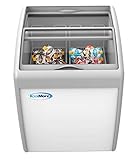
Overview: The KoolMore MCF-6C is a compact commercial ice cream freezer designed for small cafes, delis, and ice cream shops. With 5.7 cubic feet of capacity, it balances storage space with a modest footprint of 26.1"W x 28.1"D x 34.5"H. The unit maintains temperatures between -15°F and 10°F, optimized for serving perfectly textured ice cream directly to customers.
What Makes It Stand Out: This freezer distinguishes itself with ETL certification to NSF 7 standards, ensuring compliance with strict health and safety regulations—a critical feature for commercial food service. The curved locking glass lid with integrated LED lighting creates an attractive display that highlights product colors and textures, encouraging impulse purchases. The two included PVC-coated baskets resist rust and corrosion while keeping flavors organized.
Value for Money: At $935, this unit sits in the mid-range for certified commercial freezers. The NSF 7 certification alone justifies the premium over residential models, potentially saving thousands in health inspection violations. The one-year parts and labor warranty provides peace of mind, though competitors offer longer compressor coverage.
Strengths and Weaknesses: Strengths include NSF 7 compliance, effective LED lighting, secure locking mechanism, and corrosion-resistant baskets. The temperature range is ideal for scoop-and-serve operations. Weaknesses are limited capacity for growing businesses, manual defrost requirement, and only two baskets for organization. The warranty period is shorter than some alternatives.
Bottom Line: The KoolMore MCF-6C is an excellent choice for small commercial operations prioritizing regulatory compliance and product visibility. Its certification and lighting make it worth the investment for legitimate food service businesses.
2. Chest Freezer Glass Door slide Commercial Ice Cream Freezer 39" White Stand Alone Curve Display Top w/Storage Baskets - 10 Cu.Ft xs-260yxl

Overview: This 39-inch commercial chest freezer delivers 9.2 cubic feet of storage for businesses needing more capacity than compact models. Measuring 39"L x 27"D x 34"T, it suits convenience stores, markets, and restaurants requiring reliable frozen food display. The unit maintains consistent temperatures between -8°F and -4°F using eco-friendly R290 refrigerant.
What Makes It Stand Out: The standout feature is the exceptional warranty package: three years all-parts, six years compressor, and one year labor coverage—far exceeding industry standards. The R290 hydrocarbon refrigerant demonstrates environmental responsibility while delivering reliable performance in ambient temperatures up to 90°F. Two large epoxy-coated steel baskets provide durable organization.
Value for Money: Priced at $943, this freezer offers compelling value with its superior warranty and green credentials. The cost per cubic foot is competitive, and the extended compressor protection could save significant repair expenses. Manual defrost operation reduces complexity and potential maintenance issues compared to auto-defrost systems.
Strengths and Weaknesses: Strengths include outstanding warranty terms, eco-friendly refrigerant, robust basket construction, lockable sliding glass door, and all-directional wheels for mobility. The temperature range suits various frozen products beyond ice cream. Weaknesses lack LED lighting for enhanced merchandising, manual defrost requires regular maintenance, and only two baskets may limit organization for diverse inventories.
Bottom Line: This freezer excels for businesses wanting long-term reliability and environmental compliance. The warranty alone makes it a smart investment for operators planning extended use.
3. Chest Freezer Glass Door slide Commercial Ice Cream Freezer 49" White Stand Alone Curve Display Top w/Storage Baskets - 13 Cu.Ft…XS-360YXL

Overview: The 49-inch XS-360YXL expands storage to 12.7 cubic feet for growing businesses. Its dimensions of 49"L x 27"D x 34"T provide substantial capacity while maintaining a manageable footprint. Like its smaller sibling, it maintains -8°F to -4°F temperatures using R290 refrigerant, making it versatile for ice cream shops, cafeterias, and retail markets with higher volume needs.
What Makes It Stand Out: This model retains the impressive warranty structure of the series while offering significantly more display space. The eco-friendly R290 refrigerant and dependable compressor performance in 90°F ambient conditions make it sustainable for high-traffic environments. The sliding glass door design ensures easy customer access while maintaining temperature stability.
Value for Money: At $1,257, the price reflects the 38% capacity increase over the 39-inch model. The cost per cubic foot is slightly higher, but the extended warranty and reliable performance justify the premium for businesses scaling operations. The three-year all-parts coverage minimizes financial risk during critical growth phases.
Strengths and Weaknesses: Strengths include generous capacity, exceptional warranty terms, environmental compliance, and durable construction. The lockable door and mobility wheels add operational flexibility. Weaknesses are the price jump from smaller models, continued manual defrost requirement, and only two baskets for a larger space, which may necessitate additional purchases for optimal organization.
Bottom Line: Ideal for expanding businesses needing reliable, eco-friendly frozen storage. The capacity and warranty combination supports growth without compromising on quality or sustainability.
4. Chest Freezer Glass Door slide Commercial Ice Cream Freezer 60" White Curve Display Top w/Storage Baskets 16 Cu.ft XS460-YXL
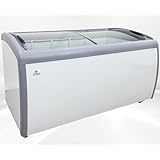
Overview: The 60-inch XS460-YXL represents the largest option in this series, offering 16 cubic feet of commercial frozen storage. Measuring 60"L x 27"D x 34"T, it serves high-volume establishments like busy markets, large restaurants, and ice cream parlors with extensive flavor selections. It maintains the same reliable -8°F to -4°F temperature range using R290 refrigerant.
What Makes It Stand Out: This model uniquely includes four large epoxy-coated steel baskets—double the smaller models—providing superior organization for diverse inventories. The expansive glass display area maximizes product visibility and merchandising opportunities. It maintains the series’ commitment to environmental responsibility and temperature stability in demanding commercial environments.
Value for Money: Surprisingly priced at $1,234, this unit costs less than the 49-inch model while offering 26% more capacity. This反常 pricing creates exceptional value, lowering the cost per cubic foot significantly. The same comprehensive warranty applies, making it the best financial proposition for businesses needing maximum storage.
Strengths and Weaknesses: Strengths include unmatched capacity in the lineup, four organizational baskets, outstanding warranty coverage, eco-friendly operation, and mobility features. The sliding glass door and lock ensure security and energy efficiency. Weaknesses involve the substantial floor space requirement and manual defrost maintenance. The size may overwhelm smaller operations.
Bottom Line: This freezer delivers the best value-per-cubic-foot in its class. High-volume businesses should capitalize on this pricing anomaly for maximum storage capacity and long-term reliability.
5. BEYOU Commercial Ice Cream Freezers with Display Glass Top,5.6 Cu.ft Chest Freezer with Wire Basket, White

Overview: The BEYOU 5.6 cubic foot freezer targets budget-conscious startups and small businesses. With 158 liters of capacity, it holds approximately four 3-gallon ice cream buckets. The compact design suits cafes, ice cream stations, and small retail spaces needing basic frozen storage and display functionality without commercial certification requirements.
What Makes It Stand Out: This model offers the lowest entry price point while including thoughtful features like a built-in thermometer, lock and keys, and caster wheels with brakes for stability. The adjustable temperature range of -26°C to -13°C (-14.8°F to -8.6°F) provides flexibility for various frozen products. The sliding glass door operates bidirectionally for customer convenience.
Value for Money: At $785.99, this is the most affordable option, saving approximately $150 over the KoolMore. For businesses operating in less regulated environments or just starting out, this cost savings can be significant. However, the lack of NSF certification may limit use in jurisdictions with strict health codes.
Strengths and Weaknesses: Strengths include competitive pricing, included thermometer, locking mechanism, brake-equipped wheels, and adequate capacity for small operations. The temperature range is suitable for ice cream service. Weaknesses are no mentioned certification for commercial standards, single wire basket limiting organization, unclear lighting specifications, and unknown long-term brand reliability compared to established competitors.
Bottom Line: The BEYOU freezer is a practical budget choice for low-volume operations or businesses in areas without strict certification requirements. Prioritize this for cost savings over regulatory compliance.
6. Tiger Chef Commercial Angle Curved Top Chest Freezer Glass Top, Deep Ice Cream Freezer with 2 Wire Baskets, Adjustable Thermostat, Locking Coasters, 9 Cubic Feet, White
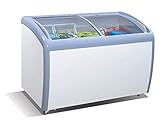
Overview: The Tiger Chef Commercial Chest Freezer delivers 9.2 cubic feet of frozen storage in a curved glass top design optimized for ice cream merchandising. This unit features a white coated steel exterior and aluminum interior for easy maintenance, making it suitable for small cafes, convenience stores, and mobile vendors. The pre-installed locking casters and secure door lock address both mobility and theft prevention, while the adjustable thermostat maintains consistent temperatures for frozen products.
What Makes It Stand Out: Exceptional mobility sets this freezer apart, with locking casters that allow easy repositioning for cleaning or layout changes without sacrificing stability when stationary. The curved glass top creates an attractive display angle that enhances product visibility naturally, without requiring power-hungry lighting. The combination of security features—both a locking lid and lockable wheels—provides comprehensive theft and tampering protection rarely found in this category.
Value for Money: At $1,145, this model occupies the mid-range sweet spot. While it lacks LED lighting and digital controls found in newer units, the robust construction and superior mobility justify the investment for businesses prioritizing flexibility. Comparable stationary units cost similarly, making the mobility features a genuine value-add for vendors who frequently rearrange spaces or require portable frozen storage solutions.
Strengths and Weaknesses: Strengths include excellent mobility, dual security features, easy-clean surfaces, and commercial-grade materials. Weaknesses include the basic two-basket configuration, absence of interior lighting, and manual thermostat requiring periodic monitoring. The lack of digital temperature display may inconvenience operators wanting precise readouts.
Bottom Line: Ideal for small operations needing secure, movable frozen storage. The Tiger Chef delivers reliable performance with thoughtful mobility features, though businesses wanting modern display aesthetics may find it functionally basic.
7. KoolMore - MCF-9C Commercial Ice Cream Freezer Display Case, Glass Top Chest Freezer with 3 Storage Baskets and Sliding Lid, Large 9 cu. ft. Capacity, White
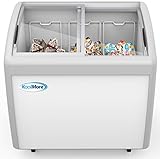
Overview: The KoolMore MCF-9C provides premium frozen merchandising in a 9 cubic foot display case designed for commercial environments. This unit maintains optimal temperatures between -15°F and 10°F while showcasing products through a curved glass top with integrated LED lighting. Three PVC-coated baskets create organized display zones for ice cream shops and convenience stores seeking professional presentation and easy customer access.
What Makes It Stand Out: ETL certification to NSF 7 standards ensures compliance with strict health and safety regulations, critical for inspected food service operations. The bright LED lighting system actively highlights product colors, improving visibility in dim conditions and driving impulse purchases. Three rust-resistant baskets offer superior organization compared to standard two-basket configurations, enabling better product categorization.
Value for Money: Priced at $1,095, this unit commands a modest premium over basic models but delivers professional certification and lighting that cheaper alternatives lack. The one-year parts and labor warranty provides additional protection. For businesses requiring NSF compliance, this represents excellent value—similarly certified units often cost $200-300 more, making the KoolMore a financially prudent choice for regulated environments.
Strengths and Weaknesses: Strengths include NSF certification, integrated LED lighting, three baskets, warranty coverage, and proven temperature range. Weaknesses include manual temperature controls lacking digital precision and a price point slightly above non-certified competitors. The sliding lid design, while functional, may wear faster than hinged alternatives in high-traffic settings.
Bottom Line: Perfect for businesses requiring certified equipment with enhanced display capabilities. The KoolMore balances regulatory compliance, attractive presentation, and reasonable pricing, making it a smart investment for established food service operations prioritizing safety standards.
8. VEVOR Commercial Ice Cream Display Case, 9.3 Cu.ft Chest Freezer, -19 to 3℉ Temp Adjustable Mobile Top Deep Freezer with 3 Wire Baskets, 2 Sliding Glass Doors, Locking Casters & LED Strip Lighting

Overview: The VEVOR Commercial Ice Cream Display Case delivers modern digital features at a budget-friendly price point, offering 9.3 cubic feet of capacity with contemporary controls. This unit showcases products through tempered glass sliding doors with built-in LED strip lighting, creating an eye-catching display for ice cream shops, cafes, and convenience stores. The mobile design with locking casters provides flexibility for cleaning and repositioning.
What Makes It Stand Out: The upgraded digital temperature control panel allows precise 1°F adjustments from -19 to 3°F, providing unmatched accuracy in this price category. The LCD real-time display eliminates guesswork, while the sliding glass doors offer smoother operation than traditional lids. At $899.99, it’s the most affordable option with digital controls, undercutting competitors by $200+ while maintaining comparable capacity and LED lighting.
Value for Money: Exceptional value defines this VEVOR model. Businesses receive premium features—digital controls, LED lighting, locking casters, and sliding doors—at a startup-friendly price. While brand recognition lags behind established competitors, the feature set rivals units costing 30-40% more. This makes it ideal for cost-conscious entrepreneurs unwilling to sacrifice modern functionality.
Strengths and Weaknesses: Strengths include precise digital controls, attractive LED lighting, smooth sliding doors, mobility, and outstanding affordability. Weaknesses involve potentially shorter warranty coverage than premium brands and unknown long-term durability. The temperature range, while adequate for ice cream, may not suit all frozen food applications requiring ultra-low temperatures.
Bottom Line: The best budget-conscious choice for businesses wanting modern digital features without premium pricing. The VEVOR offers impressive functionality for startups and small operations prioritizing value and precise temperature management over brand prestige.
9. Chest Freezer Glass Door slide Commercial Ice Cream Freezer 72" capacity 20cuftWhite Curve Display Top w/Storage Baskets XS-560YXL

Overview: This 72-inch Commercial Ice Cream Freezer delivers massive 20 cubic foot capacity for high-volume operations requiring extensive frozen storage. The expansive curved glass top display spans six feet, making it ideal for convenience stores, markets, and busy restaurants needing maximum product variety. Maintaining temperatures from -8°F to -4°F using eco-friendly R290 refrigerant, this unit combines bulk storage with environmental responsibility.
What Makes It Stand Out: The enormous storage volume and industry-leading warranty package distinguish this freezer. With three years all-parts coverage and six years on the compressor, it offers double the warranty protection of most competitors. The eco-friendly R290 refrigerant demonstrates environmental consciousness while delivering reliable performance in ambient temperatures up to 90°F. Four epoxy-coated steel baskets provide robust organization for high-traffic environments.
Value for Money: At $1,359, this represents significant investment but justifies cost through sheer capacity and warranty protection. The cost per cubic foot is lower than smaller units, making it economical for businesses needing maximum storage. The extensive warranty eliminates long-term repair concerns, providing financial predictability that cheaper alternatives cannot match.
Strengths and Weaknesses: Strengths include massive capacity, exceptional warranty, eco-friendly refrigerant, durable construction, and lockable sliding doors. Weaknesses are the large footprint requiring substantial floor space, highest absolute price in the lineup, and manual defrost system requiring periodic maintenance. The return policy’s pallet requirement complicates potential warranty claims.
Bottom Line: Perfect for high-volume retailers and restaurants needing maximum frozen storage. The combination of capacity, warranty, and eco-friendly operation makes this a smart long-term investment despite premium pricing and substantial space requirements.
10. NAFCOOL 12.4 Cu.Ft Commercial Chest Freezer with LED Light,Temp Rang -8°F and 0°F,Glass Top Display Chest Freezer with 6 Removable Wire Baskets,Sliding Lids, Lock,Caster Wheels, White

Overview: The NAFCOOL 12.4 Cu.Ft Commercial Chest Freezer bridges the gap between compact and oversized units, offering enhanced capacity with premium features. This display freezer maintains temperatures from -8°F to 0°F using efficient R600a refrigerant, while six removable wire baskets provide exceptional organization. LED lighting, locking casters, and ETL certification create a versatile solution for restaurants, convenience stores, and cafes seeking scalable frozen storage.
What Makes It Stand Out: Six included baskets surpass all competitors, enabling superior product organization and reducing customer search time. The five-year compressor warranty exceeds industry standards, demonstrating manufacturer confidence. At $759, it offers 12.4 cubic feet—30% more capacity than standard 9 cu ft models—for less than most premium 9 cu ft units, creating an unmatched capacity-to-price ratio.
Value for Money: Outstanding value defines the NAFCOOL. Businesses gain significantly more storage, six baskets, LED lighting, and extended warranty at a price below many smaller units. For small to medium operations, this eliminates the need to choose between capacity and affordability, delivering both without compromise. The cost per cubic foot is among the lowest in the commercial category.
Strengths and Weaknesses: Strengths include superior capacity, six baskets, five-year compressor warranty, LED lighting, ETL certification, and aggressive pricing. Weaknesses include a narrower temperature range than some competitors and less brand recognition than established commercial equipment manufacturers. The manual temperature dial lacks the precision of digital controls.
Bottom Line: The optimal choice for growing businesses needing extra capacity without premium pricing. NAFCOOL delivers exceptional storage volume, comprehensive features, and warranty protection at a value that’s hard to beat in the commercial freezer market.
Why Choose a Chest Freezer with Glass Sliders for Display?
The Visual Merchandising Advantage
The psychology behind customer purchasing decisions is heavily influenced by visibility and accessibility. Glass slider freezers create an immediate visual connection between your customers and your products, triggering impulse purchases that solid-lid models simply cannot generate. The sliding mechanism allows multiple customers to browse simultaneously without the awkward lifting of heavy lids, reducing barriers to purchase. For businesses in high-traffic environments like grocery stores, convenience markets, or specialty food shops, this seamless browsing experience translates directly to increased sales velocity and higher average transaction values.
Energy Efficiency vs. Display Needs
There’s a common misconception that display freezers inherently waste energy. Modern glass slider models incorporate sophisticated thermal break frames, triple-pane low-emissivity glass, and heated mullions that dramatically reduce thermal transfer. While they may consume marginally more power than their solid-lid counterparts, the ROI from increased sales typically far outweighs the incremental energy costs. The key is understanding your specific usage patterns—how frequently will sliders be opened? What ambient temperature will the unit face? These factors determine whether the energy premium is justified for your particular application.
Key Features to Evaluate Before Buying
Glass Slider Types and Quality
Not all glass is equal in the commercial freezer world. Look for tempered safety glass as a baseline requirement, but dig deeper into the glazing specifications. Triple-pane units with argon gas fill provide superior insulation compared to standard double-pane models. Low-E (low emissivity) coatings reflect infrared heat while allowing visible light to pass through, maintaining product visibility without compromising thermal efficiency. Pay attention to the spacer system between panes—warm-edge spacers reduce condensation formation at the edges, a common failure point in humid environments.
Insulation and Temperature Consistency
The insulation density in chest freezers directly impacts temperature recovery after opening. High-density polyurethane foam with a minimum of 2.5 inches of thickness provides stable temperatures even during peak browsing hours. Ask about the thermal bridging at corners and slider tracks—poorly designed units create cold bridges that lead to frost buildup and temperature fluctuations. The best models feature foamed-in-place insulation that eliminates gaps and creates a monolithic thermal envelope around the entire cabinet.
Capacity and Dimensions
Calculating your true capacity needs requires more than just cubic feet measurements. Consider your product mix—irregularly shaped items like frozen turkeys waste space compared to uniformly stacked pizza boxes. Internal basket configurations either maximize or hinder organization. Measure your floor space carefully, accounting for the slider clearance (typically 12-18 inches beyond the unit’s depth) and service access requirements. Remember that advertised capacity includes unusable space near the compressor hump; ask for the net merchandising capacity instead.
Temperature Range and Controls
Commercial applications demand precise temperature control, typically ranging from -10°F to 10°F for most frozen foods. However, ice cream requires colder holding temperatures around -20°F to maintain optimal scooping texture. Digital microprocessor controls with LED displays offer accuracy within 1-2 degrees, while mechanical thermostats may fluctuate by 5 degrees or more. Look for models with adjustable temperature alarms that alert you to deviations before product quality suffers. Some advanced units feature adaptive defrost controls that learn your usage patterns and optimize defrost cycles accordingly.
Defrosting Mechanisms
Manual defrost models cost less upfront but demand significant labor—expect to shut down and empty the unit every 2-4 weeks in humid climates. Automatic defrost systems use heated elements to periodically melt frost, but this introduces brief temperature spikes and increases energy consumption. The sweet spot for many businesses is a hybrid system with demand-based defrost initiation, which only activates when frost buildup reaches a certain threshold. Understand how defrost water is managed—evaporator pans should be easily accessible for cleaning to prevent bacterial growth and odors.
Lighting Systems
LED interior lighting has become the standard, but implementation varies dramatically. Edge-lit glass panels create an even, glare-free illumination that makes products pop without generating excess heat. Avoid units with exposed LED strips that cast harsh shadows or create hot spots. The color temperature matters too—5000K daylight LEDs render food colors accurately, while warmer temperatures can make products appear unappetizing. Check if lighting operates on door switches or motion sensors; continuous operation wastes energy and generates unnecessary heat load.
Security Features
After-hours protection is critical for high-value frozen inventory. Integrated locking systems should engage at multiple points along the slider track, not just a single latch. Some models feature alarm contacts that integrate with store security systems when sliders are forced open. For cannabis retailers or pharmacies storing temperature-sensitive products, consider units with tamper-evident seals or audit trail capabilities that log every access event. The glass itself should be impact-resistant; ask about anti-shatter films that hold fragments together if breakage occurs.
Mobility and Placement
Even permanent installations benefit from casters during initial positioning and future renovations. Heavy-duty swivel casters with locking brakes support loads exceeding 500 pounds when fully stocked. If you’re placing the unit on uneven floors, look for models with adjustable leveling legs that prevent slider misalignment. For outdoor venues or mobile operations, verify the compressor is rated for ambient temperatures up to 110°F and that the electrical components are weather-sealed. Ventilation clearance is non-negotiable—most manufacturers require 3-4 inches of space on all sides for proper airflow.
Energy Consumption Ratings
The DOE’s Energy Star program now covers commercial freezers, but the ratings don’t tell the whole story. Look beyond the annual kWh figure to understand the energy use intensity (EUI) per cubic foot of storage. Units with variable-speed compressors modulate their output based on cooling demand, reducing energy consumption by 20-30% compared to single-speed models. Hot gas anti-sweat systems prevent condensation but consume significant power—ensure these can be disabled in low-humidity environments to save energy. Request 24-hour energy consumption data at various ambient temperatures, not just the standard 75°F test condition.
Noise Levels
The acoustic footprint of your freezer affects customer experience, especially in boutique settings. Compressor noise is measured in decibels (dB); units operating below 45 dB are whisper-quiet, while those above 55 dB become noticeable in quiet environments. Noise originates from three sources: compressor vibration, fan operation, and refrigerant flow. Look for models with vibration-dampening mounts, acoustically insulated compressor compartments, and variable-speed condenser fans that ramp down during low-demand periods. Install rubber isolation pads beneath the unit to prevent vibration transfer through the floor.
Build Quality and Durability
Commercial environments punish equipment. Examine the gauge of the steel used in the cabinet—20-gauge or thicker resists dents and damage from shopping carts. The slider track system should be extruded aluminum with stainless steel bearings, not plastic components that crack under heavy use. Gasket quality is paramount; magnetic vinyl gaskets should be replaceable without tools and form a continuous seal even after thousands of cycles. Internal corners should be coved (rounded) rather than square, preventing debris accumulation and simplifying sanitization. Request the mean time between failures (MTBF) data for critical components like compressors and fan motors.
Brand Reputation and Warranty
In the commercial refrigeration world, warranty terms reveal manufacturer confidence. A one-year parts and labor warranty is standard, but premium brands offer five-year compressor warranties and three-year coverage on all components. More important than duration is the service network—does the manufacturer have certified technicians within 50 miles of your location? Read the fine print for exclusions; some warranties are voided if the unit isn’t installed by a certified professional or if you use aftermarket accessories. Check for pro-rated coverage that reduces your out-of-pocket costs as the unit ages.
Price vs. Long-Term Value
The cheapest unit often costs more over its lifetime. A $1,500 savings upfront can evaporate through higher energy bills, more frequent repairs, and shorter lifespan. Calculate the total cost of ownership (TCO) over five years, factoring in energy costs, expected maintenance, and potential product loss from temperature failures. Premium units with advanced controls and better insulation typically pay for themselves within 2-3 years through reduced operating costs. Consider financing options that spread the investment—many manufacturers offer 0% APR for qualified buyers, making higher-quality units more accessible.
Installation and Setup Best Practices
Location Planning
Site selection impacts performance and longevity. Avoid placing units near HVAC vents, direct sunlight, or heat-producing equipment like ovens. The floor must support the fully loaded weight—remember that 15 cubic feet of frozen product can exceed 400 pounds. Plan for customer traffic flow; sliders should open away from main walkways to prevent congestion. In grocery settings, position units perpendicular to main aisles rather than parallel, encouraging customers to browse the full product assortment. Maintain adequate clearance for service access—technicians need 30 inches of space to remove compressor panels.
Electrical Requirements
Most commercial chest freezers require dedicated 115V circuits, but larger units may need 208-230V. The circuit should be protected by a ground fault circuit interrupter (GFCI) in wet locations. Voltage fluctuations damage compressors; consider installing a voltage regulator if your location experiences frequent brownouts. The outlet must be accessible without moving the unit—never rely on extension cords, which void warranties and create fire hazards. For mobile applications, verify your generator can handle the startup surge, which is typically 3-4 times the running amperage.
Initial Calibration
After installation, allow the unit to stand upright for 24 hours before powering on—this lets refrigerant oil return to the compressor. Load the freezer gradually, starting with 25% capacity and adding product over several hours. This prevents temperature overshoot and allows the system to stabilize. Calibrate the thermostat using a calibrated thermometer placed in a glycol-filled bottle (this simulates product temperature rather than air temperature). Document the baseline performance, including pull-down time from ambient temperature and temperature recovery after a 5-minute door opening.
Maintenance and Care Tips
Cleaning Glass Sliders
Use pH-neutral cleaners specifically formulated for low-E coatings—ammonia-based products degrade the reflective layer. Clean both interior and exterior surfaces weekly using microfiber cloths to prevent scratching. For stubborn residue like ice cream smudges, apply a mixture of warm water and mild dish soap, then squeegee dry. Never use razor blades or abrasive pads. Inspect gaskets during cleaning; a thin layer of petroleum jelly on the gasket surface maintains flexibility and improves the seal. Clean the slider tracks monthly with a vacuum and damp cloth to remove debris that causes binding.
Preventing Frost Buildup
Excessive frost indicates air infiltration. Check gasket integrity first—close a dollar bill in the seal and pull; if it slides out easily, replace the gasket. Train staff to close sliders firmly; many units require a final push to engage the magnetic seal. In humid environments, install a dehumidifier nearby to reduce ambient moisture. Keep the freezer at least 75% full—thermal mass from frozen product stabilizes temperatures and reduces air exchange. If frost forms on the evaporator coils more frequently than every two weeks, have a technician check the defrost timer and heater elements.
Routine Inspection Checklist
Perform monthly inspections of the condenser coil, cleaning it with a soft brush or vacuum to maintain airflow efficiency. Check drain lines for clogs by pouring a cup of water down the pan and verifying it flows freely. Listen for changes in compressor noise pitch or fan operation, which often precede failures. Verify temperature accuracy quarterly using a calibrated thermometer. Inspect electrical connections annually for signs of corrosion or overheating. Document all maintenance activities in a logbook—this demonstrates due diligence for health inspections and supports warranty claims.
Regulatory and Safety Compliance
Food Safety Standards
The FDA Food Code requires frozen food to be held at 0°F or below, but best practices suggest maintaining -10°F to provide a safety margin. Your freezer must have a visible, accurate thermometer. In many jurisdictions, display freezers require sneeze guards if customers can reach over open product. NSF International certification ensures the unit meets sanitation standards, including coved corners and cleanable components. For businesses selling meat or dairy, local health departments may require alarm systems that alert staff to temperature deviations. Maintain temperature logs for at least 90 days—digital data loggers with cloud storage simplify compliance.
Energy Regulations
The Department of Energy’s energy conservation standards for commercial freezers mandate minimum efficiency levels, but these represent the floor, not the ceiling. Some states have adopted more stringent requirements—California’s Title 20 regulations, for example, restrict standby power consumption. If you’re pursuing LEED certification for your facility, select freezers with refrigerants that have low global warming potential (GWP), such as R-290 (propane) or R-600a (isobutane). These natural refrigerants also improve energy efficiency by 10-15% compared to traditional HFCs. Keep compliance documentation with your equipment records; energy audits increasingly scrutinize refrigeration loads.
Frequently Asked Questions
What are the main advantages of glass slider chest freezers over solid door models?
Glass sliders provide immediate product visibility that drives impulse purchases and reduces the need for additional signage. They allow multiple customers to browse simultaneously without lifting heavy lids, improving the shopping experience. While they consume slightly more energy than solid lids, the sales increase typically offsets the cost difference. The sliding mechanism also requires less clearance space than hinged doors, making them ideal for tight layouts.
How energy-efficient are display chest freezers with glass sliders?
Modern units with triple-pane low-E glass, thermal break frames, and LED lighting are remarkably efficient, often using only 10-15% more energy than solid-lid models. Look for Energy Star certification and variable-speed compressors that reduce consumption by 20-30% during low-demand periods. The key is to size the unit properly and maintain it well—an oversized or poorly maintained freezer wastes far more energy than the glass itself.
What temperature range should I look for in a display freezer?
For general frozen foods, select a unit capable of maintaining -10°F to 0°F. Ice cream applications require colder temperatures around -20°F for optimal texture. Digital controls with 1-degree accuracy are essential for food safety compliance. Ensure the freezer can recover quickly after door openings—specifications should include temperature recovery time to within 3 degrees of setpoint after a 5-minute door opening.
How do I prevent condensation and fogging on the glass?
Anti-sweat heaters built into the frame prevent condensation in humid environments, but they increase energy use. In moderate humidity, ensure proper air circulation around the unit and maintain the freezer at least 75% full to stabilize internal temperatures. Clean the glass regularly with anti-fog treatments designed for low-E coatings. If fogging persists, check gasket integrity—air leaks introduce moist air that condenses on cold surfaces.
What’s the difference between manual and automatic defrost systems?
Manual defrost requires shutting down the unit and removing frost buildup every 2-4 weeks, which is labor-intensive but maintains consistent temperatures. Automatic defrost uses electric heaters to melt frost periodically, introducing brief temperature spikes and increasing energy consumption. Demand-based defrost systems offer the best compromise, activating only when sensors detect frost accumulation, minimizing energy waste and temperature fluctuations.
How often should I clean the glass sliders and tracks?
Clean interior and exterior glass surfaces weekly using pH-neutral cleaners and microfiber cloths to protect low-E coatings. Slider tracks need monthly cleaning to remove debris that causes binding and gaps in the seal. Gaskets should be wiped down weekly and treated with a thin layer of petroleum jelly monthly to maintain flexibility. Establish a cleaning schedule and train staff on proper techniques to prevent damage.
Are glass slider chest freezers suitable for outdoor use?
Standard units are rated for indoor ambient temperatures up to 75°F. For outdoor use, you need specialized models with weather-sealed electrical components, compressors rated for 110°F ambient, and reinforced construction. Even outdoor-rated units require protection from direct sunlight and precipitation. Consider the warranty implications—most manufacturers void coverage if indoor units are used outside.
What security features are essential for high-value inventory?
Multi-point locking systems that engage at several points along the slider track provide better security than single-latch locks. Integrated alarm contacts that connect to your store’s security system alert you to forced entry. For regulated products like pharmaceuticals or cannabis, look for units with access logs and tamper-evident features. Anti-shatter film on the glass prevents smash-and-grab theft while maintaining visibility.
How do I calculate the right capacity for my business?
Start by auditing your current inventory and projected growth. Calculate cubic feet needed based on product dimensions, not just weight. Remember that efficient organization requires 20-30% more space than the product volume alone. Consider your restocking schedule—daily deliveries allow smaller units than weekly shipments. Factor in seasonal peaks; it’s better to have 15-20% excess capacity than to run out of space during your busiest periods.
What maintenance can I perform myself versus requiring a technician?
Staff can handle cleaning, gasket inspection, and basic temperature monitoring. Monthly condenser coil cleaning and drain line checks are also manageable with proper training. Leave refrigerant system repairs, electrical diagnostics, and compressor work to certified technicians. Annual professional inspections should include refrigerant level checks, electrical connection tightening, and performance calibration. Attempting complex repairs yourself voids warranties and may violate EPA regulations regarding refrigerant handling.