Your kitchen deserves better than a refrigerator that juts out like an unwelcome guest. That awkward gap between the fridge door and your cabinets isn’t just an eyesore—it’s a dust magnet that disrupts the entire flow of your carefully curated space. Counter-depth bottom-freezer refrigerators have emerged as the design-savvy homeowner’s secret weapon, delivering that coveted built-in aesthetic without the built-in price tag or renovation headaches. But not all counter-depth models are created equal when it comes to truly mimicking the seamless integration of their custom counterparts.
Understanding what separates the convincing from the compromise requires diving deeper than mere dimensions. The illusion of a built-in appliance hinges on a symphony of design details, installation precision, and feature selections that most shoppers overlook until it’s too late. Whether you’re renovating your dream kitchen or simply upgrading an aging eyesore, knowing how to evaluate these refrigerators through the lens of a kitchen designer will save you from buyer’s remorse and ensure your investment looks intentional, not accidental.
Top 10 Counter-Depth Bottom-Freezer Refrigerators
Detailed Product Reviews
1. Sharp SJB1255GS Bottom-Freezer Counter-Depth Refrigerator, 24 Inch, 11.5 Cubic Foot, Garage Ready

Overview:
The Sharp SJB1255GS delivers 11.5 cubic feet of storage in a 24-inch counter-depth design optimized for garages and compact kitchens. Its bottom-freezer configuration places fresh foods at eye level while providing a generous 4.2 cubic foot freezer compartment. The unit combines space efficiency with specialized cooling technologies for discerning homeowners.
What Makes It Stand Out:
The Vacation Mode function uniquely allows deactivating the refrigerator cavity while maintaining freezer operation—ideal for extended travel. The Fresh Converter Drawer adapts between chiller and crisper modes, offering unprecedented flexibility for fresh food storage. Multi Air Flow technology ensures even temperature distribution throughout both compartments, while the integrated wine rack adds entertaining convenience.
Value for Money:
At $1,098.97, this model commands a mid-range premium justified by garage-ready certification and innovative features. While $200-300 more than basic alternatives, the Vacation Mode energy savings and convertible drawer deliver tangible long-term benefits. For households requiring flexible cooling solutions or secondary garage installations, the price aligns with functionality.
Strengths and Weaknesses:
Strengths: Garage-ready construction; Vacation Mode energy efficiency; versatile Fresh Converter Drawer; spacious freezer capacity; even air distribution system
Weaknesses: Limited finish options; smaller crisper space in chiller mode; higher initial investment than entry-level models
Bottom Line:
The Sharp SJB1255GS excels for homeowners needing adaptable cooling and garage capability. Its specialized features justify the moderate premium, making it ideal for secondary installations or primary use in space-constrained homes.
2. Carlton 10.5 cu. ft. Bottom Freezer Refrigerator with Adjustable Cooling Zones, Reversible Doors in Stainless Steel

Overview:
Carlton’s 10.5 cubic foot bottom-freezer refrigerator offers stainless steel aesthetics and practical functionality in a 24-inch footprint. Designed for apartments and smaller kitchens, it maximizes storage with wall-to-wall adjustable glass shelves and strategic door organization. The unit emphasizes straightforward, reliable performance over complex technology.
What Makes It Stand Out:
Reversible doors provide installation flexibility rarely included at this price point. Three integrated door shelves, including gallon container storage, optimize accessibility without sacrificing interior capacity. Adjustable cooling zones allow precise temperature management tailored to different food types, while adjustable feet ensure stability on uneven floors.
Value for Money:
Priced at $829.98, this Carlton represents exceptional value, undercutting most competitors by $200-400. It delivers essential features—LED lighting, precise temperature control, and flexible storage—without premium frills. While lacking Energy Star certification and digital displays, it admirably covers core functions for budget-conscious buyers prioritizing practicality over advanced features.
Strengths and Weaknesses:
Strengths: Outstanding affordability; reversible door configuration; adjustable feet for stability; bright LED lighting; straightforward operation
Weaknesses: No Energy Star certification mentioned; manual temperature controls; smaller capacity than similarly priced models; basic feature set
Bottom Line:
This no-frills workhorse delivers reliable performance at an unbeatable price. Perfect for renters, first-time homeowners, or anyone seeking functional cooling without financial strain.
3. Summit Appliance FFBF235PL 24" Wide Bottom Freezer Refrigerator, Energy Star, LED Lighting, Stainless Steel (RHD)

Overview:
Summit’s FFBF235PL combines Energy Star certification with premium digital controls in a space-saving 24-inch wide design. Offering 10.8 cubic feet of capacity, this counter-depth unit targets tech-savvy users in compact kitchens. The thin-line series balances quality construction with innovative features for modern households.
What Makes It Stand Out:
The intuitive digital touch control system provides precise temperature management uncommon in 24-inch models. Super Freeze rapidly chills newly loaded groceries, preserving food quality. A convertible meat drawer holds colder temperatures for deli items or functions as a secondary crisper. Fingerprint-resistant stainless steel with horizontal grain maintains aesthetics with minimal maintenance.
Value for Money:
At $1,275.86, this Summit commands a premium but delivers proportional value. Energy Star efficiency ensures utility savings, while frost-free operation minimizes maintenance. The digital interface and specialized compartments justify the cost over entry-level alternatives, though budget buyers may find better cubic-foot-per-dollar value elsewhere.
Strengths and Weaknesses:
Strengths: Digital touch controls; Super Freeze function; Energy Star efficiency; fingerprint-resistant finish; reversible doors; frost-free operation
Weaknesses: Highest price per cubic foot; smaller capacity than similarly priced models; complex features may overwhelm some users
Bottom Line:
The FFBF235PL suits tech-savvy homeowners prioritizing precision and convenience in a compact package. Premium features and build quality make it worth the investment for primary kitchen use.
4. Summit 24" Bottom Freezer Refrigerator, Counter Depth Refrigerator- Freezer, Energy Star, White - FFBF121WLHD (Left Hand Door)

Overview:
The Summit FFBF121WLHD offers 11.7 cubic feet of Energy Star-certified storage in a left-hand door configuration. This white counter-depth refrigerator provides frost-free convenience and digital temperature management for space-challenged kitchens. The unit addresses specific layout requirements while maintaining dependable performance.
What Makes It Stand Out:
The left-hand door swing caters to specific kitchen layouts often ignored by manufacturers. Super Freeze rapidly cools new groceries, while three slide-out freezer drawers protect contents from temperature fluctuations when opened. A sealed back design and right-angle plug maximize space savings in tight installations.
Value for Money:
Priced at $1,146.95, this model balances premium features with practical considerations. Energy Star certification and frost-free operation provide long-term savings. While slightly more expensive than non-certified models, the energy efficiency and specialized left-hand option justify the cost for targeted installations.
Strengths and Weaknesses:
Strengths: Left-hand door configuration; Energy Star certified; Super Freeze function; frost-free operation; gallon door storage; space-saving design
Weaknesses: White finish may not suit all décor; fewer freezer drawers than some competitors; no vacation mode; limited aesthetic options
Bottom Line:
The FFBF121WLHD is a specialized solution for left-hand door requirements and tight spaces. Its energy efficiency and practical features make it a smart choice for apartments, condos, and galley kitchens.
5. VEVOR French Door Refrigerator, 18.9 Cu. Ft. Kitchen Fridge, Counter Depth French Refrigerator with LED Display and 4 Casters, Frost-Free Bottom Freezer Refrigerators for Home & Commercial Use, Black

Overview:
VEVOR’s 18.9 cubic foot French Door refrigerator delivers substantial capacity in a counter-depth design suitable for home and light commercial use. The black finish model features a bottom freezer with LED display control and four casters for mobility. With 12.4 cubic feet of refrigerator space and 6.5 cubic feet of freezer capacity, it serves large households and entertainers.
What Makes It Stand Out:
Caster wheels provide unprecedented mobility for a full-size refrigerator, enabling easy cleaning and repositioning. The inverter compressor operates at just 45dB—quieter than many dishwashers. Magnetic door seals minimize cold air loss, while the 90-degree door opening facilitates drawer access in tight spaces. Frost-free technology eliminates manual defrosting.
Value for Money:
At $1,437.99, this VEVOR offers exceptional capacity-per-dollar value. The 18.9 cubic feet significantly exceeds similarly priced 24-inch models. While brand recognition lags behind established manufacturers, features like the inverter compressor and mobility match premium competitors. For buyers prioritizing space and flexibility over brand name, the value proposition is compelling.
Strengths and Weaknesses:
Strengths: Massive capacity; mobile casters; quiet inverter compressor; French door accessibility; frost-free operation; magnetic seals
Weaknesses: Larger 32.8-inch width requires more space; lesser-known brand; black finish shows fingerprints; may be oversized for small kitchens
Bottom Line:
Perfect for large households or commercial settings needing capacity and flexibility. The mobility and quiet operation create a unique value proposition despite its larger footprint.
6. Summit 24" Bottom Freezer Refrigerator, Counter Depth Refrigerator- Freezer, Energy Star, Stainless Steel - FFBF124SSLHD (Left Hand Door)

Overview: The Summit FFBF124SSLHD is a 24-inch counter-depth bottom freezer refrigerator designed for space-conscious kitchens. With 11.7 cubic feet of capacity, it fits seamlessly into compact spaces while offering full-size functionality. The left-hand door orientation makes it ideal for specific kitchen layouts where this configuration works best, providing a custom solution for tight urban apartments or galley kitchens.
What Makes It Stand Out: This unit excels with its digital temperature control panel inside the refrigerator, allowing precise management of both fridge and freezer compartments. The Super Freeze function rapidly cools newly added groceries, preserving freshness. Three slide-out freezer drawers with protective fronts prevent cold air loss and organize frozen items efficiently. The ENERGY STAR certification ensures lower utility bills, while the 100% CFC-free and CARB-compliant design appeals to environmentally conscious buyers seeking sustainable appliances.
Value for Money: At $1,244.31, this Summit model sits in the premium compact appliance category. While pricier than standard apartment refrigerators, its counter-depth design, advanced features like Super Freeze, and robust build quality justify the investment. Comparable models from other brands often lack the digital controls and triple-drawer freezer system, making this a worthwhile purchase for those prioritizing performance in tight spaces.
Strengths and Weaknesses: Strengths include excellent space optimization, precise temperature control, rapid freezing capability, and eco-friendly certifications. The adjustable glass shelves and gallon door storage enhance flexibility. Weaknesses are the limited 11.7 cu.ft. capacity for larger households and the premium price point. The left-hand orientation may not suit all kitchen layouts, and some users might prefer external digital displays.
Bottom Line: The Summit FFBF124SSLHD is an excellent choice for urban dwellers, small families, or anyone needing a high-performance, space-saving refrigerator. Its advanced features and quality construction make it worth the premium price if your kitchen demands left-hand door access.
7. Summit 24" Bottom Freezer Refrigerator, Counter Depth Refrigerator- Freezer, Energy Star, Stainless Steel - FFBF124SS (Right Hand Door)

Overview: The Summit FFBF124SS offers identical features to its left-hand counterpart but with a right-hand door swing, making it suitable for standard kitchen configurations. This 24-inch counter-depth bottom freezer refrigerator provides 11.7 cubic feet of storage in a slim footprint, perfect for apartments, condos, and smaller homes where space efficiency matters without sacrificing quality.
What Makes It Stand Out: Like the left-hand version, this model features an innovative digital temperature control panel inside the refrigerator for easy climate management. The Super Freeze setting quickly chills newly added items, while three slide-out freezer drawers keep frozen foods organized and protected. ENERGY STAR certification and eco-friendly construction (100% CFC-free, CARB compliant) make it a responsible choice for environmentally aware consumers.
Value for Money: Priced at $1,204.91, it’s slightly more affordable than the left-hand model, offering the same premium features. The $40 savings makes it an even better value for those who don’t need specialized door orientation. While still an investment, its counter-depth design, advanced freezing technology, and digital controls provide features rarely found in compact refrigerators at this price point.
Strengths and Weaknesses: Strengths include space-efficient design, precise temperature management, rapid freezing function, and environmentally friendly operation. The adjustable shelving and gallon door storage add convenience. Weaknesses include the modest 11.7 cu.ft. capacity limiting storage for larger families, and the internal digital display may be less convenient than external panels. The premium pricing might deter budget shoppers.
Bottom Line: The Summit FFBF124SS is a top-tier compact refrigerator for those seeking premium features in a space-saving design. If you need a reliable, energy-efficient bottom freezer model with right-hand door access, this unit delivers exceptional performance worth the investment.
8. BANGSON 7.1 Cu.Ft Refrigerator with Freezer, Apartment Size Fridge with Bottom Freezer, for Apartment, Office, Kitchen and Garage, Stainless Steel, Silver

Overview: The BANGSON 7.1 Cu.Ft Refrigerator is an apartment-sized bottom freezer unit designed for ultra-compact spaces. Measuring just 21.3" W x 20.7" D x 56" H, it’s ideal for apartments, offices, garages, or dorm rooms. With 5.45 cu.ft. refrigerator and 1.65 cu.ft. freezer capacity, it provides essential cooling without consuming valuable floor space while maintaining modern aesthetics.
What Makes It Stand Out: This model offers five adjustable temperature settings for both compartments, ranging from -5.6°F to 15.1°F in the freezer and 32°F to 50°F in the fridge. Operating at a whisper-quiet 39dB, it won’t disrupt daily activities. Thoughtful details include reversible doors, an automatic night light, bottom leveling legs for stability, and included accessories like an ice tray, defrost tool, and egg shelf that add immediate value.
Value for Money: At $429.99, this BANGSON refrigerator represents exceptional value for budget-conscious consumers or those furnishing secondary spaces. While lacking advanced features like digital controls or rapid freeze, it covers all basics reliably. Comparable compact models often cost more while offering similar capacity, making this an affordable solution for small-space refrigeration needs without sacrificing essential functionality.
Strengths and Weaknesses: Strengths include ultra-compact dimensions, quiet operation, reversible doors, included accessories, and excellent price point. The five temperature settings provide good flexibility. Weaknesses include manual defrost requirement, basic mechanical temperature controls, smaller capacity limiting storage, and less durable construction compared to premium brands. The 6-12 hour settling period after transport is also inconvenient.
Bottom Line: The BANGSON 7.1 Cu.Ft Refrigerator is perfect for those prioritizing affordability and compact size over advanced features. It’s an excellent choice for apartments, offices, or as a secondary fridge, delivering reliable performance at a budget-friendly price that won’t strain your wallet.
9. KoolMore 30-Inch and 18.5 cu. ft. Counter Depth French Door Refrigerator with Three Doors and Deep Freezer in Stainless-Steel (KM-RERFDSS-18C)

Overview: The KoolMore KM-RERFDSS-18C is a 30-inch French door refrigerator offering 18.5 cubic feet of capacity in a counter-depth design. This three-door model combines modern aesthetics with practical functionality, featuring double crispers with humidity control and spacious freezer storage. It aligns flush with kitchen counters for a built-in look that elevates any contemporary kitchen design.
What Makes It Stand Out: The double-flow cooling system ensures even temperature distribution throughout, keeping produce fresher longer. Six door bins and adjustable glass shelving provide exceptional organization flexibility. The French door design allows easy access to fresh foods while keeping cold air contained. The deep freezer drawers offer ample frozen storage with better organization than traditional freezer designs, reducing food waste.
Value for Money: At $1,389.00, this KoolMore model competes with mid-range French door refrigerators from major brands. The counter-depth design and premium features like humidity-controlled double crispers and advanced cooling technology justify the price. While not the cheapest option, it offers comparable features to units costing significantly more, making it a solid value for those wanting French door style without premium brand pricing.
Strengths and Weaknesses: Strengths include stylish French door design, generous 18.5 cu.ft. capacity, excellent organization options, precise temperature control, and counter-depth fit. The double crispers and dual freezer drawers enhance usability. Weaknesses include the higher price point for budget shoppers, potential reliability questions with a lesser-known brand, and French doors may require more clearance space than single-door models.
Bottom Line: The KoolMore French door refrigerator is ideal for homeowners seeking a stylish, spacious, and feature-rich appliance at a reasonable price. Its counter-depth design and advanced cooling make it a smart choice for modern kitchen renovations where aesthetics and performance matter equally.
10. Hamilton Beach HBF1558 15.6 cu ft Counter Depth Full Size Refrigerator, Side Doors, Stainless
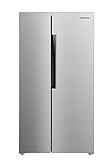
Overview: The Hamilton Beach HBF1558 is a 15.6 cubic foot counter-depth side-by-side refrigerator offering full-size capacity in a space-conscious design. This model features a contemporary stainless-steel finish with convenient side-by-side doors, making it easy to organize and access both fresh and frozen foods without bending down, perfect for busy families.
What Makes It Stand Out: The digital display control panel mounted inside the refrigerator door allows easy temperature adjustments. Oversized gallon door bins maximize storage efficiency, while the side-by-side configuration provides eye-level access to both compartments. Adjustable feet and interchangeable shelves enable personalized organization. The counter-depth design ensures seamless kitchen integration without protruding into walkways.
Value for Money: Priced at $1,096.90, this Hamilton Beach model offers excellent value for those wanting side-by-side convenience without breaking the bank. It’s more affordable than many competing side-by-side models while delivering comparable capacity and features. The digital controls and generous door storage add premium touches typically found in higher-priced units, making it a budget-friendly yet feature-rich option for cost-conscious families.
Strengths and Weaknesses: Strengths include accessible side-by-side design, generous capacity, digital controls, large door bins, and counter-depth fit. The adjustable features enhance customization. Weaknesses include potential energy efficiency concerns compared to top or bottom freezer models, side-by-side freezers can be narrow for large items, and Hamilton Beach may not have the same brand reputation for major appliances as specialized manufacturers.
Bottom Line: The Hamilton Beach HBF1558 is perfect for families wanting convenient side-by-side access and full-size capacity at a mid-range price. It’s a practical choice that balances features, capacity, and affordability for everyday kitchen use, delivering reliable performance without premium cost.
What Makes a Counter-Depth Bottom-Freezer Refrigerator Look Built-In?
The Seamless Integration Factor
True built-in refrigerators become one with your cabinetry through precise engineering that eliminates visual disruption. The magic happens when the refrigerator doors sit nearly flush with adjacent cabinet faces, creating an uninterrupted plane across your kitchen wall. This requires more than shallow depth—it demands meticulous attention to hinge design, handle projection, and the refrigerator’s ability to accept custom panels that match your exact cabinet specifications. Panel-ready models take this further by allowing wood or custom laminate panels to attach directly to the door, making the appliance virtually disappear.
Depth Dimensions That Matter
Standard refrigerators typically measure 30-34 inches deep, protruding 6-8 inches beyond standard 24-inch deep countertops. Counter-depth models generally range from 23 to 30 inches deep, but here’s where nuance matters: the term “counter-depth” isn’t standardized. Some manufacturers measure to the front of the door, others to the front of the cabinet, and this discrepancy can make or break your built-in illusion. For a truly integrated look, aim for models that measure 24-25 inches to the front of the door, not the handle. Remember to account for the door hinge mechanism—some require an additional half-inch clearance that can sabotage your flush appearance.
Professional vs. Standard Counter-Depth
The industry draws a subtle but important distinction between “professional counter-depth” and standard counter-depth. Professional models, often found in luxury lines, typically measure exactly 24 inches to the door and are designed for true panel integration with zero clearance hinges. Standard counter-depth models might measure 27-30 inches and while shallower than traditional fridges, they still create a noticeable step between appliance and cabinetry. Your budget and commitment to the built-in aesthetic will determine which category serves your vision best.
Why Choose a Bottom-Freezer Configuration?
Ergonomic Benefits
The bottom-freezer design fundamentally respects how you actually use your refrigerator. Since the fresh food compartment accounts for roughly 70% of daily access, placing it at eye level eliminates the constant stooping required by top-freezer models. This configuration becomes even more valuable in counter-depth designs where every inch of accessible space matters. The freezer drawer pulls out smoothly, bringing frozen items to you rather than requiring you to reach deep into a cave-like compartment. For households with mobility concerns or back issues, this ergonomic advantage transforms the kitchen experience from painful to pleasurable.
Energy Efficiency Advantages
Physics works in your favor with bottom-freezer designs. Since cold air naturally sinks, the freezer compartment stays efficiently cold without working the compressor overtime. Every time you open the fresh food section, you’re not dumping the coldest air onto your kitchen floor as you would with a top-freezer model. Modern counter-depth bottom-freezer units capitalize on this efficiency with enhanced insulation and precise temperature management, often achieving Energy Star certification while delivering superior performance. The configuration also reduces frost buildup in the freezer, meaning less frequent defrosting and more consistent temperatures.
Organization Potential
The drawer-style freezer revolutionizes frozen food storage through vertical organization. Instead of stacking items precariously on shelves where they disappear into the abyss, bottom freezers use baskets and dividers that create natural categories. Many models feature tiered drawer systems that let you separate frequently used items from long-term storage. The fresh food section above typically offers more flexible shelving configurations since it doesn’t need to accommodate a freezer compartment, allowing for taller item storage and customizable layouts that adapt to your shopping habits.
Key Features That Elevate the Built-In Aesthetic
Panel-Ready Options
Panel-ready models represent the gold standard for built-in appearance. These refrigerators arrive with unfinished fronts designed to accept custom panels that match your cabinetry exactly. The best implementations use proprietary attachment systems that allow panels to sit perfectly flush without visible fasteners. Look for models with “fully integrated” designation, which means they accept panels that extend from counter to cabinet top, eliminating any stainless steel reveal. The door hinges should be designed to support the additional weight of wood panels without sagging over time, a common failure point in cheaper panel-ready options.
Hidden Hinges and Integrated Handles
Standard refrigerator hinges create a visible gap and prevent true flush installation. Premium counter-depth models feature zero-clearance or “pocket” hinges that allow the door to swing open without encroaching on adjacent cabinetry. These hinges tuck completely out of view when the door is closed, maintaining clean sightlines. Integrated handles—or better yet, handle-less designs with recessed grips—keep the front plane perfectly flat. Some luxury models use push-to-open mechanisms that eliminate handles entirely, creating a minimalist aesthetic that screams custom installation.
Flush Installation Requirements
Achieving a flush look demands more than the right refrigerator—it requires precise installation protocols. The unit must be perfectly level both side-to-side and front-to-back, often within 1/8 inch tolerance. Most built-in looking installations use anti-tip brackets and rear leveling legs to fine-tune positioning. The surrounding cabinetry needs to be square and true, which might require custom filler panels or scribe molding to disguise minor gaps. Professional installers often create a dedicated alcove with finished sides, so the refrigerator appears recessed rather than simply placed against a wall.
Measuring Your Space: The Critical First Step
Width, Height, and Depth Considerations
Never trust manufacturer specifications alone. Measure your space at three points for each dimension—top, middle, and bottom for width; left, center, and right for height—to account for walls and floors that aren’t perfectly plumb. Counter-depth bottom-freezer models typically come in 30, 33, and 36-inch widths, but the installation clearance requirements vary dramatically. Allow 1/8 to 1/4 inch on each side for proper ventilation and door operation. Height matters enormously: many modern kitchens feature 84-inch tall cabinets, and some premium counter-depth models offer optional height kits to reach this standard for fully integrated installations.
Clearance Requirements for Proper Ventilation
The built-in look dies quickly if your refrigerator can’t breathe. Counter-depth models require specific air circulation patterns, typically through front-facing vents at the toe kick or above the cabinet. Without adequate clearance—usually 1/2 inch at the top and sides—compressors work harder, shortening lifespan and creating noise. Side-clearance becomes critical for door swing: even zero-clearance hinges need room for the door seal to function properly. Check whether your chosen location allows for the recommended 2-inch rear clearance for electrical and water connections without pushing the unit forward.
Door Swing and Kitchen Workflow
Map your door swing before committing to any model. Bottom-freezer refrigerators often have wider door arcs than expected, especially French door variants. Consider the “work triangle”—your path between sink, stove, and fridge. A door that swings open 130 degrees might block adjacent cabinets or traffic paths. Some models offer reversible door configurations, but this isn’t universal and may compromise the built-in look if hinge covers aren’t symmetrical. Test the full swing in your space, accounting for handle projection and the depth of adjacent countertops.
Understanding Counter-Depth vs. True Built-In
The Price Gap Reality
True built-in refrigerators command premium prices—often $8,000 to $15,000—because they use commercial-grade compressors, heavier insulation, and completely different installation methods. Counter-depth models delivering similar aesthetics typically range from $2,000 to $5,000, representing massive savings. The performance gap has narrowed considerably: modern counter-depth units offer similar temperature stability and features. The primary difference lies in longevity—built-ins often last 20+ years versus 12-15 for counter-depth—and the ability to service them without removing from the cabinet. For most homeowners, the aesthetic and functional payoff of counter-depth models far outweighs the premium for true built-in.
Installation Flexibility
Counter-depth bottom-freezer refrigerators install like standard appliances: they roll into place and plug in. True built-ins require dedicated electrical circuits, custom cabinetry, and often professional installation costing thousands. This flexibility means you can replace a counter-depth model years later without renovating your entire kitchen—a huge advantage if trends or your tastes change. The freestanding nature of counter-depth units also allows for easier service access; technicians can pull the unit out rather than working within a tight cabinet cavity. However, this same flexibility means you must be more diligent about securing the unit properly to prevent tipping or shifting that reveals gaps.
Performance Differences
True built-ins use separate evaporators for refrigerator and freezer compartments, maintaining optimal humidity and preventing odor transfer. Many premium counter-depth models now offer dual evaporators as well, but it’s not universal. Compressor location differs: built-ins often place compressors on top for easier service and quieter operation, while most counter-depth models use bottom-mounted compressors that can generate more noise and heat near the freezer. The insulation thickness in true built-ins maintains temperature better during power outages and in hot kitchens, but modern counter-depth units close this gap with vacuum-insulated panels and improved door seals.
Design Elements That Sell the Illusion
Stainless Steel Finishes That Match Cabinetry
Not all stainless steel is created equal. Premium counter-depth models use “real stainless” or “commercial stainless” that matches appliance suites and resists fingerprints through PVD coating or similar treatments. The grain direction should run vertically on doors and horizontally on handles for consistency. Some manufacturers offer “black stainless” or “slate” finishes that blend better with dark cabinetry while maintaining that professional look. The door material thickness matters—thinner doors look cheap and flex when opened, while substantial doors feel solid and maintain alignment. Look for wrapped edges that continue the finish around door perimeters rather than painted edges that chip over time.
Minimal Gaps and Precise Alignment
The built-in aesthetic lives or dies by gap consistency. Professional installations achieve 1/8-inch reveals between refrigerator and cabinets, matching standard cabinet door gaps. This requires either custom filler strips or a refrigerator designed with adjustable width trim kits. Some luxury counter-depth models include magnetic trim pieces that attach to the sides, creating a finished appearance while allowing for imperfect wall conditions. The alignment between refrigerator doors and adjacent drawer fronts should create a continuous horizontal line—any deviation immediately signals “appliance” rather than “custom cabinetry.”
Custom Panel Integration
If you’re going the panel-ready route, insist on seeing a sample installation before committing. The best systems use a four-point attachment that distributes panel weight evenly, preventing warping. Panel thickness typically ranges from 1/4 to 3/4 inch, and your cabinetmaker must know the exact specifications before building. Some systems require the panel to extend beyond the refrigerator door edge to create a reveal, while others sit perfectly flush. The panel material should be the same as your cabinetry—using different wood species or finishes creates subtle but noticeable mismatches as they age differently under kitchen lighting.
Interior Configuration Must-Haves
Flexible Storage Systems
A built-in look demands interior sophistication to match the exterior promise. Look for split shelving that allows half-width adjustments, creating tall spaces for wine bottles or party platters without sacrificing an entire shelf. Spill-proof glass shelves with raised edges contain messes and look more refined than wire racks. Door bins should be adjustable and capable of holding gallon containers securely—the flimsy bins on cheaper models sag and break, undermining the premium feel. Some premium counter-depth models offer specialty compartments with independent temperature controls for meat, deli items, or produce, mimicking the customization of true built-ins.
LED Lighting for Premium Feel
Interior lighting dramatically impacts perceived quality. Single overhead bulbs cast harsh shadows and scream “basic appliance.” Instead, seek models with LED strip lighting along the sides or back panels that creates even, shadow-free illumination. Some units feature theater-style gradual brightening when doors open—a subtle touch that feels luxurious. Freezer lighting matters too: drawer-style freezers benefit from LED strips along the top frame that illuminate the entire compartment without being blocked by contents. The color temperature should be cool white (around 4000K) rather than warm yellow, as it makes food appear fresher and matches modern kitchen lighting schemes.
Humidity-Controlled Crispers
Cheap crisper drawers extend the life of your produce; sophisticated humidity-controlled crispers elevate the entire refrigeration system. Look for sliders or dials that actually create measurable humidity differences—some models use gaskets and dedicated vents that truly seal the compartment. Dual crispers with independent controls allow you to store leafy greens at high humidity while keeping fruits at lower humidity to prevent premature ripening. The drawer slides should feel smooth and substantial, with full extension that lets you reach items at the back without contorting. Some premium models even include ethylene gas absorbers that extend produce life significantly.
Technology Features Worth Considering
Temperature Management Systems
Basic refrigerators react to temperature changes; advanced systems prevent them. Seek models with multiple temperature sensors throughout the compartment that communicate with a central processor to adjust cooling output proactively. Dual evaporators separate refrigerator and freezer air completely, preventing freezer burn in frozen foods and maintaining optimal humidity for fresh items. Some systems use variable-speed compressors that run continuously at low speed rather than cycling on and off, maintaining tighter temperature control and reducing noise. Quick-chill and quick-freeze functions that rapidly bring new groceries to safe temperatures demonstrate sophisticated engineering worthy of the built-in aesthetic.
Smart Connectivity Pros and Cons
Wi-Fi connectivity in refrigerators divides opinion among design purists. On one hand, door-open alerts prevent energy waste and food spoilage—valuable in a high-end kitchen. Remote temperature monitoring and control through smartphone apps provide peace of mind during travel. However, smart features can compromise the timeless built-in look if they require visible antennas or screens on the door exterior. Consider whether the convenience outweighs the potential for dated technology; a refrigerator should last 15 years, but smart platforms evolve every 3-5 years. If you opt for connectivity, ensure the app interface is refined and the manufacturer commits to long-term software support.
Ice Maker Placement Challenges
Bottom-freezer configurations complicate ice maker placement. Models with in-door ice dispensers sacrifice door storage space and create a visible cutout that breaks the built-in illusion. Internal ice makers in the fresh food compartment maintain clean lines but consume valuable shelf space. The most elegant solution places the ice maker in the freezer drawer, but this can limit ice capacity and make access less convenient. Consider your household’s ice consumption habits: if you entertain frequently, a larger capacity in-freezer maker might serve you better than a sleek but small in-door unit. Water line routing also matters—the connection point should be hidden but accessible for maintenance.
Installation Best Practices
Professional vs. DIY Installation
While counter-depth refrigerators install more easily than true built-ins, achieving the built-in look often justifies professional installation. Experienced installers understand how to scribe cabinets, adjust for uneven floors, and hide gaps with precision. They’ll ensure the anti-tip bracket is properly secured to wall studs—not just drywall—and that water lines have adequate shut-off valves. DIY installation saves $200-400 but risks misalignment that becomes permanently visible. If you choose DIY, invest in a high-quality level, shims, and a cabinet installation kit that includes trim pieces designed for seamless integration.
Flooring Considerations
Your refrigerator sits on your floor for a decade or more—plan accordingly. If you’re installing new flooring, run it completely under the refrigerator space rather than butting against it; this allows future replacement without flooring repairs. For tile floors, ensure the surface is perfectly level where the refrigerator will sit; even slight slopes cause doors to swing open or closed unexpectedly. Consider placing a thin appliance mat underneath to protect flooring from scratches and make sliding the unit easier during installation. Never install directly on carpet—moisture and compression create hygiene issues and instability.
Electrical and Water Line Requirements
Counter-depth bottom-freezer refrigerators require a dedicated 115-volt, 60-Hz, AC-only, 15- or 20-amp fused electrical supply. The outlet should be located within the alcove, not behind the unit where it’s inaccessible. For ice makers, a water line with shut-off valve must be within 6 feet. Use flexible braided stainless steel supply lines rather than rigid copper—they’re easier to install and less prone to kinking when sliding the unit into place. Ensure the shut-off valve is easily reachable without pulling the refrigerator out; installing it in an adjacent cabinet base often works perfectly.
Maintenance and Longevity
Cleaning Tips for Seamless Surfaces
Maintaining the built-in look requires cleaning strategies that protect finishes. Use microfiber cloths and mild dish soap for stainless steel, wiping with the grain to avoid streaks. Avoid abrasive cleaners that scratch protective coatings. For panel-ready models, follow the same cleaning regimen as your cabinetry—wood panels may require periodic conditioning to prevent drying and cracking. The tight gaps that create the built-in aesthetic trap dust and crumbs; use a thin vacuum attachment monthly. Door seals need quarterly cleaning with warm water to maintain flexibility and prevent air leaks that compromise efficiency.
Filter Replacement Schedules
Water and air filters directly impact performance and food quality. Most manufacturers recommend water filter replacement every six months, but this varies with usage and water hardness. Set a calendar reminder—neglected filters clog, reducing water flow to ice makers and dispensers while potentially harboring bacteria. Air filters that reduce odors typically last a year. Some smart models monitor filter life and send phone notifications, a genuinely useful feature. Keep replacement filters on hand; they’re often proprietary and not available at local hardware stores. Factor $40-80 annually into your operating budget for filters.
Common Issues to Watch For
Door alignment shifts over time as hinges settle and floors compress. Check alignment quarterly and adjust using the hinge set screws—most owners never realize these exist. Frost buildup in the freezer drawer indicates a seal problem; clean the gasket and check for obstructions. Unusual noise often stems from the unit being slightly unlevel, causing compressor vibration. If the exterior feels warm, that’s normal—condenser coils often run along the sides—but excessive heat suggests ventilation issues. Water pooling under the vegetable drawers usually means a clogged defrost drain, a simple fix with a pipe cleaner but a common oversight that leads to service calls.
Budget Planning: What to Expect
Price Ranges and What Drives Cost
Entry-level counter-depth bottom-freezer refrigerators start around $1,800, offering the shallow depth but few built-in aesthetic features. Mid-range models from $2,500-4,000 add panel-ready options, better lighting, and dual evaporators. Premium units from $4,000-6,000 deliver true built-in appearance with zero-clearance hinges, professional handles, and advanced temperature management. Beyond $6,000, you’re approaching true built-in territory. Price drivers include compressor type, material quality, smart features, and brand cachet. The most expensive single feature is panel-ready capability, which typically adds $500-1,000 to a comparable stainless model.
Hidden Installation Expenses
The refrigerator purchase price tells only part of the story. Professional installation: $200-400. Custom panels from your cabinetmaker: $300-800. Custom trim kits: $100-300. Electrical outlet installation if not present: $150-300. Water line extension: $100-200. Anti-tip brackets and hardware: $20-50. If your cabinets aren’t perfectly square, custom scribe molding or filler strips add $100-300. Budget an additional 20-30% of the appliance cost for installation and finishing to achieve the built-in look. Cutting corners here defeats the purpose of buying a premium appliance.
When to Splurge vs. Save
Splurge on hinge quality and door material—these define the built-in appearance and can’t be upgraded later. Invest in dual evaporators if you store expensive produce or freeze items long-term. Save on smart features unless you’re certain you’ll use them; they add cost and potential failure points. Skip internal water dispensers if you have a sink nearby—they compromise door storage and clean lines. Consider mid-tier brands that use the same compressors as premium lines but spend less on marketing. The sweet spot for value typically lies in the $2,800-3,500 range, where you get panel-ready options and quality construction without paying for celebrity chef endorsements.
Frequently Asked Questions
What’s the real difference between counter-depth and standard depth refrigerators?
Counter-depth models measure 23-30 inches deep versus 30-34 inches for standard units, designed to align with 24-inch deep countertops. This eliminates the protruding “box” look, creating a streamlined profile that mimics built-in appliances. However, you’ll sacrifice 3-6 cubic feet of interior capacity, which is the trade-off for the aesthetic improvement.
Will a counter-depth bottom-freezer give me enough storage for a family of four?
Most 36-inch counter-depth bottom-freezer models offer 18-22 cubic feet of total capacity, which suffices for average families who shop weekly. The key is intelligent organization—use the freezer drawers efficiently and avoid over-purchasing bulky items. If you buy in bulk or have teenagers, consider supplementing with a garage freezer or choosing the widest model your kitchen accommodates.
Can I install a counter-depth refrigerator myself and still achieve the built-in look?
DIY installation is possible but challenging for the built-in aesthetic. Achieving perfect alignment, scribing gaps, and installing custom panels requires cabinet-making skills and specialized tools. If you’re experienced with finish carpentry and have a helper for the heavy lifting, you can save $300-400. Otherwise, professional installation ensures the seamless appearance justifies your appliance investment.
Do panel-ready models cost significantly more than stainless steel versions?
Expect to pay $500-1,000 more for a panel-ready version of the same model. This premium covers the unfinished door fronts, specialized hinge systems for panel weight, and the engineering required for seamless integration. However, this is still far less expensive than true built-in units, making it a cost-effective way to achieve a custom look.
How do I clean the tight gaps between the refrigerator and cabinets?
Use a thin, flexible microfiber duster or vacuum attachment with a crevice tool. Clean these gaps monthly to prevent dust buildup that can affect door seals. For stubborn grime, wrap a microfiber cloth around a ruler or paint stirrer and gently work it into the gap. Avoid using water, which can seep behind the unit and cause mold.
Are bottom freezers more prone to mechanical problems than top freezers?
Modern bottom-freezer designs are equally reliable, with failure rates comparable to top-freezer models. The drawer mechanism uses robust slides rated for decades of use. However, ice makers in bottom freezers can be more challenging to service due to their location, and freezer door seals may wear faster because they contact the floor more frequently. Regular maintenance eliminates most issues.
What’s the realistic lifespan of a counter-depth bottom-freezer refrigerator?
Expect 12-15 years of reliable service with proper maintenance—slightly less than true built-ins (20+ years) but comparable to standard-depth models. The built-in aesthetic components like hinges and panels may require attention sooner. Regular filter changes, door seal cleaning, and maintaining proper ventilation significantly extend lifespan.
Do these refrigerators require special electrical circuits?
Most counter-depth bottom-freezer models run on standard 115-volt household circuits and don’t require dedicated wiring, though it’s recommended. They typically draw 6-8 amps during operation. However, if your kitchen circuit already supports a microwave, dishwasher, and multiple small appliances, adding a refrigerator may trip breakers. Consult an electrician if your home has older wiring.
Can I add custom panels to a standard counter-depth refrigerator later?
Generally no—panel-ready models have specific door construction and hinge systems designed for panel weight and attachment. Attempting to add panels to a standard model will void warranties and likely result in door sagging or alignment issues. If you think you might want panels in the future, buy the panel-ready version upfront; the cost difference is less than replacing the unit later.
Why are counter-depth bottom-freezer models more expensive than top-freezer versions?
The price premium reflects more complex engineering to maintain performance in a shallower cabinet, higher-quality materials for the built-in aesthetic, and the popularity of the configuration. Dual evaporators, premium hinges, and advanced insulation add cost. You’re also paying for design—bottom-freezer models represent a smaller market segment, so economies of scale are lower than mass-market top-freezer designs.