Galley kitchens under eight feet wide present a unique puzzle: how do you squeeze full-scale functionality into a space that feels more like a corridor than a culinary workspace? The refrigerator, typically your kitchen’s largest appliance, becomes the make-or-break element in this spatial equation. While standard-depth models jut out like bulky obstacles, creating a traffic nightmare and shattering any sense of flow, counter-depth refrigerators offer a sleek, integrated solution that respects your kitchen’s narrow footprint. But not all counter-depth models are created equal, and the difference between a seamless fit and a costly mistake often comes down to measurements measured in mere inches—and features you never knew you needed.
This comprehensive guide dives deep into the art and science of selecting the perfect counter-depth refrigerator for your compact galley kitchen. We’ll explore the critical dimensions that go beyond simple width, unpack the ventilation requirements that can derail your installation, and reveal the design features that transform a cramped cooking space into an efficient, stylish corridor of culinary possibility. Whether you’re renovating a city apartment or maximizing a modest home layout, understanding these principles will save you from expensive errors and years of daily frustration.
Top 10 Counter-Depth Refrigerators for Galley Kitchens
Detailed Product Reviews
1. KoolMore 30-Inch and 18.5 cu. ft. Counter Depth French Door Refrigerator with Three Doors and Deep Freezer in Stainless-Steel (KM-RERFDSS-18C)

Overview: The KoolMore 30-Inch French Door Refrigerator delivers premium styling and substantial storage in an 18.5 cubic foot counter-depth package. This three-door configuration features two upper refrigerator doors with a deep freezer drawer below, all wrapped in contemporary stainless steel. The design aligns flush with kitchen cabinetry for a built-in look without the built-in price tag.
What Makes It Stand Out: The double crisper drawers with independent humidity control set this unit apart, allowing optimal preservation for both fruits and vegetables. The double-flow cooling system ensures even temperature distribution throughout both compartments, while digital controls provide precise management. Six door bins and adjustable glass shelving maximize the already generous capacity, making organization intuitive and flexible.
Value for Money: At $1,389, this KoolMore sits in the sweet spot between budget and luxury brands. You’re getting French door sophistication, advanced humidity control, and counter-depth styling for roughly 30% less than comparable Samsung or LG models. The feature set rivals premium options without the brand tax, making it ideal for value-conscious buyers who refuse to compromise on functionality.
Strengths and Weaknesses: Pros include excellent organization options, superior humidity management, modern aesthetic, and precise temperature control. The counter-depth design saves kitchen space while maintaining capacity. Cons include the lesser-known brand reputation, potentially longer-term reliability questions, and freezer drawers that may be less convenient than a single pull-out compartment. Some users might prefer a more established manufacturer for warranty support.
Bottom Line: This KoolMore refrigerator excels for homeowners seeking French door elegance and advanced preservation features at a mid-range price. It’s a smart compromise between budget limitations and premium performance, offering impressive storage solutions for most families.
2. Hamilton Beach HBF1558 15.6 cu ft Counter Depth Full Size Refrigerator, Side Doors, Stainless
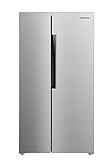
Overview: The Hamilton Beach HBF1558 offers side-by-side refrigeration in a 15.6 cubic foot counter-depth configuration. This design splits fresh and frozen foods vertically, providing easy access to both compartments without bending. The stainless steel finish and streamlined handles create a clean, modern appearance suitable for any kitchen aesthetic.
What Makes It Stand Out: Oversized gallon door bins maximize storage efficiency, accommodating large beverage containers and freeing up shelf space. The digital display control panel, mounted on the refrigerator door interior, allows effortless temperature adjustments without opening the compartment. Adjustable shelving and feet enable complete customization for your specific storage needs.
Value for Money: Priced at $1,096.90, this represents exceptional value for a side-by-side configuration. Most competitors charge $300-500 more for similar capacity and features. Hamilton Beach delivers reliable performance and contemporary styling at a budget-friendly price point, making it accessible for first-time homeowners or rental property investments.
Strengths and Weaknesses: Strengths include affordable pricing, narrow doors ideal for tight kitchen layouts, ample door storage, and user-friendly digital controls. The side-by-side design provides good organization visibility. Weaknesses include the smaller 15.6 cubic foot capacity, which may challenge larger families. Side-by-side models inherently have narrower shelves that won’t accommodate wide platters, and the freezer compartment often feels cramped compared to drawer designs.
Bottom Line: The Hamilton Beach HBF1558 is perfect for budget-minded shoppers wanting side-by-side convenience without premium costs. It serves smaller households excellently and fits beautifully in compact kitchens where door swing space is limited.
3. Sharp SJB1255GS Bottom-Freezer Counter-Depth Refrigerator, 24 Inch, 11.5 Cubic Foot, Garage Ready

Overview: The Sharp SJB1255GS bottom-freezer refrigerator packs impressive features into a slim 24-inch width and 11.5 cubic foot capacity. Designed for space-conscious kitchens, this counter-depth unit offers garage-ready capability, making it versatile for multiple installation locations. The bottom-freezer configuration keeps fresh foods at eye level for convenient daily access.
What Makes It Stand Out: The innovative Vacation Mode allows you to deactivate the refrigerator section while keeping the freezer operational—perfect for extended travel. A removable wine rack adds sophisticated storage flexibility, while the Fresh Converter Drawer transitions between chiller and crisper modes for customized preservation. Multi-Air Flow technology ensures consistent temperatures throughout both compartments.
Value for Money: At $1,098.97, Sharp positions this as a specialty appliance worth the investment. The garage-ready rating and Vacation Mode justify the price premium over basic compact refrigerators. For urban dwellers, secondary kitchen spaces, or garage installations, these unique features deliver tangible benefits that standard models lack.
Strengths and Weaknesses: Advantages include space-saving dimensions, versatile installation options, energy-saving Vacation Mode, dedicated wine storage, and consistent cooling performance. The bottom-freezer design reduces bending for frequently accessed items. Disadvantages include limited 11.5 cubic foot capacity unsuitable for families, potential freezer accessibility issues for those with mobility concerns, and a higher cost per cubic foot than larger models.
Bottom Line: Ideal for singles, couples, or as a secondary refrigerator, the Sharp excels in compact spaces and alternative installations. Its specialized features make it worth considering if you need garage-ready capability or frequently travel.
4. LG 24 cu. ft. Counter Depth MAX Zero Clearance 3-Door French Door Refrigerator with Craft Ice in PrintProof Stainless Steel LF24Z6530S

Overview: The LG 24 cu. ft. Counter Depth MAX French Door Refrigerator represents the pinnacle of space optimization and premium features. This three-door unit boasts an industry-leading capacity for counter-depth models while maintaining a sleek, built-in appearance. The PrintProof stainless steel resists fingerprints and smudges, preserving its pristine look with minimal maintenance.
What Makes It Stand Out: The revolutionary Zero Clearance design allows installation against walls or cabinets without sacrificing door swing, maximizing kitchen layout flexibility. The Craft Ice maker produces slow-melting spherical ice—a luxury feature typically reserved for ultra-high-end models. This combination of practical installation advantages and gourmet amenities sets it apart from conventional offerings.
Value for Money: At $1,951.90, this LG commands a premium price but delivers corresponding value. You’re investing in maximum storage capacity (24 cu. ft.), innovative installation freedom, and unique Craft Ice capability from a brand renowned for reliability. While $500+ more than competitors, the space efficiency and specialized features justify the cost for discerning buyers.
Strengths and Weaknesses: Strengths include exceptional capacity, flexible Zero Clearance installation, fingerprint-resistant finish, premium brand reputation, and innovative Craft Ice. The French door design provides excellent organization. Weaknesses include the highest price in this comparison, potentially unnecessary Craft Ice feature for practical buyers, and premium cost for technology that may not be essential for every household.
Bottom Line: For those prioritizing maximum storage in counter-depth form and willing to invest in premium features, this LG is unmatched. It’s ideal for large families and design-conscious homeowners wanting installation flexibility.
5. Hamilton Beach HBF1662 French Door Full Size Counter Depth Refrigerator with Freezer Drawer, 16.6 cu ft, Stainless

Overview: The Hamilton Beach HBF1662 French Door Refrigerator combines elegant design with practical functionality in a 16.6 cubic foot counter-depth package. This model features two refrigerator doors above a spacious freezer drawer, creating an upscale aesthetic that complements modern kitchens. The stainless steel finish and integrated handles deliver a seamless, professional appearance.
What Makes It Stand Out: Recessed handles provide a sleek, uninterrupted facade that enhances the built-in look while preventing accidental snags. Bright LED interior lighting illuminates every corner, eliminating dark spots and making food location effortless. Gallon-sized door bins offer generous storage for large containers, maximizing the usable space within the compact footprint.
Value for Money: Priced at $1,245.47, this Hamilton Beach hits the middle market sweet spot. It undercuts premium brands by $300-400 while delivering comparable capacity and French door styling. The LED lighting and recessed handles add touches of luxury typically found in higher-priced models, representing thoughtful value engineering.
Strengths and Weaknesses: Pros include attractive recessed handle design, excellent interior visibility, spacious 4.9 cubic foot freezer, decent 16.6 cu. ft. capacity, and competitive pricing. The French door configuration provides good organization. Cons include Hamilton Beach’s limited refrigerator market presence compared to appliance specialists, fewer advanced cooling technologies than premium competitors, and potential long-term durability uncertainties.
Bottom Line: This refrigerator serves as an excellent mid-range choice for buyers wanting French door style and quality features without stepping up to premium pricing. It’s well-suited for small to medium households seeking aesthetic appeal and functional design.
6. KoolMore Counter Depth French Door Refrigerator with Ice Maker, 4 Door Stainless-Steel Fridge - 22.5 Cu.Ft
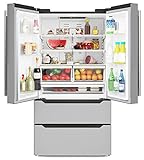
Overview: The KoolMore Counter Depth French Door Refrigerator delivers premium features at a competitive mid-range price point. This 22.5 cubic foot stainless-steel appliance combines modern aesthetics with practical functionality through its four-door configuration and integrated ice maker. Designed to align flush with kitchen countertops, it offers homeowners a built-in look without custom installation costs while providing ample storage for busy households.
What Makes It Stand Out: This model distinguishes itself with humidity-controlled double crispers—a feature typically reserved for units costing $3,000+. The four-door design provides superior organization compared to standard two-door layouts, while the precision temperature control system ensures even cooling throughout. Counter-depth styling creates that coveted integrated appearance, and the factory-installed ice maker eliminates aftermarket installation hassles.
Value for Money: At $2,370, it undercuts premium brands by $300-500 while delivering comparable features. The inclusion of humidity-controlled crispers and a built-in ice maker at this price represents exceptional value. You’re essentially receiving 90% of the luxury refrigerator experience for approximately 75% of the cost, making it ideal for budget-conscious kitchen renovations.
Strengths and Weaknesses: Strengths include seamless counter-depth integration, versatile storage with six door bins and adjustable glass shelving, and reliable dual-flow cooling. The modern stainless finish resists fingerprints adequately. Weaknesses involve the lesser-known brand reputation, potentially limited service network, and absence of smart connectivity. Ice production rates may trail premium competitors.
Bottom Line: Perfect for style-conscious buyers prioritizing function over brand prestige. The KoolMore excels in core refrigeration tasks with sophisticated flair. While not suited for tech enthusiasts, it delivers outstanding value for kitchen renovations requiring built-in aesthetics on realistic budgets.
7. Velieta 24 Inch Upgraded Three-Drawer Beverage Fridge, Weather Proof Outdoor Stainless Steel Beverage Refrigerator, Under Counter Built-in Beverage Cooler for Home & Commercial Use
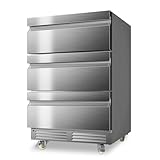
Overview: The Velieta 24-Inch Three-Drawer Beverage Fridge redefines drink storage versatility. Engineered for both indoor luxury and outdoor durability, this stainless-steel cooler transitions seamlessly from kitchen to patio. With three drawers and legitimate weatherproof construction, it serves entertainers who demand flexible, mobile refrigeration solutions without compromising performance in challenging environments.
What Makes It Stand Out: Genuine weatherproofing distinguishes this unit—most beverage fridges fail in outdoor humidity and temperature fluctuations. The three-drawer configuration offers superior organization versus traditional glass-door models, while integrated wheels provide true mobility. Smart LED temperature controls maintain precise cooling between 37-64°F, accommodating craft beer to fine wine with professional consistency.
Value for Money: At $1,000, it bridges basic indoor units ($600-800) and premium outdoor models ($1,500+). The 30% premium delivers legitimate weather resistance and mobility that cheaper alternatives lack. For homeowners requiring flexible outdoor entertaining, this eliminates purchasing separate indoor/outdoor units, creating strong long-term value.
Strengths and Weaknesses: Strengths include IP-rated weatherproofing, smooth drawer operation, excellent temperature stability, and locking mobility wheels. The stainless steel resists corrosion effectively. Weaknesses involve limited capacity for large gatherings, drawer height restrictions for champagne bottles, and slightly elevated noise levels versus stationary units. Lower drawer access requires bending.
Bottom Line: Ideal for outdoor kitchens, pool areas, or mobile catering. While not a primary refrigerator replacement, it excels as a specialized beverage station. The weatherproofing justifies the price premium for climate-challenged locations. Indoor-only buyers might find better value in traditional glass-door models.
8. GE GYE22GYNFS 36" French Door Counter Depth Refrigerator with 22.1 cu. ft. Total Capacity Space Saving Ice Maker Showcase LED Lighting in Stainless Steel
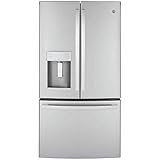
Overview: The GE GYE22GYNFS brings trusted American engineering to the counter-depth segment. This 22.1 cubic foot French door model balances sophisticated design with practical innovation, featuring space-saving ice maker technology and showcase LED lighting. GE’s legendary reputation for reliability makes this a safe, dependable choice for discerning homeowners prioritizing long-term performance.
What Makes It Stand Out: GE’s space-saving ice maker design maximizes freezer capacity while maintaining robust cube production. The showcase LED lighting system brilliantly illuminates contents using minimal energy. The fingerprint-resistant stainless finish maintains pristine appearance with less cleaning. Most importantly, GE’s nationwide service network provides peace of mind that boutique brands cannot match.
Value for Money: At $1,999, this undercuts the KoolMore by $370 while offering superior brand recognition and service support. You’re receiving premium features—counter-depth design, ice maker, LED lighting—at a mass-market price. GE’s 10+ year parts availability and certified technician network significantly strengthen the value proposition for long-term ownership.
Strengths and Weaknesses: Strengths include rock-solid reliability ratings, excellent temperature consistency, quiet operation, and superior customer support. The internal water dispenser saves door space while providing filtered water. Weaknesses involve slightly less capacity than competitors (22.1 vs 22.5+ cu ft) and basic shelving without humidity-controlled crispers. The freezer layout feels less premium than four-door alternatives.
Bottom Line: Perfect for buyers prioritizing brand trust and long-term support over maximum capacity. This GE model excels as a dependable, stylish workhorse that integrates seamlessly into modern kitchens. The service network alone justifies choosing this over lesser-known competitors, making it a smart investment for risk-averse consumers.
9. ZLINE Autograph 36 in. Black Steel Counter-Depth Refrigerator with Gold Handles (RFMZ-W-36-BS-G)

Overview: The ZLINE Autograph Edition transforms refrigeration into a luxury statement piece. This 21.6 cubic foot counter-depth refrigerator features dramatic black steel construction paired with four polished gold handles, creating an unmistakable kitchen centerpiece. Beyond aesthetics, it offers sophisticated temperature management and a versatile flex drawer for discerning homeowners.
What Makes It Stand Out: The black steel finish with gold hardware delivers a designer aesthetic unmatched by standard stainless appliances. The full-width flex drawer with four temperature zones (30-41°F) provides specialized storage for wines, charcuterie, or delicate produce. Counter-depth integration and professional-grade build quality position this as a true luxury appliance for high-end renovations.
Value for Money: At $4,590, this commands a 100%+ premium over comparable capacity refrigerators. You’re investing primarily in design exclusivity and premium materials rather than raw storage or advanced technology. For luxury kitchen renovations where aesthetic cohesion justifies expense, the value proposition works. Practical buyers will find better capacity and features at half the price.
Strengths and Weaknesses: Strengths include breathtaking design, robust construction, whisper-quiet operation, and versatile flex drawer functionality. The temperature control system maintains precise conditions, and the black steel resists smudging better than traditional stainless. Weaknesses involve premium pricing that doesn’t correlate with capacity, limited service network compared to major brands, and an aesthetic that may feel dated if design trends shift.
Bottom Line: Exclusively for luxury renovations where design trumps budget considerations. This ZLINE excels as a showpiece appliance that happens to refrigerate beautifully. For buyers seeking status and style, it’s worth every penny. Value-conscious shoppers should look elsewhere, but connoisseurs of kitchen design will find it irresistible.
10. Techomey 13.9 Cu.Ft.Top Freezer Refrigerator, Frost Free Refrigerator with Freezer, 28" Compact Garage Fridge, Standard Depth, Gallon Door Bins, LED Light, Stainless Steel

Overview: The Techomey 13.9 Cu.Ft. Top Freezer Refrigerator delivers reliable cooling in a compact, budget-friendly package. Designed for garages, apartments, or secondary storage, this frost-free unit prioritizes efficiency and practicality. With garage-friendly construction and whisper-quiet 40dB operation, it solves space constraints without sacrificing performance or durability.
What Makes It Stand Out: True garage-ready operation with enhanced components handles temperature fluctuations from 38-110°F, unlike standard refrigerators. The frost-free system eliminates manual defrosting, while the 40dB noise level rivals library-quiet appliances. Automatic door closing and anti-tilt gallon bins demonstrate thoughtful engineering rarely seen at this price point, maximizing convenience.
Value for Money: At $900, this undercuts comparable garage-ready models by $200-400. Energy Star efficiency saves 10-25% on utility costs versus older units, while the 1-year comprehensive warranty provides peace of mind. You’re getting premium durability features in a budget package, making it ideal for cost-conscious buyers needing reliable secondary refrigeration.
Strengths and Weaknesses: Strengths include exceptional value, true garage-rated performance, reversible doors for flexible placement, and LED lighting. The frost-free operation and quiet compressor make it apartment-friendly. Weaknesses involve limited 13.9 cu ft capacity unsuitable for large families, absence of ice maker or water dispenser, and basic wire shelving instead of glass. The top-freezer design requires bending for fresh food access.
Bottom Line: Perfect as a garage fridge, apartment primary unit, or basement overflow storage. The Techomey excels where durability and efficiency matter more than capacity or luxury features. For secondary refrigeration needs, it’s nearly impossible to beat this value proposition, making it a smart choice for practical homeowners.
Understanding Counter-Depth Refrigerators in Compact Spaces
What “Counter-Depth” Really Means for Your Galley Kitchen
The term “counter-depth” sounds precise, but it’s one of the most misunderstood specifications in appliance shopping. Contrary to popular belief, counter-depth doesn’t mean your refrigerator will align perfectly with your countertops. Most kitchen counters extend 24-25 inches from the wall, but counter-depth refrigerators typically measure 24-30 inches without doors and handles. When you factor in door thickness (often 1-3 inches) and handle projection (another 1-2 inches), you’re looking at a total depth of 28-35 inches. In a galley kitchen under eight feet wide, every inch of projection reduces your walkway clearance, turning what should be a comfortable 36-42 inch corridor into a shoulder-brushing obstacle course.
The key is understanding that “counter-depth” describes the cabinet depth, not the overall depth. For galley kitchens, you must calculate the total front-to-back measurement including doors, handles, and the crucial air gap behind the unit. This is why a true integrated refrigerator—which sits completely flush within cabinetry using a special installation—might be worth considering if your space is exceptionally narrow. However, integrated models come with their own set of constraints and price premiums that demand careful evaluation.
Why Standard Depth Models Create Galley Kitchen Chaos
Standard-depth refrigerators, typically 30-34 inches deep for the cabinet alone, become spatial bullies in narrow kitchens. When installed in a galley under eight feet wide, they can reduce your functional walkway to less than 30 inches, violating basic building codes and creating a daily safety hazard. Beyond the obvious traffic flow issues, these deeper models prevent adjacent cabinet doors and drawers from opening fully, effectively rendering half your storage inaccessible. The psychological impact is equally significant: a protruding fridge creates a visual barrier that makes the entire kitchen feel claustrophobic and chopped up.
In galley configurations, the refrigerator door swing arc becomes a critical calculation. A standard-depth unit’s deeper door requires more forward clearance to open 90 degrees, meaning you might need to stand in the opposing walkway just to access the crisper drawers. This creates a frustrating dance of stepping back and forth that erodes the efficiency galley kitchens are supposed to provide. Counter-depth models, with their shallower cabinets, allow doors to swing open within a tighter radius, keeping you positioned within the kitchen’s work zone rather than blocking traffic.
The 8-Foot Galley Kitchen Challenge: Spatial Mathematics
Minimum Clearance Requirements That Make or Break Your Layout
Before falling in love with any refrigerator specification sheet, you must master the mathematics of minimum clearances. Building codes and manufacturer requirements converge to create non-negotiable boundaries. For a galley kitchen under 96 inches wide, you need to account for: base cabinet depth (24 inches), counter overhang (1.5 inches), refrigerator cabinet depth (24-30 inches), door and handle projection (2-4 inches), and rear ventilation gap (0.5-1 inch). This leaves your walkway clearance—the space between opposing countertops or appliances.
The magic number for comfortable passage is 36 inches minimum, with 42 inches being ideal for two cooks. If your galley measures exactly 8 feet (96 inches), and you have standard 24-inch deep base cabinets on both sides, you’ve already consumed 48 inches, leaving just 48 inches for the refrigerator and walkway. This math reveals why a 30-inch deep standard refrigerator leaves you with only 18 inches of passage—completely unworkable. A 24-inch counter-depth model, by contrast, can preserve a 36-inch walkway, making the difference between a kitchen that functions and one that fights you daily.
The 36-Inch Rule: Traffic Flow vs. Appliance Access
The 36-inch rule serves two masters: human ergonomics and appliance functionality. For traffic flow, 36 inches allows most people to pass through comfortably without turning sideways. For appliance access, it provides the necessary space to open refrigerator doors to at least 120 degrees—the angle required to pull out crisper bins and slide-out shelves without obstruction. In galley kitchens under eight feet wide, achieving both simultaneously becomes a delicate balancing act.
Consider your primary direction of travel. If your galley connects high-traffic areas (like a garage entry to the main living space), you might need to prioritize walkway width and sacrifice some door swing angle. This is where French door or side-by-side configurations shine, as their narrower doors require less clearance to access interior compartments. Conversely, if your galley is a dead-end kitchen with minimal through-traffic, you can afford to allocate more space to the refrigerator zone, allowing for a full door swing and maximum storage access.
Key Dimensions Beyond Width: Depth and Height Considerations
How to Measure Your Galley Kitchen Like a Professional Designer
Professional kitchen designers use a systematic measurement protocol that goes beyond simple wall-to-wall dimensions. Start by measuring your galley’s width at three heights: floor level, counter height (36 inches), and ceiling height. Older homes often have walls that bow or taper, and that half-inch variance at counter level is where your refrigerator must fit. Next, measure the depth from the back wall to the front edge of your base cabinets—not the countertops—to determine your true available depth. Don’t forget to measure window and door trim depth, as these can impede refrigerator placement.
Create a detailed floor plan to scale on graph paper or using a digital tool. Mark all obstacles: electrical outlets, water lines, gas lines, heating vents, and window casings. Note the swing direction of any doors that open into the galley, as these will affect your refrigerator’s door hinge placement. The most overlooked measurement is the delivery path: measure every doorway, hallway turn, and stairwell between your home’s entrance and the kitchen. Many perfect-fit refrigerators never make it to their destination because of a tight corner in a foyer or a narrow basement staircase.
The “Work Triangle” Reimagined for Narrow Corridors
The classic kitchen work triangle—connecting sink, stove, and refrigerator—becomes compressed and linear in galley kitchens. Rather than a triangular path, you’re creating an efficient assembly line. The refrigerator should ideally anchor one end of the galley, allowing you to grab ingredients and move sequentially toward the prep area and cooking zone. This linear flow minimizes cross-traffic and keeps the central corridor clear.
In an 8-foot wide galley, the triangle’s legs shrink dramatically, which actually increases efficiency but demands precise appliance positioning. Your refrigerator should be no more than 4-9 feet from the sink, measured by walking path, not straight-line distance. If you place the refrigerator at the galley’s entrance, you create a “shopping bag” zone where groceries can be unloaded without blocking the cooking area. Alternatively, positioning it at the far end creates a natural “culinary finish line” that keeps foot traffic away from the active cooking space. The key is ensuring your chosen model’s door swing doesn’t cross into the sink or stove zone when open.
Essential Features for Galley Kitchen Refrigerators
Reversible Door Hinges: Your Layout’s Secret Weapon
Reversible door hinges aren’t just a nice-to-have feature for galley kitchens—they’re a strategic necessity. The ability to switch your refrigerator door from right-swing to left-swing gives you the flexibility to optimize traffic flow after purchase. In a narrow corridor, you want the door to open away from the primary walkway whenever possible. If your galley has a dead end, hinge the door to swing toward that wall. If it’s a through-corridor, hinge it to swing toward the less-traveled side.
When evaluating reversible hinge capabilities, investigate the conversion process. Some models require a service technician and cost $150-300 for the switch, while others are designed for DIY reversal with basic tools. Look for refrigerators where the manufacturer explicitly states “tool-free hinge reversal” or includes a conversion kit. Additionally, examine how reversal affects interior features: do the door bins need to be relocated? Are there covers for the hinge holes on the opposite side? These details distinguish a thoughtfully designed reversible door from a marketing afterthought.
Panel-Ready vs. Stainless: Visual Space-Saving Strategies
Your refrigerator’s finish dramatically impacts how spacious your galley kitchen feels. Stainless steel, while popular, creates a strong visual break that can make a narrow kitchen feel chopped up. Its reflective properties can help bounce light around, but the material’s inherent bulkiness works against spatial flow. Panel-ready models, which accept custom cabinet fronts, allow your refrigerator to disappear into the cabinetry, creating an unbroken visual line that makes the entire galley appear wider and more cohesive.
Consider a hybrid approach: some manufacturers offer “slab-door” refrigerators with flat, handle-less fronts in neutral colors that mimic cabinetry without requiring custom panels. These often cost less than true panel-ready models but provide similar visual integration. For ultra-narrow galleys, a matte black or dark bronze finish can actually recede visually, making the appliance appear smaller than it is. Avoid high-gloss finishes that create stark reflections; instead, opt for brushed or fingerprint-resistant textures that absorb light and minimize visual weight.
Interior Configuration: Maximizing Usable Space in a Slim Profile
Counter-depth refrigerators sacrifice interior volume compared to standard-depth models, making smart interior configuration crucial. In a galley kitchen, where every trip to the fridge should be efficient, prioritize models with adjustable split shelves that accommodate tall items without wasting vertical space. Look for door bins that can be repositioned to fit gallon containers, freeing up precious shelf real estate. The freezer configuration—bottom drawer, side-by-side, or top-mount—significantly impacts accessibility in narrow spaces.
Bottom-freezer models keep the refrigerator compartment at eye level, reducing bending and improving workflow, but their pull-out drawer requires clear floor space in front. Side-by-side models offer narrow doors that work well in tight quarters, but their equal division of space often sacrifices refrigerator capacity for freezer volume. French door models combine the benefits of bottom freezers with narrow door swings, though they typically command a price premium. For the narrowest galleys, consider a counter-depth top-mount refrigerator; while less fashionable, its single narrow door and shallow depth can be the perfect spatial compromise.
Ventilation and Airflow: The Hidden Space Hog
Side Clearances: Why Manufacturer Specifications Are Non-Negotiable
Every refrigerator specification sheet lists minimum side clearances, and in galley kitchens, these numbers aren’t suggestions—they’re survival parameters. Most counter-depth models require 0.5-1 inch of clearance on each side for proper air circulation. This prevents the compressor from overheating and ensures efficient operation. However, some high-efficiency models can require up to 2 inches per side, which in an 8-foot galley can eat up 4 precious inches of walkway width.
The critical detail is how manufacturers measure these clearances. Some specify clearance to combustible materials (like wood cabinetry) versus non-combustible (like metal or stone). If you’re building custom cabinets around your refrigerator, you may be able to reduce side clearances by using non-combustible materials. Additionally, some premium models use front-venting systems that eliminate side clearance requirements entirely, allowing for a true built-in look. Always verify whether the stated clearance includes the door swing; a model that requires 1 inch of side clearance might need an additional 2 inches for the door to open past 90 degrees without scraping adjacent cabinetry.
Top and Rear Ventilation Requirements in Confined Quarters
Top clearance becomes critical if your galley kitchen has overhead cabinets. Most counter-depth refrigerators need 1-2 inches of space above the cabinet for heat dissipation. In a galley with 36-inch tall wall cabinets, this can create a visual gap that disrupts the built-in aesthetic. Some models are designed for “zero-clearance” top installation, using forced-air systems that vent through the front. These are premium features but can be worth the investment for a seamless look.
Rear clearance is equally important and often miscalculated. The specification sheet’s stated depth rarely includes the recommended 0.5-1 inch gap behind the unit for the power cord, water line, and airflow. This gap also accommodates uneven walls and allows for installation without pushing the refrigerator flush against plumbing or electrical connections. Measure from the finished wall surface, not the drywall, as textured plaster or tile can reduce your effective depth by a quarter-inch. For galley kitchens with water lines in the wall, consider a refrigerator with a recessed area in the back panel that accommodates connections without pushing the unit forward.
Installation Nuances for Galley Kitchens
Flooring Considerations: Weight Distribution in Narrow Spaces
A fully loaded counter-depth refrigerator can weigh 250-350 pounds, concentrating that load on four small leveling feet. In a narrow galley kitchen, this weight sits close to your base cabinets, creating potential stress on the floor structure. If you’re installing on an upper floor or over a crawl space, verify that your floor joists can handle the point load. For older homes with springy floors, consider placing a 3/4-inch plywood sheet under the refrigerator to distribute weight more evenly.
The flooring material itself affects installation. Tile floors require careful measurement of grout lines and tile thickness; the refrigerator’s adjustable feet must be raised enough to clear the tile baseboard but not so high that the unit becomes unstable. In galley kitchens with continuous flooring running wall-to-wall, you’ll need to protect the floor during installation. Use appliance sliders or hardboard sheets to prevent scratching, as you won’t have the luxury of maneuvering around a large open space. If you’re installing new flooring, always run it under the refrigerator rather than butting against it; this allows for future replacement without flooring repairs.
Electrical and Water Line Placement Strategies
Electrical outlets in galley kitchens are often positioned based on outdated code or previous appliance layouts. For a counter-depth refrigerator, the ideal outlet placement is directly behind the unit, centered on its width, and positioned 36-42 inches from the floor. This keeps the cord hidden and prevents it from interfering with side clearances. If your outlet is positioned to the side, the plug can protrude up to 2 inches, effectively increasing your required side clearance and reducing walkway width.
Water lines for ice makers and water dispensers present similar challenges. A typical 1/4-inch copper line requires a shutoff valve with a 90-degree elbow that can stick out 3-4 inches from the wall. In a counter-depth installation, this can push your refrigerator forward, defeating the purpose. Opt for a recessed water connection box, similar to those used for washing machines, which sits flush in the wall cavity. Alternatively, use a braided stainless steel line with a low-profile valve that fits in a 1-inch wall gap. Always position the water connection at the same height as the electrical outlet to create a clean, consolidated utility zone.
Delivery Path Planning: Getting It Into Your Kitchen
The best refrigerator in the world is useless if it can’t navigate your home’s obstacles. Create a delivery path diagram that includes every doorway width, hallway length, and turn angle. Standard interior doorways are 30-32 inches wide, while many counter-depth refrigerators arrive in boxes 31-36 inches wide. The delivery team can remove refrigerator doors, which typically reduces width to 28-30 inches, but this adds complexity and potential damage risk.
Measure your stairwell width and headroom if applicable. A refrigerator standing upright requires at least 70 inches of vertical clearance; if your stairwell ceiling slopes, you may need to tilt the unit, which can damage compressors if not done properly. Some galley kitchens are accessed through tight corners or narrow basement stairs where a standard delivery dolly won’t fit. In these cases, consider models that ship in two pieces (refrigerator and freezer compartments separate) or those with removable compressors for tight squeezes. Always confirm with the retailer that delivery includes measurement verification and pathway planning before purchase.
Style and Aesthetics: Making Your Fridge Disappear (or Shine)
Integrated vs. Counter-Depth: Understanding the Crucial Difference
The terms “integrated” and “counter-depth” are often used interchangeably, but they represent fundamentally different installation philosophies. True integrated refrigerators are designed to accept custom cabinet panels and mount flush with surrounding cabinetry, using specialized hinges that allow doors to open within the cabinet frame. They require precise cabinet construction and professional installation but create a seamless, furniture-like appearance that can make an 8-foot galley feel like a continuous, unbroken space.
Counter-depth models, while shallower than standard, still maintain distinct appliance aesthetics and require some front projection for door operation. They cost significantly less than integrated units and offer more flexibility for replacement or relocation. In a rental property or budget-conscious renovation, a high-quality counter-depth model with a panel-ready option provides 80% of the integrated look at 50% of the cost. The key is understanding that integrated refrigerators typically require a 25-inch deep cabinet box, while counter-depth units fit standard 24-inch deep cabinetry with slight projection.
Handle Design: How Projection Impacts Traffic Flow
Handle projection—the distance a handle extends from the refrigerator door—directly reduces your effective walkway width. A typical bar handle protrudes 2-3 inches, which in a narrow galley can be the difference between comfortable passage and constant hip bumps. Look for recessed handles, integrated pulls, or slim-profile designs that extend less than 1.5 inches. Some premium models offer “pocket handles” that are carved into the door itself, creating zero projection.
Consider handle shape as well as projection. Rounded or angled handles are less likely to catch clothing or bags as you squeeze past. In households with children, avoid handles that extend horizontally at toddler head height. For accessibility, ensure the handle design allows for easy gripping without requiring precise finger placement—important when your other hand is full in a narrow space. If you opt for a panel-ready model, you can use the same cabinet pulls as your other cabinetry, ensuring consistent projection and visual harmony.
Finish Options That Visually Expand Your Space
Color psychology plays a powerful role in how spacious your galley kitchen feels. Light-colored refrigerators—white, cream, or light gray—reflect more light and recede visually, making walls appear farther apart. However, they can also highlight every fingerprint and spill in a high-traffic corridor. Dark finishes—black stainless, slate, or bronze—absorb light and create depth, but can make an already narrow space feel cave-like if not balanced with adequate lighting.
Metallic finishes with a horizontal grain pattern can subtly guide the eye along the length of the galley, emphasizing the kitchen’s longitudinal dimension rather than its width. Matte finishes reduce glare and hide smudges, crucial in a space where you’ll be brushing past the refrigerator constantly. For the ultimate space-expanding trick, consider a refrigerator with a mirrored or highly reflective glass front; while high-maintenance, it can visually double the apparent width of your galley by reflecting the opposite wall. Just ensure the reflection doesn’t bounce light directly into your eyes while cooking.
Energy Efficiency and Operating Costs
The True Cost of Running a Refrigerator in a Confined Space
A refrigerator’s energy consumption increases when it’s squeezed into a tight space with restricted airflow. The compressor works harder to dissipate heat, potentially increasing energy use by 15-25% above the rated consumption. In a galley kitchen, where the refrigerator may be flanked by heat-generating appliances like dishwashers or ovens, this effect compounds. That bargain-priced model with a lower ENERGY STAR rating could cost you an extra $50-75 annually in electricity, erasing any initial savings within 3-4 years.
Calculate the total cost of ownership: (Purchase Price) + (Annual Energy Cost × Expected Lifespan). A $2,000 refrigerator that uses $60/year in electricity over 15 years costs $2,900 total. A $1,500 model using $90/year costs $2,850 over the same period—nearly the same, but with lower upfront investment. However, premium models with inverter compressors and advanced insulation can drop annual costs to $40, making the $2,500 purchase price more economical over time. In a galley kitchen, the premium for efficiency pays dividends because the confined space amplifies the impact of heat generation and energy waste.
ENERGY STAR Ratings: What They Actually Mean for Narrow Kitchens
ENERGY STAR certification means a refrigerator uses at least 9% less energy than federal minimum standards, but the raw kilowatt-hour rating doesn’t tell the full story for galley kitchens. Look for the yellow EnergyGuide label’s estimated annual operating cost, then adjust it upward by 10-15% to account for reduced airflow in your compact space. The most efficient models use variable-speed compressors that run continuously at low power rather than cycling on and off, which reduces noise—a critical consideration in narrow kitchens where sound reverberates.
Pay attention to the “kilowatt-hours per cubic foot” ratio, which measures efficiency relative to interior volume. A smaller counter-depth refrigerator should be more efficient per cubic foot than a larger standard-depth model because you’re cooling less space. If the ratio is higher, you’re paying a premium for style over substance. Also, consider the refrigerator’s placement relative to heat sources. If your galley forces the refrigerator next to the oven, look for models with enhanced insulation in the sidewalls, often indicated by a thicker cabinet specification (28+ inches wide for a 36-inch model indicates extra insulation).
Acoustic Considerations in Galley Kitchens
Decibel Ratings: When Quiet Operation Becomes Essential
In an open-plan home, a galley kitchen’s refrigerator becomes the soundtrack to your living space. Sound waves bounce off parallel walls, amplifying compressor noise in a way that doesn’t occur in larger, more absorbent kitchens. A refrigerator rated at 40 decibels in a test lab can sound like 45-50 decibels in a hard-surfaced galley with tile floors and minimal textiles. For context, 40 decibels is library-quiet, while 50 decibels is comparable to moderate rainfall—noticeable and potentially disruptive during phone calls or TV watching.
Seek out models specifically marketed as “quiet operation” or “bedroom-friendly,” typically rated under 39 decibels. These use sound-dampening compressor mounts, insulated cabinets, and variable-speed fans that avoid the jarring on-off cycles of conventional models. The location of the compressor matters too: bottom-mounted compressors (common in French door models) position the noise source farther from ear height, while top-mounted units can seem louder because the sound emanates closer to your head. In a galley, avoid models with external ice dispensers, as the mechanism adds 3-5 decibels during operation and can be startling in a confined space.
Smart Technology in Compact Refrigerators
Are Connected Features Worth the Premium in Small Kitchens?
Smart refrigerators promise convenience through Wi-Fi connectivity, interior cameras, and app-controlled settings, but in a galley kitchen under eight feet wide, many of these features become redundant. You can see the entire interior from the doorway, making cameras unnecessary. The proximity to your living areas means manual temperature adjustments take seconds, not minutes. However, some smart features offer genuine value in compact spaces: door-open alerts prevent energy waste in a kitchen where you’re constantly brushing past the appliance, and maintenance reminders help you clean condenser coils that are more prone to dust buildup in confined quarters.
Evaluate smart features based on your galley kitchen’s specific challenges. If the refrigerator is positioned far from your main living area (in a basement galley, for instance), remote temperature monitoring might be useful. If you have children who frequently leave doors ajar, door alarm notifications on your phone can save hundreds in spoiled food. But avoid paying premiums for features like recipe suggestions or shopping list integration—these are gimmicks that don’t address the core spatial constraints of your narrow kitchen. Instead, invest that money in better insulation or a quieter compressor, which provide daily quality-of-life improvements.
Budget Planning and Value Assessment
Price Tiers: What You Gain as You Spend More
Counter-depth refrigerators for galley kitchens fall into three price tiers, each with distinct implications for your narrow space. The entry tier ($1,200-1,800) offers basic counter-depth dimensions but often sacrifices interior configuration flexibility and noise reduction. You’ll get a shallower cabinet, but side clearances may be larger, and finishes are typically limited to stainless steel or white. Mid-tier models ($1,800-3,000) introduce reversible doors, better interior lighting, and quieter operation—features that directly impact daily life in a galley kitchen.
The premium tier ($3,000-6,000) brings integrated installation options, panel-ready fronts, and advanced ventilation systems that can reduce required clearances. These models often feature “zero-clearance” hinges that allow doors to open fully when installed flush with cabinetry, crucial for maintaining walkway width. They also include compressors designed for built-in applications, which handle heat dissipation better in confined spaces. For an 8-foot galley, the sweet spot is typically the upper mid-tier ($2,500-3,000), where you gain the spatial benefits of better engineering without the diminishing returns of luxury features irrelevant to compact kitchens.
Total Cost of Ownership: Beyond the Purchase Price
The sticker price is just the beginning. Factor in delivery fees ($50-200), installation costs ($100-400 if plumbing or electrical work is needed), and potential cabinet modifications ($200-1,000). Panel-ready models require custom cabinet panels ($300-800), and integrated installations demand professional placement ($300-600). Energy costs over 15 years can range from $600 (efficient models) to $1,350 (inefficient units), making efficiency a major financial factor.
Don’t forget the cost of failed installations. A refrigerator that doesn’t fit may incur restocking fees (15-25% of purchase price) and return shipping costs. Measure twice, buy once. Consider purchasing from retailers offering free delivery and installation with measurement verification. Some high-end appliance stores provide “fit guarantees” where they’ll replace or modify the unit at no cost if measurement errors occur on their end. For DIY installations, budget for specialized tools: a refrigeration coil brush ($15), a torque wrench for water line connections ($25), and furniture sliders for positioning ($10). These small investments prevent costly damage to your floors and new appliance.
Common Mistakes That Derail Galley Kitchen Projects
The “Eyeballing It” Error: Why Precise Measurement Matters
The most expensive mistake in galley kitchen appliance selection is trusting visual estimation over precise measurement. A refrigerator that looks “about the right size” in a showroom will feel enormous in your narrow corridor. Showrooms are designed with expansive sight lines and high ceilings that distort perception. Always bring a tape measure and a cardboard mock-up to your kitchen. Many appliance retailers offer “floor sample” programs where you can borrow a display model’s exact dimensions in cardboard form to test in your space.
The critical measurements that get eyeballed: the diagonal depth (from back corner to farthest front point with door open), the door swing radius at various angles, and the height including hinge covers. A refrigerator might fit perfectly at floor level but impede a window sill or crown molding at the top. The diagonal depth measurement is particularly crucial for French door models, where the open doors form a wide triangle that can block the entire galley if not positioned correctly. Create a full-scale outline on your floor with painter’s tape, then walk through your daily kitchen routines, mimicking opening doors and pulling out drawers.
Forgetting the Door Swing Arc in Tight Spaces
The door swing arc is the invisible space your refrigerator occupies when in use, and it’s the most common source of post-installation regret. A door opened to 120 degrees (required for full shelf access) can increase the refrigerator’s effective width by 6-8 inches on the hinge side. In a galley with 36 inches of walkway, this leaves just 28 inches of passage—tight but workable. However, if your refrigerator is positioned opposite a dishwasher or oven, you must account for their door swings too. The nightmare scenario: refrigerator and dishwasher doors open simultaneously, completely blocking the corridor.
Test the door swing using a simple protractor app on your smartphone. Open your existing refrigerator (or a similar-sized one) to various angles and measure how far the door edge extends into your walkway. Remember that door bins, when loaded, increase the door’s effective depth and can scrape opposing countertops if clearance is tight. Some models feature “door stop” adjustments that limit opening angle to 90 degrees, sacrificing some interior access for traffic flow. This compromise is often worth it in galleys under 7 feet wide, where maintaining 32+ inches of clear walkway takes priority over pulling out the deli drawer completely.
Frequently Asked Questions
What’s the actual difference between counter-depth and standard depth in inches?
Counter-depth refrigerator cabinets measure 24-30 inches deep, while standard-depth models range from 30-34 inches. However, the critical difference is total depth with doors and handles: counter-depth typically totals 28-35 inches, while standard-depth reaches 36-42 inches. In an 8-foot galley, that 4-10 inch difference preserves 36+ inches of walkway clearance versus a cramped 28-inch corridor.
Can I fit a counter-depth fridge in a 7-foot wide galley kitchen?
Yes, but with strict parameters. With 24-inch deep base cabinets on both sides, you have 60 inches total for the refrigerator and walkway. A 30-inch wide counter-depth model (including side clearances) leaves 30 inches for passage—functional but tight. Opt for a 28-inch wide unit to preserve 32 inches of walkway, or consider a 24-inch wide apartment-sized model for a comfortable 36-inch corridor.
How much side clearance does a counter-depth refrigerator really need?
Most require 0.5-1 inch per side for ventilation, but this varies by model. Front-venting units need zero side clearance, while some budget models need 2 inches. Always check the installation manual, not just the spec sheet. The manual specifies “clearance to combustible materials,” which is the number that matters for built-in installations.
Will I lose too much storage space with a counter-depth model?
You’ll sacrifice 3-5 cubic feet compared to a standard-depth model of the same width. However, smart interior design can offset this loss. Look for models with adjustable split shelves, gallon door bins, and sliding deli drawers that maximize accessible space. The shallow depth actually improves visibility, reducing food waste from forgotten items in the back.
What’s the quietest counter-depth refrigerator type for galley kitchens?
French door models with bottom-mounted compressors and variable-speed inverters are typically quietest, often rated under 38 decibels. Avoid side-by-side models with through-the-door ice makers, as the ice mechanism adds noise. Read reviews specifically mentioning noise in small kitchens, as lab ratings don’t account for sound amplification in narrow, hard-surfaced spaces.
Do I need a water line for a counter-depth fridge in a small kitchen?
Only if you want ice and water dispensers. Many excellent counter-depth models skip these features, saving space and reducing noise. If you do want them, plan the water line carefully: use a recessed connection box in the wall to avoid pushing the fridge forward. Consider a model with an internal water dispenser to eliminate door thickness and reduce the risk of leaks in a confined space.
How do I handle ventilation if my fridge is surrounded by cabinets?
Specify a model designed for “fully recessed” or “built-in” installation with front-venting. These have fans that pull air in from the bottom front and exhaust it at the top front. If using a standard counter-depth model, you must maintain the manufacturer’s side and top clearances. Install louvered toe kicks below the refrigerator and consider a vented cabinet panel above to create a chimney effect for heat dissipation.
Are panel-ready refrigerators worth the extra cost in small kitchens?
For galleys under 8 feet wide, panel-ready models provide the significant visual benefit of an unbroken wall of cabinetry, making the space feel wider. The cost premium ($500-1,500) is often justified by this spatial perception improvement. However, you must also budget for custom panels ($300-800), so the total upgrade cost can approach $2,000. Consider it if visual clutter reduction is a top priority.
What’s the best refrigerator configuration for a galley kitchen: French door, side-by-side, or bottom freezer?
For most 8-foot galleys, French door models offer the best compromise: narrow doors that don’t block traffic, bottom freezer accessibility, and efficient use of width. Side-by-side models work well if you prioritize freezer access, but their 50/50 split wastes refrigerator space. Bottom-freezer single-door models are most budget-friendly but require more door clearance. Top-freezer models are the most space-efficient but least ergonomic.
How long should a counter-depth refrigerator last in a galley kitchen?
Expect 10-15 years with proper maintenance. The confined space of a galley kitchen can shorten lifespan if ventilation is inadequate, causing the compressor to work harder. Clean the condenser coils every 6 months (more frequently than the typical annual recommendation) because dust accumulates faster in tight quarters. Ensure your installation maintains all manufacturer clearances, and the appliance should match the lifespan of standard-depth models despite the spatial constraints.