Creating an inclusive kitchen environment isn’t just about meeting legal requirements—it’s about fostering independence, dignity, and effortless functionality for everyone who uses the space. Whether you’re designing a new accessible kitchen or retrofitting an existing one, selecting the right ADA-compliant undercounter ice maker can transform daily routines from frustrating challenges into seamless experiences. These specialized appliances represent the perfect marriage of form and function, sitting discreetly beneath countertops while delivering crystal-clear ice at the touch of a button, all without requiring users to reach, bend, or strain beyond comfortable limits.
As accessibility standards evolve and technology advances, today’s undercounter ice makers offer far more than basic compliance. They bring sophisticated engineering, energy efficiency, and thoughtful design features that serve users of all abilities while elevating the entire kitchen aesthetic. Understanding what truly makes an ice maker ADA-compliant—and which features genuinely enhance accessibility versus those that merely check regulatory boxes—empowers you to make an investment that will serve your household for years to come.
Top 10 ADA Compliant Undercounter Ice Makers
Detailed Product Reviews
1. Summit 15" Clear Ice Maker, 50 lb. Production Capacity, Energy Star, ADA Compliant, Stainless Steel- BIM44GADA

Overview: The Summit BIM44GADA is a premium 15-inch clear ice maker engineered for both residential and commercial applications. This ADA-compliant unit produces up to 50 pounds of crystal-clear cube ice daily, with a 25-pound storage capacity. Its front-breathing design and fully finished sides allow flexible built-in or freestanding installation, while the integrated pump eliminates drainage concerns. The unit creates ice in sheets that break into uniform 7/8" cubes, delivering restaurant-quality results for discerning users.
What Makes It Stand Out: This unit’s commercial-grade credentials distinguish it from residential-only competitors. NSF listing ensures strict sanitation standards for commercial establishments, while ENERGY STAR certification reduces operational costs. The clear ice production creates premium cubes that elevate beverages far beyond cloudy alternatives. Its 32 3/8" height and 15" width make it perfect for ADA-compliant spaces, and the internal pump provides installation flexibility rarely found in this class. The insulated storage bin extends ice retention during peak usage periods.
Value for Money: At $1,949.41, this represents a significant investment, but one justified for serious users. Commercial-grade construction, clear ice capability, and dual installation options typically cost $2,500+ from premium brands. The Energy Star rating reduces long-term operating expenses, while NSF certification adds value for small business owners requiring compliant equipment. For residential buyers seeking premium clear ice, the price aligns with other high-end appliances.
Strengths and Weaknesses: Pros: Commercial-grade quality; Crystal-clear ice production; ADA compliant design; Flexible installation with internal pump; Energy efficient operation; NSF listed for commercial use Cons: High upfront cost; Requires specific cabinet notch for under-counter installation; Limited 25 lb storage capacity relative to production; May be overkill for casual users
Bottom Line: Ideal for homeowners wanting premium clear ice or small commercial spaces needing ADA-compliant, certified equipment. The high price is offset by professional-grade performance and installation flexibility. Skip if you only need basic ice production or have a tight budget.
2. Summit 15" Ice Maker, Drain Free, Built-in Ice Maker 25lb. Production Capacity, ADA Compliant, Stainless Steel- BIM26H32
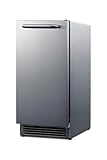
Overview: The Summit BIM26H32 offers a compact, drain-free ice making solution for spaces where plumbing flexibility is paramount. This ADA-compliant 15-inch unit produces over 20 pounds of crescent-shaped ice daily, storing it in an insulated bin. Its 31.75-inch height allows installation under lower counters, while the static cooling system maintains ice quality without complex mechanics. The flush-back design simplifies cleaning and placement against walls.
What Makes It Stand Out: The zero-drainage design is the star feature, enabling placement virtually anywhere without plumbing modifications. This freedom is rare in built-in units under $1,600. The stainless steel door and flush-back design create a seamless, easy-to-clean appearance suitable for custom kitchens. Crescent cubes, while not clear, are preferred by many for their slower melt rate and efficient glass-filling shape. The large included scoop and holder add convenience often missing from competitors.
Value for Money: At $1,530.00, it sits in the mid-range for built-in ice makers. The drain-free convenience saves $200-500 in plumbing costs, effectively reducing the true price. While production is modest at 25 pounds, it’s sufficient for households or small offices. Comparable drain-free models from premium brands often exceed $2,000, making this a smart value play for those prioritizing installation simplicity over maximum output.
Strengths and Weaknesses: Pros: No drain required; ADA compliant height; Stainless steel aesthetic; Static cooling preserves ice longer; Easy installation; Reversible door swing; Includes scoop holder Cons: Lower ice production (25 lbs); Crescent ice not clear; No Energy Star rating mentioned; Smaller storage capacity; Limited to residential or light commercial use
Bottom Line: Perfect for residential kitchens or break rooms where plumbing is problematic. The drain-free design outweighs production limitations for most home users. Consider alternatives if you need high volume, clear ice, or commercial certification.
3. Scotsman Commercial Undercounter Ice Maker with Bin
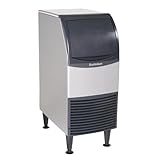
Overview: The Scotsman Commercial Undercounter Ice Maker is a heavy-duty workhorse engineered for demanding commercial environments. This 15-inch wide unit produces an impressive 80 pounds of clear medium cube ice daily, fitting seamlessly into tight spaces with zero side clearance requirements. ADA compliance with an optional floor mount kit ensures accessibility across all installations. The air-cooled, self-contained condenser and horizontal evaporator deliver consistent performance.
What Makes It Stand Out: Scotsman’s reputation for reliability shines through with the efficient horizontal evaporator design that maintains production levels under continuous use. The unit-specific QR code for maintenance is a modern touch that simplifies service calls and parts ordering. Clear ice production at this capacity in such a compact footprint is exceptional. The metallic finish provides enhanced durability beyond standard stainless steel, while the 6" legs offer stability and easy cleaning access underneath.
Value for Money: At $2,410.00, this is a professional-grade investment. For commercial settings, the price is competitive—similar spec units from Hoshizaki or Manitowoc cost $2,800+. The 80-pound capacity serves busy bars and restaurants effectively, while industrial durability reduces long-term replacement costs. Residential users will find this overkill unless they entertain constantly. The premium is justified by proven reliability and performance in high-demand environments.
Strengths and Weaknesses: Pros: High production capacity (80 lbs); Commercial reliability; Clear medium cubes; Compact 15" width; No side clearance needed; QR code maintenance system; ADA compliant with kit Cons: Premium pricing; Overkill for typical residential use; Requires professional installation; Metallic finish may not match all décors; Storage bin capacity not specified
Bottom Line: Best suited for commercial establishments needing reliable, high-volume clear ice in limited space. The premium is justified by industrial durability and performance. Residential buyers should consider more cost-effective options unless budget is unlimited and demand is exceptional.
4. COWSAR Commercial Ice Maker Machine, 80Lbs/24H Freestanding Undercounter Ice Maker with 24Lbs Storage Capacity, Self-Cleaning Ice Machine for Home, Bar, Restaurant, Office, Outdoor
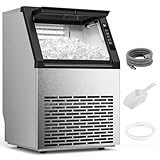
Overview: The COWSAR Commercial Ice Maker delivers impressive 80-pound daily production at a fraction of competitors’ prices. This freestanding undercounter unit features a 24-pound storage capacity, self-cleaning function, and dual water inlet options. The stainless steel construction and ETL certification make it suitable for both home and commercial applications, from kitchens to outdoor bars. LCD controls enable easy customization of ice size and production timing.
What Makes It Stand Out: The price-to-performance ratio is unmatched—similar 80-pound units cost 3-5x more. The LCD control panel offers intuitive adjustment of ice size and production timing, while the automatic cleaning function reduces maintenance headaches. Dual water inlet options (tap or bottled) provide installation versatility that premium brands often lack. The 11-18 minute cycle time ensures rapid ice replenishment during peak demand, and elevated feet prevent moisture damage.
Value for Money: At $249.99, this is exceptional value. You’re getting commercial-level production specs for the price of a basic countertop model. Even if longevity is 50% of a $2,000+ unit, you could buy multiple replacements and still save money. The self-cleaning feature saves on service costs, while ETL certification ensures safety standards are met. Perfect for budget-conscious buyers needing serious ice production without the premium brand tax.
Strengths and Weaknesses: Pros: Incredible price; High production (80 lbs); Self-cleaning function; LCD control panel; ETL certified; Dual water inlet options; Fast cycle time; Stainless steel build Cons: Unknown long-term reliability; May be noisier than premium brands; Not NSF certified; Brand lacks commercial track record; Likely shorter warranty period; Customer support unknown
Bottom Line: An unbeatable value for home bars, small restaurants, or outdoor kitchens on tight budgets. Accept some reliability risk given the massive price advantage. Commercial operators with high downtime costs should invest in established brands instead. Perfect for those prioritizing capacity over brand prestige.
5. EdgeStar IB121 15 Inch Wide 12 Lbs. Capacity Built-In Ice Maker with 15 Lbs. Daily Ice Production - Stainless Steel

Overview: The EdgeStar IB121 is a compact, budget-friendly built-in ice maker designed for residential spaces requiring ADA compliance. Measuring just 25 inches high, this 15-inch wide unit produces 15 pounds of crescent-shaped ice daily with a 12-pound storage capacity. Manual controls and a reversible door offer simplicity and installation flexibility for custom kitchen projects. The fully finished cabinet also allows freestanding use if needed.
What Makes It Stand Out: The ultra-compact 25-inch height is among the lowest available, fitting where others cannot. Manual controls eliminate electronic complexity, potentially improving reliability and ease of use for those preferring straightforward operation. The reversible door swing is a thoughtful feature rarely found in budget models, allowing left or right hinge configuration to match existing cabinetry. At 15 pounds daily production, it’s clearly designed for modest household needs rather than commercial demands.
Value for Money: At $519.00, this is one of the most affordable ADA-compliant built-in options. While production is limited, the price reflects realistic residential capabilities—you’re not paying for unnecessary commercial features. Installation costs remain low due to standard plumbing requirements. Comparable compact units from U-Line or Marvel cost $800+, making this an excellent entry-level built-in solution for homeowners prioritizing fit and price over maximum output.
Strengths and Weaknesses: Pros: Very compact 25" height; Affordable price point; ADA compliant; Reversible door swing; Simple manual controls; Easy installation; Can be freestanding Cons: Low production (15 lbs); Small storage (12 lbs); No advanced features; Crescent ice only; Not Energy Star rated; Limited to light residential use; No self-cleaning
Bottom Line: Ideal for small households or as a secondary ice source in wet bars. The low price and compact size make it accessible for budget renovations. Look elsewhere if you need more than minimal ice production or want premium features like clear ice or self-cleaning. A practical choice for space-constrained installations.
6. EUHOMY Commercial Ice Maker Machine,80lbs/24H,36 Ice Cubes in 8-12 Mins,Under Counter Ice Maker with Water Filter,12lbs Storage Capacity,Freestanding Ice Machine for Home/Bar/Cafe/Restaurant

Overview: The EUHOMY Commercial Ice Maker delivers impressive performance for its price point, churning out 80 pounds of clear ice daily with 36 cubes ready in under 12 minutes. Designed for versatile installation as either an under-counter or freestanding unit, this machine targets home users and small commercial operations like cafes and bars. The 12-pound storage capacity ensures you won’t constantly be monitoring production, while adjustable thickness settings accommodate different beverage types from cocktails to coffee.
What Makes It Stand Out: The integrated water filtration system sets this apart from budget competitors, removing impurities for crystal-clear, safe ice. The intelligent LCD panel provides environmental temperature monitoring and allows precise cube size adjustment, while the automatic cleaning function simplifies maintenance. Three-layer insulation maintains ice quality longer than standard models, and the viewing window adds practical monitoring capability for busy environments.
Value for Money: At $196, this unit dramatically undercuts most commercial-grade ice makers while delivering legitimate commercial certification (ETL). The inclusion of a water filter alone justifies the cost premium over residential models. For small businesses or serious home entertainers, it pays for itself by eliminating bagged ice purchases within months. The feature set rivals units costing twice as much, making it an exceptional entry point into commercial ice production.
Strengths and Weaknesses: Strengths include rapid production speed, adjustable cube thickness, effective filtration, and robust insulation. The copper compressor promises durability. Weaknesses involve the gravity drain requirement, which limits placement options, and the need for daily manual draining. The 12-pound storage may be insufficient for high-volume commercial use during peak hours, requiring frequent monitoring.
Bottom Line: This EUHOMY model offers exceptional value for small business owners and dedicated home users needing reliable, high-volume ice production. While installation requires planning for drainage, its performance, filtration, and commercial certification make it a smart investment that balances professional features with accessible pricing.
7. Frigidaire Gallery, 33 Lbs. Countertop Ice Maker, Nugget Shaped Ice, Stainless Steel Trim (Black)

Overview: Frigidaire Gallery’s nugget ice maker brings the coveted restaurant-style chewable ice experience to home kitchens in a compact, stylish package. Producing 33 pounds of soft, crunchy nuggets daily, this unit caters to ice-chewers who prioritize texture over sheer volume. Its low-profile design fits under most cabinets while remaining portable enough for countertop use, making it ideal for apartments or homes where space is at a premium.
What Makes It Stand Out: The signature nugget ice texture is the star—soft, porous, and addictively chewable unlike traditional hard cubes. The 15-minute production speed is respectable for quick turnaround, and the stainless steel trim adds premium aesthetics. The compact footprint makes it ideal for apartments or homes where space is at a premium, while the dual installation options provide flexibility.
Value for Money: Priced at $199, this sits in the sweet spot for specialty ice makers. While traditional cube producers offer higher output for similar money, none replicate the nugget texture. For enthusiasts of chewable ice, the premium is justified. However, the modest 3-pound storage means frequent emptying during parties, and the lack of a water filter or self-cleaning function reduces long-term value compared to some competitors.
Strengths and Weaknesses: Strengths include authentic nugget ice quality, attractive design, quick initial production, and flexible placement. The compact size is perfect for small spaces. Weaknesses are limited daily output for the price, tiny storage bin, and lack of advanced features like self-cleaning or water filtration. It produces noise typical of countertop units and requires manual filling.
Bottom Line: This Frigidaire model is perfect for nugget ice aficionados with modest volume needs. It won’t replace a primary ice maker for large households, but delivers exceptional quality for personal use or small gatherings. Consider your ice texture preference and consumption habits before purchasing, as traditional cube makers offer better value for those indifferent to nugget texture.
8. Coolake 15" Commercial Under Counter Ice Maker, 100Lbs/Day Outdoor Ice Maker with 30 Lbs Storage, Stainless Steel Gravity Drainage Freestanding Built-in Ice Machine for Home Bar Garage Kitchen

Overview: The Coolake 15-inch commercial ice maker positions itself as a heavy-duty solution for demanding environments, delivering 100 pounds of daily ice production with substantial 30-pound storage. Designed for both indoor and outdoor installations, this unit targets serious entertainers and small commercial operations needing reliable, high-capacity performance. Its under-counter form factor integrates seamlessly into custom kitchen layouts and outdoor bar setups.
What Makes It Stand Out: True outdoor rating with weather-resistant construction distinguishes this from indoor-only competitors. The massive 30-pound removable bin exceeds most home units, while adjustable thickness settings accommodate everything from cocktails to seafood displays. One-click self-cleaning and water shortage alerts demonstrate thoughtful engineering for low-maintenance operation. Enhanced insulation keeps ice frozen for up to 8 hours without power.
Value for Money: At $580, this represents a significant step-up from entry-level commercial units, but delivers proportional value. The outdoor certification, higher production capacity, and larger storage justify the premium over $200-300 models. For outdoor kitchens or high-volume home bars, it’s competitively priced against similar spec units costing $700+. The included accessories and quiet operation add further value.
Strengths and Weaknesses: Strengths include robust outdoor construction, exceptional storage capacity, user-friendly controls with alerts, quiet operation, and effective insulation. The self-cleaning function is genuinely useful. Weaknesses include the price barrier for casual users, gravity drainage limitations, and substantial weight requiring professional installation. The cleaning procedure, while automated, still requires manual intervention.
Bottom Line: This Coolake unit excels for outdoor kitchens and serious home entertainers. If you need weatherproof reliability and high volume, the investment pays dividends. For indoor-only use with moderate needs, cheaper alternatives suffice. Installation complexity means it’s best for permanent setups rather than casual placement. The outdoor rating is its defining feature—don’t pay the premium if you don’t need it.
9. Summit 15" Drain Free Ice Maker, Outdoor Ice Maker, 25 lb. Production Capacity, ADA Compliant, Stainless Steel- BIM27OSADA
Overview: Summit’s premium outdoor ice maker targets a niche market with its revolutionary drain-free design and ADA-compliant dimensions. Producing 25 pounds of crescent-shaped ice daily without requiring drainage infrastructure, this unit offers unparalleled placement flexibility for outdoor kitchens, patio bars, or accessible installations. The manual defrost system prioritizes ice longevity over convenience, making it unique in the residential ice maker landscape.
What Makes It Stand Out: The absence of drainage requirements eliminates the primary installation constraint of most ice makers. The ADA-compliant 31.75-inch height allows seamless under-counter integration in accessible designs. Weatherproof stainless steel construction and front-breathing design enable true built-in or freestanding outdoor use. The included water filter, pre-installed hose, and comprehensive accessory package add value to the premium package.
Value for Money: At $1,591, this is a luxury appliance purchase justified only by specific needs. The drain-free technology and ADA compliance command a massive premium over standard units. For standard installations with available drainage, alternatives offer 3-4x better production at one-third the price. However, for challenging installations or accessibility requirements, it may be the only viable option, making the price secondary to functionality.
Strengths and Weaknesses: Strengths include ultimate installation flexibility, premium outdoor build quality, ADA compliance, and included accessories. The manual defrost extends ice preservation without continuous energy use. Weaknesses are extremely low production volume for the price, manual defrost inconvenience, and poor value for non-specialized applications. The crescent ice shape may not suit all preferences.
Bottom Line: Purchase only if you require drain-free operation or ADA compliance. For typical outdoor kitchen installations with available drainage, significantly cheaper alternatives deliver superior performance. This is a specialized solution for unique installation challenges, not a general-purpose high-volume ice maker. The price reflects its niche engineering, not its output capacity.
10. EUHOMY Commercial Ice Maker Machine, 100lbs/24H Stainless Steel Under Counter ice Machine with 33lbs Ice Storage Capacity, Freestanding Ice Maker.

Overview: EUHOMY’s upgraded commercial ice maker doubles down on capacity, delivering 100 pounds of daily ice production with an impressive 33-pound storage bin. This stainless steel under-counter unit bridges the gap between entry-level commercial models and professional equipment, offering robust performance for home bars, restaurants, and small businesses. The automatic overflow prevention ensures worry-free operation during peak demand without constant supervision.
What Makes It Stand Out: The exceptional storage-to-production ratio sets this apart, holding one-third of its daily output. The smart LCD panel provides environmental temperature monitoring and cube size adjustment, while automatic cleaning simplifies maintenance. ETL commercial certification and energy efficiency credentials validate its professional capabilities. The powerful yet quiet compressor balances performance with ambient comfort for indoor installations.
Value for Money: At $330, this represents strong mid-range value. It offers double the storage of cheaper $200 models and matches production specs of units costing $500+. For high-volume users, the larger bin reduces monitoring frequency, justifying the premium. The energy certification promises long-term operational savings that offset initial investment, making it economical for continuous use scenarios.
Strengths and Weaknesses: Strengths include high daily output, massive storage capacity, commercial certification, quiet operation, and energy efficiency. The overflow prevention and cleaning functions are practical. Weaknesses include gravity drainage requirement, need for 24-hour upright settling before use, and substantial weight. The cleaning procedure remains somewhat manual despite “automatic” claims, requiring button activation.
Bottom Line: This EUHOMY model hits the sweet spot for serious users needing genuine commercial capacity without premium pricing. It outperforms entry-level units significantly while costing far less than comparable professional equipment. Ideal for home bars, small cafes, or offices with consistent high demand. Ensure you can accommodate drainage before purchasing, and plan for permanent installation due to its size and weight.
Understanding ADA Compliance in Kitchen Appliances
Navigating the world of accessible kitchen design requires more than a passing familiarity with ADA guidelines. True compliance involves a holistic approach to how appliances integrate into the overall workspace, interact with users of varying abilities, and perform reliably without creating new barriers.
The Importance of Accessible Design
Accessible design transcends mere regulatory adherence. When kitchen appliances are designed with universal access in mind, they create environments where individuals using wheelchairs, those with limited reach or grip strength, and people with visual or cognitive impairments can operate independently. An ADA-compliant undercounter ice maker becomes a subtle yet powerful tool for empowerment, eliminating the need to ask for assistance or struggle with poorly designed controls. The psychological impact of this independence cannot be overstated—it reinforces self-sufficiency and confidence in one’s own home.
Key ADA Guidelines for Undercounter Appliances
The Americans with Disabilities Act establishes specific technical requirements for appliances installed beneath countertops. For undercounter ice makers, compliance hinges on several non-negotiable elements: maximum installation height, forward reach ranges, operable part specifications, and clear floor space requirements. The appliance’s controls and operating mechanisms must be positioned no higher than 48 inches above the finished floor for a forward reach, or 54 inches for a side reach. Additionally, all operable parts must be usable with one hand without requiring tight grasping, pinching, or twisting of the wrist—critical considerations for users with arthritis or limited dexterity.
Why Undercounter Ice Makers Are Ideal for Accessible Kitchens
Undercounter ice makers solve multiple accessibility challenges simultaneously. Unlike countertop models that consume valuable workspace and create obstacles, or full-sized units that require excessive reaching, undercounter models integrate seamlessly into the kitchen’s footprint. They position ice production exactly where it’s needed—within easy reach from a seated or standing position—while maintaining clear sight lines and unobstructed pathways throughout the kitchen. This built-in approach also eliminates the need to lift heavy water reservoirs or navigate around freestanding units, reducing fall risks and physical strain.
Critical ADA-Compliance Features to Look For
Not all undercounter ice makers marketed as “accessible” meet true ADA standards. Discerning buyers must look beyond marketing language to verify specific design elements that ensure genuine usability.
Front-Control Accessibility
The gold standard for ADA compliance places all controls on the front face of the appliance, eliminating any need to reach over or across the unit. Look for tactile, easy-to-read buttons or touch controls positioned within the 15 to 48-inch reach range. Controls should provide both visual and auditory feedback when activated, assisting users with visual impairments. The best designs feature high-contrast labeling with large, sans-serif fonts and optional backlighting that automatically dims to prevent glare while remaining visible.
Operable Parts and Reach Ranges
Every interactive component—from the power switch to the ice scoop holder—must comply with ADA operable part standards. This means mechanisms operable with closed fists, lever-style handles rather than knobs, and forces required to activate controls not exceeding five pounds of pressure. The ice dispensing mechanism deserves particular scrutiny; paddle-style activators that respond to gentle pressure from a cup, hand, or elbow represent optimal accessible design. Avoid units requiring precise finger movements or significant grip strength.
Clear Floor Space Requirements
ADA compliance extends beyond the appliance itself to the surrounding installation area. Your undercounter ice maker requires a clear floor space measuring at least 30 by 48 inches to accommodate a parallel or forward approach. This space must remain completely unobstructed by cabinets, plumbing, or electrical fixtures. When planning installation, consider the swing radius of wheelchair footrests and ensure the floor surface is level, stable, and slip-resistant. The approach path to the ice maker should maintain a minimum width of 36 inches throughout the kitchen.
Door and Handle Design Considerations
Door operation represents one of the most frequently overlooked accessibility barriers. ADA-compliant undercounter ice makers feature doors that open with minimal force and remain securely open at 90 degrees without requiring continuous pressure. Handle design should accommodate various grip styles—D-shaped pulls or integrated handles that allow for closed-fist operation work best. The door itself must not protrude more than 4 inches into the required clear floor space when fully open, and should feature soft-close mechanisms to prevent slamming injuries.
Ice Production and Storage Capacity for Household Needs
Matching production capacity to actual usage prevents both shortages and wasted energy. For accessible kitchens serving individuals or couples, a unit producing 25-35 pounds of ice daily with 15-20 pounds of storage typically suffices. Larger households or those who frequently entertain may require 50+ pounds of daily production. Consider units with adjustable production settings that allow users to scale output based on current needs, reducing unnecessary noise and energy consumption during quieter periods. The storage bin should feature a sliding or pull-out design that brings ice forward, eliminating the need to reach deep into the unit.
Types of Ice and Their Accessibility Implications
Ice type affects more than beverage aesthetics—it impacts safety and usability. Nugget ice, with its chewable texture, reduces choking hazards for users with swallowing difficulties. Clear cube ice melts slower, requiring less frequent refilling for users with limited mobility. Crescent ice fits easily into narrow-necked bottles without requiring precise alignment. For maximum accessibility, select units offering multiple ice types or those producing half-size cubes that are easier to handle. The dispensing mechanism should accommodate various container sizes, from small medication cups to large water bottles, without requiring awkward tilting or balancing acts.
Installation Requirements for ADA-Compliant Units
Proper installation determines whether a technically compliant appliance functions accessibly in practice. Professional installation following ADA guidelines ensures all technical requirements translate into real-world usability.
Electrical and Plumbing Considerations
ADA-compliant installation requires electrical outlets and plumbing connections positioned to allow easy approach and maintenance access. The electrical outlet should be installed within the required reach range but not directly behind the unit, enabling safe plug access without moving the appliance. Water supply and drain lines must include accessible shut-off valves positioned in the adjacent cabinet space or behind an easily removable access panel. These valves should feature lever-style handles rather than traditional round knobs, operable with minimal force and without requiring fine motor control.
Ventilation and Clearance Space
Adequate ventilation prevents overheating and ensures consistent ice production, but must be achieved without compromising accessibility. Front-venting models work best for accessible installations, as they require zero side clearance and maintain the full clear floor space. If using a rear-venting unit, ensure the installation allows for the required ventilation gap while keeping all mechanical components within reach for maintenance. The kickplate area should be removable without tools, providing access to filters and drainage components that require regular servicing.
Smart Features and Modern Technology Integration
Contemporary ADA-compliant ice makers increasingly incorporate smart technology that enhances accessibility rather than complicating it. Voice control integration allows hands-free operation for users with limited upper body mobility. Mobile apps with high-contrast, large-button interfaces enable remote monitoring of ice levels, filter status, and production schedules. Look for units with customizable audio alerts that signal when ice is ready, when the bin is full, or when maintenance is required—particularly valuable for users with visual impairments. The best implementations allow users to disable complex features, preventing accidental activation while preserving core accessibility functions.
Energy Efficiency and Environmental Impact
Energy efficiency directly correlates with operational cost and environmental responsibility, but also impacts accessibility. Efficient units produce less waste heat, keeping the surrounding cabinet and floor area comfortable for users seated nearby. Look for ENERGY STAR certification as a baseline, but also examine the unit’s water usage efficiency—critical in areas with water restrictions. Models featuring insulated storage bins with tight-sealing doors maintain ice quality longer, reducing the frequency of production cycles and associated noise. Consider units with programmable sleep modes that automatically reduce production during overnight hours, conserving energy while maintaining accessibility for early morning users.
Maintenance and Cleaning Accessibility
An ice maker that requires difficult-to-perform maintenance quickly becomes inaccessible, regardless of its initial design. The best ADA-compliant units feature self-cleaning cycles activated through front-facing controls, with clear audio and visual indicators of cycle progress. Water filters should be located behind a front-access panel, removable with a simple quarter-turn motion requiring minimal grip strength. The ice bin should lift out easily, with handles positioned to accommodate various grasping methods. Drainage components must be accessible without tools, and the unit should provide clear, high-contrast maintenance alerts that are both visible and audible.
Budget Considerations and Value Assessment
ADA-compliant undercounter ice makers typically command a premium over standard units, but this investment delivers measurable returns in independence and safety. Price ranges generally span from $1,500 for basic compliant models to $4,000+ for premium units with advanced features. When evaluating cost, factor in long-term expenses: energy efficiency ratings, water usage, filter replacement frequency and cost, and warranty coverage specifically addressing accessibility components. Some manufacturers offer extended warranties on electronic controls and door mechanisms—critical for users who cannot easily perform repairs themselves. Consider financing options or accessibility grants available through various housing modification programs, which can significantly offset initial investment.
Design Aesthetics and Kitchen Integration
Accessibility and aesthetic appeal need not exist in opposition. Modern ADA-compliant undercounter ice makers offer panel-ready designs that accept custom cabinet fronts, creating a seamless visual flow that doesn’t scream “accessible appliance.” Stainless steel finishes with anti-fingerprint coatings reduce maintenance while providing durable, easy-to-clean surfaces. LED interior lighting automatically illuminates when doors open, assisting users with low vision without creating harsh glare. The unit’s overall dimensions should integrate with standard accessible cabinet heights, typically 32½ inches maximum from floor to underside of counter, ensuring the installation maintains the required knee clearance for wheelchair users who may need to pull directly up to the appliance.
Frequently Asked Questions
What makes an undercounter ice maker truly ADA-compliant versus just “accessible”?
True ADA compliance means the appliance meets specific federal guidelines for reach ranges, operable parts, clear floor space, and force requirements. Look for units that explicitly state ADA compliance in their specifications, not just marketing materials. The controls must be front-mounted within 15-48 inches height, operable with one hand using less than five pounds of force, and the unit must accommodate a 30x48 inch clear floor space.
Can I retrofit my existing undercounter ice maker to be ADA-compliant?
Generally, no. ADA compliance is engineered into the appliance’s fundamental design—control placement, door operation, and internal mechanisms. While you might add aftermarket handles or modify the installation height, most standard units cannot achieve full compliance without compromising safety or functionality. Replacement with a purpose-built accessible unit is typically the only reliable solution.
How much clearance space do I need around an ADA-compliant ice maker?
You need a clear floor space of at least 30 by 48 inches for a forward or parallel approach. The door should not swing into this space by more than 4 inches. Additionally, maintain the manufacturer’s specified ventilation clearance (often zero for front-venting models) while ensuring the approach path to the unit remains at least 36 inches wide throughout the kitchen.
Are ADA-compliant ice makers more expensive than standard models?
Yes, typically 20-40% more expensive due to specialized engineering, compliance testing, and lower production volumes. However, this cost difference reflects meaningful design features that enhance safety and independence. Many users find the investment justified by reduced need for assistance and increased daily convenience.
What ice type is safest for users with swallowing difficulties?
Nugget ice (also called pellet or sonic ice) is generally safest for individuals with dysphagia. Its soft, chewable texture reduces choking risk and is easier to manage for those with oral motor challenges. Many ADA-compliant units offer nugget ice options, and some healthcare-focused models even produce specialized “thickened ice” for therapeutic purposes.
Do ADA-compliant ice makers require professional installation?
Professional installation is strongly recommended and often necessary to maintain warranty coverage and ensure compliance. Certified installers understand the precise height requirements, clear floor space specifications, and accessible plumbing/electrical connections needed for legitimate ADA compliance. Improper installation can render even a compliant appliance inaccessible.
How often should I clean my accessible ice maker?
Clean accessible units every 3-6 months depending on usage and water hardness. Many ADA-compliant models feature automated cleaning cycles that simplify this process. Hard water deposits can affect performance more quickly in accessible units due to their lower installation height and potentially reduced ventilation, making regular maintenance critical for reliable operation.
Can voice-controlled ice makers work without internet connectivity?
Most smart features require internet for full functionality, but many units offer basic voice commands via Bluetooth or local networks. For users concerned about connectivity issues, prioritize models that maintain full manual control through front-mounted buttons as the primary interface, with smart features as a supplementary accessibility enhancement.
What happens if my ADA-compliant ice maker needs repairs?
Choose manufacturers offering in-home service from technicians trained in accessible appliance repair. The warranty should specifically cover door mechanisms, control panels, and dispensing systems. Some companies provide loaner units during extended repairs, ensuring continuous access to ice—a critical consideration for users with medical needs or limited ability to purchase bagged ice.
Are there tax benefits or financial assistance for purchasing ADA-compliant appliances?
Yes, several programs can help. The IRS offers medical expense deductions for accessibility modifications, including appliances prescribed for medical necessity. State Medicaid waiver programs, VA housing grants, and non-profit organizations like Rebuilding Together may provide funding. Consult with a tax professional and local independent living center to explore available financial assistance in your area.