Running a small restaurant means juggling a thousand moving parts while keeping your margins razor-thin. Between managing inventory, controlling food costs, and maintaining consistent quality, your equipment choices can make or break your operation. Few decisions carry as much hidden weight as selecting the right commercial chest freezer. It’s not just a cold box—it’s your insurance against spoilage, your bulk-buying enabler, and often the unsung hero of your kitchen’s efficiency.
The problem? Most small restaurant owners approach this purchase with a residential mindset, focusing solely on cubic feet and price tags. This year, with supply chain volatility and energy costs fluctuating wildly, that approach could cost you thousands in wasted energy, lost product, and premature equipment failure. Let’s dive into what actually matters when investing in a commercial chest freezer that will serve your kitchen for years to come.
Top 10 Commercial Chest Freezers for Small Restaurants
Detailed Product Reviews
1. Commercial Solid Top Chest Freezer by Atosa
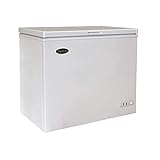
Overview: The Atosa Commercial Solid Top Chest Freezer offers 7 cubic feet of frozen storage in a compact footprint, making it an ideal entry-level solution for small cafes, convenience stores, or home businesses needing commercial-grade reliability. This chest freezer prioritizes durability with its white-coated steel exterior and corrosion-resistant aluminum interior, designed to withstand daily commercial use while maintaining efficient temperature control.
What Makes It Stand Out: The inclusion of eco-friendly R600a refrigerant sets this unit apart from older models still using harmful CFCs, reducing environmental impact while delivering reliable cooling performance. The epoxy-coated white baskets provide organized storage that resists rust and corrosion, while the integrated defrost drain simplifies maintenance—a feature often missing in budget commercial freezers. The solid hinged lid ensures secure closure and energy efficiency.
Value for Money: At $506, this freezer positions itself as an accessible commercial option, priced competitively against residential high-capacity models while offering superior durability. For small-scale operations, it eliminates the need to invest in larger, more expensive units, though its manual defrost requirement means occasional downtime for maintenance.
Strengths and Weaknesses: Strengths include its compact size for tight spaces, eco-conscious refrigerant, durable construction, and organized basket system. Weaknesses are the modest 7 cu. ft. capacity limiting inventory, manual defrost process requiring periodic attention, and basic temperature control without digital precision.
Bottom Line: This Atosa chest freezer excels for businesses with modest frozen storage needs, delivering commercial durability at a reasonable price point. It’s best suited for establishments requiring reliable freezing without the footprint or cost of larger units.
2. Commercial Solid Top Chest Freezer by Atosa
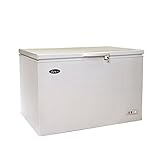
Overview: This upgraded Atosa Commercial Solid Top Chest Freezer, priced at $688, likely represents a larger capacity variant within the same product line, though specific specifications are sparse in the listing. Positioned as a mid-tier commercial freezing solution, it appears designed for businesses requiring more storage than the entry-level 7 cu. ft. model while maintaining the brand’s focus on durability and straightforward operation.
What Makes It Stand Out: The price point suggests enhanced capacity—potentially 10-12 cubic feet—offering 40% more storage than its smaller sibling without jumping to the premium tier. The “Reach In” designation indicates easy-access design for commercial environments, while the ice cream-specific capability implies precise temperature maintenance suitable for frozen desserts and general frozen goods alike.
Value for Money: At $688, this model bridges the gap between compact economy units and larger commercial freezers, offering expanded capacity for roughly 35% more investment. For growing businesses hitting storage limits, it provides scalability without the $1,000+ price tag of high-capacity alternatives, though the lack of detailed features makes exact value assessment challenging.
Strengths and Weaknesses: Strengths include presumed larger storage capacity, commercial-grade construction consistent with Atosa standards, and versatility for various frozen products. Weaknesses center on the vague feature list creating uncertainty about exact specifications, manual defrost likely continuing from the base model, and potentially limited temperature precision.
Bottom Line: This freezer suits expanding small businesses needing more frozen storage, but buyers should verify exact capacity and features before purchasing. It’s a practical middle-ground option assuming it delivers proportional upgrades over the smaller model.
3. 5.5 Cu.Ft Ice Cream Freezer Commercial 23 Inch Display Case Chest Freezers Restaurant Gelato Dipping Cabinet with 2 Large Displayed Baskets

Overview: This 5.5 cu. ft. Ice Cream Display Freezer combines commercial functionality with merchandising appeal, featuring a 23-inch curved glass top designed specifically for retail environments where product visibility drives sales. The unit’s compact footprint houses a surprisingly versatile temperature system capable of handling everything from gelato at warmer temperatures to ice cream at standard freezing points, making it ideal for specialty dessert shops and cafes.
What Makes It Stand Out: The curved anti-fog tempered glass with integrated LED lighting creates an attractive display that maintains visibility even during high-humidity conditions. Seven adjustable temperature settings spanning -14.8°F to 18.4°F offer unprecedented flexibility for serving different frozen desserts at optimal consistencies. The combination of pre-coated aluminum, insulating foam, and rubber sealing delivers superior cold retention rarely seen in display units under $700.
Value for Money: At $685, this freezer competes aggressively with specialized dipping cabinets costing $800-$1,200. The inclusion of mobility features—four silent casters with brakes—and two removable PVC-coated baskets adds practical value for dynamic retail layouts, while the one-year commercial warranty provides essential business protection.
Strengths and Weaknesses: Strengths include excellent product visibility, wide temperature range for diverse frozen desserts, mobility, and energy-efficient insulation. Weaknesses are the limited 5.5 cu. ft. capacity restricting inventory depth, vulnerability of glass to breakage in high-traffic areas, and specialized design unsuitable for bulk storage.
Bottom Line: Perfect for businesses where presentation matters as much as preservation. This display freezer excels in customer-facing roles but shouldn’t be purchased for general storage needs. It’s a specialized tool that performs its intended function exceptionally well.
4. 54" W Commercial Reach-in Freezer, ETL Upright 2 doors Auto-Defrost, 49 cu. ft. Bottom Mounted, stainless steel for Restaurant Kitchen Home Bar Shop -8°F

Overview: This 54-inch wide Commercial Reach-in Freezer delivers serious capacity with 49 cubic feet of upright storage, targeting high-volume restaurant kitchens, bakeries, and food service operations. The two-door configuration with bottom-mounted Embraco compressor represents professional-grade equipment designed for constant access and heavy inventory turnover, backed by ETL certification for safety and sanitation compliance.
What Makes It Stand Out: The warranty package is exceptional—three years on all parts, six years on the compressor, and one year labor—demonstrating manufacturer confidence rarely seen in this price tier. The full stainless-steel interior and exterior simplify cleaning while ensuring durability, while the digital temperature control maintains -8°F to 0°F with precision. Auto-defrost eliminates manual maintenance downtime.
Value for Money: At $1,982, this freezer commands a premium but delivers proportional value through its 49 cu. ft. capacity, automated features, and superior warranty. Comparable NSF-certified units often exceed $2,500, making this a cost-effective choice for established businesses prioritizing reliability and compliance.
Strengths and Weaknesses: Strengths include massive capacity, auto-defrost convenience, exceptional warranty coverage, mobility with lockable casters, and ETL certification. Weaknesses are the significant investment required, large footprint demanding ample space, and warranty exclusions for food trucks, residential use, and islands.
Bottom Line: A workhorse freezer for serious commercial operations. The combination of capacity, automated maintenance, and warranty protection justifies the price for businesses with demanding frozen storage needs. Verify warranty terms match your specific use case before purchasing.
5. DUURA Chest Freezer Sub Zero Commercial Freezer with Split Top Double Locking Lids, Indoor or Outdoor Ready for Garage, Basement, Restaurant, Cafe, 30 Cu. Ft., White
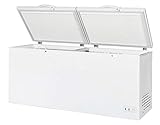
Overview: The DUURA 30 cu. ft. Chest Freezer positions itself as a versatile heavy-duty solution for both commercial and residential power users, featuring split-top double locking lids and robust 3-inch insulation. Its impressive capacity suits restaurants, cafes, and homeowners needing substantial frozen storage, while UL 471 and NSF-7 commercial certifications validate its food-grade performance standards.
What Makes It Stand Out: Split lid design allows accessing half the contents while retaining cold air in the other section—a practical efficiency feature rarely found in chest freezers. The outdoor-ready construction with corrosion-resistant interior enables garage or basement installation in any climate, expanding placement flexibility. Meeting commercial food grade standards while remaining accessible for home use creates a unique dual-market appeal.
Value for Money: Priced at $1,883, this freezer costs significantly less than many NSF-certified commercial units of comparable size, which often exceed $2,200. The 30 cu. ft. capacity offers excellent storage density, though the manual temperature dial feels basic for the price point.
Strengths and Weaknesses: Strengths include massive capacity, split lid efficiency, commercial certifications, outdoor durability, and integrated locks. Weaknesses are the basic manual temperature control lacking digital precision, chest-style access requiring more floor space than upright models, and limited one-year warranty compared to premium alternatives.
Bottom Line: An excellent choice for high-volume frozen storage in flexible environments. The DUURA excels in garages, basements, and commercial settings where capacity trumps convenience. Consider this if you need certified commercial performance without the premium price tag of auto-defrost upright models.
6. Hamilton Beach 30 Cu. Ft. Garage Ready Chest Freezer, White Deep Freezer, Adjustable Thermostat, Easy Defrost Drain, Double Door Lid, for Storage, Hunting, Large Family - 29"D x 79"W x 38"H

Overview: The Hamilton Beach 30 cubic foot chest freezer is a behemoth designed for serious storage needs. This garage-ready unit targets large families, hunters, and those needing commercial-grade capacity. With dimensions of 79" wide, it offers massive storage potential for bulk purchases, game meat, or meal prep operations.
What Makes It Stand Out: The sheer capacity is the headline feature—30 cu ft dwarfs typical residential freezers. The double-door lid design improves accessibility, while the garage-ready construction ensures reliable operation in temperature extremes. The integrated lock provides security for valuable contents, and the exterior defrost drain simplifies maintenance.
Value for Money: At $994, this represents solid value at approximately $33 per cubic foot. While not cheap, it’s comparable to commercial units with similar capacity. For large families or hunters who buy in bulk, the savings on food costs can quickly offset the investment. Residential users should consider the energy consumption implications of such a large unit.
Strengths and Weaknesses: Strengths include massive capacity, double-door access, lockable security, garage-ready reliability, and easy defrost drain. Weaknesses are its enormous footprint requiring substantial space, unknown energy efficiency ratings, and limited organizational features (only one basket). The unit may be overkill for average households.
Bottom Line: This freezer is ideal for those who genuinely need maximum storage capacity. Hunters, large families, and small commercial operators will appreciate its robust design and security features. Ensure you have adequate space and understand the energy commitment before purchasing.
7. Frigidaire Commercial Chest Freezer for Ice Cream and Frozen Foods, Store Displayer, Glass Top Storage Case, 4 Cu. Ft. Bin, Rolling Caster Wheels, Adjustable Temperature, Energy Efficient Cooling
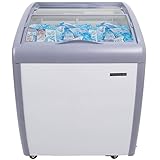
Overview: The Frigidaire 4 cu ft commercial chest freezer is a compact display solution designed for retail environments. Its glass top design makes it perfect for gas stations, cafes, and small stores where product visibility drives impulse purchases. The unit prioritizes accessibility and mobility over raw storage capacity.
What Makes It Stand Out: The clear glass top is the defining feature, allowing customers to view contents without opening the lid and wasting energy. Four rolling casters provide exceptional mobility for cleaning and repositioning. The commercial-grade pre-painted steel interior ensures durability in high-traffic retail settings.
Value for Money: At $549, you’re paying a premium for the display functionality—approximately $137 per cubic foot. This is significantly higher than standard chest freezers, but justified for businesses where product visibility impacts revenue. For non-commercial use, the value proposition diminishes considerably and makes less financial sense.
Strengths and Weaknesses: Strengths include excellent product visibility, superior mobility, commercial durability, and compact footprint. Weaknesses are limited 4 cu ft capacity, high price per cubic foot, and lack of organizational baskets. The glass top may be prone to scratching and requires regular cleaning to maintain visibility.
Bottom Line: This freezer excels in small retail spaces where displaying frozen goods drives impulse purchases. It’s perfect for ice cream shops, convenience stores, or cafes with limited space. For residential or bulk storage needs, traditional chest freezers offer better value and significantly more capacity.
8. Frigidaire Commercial Chest Freezer for Ice Cream and Frozen Foods, Store Displayer, Glass Top Storage Case, 9 Cu. Ft. Bin, Rolling Caster Wheels, Adjustable Temperature, Energy Efficient Cooling

Overview: The Frigidaire 9 cu ft commercial chest freezer scales up the display concept for businesses needing greater capacity. It maintains the same glass-top design and mobility features as its smaller sibling while offering more than double the storage space for frozen merchandise and treats.
What Makes It Stand Out: The larger glass viewing area showcases more products while maintaining energy-efficient visibility. The same robust caster system supports heavier loads, and the commercial-grade construction ensures longevity. The 9 cu ft capacity strikes a practical balance between display functionality and useful storage volume.
Value for Money: At $808, the price per cubic foot drops to about $90—much better value than the 4 cu ft model. For small to medium retail operations, this represents a reasonable investment in merchandising equipment. The cost is still premium compared to non-display freezers, but the sales benefits can justify the expense.
Strengths and Weaknesses: Strengths include enhanced display capacity, commercial mobility, durable construction, and improved value over smaller units. Weaknesses include remaining premium pricing, potential for glass fogging in humid environments, and limited organizational features. The unit may still be too small for high-volume operations needing more storage.
Bottom Line: This mid-size display freezer serves small businesses perfectly—offering enough capacity for variety without overwhelming space. Ice cream shops and convenience stores will find it ideal for showcasing products. Consider your inventory turnover before choosing between this and the smaller 4 cu ft model.
9. ECEVT Commercial Ice Cream Freezer 12.7 Cu.Ft, Glass Top Chest Freezer with 5 Large Displayed Baskets, 2 Sliding Glass Doors, Rolling Wheels and Lockable Breaks

Overview: The ECEVT 12.7 cu ft commercial ice cream freezer is a professional-grade display unit built for serious frozen dessert retailers. With five baskets and sliding glass doors, it combines organization with premium product presentation. The ETL certification ensures commercial safety compliance across various food service environments.
What Makes It Stand Out: The anti-fog tempered glass with LED lighting creates an attractive display that maintains visibility in high-traffic environments. Five removable baskets organize diverse products effectively. The wide temperature range (-14.8°F to 18.4°F) accommodates everything from ice cream to frozen meals. Lockable brakes ensure stability once positioned.
Value for Money: At $999, this offers competitive pricing for a feature-rich commercial display unit—approximately $79 per cubic foot. The specialized features like anti-fog glass, LED lighting, and precise temperature control justify the premium over standard freezers. For businesses where presentation drives sales, this delivers strong ROI.
Strengths and Weaknesses: Strengths include superior display quality with anti-fog glass, excellent organization, commercial certification, mobility with brakes, and precise temperature control. Weaknesses are higher price point, specialized design that may not suit non-food businesses, and potential complexity for staff training.
Bottom Line: This freezer is perfect dedicated ice cream shops, upscale delis, and cafes prioritizing product presentation. The combination of visibility, organization, and temperature precision makes it a top-tier choice for frozen dessert retailers. The investment pays dividends through enhanced customer experience.
10. 14.5 Cu Ft Deep Freezer - Large Chest Freezer with Removable Basket and 7 Level Adjustable Thermostat - Commercial Freezer Energy Saving Quiet for Restaurants, Supermarkets, and Garages
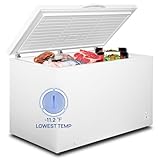
Overview: This 14.5 cu ft chest freezer balances capacity, efficiency, and quiet operation for commercial and residential use. Designed for restaurants, supermarkets, and garages, it emphasizes energy savings and low noise over display features, making it a practical workhorse solution for bulk storage needs.
What Makes It Stand Out: The energy consumption of 247.2 kWh/year represents 30% lower operating costs than comparable models. Operating below 42 decibels, it’s exceptionally quiet for commercial environments. The seven-level thermostat provides precise control from -11.2°F to 14°F, while dual-direction wheels ensure easy positioning anywhere.
Value for Money: At $730, this delivers outstanding value at approximately $50 per cubic foot. The energy savings alone can recover the cost difference versus less efficient models within 2-3 years. For budget-conscious businesses or homeowners, this combines generous capacity with long-term operational economy.
Strengths and Weaknesses: Strengths include exceptional energy efficiency, whisper-quiet operation, generous capacity, mobility, and durable construction with R600a compressor. Weaknesses are basic aesthetic design, single removable basket limiting organization, and lack of display features for retail environments. The hinged door requires adequate clearance space.
Bottom Line: This freezer excels as a reliable, economical storage solution for those prioritizing operating costs over display. Perfect for restaurant kitchens, garage storage, or supermarkets needing back-room capacity. The energy savings and quiet operation make it a smart long-term investment for both commercial and residential buyers.
Why Chest Freezers Dominate Commercial Kitchens
Walk into any seasoned chef’s prep area and you’ll notice a pattern: chest freezers often outnumber their upright counterparts. This isn’t coincidence—it’s strategic kitchen design born from decades of operational wisdom. The horizontal orientation fundamentally changes how cold air behaves, creating natural convection patterns that maintain temperature more consistently during busy service periods.
The Space Efficiency Advantage
While upright freezers boast a smaller footprint, chest models maximize cubic storage in a way that matters for bulk ingredients. That 15-cubic-foot chest freezer can hold significantly more whole proteins, prepped sauces, and portioned vegetables than an upright of the same capacity because you’re not sacrificing space to shelving systems and door compartments. For small restaurants operating in tight quarters, this means storing a week’s worth of prep in a single unit rather than spreading inventory across multiple appliances.
Energy Consumption Realities
Every time you open a freezer door, cold air escapes. Upright models hemorrhage chilled air like a sieve, with dense, cold air tumbling out the bottom while warm kitchen air rushes in to replace it. Chest freezers, with their top-opening design, keep that heavy cold air pooled inside even during extended browsing. In a busy kitchen where staff access the freezer 50+ times daily, this design difference translates to 20-30% lower energy consumption over the unit’s lifetime.
Understanding Commercial vs. Residential Grade
That bargain freezer from the big-box store might seem tempting at half the price, but it’s engineered for a completely different duty cycle. Residential units assume occasional access—maybe a dozen times per day—with long periods of dormancy. Commercial chest freezers are built for the punishment of constant opening, closing, and temperature recovery.
Key Durability Differences
Commercial compressors are designed to run continuously without overheating, featuring larger condensers and more robust refrigerant systems. The door hinges alone tell a story—commercial units use reinforced, greaseable hinges rated for 300,000+ cycles, while residential hinges might fail after 50,000 openings. In a restaurant setting, that difference could mean failure within two years versus a decade of reliable service.
Performance Under Pressure
Health inspectors don’t care about your budget constraints—they care about holding temperatures. Commercial units maintain -10°F to 0°F even when ambient kitchen temperatures hit 110°F during summer service. Residential models start struggling above 85°F ambient temperature, creating a food safety liability that could shut you down during an inspection.
Capacity Planning for Your Menu
Before measuring your available floor space, measure your actual storage needs. Too many small restaurants buy based on what fits physically, not what fits operationally, leading to either constant overflow or wasted energy cooling empty space.
Calculating True Storage Needs
Start with your weekly inventory turnover. If you receive three deliveries weekly and hold two days of backup stock, calculate the total cubic footage of all frozen items on your busiest day. Add 25% for packaging and air gaps between items. Then add another 20% for growth and seasonal menu fluctuations. This final number is your minimum operational capacity—not the manufacturer’s stated capacity.
The 80% Rule for Optimal Airflow
Packing a chest freezer to the brim feels satisfying but destroys efficiency. Cold air needs to circulate between items to maintain consistent temperatures. Industry best practice dictates keeping your freezer at 80% capacity maximum, allowing air to flow around inventory. This prevents warm spots near the top and reduces compressor strain, extending equipment life by years.
Temperature Range and Control Precision
Not all frozen storage serves the same purpose. Your ice cream service requires different holding temperatures than your bulk meat storage. Understanding temperature precision helps you avoid serving ice cream soup or freezer-burned proteins.
NSF Standard Requirements
NSF-certified commercial freezers must maintain 0°F or below in 90°F ambient temperatures with the door opened multiple times per hour. But the best units offer adjustable ranges from -15°F to 10°F, giving you flexibility for different products. Look for units with quick-recovery capabilities that return to set temperature within 15 minutes after a 30-second door opening.
Digital vs. Analog Thermostats
Analog dials might save you $100 upfront, but they lack the precision digital controls provide. Digital thermostats maintain temperature within ±2°F variance, while analog systems can drift ±5°F or more. That variance means the difference between perfectly preserved fish and product that’s slowly degrading. Digital displays also provide instant visual confirmation for staff during opening checks, creating accountability without needing separate thermometers.
Energy Efficiency and Operating Costs
That Energy Star sticker isn’t just greenwashing—it represents measurable savings that compound monthly. A standard commercial chest freezer costs $400-600 annually to operate, while Energy Star models slash that by 30-40%. Over a 10-year lifespan, you’re looking at $1,200-2,000 in savings.
Decoding Energy Star Ratings
Commercial freezer Energy Star certification requires being 20% more efficient than federal standards, but the real metric to examine is the kWh/year rating on the yellow energy guide label. Divide this by 12 for monthly costs, then multiply by your local utility rate. A unit rated at 2,400 kWh/year costs $30/month at $0.15/kWh versus $45/month for a 3,600 kWh/year model—nearly $200 in annual savings.
The Hidden Cost of Cheap Insulation
Foam insulation quality directly impacts both efficiency and longevity. High-density eco-friendly foam maintains R-value for the freezer’s lifetime, while cheaper insulation can degrade, especially in humid kitchen environments. Premium insulation adds $200-300 to the purchase price but prevents the gradual efficiency loss that costs you thousands over a decade. Press your hand against the freezer walls—quality insulation feels uniformly cold without hot spots.
Defrost Mechanisms Demystified
Ice buildup isn’t just an inconvenience—it’s an efficiency killer. Every quarter-inch of frost reduces storage capacity and forces your compressor to work harder. Understanding defrost options prevents mid-service surprises and maintenance headaches.
Manual Defrost Considerations
Manual defrost models cost less upfront and use simpler mechanical systems with fewer failure points. However, they require shutting down completely every 3-6 months for 4-8 hours to melt accumulated ice. For small restaurants with limited freezer redundancy, this means scheduling defrosting during slow periods and potentially renting temporary storage—hidden costs that add up.
Auto-Defrost Trade-offs
Auto-defrost systems use heating elements that cycle periodically to prevent frost buildup. While convenient, they increase energy consumption by 10-15% and can cause minor temperature fluctuations during defrost cycles. For operations storing delicate items like prepared desserts or premium ice cream, these fluctuations might compromise quality. Evaluate whether the convenience outweighs the precision cost for your specific menu.
Organizational Systems That Save Time
A chest freezer without organization becomes a black hole where inventory goes to die. Staff waste precious minutes digging through layers, compromising food safety as items sit open, and you’ll inevitably discover expired product buried at the bottom.
Basket Configurations and Customization
Standard units typically include 2-3 wire baskets, but the best setups allow for additional basket purchases and adjustable divider systems. Look for freezers with integrated slot systems along the walls that let you reconfigure storage as your menu evolves. Some manufacturers offer color-coded basket options, letting you designate red for proteins, blue for prepared items, and green for vegetables—creating visual inventory systems that reduce training time and errors.
Inventory Management Best Practices
Implement a “first in, first out” rotation system using dated, color-coded labels visible from above. Create a laminated freezer map posted nearby showing basket contents, and enforce a rule: nothing goes in without a label and location assignment. This discipline transforms your freezer from a cost center into a profit protector, reducing waste by 15-20% through better visibility.
Placement and Ventilation Requirements
That perfect spot you found in the corner? It might be suffocating your freezer’s compressor. Commercial units generate significant heat and require specific clearances to operate efficiently and safely.
Clearance Specifications
Most manufacturers require 3-4 inches of clearance on sides and back, plus 6-8 inches above the unit for proper heat dissipation. Placing a freezer against a wall or under a low counter without ventilation can raise compressor temperatures by 20-30°F, cutting its lifespan in half. Measure your space with these requirements in mind, and consider that the freezer’s stated dimensions rarely include necessary clearances.
Ambient Temperature Impact
Installing a freezer near your cook line or pizza oven might be convenient, but ambient temperatures above 95°F force the compressor into overdrive. If your kitchen runs hot, budget for a unit with a larger condenser and consider adding a small exhaust fan to pull hot air away from the compressor area. The $50 fan could save you a $800 compressor replacement in two years.
Locking Mechanisms and Security Features
In a busy restaurant, not everyone should have access to everything. Premium proteins, specialty ingredients, and prepared items represent significant inventory investments that need protection from both theft and well-meaning but untrained staff.
Protecting High-Value Inventory
Keyed locks are standard, but consider units with combination locks or even RFID systems that track who accessed the freezer and when. This creates accountability and helps identify training issues when expensive items disappear or get mishandled. For small operations where the owner isn’t always present, this feature provides peace of mind and insurance documentation if theft occurs.
Health Inspector Preferences
During health inspections, locked freezers score points for preventing unauthorized access and cross-contamination. Inspectors appreciate seeing that high-risk items like raw poultry are secured separately from ready-to-eat foods. Some jurisdictions even offer small insurance premium reductions for establishments with locked storage for high-value inventory.
Mobility and Installation Factors
That 300-pound freezer might never move once installed—until you need to clean behind it or access a failing compressor. Planning for mobility from day one prevents hernias and maintenance nightmares.
Casters vs. Stationary Placement
Commercial-grade casters rated for 500+ pounds per wheel allow you to move the unit for deep cleaning and maintenance. Look for units with locking casters that prevent accidental movement while still allowing repositioning. Stationary units might seem more stable, but they trap grime underneath and make compressor service calls more expensive as technicians struggle for access.
Door Swing and Access Patterns
Chest freezers don’t have door swing concerns, but lid design matters enormously. Spring-assisted lids reduce staff fatigue during frequent access and prevent the lid from slamming shut—a safety hazard and seal-damaging event. Some models offer dual-hinge designs that allow the lid to stay open at 45°, 90°, and fully open positions, adapting to different access patterns throughout service.
Maintenance and Longevity Strategies
Your freezer will outlast most relationships if you treat it right. Preventive maintenance isn’t glamorous, but it’s the difference between a 5-year lifespan and a 15-year workhorse.
Daily Cleaning Protocols
Wipe down door gaskets nightly with a mild sanitizer to prevent buildup that compromises the seal. Vacuum the condenser coils weekly in dusty environments—this 5-minute task improves efficiency by up to 30% and prevents the number one cause of compressor failure. Keep the interior organized enough that you can spot spills immediately; frozen liquids expand and can damage interior linings.
Preventive Maintenance Schedules
Schedule professional maintenance every 6 months. A qualified technician will check refrigerant pressure, test compressor draw, and calibrate thermostats. This $150 service call can identify a failing compressor capacitor before it takes out the entire unit, saving you a $1,200 emergency replacement. Keep a maintenance log inside a plastic sleeve on the freezer—inspectors love seeing documented care, and it helps track patterns.
Warranty and Service Network Considerations
A 5-year warranty sounds impressive until you read the fine print and discover the compressor is only covered for 1 year. Understanding warranty realities prevents nasty surprises when your unit fails at the worst possible moment.
What Realistic Coverage Looks Like
Quality commercial freezers offer 3-year full parts and labor warranties with 5-year compressor coverage. Be wary of “commercial-style” units that carry residential warranties—often just 1 year total coverage. The best manufacturers provide loaner programs, shipping your unit for repair while providing temporary replacement, minimizing operational disruption.
Local Technician Availability
That obscure European brand might have killer specs, but if the nearest certified technician is 200 miles away, you’re facing $400 service call fees. Choose brands with established service networks in your region. Call local commercial kitchen repair companies before purchasing and ask which brands they service regularly—this simple step identifies which units have local parts availability and affordable labor rates.
Budgeting Beyond the Sticker Price
The price tag tells maybe 60% of the story. Smart budgeting accounts for installation, electrical upgrades, and the hidden costs of operation that accumulate silently.
Total Cost of Ownership Calculations
Calculate TCO over 10 years: purchase price + estimated annual energy costs × 10 + maintenance estimates ($150/year) + potential lost product from failure ($500 contingency). A $1,200 cheap unit might cost $8,500 over a decade, while a $2,000 premium unit costs $7,000 due to lower energy use and fewer repairs. The “expensive” option saves $1,500 and countless headaches.
Financing Options for Small Operators
Many equipment suppliers offer 0% financing for 12-18 months on commercial freezers, preserving working capital. Some manufacturers partner with energy companies to provide rebates for Energy Star models—check your local utility’s website for programs that could refund $200-500 of your purchase. Leasing options exist but rarely make sense for freezers; you’re better off owning an asset that retains 40% of its value after 5 years.
Common Pitfalls First-Time Buyers Encounter
Experience is a brutal teacher in the restaurant business. Learn from others’ mistakes rather than making them yourself.
Oversizing Mistakes
Bigger isn’t better. An oversized freezer cycles less frequently, which sounds efficient but actually causes temperature fluctuations and humidity issues. The compressor runs just long enough to cool the empty space, then shuts off, allowing temperatures to drift upward before the next cycle. Right-sizing your freezer ensures steady-state operation and consistent temperatures.
Ignoring Door Seal Quality
The gasket is your freezer’s most critical component after the compressor. Test seal quality by closing the door on a dollar bill—you should feel significant resistance when pulling it out. Inspect gaskets weekly for tears or cracks, and replace them annually. A $40 gasket replacement saves hundreds in energy costs and prevents compressor overwork.
Future-Proofing Your Investment
Today’s perfect freezer might become tomorrow’s bottleneck as your menu evolves. Smart buyers plan for growth and technological integration.
Modular Expansion Possibilities
Some manufacturers design freezers with connectable ventilation systems, allowing you to place two units side-by-side and link their controls. This modular approach lets you add capacity incrementally rather than replacing a perfectly good unit. Look for model lines with consistent dimensions year-over-year, ensuring future additions match your existing setup.
Technology Integration Trends
IoT-enabled freezers with temperature logging and alert systems are becoming standard. While currently premium features, they’ll be baseline in 3-5 years. Units with upgradeable control boards allow you to add Wi-Fi monitoring later without replacing the entire freezer. This forward compatibility protects your investment as health departments increasingly require digital temperature logs.
Frequently Asked Questions
How long should a commercial chest freezer last in a restaurant environment?
With proper maintenance, expect 10-15 years of reliable service. Daily cleaning of gaskets, weekly coil vacuuming, and bi-annual professional servicing are non-negotiable for maximizing lifespan. Units in high-humidity environments or those accessed over 100 times daily may see reduced lifespans of 8-10 years.
What’s the ideal temperature for storing different types of frozen restaurant inventory?
Hold ice cream and delicate desserts at -10°F to -5°F for optimal texture. Store proteins, vegetables, and prepared entrees at 0°F. Never exceed 0°F for any product—this is the critical threshold where bacterial growth pauses completely. Use separate freezers for different temperature requirements when possible.
Can I install a commercial chest freezer myself, or do I need professional installation?
Most units plug into standard 120V outlets and can be positioned by staff. However, professional installation ($150-300) ensures proper leveling, ventilation clearance verification, and initial temperature calibration. This small investment prevents warranty issues and confirms your electrical circuit can handle the startup amperage draw, which is 2-3 times higher than running amperage.
How do I calculate the electrical cost of running a chest freezer?
Locate the kWh/year rating on the Energy Guide label. Divide by 365 for daily consumption, multiply by your utility rate (check your bill). For example, 2,400 kWh/year ÷ 365 = 6.58 kWh/day. At $0.15/kWh, that’s $0.99/day or $361/year. Add 15% for hot kitchen environments or frequent door openings.
What should I do if my chest freezer fails during service?
Immediately transfer high-value items to other units. Fill sinks with ice for temporary storage of proteins. Call your 24-hour equipment repair service—most offer emergency rates ($200-400 callout fee). If you maintain a freezer log, you have 2-4 hours before product begins to compromise if the door stays closed. Document everything for insurance claims.
Are glass-top chest freezers suitable for back-of-house restaurant use?
Generally, no. Glass tops are designed for merchandising, not heavy-duty kitchen use. They have weaker seals, poorer insulation, and the glass fogs in humid kitchen environments. The exception is if you’re using it exclusively for front-of-house display with minimal opening—otherwise, stick to solid-top commercial models.
How often should I defrost my manual-defrost chest freezer?
Plan on every 3-4 months for busy kitchens, or when frost exceeds 1/4-inch thickness. Schedule during slow periods and use this as an opportunity for deep cleaning and inventory rotation. Never use sharp objects to chip ice—this damages interior linings and voids warranties. Use a plastic scraper and allow ice to melt naturally with the unit unplugged.
What’s the best way to organize a chest freezer for a small pizza restaurant?
Use a three-basket system: top baskets for frequently accessed items like shredded cheese and pepperoni; middle zone for dough balls and prepped vegetables; bottom for bulk meats and backup sauce. Keep a laminated inventory map on the wall and enforce a “label everything” policy with date and quantity. This reduces door-open time and prevents cross-contamination.
Do I need a floor drain under my chest freezer?
Not for the freezer itself, but it’s highly recommended. Condensation, spills, and defrosting operations create water that needs somewhere to go. A floor drain within 3 feet prevents slip hazards and health code violations. If a drain isn’t possible, install a waterproof mat with a containment edge and empty it daily.
Can I use a chest freezer in my restaurant’s outdoor storage area?
Only if it’s specifically rated for outdoor use. Standard commercial freezers are designed for indoor ambient temperatures between 45°F and 95°F. Outdoor installation voids most warranties and causes compressor failure in extreme temperatures. Outdoor-rated units feature reinforced components and extended temperature ranges but cost 40-60% more—worth it if indoor space is truly unavailable.