When a vial of insulin worth thousands of dollars becomes compromised due to a subtle temperature fluctuation overnight, or when a batch of vaccines must be discarded because a refrigerator door didn’t seal properly, the true cost of inadequate pharmacy refrigeration becomes devastatingly clear. These aren’t hypothetical scenarios—they’re daily risks that pharmacy managers face, and they directly impact patient safety, regulatory compliance, and your bottom line. In an era where medication integrity is non-negotiable and regulatory scrutiny is intensifying, investing in a single door freezerless refrigerator with digital temperature alarm capabilities isn’t just a smart choice; it’s an essential safeguard for your practice.
This comprehensive guide dives deep into everything pharmacy professionals need to know about selecting, installing, and maintaining these critical pieces of equipment. We’ll explore the nuanced features that separate pharmacy-grade units from standard commercial refrigerators, decode the technical specifications that matter most for compliance, and provide actionable insights to help you make an informed decision that protects both your patients and your investment.
Top 10 Single Door Refrigerators for Pharmacies
Detailed Product Reviews
1. Accucold 2.65 cu.ft. Medical Refrigerator, 20” Wide, Vaccine Refrigerator, ADA Compliant, Glass Door- ACR46GL
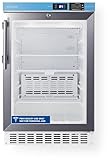
Overview: The Accucold ACR46GL is a purpose-built medical refrigerator designed for critical vaccine and medication storage. With a compact 2.65 cubic foot capacity, this unit meets stringent CDC and VFC guidelines while fitting into tight clinical spaces. Its 31.5-inch height ensures ADA compliance, making it ideal for accessible installations in pharmacies and medical offices.
What Makes It Stand Out: This model distinguishes itself with medical-specific features including a buffered temperature probe encased in glass beads for accurate product simulation, a pre-installed probe hole for external monitoring, and a comprehensive audible alarm system. The reversible double-pane tempered glass door provides visibility while maintaining temperature integrity, and the hospital-grade cord ensures secure connections in busy medical environments.
Value for Money: At $985, this refrigerator commands a premium price point typical of medical-grade equipment. While significantly more expensive per cubic foot than standard refrigerators, the specialized temperature stability, alarm systems, and CDC compliance justify the cost for healthcare facilities where vaccine efficacy cannot be compromised.
Strengths and Weaknesses: Strengths include precise medical-grade temperature control, ADA-compliant height, security lock, frost-free operation, and external monitoring capability. Weaknesses are limited capacity for larger practices, high cost per cubic foot, and the specialized nature that may be overkill for non-medical applications.
Bottom Line: An excellent investment for small medical practices, pharmacies, or clinics requiring reliable, compliant vaccine storage. The Accucold ACR46GL delivers peace of mind that justifies its premium pricing.
2. KoolMore 11 cu. ft. Medical Pharmacy Refrigerator with Emergency Backup Battery for Temperature Display and Alarm in White, UL Listed(KM-PHR-11C)

Overview: The KoolMore KM-PHR-11C is a high-capacity medical pharmacy refrigerator offering 11 cubic feet of precision storage. Designed for critical medication and vaccine preservation, this UL-listed unit features innovative top-down cooling technology and comprehensive monitoring systems essential for healthcare compliance and patient safety.
What Makes It Stand Out: The standout feature is the 24-hour battery backup that maintains temperature monitoring and alarms during power outages—a crucial safeguard for valuable contents. The top-cooling design creates an air barrier along the door, achieving remarkable temperature uniformity within ±1°C. Multiple alarm settings including high/low temperature, ambient, power failure, and sensor failure provide layered protection unmatched by standard medical refrigerators.
Value for Money: Priced at $2,399, this represents significant investment in medication security. While expensive compared to commercial units, the battery backup alone can prevent thousands in vaccine losses during outages. For hospitals and busy pharmacies where temperature excursions are unacceptable, the cost is justified by regulatory compliance and risk mitigation.
Strengths and Weaknesses: Strengths include exceptional temperature uniformity, battery backup, multiple alarm systems, and condensation-resistant design. The primary weakness is temperature display limited to Celsius only, which may require conversion for US staff. The price point also restricts it to professional healthcare settings.
Bottom Line: Ideal for hospitals, large clinics, and pharmacies requiring maximum protection for stored medications. The KoolMore delivers professional-grade security that merits its premium cost.
3. PEAKCOLD Single Door Commercial Refrigerator - 23 Cubic Ft, 29" Wide Stainless Steel Reach-In Commercial Refrigerator with White Internal Lighting - Freestanding Industrial Fridge

Overview: The PEAKCOLD commercial refrigerator offers substantial 23 cubic feet storage in a stainless steel reach-in design. ETL certified and NSF Standard 7 compliant, this unit bridges professional durability with residential warranty coverage, making it versatile for restaurants, schools, or home use where large capacity is essential.
What Makes It Stand Out: This model uniquely includes residential warranty coverage—a rarity in commercial equipment—while maintaining professional certifications. The self-closing door under 90 degrees saves energy, while the stay-open feature past 90 degrees facilitates restocking. Three adjustable shelves each support 88 pounds, and the R-290 refrigerant ensures environmentally responsible operation with lower energy costs.
Value for Money: At $1,295, this refrigerator delivers excellent value, costing less per cubic foot than many residential units while offering commercial durability. The inclusion of residential warranty eliminates a major drawback of commercial equipment for home users, representing significant long-term savings and peace of mind.
Strengths and Weaknesses: Strengths include large capacity, robust construction, multiple certifications, energy-efficient features, and dual commercial/residential warranty. The 55-70dB operational noise is the main weakness—louder than residential units—and the commercial aesthetic may not suit all home kitchens.
Bottom Line: A smart choice for serious home cooks or small businesses needing large-scale refrigeration. The PEAKCOLD combines commercial performance with homeowner-friendly warranty terms at a competitive price.
4. ACCUCOLD 1 cu ft Countertop Pharma-Vac Medical Refrigerator w/Solid Door - Temperature Alarm, 115v

Overview: The Accucold 1 cu ft Pharma-Vac is a ultra-compact medical refrigerator designed for countertop use in space-constrained clinical settings. Despite its small footprint, this unit maintains the medical-grade temperature control and alarm systems essential for medication and vaccine storage, operating on standard 115v power for maximum placement flexibility.
What Makes It Stand Out: Its primary distinction is the solid door design, which provides superior insulation compared to glass doors—critical for maintaining stable temperatures in challenging environments. The compact dimensions allow placement where larger units cannot fit, while the Accucold brand ensures medical-specific engineering including buffered temperature probes and calibrated controls for regulatory compliance.
Value for Money: At $1,109 for just 1 cubic foot, this is a significant investment. However, for specialized medical applications where space is at a premium and temperature stability is non-negotiable, the cost reflects precision engineering rather than capacity. It serves niche needs that standard compact refrigerators cannot safely address.
Strengths and Weaknesses: Strengths include minimal footprint, solid door insulation, medical-grade temperature alarm, and Accucold’s reputation for reliability. The extreme cost per cubic foot and very limited storage capacity are clear weaknesses, restricting it to specific use cases like travel clinics or small practices with tight space constraints.
Bottom Line: Perfect for healthcare providers needing reliable medical refrigeration in tight spaces. The Accucold countertop model prioritizes precision over capacity, serving its niche exceptionally well.
5. ICECASA 27" W Commercial Refrigerator Reach-in 23 Cu.ft Single Solid Door Stainless Steel Commercial Refrigerator Fan Cooling for Restuarant, Bar, Shop, etc

Overview: The ICECASA 23 cubic foot commercial refrigerator combines substantial storage capacity with exceptional warranty coverage. This single-door stainless steel unit targets both commercial establishments and residential users seeking industrial-grade refrigeration with comprehensive after-sales support and modern cooling technology.
What Makes It Stand Out: The warranty is unparalleled: two years of free on-site maintenance plus six years of compressor coverage for both commercial and residential locations. Intelligent features include automatic fan stop when the door opens, preventing warm air influx, and electric defrost every four hours. Heavy-duty shelves support 150 pounds each—far exceeding standard commercial units—and the fingerprint-resistant exterior reduces cleaning time.
Value for Money: At $1,379, this refrigerator is competitively priced within the commercial category. The extensive warranty adds tremendous value, potentially saving hundreds in service costs. For residential users, the warranty eliminates a primary commercial-equipment concern, while businesses benefit from reduced downtime risk and maintenance expenses.
Strengths and Weaknesses: Strengths include outstanding warranty, high shelf capacity, intelligent temperature controls, fingerprint-resistant stainless steel, and flexible residential/commercial use. Weaknesses include limited brand recognition compared to established commercial manufacturers and potential overkill for typical residential needs despite warranty coverage.
Bottom Line: An excellent value proposition for buyers prioritizing long-term support. The ICECASA offers commercial durability with warranty security that few competitors match, making it a wise investment for demanding applications.
6. JINSONG 27" Commercial Refrigerator with Single Solid Door, 23 cu.ft Stainless Steel Reach-in Refrigerator for Restaurant, Bar, Shop, Residential

Overview: The JINSONG 27" Commercial Refrigerator delivers professional-grade refrigeration in a 23 cubic foot package designed for demanding environments. Featuring a solid stainless steel door and robust construction, this reach-in unit targets restaurants, bars, shops, and even residential users seeking commercial reliability. Its Embraco compressor technology promises significant energy savings while maintaining whisper-quiet operation that won’t disrupt customer-facing spaces.
What Makes It Stand Out: The intelligent temperature control system automatically adapts to conditions, ensuring optimal performance without manual intervention. The 4-hour auto-defrost cycle is more frequent than many competitors, preventing ice buildup effectively. Four adjustable shelves maximize storage flexibility, while heavy-duty wheels provide mobility for cleaning or reconfiguration. The fingerprint-resistant stainless steel exterior reduces cleaning time significantly, a crucial benefit in busy commercial settings.
Value for Money: At $1,481.99, this unit sits in the mid-range for commercial refrigerators. The 5-year compressor warranty and 2-year parts coverage provide peace of mind that justifies the investment. Compared to conventional models, the 40% energy reduction translates to substantial long-term savings, making it cost-effective over its service life. ETL safety, hygiene, and DOE energy certifications add professional credibility.
Strengths and Weaknesses: Strengths include exceptional energy efficiency, quiet operation, comprehensive certifications, and maintenance-friendly design with removable door seals. The 90-degree auto-close mechanism enhances energy conservation. Weaknesses include a slightly higher upfront cost for residential buyers and fewer shelves than some competing models, potentially limiting organization options for diverse inventory.
Bottom Line: A solid investment for commercial operators prioritizing efficiency and reliability. The JINSONG balances performance, energy savings, and warranty coverage admirably, making it suitable for both professional kitchens and serious residential users.
7. ORIKOOL 27" W Commercial Reach-In Upright Refrigerator - Single Door Stainless Steel Fridge, 23 Cu.ft Capacity, 3 Adjustable Shelves, Auto Defrost, Digital thermostat control, LED Lighting

Overview: The ORIKOOL 27" Commercial Reach-In Upright Refrigerator offers premium refrigeration with a 23 cubic foot capacity housed in a durable stainless steel exterior. Designed for commercial kitchens and restaurants, this unit combines robust construction with intelligent temperature management, maintaining precise 33-40°F conditions for optimal food safety and freshness preservation.
What Makes It Stand Out: The CAREL digital thermostat provides professional-grade temperature accuracy, while the innovative heated door frame prevents condensation buildup—a crucial feature in humid environments. The door opens an impressive 222 degrees for easy loading and automatically closes when under 90 degrees. Curved interior edges simplify cleaning, and 24-hour customer service ensures support when needed, distinguishing it from competitors with limited support.
Value for Money: Priced at $1,599, this is a premium option. The 5-year compressor and 2-year parts warranty, combined with energy savings from the Cubigel compressor, offset the initial cost over time. The aluminum interior, while not stainless steel, still offers durability and corrosion resistance at this price point. The heated door frame adds value in high-humidity climates where condensation is problematic.
Strengths and Weaknesses: Strengths include excellent temperature control, superior door design, strong warranty coverage, and responsive customer service. Three anti-corrosion shelves each support 155 lbs. The heated door frame is a standout feature. Weaknesses include the aluminum interior (less premium than stainless) and fewer shelves than some competitors, potentially limiting organization options for diverse product lines.
Bottom Line: For professionals seeking top-tier temperature management and support, the ORIKOOL justifies its premium price with features that enhance daily operations and reduce maintenance headaches in demanding commercial environments.
8. ORIKOOL 27" W Commercial Glass-Door Reach-In Refrigerator - Tempered Glass Single Door Fridge, 21 Cu.ft Capacity, 3 Adjustable Shelves, Auto Defrost, Digital thermostat control, LED Lighting

Overview: The ORIKOOL 27" Glass-Door Reach-In Refrigerator brings visibility to commercial refrigeration with its 21 cubic foot tempered glass door design. Ideal for establishments needing quick ingredient identification, this unit maintains the same performance standards as its solid-door sibling while enhancing operational efficiency through transparency and reduced door-open time.
What Makes It Stand Out: The glass door allows staff to locate ingredients in under 5 seconds, reportedly increasing peak-hour efficiency by 30% by reducing cold air loss from repeated openings. Dynamic fan cooling ensures even temperature distribution, while the magnetic gasket creates a tight seal. LED lighting strips on both sides provide excellent interior illumination, and the 227-degree door opening offers exceptional access during busy service periods.
Value for Money: At $1,299, this model costs less than the solid-door version despite similar features. The 40% energy reduction and premium components make it an excellent value for retail environments where product visibility drives sales and operational speed matters. The trade-off is slightly reduced capacity (21 vs 23 cu.ft), but the efficiency gains often outweigh this minor limitation.
Strengths and Weaknesses: Strengths include superior visibility, energy efficiency, professional certifications, and the same robust warranty as other ORIKOOL models. Three shelves support 155 lbs each. The 227-degree door opening is exceptional. Weaknesses include potential insulation limitations compared to solid doors and marginally less storage space. Glass requires more frequent cleaning to maintain a pristine appearance in customer-facing areas.
Bottom Line: Perfect for delis, cafes, and restaurants where display matters. The ORIKOOL glass-door model delivers performance and visibility at a competitive price, making it a smart choice for businesses focused on speed and presentation.
9. Tylza Commercial Refrigerator with Glass Door Display Beverage Fridge, 350L Upright Beverage Cooler Merchandiser with Rebound Door, Fast Cooling, Low Noise, Black

Overview: The Tylza Commercial Glass Door Refrigerator focuses on beverage merchandising with its sleek black design and 350-liter capacity. Measuring 24.4" x 25" x 76.2", this unit stores up to 590 standard cans, making it ideal for storefronts, offices, or residential entertainment spaces prioritizing drink display over general food storage and commercial versatility.
What Makes It Stand Out: The high-transmittance tempered glass features infrared reflectivity, protecting beverages from external temperature fluctuations while providing crystal-clear visibility. The rebound automatic door closing mechanism ensures the door never remains ajar, preventing energy waste and temperature spikes. Fast cooling technology rapidly brings drinks to optimal serving temperature, crucial for high-turnover environments.
Value for Money: At $949.98, this is the most affordable option in the lineup. For beverage-focused applications, it offers excellent capacity and display quality. However, the lack of mentioned certifications (ETL, DOE) or warranty details may concern commercial buyers seeking long-term reliability protection and regulatory compliance for health inspections.
Strengths and Weaknesses: Strengths include attractive black aesthetics, impressive can capacity, fast cooling performance, and automatic door closure. The IR-reflective glass is a nice touch for temperature stability. Weaknesses include no stated certifications, unspecified warranty terms, and potential limitations for general food storage beyond beverages. It’s less suited for heavy-duty commercial kitchen use where hygiene certifications are mandatory.
Bottom Line: An excellent choice for beverage display on a budget. Best for light commercial or residential use where certifications are less critical and visual appeal matters most. Consider carefully if you need verified commercial compliance.
10. ICECASA 27" W Commercial Display Refrigerator Single Glass Door Merchandiser Reach-in 23 Cu.ft Stainless Steel Display Refrigerator Fan Cooling for Restuarant, Bar, Shop, etc

Overview: The ICECASA 27" Commercial Display Refrigerator combines a 23 cubic foot capacity with a single glass door merchandiser design. Built for restaurants, bars, and retail shops, this unit emphasizes longevity and serviceability with an impressive warranty package and intelligent features that reduce operational costs and maintenance downtime over its potential 10-year service life.
What Makes It Stand Out: The fan automatically stops when the door opens, preventing warm air infiltration and reducing energy costs—a smart innovation rarely seen in this price class. The LCD digital temperature display provides convenient monitoring, while fingerprint-resistant stainless steel minimizes cleaning time. Most notably, ICECASA offers 2 years of free on-site maintenance plus 6 years of compressor coverage, applicable to both commercial and residential locations.
Value for Money: At $1,429, this model offers the best warranty in its class. The potential 10-year service life and included on-site service create exceptional long-term value, outweighing the slightly higher price than budget options. Four shelves each hold 150 lbs, providing ample storage flexibility for various products and display configurations.
Strengths and Weaknesses: Strengths include outstanding warranty coverage, intelligent temperature control, auto-defrost every 10 hours, and professional certifications. The fan-stop feature demonstrates thoughtful engineering. Weaknesses include less frequent auto-defrost cycles than some competitors and a slightly higher price point than basic models lacking service plans. The glass door may require more cleaning in high-traffic areas.
Bottom Line: The ICECASA is the warranty leader, making it ideal for businesses prioritizing long-term reliability and minimal downtime. The comprehensive service package alone justifies the investment, providing peace of mind that competitors can’t match.
Why Pharmacies Need Specialized Refrigeration Solutions
The Critical Role of Temperature Control in Medication Safety
Medication efficacy hinges on precise temperature control. Biologics, vaccines, chemotherapy agents, and compounded sterile preparations require storage within narrow temperature ranges—typically 2-8°C (36-46°F). Even brief excursions outside these parameters can degrade molecular structures, rendering life-saving treatments ineffective or potentially harmful. Standard household or commercial refrigerators simply cannot maintain the temperature uniformity and stability that modern pharmaceuticals demand.
Pharmacy-grade freezerless units eliminate the variables introduced by freezer compartments, which create temperature stratification and force the compressor to work harder. Without a freezer section, these specialized refrigerators maintain consistent cooling throughout the entire cabinet, ensuring every shelf remains within the acceptable range. This design choice isn’t about convenience—it’s about creating a stable microenvironment where temperature-sensitive medications can be stored with confidence.
Understanding USP <797> and CDC Vaccine Storage Guidelines
Regulatory compliance drives many pharmacy refrigeration decisions. USP Chapter <797> outlines stringent requirements for storing compounded sterile preparations (CSPs), mandating continuous temperature monitoring with accurate recording devices. The CDC’s Vaccine Storage and Handling Toolkit similarly requires digital data loggers with buffered temperature probes, alarm capabilities, and detailed documentation protocols.
Your refrigerator must do more than keep contents cold—it must provide an auditable trail of temperature data, immediate alarm notifications when excursions occur, and the precision to maintain tight temperature bands. Single door configurations often simplify compliance by providing one consistent environment to monitor rather than multiple zones, reducing the complexity of your documentation and quality assurance processes.
Key Features to Look for in Pharmacy-Grade Refrigerators
Digital Temperature Alarms: Your First Line of Defense
Not all temperature alarms are created equal. The digital temperature alarm in a pharmacy-grade unit should offer programmable high and low-temperature setpoints, typically adjustable in 0.1°C increments. Look for systems that provide both audible alarms—loud enough (minimum 65 decibels) to be heard in a busy pharmacy—and visual indicators like flashing LED displays that persist until manually acknowledged.
Advanced systems include delay timers to prevent nuisance alarms during routine door openings, and some feature “alarm history” logs that record every triggered event with timestamps. This functionality proves invaluable during regulatory inspections, demonstrating your proactive approach to temperature management. The alarm system should also include power failure notifications, either through battery backup on the control panel or integrated with your facility’s emergency systems.
Single Door vs. Multi-Door Configurations for Pharmacy Workflows
While multi-door units might seem efficient for separating inventory, single door freezerless refrigerators offer distinct advantages for pharmacy environments. They eliminate the risk of staff opening the wrong compartment and disrupting critical inventory, simplify temperature mapping procedures, and provide full visibility of all contents at a glance. For pharmacies storing vaccines or high-value biologics, this transparency reduces door-open time—a key factor in temperature stability.
Single door units also typically achieve better temperature recovery after door openings since cold air doesn’t escape through multiple access points. In workflow terms, they encourage organized storage practices and can be positioned strategically within the dispensing area for optimal ergonomics. Consider your staff’s movement patterns and whether a single access point would streamline or hinder daily operations.
The Importance of Forced-Air Circulation Systems
Passive cooling creates hot spots. Pharmacy-grade refrigerators must employ forced-air circulation systems with internal fans that continuously distribute cold air throughout the cabinet. This technology prevents temperature stratification—the phenomenon where the top shelf runs warmer than the bottom—and ensures every vial, regardless of placement, experiences identical conditions.
When evaluating units, inquire about fan speed variability and whether the system includes air diffusers to prevent direct cold air blasts on products. Some advanced models feature “air curtain” technology that creates an invisible barrier of cold air when the door opens, dramatically reducing warm air infiltration. This capability directly impacts temperature recovery times and overall stability.
Decoding Temperature Uniformity and Recovery Performance
What is Temperature Mapping and Why It Matters
Temperature mapping is the process of measuring temperature at multiple points throughout the refrigerator’s interior under various conditions—empty, fully loaded, during door openings, and after power restoration. This validation process identifies hot and cold spots, informing proper product placement and confirming the unit meets performance specifications.
Before putting any new refrigerator into service, conduct a formal temperature mapping study using calibrated data loggers placed on every shelf. Repeat this process annually and after any major service. The results should show no point deviating more than ±0.5°C from the setpoint. Units with pre-drilled access ports for probe cables simplify this process, allowing you to run wires without compromising door seals.
Recovery Time After Door Openings: A Critical Metric
Every time staff access the refrigerator, warm air rushes in, triggering the compressor and creating temporary temperature spikes. Recovery time—the duration needed to return to the setpoint—varies dramatically between units. Pharmacy-grade refrigerators should recover to within 2-8°C within 15 minutes after a 30-second door opening at normal room temperature (20-25°C).
This specification matters because frequent access during busy periods can create cumulative temperature excursions. Look for units with rapid recovery technology, including high-BTU compressors and intelligent defrost cycles that pause during peak access times. Some models even feature “door opening counters” that track access frequency, helping you identify workflow patterns that might compromise medication integrity.
Alarm Systems Beyond Basic Temperature Alerts
Multi-Channel Alarm Notifications: Audible, Visual, and Remote
Modern pharmacy refrigerators offer layered alarm systems that ensure no critical alert goes unnoticed. Beyond the standard audible buzzer and flashing display, premium units provide relay contacts for integration with building management systems, allowing alarms to trigger overhead pagers, phone notifications, or even SMS alerts to pharmacy managers’ mobile devices.
Consider units with Ethernet or Wi-Fi connectivity that enable remote monitoring through web-based dashboards. These systems allow you to check current temperatures, review alarm history, and adjust setpoints from any location—particularly valuable for after-hours oversight. Ensure any cloud-based system meets HIPAA requirements for data security and provides encrypted transmission protocols.
Data Logging Capabilities for Compliance Documentation
Manual temperature logs are obsolete. Your refrigerator must include a digital data logger that records temperatures at least every 15 minutes, storing data for a minimum of one year. The system should automatically generate reports formatted for regulatory inspection, including minimum, maximum, and average temperatures over any specified period.
Look for loggers with backup battery power that continues recording during outages, and USB or network download capabilities for easy data retrieval. Some advanced systems automatically email daily summary reports to designated staff, creating a passive compliance mechanism. The probe should be glycol-buffered to simulate liquid temperatures rather than air fluctuations, providing more accurate readings of actual medication conditions.
Size and Capacity Considerations for Different Pharmacy Settings
Calculating Your True Storage Needs
Capacity requirements extend beyond current inventory. Factor in seasonal fluctuations—flu season dramatically increases vaccine storage needs—and potential growth in specialty pharmacy services. A good rule of thumb: purchase a unit with 25-30% more capacity than your average daily inventory requires, but avoid oversized units that waste energy and floor space.
Consider vial and box dimensions when evaluating shelf spacing. Adjustable shelving with 1-inch increments provides flexibility for evolving product lines. For hospital pharmacies, calculate needs by service line: oncology, IV room, and satellite clinics may each require dedicated units to prevent cross-contamination and simplify inventory management.
Space Constraints and ADA Compliance
Pharmacy layouts rarely offer unlimited space. Single door units typically range from 24 to 30 inches wide, but don’t forget to account for door swing clearance—generally 36-48 inches in front of the unit. For tight spaces, specify units with reversible door hinges or sliding glass doors, though the latter may compromise seal integrity over time.
ADA compliance requires that controls and displays be accessible from a seated position (15-48 inches from the floor). Ensure digital displays and alarm acknowledgment buttons fall within this range. Also consider casters for mobility during cleaning and maintenance, but verify they include locking mechanisms to prevent unintended movement.
Energy Efficiency and Operating Costs
Understanding Energy Star Ratings for Medical-Grade Units
Medical-grade refrigerators consume significantly more energy than residential units due to their powerful compressors and continuous fan operation. Energy Star certification for medical equipment indicates the unit uses at least 15% less energy than standard models while maintaining performance. Over a 10-year lifespan, this can translate to $500-800 in savings per unit.
However, don’t sacrifice temperature performance for marginal energy gains. Some ultra-efficient models use variable-speed compressors that adjust cooling output based on load—a technology that both saves energy and reduces temperature fluctuations. Review the unit’s energy consumption data (kWh/year) and calculate annual operating costs based on your local utility rates.
Long-Term Cost of Ownership Calculations
Purchase price represents only 30-40% of total ownership cost. Factor in calibration expenses ($150-300 annually), preventive maintenance contracts ($200-400/year), and potential revenue loss from a single temperature excursion event. A $3,000 unit that prevents one $5,000 vaccine loss has already paid for itself.
Consider warranty terms carefully. Five-year compressor warranties are standard, but premium units offer 10-year coverage plus extended warranties on parts and labor. Evaluate the manufacturer’s service network—local technicians familiar with medical equipment provide faster response times than general appliance repair services. Some manufacturers offer loaner programs during repairs, minimizing operational disruption.
Installation Requirements and Site Preparation
Electrical Specifications and Dedicated Circuits
Pharmacy refrigerators require dedicated 120V, 20-amp circuits—not shared with other equipment. Voltage fluctuations from adjacent machinery can disrupt compressor operation and trigger false alarms. Ensure the electrical outlet is within 6 feet of the unit’s location and includes hospital-grade receptacles with green dot certification for secure plug retention.
For facilities with backup generators, verify the circuit is included in emergency power systems. Some advanced units include automatic voltage regulation that protects against surges and brownouts, preventing control board damage. Never use extension cords or power strips—these create fire hazards and void warranties.
Ventilation Clearances and Ambient Temperature Limits
Medical-grade compressors generate significant heat and require proper ventilation. Maintain minimum clearances of 3 inches on sides and top, and 4-6 inches at the rear. Built-in units designed for enclosed spaces use front-venting condensers that eliminate side clearance requirements—essential for under-counter installations.
Ambient temperature dramatically impacts performance. Most units are rated for 15-32°C (59-90°F) environments, but pharmacy back rooms can exceed this during summer months. If your location experiences temperature swings, specify “high ambient” models rated to 43°C (110°F). Installing the unit away from direct sunlight, heat registers, and equipment exhaust prevents compressor overwork and extends lifespan.
Maintenance and Calibration Protocols
Preventive Maintenance Schedules
Quarterly maintenance prevents catastrophic failures. Schedule professional service every three months to clean condenser coils, check door gasket integrity, test alarm functions, and verify temperature accuracy against calibrated references. Dirty condenser coils reduce efficiency by up to 30% and are the leading cause of compressor failure.
Between service visits, implement daily visual inspections: check the digital display for proper temperature, ensure the door closes securely, and listen for unusual compressor noises. Monthly tasks include cleaning door gaskets with mild soap (avoid petroleum-based products that degrade rubber) and verifying that interior lights function properly—burned-out lights cause extended door-open times.
DIY vs. Professional Calibration Services
While staff can perform basic verification using calibrated thermometers, professional calibration services provide NIST-traceable documentation required for regulatory inspections. Annual professional calibration should include a three-point temperature verification (4°C, 25°C, and 37°C) and recalibration of the control probe if deviations exceed ±0.5°C.
Some modern units include self-calibration routines accessible through the control panel, but these don’t replace professional services. Maintain a calibration log documenting all adjustments, and never attempt to calibrate the control board yourself unless specifically trained—improper adjustments can create dangerous temperature offsets that compromise entire inventories.
Security Features for Controlled Substances
Locking Mechanisms and Access Control Integration
While primarily designed for temperature-sensitive medications, these refrigerators often store controlled substances requiring DEA compliance. Standard key locks offer basic security, but electronic keypad locks provide audit trails showing access times and user codes. For maximum security, specify units with integrated card readers that connect to your facility’s access control system, automatically logging every interaction.
Consider dual-lock systems requiring two authorized staff members for access—ideal for Schedule II medications. Some advanced units include interior motion sensors that trigger silent alarms if unauthorized access occurs after hours. Ensure locking mechanisms don’t interfere with door seal integrity, as poorly designed locks can create air gaps that compromise temperature stability.
Warranty and Service Support Considerations
Medical equipment warranties vary dramatically. Read the fine print: some manufacturers exclude door gaskets, interior lights, and control boards from coverage, considering them “consumable” parts. Premium warranties include on-site service and same-day response guarantees—critical when every hour of downtime risks inventory loss.
Investigate the manufacturer’s technical support availability. 24/7 phone support staffed by biomedical engineers, not call center operators, provides confidence during emergencies. Ask about firmware update policies; units with field-updatable software can receive new features and security patches, extending useful life. Finally, verify that replacement parts remain available for at least 10 years post-purchase—nothing’s worse than a $4,000 refrigerator rendered useless by a $50 discontinued control board.
Frequently Asked Questions
1. What’s the difference between a pharmacy-grade refrigerator and a standard commercial unit?
Pharmacy-grade refrigerators maintain precise temperature uniformity (±0.5°C variation), feature rapid recovery systems, include NIST-calibrated probes, and provide comprehensive alarm and data logging capabilities. Standard commercial units have temperature swings of 3-5°C, lack proper alarm systems, and cannot produce the documentation required for regulatory compliance.
2. How often should I perform temperature mapping on my pharmacy refrigerator?
Conduct initial temperature mapping before placing the unit into service, then repeat annually and after any major repair or relocation. Also perform mapping if you notice frequent alarm events or changes in inventory loading patterns. Each mapping study should run for 24-48 hours under normal operating conditions.
3. Can I store vaccines and chemotherapy drugs in the same refrigerator?
While technically possible if temperature ranges align, best practice dictates separate units for different drug categories. This prevents cross-contamination, simplifies inventory management, and isolates risk—if one unit fails, you don’t lose all critical inventory. CDC guidelines specifically recommend dedicated vaccine storage units.
4. What should I do during a power outage if my refrigerator doesn’t have battery backup?
Keep the door closed to maintain temperature—most pharmacy-grade units will hold temperature for 4-6 hours if unopened. Have a backup plan with a generator-equipped facility or transport containers with ice packs ready. Document the outage duration and monitor temperatures manually with a calibrated thermometer until power restores.
5. How do I know if my digital temperature alarm is accurate?
Perform quarterly accuracy checks using a NIST-traceable calibrated thermometer placed adjacent to the built-in probe. The readings should match within ±0.5°C. If discrepancies exist, schedule professional calibration immediately. Never rely solely on the built-in display without periodic verification.
6. What’s the ideal storage capacity for a community pharmacy?
Most community pharmacies benefit from 18-24 cubic feet units, which accommodate 200-300 vaccine doses plus routine medications. Consider your patient volume, seasonal fluctuations, and specialty service plans. Undersized units lead to overcrowding and poor air circulation, while oversized units waste energy.
7. Are glass door or solid door refrigerators better for pharmacy use?
Glass doors reduce door-open time by allowing visual inventory checks, but they provide less insulation and can develop condensation in humid environments. Solid doors offer superior temperature stability and security. Many pharmacies choose solid doors for high-value inventory and glass doors for fast-moving vaccines where quick identification is crucial.
8. How long should temperature data be retained for regulatory compliance?
CDC guidelines require vaccine temperature data retention for three years, while USP <797> specifies records be kept for at least one year beyond the preparation’s beyond-use date. Best practice is maintaining digital records for a minimum of three years, with backup storage on secure servers or encrypted cloud platforms.
9. Can I install a pharmacy refrigerator under a counter?
Only if specifically designed as a “built-in” or “under-counter” model with front-venting condensers. Standard units require side and top clearance for heat dissipation. Installing a freestanding unit in an enclosed space voids the warranty, causes compressor failure, and creates dangerous temperature instability.
10. What maintenance can pharmacy staff safely perform without voiding the warranty?
Staff can clean interior surfaces with approved disinfectants, wipe door gaskets monthly, check door seal integrity, verify alarm operation, and keep condenser coils free of dust (if accessible). Never attempt to adjust control settings beyond setpoint changes, calibrate probes, or service refrigeration components—leave these tasks to certified technicians to maintain warranty coverage.