Narrow kitchen layouts present a unique puzzle: how do you fit full-scale appliances into a space that seems to defy geometry? The refrigerator, typically the kitchen’s largest appliance, often becomes the biggest challenge. Standard-depth models can jut out awkwardly, turning a tight cooking zone into an obstacle course of bruised hips and compromised workflow. This is where counter-depth refrigerators transform from a luxury option into a strategic necessity. They don’t just save inches—they reclaim your kitchen’s functionality and visual harmony.
But not all counter-depth models are created equal, especially when you’re working with limited width and depth simultaneously. The market is flooded with options that promise space-saving benefits, yet fail to address the specific constraints of galley kitchens, compact urban apartments, or narrow galley-style renovations. Understanding the nuances of measurement, configuration, and feature prioritization becomes critical to making a choice that actually improves your daily life rather than simply looking sleek. Let’s dive deep into what separates a truly space-efficient counter-depth refrigerator from the pretenders.
Top 10 Counter-Depth Refrigerators for Narrow Kitchen Layouts
Detailed Product Reviews
1. Sharp SJB1255GS Bottom-Freezer Counter-Depth Refrigerator, 24 Inch, 11.5 Cubic Foot, Garage Ready

Overview: The Sharp SJB1255GS delivers premium features in a compact 11.5 cubic foot bottom-freezer configuration designed for space-constrained kitchens and garage installations. Its counter-depth profile integrates seamlessly with cabinetry, while the garage-ready certification ensures reliable operation in temperature extremes from 0°F to 110°F. This model serves homeowners needing a primary unit for small households or a high-quality secondary refrigerator.
What Makes It Stand Out: The vacation mode function intelligently powers down the refrigerator compartment while maintaining freezer operation, delivering meaningful energy savings during extended travel. A removable wine rack adds unexpected versatility for entertaining, while the Fresh Converter Drawer adapts between chiller and crisper modes for customized food preservation. Multi-Air Flow technology distributes cold air evenly through multiple vents in both compartments.
Value for Money: At $1,098.97, this Sharp model undercuts most counter-depth units by $200-400 while offering specialized features absent in basic top-freezer alternatives. The garage-ready capability alone typically commands a $150 premium, making this pricing aggressive for a reputable brand. For buyers prioritizing reliability and efficiency over raw capacity, the value proposition is compelling.
Strengths and Weaknesses: Strengths: Garage-ready design; vacation mode energy savings; convertible fresh drawer; space-efficient layout; trusted brand reliability Weaknesses: Limited 11.5 cu ft capacity; no ice maker; smaller freezer drawer; fewer door bins than French door models
Bottom Line: The Sharp SJB1255GS excels as a primary refrigerator for apartments and condos or as a premium garage unit. Its specialized features and robust construction deliver exceptional utility despite modest capacity. Ideal for small households wanting advanced functionality without sacrificing space or efficiency.
2. KoolMore 30-Inch and 18.5 cu. ft. Counter Depth French Door Refrigerator with Three Doors and Deep Freezer in Stainless-Steel (KM-RERFDSS-18C)

Overview: The KoolMore 18.5 cubic foot French door refrigerator brings European styling to mid-range kitchens with its three-door configuration and counter-depth silhouette. This stainless-steel model offers substantial capacity while maintaining the sleek lines desired in contemporary spaces. It balances accessibility with organized storage for families of three to four members.
What Makes It Stand Out: Double freezer drawers provide superior organization compared to single-drawer designs, preventing frozen item avalanches. Six door bins maximize vertical storage efficiency, while humidity-controlled double crispers extend produce freshness significantly. Precision temperature management through dual-flow cooling ensures even cold distribution throughout all compartments, eliminating hot spots.
Value for Money: Priced at $1,389, this model undercuts major brand French door refrigerators by $400-600 while delivering comparable features and capacity. The 18.5 cubic foot size hits the sweet spot for most families, offering 60% more space than compact models without the bulk of premium 22+ cubic foot units. Adjustable glass shelving adds flexibility rarely seen at this price tier.
Strengths and Weaknesses: Strengths: Excellent storage organization; humidity-controlled crispers; counter-depth design; dual-flow cooling; competitive pricing Weaknesses: No built-in ice maker; lesser-known brand; potentially shorter warranty support; basic interior lighting
Bottom Line: The KoolMore French door refrigerator represents outstanding value for design-conscious buyers prioritizing function over brand prestige. Its thoughtful storage solutions and modern aesthetics make it a smart choice for kitchen renovations. Consider your ice-making needs separately, as this remains its most notable omission.
3. Hamilton Beach HBF1662 French Door Full Size Counter Depth Refrigerator with Freezer Drawer, 16.6 cu ft, Stainless

Overview: Hamilton Beach applies its trusted small appliance expertise to this 16.6 cubic foot French door refrigerator, offering reliable performance in a counter-depth package. The unit combines accessibility with practical features like gallon door bins and LED illumination. Its recessed handles create a streamlined, professional appearance suitable for modern kitchens without protruding hardware.
What Makes It Stand Out: The spacious 4.9 cubic foot freezer compartment exceeds expectations for this class, providing ample room for frozen goods organization. Gallon-sized door bins free valuable shelf space for larger items, while recessed handles prevent snagging in tight kitchen layouts. Bright LED interior lighting ensures excellent visibility without heat generation, reducing temperature fluctuations.
Value for Money: At $1,245.47, this Hamilton Beach model leverages brand recognition to compete effectively against emerging manufacturers. The price reflects a $150-200 premium over no-name alternatives, justified by established customer service networks and parts availability. Counter-depth French door models under $1,300 remain rare, making this a budget-friendly entry point into the category.
Strengths and Weaknesses: Strengths: Trusted brand name; large freezer capacity; space-saving recessed handles; gallon door bins; energy-efficient LED lighting Weaknesses: No ice maker; smaller total capacity; limited advanced features; fewer door bins than competitors
Bottom Line: This Hamilton Beach refrigerator suits brand-loyal consumers seeking French door styling without premium pricing. The generous freezer space and practical design elements outweigh modest capacity limitations. Perfect for couples or small families wanting reliability and style on a budget, with the confidence of a recognizable manufacturer.
4. HobbyField 21 Cu.Ft 4-Door French Door Refrigerator – Counter-Depth Stainless Steel Fridge with Freezer, Refresh Zone & Wine Cooler | Multi-Use for Kitchen, Bedroom, Office & Dorm

Overview: The HobbyField 21 cubic foot refrigerator redefines versatility with its innovative 4-door configuration incorporating a dedicated wine cellar. This counter-depth unit serves as a consolidated food and beverage center, eliminating the need for separate appliances. The multifunctional design targets wine enthusiasts and entertainers seeking streamlined kitchen solutions without compromising on specialized storage.
What Makes It Stand Out: The 32-bottle wine cabinet with independent temperature control (41°F–64.4°F) stands as the flagship feature, rivaling standalone wine coolers costing $400-600 alone. Three distinct climate zones allow simultaneous optimization for fresh foods, frozen items, and wine preservation. The inverter compressor operates whisper-quiet while adapting efficiently to temperature demands, maintaining consistent conditions.
Value for Money: At $1,636.65, this model costs less than purchasing a separate wine cooler and standard refrigerator. The 21 cubic foot capacity and premium features typically command $2,000+ from established brands. Fingerprint-resistant stainless steel and customizable zones deliver luxury amenities at mid-tier pricing, making it financially compelling for wine lovers.
Strengths and Weaknesses: Strengths: Integrated wine storage; three independent climate zones; quiet inverter compressor; spacious 21 cu ft capacity; fingerprint-resistant finish Weaknesses: Niche brand with unproven longevity; complex features may overwhelm basic users; limited service network; occupies substantial floor space
Bottom Line: The HobbyField excels for wine collectors and frequent hosts wanting an all-in-one solution. Its specialized compartments and precise temperature management justify the investment for the right user. Verify local service availability before purchasing, as the brand’s support infrastructure remains developing.
5. KoolMore Counter Depth French Door Refrigerator with Ice Maker, 4 Door Stainless-Steel Fridge - 22.5 Cu.Ft
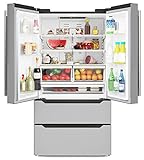
Overview: The KoolMore 22.5 cubic foot 4-door refrigerator represents the brand’s flagship offering, integrating a built-in ice maker with expansive storage capacity. This counter-depth stainless-steel model serves large families demanding both style and functional performance. The four-door configuration provides exceptional organization for diverse food types while maintaining kitchen sightlines.
What Makes It Stand Out: The automatic ice maker eliminates the inconvenience of manual tray filling, a rarity in counter-depth models under $2,500. Two large freezer drawers plus six door bins create unparalleled organization options for frozen and refrigerated goods. The double-flow cooling system maintains consistent temperatures across all zones, while digital controls offer precise adjustments for optimal food preservation.
Value for Money: At $2,370.38, this model competes with premium brands like LG and Samsung at a 20-30% discount. The included ice maker typically adds $200-400 to refrigerator costs, making the effective base price under $2,000. For maximum counter-depth capacity with advanced features, this represents strong value despite the higher absolute cost compared to standard-depth units.
Strengths and Weaknesses: Strengths: Built-in ice maker; largest capacity (22.5 cu ft); excellent organization; double-flow cooling; modern stainless design Weaknesses: Premium pricing; brand recognition concerns; potentially higher repair costs; may be oversized for small households
Bottom Line: This KoolMore model suits large families prioritizing capacity and convenience over brand prestige. The integrated ice maker and superior organization justify the investment for busy households. Ideal for kitchen renovations where maximum storage and seamless design are paramount considerations.
6. Midea 22.5 Cu. Ft. Counter-Depth 4-Door French Door Refrigerator

Overview: The Midea 22.5 Cu. Ft. Counter-Depth 4-Door French Door Refrigerator delivers premium styling at a surprisingly accessible price point. This appliance features a modern French door configuration with four distinct compartments, providing sophisticated organization for contemporary kitchens while maintaining a built-in look that doesn’t protrude beyond standard countertops.
What Makes It Stand Out: The four-door design sets this model apart from traditional three-door configurations, offering dual freezer drawers that enable superior frozen food organization. The humidity-controlled double crispers extend produce freshness significantly, while electronic temperature control provides precise climate management. LED interior lighting illuminates contents efficiently, and the counter-depth profile creates a seamless, high-end aesthetic without the custom price tag.
Value for Money: At $1,299.22, this refrigerator dramatically undercuts competitors offering similar features by $500-$1,000. You’re getting true counter-depth construction, French door styling, and advanced features like humidity-controlled crispers typically found in premium models. For budget-conscious homeowners seeking modern aesthetics, this represents exceptional value.
Strengths and Weaknesses: Strengths include the innovative four-door layout, competitive pricing, sleek counter-depth design, and effective LED lighting. Weaknesses involve Midea’s lesser brand recognition compared to legacy manufacturers, potentially impacting resale value and long-term parts availability. The electronic controls may also prove less durable than mechanical systems over decades of use.
Bottom Line: This Midea refrigerator is ideal for style-savvy buyers prioritizing aesthetics and functionality over brand prestige. It delivers 90% of the premium experience at 60% of the cost, making it a smart choice for first-time homeowners or renovators on moderate budgets.
7. GE GYE22GYNFS 36" French Door Counter Depth Refrigerator with 22.1 cu. ft. Total Capacity Space Saving Ice Maker Showcase LED Lighting in Stainless Steel
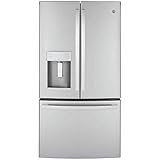
Overview: The GE GYE22GYNFS represents the trusted manufacturer’s answer to the demand for sleek, built-in appearance refrigerators. With 22.1 cubic feet of capacity, this 36-inch French door model combines space-saving engineering with the reliability of one of America’s most established appliance brands, featuring thoughtful innovations for modern households.
What Makes It Stand Out: The space-saving ice maker design maximizes freezer capacity without sacrificing convenience. Showcase LED lighting provides exceptional visibility throughout the interior, making food retrieval effortless. The fingerprint-resistant stainless steel exterior maintains a pristine appearance with minimal cleaning, addressing a common pain point for busy families. GE’s reputation for durability and service network adds significant peace of mind.
Value for Money: Priced at $1,999.00, this model sits in the sweet spot between budget and luxury tiers. You’re investing in proven reliability, superior customer support, and innovative features like the compact ice maker. While $700 more than the Midea equivalent, the premium covers brand trust, likely longer lifespan, and better resale value.
Strengths and Weaknesses: Strengths include the space-efficient ice maker, fingerprint-resistant finish, excellent LED lighting, and GE’s robust warranty and service infrastructure. Weaknesses comprise the higher price point, slightly smaller capacity than standard-depth models, and the ice maker’s location potentially reducing already limited freezer space in this counter-depth configuration.
Bottom Line: Perfect for buyers who prioritize brand reliability and low maintenance over absolute cost savings. The GE GYE22GYNFS is a solid mid-range investment that balances modern features with the assurance of established manufacturer support, suitable for families wanting hassle-free performance.
8. GE® ENERGY STAR® 17.5 Cu. Ft. Counter-Depth French-Door Refrigerator

Overview: This GE ENERGY STAR certified refrigerator targets environmentally conscious consumers seeking advanced cooling technology in a compact footprint. At 17.5 cubic feet, it’s designed for smaller households or secondary kitchens where efficiency and performance trump raw capacity, delivering premium features in a space-conscious package.
What Makes It Stand Out: Turbo Cool and Turbo Freeze settings provide rapid temperature recovery after door openings, preserving food quality better than conventional systems. The ENERGY STAR certification ensures lower utility bills and reduced environmental impact. Combined with fingerprint-resistant stainless steel and crisp LED lighting, this model offers flagship features in a smaller size.
Value for Money: At $2,399.00, this is the premium option among these reviews. The price reflects advanced cooling technology and energy efficiency that can save $50-$100 annually on utilities. For eco-minded buyers or those in high electricity cost regions, the investment pays dividends over time. However, the capacity limitation makes it suitable only for specific use cases.
Strengths and Weaknesses: Strengths include exceptional energy efficiency, rapid cooling technology, smudge-proof exterior, and superior temperature management. Weaknesses are the smaller 17.5 cubic foot capacity (limiting appeal for families), highest price point in its class, and features that may be overkill for users who don’t frequently open the refrigerator.
Bottom Line: Best suited for tech-savvy couples, empty nesters, or environmentally focused households where premium performance justifies premium pricing. The capacity limits broad appeal, but those prioritizing efficiency and advanced features will find excellent long-term value despite the upfront cost.
9. Icyglee 15 Inch Beverage Cooler Under Counter Built-in Beverage Refrigerator,127 Cans Mini Fridge with Glass Removable Shelves for Drink Beer Soda Wine Water

Overview: The Icyglee 15-inch beverage cooler addresses the growing home entertainment market with a compact, built-in capable solution. Accommodating 127 cans, this under-counter unit fits seamlessly into kitchen islands, home bars, or office break rooms, offering specialized drink storage that frees up main refrigerator space while adding convenience.
What Makes It Stand Out: The front-vented design enables true built-in installation without clearance concerns, a feature often missing in this price range. One-touch temperature controls with LED display simplify operation, while the hidden door lock prevents unauthorized access—ideal for households with children or commercial settings. Multi-layer insulation and seamless foam construction ensure consistent cooling performance.
Value for Money: At $319.99, this represents exceptional value for a built-in capable beverage refrigerator. Comparable units from premium brands cost $500-$800. The inclusion of a door lock, front ventilation, and adjustable shelves at this price point makes it a budget-friendly choice for casual entertainers and small offices.
Strengths and Weaknesses: Strengths include the front-vented built-in design, security lock, adjustable shelving, quiet operation, and unbeatable price. Weaknesses involve lesser-known brand reputation, potential temperature fluctuations when fully loaded, the required 24-hour standing period after delivery, and limited 127-can capacity for serious collectors.
Bottom Line: An excellent entry-level option for homeowners wanting dedicated beverage storage without major renovation costs. The Icyglee cooler is perfect for man caves, small offices, or apartments where space and budget are primary constraints, though heavy users may eventually desire a larger unit.
10. EUHOMY 24 Inch Beverage Refrigerator, 180 Can Built-in Beverage Cooler, Under Counter Beer Fridge with Glass Door for Soda, Water, Wine - For Kitchen, Bar or Office
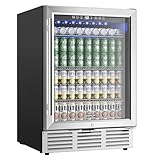
Overview: The EUHOMY 24-inch beverage refrigerator positions itself as a premium under-counter solution for serious entertainers. With capacity for 180 cans, this unit significantly outpaces smaller competitors while maintaining built-in capability. It’s designed for seamless kitchen integration, home bars, or commercial office spaces requiring substantial drink storage.
What Makes It Stand Out: The sensor-activated LED lighting with memory function restores previous settings after power outages—a thoughtful touch for wine collectors. Operating at just 40dB, it’s remarkably quiet, while consuming only 0.84kWh daily. The front ventilation design, multiple certifications (ETL, DOE, CEC), and hidden door lock demonstrate professional-grade engineering.
Value for Money: At $589.99, this mid-range pricing reflects substantial upgrades over budget alternatives. The 40% capacity increase versus 15-inch models, combined with memory function, superior insulation, and energy efficiency, justifies the $270 premium over the Icyglee. For frequent entertainers, the extra capacity and reliability features deliver strong ROI.
Strengths and Weaknesses: Strengths include impressive 180-can capacity, memory function, whisper-quiet operation, energy efficiency, comprehensive certifications, and robust after-sales support. Weaknesses are the larger footprint requiring more installation space, higher price point, and potentially excessive capacity for casual users.
Bottom Line: Ideal for dedicated home entertainers, small restaurants, or offices with high beverage consumption. The EUHOMY balances capacity, features, and build quality at a reasonable price. If you regularly host gatherings or want a set-and-forget solution, this premium mid-range option outperforms budget competitors significantly.
Understanding Counter-Depth Refrigerators
What Makes a Refrigerator “Counter-Depth”?
The term “counter-depth” is slightly misleading—it doesn’t mean your refrigerator will be exactly flush with your countertops. Standard kitchen counters measure 24-25 inches deep, but counter-depth refrigerators typically range from 23 to 30 inches deep, excluding handles and doors. The key distinction is that these models are designed to sit nearly flush with standard cabinetry, creating a streamlined, built-in look without the built-in price tag. For narrow kitchens, this reduced protrusion means reclaiming 6-8 inches of floor space, which can make the difference between comfortable navigation and constant collision.
Standard vs. Counter-Depth: The Critical Differences
Beyond the obvious depth reduction, counter-depth models fundamentally differ in their internal architecture. Manufacturers sacrifice some interior cubic footage to achieve the shallower profile, but they compensate with smarter organization systems. The compressor location, insulation thickness, and evaporator placement all get re-engineered. In narrow kitchens, this matters because you’re not just buying a smaller fridge—you’re investing in a completely different approach to food storage that prioritizes accessibility over raw capacity. The trade-off becomes less painful when every shelf and bin is optimized for reachability.
Why Counter-Depth Models Are Perfect for Narrow Kitchens
The Space-Saving Philosophy
In a narrow kitchen, every inch of clearance affects the entire workflow triangle. A refrigerator that doesn’t protrude means you can open adjacent cabinet doors fully without interference. It allows two people to pass each other comfortably in a galley layout. More importantly, it eliminates the psychological claustrophobia that comes from appliances invading your personal space. The visual breathing room these models create often makes a kitchen feel 20% larger than it actually is, according to interior design studies on spatial perception.
Visual Flow and Kitchen Aesthetics
Counter-depth refrigerators create an uninterrupted sightline across your kitchen, which tricks the eye into perceiving more width. When your fridge doesn’t break the visual plane of your cabinetry, the space reads as cohesive rather than cluttered. This is particularly valuable in open-concept layouts where the kitchen is visible from living areas. The refrigerator becomes a design element rather than a bulky utility box, allowing you to maintain aesthetic continuity that makes narrow spaces feel intentional rather than compromised.
Key Measurement Considerations Before You Buy
Measuring Your Available Space Like a Pro
Grab your tape measure and notebook—this is where most buyers make critical errors. Measure the width at three points: floor level, counter height, and top of the space. Narrow kitchens often have walls that aren’t perfectly plumb, and that quarter-inch difference at the top can derail installation. Depth measurement must account for baseboard thickness, which can eat up ½-¾ inch. Measure from the wall surface, not the front of the counter. Height matters too—don’t forget to measure from the finished floor to the underside of any upper cabinets, accounting for flooring thickness if you’re renovating.
Door Swing Clearance: The Often Overlooked Factor
Here’s the deal-breaker many discover too late: a 36-inch wide counter-depth fridge needs nearly 60 inches of clearance when both doors open to 90 degrees. In a 48-inch wide galley kitchen, that’s mathematically impossible. Calculate your door swing arc by measuring from the hinge point to the farthest corner of the door handle when fully extended. Some models offer zero-clearance hinges that allow doors to open within their own width, but these are premium features. For truly narrow spaces, consider how often you’ll need full access versus quick grab-and-go retrieval.
Ventilation Requirements and Clearances
Counter-depth models need breathing room—typically ½ inch on sides, 1 inch on top, and 1-2 inches behind. In narrow installations, that rear clearance becomes problematic because you can’t easily pull the unit out for cleaning. Some manufacturers have reduced these requirements with advanced cooling systems, but never assume. Check the spec sheet’s “installation clearances” section religiously. Insufficient ventilation forces the compressor to work harder, reducing efficiency and lifespan, which hits harder when you’ve paid a premium for the counter-depth design.
Configuration Options That Maximize Narrow Spaces
French Door Designs for Accessibility
French door models split the refrigerator compartment vertically, meaning each door is narrower and requires less swing clearance than a single full-width door. In a 30-inch wide space, this configuration can be a game-changer. The wide refrigerator compartment at eye level means less bending, while the bottom freezer drawer slides out without needing door clearance. However, the freezer drawer requires adequate pull-out space—ensure you have at least 24 inches of depth clearance in front of the unit when accounting for the handle and your ability to stand behind it when open.
Side-by-Side Models: Pros and Cons
Side-by-side configurations offer the narrowest door profiles, making them theoretically perfect for tight spaces. Both compartments remain at accessible heights, eliminating bending for frozen items. The downside? The narrow compartments can make storing wide items like pizza boxes or party platters frustrating. For narrow kitchens, the 33-inch wide side-by-side often fits where a 36-inch French door won’t, but you’ll sacrifice some refrigerator width. The ice and water dispenser location also becomes critical—internal dispensers save door space but require opening the door for every glass of water.
Bottom Freezer vs. Top Freezer: Space Impact
Top-freezer counter-depth models are rare but offer the most refrigerator space for their footprint. They require minimal door clearance but force constant bending for fresh food access. Bottom-freezer designs prioritize refrigerator access, which aligns with how most families use their fridge 90% of the time. For narrow kitchens, the bottom-freezer drawer often works better than a swing door because you can partially open it without blocking the aisle. Consider your household’s height—shorter users may struggle to see into the back of a high-top freezer.
Four-Door Flexibility: Worth the Investment?
Four-door models split the freezer into two independent compartments, offering unprecedented organization. In narrow kitchens, this means you can access frequently used frozen items from the upper drawer without opening the entire freezer section. Some models feature a convertible compartment that switches between fridge and freezer, giving you flexibility for entertaining. The premium price is harder to justify in small spaces unless you value organization over absolute capacity. The additional dividers do reduce usable space slightly, so calculate whether the flexibility outweighs the cubic footage loss.
Critical Features for Space Efficiency
Interior Organization Systems
Look for split shelving that allows you to create tall-item space on one side while maintaining full shelves on the other. Retractable half-shelves that slide under themselves are worth their weight in gold for narrow fridges. Door bins that adjust without tools let you reconfigure around bulky condiments. Some models feature dedicated compartments with independent temperature controls—these can replace a small wine fridge or beverage cooler, saving separate appliance space in your narrow kitchen.
Adjustable Shelving Strategies
Fixed shelving wastes space in any refrigerator, but the problem multiplies in counter-depth models where every cubic inch counts. Seek out models with at least four shelf positions per section, and preferably more. Spill-proof glass shelves with raised edges prevent messes from dripping down, which is crucial when you can’t easily reach the back. Some premium models offer shelves that slide forward, bringing items from the rear within easy reach—this feature alone can justify a higher price tag in a deep, narrow fridge where back corners become black holes.
Door Storage Innovations
Gallon-door bins free up valuable shelf space, but their depth can interfere with interior shelving when the door closes. Look for bins that angle slightly inward or feature cutaway designs. Some models include removable dividers within door bins, letting you customize for everything from soda cans to spice jars. For narrow kitchens, consider how door storage affects the overall width—bulky bins can make the doors effectively wider, reducing your aisle clearance when open.
Installation Nuances for Tight Spaces
Professional vs. DIY Installation
In narrow kitchens, professional installation isn’t a luxury—it’s cheap insurance. Installers have specialized dollies that can maneuver 300-pound appliances through 32-inch openings without damaging walls or floors. They’ll handle leveling on uneven floors, which is critical when clearances are measured in fractions of an inch. DIY installation risks scratching floors, denting the fridge, or worse, kinking the water line behind the unit where you can’t see it. The $150-300 installation fee pales compared to replacing a damaged fridge or repairing water damage.
Flooring and Leveling Considerations
Counter-depth refrigerators must be perfectly level to ensure proper door sealing and drainage. In narrow kitchens, floors are often older and less even. Adjustable feet typically offer 1-2 inches of height variation, but if your floor slopes more than that, you’ll need to address it before delivery. Consider placing the fridge on a ¼-inch plywood platform that you can level independently—this also protects flooring and makes future removal easier. Never install directly on carpet or uneven tile; the weight will eventually cause settling that throws off alignment.
Dealing with Baseboard Molding and Trim
That elegant baseboard molding you love? It might need to be notched or removed. Most counter-depth specs assume a flat wall surface. Baseboards can push the fridge forward by ¾ inch, defeating the purpose. Some installers can scribe the fridge casing to fit over the baseboard, but this requires precision. The cleaner solution is to remove the baseboard behind the fridge and replace it with a thinner profile or omit it entirely in that section. Plan this before delivery day—it’s a 30-minute job that prevents a major headache.
Style and Finish Considerations
Panel-Ready Options for Seamless Integration
Panel-ready models accept custom cabinet fronts, making the refrigerator disappear into your cabinetry. In narrow kitchens, this visual trickery makes the space feel larger by eliminating the appliance’s visual mass. The downside? You’ll pay 20-30% more for the fridge itself, plus $500-1,500 for custom panels. The panels also add ½-¾ inch of depth, so factor that into measurements. For rental properties or budget renovations, consider that panel-ready models have less resale appeal if you move.
Finish Durability in High-Traffic Areas
Narrow kitchens mean more opportunities to bump into the refrigerator. Stainless steel shows fingerprints and scratches easily, while black stainless steel is more forgiving but can chip. Traditional white or black finishes are most durable but may feel dated. New fingerprint-resistant stainless options use a different grain pattern that hides smudges. In tight spaces, consider the finish’s repairability—some manufacturers sell touch-up paint kits, while others require professional refinishing. The texture matters too; smoother finishes wipe clean faster but show dents more readily.
Handle Design and Protrusion
Protruding handles can add 2-3 inches to your depth measurement and become hip-level hazards in narrow aisles. Look for integrated handles that are recessed into the door or minimalist profiles that stay within an inch of the door surface. Some models offer interchangeable handles, letting you switch from bar-style to pocket-style without replacing the entire unit. Consider how handles feel when your hands are full—some sleek designs are ergonomically poor. In households with children or elderly users, avoid handles that require tight gripping or precise hand positioning.
Energy Efficiency in Compact Models
Understanding Energy Star Ratings
Counter-depth refrigerators often consume more energy per cubic foot than standard models because they have less interior volume relative to exterior surface area. A smaller fridge with a poor Energy Star rating might cost more to run than a larger efficient model. Look for the yellow Energy Guide label and compare estimated annual operating costs, not just the star rating. In narrow kitchens, poor ventilation can compound inefficiency, so an efficient compressor becomes even more critical. Some utilities offer rebates for Energy Star models, which can offset the higher purchase price.
Inverter Compressors: The Quiet Revolution
Traditional compressors cycle on and off, creating noise and temperature fluctuations. Inverter compressors run continuously at variable speeds, maintaining consistent temperatures while using less energy. In narrow kitchens where the fridge might be near living or sleeping areas, the reduced noise—often under 40 decibels—makes a dramatic difference. The initial cost premium of $200-400 typically pays back in 3-5 years through energy savings and food preservation benefits. Plus, the gentler operation reduces wear on components, extending the appliance’s lifespan.
Long-Term Cost Savings Analysis
Calculate total cost of ownership, not just purchase price. A $2,500 efficient model might save $150 annually in electricity compared to a $1,800 inefficient unit, breaking even in 4.7 years. Factor in food waste—better temperature control and organization reduce spoilage, saving an estimated $300-500 yearly for average families. In narrow kitchens, the space efficiency might eliminate the need for a secondary beverage fridge or freezer in another room, saving another $500-1,000. The math often favors premium models when you look beyond the sticker price.
Budget Planning and Value Propositions
Price Ranges and What to Expect
Entry-level counter-depth refrigerators start around $1,200-1,500 but often lack key space-saving features like adjustable shelving or quality lighting. Mid-range models ($1,800-2,500) offer the best value, with most premium features except smart connectivity and panel-ready options. High-end units ($2,500-4,000) add build quality, quieter operation, and advanced organization. For narrow kitchens, don’t automatically choose the cheapest option—a poorly designed interior wastes more space than the depth savings provide. Allocate 15-20% of your appliance budget for installation and minor modifications.
Hidden Costs to Factor In
Delivery fees for counter-depth models often run higher—$100-200 versus $50-75 for standard fridges—because they require more careful handling. Water line installation adds $150-300 if you don’t have an existing connection. You might need to hire a carpenter to modify cabinetry or trim ($200-500). Don’t forget the cost of extended warranty; counter-depth models have more complex engineering and higher repair costs. Finally, if your old fridge is larger, you may need to patch flooring or repaint walls where it once stood, adding another $100-300 to the project.
Common Mistakes to Avoid
The “Perfect Fit” Fallacy
Spec sheets lie—okay, they don’t lie, but they don’t tell the whole truth. A fridge listed as 30 inches wide might require 31 inches when you account for hinge projection. That 24-inch depth spec doesn’t include the handle, which might add another 2 inches. Always add ½ inch to every dimension for installation tolerance. The “perfect fit” approach leads to appliances that functionally fit but can’t be serviced or cleaned. You need wiggle room, even in tight spaces, or you’ll regret it during the first repair.
Ignoring the Water Line Challenge
That ice and water dispenser seems essential until you realize the water line must run through a cabinet or behind the fridge in a space with no access. In narrow kitchens, running a new water line might require removing countertops or drilling through multiple cabinet bases. If your fridge will sit against an exterior wall, insulation and plumbing become even trickier. Some buyers opt for non-plumbed models with manual water reservoirs, but these hold limited volumes and require refilling. Plan your water source before falling in love with a plumbed feature.
Forgetting About Replacement Access
You’re buying this fridge for a narrow space, but what happens in 10 years when it needs replacement? Appliance sizes change, and that 30-inch opening might become obsolete. Avoid built-in looks that require custom trim pieces you can’t replicate later. Keep the original installation manual with measurements taped inside a cabinet—future you will thank present you. Consider whether the fridge can be removed without demolishing surrounding cabinetry. Some narrow installations require removing upper cabinets just to tilt the fridge out, turning a simple replacement into a major renovation.
Maintenance Tips for Longevity
Cleaning in Confined Spaces
You can’t pull the fridge out easily, so preventive maintenance becomes crucial. Place a coil brush (a long, flexible brush) behind the fridge during installation to clean condenser coils without moving the unit. Vacuum the front grille monthly—dust accumulation reduces efficiency by up to 15%. Use a microfiber duster with an extendable handle to clean the top surface. For interior cleaning, choose models with removable, dishwasher-safe door bins and glass shelves that lift out without tools. Schedule a deep clean quarterly, and take everything out rather than trying to work around items in tight quarters.
Filter Replacement Strategies
Water filters typically need changing every 6 months, and in-counter-depth models, they’re often located in awkward positions. Before buying, physically check where the filter sits—some require opening both doors wide and contorting your arm into a narrow gap. Look for models with front-access filters in the base grille; these can be changed without moving the fridge or unloading door bins. Set calendar reminders for filter changes, as restricted water flow from a clogged filter can damage the dispenser mechanism, leading to expensive repairs in an appliance that’s hard to service.
Preventing Ventilation Blockage
In narrow kitchens, items stored on top of the fridge or beside it can block ventilation. Establish a firm rule: nothing within 2 inches of side vents, and only flat, lightweight items on top. Use a slim profile tray on top to prevent small items from falling behind. Check the rear clearance annually with a flashlight and yardstick—dust bunnies and debris accumulate quickly in tight spaces. Some owners install a small, low-profile fan near the compressor area to improve airflow in particularly cramped installations, though this shouldn’t be necessary with proper clearances.
Smart Features: Worth the Space Trade-off?
Connectivity Options
Wi-Fi-enabled refrigerators offer grocery list integration, temperature alerts, and remote diagnostics. In narrow kitchens, the ability to check if you left the door open via smartphone is genuinely useful—you can’t always see the door from adjacent rooms. However, the control modules and antennas take up interior space, sometimes reducing capacity by 0.5 cubic feet. Consider whether you’ll actually use the features or if they’re novelty items that’ll be forgotten after six months. The technology also adds failure points in an appliance that’s already more complex than standard models.
Internal Dispenser vs. External: Space Implications
External ice and water dispensers add 2-3 inches to door depth and can protrude beyond the counter-depth profile. They also reduce interior door storage significantly. Internal dispensers maintain the sleek silhouette and keep doors cleaner but require opening the fridge for every glass of water, which adds up in energy costs and convenience. For narrow kitchens, consider your usage patterns. If you primarily use the dispenser during meal prep when the door is already open, internal works beautifully. For grab-and-go hydration, external might be worth the space penalty.
Sound Considerations in Open-Concept Spaces
Decibel Ratings Explained
Refrigerator noise is measured in decibels (dB), with standard models running 45-50 dB—about the level of a quiet conversation. Premium counter-depth units can operate at 38-42 dB, which is noticeably quieter. In narrow kitchens that open to living areas, this difference matters. A fridge that cycles noisily during a dinner party or while you’re watching TV becomes a constant irritant. Look for models that specifically advertise quiet operation, and read user reviews focusing on noise complaints. Remember that installation quality affects noise—poor leveling or inadequate clearance can make even quiet models rumble.
Vibration and Resonance Issues
The compressor’s vibration can transfer to adjacent cabinets in tight installations, creating a low-frequency hum that permeates the space. Prevent this by ensuring the fridge sits on a solid, level surface. Some installers place thin rubber mats under the feet to dampen vibration. Check that the fridge isn’t touching surrounding cabinets—even slight contact can amplify noise. If you have glassware in adjacent cabinets, add shelf liners to prevent rattling. In extreme cases, acoustic foam panels placed behind the fridge (without blocking ventilation) can absorb sound, though this is a last resort for particularly noisy units.
Warranty and Support Considerations
What Coverage Matters Most
Standard warranties cover 1 year parts and labor, 5 years on sealed systems (compressor, evaporator, condenser). For counter-depth models, prioritize extended coverage on electronic controls and ice makers—these fail most frequently and are expensive to repair. Some brands offer 10-year compressor warranties, which indicates confidence in build quality. Read the fine print: many warranties are voided if the fridge is installed in a space that doesn’t meet minimum clearance requirements. Save all installation documentation and photos showing proper clearances in case you need to file a claim.
Service Access in Installed Positions
Before finalizing your purchase, call the manufacturer’s service department and ask: “If the compressor fails, can it be repaired in-place, or does the unit need to be removed?” In narrow installations, removal might require uninstalling cabinetry. Some models have front-serviceable components, while others need 12 inches of rear clearance for technician access. This information is rarely in marketing materials but is crucial for long-term ownership. Brands with robust service networks in urban areas are better bets for narrow kitchen owners, as their technicians have experience with challenging installations.
Making Your Final Decision
The Prioritization Matrix Approach
Create a simple grid with your top 5 needs (e.g., width, quiet operation, ice maker, budget, finish) and score each model you’re considering 1-5 on each factor. Weight the factors by importance—width might be 5x more critical than finish. This objective approach prevents emotional decisions based on showroom appeal. For narrow kitchens, always weight “serviceability” and “installation flexibility” heavily. A fridge that scores perfectly on features but fails on practical installation considerations will become a daily frustration.
Where to See Models in Person
Online research is invaluable, but you must see candidates in person. Visit showrooms with your exact measurements taped to a piece of cardboard that matches your space dimensions. Place it against displayed models to visualize the fit. Open doors fully and imagine them in your kitchen. Bring a tape measure and don’t trust the display tags—verify dimensions yourself. Ask to see a model that’s plugged in and running to assess noise levels. Some retailers have “living kitchens” where you can actually use the appliances, which reveals ergonomic issues that specs can’t capture.
Frequently Asked Questions
What’s the actual depth of a counter-depth refrigerator?
Counter-depth models typically measure 23-30 inches deep, excluding handles and doors. The body depth is usually 24-25 inches to align with standard countertops, but handles can add 2-3 inches. Always check the manufacturer’s “overall depth with handles” spec for the true protrusion.
Will I lose too much storage capacity?
You’ll lose 3-6 cubic feet compared to a standard-depth model of the same width, but better organization often compensates. The real question is whether you’ll lose usable capacity. Many owners find they waste less food because items stay visible and accessible, effectively offsetting the raw volume reduction.
Can I install a counter-depth fridge myself?
While possible, it’s risky in narrow spaces. The units are heavy and awkward, and tight clearances amplify the chance of wall damage. Professional installation ($150-300) includes leveling, water line connection, and clearance verification—worth it for the warranty protection alone.
Do counter-depth models cost more to operate?
Surprisingly, they can cost less annually due to smaller volume and better insulation. However, Energy Star ratings vary widely. Compare the yellow Energy Guide labels between models you’re considering—a difference of $50/year adds up over the appliance’s 12-15 year lifespan.
How do I handle water line installation in tight spaces?
Use a flexible braided stainless steel line rather than rigid copper—it requires less clearance and is easier to route. Install a shut-off valve in an adjacent cabinet rather than behind the fridge. If you can’t access the sink line easily, consider a non-plumbed model with a manual reservoir.
Are panel-ready models worth the extra cost?
For narrow kitchens, the visual integration can make the space feel significantly larger. The $500-1,500 panel cost is often less expensive than the visual clutter of a standard finish. However, only invest if you’re committed to the kitchen’s design long-term, as custom panels reduce resale flexibility.
What’s the minimum width for a functional narrow kitchen fridge?
24-inch wide counter-depth models exist but sacrifice significant capacity and often lack ice makers. For most households, 30 inches is the practical minimum, offering 18-20 cubic feet of storage. Below that, consider whether a separate undercounter fridge might supplement a primary unit located elsewhere.
How do I clean behind a counter-depth refrigerator?
Install a coil brush behind the unit during setup for cleaning condenser coils from the front. Use a microfiber duster with an extendable handle for the top. For deep cleaning, you’ll need to remove the unit, so prevention is key—vacuum the front grille monthly and never store items on top that could fall behind.
Will a counter-depth fridge stick out at all?
Yes, typically 1-3 inches including handles. True flush installation requires a built-in model at 2-3x the cost. The goal is reduced protrusion, not absolute flushness. For narrow kitchens, even 2 inches of savings dramatically improves traffic flow.
Can I reverse the doors on any counter-depth model?
Most but not all. Check the specifications for “reversible doors”—some models with ice makers or water dispensers have fixed door configurations. Even reversible models require a kit (usually $50-100) and 1-2 hours of careful work. In narrow kitchens, door swing direction is critical, so confirm reversibility before purchasing.