Imagine this: you’re miles from the nearest convenience store, surrounded by towering pines, and your cooler full of ice is already a lukewarm puddle. The steaks you packed for dinner are perilously close to the danger zone, and that celebratory six-pack isn’t quite as frosty as it should be. For outdoor enthusiasts, campers, anglers, and road trippers, reliable portable refrigeration isn’t just a luxury—it’s the difference between a memorable adventure and a spoiled meal (or worse, food poisoning). The good news? You don’t need to drain your savings account to keep things reliably frozen or chilled in the great outdoors. Budget-friendly portable freezers have evolved dramatically, offering real compressor-powered cooling that punches far above their price point, especially under the $300 mark.
Gone are the days when portable cooling meant lukewarm thermoelectric units or constantly replenishing ice. Modern technology has democratized access to true freezing capabilities, making it possible to enjoy frozen foods, ice cream, or perfectly chilled beverages almost anywhere. But navigating the sea of options under $300 requires knowing what truly matters for outdoor ruggedness, efficiency, and longevity. It’s not just about finding the cheapest box that claims “freezing”—it’s about understanding the critical features that ensure your investment survives trail dust, temperature extremes, and repeated use without breaking the bank. This guide cuts through the marketing fluff to focus on the essential considerations for choosing a portable freezer that delivers dependable performance without demanding a premium price.
Top 10 Portable Freezers under $300
Detailed Product Reviews
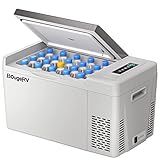
1. BougeRV 12 Volt Refrigerator 12V Car Fridge 23 Quart Portable Freezer Compressor Cooler 12/24V DC 110~240 Volt AC for Truck Van RV Camper SUV Travel Camping Road Trips Tailgating -7℉~50℉
Overview:
This 23-quart compressor-powered fridge/freezer delivers reliable temperature control for vehicles, RVs, and camping. Its compact size (22.68 x 12.60 x 12.97 inches) and 22.27 lb weight make it highly portable, while the -7℉ to 50℉ range suits diverse cooling needs without ice.
What Makes It Stand Out:
BougeRV’s CR22 excels with rapid 15-minute cooling from 77℉ to 32℉ and intelligent cycling that keeps daily power use under 1kWh. The 3-level battery protection prevents vehicle drain, and its 45dB noise level ensures quiet operation. Shock-proofing for 30° inclines handles off-road adventures seamlessly.
Value for Money:
Priced competitively for a compressor model, it eliminates ice costs and space waste. The 2-year tech support, included AC/DC cords, and energy-efficient ECO mode (36W) justify the investment versus cheaper thermoelectric coolers that lack freezing capability.
Strengths and Weaknesses:
Strengths: Fast cooling, ultra-low power consumption, robust off-road design, and intuitive voltage protection. Weaknesses: Limited 23QT capacity for large groups, and the AC cord length (6.56 ft) may restrict plug-in flexibility.
Bottom Line:
Ideal for solo travelers or couples prioritizing reliability and efficiency. Its balanced performance and vehicle safety features make it a top-tier choice for road trips and camping, despite modest capacity.
2. BougeRV 12 Volt Refrigerator 12V Car Fridge 23 Quart Portable Freezer Compressor Cooler 12/24V DC 110~240V AC for Truck Van RV SUV Boat Travel Camping Road Trips Tailgating -8℉~50℉ (Black)

Overview:
Identical to Product 1 in specs and performance but offered in black, this 23QT compressor fridge targets vehicle-based adventures. It maintains temperatures from -8℉ to 50℉, weighing 22.27 lb with the same compact dimensions.
What Makes It Stand Out:
The near-silent 45dB operation and 30° shock tolerance ensure comfort during travel. Its standout feature remains the 3-level battery monitor, customizable to prevent vehicle battery drain—a critical safeguard for off-grid use. Energy-sipping ECO mode (36W) extends runtime significantly.
Value for Money:
At a similar price point to its silver variant, the black model offers identical value: compressor efficiency without recurring ice costs. The 2-year support and dual-voltage compatibility (12/24V DC, 100-240V AC) provide versatility unmatched by budget alternatives.
Strengths and Weaknesses:
Strengths: Dependable freezing performance, excellent battery safeguards, and ruggedized for rough terrain. Weaknesses: Identical capacity limitations as Product 1; color choice doesn’t enhance functionality.
Bottom Line:
A worthy option for users preferring aesthetic cohesion in their gear. Performance parity with Product 1 makes this a style-driven variant, equally recommended for reliable mobile cooling.
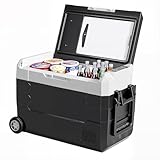
3. OLIXIS Portable Car Refrigerator, 42QT Dual-Zone Electric Cooler for Vehicles with Wheels & Cutting Board, -4℉-68℉ Freezer Smart Control via Bluetooth, Battery Protection, 12/24V DC & 100-240V AC
Overview:
This 42QT dual-zone fridge/freezer merges high capacity with smart tech for group adventures. Bluetooth-enabled app control and a built-in cutting board cater to campers and tailgaters needing versatile food management.
What Makes It Stand Out:
Dual independent zones allow simultaneous freezing and refrigeration, while Bluetooth adjustments (from -4℉ to 68℉) enable remote monitoring. The ≤40dB operation, pull-rod wheels, and child-lock LED panel enhance usability. The cutting board is a unique culinary addition.
Value for Money:
Justified for groups or extended trips due to its spacious 42QT capacity and dual-zone flexibility. Though pricier, the smart features and portability offset costs versus buying two single-zone units.
Strengths and Weaknesses:
Strengths: Exceptional capacity, innovative Bluetooth control, and mobile-friendly design with wheels. Weaknesses: App dependency may frustrate tech-averse users; dual-zone reduces usable space per compartment.
Bottom Line:
Best for families or social adventurers prioritizing convenience and tech integration. The dual-zone functionality and smart controls deliver premium value for group outings.
4. EUHOMY 12 Volt Refrigerator, 53QT(50L) Electric Cooler, Portable Freezer 12V/24V DC 100-240V AC, 12V Fridge -4℉~68℉, 12V Cooler with Wheels & 2 Baskets for Travel,Camping,Truck,Boat

Overview:
EUHOMY’s 53QT heavyweight champion offers massive capacity for RVs or boating, featuring dual storage zones and rugged mobility. Its compressor cools from -4℉ to 68℉, targeting users needing bulk storage.
What Makes It Stand Out:
The largest reviewed (53QT), it includes two baskets, a removable divider, and off-road wheels with a pull handle. UL-certified ECO/MAX modes balance speed and efficiency, while 40dB quiet operation and 30° tilt tolerance ensure versatility.
Value for Money:
Superior for groups due to capacity—outperforming smaller units at a modest price premium. The 2-year support, dual AC/DC power, and L/M/H battery protection maximize utility across vehicles and home use.
Strengths and Weaknesses:
Strengths: Unmatched storage space, excellent insulation, and effortless mobility. Weaknesses: Bulky for solo travelers; dual handles are less ergonomic than OLIXIS’s pull-rod.
Bottom Line:
The go-to for large families or extended expeditions where capacity trumps portability. A robust, cost-effective solution for serious outdoor enthusiasts.
5. HOMCOM Mini Freezer Countertop, 1.1 Cu.Ft Compact Upright Freezer with Removable Shelves, Reversible Door for Home, Dorm, Apartment and Office, Silver

Overview:
This 1.1 cu.ft electric upright freezer targets small-space dwellers, offering basic freezing (-11.2℉ to 6.8℉) for apartments or offices. Unlike compressor fridges, it uses thermoelectric cooling.
What Makes It Stand Out:
Its ultra-compact footprint (18.5" W x 17.5" D) and reversible door suit cramped quarters. Removable shelves and included ice tray add flexibility, while energy-efficient cycling saves power in static settings.
Value for Money:
Budget-friendly for supplemental freezing but lacks compressor performance. Ideal as a dorm or office secondary unit, yet impractical for travel—thermoelectric cooling struggles below ambient temps.
Strengths and Weaknesses:
Strengths: Space-saving design, quiet operation, and reversible door. Weaknesses: Weak cooling depth (-11.2℉ max), no portability features, and unsuitable for vehicles or camping.
Bottom Line:
A niche solution for stationary, space-constrained freezing needs. Not recommended for adventurers—reserve for dorms or home backups where mobility isn’t required.
6. BougeRV 12 Volt Refrigerator 12V Car Fridge 30 Quart Portable Freezer Compressor Cooler Compressor Freezer, 12/24V DC 110~240V AC, -8℉~50℉ for Truck RV SUV (Black)

Overview: The BougeRV CR28 is a 30-quart compressor-powered portable fridge/freezer designed for vehicles and off-grid use. It operates on 12/24V DC or 110-240V AC power, cooling from 77°F to 32°F in 15 minutes and reaching -5°F in 50 minutes. Its lightweight design (24.26 lbs) and shock-proof construction suit RVs, trucks, and boats. What Makes It Stand Out: Rapid compressor cooling eliminates ice dependency, while ECO mode achieves ultra-low 36W power consumption. The 3-level battery protection prevents vehicle drain, and its 45dB quiet operation ensures restful sleep. The 30° tilt tolerance handles rough terrain exceptionally well. Value for Money: Priced competitively for a 30QT compressor unit, it outperforms thermoelectric coolers in efficiency and capacity. The 2-year tech support and inclusion of both AC/DC cords add significant value compared to budget alternatives requiring ice or lacking dual-voltage flexibility. Strengths and Weaknesses: Strengths: Exceptional cooling speed, energy-efficient ECO mode, robust build for off-roading, comprehensive voltage protection. Weaknesses: Limited capacity for large groups, no app connectivity or internal lighting noted, partition board may restrict bulky item storage. Bottom Line: An outstanding mid-sized compressor fridge for serious adventurers needing reliable, quiet performance without draining vehicle batteries. Ideal for couples or small families prioritizing efficiency over smart features.
7. EUHOMY 12 Volt Refrigerator, 19QT(18L) Compressor Electric Cooler APP Control, Car Fridge -4℉~68℉, Portable Refrigerator 12/24V DC 100-240V AC, Portable Freezer for Camping, Travel, Boat

Overview: EUHOMY’s 19-quart portable compressor fridge offers app-controlled temperature management (-4°F to 68°F) for vehicles and home use. It cools rapidly (77°F to 32°F in 15 minutes) and includes dual power options (12/24V DC and 100-240V AC), targeting campers and boaters seeking smart convenience. What Makes It Stand Out: Bluetooth app control enables remote temperature adjustments—a rarity in this size class. The magnetic lid seal enhances insulation, while 42dB operation makes it one of the quietest models. Its anti-shock design handles 30° inclines effortlessly. Value for Money: Justifies its premium price with app integration and superior sealing technology. Though pricier than basic models, the tech features and energy efficiency (45W max) deliver long-term savings versus ice-dependent coolers, especially for frequent users. Strengths and Weaknesses: Strengths: Intuitive app control, excellent magnetic seal for cold retention, whisper-quiet operation, versatile power options. Weaknesses: Smaller 19QT capacity limits group use, app reliance may frustrate without phone signal, no internal light mentioned. Bottom Line: The top pick for tech-focused users needing compact, smart cooling. Perfect for solo travelers or couples who prioritize app convenience and quiet performance over larger storage.
8. EUHOMY 12 Volt Refrigerator, 59QT(55L) Electric Cooler, 12V Fridge APP Control, 12V Cooler -4℉~68℉, Portable Freezer 12/24V DC 100-240V AC for Camping, Travel, Truck, Home

Overview: This 59-quart EUHOMY unit is a large-capacity compressor fridge/freezer (-4°F to 68°F) with dual storage zones, app control, and dual-voltage operation. Designed for extended trips, it combines commercial-grade cooling with user-friendly features for RVs, trucks, or home backup. What Makes It Stand Out: The dual-zone design minimizes odor transfer, while the removable basket and internal LED light enhance usability. UL-certified energy efficiency (45W average) and Bluetooth app control set it apart in the large-capacity segment. Value for Money: Competitively priced for a 59QT compressor model, it offers exceptional space efficiency versus ice chests. The 2-year support, AC/DC cords, and ECO/MAX modes provide strong ROI for families or frequent travelers needing reliable large-scale cooling. Strengths and Weaknesses: Strengths: Spacious dual-zone layout, app monitoring, energy-efficient UL certification, user-friendly LCD panel and LED light. Weaknesses: Heavier weight limits portability, app connectivity may have occasional glitches, higher initial cost than smaller units. Bottom Line: A powerhouse for groups or long expeditions, balancing smart features with robust performance. Highly recommended for RVers or large families needing ample, organized cooling.
9. Alpicool C9PT Portable Car Freezer Cooler, 12 Volt Car Refrigerator, 10 Quart Fast Cooling, with 12/24V DC and 100-240V AC for Outdoor, Camping, RV, Truck (Black&Grey)

Overview: The Alpicool C9PT is a compact 10-quart compressor fridge/freezer (-4°F to 68°F) optimized for portability. Weighing just 14.8 lbs, it fits tight spaces and cools rapidly using MAX/ECO modes, targeting solo adventurers and short-trip users. What Makes It Stand Out: Its ultra-lightweight design and compact size (fits under car seats) make it uniquely portable. The 3-tier battery protection (H1-H3) and temperature memory function ensure vehicle safety, while thick insulation maintains cooling during transit. Value for Money: An affordable entry into compressor cooling, avoiding ice costs and waste. Though pricier than small thermoelectric coolers, its efficiency, durability, and dual-voltage support offer superior long-term value for frequent solo travelers. Strengths and Weaknesses: Strengths: Extremely portable, efficient cooling for size, intuitive battery protection, space-saving design. Weaknesses: Very limited capacity (only 10QT), no app connectivity or internal light, fewer accessories than competitors. Bottom Line: The go-to mini-fridge for anglers or solo hikers needing lightweight, reliable cooling. Skip if you require more than basic beverage/snack storage.
10. VEVOR 10 Quart 12 Volt Portable Mini Freezer Car Compressor Fridge Cooler

Overview: VEVOR’s 10-quart compressor fridge delivers fast cooling (-4°F to 68°F) via MAX/ECO modes and app control. It includes USB charging, 45° tilt stability, and dual-voltage operation, targeting budget-conscious campers needing compact versatility. What Makes It Stand Out: Unique USB port for device charging and exceptional 45° tilt tolerance surpass most competitors. The 1.3" thick insulation and magnetic gasket enhance efficiency, while app monitoring adds modern convenience at an accessible price. Value for Money: One of the most feature-rich 10QT models under $200. The inclusion of app control, USB charging, and superior tilt stability for its class makes it a standout budget option versus basic thermoelectric coolers. Strengths and Weaknesses: Strengths: USB charging capability, best-in-class 45° stability, robust insulation, app connectivity. Weaknesses: App interface may feel less polished, no internal light, smaller capacity than mid-sized alternatives. Bottom Line: An exceptional value pick for tech-savvy users wanting extra features in a mini-fridge. Ideal for couples or short trips where portability and USB charging matter most.
Understanding Portable Freezer Types and Technologies
Compressor Cooling: The Gold Standard for Freezing
True compressor-driven portable freezers are the undisputed champions when it comes to achieving and maintaining actual freezing temperatures, especially in warm environments. Unlike older technologies, they actively pump refrigerant to create a significant temperature drop, capable of reaching well below 0°F (-18°C). This is crucial if you need to keep frozen food solid for days or make ice on the go. While historically more expensive, intense competition has brought capable compressor models firmly into the sub-$300 range, making them the smart choice for serious outdoor freezing needs.
Thermoelectric (Peltier) Coolers: Limited Chilling Capability
Thermoelectric coolers operate on a fundamentally different principle, using electrical current across semiconductor junctions to create a temperature differential. While generally more affordable upfront, they have significant limitations for true freezing tasks. They typically only cool about 30-40°F below ambient temperature. On a hot 90°F day, that means you might only reach 50-60°F inside—perfectly adequate for chilling drinks but utterly incapable of freezing items or safely storing frozen foods for any duration. They are also significantly less energy-efficient than compressor models, draining power sources faster.
Why Compressor is Essential for True Freezing Outdoors
For anyone needing actual frozen storage—whether it’s preserving fish after a day on the lake, keeping medical supplies cold, or simply enjoying frozen treats—the compressor technology is non-negotiable under $300. Thermoelectric units simply cannot overcome ambient heat to achieve sub-zero temperatures reliably, especially in direct sunlight or high temperatures common during outdoor adventures. The slight premium for a budget compressor model pays off massively in versatility, safety, and overall performance when freezing is the goal.
Key Features to Prioritize Under $300
Capacity: Matching Size to Your Adventure Style
Capacity, measured in quarts or liters, dictates how much you can realistically freeze or chill. Budget models under $300 typically range from 15 to 40 quarts. Consider your typical group size and trip duration: a solo backpacker might thrive with 15-20 quarts, while a family of four on a weekend trip will likely need 30+ quarts. Remember, usable space is less than the total capacity—account for insulation thickness and the need for air circulation around items. Overfilling drastically reduces efficiency and freezing capability.
Power Consumption and Efficiency Metrics
Battery life is paramount when off-grid. Look beyond just the amp-hour (Ah) rating of the unit itself; focus on watts per hour (Wh) or daily kilowatt-hour (kWh) consumption figures provided by the manufacturer. Lower numbers mean longer run times on a single battery charge. Efficient compressor models under $300 often consume 30-60Wh per hour on average. Compare this to your power source capacity (e.g., a common 100Ah lithium battery might power an efficient 40Wh unit for roughly 40-50 hours at 50% discharge). Prioritize units with clear, realistic energy consumption data.
Insulation Quality and Construction Durability
Thick, high-density polyurethane foam insulation is the unsung hero of efficient portable freezing. Better insulation means the compressor runs less frequently, saving battery power and extending component life. Under $300, inspect descriptions for foam thickness claims (aim for at least 1.5 inches) and overall build quality. Look for rugged exteriors—robust polypropylene shells, secure latches, and rubberized corners—that can withstand bumps, drops, and exposure to dirt, water, and UV rays common in outdoor settings. Cheap, thin plastic shells lead to poor performance and short lifespans.
Power Source Flexibility and Compatibility
DC Power: Essential for Vehicle Adventures
Running directly from your car, truck, or RV’s 12V/24V socket is the most common and practical power source for portable freezers. Ensure the unit includes a high-quality, fused DC power cord designed for continuous use. Check the required amperage—most budget compressor models draw 3-5 amps at 12V during operation. Verify your vehicle’s socket can handle this load continuously; older vehicles or sockets shared with other accessories might need an upgrade. A dedicated circuit is ideal.
AC Power: Convenience for Campsites and Home Use
While DC is king outdoors, AC power (plugging into a standard wall outlet) is invaluable for pre-cooling the unit at home before a trip or using it at campgrounds with electrical hookups. Nearly all sub-$300 compressor models include this feature. It allows you to bring the interior down to freezing temperatures before you leave, maximizing battery life once you’re off-grid. Don’t overlook this dual-power capability—it significantly enhances versatility.
Solar Charging Compatibility and Requirements
Harnessing solar power is a game-changer for extended off-grid trips. Most modern budget portable freezers are compatible with 12V solar setups, but compatibility isn’t automatic. You’ll need a compatible solar charge controller (PWM or MPPT) and sufficient solar panel wattage to replenish the battery faster than the freezer consumes power. For a typical 40-50W freezer, a 100W-200W solar panel kit is often the minimum starting point. Ensure the freezer’s DC input accepts the voltage range your solar system outputs.
Temperature Control and User Experience
Digital Thermostats vs. Basic Thermostats
Precise temperature control is vital for both freezing and refrigeration. Budget models increasingly feature digital thermostats with LED displays, allowing you to set exact temperatures (e.g., -4°F for freezing, 34°F for refrigeration) and monitor internal conditions. This is far superior to basic analog thermostats (dials) which offer vague settings (“1-7”) and less accuracy. Digital controls ensure food safety, prevent over-freezing delicate items, and optimize energy use—worth prioritizing even under $300.
Interior Layout and Usable Space Optimization
How the interior is designed impacts practicality. Look for features like removable dividers or baskets that allow separation of frozen and refrigerated items within the same unit. Smooth, seamless interiors are easier to clean. Consider the shape—rectangular interiors often pack more efficiently than cylindrical ones. Also, note the lid design: a top-opening lid minimizes cold air loss compared to front-opening models, crucial for maintaining freezing temps and saving battery power, especially in warm weather.
Noise Levels for Campsite Comfort
Portable freezers aren’t silent appliances; the compressor and fan generate noise. While generally acceptable for camping, excessively loud units can disrupt the tranquility of your campsite or even your sleep if kept in a tent. Budget models vary—some prioritize quiet operation (measured in decibels, dBA), while others are noticeably louder. If noise sensitivity is a concern, seek out user reviews specifically mentioning sound levels. Quieter operation often correlates with slightly higher build quality, even at this price point.
Essential Considerations for Outdoor Durability
Weather and Water Resistance Ratings
Outdoor use demands resilience against the elements. Look for units with explicit IP (Ingress Protection) ratings. An IPX5 rating or higher indicates resistance to water jets from any direction, essential for handling rain, splashes from rivers, or hosing down after a muddy adventure. While not fully submersible, this level of protection is crucial. Avoid units that only claim vague “water resistance” without a standardized IP rating—they often fail when truly tested.
Extreme Temperature Performance Limits
Your portable freezer must perform reliably in both scorching heat and freezing cold. Check the manufacturer’s specified operating temperature range. Good budget models typically function between -4°F and 104°F (-20°C to 40°C) ambient temperatures. Performance degrades significantly outside this range; the compressor may shut down in extreme cold or struggle immensely in extreme heat, drastically increasing power draw. Understand these limits to avoid failures during critical trips.
Vibration and Shock Resistance for Rough Terrain
Bumpy dirt roads and rocky trails put mechanical stress on any device. A well-built portable freezer needs internal components secured to withstand vibration. Look for mentions of shock absorption, rubberized feet, or reinforced compressor mounts in the specifications. Units designed primarily for marine use often have superior vibration resistance, a trait that benefits any off-road adventure. Poor vibration handling leads to premature compressor failure—a costly breakdown far from help.
Maximizing Value and Longevity on a Budget
Warranty Coverage and Manufacturer Support
Don’t underestimate the importance of warranty terms, especially at this price point. A minimum 1-year warranty is standard, but some reputable brands offer 3 years or more even on budget models. Pay close attention to what’s covered—ideally, it should include the compressor and main electronic components. Research the manufacturer’s reputation for honoring warranties and providing responsive customer support; a longer warranty means little if claims are difficult to process. This is a key indicator of build confidence.
Realistic Expectations for Budget Performance
While capable compressor models exist under $300, understand they represent the entry point for true freezing technology. They may use slightly less robust components than premium models, have marginally higher power consumption, or feature simpler controls. Prioritize core functionality (reliable freezing, decent insulation, essential durability) over bells and whistles. Avoid models that seem too cheap—extremely low prices often signal corner-cutting on insulation or compressor quality, leading to poor performance and short lifespans.
Maintenance Practices for Extended Lifespan
Simple maintenance dramatically extends the life of any portable freezer. Always clean the interior thoroughly after each trip with mild soap and water; never use abrasive cleaners. Ensure the drain plug (if present) is open during storage to prevent moisture buildup. Periodically check and clean the exterior vents of dust and debris—blocked vents cause overheating and compressor strain. Store the unit with the lid slightly ajar in a cool, dry place. These small habits prevent odors, mold, and mechanical stress, protecting your investment.
Frequently Asked Questions
Frequently Asked Questions
How long will a portable freezer under $300 run on a standard car battery? A typical 12V 50Ah car battery can realistically power an efficient portable freezer (consuming ~45Wh/hour) for 8-12 hours before risking being unable to start your vehicle. Always use a dedicated deep-cycle battery (like a 100Ah AGM or lithium) for extended off-grid use to avoid draining your starter battery.
Can I use a portable freezer under $300 to make ice? Yes, capable compressor models in this price range can freeze water into solid ice, usually taking 4-8 hours depending on ambient temperature, freezer setting, and container size. Pre-cooling the unit and using smaller containers speeds up the process significantly.
Is it safe to run a portable freezer while driving? Generally, yes, as long as it’s securely mounted (using straps or in a cargo area) and plugged directly into your vehicle’s 12V socket (cigarette lighter port). Ensure cords are routed safely away from pedals and moving parts. Avoid placing it on the passenger seat unsecured.
Do I need a power inverter to use AC power with my portable freezer? No. If the unit includes an AC power cord, it has a built-in inverter or power supply designed to convert standard 110V/120V AC household current to the DC power the freezer needs. Simply plug the provided AC cord into a wall outlet or generator.
How do I prevent condensation inside the freezer when not in use? Always clean and thoroughly dry the interior after each trip. Store the unit with the lid propped open slightly using the provided latch or a small object to allow air circulation and prevent moisture buildup, which leads to mold and odors.
Can portable freezers be laid on their side during transport? Check the manufacturer’s instructions. Most compressor models require upright transport for at least 2-4 hours before operation if tilted significantly, to allow oil to settle back into the compressor. Laying them flat for extended periods can damage the compressor. Always transport upright if possible.
Why does my portable freezer stop cooling in very hot weather? All portable freezers have an upper ambient temperature limit (often around 104°F/40°C). Above this, the compressor struggles to reject heat, causing it to cycle off frequently or run continuously without achieving set temperatures. Keep the unit shaded and ensure vents are completely unobstructed.
What’s the difference between a “fridge” and a “freezer” in portable units? True portable freezers are specifically designed to reach and maintain sub-zero temperatures (typically down to -4°F/-20°C). Many portable units labeled as “fridges” or “fridge/freezers” can only refrigerate (down to ~32°F/0°C) and cannot achieve actual freezing temperatures, especially in warm conditions.
How often should I defrost a budget portable freezer? Manual defrost is standard under $300. Defrost whenever a significant layer of frost (1/4 inch or more) builds up on the interior walls, as this insulates and drastically reduces efficiency. Frequency depends on humidity and how often the lid is opened—could be every few days to once a week.
Can I use a portable freezer under $300 for medical冷藏 (like insulin)? Only if the unit can reliably maintain the precise, consistent refrigeration temperature required (usually 36°F-46°F/2°C-8°C) and you have a way to continuously monitor the internal temperature with a separate, calibrated thermometer. Budget units often lack the ultra-precise stability needed for critical medical storage; verify specifications thoroughly.