When you’re miles from the nearest power outlet, deep in the backcountry or parked at a remote trailhead, keeping your food fresh and drinks cold transforms from a simple convenience into a critical piece of gear. Traditional coolers devour ice, create soggy messes, and leave you constantly calculating how long your supplies will last. Enter solar-powered mini coolers—the game-changing fusion of portable refrigeration and renewable energy that’s revolutionizing how adventurers think about food storage off the grid.
These aren’t your grandfather’s ice chests with a solar panel slapped on top. Modern solar-powered mini coolers represent sophisticated engineering designed specifically for the demands of van life, overlanding, boat camping, and extended wilderness excursions. They operate as self-sufficient cooling systems that harness the sun’s energy to keep your provisions at precise temperatures without the constant need for resupply runs or generator noise. Understanding what separates exceptional units from mediocre ones can mean the difference between perfectly preserved steaks and a cooler full of spoiled supplies.
Top 10 Solar-Powered Mini Coolers for Off-Grid Adventures
Detailed Product Reviews
1. GOSUN Chill Solar Cooler & Solar Panel 30+ | Iceless Solar Powered Cooler With Wheels - 12 Volt Refrigerator Ice Chest With Portable Battery | 12v Beach Cooler & Solar Camping Equipment & Solar Panels
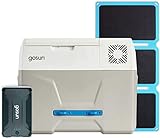
Overview: The GOSUN Chill Solar Cooler revolutionizes outdoor refrigeration by eliminating ice entirely. This 12-volt portable refrigerator maintains precise temperatures from -4°F to 68°F, offering true refrigeration rather than simple insulation. With integrated wheels and a comprehensive power ecosystem, it provides a self-sufficient cooling solution for extended off-grid adventures, beach trips, and camping excursions where traditional coolers fall short.
What Makes It Stand Out: Unlike conventional coolers, the Chill maximizes storage by removing ice from the equation, effectively doubling usable space. Its multi-modal power system is genuinely versatile—running on the included PowerBank+, AC adapter, 12V car port, or bundled SolarPanel 30+. The PowerBank+ doubles as a portable charging station for phones, tablets, and laptops, adding significant utility beyond cooling. The touch-screen temperature control provides precision that standard coolers cannot match, while the solar panel enables indefinite off-grid operation.
Value for Money: At $949, this sits in the premium tier, comparable to high-end rotomolded coolers plus perpetual ice costs. However, the Chill’s value compounds over time—no ongoing ice purchases, no food waste from water damage, and the integrated power bank eliminates separate battery packs. For frequent campers, van dwellers, or tailgaters, the investment pays for itself within a few seasons. The included solar panel and PowerBank+ justify the price compared to buying components separately.
Strengths and Weaknesses: Strengths include ice-free operation maximizing storage, versatile power options, device charging capability, precise digital temperature control, and built-in portability. The ability to make ice rather than melt it is a game-changer. Weaknesses are the steep upfront cost, dependency on power sources that may falter during prolonged bad weather, substantial weight when fully loaded, and complexity that casual users might find unnecessary compared to a simple $50 cooler.
Bottom Line: The GOSUN Chill is exceptional for serious outdoor enthusiasts who prioritize convenience, efficiency, and off-grid capability. It’s overkill for occasional park visits but invaluable for extended camping, boating, or overlanding where reliable refrigeration transforms the experience from basic survival to genuine comfort.
Understanding Solar-Powered Mini Coolers
Solar-powered mini coolers are portable refrigeration units that combine three core components: a 12V compressor-based cooling system, an integrated or external solar panel array, and a battery storage system. Unlike thermoelectric coolers that merely maintain temperature differences, true solar-powered units actively refrigerate using compressors similar to your home refrigerator, capable of achieving true freezing temperatures even when ambient temperatures soar above 100°F.
The magic happens through a closed-loop system where photovoltaic panels convert sunlight into DC electricity, which either powers the compressor directly or charges an internal battery bank. This stored energy keeps your food cold through the night and during cloudy periods. The best systems operate on a duty cycle principle, running the compressor intermittently rather than continuously, maximizing efficiency while maintaining consistent internal temperatures.
Key Benefits for Off-Grid Adventures
The primary advantage of solar-powered cooling is genuine energy independence. You’re no longer tethered to gas station ice runs or noisy generators that disrupt the wilderness experience. Over a week-long expedition, a quality solar cooler can eliminate $50-100 in ice costs while providing superior temperature control that extends food freshness by 3-4 times compared to traditional coolers.
Environmental impact reduction is substantial. A typical ice cooler requires 20-40 pounds of ice every 2-3 days, creating plastic waste from bags and contributing to water waste. Solar units produce zero emissions during operation and, when paired with durable construction, can offset their manufacturing carbon footprint within 2-3 years of regular use. For eco-conscious adventurers, this aligns perfectly with Leave No Trace principles while actually improving camp comfort.
Essential Features to Evaluate
Capacity and Size Considerations
Capacity ratings can be misleading. Manufacturers typically list internal volume in liters or quarts, but usable space is often 15-20% less due to compressor housings, battery compartments, and interior contours. For solo weekend trips, 20-30 liters suffices, while family expeditions of 5+ days demand 50+ liters. Consider your vehicle’s available space—roof-mounted solar panels free up cargo area but expose the cooler to extreme heat, while cab-mounted units stay cooler but consume valuable interior real estate.
Cooling Technology Explained
The compressor versus thermoelectric debate is fundamental. Compressor coolers use refrigerant and a motor-driven pump, achieving 0°F temperatures and maintaining efficiency regardless of outside heat. Thermoelectric models rely on the Peltier effect, typically maxing out at 40°F below ambient temperature—useless when it’s 95°F outside and you need to keep meat at 35°F. For true off-grid reliability, compressor technology is non-negotiable, especially in desert or tropical environments where ambient temperatures regularly exceed 90°F.
Solar Panel Integration
Built-in panels offer convenience but sacrifice efficiency. External, adjustable panels allow optimal angling toward the sun throughout the day, potentially increasing energy harvest by 30-40%. Panel wattage must match the cooler’s consumption—generally, 60-100 watts of solar capacity per 30 liters of cooler volume provides adequate charging in moderate sunlight. Monocrystalline panels outperform polycrystalline in low-light conditions common during dawn, dusk, and overcast days on the trail.
Battery Capacity and Power Storage
Battery capacity, measured in amp-hours (Ah), determines overnight performance. A 40Ah lithium battery can typically run a 45-liter cooler for 24-36 hours without sun, depending on set temperature and ambient conditions. Lithium Iron Phosphate (LiFePO4) batteries offer superior longevity, handling 2000+ charge cycles versus 500-800 for standard lithium-ion. They also perform better in temperature extremes, maintaining 80% capacity at 14°F compared to significant degradation in cheaper alternatives.
Durability and Build Quality
Off-grid adventures punish gear. Rotomolded construction provides impact resistance and superior insulation, maintaining internal temperatures with less energy input. Look for IPX4 or higher water resistance ratings for protection against rain and splashing. Heavy-duty latches should be metal, not plastic, as UV exposure makes plastic brittle over time. The compressor compartment needs ventilation but also dust protection—essential for desert overlanding where fine particles can destroy electronics.
Portability Factors
Weight becomes critical when you’re hauling gear across sand dunes or lifting it into a truck bed. A 40-liter solar cooler typically weighs 35-45 pounds empty, with batteries and panels adding another 10-20 pounds. Integrated wheels must be all-terrain capable, not flimsy plastic casters. Ergonomic, recessed handles prevent snagging on brush and reduce fatigue during carries. Some premium models feature removable battery/solar modules, allowing you to lighten the load for short trips while maintaining core cooling functionality.
Temperature Range and Performance
True performance is measured in temperature differential—the gap between ambient and internal temperatures. Quality units achieve 70-80°F differentials, meaning they can reach 0°F when it’s 70°F outside. Fast cooling capability matters; the best coolers drop from 70°F to 35°F in under 30 minutes. Recovery time after opening is equally important—superior insulation and compressor power should restore target temperature within 3-5 minutes, minimizing energy waste and temperature spikes that compromise food safety.
Power Consumption and Efficiency
Average consumption runs 0.7-1.5 Ah per hour for a 45-liter cooler set at 35°F in 70°F ambient conditions. Eco modes reduce this by 20-30% by allowing slightly wider temperature fluctuations—acceptable for beverages but risky for perishables. Standby drain, often overlooked, can deplete batteries unnecessarily. Quality units draw less than 0.1Ah when idle. Always calculate total daily consumption: 1Ah/hour × 24 hours = 24Ah, meaning your solar system must replenish this plus overhead for battery inefficiency.
Additional Smart Features
Bluetooth/WiFi connectivity enables temperature monitoring from your smartphone—crucial when the cooler’s tucked in your vehicle while you’re hiking. USB charging ports turn your cooler into a power bank for devices, though this drains the cooling battery. Interior LED lighting with motion sensors prevents fumbling in the dark. Some advanced models feature dual-zone compartments, allowing simultaneous refrigeration and freezing—perfect for keeping ice cream solid while chilling drinks.
Price vs. Value Analysis
Budget-tier solar coolers ($300-500) typically use thermoelectric cooling or small compressors with minimal battery capacity—suitable only for day trips or mild climates. Mid-range options ($500-900) offer true compressor cooling, 30-40Ah batteries, and 60W solar panels, representing the sweet spot for most weekend warriors. Premium units ($900-1500+) feature LiFePO4 batteries, dual-zone cooling, app controls, and ruggedized construction that justifies the investment for full-time van lifers or expedition leaders. Calculate cost-per-use over three years to determine true value.
Real-World Off-Grid Scenarios
Overlanders crossing multiple climate zones need coolers that perform from sea level to 10,000 feet elevation, where thinner air reduces cooling efficiency. Van lifers prioritize low power draw and quiet operation for overnight parking in urban stealth situations. Boat campers require corrosion-resistant components and tie-down points for pitching decks. Remote workers at job sites value dual power inputs—solar for primary operation and 120V AC for fast cooling when shore power is available. Each scenario demands different feature prioritization.
Maintenance and Care Tips
Clean the condenser coils monthly with compressed air—dust buildup can reduce efficiency by 15-20%. Never lay the cooler on its side; compressor oil can flow into refrigeration lines, causing permanent damage. Store batteries at 50-80% charge during off-season to maximize lifespan. Solar panels need occasional cleaning with mild soap and water; even a thin layer of dust cuts output by 10%. Check door seals quarterly for cracks or compression set—a failed seal forces the compressor to run continuously, draining batteries and risking food spoilage.
Common Mistakes to Avoid
Oversizing your cooler wastes energy cooling empty space. Undersizing solar capacity leads to dead batteries by day three of cloudy weather. Ignoring duty cycle ratings causes unrealistic runtime expectations—compressors don’t run 24/7, typically cycling 30-40% of the time in moderate conditions. Poor ventilation around the compressor compartment can increase power consumption by 25% and shorten component life. Finally, placing the cooler in direct sunlight dramatically increases cooling load; always park in shade or use reflective covers.
Future of Solar Cooling Technology
Emerging solid-state cooling technology promises compressor-less refrigeration with no moving parts, potentially doubling efficiency while reducing weight. Perovskite solar cells, though still in development, could increase panel efficiency from 22% to 35%, enabling smaller arrays. Integrated MPPT charge controllers are becoming standard, optimizing power harvest 20-30% better than older PWM controllers. Battery technology continues advancing; graphene-enhanced LiFePO4 batteries may soon offer 5000+ cycles and charge in under an hour, fundamentally changing how we think about off-grid power management.
Frequently Asked Questions
How long will a solar-powered mini cooler run without sunlight?
Runtime depends entirely on battery capacity and ambient conditions. A 40Ah lithium battery typically powers a 45-liter cooler for 24-36 hours when set at 35°F in 70°F weather. In 90°F heat, expect 18-24 hours. Using eco mode can extend this by 20-30%, but never risk perishable foods. Always size your battery bank for 48 hours of autonomy to account for consecutive cloudy days.
Can I use my solar cooler while driving?
Yes, most quality units feature 12V DC inputs that connect directly to your vehicle’s cigarette lighter or auxiliary battery bank. The cooler will draw power from the alternator while the engine runs, preserving battery charge for stationary use. Ensure your vehicle’s electrical system can handle the additional 5-8 amp draw; older vehicles may require a dedicated circuit to avoid blown fuses.
What’s the minimum solar panel wattage I need?
As a rule of thumb, budget 60-100 watts of solar per 30 liters of cooler capacity. A 45-liter cooler with a 40Ah battery requires at least 80 watts for reliable operation in mixed weather conditions. This allows the panel to replenish daily consumption plus charge the battery for overnight use. If you camp exclusively in sunny desert environments, you might reduce this by 20%; forest campers should increase it by 30%.
Will these coolers work in freezing temperatures?
Most compressor-based coolers function down to 14°F ambient temperature, though efficiency drops significantly below 32°F. The compressor oil thickens, and battery capacity reduces in cold. For winter camping, insulate the cooler externally and keep batteries warm with heating pads or by storing the unit inside your heated space. Some premium models include internal battery heaters that activate automatically below freezing.
How noisy are solar-powered mini coolers?
Quality compressor coolers produce 35-45 decibels—comparable to a quiet library or refrigerator hum. You’ll hear a brief startup sound when the compressor engages, then a low humming during operation. Thermoelectric models are silent but far less effective. For stealth camping, place the cooler in a cabinet or under insulation to muffle sound; never obstruct ventilation.
Can I run other devices from my cooler’s battery?
Many units feature USB ports and 12V outputs for small devices. However, every amp you draw for charging phones or lights reduces cooling runtime. A smartphone charge consumes roughly 3Ah—enough to reduce overnight cooling capacity by 1-2 hours. Use this feature sparingly or upgrade to a separate power station for device charging to preserve your food storage priority.
How do I calculate total power needs for my setup?
Multiply the cooler’s hourly draw (found in specs) by 24 hours, then add 20% for inefficiencies. For example: 1.2Ah/hour × 24 = 28.8Ah daily need. Your solar must produce this plus recharge the battery. In 5 peak sun hours, an 80W panel generates roughly 25-30Ah, covering daily use but requiring full sun. Always oversize by 30% for real-world conditions.
Are solar coolers worth the cost compared to traditional coolers?
For trips exceeding 3 days or frequent weekend adventures, absolutely. A $800 solar cooler pays for itself in 1-2 years when you factor in $10-15 daily ice costs. The ability to keep frozen foods solid and avoid waterlogged supplies adds value beyond pure economics. For occasional single-night campers, a high-end rotomolded cooler with ice remains more cost-effective.
What’s the lifespan of these units?
The compressor typically lasts 8-10 years with proper care. LiFePO4 batteries survive 2000+ cycles—about 5-7 years of daily use. Cheaper lithium-ion batteries may need replacement after 3-4 years. The cooler itself, if rotomolded, can last decades. Factor in a $150-200 battery replacement every 5-7 years when calculating long-term ownership costs.
Can I add solar panels or batteries later?
Most quality coolers accept external panels via Anderson or MC4 connectors, allowing easy upgrades. Battery expansion is trickier; many units have proprietary battery packs that can’t be paralleled. Some premium models feature external battery ports for connecting auxiliary power stations. When purchasing, verify upgrade paths if you anticipate needing more capacity for longer expeditions in the future.