Imagine trying to cram a mini-fridge into a closet-sized dorm room already bursting with textbooks, a lofted bed, and a desk that doubles as your dining table. You need cold storage for snacks, drinks, and maybe even a yogurt or two, but bulky appliances that dominate the space are simply non-negotiable. This is where the humble cube refrigerator steps in, transforming from a niche appliance into a near-essential dorm survival tool. Compact, surprisingly efficient, and designed to fit into the tightest corners, these little boxes of coolness solve the fundamental problem every college student faces: maximizing function in minimal square footage without breaking the bank or blowing a fuse.
Forget the clunky, noisy behemoths of decades past. Modern cube refrigerators are engineered with student life in mind, prioritizing quiet operation, energy efficiency, and clever design that integrates seamlessly into cramped living quarters. They offer the crucial ability to keep essentials chilled without sacrificing precious floor space or violating strict university appliance policies. But navigating the sea of options can be overwhelming – is the smallest size actually practical? How do you avoid a noisy eyesore that keeps your roommate awake? Understanding the right features for your specific dorm situation is the key to avoiding buyer’s remorse and ensuring your cube fridge becomes a trusted companion, not a dorm-room headache.
Top 10 Cube Refrigerators for Dorms
Detailed Product Reviews
1. EUHOMY 1.7 Cu.Ft Mini Fridge, Reversible Single Door Compact Refrigerator, Adjustable Thermostat, Energy Saving, Mini Fridge for Bedroom, Office, Dorm, Black
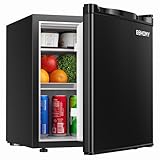
Overview: The EUHOMY 1.7 Cu.Ft Mini Fridge is a versatile compact refrigerator designed for small spaces like dorms, offices, or bedrooms. It features a single reversible door, an adjustable thermostat, and a split interior with a main 1.5 Cu.Ft refrigeration section and a 0.2 Cu.Ft freezer compartment. Its space-saving footprint (16.9"D x 17.5"W x 19.1"H) and quiet operation target users needing efficient cooling without bulk.
What Makes It Stand Out: Its reversible door (left/right opening) and removable wire shelf offer exceptional layout flexibility for tight spots. The 7-speed temperature knob (32℉-50℉) provides precise control, while high-density insulation ensures stable cooling. At 38dB noise and 0.55 kWh/day energy use, it balances efficiency with near-silent performance—ideal for bedrooms or study areas.
Value for Money: Priced competitively, it undercuts larger models while delivering core features like adjustable cooling and reversible doors. The lack of a dedicated freezer (only a small compartment) may deter some, but for basic beverage/snack chilling in constrained spaces, its energy efficiency and compact design justify the cost versus noisier, less refined alternatives.
Strengths and Weaknesses:
Strengths: Ultra-quiet operation; intuitive reversible door; energy-efficient (0.55 kWh/day); sturdy build; 1-year warranty with responsive support.
Weaknesses: Minimal freezer space (0.2 Cu.Ft); wire shelf less durable than glass; no interior light; limited capacity for families.
Bottom Line: A reliable, space-savvy mini fridge perfect for students or solo users prioritizing quiet operation and portability. Avoid if you need substantial frozen storage; otherwise, it’s an excellent value for personal cooling needs.
2. Igloo 3.2 Cu.Ft. Mini Fridge with Freezer - Single Door Compact Refrigerator with Glass Shelves for Homes, Dorms & Offices- Keep Snacks, Drinks & Frozen Foods Cool with Temperature Control Mini Fridge

Overview: The Igloo 3.2 Cu.Ft. Mini Fridge delivers expanded capacity in a compact single-door unit, featuring a separate freezer compartment and glass shelves. Designed for dorms, offices, or small apartments, it offers 3.2 cubic feet of total space with compressor-based cooling and mechanical temperature control (32–50°F range), prioritizing simplicity and functionality.
What Makes It Stand Out: Its standout feature is the generous 3.2 Cu.Ft. capacity—unusually spacious for a mini fridge—making it suitable for small households. The dedicated freezer compartment (unlike mere freezer sections in smaller models) accommodates frozen meals effectively. Static cooling (no fan) reduces noise and cost, while glass shelves enhance durability and spill containment.
Value for Money: This model offers exceptional capacity per dollar, outperforming 1.7–2 Cu.Ft. rivals for households needing more storage. Though slightly less energy-efficient than ultra-compact units, its freezer utility and shelf organization justify a moderate price premium for users requiring versatility beyond basic beverage chilling.
Strengths and Weaknesses:
Strengths: Ample storage for its class; true separate freezer; easy-clean glass shelves; reliable compressor cooling.
Weaknesses: Bulkier footprint (may not fit tight spaces); static cooling leads to uneven temps; higher energy use than smaller fridges; no reversible door option.
Bottom Line: Ideal for couples, small families, or frequent entertainers needing substantial refrigeration and freezer space in a single compact unit. Choose this over smaller models if space allows and capacity is critical.
3. Frestec 1.7 Cu.Ft Mini Fridge with Freezer, Mini Fridge for Bedroom, Small Refrigerator, Dorm Refrigerators with Freezer, Compact Refrigerator for Office, Apartment, Dorm, Bedroom (Grey)

Overview: The Frestec 1.7 Cu.Ft Mini Fridge combines compact dimensions (17.83"W x 18.05"D x 19.8"H) with a full freezer compartment, targeting dorms, bedrooms, and offices. It features adjustable temperature control (0–6 modes, 28.4°F–50°F), reversible doors, and energy-efficient operation at 0.55 kWh/day, emphasizing user convenience and space optimization.
What Makes It Stand Out: The one-touch defrost button eliminates manual thawing—a rare convenience in this price range. Reversible doors, adjustable feet, and removable glass shelves enhance adaptability to uneven surfaces or tall items. Its 37dB operation and Energy Star certification make it exceptionally quiet and eco-friendly for personal spaces.
Value for Money: Positioned affordably, it competes strongly with similar 1.7 Cu.Ft. models by including premium features like automatic defrost and glass shelves. The freezer compartment adds significant utility over non-freezer mini fridges, offering better versatility per dollar for students or professionals needing frozen storage.
Strengths and Weaknesses:
Strengths: One-touch defrost; ultra-quiet (37dB); reversible door; energy-efficient; removable glass shelves.
Weaknesses: Freezer size limited by overall capacity; grey finish shows smudges; thermostat lacks precise °F display; no interior light.
Bottom Line: A top pick for dorms or offices where ease of maintenance and quiet operation matter. The defrost feature and freezer capability provide outstanding practicality for the price, though freezer capacity is modest.
4. Frostorm 1.6 Cu Ft Mini Fridge with Freezer - 30dB Ultra Quiet Upright Freezer for Bedroom, Dorm & Office | Compact Fridge, Adjustable Thermostat, Reversible Door, ETL Certified

Overview: The Frostorm 1.6 Cu Ft Mini Fridge excels in ultra-quiet performance (30dB) and dedicated freezing, featuring a 0.2 Cu Ft freezer compartment reaching -14°C to -24°C. Designed for noise-sensitive environments like bedrooms, it includes reversible doors, ETL certification, and energy-efficient operation (0.6 kWh/day), prioritizing tranquility and reliability.
What Makes It Stand Out: Its industry-leading 30dB noise level makes it virtually inaudible during sleep or work—significantly quieter than rivals (typically 35–40dB). The true freezer compartment (not just a chill zone) reliably stores ice cream or frozen meals. ETL certification and PCM steel construction ensure safety and durability, while the 1-5 thermostat simplifies optimal cooling.
Value for Money: Though slightly pricier, the Frostorm justifies cost through superior noise reduction and freezer performance. At ~$0.10/day operating cost, it’s economical long-term. For light sleepers or focused workers, the peace-of-mind value exceeds cheaper, noisier alternatives, especially given its robust build.
Strengths and Weaknesses:
Strengths: Near-silent 30dB operation; potent freezer (-24°C); ETL safety certified; energy-efficient; reversible door.
Weaknesses: Smaller capacity (1.6 Cu.Ft) than some rivals; basic mechanical thermostat; limited shelf adjustability.
Bottom Line: Unbeatable for bedrooms or study spaces where silence is non-negotiable. Invest in this if noise disrupts your routine—it’s the quietest, most freezer-competent mini fridge in its class.
5. Frigidaire EFR115-PURPLE 1.6 Cu Ft Compact Fridge for Office, Dorm Room, Mancave or RV, Purple

Overview: The Frigidaire EFR115-PURPLE is a stylish 1.6 Cu Ft compact fridge in vibrant purple, targeting个性化 spaces like dorms, mancaves, or RVs. It features CFC-free compressor cooling, adjustable thermostat control, a freezer compartment, and slide-out shelves, blending aesthetic flair with functional refrigeration for personal use.
What Makes It Stand Out: The standout purple finish offers unique personalization rarely seen in mini fridges, appealing to style-conscious users. Its compressor cooling ensures consistent performance in varying ambient temperatures, while 2-liter bottle storage and slide-out shelves optimize interior organization. The dedicated freezer compartment adds practicality beyond basic chillers.
Value for Money: Priced mid-range, its aesthetic differentiation and Frigidaire’s reputable build quality provide solid value for those prioritizing design. While capacity matches competitors, the purple option commands a slight premium—but for users wanting personality in utilitarian appliances, it’s a worthwhile splurge over generic black/white models.
Strengths and Weaknesses:
Strengths: Eye-catching purple design; reliable compressor cooling; slide-out shelves; freezer compartment; CFC-free.
Weaknesses: Color limits decor matching; no reversible door; basic thermostat; higher price for colored variant.
Bottom Line: Choose this if you value style as much as function—it’s a fun, reliable mini fridge perfect for personalizing dorms or creative spaces, though functionality alone won’t justify the color premium for all users.
6. NEWBULIG Mini Fridge with Freezer 3.2 Cu.Ft Small Refrigerator for Office, Dorm, Small Fridge with Adjustable Thermostat, Energy Saving, Singel Door, Sliver

Overview:
The NEWBULIG 3.2 Cu.Ft mini fridge combines compact dimensions (17.7"D x 17.5"W x 31.5"H) with dual-zone cooling, targeting dorms, offices, and bedrooms. It offers separate fridge (2.9 Cu.Ft) and freezer (0.3 Cu.Ft) compartments, adjustable temperature settings, and ultra-quiet operation.
What Makes It Stand Out:
Its dual-zone design allows precise temperature control for both fresh and frozen items simultaneously. The 38dB operation ensures near-silent performance, ideal for noise-sensitive spaces. ETL and DOE certifications validate its energy efficiency, while the five temp settings provide versatility for diverse storage needs.
Value for Money:
Priced competitively for its class, it delivers certified efficiency and a practical freezer compartment often lacking in similarly sized units. Though pricier than basic models, the dual-zone functionality and reliability justify the cost for users needing true freezer capability in tight spaces.
Strengths and Weaknesses:
Strengths: True dual-zone cooling; exceptionally quiet; energy-efficient certifications; ample fridge space; sleek silver design. Weaknesses: Minimal freezer capacity (0.3 Cu.Ft); limited shelf adjustability; no reversible door option.
Bottom Line:
An excellent choice for students or professionals needing reliable dual-zone cooling in compact settings. Its quiet operation and certified efficiency make it a worthwhile investment for dorms or offices where space and noise matter most.
7. KMFurnila Mini Fridge with Freezer, 3.2 Cu.Ft Mini Refrigerators, Small Beverage Fridge with Adjustable Thermostat, for Bedroom, Office, Dorm, Single Door, Quiet & Energy Saving, Black

Overview:
The KMFurnila 3.2 Cu.Ft mini fridge mirrors competitors in size (17.7"D x 17.5"W x 31.5"H) and dual-zone layout, targeting similar use cases. It features a 2.9 Cu.Ft fridge, 0.3 Cu.Ft freezer, 38dB noise output, and five temperature settings, all in a matte black finish.
What Makes It Stand Out:
ATM-verified safety and performance certifications differentiate it, emphasizing rigorous third-party testing. The black aesthetic offers a modern alternative to standard silver/white models, while the consistent 38dB operation ensures minimal disruption in bedrooms or offices.
Value for Money:
It competes closely on price with similar dual-zone units. The ATM certification adds trustworthiness, though it lacks ENERGY STAR validation. The freezer’s limited size remains a constraint, making it best suited for light frozen storage needs.
Strengths and Weaknesses:
Strengths: Quiet 38dB operation; ATM safety certification; stylish black finish; five temp settings; dual-zone functionality. Weaknesses: No ENERGY STAR rating; tiny freezer compartment; non-reversible door; basic interior organization.
Bottom Line:
A solid, certified option for users prioritizing safety validation and aesthetics over maximum energy savings. Ideal for dorms or offices where a sleek look and whisper-quiet performance are key.
8. BLACK+DECKER 1.7 Cu. Ft. Compact Refrigerator, ENERGY STAR Certified, Single Door Mini Fridge with Chiller Compartment, Personal Fridge for Home or Dorm Room, R600a Refrigerant, BCRK17W, White

Overview:
This BLACK+DECKER model is notably smaller (1.7 Cu.Ft) and lacks a dedicated freezer, focusing instead on efficient chilled storage. ENERGY STAR certified and using eco-friendly R600a refrigerant, it suits dorms, offices, or RVs with its reversible door and compact footprint.
What Makes It Stand Out:
ENERGY STAR certification ensures top-tier efficiency (70W usage), while the reversible door and adjustable legs offer unmatched placement flexibility. The chiller compartment and removable glass shelf optimize storage for beverages or small items in tight spaces.
Value for Money:
Priced affordably, it excels as a basic beverage/snack fridge. The ENERGY STAR rating guarantees long-term energy savings, though the absence of a freezer limits utility for users needing frozen storage. Ideal for budget-conscious buyers prioritizing efficiency.
Strengths and Weaknesses:
Strengths: ENERGY STAR certified; reversible door; adjustable leveling; removable glass shelf; eco-friendly refrigerant. Weaknesses: No freezer compartment; smaller capacity (1.7 Cu.Ft); limited temp range; basic interior design.
Bottom Line:
The best pick for those needing a no-frills, highly efficient mini fridge for drinks or light snacks. Skip if you require freezer functionality; otherwise, it’s a reliable, cost-effective solution for dorms or offices.
9. Sweetcrispy 3.2 Cu.Ft Mini Fridge with Freezer Small Refrigerator Single Door Adjustable Thermostat Energy-efficient Low Noise, Compact Fridge for Bedroom, Office, Dorm (Black)

Overview:
Sweetcrispy’s 3.2 Cu.Ft mini fridge emphasizes energy cost transparency and quiet operation. With identical dimensions to competitors (17.5"W x 17.7"D x 31.5"H), it features dual zones (2.9 Cu.Ft fridge/0.3 Cu.Ft freezer), a 38dB noise rating, and five temp settings in a black finish.
What Makes It Stand Out:
Its standout feature is the calculated daily energy cost (≈$0.04/day), appealing to budget-focused users. The inclusion of a crisper drawer and two adjustable shelves enhances organization, while the whisper-quiet operation is explicitly marketed for bedside use.
Value for Money:
Offers strong value with its detailed energy-cost projection and versatile interior. Though comparable in price to rivals, the crisper drawer adds practicality. The tiny freezer remains a constraint, but the fridge section’s layout maximizes usability.
Strengths and Weaknesses:
Strengths: Energy cost transparency; crisper drawer; quiet 38dB operation; adjustable shelves; clear temp guidelines. Weaknesses: Minimal freezer space; no reversible door; basic door bins; similar capacity to larger dual-door models.
Bottom Line:
Highly recommended for cost-conscious users in dorms or bedrooms who prioritize organization and predictable energy expenses. Avoid if you need substantial frozen storage; otherwise, it’s a pragmatic, well-organized choice.
10. Frestec 1.7 Cu.Ft Mini Fridge with Freezer, Mini Fridge for Bedroom, Small Refrigerator, Dorm Refrigerators with Freezer, Compact Refrigerator for Office, Apartment, Dorm, Bedroom (Black)

Overview:
Frestec’s ultra-compact 1.7 Cu.Ft mini fridge fits under desks (17.83"W x 18.05"D x 19.8"H), featuring a small freezer compartment, one-touch defrosting, and 37dB quiet operation. It targets space-starved users in offices, dorms, or bedrooms.
What Makes It Stand Out:
The one-touch defrost button eliminates manual thawing hassles, while the reversible door and adjustable feet ensure adaptability. Six precise temp modes (0–6) and a light-freezing compartment for ice cubes enhance functionality in its diminutive size.
Value for Money:
Its under-desk size and unique defrost feature justify a moderate premium. Energy consumption (0.55 kWh/day) is reasonable, though the tiny freezer (implied by 1.7 Cu.Ft total) limits frozen storage. Best for light-duty use where space is critical.
Strengths and Weaknesses:
Strengths: One-touch defrost; reversible door; ultra-compact under-desk size; 37dB quiet operation; six temp modes. Weaknesses: Very small capacity (1.7 Cu.Ft); minimal freezer utility; basic interior; no ENERGY STAR certification.
Bottom Line:
Perfect for tight spaces like under desks or in micro-apartments where size trumps capacity. Choose it for convenience features like effortless defrosting, but avoid if you need substantial fresh or frozen storage.
Why Cube Fridges Are the Dorm Room MVP
The Space-Saving Superpower
Dorm rooms are notoriously tight, often measuring less than 150 square feet for two people. Traditional mini-fridges with their rectangular shapes struggle to find a home, frequently blocking pathways or forcing awkward furniture arrangements. Cube refrigerators, with their equal height, width, and depth, are inherently more versatile. They slide effortlessly under desks, tuck neatly into closet corners, or fit snugly beside your bed without dominating the visual space. This geometric efficiency means you reclaim usable floor area, a luxury every student desperately needs for movement, study sessions, or just storing that mountain of laundry.
Dorm Policy Compliance Simplified
University housing departments often have strict regulations regarding appliances, particularly concerning size, energy consumption, and fire safety. Cube refrigerators frequently fall under the maximum cubic foot allowance (typically 3.5 to 4.5 cu. ft.) permitted in dorms, avoiding the need for special waivers or outright bans that larger models might trigger. Their compact design inherently limits capacity, making them a safer, more policy-friendly choice right out of the box. Choosing a cube model significantly reduces the risk of your essential appliance getting confiscated during a routine room inspection.
The Quiet Operation Imperative
Sharing a tiny space with a roommate means noise sensitivity is paramount. A humming or rattling fridge can be a constant source of irritation, especially during late-night study sessions or early mornings. Modern cube refrigerators prioritize silent operation through advanced compressor technology and sound-dampening materials. When evaluating options, pay close attention to decibel (dB) ratings; models operating below 40 dB are generally considered very quiet, blending into the background noise of dorm life rather than competing with it. This feature is non-negotiable for maintaining peaceful cohabitation.
Decoding Size and Capacity for Real Dorm Life
Understanding Cubic Footage Realities
While “cube” implies uniform dimensions, actual interior capacity varies significantly. Don’t be fooled by exterior measurements alone; focus on the usable cubic feet. A true 3.0 cu. ft. model offers vastly different storage than a cramped 2.5 cu. ft. unit, even if they look similar outside. Consider your typical haul: Can it hold a standard 2-liter bottle upright? How many yogurt cups fit on a shelf? Will a small stack of frozen meals fit in the freezer compartment? Realistically assess what you actually need to store weekly to avoid constant restocking trips or, worse, wasted space you’re paying for.
Measuring Your Niche Precisely
Before falling in love with a model online, grab a tape measure and identify exactly where the fridge will live. Measure the height, width, and depth of the intended spot, including any clearance needed for doors to open fully or ventilation space required behind the unit. Remember to account for door swings and potential obstructions like baseboards or heating vents. An extra inch of depth might seem minor, but in a tight under-desk nook, it could be the difference between a perfect fit and an unusable appliance blocking your chair. Precision here prevents costly returns.
Balancing Freezer Needs vs. Fresh Food Space
Most cube refrigerators include a small freezer compartment, but its size and usability vary wildly. If you rarely freeze items beyond an ice pack or two ice cube trays, a tiny, hard-to-access freezer might suffice. However, if frozen meals, popsicles, or ice cream are staples, prioritize models with a slightly larger, more practical freezer section – perhaps one that’s a full shelf width rather than a narrow bin. Critically evaluate how the freezer space impacts the overall fresh food compartment; sometimes a marginally larger unit offers a much better balance between the two, maximizing the space you actually use daily.
Power Play: Energy Efficiency and Electrical Savvy
Demystifying the Energy Guide Label
That bright yellow sticker isn’t just for show. The EnergyGuide label provides crucial, standardized data on estimated yearly operating cost and kilowatt-hour (kWh) consumption. In a dorm setting where electricity costs might be bundled or limited, a highly efficient model (look for ENERGY STAR certification where available) saves money long-term and reduces strain on often outdated building electrical systems. Compare kWh numbers directly – a difference of 50-100 kWh annually translates to noticeable savings, especially over multiple academic years.
The Single-Outlet Reality Check
Dorm rooms are notorious for having shockingly few electrical outlets, often just one or two per room shared between two occupants. Your cube fridge must be the only appliance plugged into its dedicated circuit, as per fire codes and university rules. Factor in the space this dedicated outlet occupies; you can’t plug a lamp, charger strip, or microwave into the same socket. Understanding this constraint upfront prevents dangerous daisy-chaining of power strips, a common fire hazard that housing authorities actively crack down on. Plan your outlet usage meticulously.
Voltage Requirements and Power Strip Pitfalls
While most standard cube fridges operate on standard 110-120V household current (common in US dorms), always verify the specific voltage requirement before purchasing. More critically, never plug a refrigerator into a standard power strip or extension cord. Fridges have high startup currents that can overload these devices, creating a serious fire risk. Universities explicitly prohibit this. Your fridge needs a direct connection to a properly grounded wall outlet. If the nearest outlet is inconvenient, discuss safe solutions (like approved, heavy-duty appliance cords within code limits) with your housing office – don’t improvise dangerously.
Features That Actually Matter in a Dorm Setting
Temperature Control Precision
Basic on/off thermostats are a thing of the past for quality dorm fridges. Look for models with precise, adjustable temperature dials or digital controls. This allows you to fine-tune the internal climate – crucial for preventing frozen lettuce in the crisper drawer or ensuring your drinks stay refreshingly cold without turning into slush. Consistent, reliable temperature control protects your food investment and avoids the frustration of spoiled groceries, a common pain point with poorly regulated units.
Interior Layout Flexibility
Rigid, fixed shelves severely limit your ability to store items of varying heights. Opt for models featuring at least one or two adjustable wire shelves. This simple feature lets you customize the interior: create space for a tall juice bottle one week and stack multiple lunch containers the next. Check if the shelves are easy to slide out and reposition without tools. Similarly, verify the door bins can hold standard gallon-sized milk jugs (if you consume dairy) or multiple cans of soda – don’t assume they can based on the size.
Reversible Door Swing: A Roommate Saver
This often-overlooked feature becomes critical when fitting a fridge into a tight spot near a wall or closet door. A reversible door allows you to set the hinge on the left or right side, ensuring the door opens fully without hitting obstacles or blocking your path. This small customization can make the difference between a functional appliance and one that’s constantly in the way, significantly improving daily usability and reducing friction with your roommate over space.
Avoiding Common Dorm Fridge Fails
The Frost-Free Fallacy
Many compact cube refrigerators are manual-defrost models. While frost-free units (which automatically melt ice buildup) are convenient, they often consume more energy and can have slightly less stable temperatures due to the defrost cycle. In the constrained space of a dorm, a manual-defrost model might be perfectly adequate, requiring defrosting only once or twice a semester if used correctly. Understand the maintenance commitment; ignoring frost buildup drastically reduces efficiency and usable space. If you absolutely cannot handle defrosting, seek out a true frost-free cube model, but be prepared for potential trade-offs.
Noise Levels Beyond the Specs
Manufacturer dB ratings are measured in controlled labs, not next to a snoring roommate at 2 AM. Real-world noise perception matters immensely. Research user reviews specifically mentioning noise – phrases like “noticeable hum,” “vibrates the desk,” or “inaudible across the room” are more telling than a number alone. Placement also affects noise; putting the fridge on a hard floor transmits vibration more than a small rubber mat. Prioritize models consistently praised for quiet operation in actual dorm settings.
Build Quality vs. Disposable Mindset
It’s tempting to grab the absolute cheapest option, but dorm life is hard on appliances. Poor insulation leads to higher energy use and temperature fluctuations. Flimsy plastic shelves crack under minimal weight. Cheap compressors burn out faster. Investing in a model known for sturdy construction (check warranty length and material descriptions in reviews) pays off through reliability over the academic year and potentially beyond. A slightly higher upfront cost avoids the hassle and expense of replacing a broken fridge mid-semester.
Maximizing Your Cube Fridge Investment
Strategic Placement for Performance
Where you put your fridge impacts its efficiency and longevity. Avoid cramming it into a closet with no airflow – refrigerators need space (usually 2-3 inches) around the sides and back for heat dissipation. Placing it near a window, radiator, or in direct sunlight forces the compressor to work harder, increasing energy use and wear. The ideal spot is in a cool, well-ventilated area of your room, away from heat sources. A small gap behind it isn’t just for noise; it’s essential for the appliance to breathe and function optimally.
Organizing Like a Dorm Pro
Maximize every inch of your limited space. Use stackable bins for snacks or condiments. Store taller items on the door (where it’s slightly warmer) and perishables like dairy and meat on the lower, colder shelves. Keep the freezer compartment organized with small bins for frozen treats or ice packs. A weekly quick wipe-down prevents spills from becoming science experiments and odors from developing. Smart organization prevents food waste and makes your small space feel functional, not frustrating.
Maintenance for Longevity
Beyond defrosting (if applicable), basic maintenance keeps your cube fridge running smoothly. Vacuum the condenser coils (usually at the back or bottom) every few months to remove dust bunnies – this is the #1 cause of poor cooling and high energy bills. Check door seals periodically for cracks or gaps by closing the door on a dollar bill; if you can pull it out easily, the seal is compromised, letting cold air escape. Simple habits like not overloading the fridge and allowing hot food to cool before storing significantly reduce strain on the compressor.
Understanding Your Investment Long-Term
Warranty Wisdom
Dorm life is unpredictable. A solid warranty provides peace of mind against manufacturing defects. Pay attention to the length (1 year is standard, but some offer longer compressor coverage) and what it specifically covers (parts, labor, full replacement). Understand the claim process – is it manufacturer-direct or through the retailer? A good warranty saves significant hassle if the unit fails during finals week. Don’t skip reading the fine print; some warranties are voided by improper ventilation or using extension cords.
Beyond the Dorm: Future-Proofing
Consider if this fridge might serve you beyond college. Will it fit in a future apartment’s kitchenette? Is it energy-efficient enough for long-term use? While dorm-specific models excel in compactness, some slightly larger or more robust cube designs transition well to first apartments, tiny homes, or office use. Thinking beyond the next nine months can make the purchase feel more like a lasting investment rather than a disposable dorm item.
The True Cost of Ownership
The purchase price is just the beginning. Factor in estimated annual electricity costs (from the EnergyGuide label) over the expected lifespan (typically 5-8 years for a quality unit). A $20 more expensive model that uses 50 kWh less per year could save you $5-$10 annually on power – adding up over time. Also, consider potential costs of premature failure (replacement) or inefficiency (spoiled food). Calculating the total cost of ownership helps identify the genuinely best value, not just the cheapest sticker price.
Frequently Asked Questions
Frequently Asked Questions
Can a cube refrigerator fit under a standard dorm desk?
Yes, this is one of their primary advantages. Most true cube models (around 18-20 inches in height) are specifically designed to fit under standard dorm desk heights, which typically range from 28 to 30 inches. Always double-check your desk’s clearance and the fridge’s exact dimensions before purchasing.
Will my university allow a cube refrigerator in my room?
Cube refrigerators are generally the most likely type to comply with university size restrictions (usually capped at 3.5 or 4.5 cubic feet). However, always check your specific housing contract or website for exact appliance policies regarding size, type, and electrical requirements before buying. Never assume.
How noisy are modern cube refrigerators really?
Quality modern models designed for dorms often operate between 35-42 decibels, comparable to a quiet library. This is generally unobtrusive in a dorm setting. Avoid older compressor tech or poorly reviewed models known for loud buzzing or excessive vibration, which can disturb light sleepers.
Do I need a separate freezer with a cube refrigerator?
Most cube refrigerators include a small integrated freezer compartment (usually 0.5 - 1.0 cu. ft.). For typical dorm needs like ice packs, a few frozen meals, or ice cream, this is often sufficient. If you require significant frozen storage, you might need a slightly larger unit or a separate compact freezer, but verify dorm policy first.
Can I plug my cube refrigerator into a power strip?
Absolutely not. Refrigerators should always be plugged directly into a grounded wall outlet. Using a power strip or extension cord is a major fire hazard due to the high startup current and is strictly prohibited by fire codes and university housing rules.
How much space do I need around the fridge for ventilation?
Manufacturers typically require 2-3 inches of clearance on the sides and back, and sometimes the top, for proper airflow. Cramping the unit against walls or into a tight closet restricts airflow, causing the compressor to overwork, increasing energy use, and potentially leading to premature failure.
What’s the difference between manual defrost and frost-free in a cube fridge?
Manual defrost models require you to turn them off, empty them, and let ice melt periodically (maybe 1-2 times per semester). Frost-free models automatically melt ice buildup but often use slightly more energy and can have minor temperature fluctuations during the defrost cycle. Manual defrost is common and manageable in dorms.
How much energy does a typical dorm cube fridge use?
Energy consumption varies, but efficient 3-4 cu. ft. cube models typically use between 200-350 kWh per year. Check the yellow EnergyGuide label for the specific estimate. This translates to roughly $25-$45 annually in electricity costs in the US, depending on local rates.
Can I store my cube refrigerator in an unheated garage or balcony?
No. Standard cube refrigerators are designed for indoor use in climate-controlled environments (typically 55°F - 110°F ambient temperature). Exposure to extreme cold (below 50°F) or heat (above 110°F) can prevent proper cooling, damage the compressor, or cause refrigerant issues. Keep it inside your dorm room.
How long should a good quality cube refrigerator last in a dorm?
With proper care, adequate ventilation, and adherence to usage guidelines, a well-built cube refrigerator should last 5-8 years. This often covers the entirety of a college career and potentially beyond into first apartments. Avoiding overloading, ensuring good airflow, and keeping coils clean are key to longevity.