Choosing the right refrigerator is one of the most impactful decisions you’ll make for your home, both for daily convenience and long-term environmental responsibility. As energy demands rise and climate concerns become more urgent, homeowners are increasingly seeking appliances that deliver exceptional performance without compromising planetary health. Modern refrigeration technology has evolved dramatically, moving far beyond basic cooling to integrate intelligent features and hyper-efficient systems that actively reduce household carbon footprints. This shift isn’t just about eco-guilt—it’s a practical response to soaring utility costs and a growing desire for homes that align with personal values.
What many shoppers don’t realize is that the refrigerator running 24/7 in their kitchen often accounts for nearly 15% of their entire home’s electricity use. An inefficient model can silently drain hundreds of dollars annually while contributing significantly to grid strain. Energy Star-certified units cut through this problem by meeting rigorous, independently verified standards that ensure maximum cooling with minimal energy waste. But with evolving certification requirements and marketing claims that can confuse even savvy buyers, navigating the landscape requires more than just spotting a blue label. Understanding how these appliances achieve efficiency—and what features genuinely deliver value in 2026—is essential for making a choice that satisfies both your conscience and your budget for years to come.
Top 10 Energy Star Refrigerators



Detailed Product Reviews
1. Upstreman 11.6 Cu.Ft. Double Door Refrigerator in Stainless Steel with Large Capacity Top Freezer, Frost Free, Adjustable Thermostat Control, Apartment Refrigerator with Freezer, ENERGY STAR

Overview: The Upstreman 11.6 cu.ft. refrigerator offers substantial storage in a compact footprint (28.7’‘D x 23.7’‘W x 59.5’‘H), ideal for apartments or smaller kitchens. Featuring a top-mounted freezer (3.2 cu.ft.) and refrigerator section (8.4 cu.ft.), it combines stainless steel aesthetics with practical frost-free operation and precise electronic temperature control for both compartments.
What Makes It Stand Out: Its standout features include the reflective stainless steel exterior for modern decor, true auto-defrost eliminating manual thawing, and highly granular electronic temperature control (freezer: 7.16°F to -7.24°F; fridge: 32.5°F to 46.4°F). The ENERGY STAR certification promises low running costs (~$0.15/day) and quiet operation.
Value for Money: Priced competitively for its size and premium finish, it delivers excellent value. The large capacity and efficient design outperform many basic apartment fridges, while the stainless steel build offers durability and style typically found in pricier models, justifying its cost for space-conscious buyers.
Strengths and Weaknesses: Strengths: Spacious layout, modern stainless look, precise digital temp control, true frost-free operation, energy-efficient. Weaknesses: Limited shelf adjustability compared to larger units, freezer compartment depth may challenge bulky items, stainless finish shows fingerprints easily.
Bottom Line: A top choice for renters or small homes needing style and capacity without bulk. Its reliable performance, low running costs, and attractive finish make it a highly recommended appliance for efficient, modern living.
2. Kenmore 30" Top Mount Refrigerator with Freezer - Adjustable Shelving, Humidity-Controlled Crispers, LED Lighting, ENERGY STAR Certified, Garage Ready, 18.1 cu. ft. Capacity - White

Overview: This Kenmore 18.1 cu.ft. top-mount refrigerator delivers generous standard-depth storage in a 30-inch width, designed specifically for tighter spaces like garages or compact kitchens. It features white finish, adjustable glass shelving, humidity-controlled crispers, and ENERGY STAR efficiency for reliable, organized food preservation.
What Makes It Stand Out: Garage-ready durability (operates in extreme temps) and the inverter compressor are key differentiators, ensuring consistent cooling and quiet operation even in unheated spaces. The edge-to-edge adjustable glass shelves, gallon door bin, and humidity-controlled crispers maximize versatile storage and freshness.
Value for Money: While larger than typical apartment units, its price reflects robust garage capability and premium features like the inverter compressor. The long-term energy savings (ENERGY STAR), superior organization, and resilience in varied environments offer strong justification against basic models lacking garage readiness.
Strengths and Weaknesses: Strengths: Garage-ready for all climates, quiet inverter compressor, highly flexible storage (edge-to-edge shelves, gallon bin), crispers extend produce life, bright LED lighting. Weaknesses: White finish shows smudges, freezer lacks bins (only wire shelf), standard depth may not fit ultra-narrow spaces.
Bottom Line: An exceptional value for garage installations or small kitchens needing dependable, spacious cooling. Its adaptability, energy efficiency, and superior organization make it a standout recommendation for versatile, long-term use.
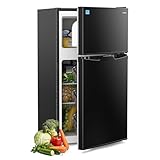
3. BLACK+DECKER 10 Cu. Ft. Top Mount Refrigerator with Freezer, 2 Door Refrigerator with Top Freezer and Adjustable Temperature Control, ENERGY STAR,BR1000HB, Black

Overview: The BLACK+DECKER BR1000HB is a no-frills, 10 cu.ft. top-freezer refrigerator designed for essential cooling in apartments, offices, or as a secondary unit. Its black finish, adjustable thermostat, and frost-free operation prioritize straightforward functionality and space efficiency within a standard footprint.
What Makes It Stand Out: Simplicity and reliability are its hallmarks. The true frost-free auto-defrost system eliminates manual thawing, while the single adjustable thermostat offers basic but effective temperature management for both compartments. ENERGY STAR certification ensures low operating costs in an accessible package.
Value for Money: Positioned as an entry-level model, it offers solid value for budget-conscious buyers needing dependable basic cooling. It undercuts pricier brands while delivering core features (frost-free, ENERGY STAR), making it ideal for temporary setups or secondary fridges where premium features aren’t essential.
Strengths and Weaknesses: Strengths: Affordable, reliable frost-free operation, easy-to-use single thermostat, energy-efficient, removable freezer shelf for flexibility. Weaknesses: Limited interior organization (basic bins/shelves), minimal temperature precision, black finish shows dust, no crispers for produce.
Bottom Line: A practical, economical choice for dorms, small apartments, or as a utility fridge. While lacking advanced features, its core reliability and low cost make it a sensible recommendation for straightforward cooling needs.
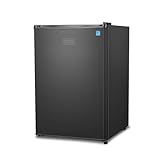
4. BLACK+DECKER 2.5 Cu. Ft. Compact Refrigerator, ENERGY STAR Certified, Single Door Mini Fridge with Chiller Compartment, Personal Fridge for Home or Dorm Room, R600a Refrigerant, BCRK25V,Stainless Look

Overview: This ultra-compact 2.5 cu.ft. BLACK+DECKER mini-fridge is tailored for personal use in dorms, offices, or small living spaces. Featuring a stainless-look vinyl finish, a chiller compartment, and ENERGY STAR efficiency, it provides minimalistic cooling for beverages and small food items in tight quarters.
What Makes It Stand Out: Its extreme portability and reversible door design allow flexible placement in constrained areas. The dedicated chiller compartment (colder than main section) is perfect for drinks, while R600a refrigerant ensures eco-friendly, efficient operation. The compact size (fits under desks/counters) is its defining strength.
Value for Money: Excellent value for its niche. It costs significantly less than full-sized units while fulfilling specific needs (dorm drink storage, office snacks). ENERGY STAR certification keeps electricity costs negligible, making it a cost-effective solution where space is the primary constraint.
Strengths and Weaknesses: Strengths: Extremely compact footprint, reversible door, energy-efficient R600a refrigerant, dedicated chiller zone, adjustable leveling legs. Weaknesses: Very limited capacity (holds ~6 cans + small items), basic interior (no shelves beyond bins), minimal temperature control.
Bottom Line: The go-to mini-fridge for students or professionals needing discreet, personal cooling. Its unbeatable size, low cost, and efficiency make it a highly recommended essential for dorm rooms or small offices.
5. Antarctic Star Compact Refrigerator,4.5 Cu.Ft. Mini Separate Freezer Double 2-Door Adjustable Removable Shelves for Apartment/Dorm/Office,BLACK

Overview: The Antarctic Star 4.5 cu.ft. model is a versatile double-door compact refrigerator/freezer combo, ideal for apartments, dorms, or offices. Its 19.37’‘D x 18.31’‘W x 42.91’‘H size fits small spaces, offering separate temperature-controlled compartments for fresh and frozen items with a sleek black finish.
What Makes It Stand Out: The true dual-compartment design (refrigerator + separate freezer) at this compact size is rare. The removable glass shelf and slide-out drawer enable customizable organization, while independent temperature control (fridge: 32°F-50°F; freezer: 3°F to -1°F) provides flexibility unmatched by single-control mini-fridges.
Value for Money: Offers exceptional utility for its footprint. The ability to independently manage fresh and frozen storage justifies a slightly higher price than single-door minis. It replaces two units for less cost/space, delivering superior organization and functionality for dorms or studio apartments seeking maximum utility.
Strengths and Weaknesses: Strengths: True separate freezer/refrigerator, removable glass shelf & drawer, independent temp control, compact yet spacious (4.5 cu.ft.), stylish black finish. Weaknesses: Manual defrost required (freezer), limited door storage, temperature knob less precise than digital controls.
Bottom Line: A highly recommended upgrade for those needing both fridge and freezer space in minimal area. Its dual-compartment versatility and smart organization make it the top choice for students or small-space dwellers over basic single-door models.
Why Energy Star Certification Truly Matters in 2026
The Certification Evolution Beyond Basic Standards
Energy Star isn’t static; its benchmarks tighten yearly to reflect technological advancements. In 2026, certified models must exceed 2023 requirements by an additional 5-8% in efficiency, pushing manufacturers to innovate with better insulation, variable-speed compressors, and smarter defrost cycles. This continuous improvement means today’s certification carries more weight than ever, directly translating to steeper reductions in greenhouse gas emissions compared to non-certified units.
How Third-Party Verification Builds Trust
Unlike self-declared “eco-friendly” claims, Energy Star certification involves rigorous lab testing by EPA-authorized facilities. Every model undergoes real-world simulated usage cycles measuring energy draw during door openings, temperature fluctuations, and standby modes. This exhaustive validation ensures the sticker isn’t just marketing—it’s proof the unit performs as promised under actual household conditions.
The Hidden Environmental Ripple Effect
Choosing Energy Star refrigeration does more than lower your personal carbon footprint. Widespread adoption reduces strain on power grids, decreasing reliance on fossil fuel “peaker” plants activated during high-demand periods. This collective impact accelerates the transition to renewable energy infrastructure, making your individual purchase part of a larger systemic shift toward cleaner energy ecosystems.
Decoding What Makes Modern Units Exceptionally Efficient
Advanced Compressor Technologies Explained
Gone are the days of single-speed compressors that ran at full blast regardless of cooling needs. Today’s top-tier units utilize inverter or variable-speed compressors that dynamically adjust power based on real-time demand—whisper-quiet operation and energy savings of 20-30% over conventional models. This precision cooling prevents temperature overshoots and minimizes compressor wear.
Vacuum Insulation Panels: The Thin-Wall Revolution
Newer models increasingly incorporate vacuum insulation panels (VIPs) in door liners and side walls. These space-age materials provide insulation equivalent to traditional foam three times thicker, allowing manufacturers to maximize interior capacity without enlarging the unit’s footprint. The result? More usable space with significantly reduced cold air leakage.
Smart Defrost Systems That Eliminate Waste
Older refrigerators wasted energy with fixed-timer defrost cycles, thawing evaporators whether needed or not. Modern Energy Star units employ demand-defrost technology using moisture and temperature sensors to trigger defrost only when frost buildup reaches critical levels. This can slash defrost-related energy use by up to 50%, keeping your food colder with less effort.
Critical Features Beyond the Energy Star Label
Precision Temperature and Humidity Control Zones
Look for models with dual evaporators and multi-airflow systems that maintain separate, consistent environments for fridge and freezer compartments. Advanced humidity-controlled crispers with adjustable vents preserve produce freshness longer, reducing food waste—a hidden energy drain when spoilage forces frequent restocking and cooking.
Adaptive Lighting and Sensor Intelligence
LED lighting has become standard, but top performers now integrate motion-activated systems that illuminate only when doors open, plus door-open alarms preventing accidental energy leaks. Some units even use internal cameras and AI to monitor contents, suggesting optimal usage patterns to maintain efficiency.
Water and Ice Filtration Integration
If you use filtered water or ice, integrated filtration systems with real-time filter life indicators ensure contaminants are removed without over-purifying. Poorly maintained filters force the system to work harder, subtly increasing energy consumption—a detail often overlooked in efficiency calculations.
Navigating Sizing and Layout for Maximum Efficiency
The Capacity Efficiency Paradox
Larger isn’t always better for efficiency. A unit operating near 75% capacity runs more efficiently than an oversized model cycling constantly in a half-empty state. Measure your actual storage needs—including common household habits like bulk shopping—and prioritize compact, well-organized designs over unnecessary cubic footage.
Placement and Ventilation Requirements
Even the most efficient refrigerator underperforms with poor installation. Allow at minimum 1 inch of clearance on sides and back for airflow around condenser coils, and never place units near ovens, dishwashers, or direct sunlight. Proper ventilation prevents the compressor from overheating and overworking, preserving both efficiency and longevity.
Door Configuration Impact on Energy Loss
French door models with bottom freezers often outperform side-by-siders in efficiency tests because the smaller freezer door minimizes cold air escape during frequent access. However, if your household accesses the freezer constantly, a top-mount configuration might prove more efficient due to superior cold air retention (cold sinks downward).
Installation and Maintenance Secrets for Long-Term Savings
The Critical First Setup Checklist
After delivery, let the unit stand upright for 24 hours before plugging in to allow oil stabilization in the compressor. Always use a dedicated circuit to prevent voltage fluctuations, and calibrate temperatures using a standalone thermometer—factory settings are often colder than necessary, wasting energy.
Seasonal Maintenance Rituals That Protect Efficiency
Clean condenser coils quarterly with a brush attachment (dust buildup can increase energy use by 30%), check door gaskets monthly for leaks using the “dollar bill test,” and replace water filters precisely when indicated. These simple habits prevent gradual efficiency erosion that turns a certified unit into an energy hog over time.
When to Consider Professional Calibration
If your unit cycles excessively or struggles to maintain temperature, request a technician to check refrigerant levels and evaporator fan operation. Low refrigerant or failing components force the compressor to overwork, silently negating Energy Star benefits. Annual professional servicing can extend peak efficiency by years.
Financial Realities: Calculating True Long-Term Value
Beyond the Purchase Price: The 10-Year Playbook
While efficient models may carry a 10-15% premium, calculate lifetime costs: Multiply annual kWh usage (found on the yellow EnergyGuide label) by your local electricity rate, then multiply by 10 years. The savings often exceed the upfront cost difference, especially in regions with high energy prices. Many utilities also offer instant rebates that narrow the initial gap.
Tax Credits and Utility Incentives You Might Qualify For
In 2026, federal tax credits cover up to $300 for ENERGY STAR Most Efficient models, while state and local programs frequently add cash rebates. Check the DSIRE database before purchasing—these incentives can transform a “premium” unit into the most economical choice from day one.
Resale Value and Future-Proofing Your Investment
As building codes tighten nationwide, ENERGY STAR-certified appliances increasingly become selling points. Homes with documented efficient systems appeal to eco-conscious buyers, potentially shortening sale timelines. Choosing a unit with modular, serviceable components also guards against premature obsolescence as technology evolves.
Frequently Asked Questions
What’s the biggest efficiency mistake homeowners make with new refrigerators?
Overfilling the unit restricts airflow, forcing the compressor to work harder. Maintain space between items for proper air circulation—especially around vents—and avoid blocking interior fans with large containers.
How can I verify an Energy Star claim isn’t outdated?
Check the certification date on the official ENERGY STAR product database using the model number. Requirements change annually, so a 2024-certified unit won’t meet 2026’s stricter benchmarks.
Do smart features actually save energy or just add cost?
Only if they’re purpose-built for efficiency. Look for adaptive features like vacation modes that optimize temps during absences or usage-pattern learning—not just app connectivity for its own sake.
Why do some Energy Star units still feel warm on the sides?
This is normal condenser coil operation. However, excessive heat (too hot to touch comfortably) indicates poor ventilation or failing components requiring service.
Are top-freezer models always the most efficient choice?
Not necessarily—they lead in basic efficiency but often lack advanced features like dual evaporators. Evaluate the specific model’s annual kWh consumption rather than assuming configuration alone determines efficiency.
How much can I trust the EnergyGuide label’s estimated yearly cost?
It’s a standardized estimate based on national average rates. Multiply the kWh/year figure by your actual electricity cost (found on bills) for a personalized projection—this reveals true local savings potential.
Does manual vs. automatic defrost impact Energy Star ratings?
Yes—automatic systems dominate certifications today because demand-based defrost cycles are inherently more efficient than manual thawing, which risks temperature spikes during the process.
Can a refrigerator be too efficient for my home’s electrical system?
Rarely, but units with variable-speed compressors may require stable voltage. Consult an electrician if you have frequent brownouts; incompatible power can negate efficiency gains through compressor stress.
How does location affect real-world efficiency beyond Energy Star testing?
Units in garages or sunrooms face extreme ambient temperatures that increase energy use by 20-40% versus climate-controlled kitchens. Select models rated for your specific installation environment.
What efficiency red flags should I watch for during shopping?
Avoid units requiring “special installation” for efficiency claims, models with unusually low upfront costs (often cutting corners on insulation), or vague “eco-mode” features without measurable kWh reductions documented in specifications.