That moment when the lights flicker back on after a power outage brings a wave of relief—until you remember the mini fridge in your garage, office, or dorm room. What’s happening inside that sealed metal box? Has your breast milk, insulin, or craft beer collection been silently stewing at dangerous temperatures? Traditional mini fridges are digital amnesiacs; they forget everything the second power cuts out, blindly cooling to factory defaults when electricity returns. But a new generation of appliances remembers.
Temperature memory technology is the unsung hero of modern refrigeration, transforming how these compact coolers handle power disruptions. This feature doesn’t just preserve your food—it preserves your settings, your safety, and your peace of mind. Whether you’re safeguarding temperature-sensitive medications or simply avoiding the disappointment of spoiled groceries, understanding this technology is crucial before your next purchase. Let’s dive deep into what makes these smart appliances worth the investment and how to choose the right one for your specific needs.
Top 10 Mini Fridges with Temperature Memory
Detailed Product Reviews
1. Cooluli 20 Liter Mini Fridge with Temperature Control - Black
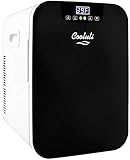
Overview: The Cooluli Concord-20LDX is a premium 20-liter thermoelectric mini fridge that combines versatility with sophisticated temperature management. Weighing just over 13 pounds, this compact unit measures 11.25" x 13.75" x 16.25" and features a sleek glass-front design. The digital thermostat allows precise temperature adjustment via an easy-to-read display, making it suitable for beverages, snacks, breast milk, insulin, cosmetics, and medications.
What Makes It Stand Out: Cooluli’s advanced dual-core cooling system sets it apart from standard thermoelectric models, delivering more consistent temperature performance while remaining ultra-quiet and eco-friendly. The ability to function as both cooler and warmer adds exceptional versatility, while the reinforced glass door provides a premium aesthetic that fits seamlessly into home, office, nursery, or dorm environments. The unit operates on North American electrical standards with a one-year limited warranty.
Value for Money: At $138.99, the Cooluli sits at the higher end of the thermoelectric market, but justifies its premium through superior build quality, dual-core technology, and multi-purpose functionality. Comparable 20-liter units typically lack the digital controls and dual-core system, making this a worthwhile investment for users needing reliable temperature control for sensitive items like medications or skincare.
Strengths and Weaknesses: Strengths include precise digital temperature control, dual-core cooling efficiency, versatile cooling/warming modes, lightweight portability, and attractive glass-front design. Weaknesses involve thermoelectric limitations—it cools only to ambient minus 30-40°F, struggles in hot environments, and lacks the power of compressor models. The premium price may deter budget-conscious buyers.
Bottom Line: The Cooluli 20L excels for users prioritizing quiet operation, portability, and precise temperature control for sensitive items. Its dual-core technology and versatile functionality make it worth the premium price, though those needing powerful cooling in hot climates should consider compressor alternatives.
2. JAYGOVAN 20L Mini Fridge with Temperature Control - 10.71×13.58×16.61inch White Portable Thermoelectric Cooler and Warmer Single Door Mini Fridge for Bedroom, Office, Car, Dorm, AC 110/120V
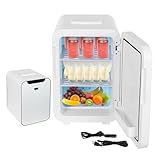
Overview: The JAYGOVAN 20L mini fridge delivers impressive functionality at a budget-friendly price point. This white thermoelectric unit measures 10.71" x 13.58" x 16.61" and weighs 12.56 pounds, offering 14.53 quarts of storage capacity. It features both AC and DC power adapters for seamless indoor and car use, cooling to 59-64°F below ambient temperature or warming to 122-149°F.
What Makes It Stand Out: The included dual power adapters (AC 110-120V and DC 12V) provide exceptional portability without requiring separate purchases. The touch panel with digital temperature display offers modern convenience, while the flexible storage system includes two removable shelves plus a side shelf for organization. The compressor-less design ensures quiet 40-50dB operation, and strategic cooling holes with dual fans improve heat dissipation and longevity.
Value for Money: At $79.99, this fridge significantly undercuts competitors while offering comparable 20-liter capacity and more included accessories. The dual power adapters alone represent a $15-20 value, making this an exceptional bargain. Thermoelectric models with similar features typically retail for $100+, positioning the JAYGOVAN as a cost-effective choice for dorm rooms, offices, or vehicle use.
Strengths and Weaknesses: Strengths include excellent price-to-performance ratio, included AC/DC adapters, quiet operation, flexible shelving, and user-friendly digital controls. Weaknesses include thermoelectric cooling limitations, modest temperature differential compared to compressor models, and basic white plastic construction that lacks premium aesthetics. The 40-50dB noise level, while quiet, is slightly higher than some premium thermoelectric units.
Bottom Line: The JAYGOVAN 20L offers outstanding value for budget-conscious buyers needing portable cooling/warming functionality. The included power adapters and flexible storage make it ideal for students and travelers, though those seeking premium materials or powerful cooling should look elsewhere.
3. Antarctic Star 18L Beverage Refrigerator Cooler 24Can, Mini Fridge with Quiet Compressor, LED Light,Freestanding Small Fridge with Electronic Temperature Control for Home and Bar(40-61 ℉)

Overview: The Antarctic Star 18L beverage refrigerator targets drink enthusiasts with its compressor-based cooling system and specialized design. Measuring 14.88" x 11.02" x 16.73", this freestanding unit holds 24 standard cans with horizontal racking for efficient organization. The compressor maintains steady temperatures between 40°F-61°F, independent of ambient conditions, making it reliable even during hot summers.
What Makes It Stand Out: Unlike thermoelectric competitors, the compressor technology delivers consistent, powerful cooling unaffected by room temperature. The reinforced door with airtight seal maintains ideal humidity levels, while the blue LED interior lighting creates an attractive display and improves visibility. The horizontal racking system maximizes space efficiency and presents beverages professionally, suitable for home bars or entertainment areas.
Value for Money: Priced at $93.47, this compressor fridge offers remarkable value, costing only slightly more than thermoelectric models while delivering superior cooling performance. Dedicated beverage coolers with similar compressor technology typically start around $150, making the Antarctic Star an affordable entry into serious drink refrigeration. The specialized design sacrifices versatility but excels at its intended purpose.
Strengths and Weaknesses: Strengths include powerful compressor cooling, consistent temperature maintenance, attractive LED lighting, space-efficient horizontal racking, and quiet operation. Weaknesses include limited 18L capacity, narrow temperature range unsuitable for warming or freezing, and lack of DC power option for car use. The beverage-specific design makes it less versatile for items like skincare or medications.
Bottom Line: The Antarctic Star is ideal for beverage storage, offering compressor performance at a thermoelectric price. It excels for home bar setups or offices where consistent drink cooling matters. However, those needing portability, warming functions, or multi-purpose storage should consider thermoelectric alternatives.
4. FoMup Beverage Refrigerator 17 inch Wide - 126 Can Beverage Cooler with Glass Door | Counter-Top/Freestanding Mini Beverage Beer Fridge | Temperature Memory | Invisible Door | Perfect for Soda, Beer

Overview: The FoMup beverage refrigerator represents a significant step up in capacity and sophistication, accommodating 126 cans in a 17-inch wide frame. This compressor-powered unit offers precise temperature control from 37°F to 65°F and features a stylish glass door with invisible handle design. Operating at under 38dB, it provides powerful cooling suitable for serious entertainers or small commercial settings.
What Makes It Stand Out: The massive 126-can capacity dwarfs typical mini fridges, while temperature memory preserves settings after power interruptions. Three adjustable stainless steel wire shelves with upgraded guardrails provide superior organization and security compared to standard wire racks. The soft blue LED ambient light creates an upscale aesthetic, and the invisible door handle minimizes accident risks while maintaining a sleek profile.
Value for Money: At $236.99, the FoMup commands a premium price but delivers commercial-level capacity and features. Cost-per-can storage is highly competitive at under $1.90 per can capacity, outperforming multiple smaller units. While expensive for casual users, the build quality, capacity, and compressor efficiency justify the investment for enthusiasts or office environments.
Strengths and Weaknesses: Strengths include exceptional 126-can capacity, precise compressor cooling, quiet sub-38dB operation, temperature memory, premium glass-door design, and adjustable guardrail shelves. Weaknesses include high price point, large footprint requiring dedicated space, lack of warming function, and no DC power option for portability. The unit is overkill for individual users with modest needs.
Bottom Line: The FoMup is perfect for serious collectors, home entertainers, or office break rooms requiring large-capacity beverage storage. Its premium features and massive capacity justify the price for targeted users, but individuals seeking personal-use portability should opt for smaller thermoelectric models.
5. AstroAI Mini Fridge 2.0 Gen, 6 Liter/8 Cans Makeup Skincare Fridge 110V AC/ 12V DC Portable Thermoelectric Cooler and Warmer Little Tiny Fridge for Bedroom, Cosmetics (Dark Grey)

Overview: The AstroAI 2.0 Gen mini fridge targets a niche market with its ultra-compact 6-liter design, perfect for cosmetics and personal items. Measuring just enough to hold eight 355ml cans or four 20oz bottles, this dark grey unit combines futuristic aesthetics with practical portability. It cools to 32-40°F below ambient temperature and warms up to 150°F, powered by both AC and DC adapters.
What Makes It Stand Out: The cosmetics-focused design includes unique silicone base pads for stability and hidden hinges to prevent furniture scratches—details rarely seen in budget mini fridges. The enhanced refrigeration chip and improved insulation deliver better temperature control than typical 6L models. Its dark grey finish and modern styling make it an attractive bedroom or vanity accessory rather than an eyesore.
Value for Money: At $57.99, the AstroAI offers excellent value for its target demographic. While pricier than basic 6L coolers, the included AC/DC adapters, enhanced insulation, and cosmetic-specific features justify the modest premium. Competing skincare fridges often cost $80+ with fewer features, making this a smart buy for beauty enthusiasts.
Strengths and Weaknesses: Strengths include ultra-portable compact size, included dual power adapters, cosmetic-specific design elements, quiet operation, and both cooling/warming functions. Weaknesses include extremely limited 6L capacity unsuitable for food storage, thermoelectric cooling limitations, and door closure issues noted in the manual. The small size restricts versatility beyond personal items.
Bottom Line: The AstroAI 2.0 Gen excels as a dedicated cosmetics and skincare fridge, offering thoughtful design touches and dual power convenience. It’s perfect for beauty enthusiasts needing bedside storage, but too small for general beverage or food use. Buyers should prioritize this for its intended niche rather than general cooling needs.
6. Feelfunn 24 Cans Beverage Refrigerator Cooler - Mini Fridge with Digital Temperature Control, Soda Wine Beer Drink Fridge - Small Refrigerator for Office Home Bedroom Dorm Bar, Black

Overview: The Feelfunn 24 Can Beverage Refrigerator delivers compact cooling for small spaces. At just 11.2" x 14.9" x 16.7" and 0.6 cubic feet, it tucks neatly under desks or in dorm rooms while holding two dozen cans or 6-8 wine bottles. The removable shelf adapts to various drink sizes, making it versatile for soda, beer, or wine storage.
What Makes It Stand Out: This model distinguishes itself with 3D circulating air cooling that distributes cold evenly while minimizing frost buildup—a common issue in budget fridges. The digital temperature control (40°F-61°F) offers precise cooling for different beverages, and the UV-protective door with blue LED lighting adds a modern aesthetic. The ≤38 dB operation is genuinely quiet for bedroom or office use.
Value for Money: At $89.99, it sits in the mid-range category. The energy consumption of 0.83 kWh per day keeps operating costs low, offsetting the initial investment over time. While not the cheapest option, the reduced frost feature and even cooling justify the price premium over basic thermoelectric models.
Strengths and Weaknesses: Strengths include compact footprint, flexible storage, quiet operation, and modern design. The 3D cooling system reduces maintenance compared to competitors. Weaknesses include the 12-hour settling period before first use and limited capacity for the price point. The 0.6 cu.ft size may disappoint those expecting more interior space.
Bottom Line: The Feelfunn excels for users prioritizing quiet operation and minimal frost in a compact beverage cooler. It’s ideal for offices, dorms, or bedrooms where space is premium and noise must be minimal.
7. CROWNFUL Mini Fridge, 4 Liter/6 Can Portable Cooler and Warmer Personal Refrigerator for Skin Care, Cosmetics, Beverage, Food,Great for Bedroom, Office, Car, Dorm, ETL Listed (White)

Overview: The CROWNFUL 4 Liter Mini Fridge offers portable cooling and warming in a tiny package. Holding just six 12 oz cans, this personal refrigerator targets skincare enthusiasts, office workers, and travelers who need temperature control on the go. The compact 5.33" x 6.05" x 7.96" interior fits easily on desks or in vehicles.
What Makes It Stand Out: Dual cooling and warming modes set this apart, reaching up to 149°F for heated items or cooling 10-20°C below ambient temperature. The brushless fan motor operates at just 25 dB—whisper-quiet for sleep mode. Including both AC and 12V DC car adapters provides exceptional versatility for road trips or camping.
Value for Money: At $44.99, it’s an affordable entry point into personal refrigeration. The multifunctionality and included car adapter add significant value. While thermoelectric cooling has limitations, the price reflects realistic performance expectations for a portable unit.
Strengths and Weaknesses: Strengths include ultra-quiet operation, portability with carry handle, dual temperature modes, and versatile power options. The ETL listing ensures safety standards. Weaknesses are limited capacity and thermoelectric cooling performance that depends on ambient temperature. It’s not suitable for serious beverage cooling in warm environments.
Bottom Line: Perfect for skincare storage, breast milk, or keeping a few drinks slightly chilled. The CROWNFUL shines as a portable solution for personal use, especially where quiet operation and mobility matter most.
8. Cooluli Mini Fridge for Bedroom - Car, Office Desk & Dorm Room - Portable 4L/6 Can Electric Plug In Cooler & Warmer for Food, Drinks, Skincare Beauty & Makeup - 12v AC/DC & Exclusive USB Option, Black

Overview: The Cooluli Classic 4L Mini Fridge combines portability with triple power options in a sleek matte black design. Weighing only 4 pounds, this thermo-electric cooler/warmer stores six cans or skincare products with equal ease. Its 7.25" x 10.25" x 10.75" profile fits discreetly on desks, in dorms, or vehicles.
What Makes It Stand Out: The exclusive USB power option differentiates this model, allowing connection to power banks or laptops for ultimate flexibility. The semiconductor operation runs ultra-quiet while remaining environmentally friendly. Cooling to 40-45°F below ambient temperature handles moderate cooling needs effectively.
Value for Money: Priced at $49.99, it commands a slight premium over similar 4L models but justifies this with USB connectivity. For users needing off-grid power options, the versatility outweighs the extra cost. However, pure AC/DC users may find better value elsewhere.
Strengths and Weaknesses: Strengths include lightweight portability, triple power sources, quiet operation, and modern aesthetics. The versatile storage works for drinks, breast milk, insulin, or cosmetics. Weaknesses include thermoelectric cooling limitations and small capacity. USB charging may be slower than direct AC/DC power, and performance drops significantly in hot environments.
Bottom Line: The Cooluli is the go-to choice for maximum power flexibility. Ideal for travelers, students, or beauty enthusiasts who prioritize portability and multiple charging options over raw cooling power.
9. Erivess 24 Cans/0.9 Cubic Feet Beverage Refrigerator Cooler and Skincare Mini Fridge with Mirrored Front Door & Temperature Control, Countertop Small Fridge for Soda, Beer and Cosmetics, Skincare

Overview: The Erivess Beverage Refrigerator merges beauty storage with drink cooling through its innovative mirrored door design. With 0.9 cubic feet capacity holding 24 cans, it serves as both a vanity mirror and functional fridge. The countertop-friendly size suits bedrooms, offices, or beauty stations where space efficiency matters.
What Makes It Stand Out: The full-length mirrored front door creates a unique dual-purpose appliance that eliminates separate vanity needs. The memory function automatically restores temperature settings after power interruptions—a thoughtful feature rarely seen at this price. Horizontal bottle racking maximizes storage efficiency for wine enthusiasts.
Value for Money: At $59.99, it undercuts many competitors while offering distinctive features. The larger 0.9 cu.ft capacity provides more storage than typical 0.6 cu.ft models at similar prices. The mirror adds functional value beyond basic cooling.
Strengths and Weaknesses: Strengths include stylish mirrored design, generous capacity, memory function, and quiet compressor operation. The versatile storage handles cans, bottles, or skincare products. Weaknesses include the restriction against fresh foods and potential mirror cleaning challenges. The mirrored surface may not suit all décor preferences.
Bottom Line: The Erivess brilliantly serves beauty-conscious users wanting integrated storage. It’s perfect for makeup enthusiasts who need chilled skincare and cold beverages within arm’s reach, offering excellent value with unique styling.
10. EUHOMY 18L Beverage Refrigerator Cooler, 24 Cans Mini Fridge with Quiet Compressor, Countertop Small Fridge with 40°F-61°F Digital Temperature Control, LED Lgiht for Home, Bar, Office

Overview: The EUHOMY 18L Beverage Refrigerator employs compressor cooling technology to deliver stable temperatures for serious drink enthusiasts. Holding 24 cans in a 0.6 cu.ft footprint, this mini fridge targets users frustrated with inconsistent thermoelectric performance. The lightweight 21-pound design maintains portability despite robust cooling capabilities.
What Makes It Stand Out: Unlike most mini fridges in this class, the compressor-based system maintains precise 40°F-61°F temperatures regardless of ambient conditions. The UV-protected door shields drinks from light damage, while operation below 40 dB ensures bedroom suitability. ETL certification and 24-hour customer support demonstrate quality commitment.
Value for Money: At $98.75, it’s the premium option among 24-can models. The compressor technology justifies the higher price for temperature-sensitive beverages like craft beer or wine. While expensive compared to thermoelectric alternatives, the performance consistency delivers long-term value for serious users.
Strengths and Weaknesses: Strengths include stable compressor cooling, quiet operation, UV protection, removable shelves, and reliable customer support. The lightweight design aids mobility. Weaknesses center on the highest price point and identical capacity to cheaper models. Compressor units may have slightly higher energy consumption than thermoelectric versions.
Bottom Line: For those prioritizing temperature stability over cost, the EUHOMY is worth the investment. It’s ideal for wine lovers and craft beverage collectors who need reliable, consistent cooling in a compact package.
Understanding Temperature Memory Technology
What Is Temperature Memory?
Temperature memory is an intelligent refrigeration feature that preserves your exact temperature settings during a power outage and automatically restores them once electricity returns. Unlike conventional mini fridges that reset to a default temperature (typically around 37°F) after every interruption, memory-enabled units maintain a digital record of your preferred settings in non-volatile storage. This means whether you’ve carefully calibrated your unit to 39°F for optimal beverage storage or 33°F for maximum food preservation, those precise parameters survive even when the unit goes completely dark.
The technology extends beyond simple setting retention. Advanced systems monitor internal temperatures throughout the outage, creating a time-temperature history that helps assess food safety upon recovery. Some models even display the maximum temperature reached during the blackout, giving you concrete data to make informed decisions about food disposal rather than relying on guesswork.
How It Works: The Technology Behind the Feature
At its core, temperature memory relies on either battery-backed RAM or EEPROM (Electrically Erasable Programmable Read-Only Memory) chips. Battery systems use a small coin-cell battery to maintain power to the control board’s memory circuits during outages, typically lasting 48-72 hours. EEPROM systems write settings to permanent memory that doesn’t require power, offering indefinite retention but with slightly slower recall speeds.
The real sophistication lies in the temperature monitoring array. Multiple thermistors positioned throughout the cabinet continuously log temperature data to a small buffer memory. When power resumes, the compressor doesn’t just immediately kick on at full blast. Instead, the microcontroller analyzes the temperature curve, calculates the optimal recovery sequence, and gradually brings the interior back to target temperature. This prevents thermal shock to sensitive contents and reduces energy surge during the critical first minutes of restoration.
Why Temperature Memory Matters for Mini Fridges
Food Safety During Extended Outages
The USDA’s “danger zone”—temperatures between 40°F and 140°F where bacteria multiply exponentially—becomes a serious concern during power failures. A standard mini fridge can enter this zone in as little as 4 hours without power. Temperature memory doesn’t prevent this warming, but it provides crucial documentation of the thermal event.
More importantly, it ensures immediate, aggressive cooling the moment power returns. Standard units often resume operation at energy-saving settings, taking hours to reach safe temperatures again. Memory-enabled models prioritize rapid recovery to your previously safe setting, potentially shaving 30-40% off the time needed to return contents to safe storage conditions. For a family storing hundreds of dollars in groceries or a medical patient relying on medication stability, this acceleration can be the difference between safety and disaster.
Energy Efficiency and Cost Savings
Contrary to assumptions, temperature memory features often reduce long-term energy consumption. Here’s why: when standard fridges reset to factory defaults, they’re frequently set colder than necessary by manufacturers to cover worst-case scenarios. Users rarely reprogram them, leading to year-round overcooling and wasted electricity.
Memory-enabled units respect your efficiency-optimized settings. If you’ve carefully set your mini fridge to 40°F for beverages (perfectly safe and efficient), it stays there after every outage. Additionally, the smart recovery algorithms avoid the massive energy spike of running the compressor at 100% capacity for hours. Instead, they use calculated cooling cycles that maintain efficiency even during restoration, potentially saving 5-8% on annual operating costs.
Preserving Sensitive Contents
Wine collectors know that temperature stability matters more than the exact degree. A fluctuation from 55°F to 70°F and back can prematurely age a delicate vintage just as much as constant heat. Temperature memory ensures your carefully chosen cellar conditions return precisely as planned.
For medical applications, the stakes are even higher. Insulin, certain antibiotics, and biologics require strict 36-46°F storage. A memory-enabled medical mini fridge doesn’t just restore the setting—it can lock the controls after recovery to prevent accidental adjustment, a critical feature in busy households or clinical settings where well-meaning family members might “help” by changing settings.
Key Features to Prioritize When Shopping
Automatic Temperature Recovery Settings
Look for models offering adjustable recovery aggression levels. “Standard” mode provides balanced recovery, while “Rapid” mode prioritizes speed over energy efficiency for medical or high-value contents. Some premium units feature “Gentle” recovery, which slowly returns temperature over several hours to prevent shocking delicate items like aged cheeses or chocolate.
The best systems also include a “delayed start” option, allowing you to postpone compressor activation for 5-15 minutes after power returns. This protects against voltage instability during grid restoration and prevents circuit overload when multiple appliances simultaneously demand power.
Adjustable Memory Parameters
Basic memory systems only retain the primary temperature setting. Advanced models remember multiple parameters: temperature zones (in dual-zone units), humidity settings for crisper drawers, rapid-cool modes, and even Sabbath mode status. This comprehensive recall eliminates the tedious reprogramming dance after every minor blip.
Pay attention to how adjustments are made. Units with physical buttons often require complicated multi-key sequences to access memory settings, while those with digital displays typically offer intuitive menu navigation. Some even allow you to disable memory for specific parameters—useful if you want temperature memory but prefer manual control over interior lighting or alarm settings.
Display and Alert Systems
A memory feature is only useful if you know it’s working. Prioritize models with clear outage indicators: a flashing power icon, a “Max Temp Reached” display, or a dedicated “Memory Active” LED. The most sophisticated units show a timestamp of when power was lost and restored, creating a verifiable log for food safety documentation.
Audible alerts matter too. A distinct chime pattern that differs from the door-ajar alarm ensures you immediately recognize a power event occurred. Some models offer customizable alert volumes or the ability to disable alerts during specific hours—perfect for bedrooms or offices where overnight outages shouldn’t disturb sleep.
Power Outage Scenarios and Performance
Short-Term vs. Long-Term Outages
For outages under 2 hours, memory-enabled mini fridges perform nearly identically to standard units in terms of internal temperature maintenance. The difference becomes apparent upon recovery. A standard unit might take 45 minutes to return to 37°F, while a memory unit achieves your custom setting in 25-30 minutes.
During extended outages (8+ hours), memory technology’s true value emerges in data logging. While both fridges will warm to room temperature, the memory unit provides a complete temperature curve. This information is invaluable for insurance claims, food safety assessments, and medical compliance reporting. Some units can store up to 30 days of temperature data, downloadable via USB for regulatory documentation.
Voltage Fluctuations and Surge Protection
Power outages rarely end cleanly. Voltage often fluctuates wildly in the minutes before and after an outage. Quality memory-enabled mini fridges include integrated surge protection and voltage regulation that safeguard both the memory circuits and the compressor. Look for units rated to handle voltage sags down to 90V and spikes up to 140V without memory loss or component damage.
Some advanced models feature “brownout detection” that proactively saves settings when voltage drops below safe operating levels but before complete power loss. This preemptive save ensures data integrity even during unstable grid conditions common in storm-prone areas or rural locations.
Technical Specifications Deep Dive
Compressor Types and Their Impact
Inverter compressors paired with temperature memory create a synergistic relationship. Unlike traditional single-speed compressors that are either on or off, inverter compressors can operate at variable speeds (typically 1,800-4,500 RPM). When power returns, they don’t just blast at full speed; they analyze the temperature differential and calculate the most efficient RPM to reach target temperature with minimal energy waste.
This pairing also reduces mechanical stress. A standard compressor starting cold after an outage draws a massive inrush current—up to 6 times normal operating amperage. Inverter compressors use soft-start technology, gradually ramping up while the memory system precisely controls the acceleration curve, potentially extending compressor life by 20-30%.
Sensor Accuracy and Placement
Memory systems are only as good as their sensors. Premium units use platinum RTD (Resistance Temperature Detector) sensors accurate to ±0.5°F, positioned at multiple points: near the evaporator, in the center of the cabinet, and in the door. This array prevents false readings from cold spots or warm zones.
The placement of the “master” sensor matters enormously. Units with door-mounted sensors often read artificially warm after an outage because door insulation fails first. Better designs place the primary sensor in the geometric center of the storage area, with secondary sensors providing correction factors. Some medical-grade units even allow you to place a remote sensor probe directly inside a storage container, ensuring the actual product temperature—not just air temperature—guides recovery.
Battery Backup vs. Capacitor Systems
Battery backup systems offer longer memory retention (days vs. hours) but require periodic maintenance. The coin-cell batteries typically last 3-5 years but will eventually fail, often without warning. Look for models with a low-battery indicator that alerts you months before failure.
Capacitor-based systems (supercapacitors) charge in seconds and last for decades, but only provide 4-6 hours of memory protection. They’re maintenance-free and more environmentally friendly. Hybrid systems offer the best of both worlds: capacitors handle short outages, while a battery kicks in for extended blackouts. The transition is seamless, and the battery lifespan extends to 7-10 years since it’s rarely used.
Comparing Standard vs. Memory-Enabled Models
Price Differential Analysis
Expect to pay a 15-25% premium for temperature memory features. A standard 3.2 cu ft mini fridge might cost $180, while its memory-enabled counterpart runs $220-240. However, this upfront cost tells only part of the story. When factoring in prevented food loss, a single avoided spoilage event can offset the entire price difference.
Consider the “hidden costs” of standard units: time spent reprogramming, stress over food safety, and potential medical waste. For a household that experiences 4-6 outages annually, the time savings alone—approximately 10-15 minutes per reprogramming session—adds up to an hour of hassle eliminated each year.
Long-Term Value Proposition
Memory-enabled mini fridges typically offer superior build quality overall. Manufacturers don’t add sophisticated memory systems to budget chassis. You’ll often find better insulation, tighter door seals, and higher-grade compressors in these models. This translates to a lifespan of 10-12 years versus 6-8 years for basic units.
Resale value also favors memory-equipped models. The secondary market for appliances with advanced features remains strong, with these units retaining 40-50% of their value after 5 years compared to 25-30% for standard models. For renters or students who may relocate, this enhanced resale value can be a significant financial consideration.
Energy Consumption Considerations
Standby Power Draw
The memory system itself consumes minimal power—typically 0.3-0.8 watts in standby. Over a year, this adds only $0.50-1.50 to your electric bill. However, the real energy story involves the recovery process. Memory-enabled units often achieve target temperature 40% faster, meaning the compressor runs less total time after an outage.
Calculate the difference: A standard compressor might run 3 hours at 120 watts (360 Wh) to recover from a 4-hour outage. A memory-enabled inverter compressor could achieve the same result in 1.8 hours at varying speeds averaging 90 watts (162 Wh). That’s a 55% energy savings per event. In outage-prone areas, this can amount to 5-10 kWh saved annually.
Recovery Mode Energy Usage
Some manufacturers implement a “power ceiling” during recovery, limiting compressor draw to prevent circuit breaker trips when multiple appliances restart simultaneously. This cap, typically 80% of normal maximum amperage, extends recovery time slightly but prevents cascading electrical failures in older homes or RVs with limited power service.
Smart recovery algorithms also factor in ambient temperature. During summer outages, they prioritize aggressive cooling. In winter, they may delay full recovery until interior temperature naturally drops, leveraging cold ambient air to reduce compressor workload. This seasonal adaptation provides year-round efficiency that standard units simply cannot match.
Installation and Placement Best Practices
Optimal Location for Temperature Stability
Even the best memory technology can’t compensate for poor placement. Install your mini fridge away from heat sources (ovens, radiators, direct sunlight) and ensure at least 2 inches of clearance on all sides for proper airflow. In memory-enabled units, this clearance is even more critical because the rapid recovery mode generates more heat in the condenser coils during the first minutes of operation.
For maximum memory effectiveness, avoid uninsulated garages or outdoor spaces where temperature extremes stress the system. If you must use the fridge in a garage, choose a model with an extended operating range (some work reliably from 38°F to 110°F ambient) and enhanced memory protection. The temperature sensors will thank you with more accurate performance.
Ventilation Requirements
Memory-enabled compressors work harder during recovery, generating significant heat. Inadequate ventilation forces the unit to work even harder, potentially triggering thermal overload protection and defeating the purpose of rapid recovery. Maintain 3 inches of clearance at the rear and ensure the floor beneath is level and solid—carpet can restrict airflow through bottom-mounted condensers.
Consider a small fan to improve circulation in tight installations. Some high-end models include an integrated fan that automatically activates during recovery mode, but you can replicate this with a $15 USB-powered fan placed near the rear vents. This simple addition can improve recovery efficiency by 15-20% in cramped quarters.
Maintenance and Care
Calibration Procedures
Temperature memory is only valuable if the baseline reading is accurate. Calibrate your unit quarterly using a certified thermometer placed in a glass of water (which stabilizes readings). If you find a discrepancy of more than 2°F, access the calibration menu—most memory-enabled units allow ±5°F adjustment.
The calibration process itself often tests the memory system. After adjusting, unplug the unit for 5 minutes, then restore power. The display should show your calibrated offset, confirming the memory circuits function correctly. If it reverts to factory calibration, the memory battery may be failing or the EEPROM could be corrupted.
Software Updates and Smart Features
Many memory-enabled mini fridges now include USB ports or Wi-Fi connectivity for firmware updates. Manufacturers occasionally release updates that improve recovery algorithms, adjust memory retention protocols, or fix bugs in temperature logging. Check for updates every 6 months, especially after purchase.
For Wi-Fi models, ensure the memory function works independently of connectivity. The best designs store settings locally first, then sync to cloud backup. This way, if your router fails during an outage (common), the fridge’s core memory remains unaffected. Be wary of models that require cloud connectivity to recall settings—they’re vulnerable to internet outages that often accompany power failures.
Safety and Certification Standards
UL Ratings and What They Mean
Look for UL 250 certification specifically for household refrigerators and freezers. This standard tests memory retention during voltage fluctuations and ensures the unit doesn’t create fire hazards during power restoration. Some manufacturers go further with UL 60335-2-24, which includes more stringent tests for electronic controls and memory circuits.
Medical-grade units should meet CDC guidelines for vaccine storage, which require memory systems that retain data for a minimum of 30 days with 0.5°F accuracy. These models often carry additional NSF or ENERGY STAR certifications that verify their performance claims. The certification numbers should be printed on the rating plate inside the door—photograph this for warranty and insurance purposes.
Food Safety Compliance
For commercial or semi-commercial use (office kitchens, Airbnb rentals), memory-enabled mini fridges should comply with FDA Food Code requirements for temperature monitoring. This means the memory system must be tamper-evident: once power returns, the max temperature display cannot be cleared without a master reset sequence, ensuring health inspectors can verify food safety compliance.
Residential users benefit from this same tamper resistance. Teenagers can’t accidentally (or intentionally) clear the “max temp” display after leaving the door open, forcing accountability. Some units even timestamp the max temperature event, providing concrete evidence of when the thermal abuse occurred.
Troubleshooting Common Issues
When Memory Fails: Causes and Solutions
If your fridge consistently forgets settings after outages, first check the power source. Voltage drops below 90V can prevent the memory save function from triggering. Install a voltage monitor to confirm stable power. If voltage is adequate, the memory battery or capacitor has likely failed.
For battery systems, replacement is usually straightforward—a CR2032 cell accessible behind the control panel. However, some integrated batteries require service calls. Capacitor failures are rare but indicate a larger electrical issue, often covered under warranty. Document the failure pattern: does it forget only during outages over 4 hours? This points to battery exhaustion. Random forgetting suggests corrupted memory or loose connections.
Resetting and Reprogramming Your Unit
Most memory systems include a “memory lock” feature that prevents changes during the first 30 minutes after power restoration. This ensures voltage stabilizes before new settings are accepted. If you need to override this, hold the temperature up and down buttons simultaneously for 5 seconds—this “master reset” clears all memory and allows immediate reprogramming.
After any extended outage (12+ hours), perform a full memory reset even if the unit seems to work correctly. Prolonged low voltage can cause “bit rot”—subtle data corruption that causes erratic behavior weeks later. The reset process typically involves unplugging for 10 minutes, then holding a specific button combination during restart. Consult your manual, as this sequence varies by manufacturer.
Smart Features Integration
Wi-Fi Connectivity and Remote Monitoring
Wi-Fi-enabled memory fridges take the concept further by uploading outage data to your smartphone. You’ll receive alerts when power fails, periodic updates on internal temperature during the outage, and a detailed recovery report once power returns. This is invaluable for travelers or property managers monitoring vacant homes.
However, scrutinize the app’s memory independence. Quality systems continue logging temperature data locally during outages, then sync the complete dataset once Wi-Fi returns. Cheaper models stop logging when the internet drops, creating dangerous gaps in your temperature history. Test this by unplugging your router, then unplugging the fridge briefly. When both restore, check if the app shows the complete outage event.
Integration with Home Automation Systems
For smart home enthusiasts, memory-enabled mini fridges can integrate with platforms like SmartThings or Home Assistant. This allows sophisticated automation: during an outage, the system can automatically switch your fridge to a backup generator circuit, or send commands to reduce cooling in less critical zones to preserve battery life.
Look for units with MQTT protocol support—the gold standard for local, reliable smart home communication. Avoid cloud-dependent APIs that become useless when internet service fails during storms. The best implementations use local memory as the primary control, with smart home integration as a secondary reporting layer, ensuring your fridge protects its contents even when your entire smart home goes dark.
Cost-Benefit Analysis
Initial Investment vs. Replacement Costs
A $60 premium for memory features seems steep until you calculate the replacement cost of spoiled contents. A fully stocked mini fridge holds $150-300 in groceries. Medical users might store $1,000+ in medications. If memory functionality prevents even one spoilage event over the appliance’s lifespan, it pays for itself.
Factor in less obvious savings: reduced emergency grocery runs, avoided takeout expenses when planned meals spoil, and preserved breast milk that’s irreplaceable. For home office users, preventing the loss of a week’s meal prep can save $50-75 in alternative food costs. The ROI becomes compelling when viewed over a 10-year ownership period.
Insurance and Warranty Implications
Some homeowners insurance policies offer discounts for appliances with advanced safety features. A documented temperature memory system can reduce premiums by 2-5% in some markets, as it demonstrates proactive risk management. Contact your insurer—providing the model number and UL certification may unlock savings.
Warranty terms also differ. Memory-enabled units often include longer control board warranties (3-5 years vs. 1 year for standard models) because manufacturers have confidence in the robust electronics. Read the fine print: some warranties specifically cover food loss if the memory system fails to perform as advertised, offering reimbursements up to $500—a protection standard units never include.
Environmental Impact and Sustainability
Refrigerant Types and Global Warming Potential
Memory-enabled mini fridges disproportionately use newer refrigerants like R600a (isobutane) rather than older R134a. R600a has a global warming potential (GWP) of just 3 compared to R134a’s GWP of 1,430. The efficient recovery algorithms in memory systems extract maximum performance from these eco-friendly refrigerants, which have slightly different pressure-temperature curves.
The combination of precise temperature control and efficient recovery reduces total runtime, meaning less refrigerant circulation and lower leak risk over the appliance’s life. A typical memory-enabled unit uses 15-20% less refrigerant charge than a standard model of equivalent capacity, simply because the system doesn’t need to oversize the charge to compensate for inefficient recovery cycles.
End-of-Life Disposal Considerations
The advanced electronics in memory-enabled units require proper e-waste recycling. The EEPROM chips and sensor arrays contain small amounts of precious metals and should be processed at certified facilities. Many manufacturers now offer take-back programs specifically for smart appliances, ensuring responsible component recovery.
From a longevity perspective, the superior build quality of memory-equipped models means they stay in service longer, reducing landfill waste. The modularity of their control systems also facilitates repair. A failed memory board can often be replaced for $30-50, extending the unit’s life by years, whereas standard models with integrated controls often become e-waste after a single component failure.
Future Trends in Temperature Memory Technology
AI-Powered Predictive Recovery
Emerging models incorporate machine learning algorithms that analyze your usage patterns and local weather data to predict outage likelihood. If storms are forecast, the fridge preemptively drops its temperature 2-3°F, creating a thermal buffer. During recovery, AI adjusts cooling aggression based on predicted outage duration, optimizing energy use while ensuring safety.
These systems also learn your recovery preferences. If you consistently override the automatic settings after outages, the AI adapts, customizing future recoveries to your behavior. This personalization extends to seasonal adjustments and even anticipates when you’re likely to restock, preparing the fridge for a new thermal load.
Solid-State Cooling Advances
Thermoelectric cooling technology, long dismissed as inefficient for refrigeration, is experiencing a renaissance with new semiconductor materials. Solid-state coolers have no moving parts and can maintain temperature memory with near-zero standby power. While current models can’t match compressor efficiency for large capacities, they’re ideal for compact medical fridges where absolute reliability trumps energy cost.
Hybrid systems are on the horizon: a small solid-state module maintains memory and minimal cooling during outages, while the main compressor handles normal operation. This approach could extend memory retention indefinitely while keeping contents safely cool for 24+ hours without grid power, revolutionizing how we think about outage resilience.
Frequently Asked Questions
1. How long do temperature memory settings last during a power outage?
Most EEPROM-based systems retain settings indefinitely without power. Battery-backed systems typically last 48-72 hours on a fresh battery. Hybrid systems use capacitors for short outages (4-6 hours) and batteries for extended ones. Check your manual for specific retention times, and replace backup batteries every 3-5 years as preventive maintenance.
2. Will temperature memory prevent food spoilage during an outage?
No, memory preserves your settings but doesn’t power the fridge. Food safety depends on outage duration, fridge insulation, and ambient temperature. However, memory ensures immediate, correct cooling upon power restoration, reducing total time in the danger zone. For true spoilage prevention, pair with a backup battery or generator.
3. Can I add temperature memory to my existing mini fridge?
Unfortunately, no. Temperature memory requires integrated control boards, specialized sensors, and firmware designed for power-loss events. It’s not an aftermarket upgrade. The entire refrigeration control system must be engineered with memory retention from the ground up.
4. Does the memory feature work for both fridge and freezer compartments?
In dual-zone units, yes—most systems store independent settings for each compartment. However, verify this in the specifications. Some budget memory-enabled models only preserve the refrigerator zone settings, defaulting the freezer to a standard 0°F after outages.
5. How accurate are the maximum temperature displays after an outage?
Quality units display readings accurate to ±2°F. The displayed max temperature represents the warmest point recorded by any sensor during the outage. For medical applications, choose units with ±0.5°F accuracy and calibration certificates. Remember, air temperature may spike higher than product temperature, so use the reading as a guideline, not an absolute safety verdict.
6. Do temperature memory fridges use more electricity overall?
No, they typically use 5-10% less electricity annually. While the memory circuit draws minimal standby power, the efficient recovery algorithms and respect for your efficiency-optimized settings more than offset this. The rapid return to target temperature reduces compressor runtime compared to standard units that slowly creep back to default settings.
7. What happens if I manually change settings during an outage?
Nothing—the control panel is inactive without power. Any button presses during an outage are ignored. When power returns, the fridge implements its memory settings first, then accepts new inputs after a 30-second initialization period. This prevents accidental setting changes from power glitches or children playing with the controls.
8. Are memory-enabled mini fridges louder during recovery?
Potentially yes, but only briefly. The rapid recovery mode may run the compressor at higher speeds for the first 10-15 minutes. However, inverter compressors in premium models actually operate more quietly than standard compressors at full speed. The total “loud time” is shorter because recovery completes faster. Expect a brief period of increased noise, then quieter operation than standard units.
9. Can temperature memory be disabled if I prefer manual control?
Most models allow you to disable the auto-recovery feature through a button sequence or app setting. The fridge will still log temperature data but won’t automatically resume cooling. This is useful during generator operation when you want to manually sequence appliance startups to prevent overload. The memory remains active even when auto-recovery is disabled.
10. How do I test if the memory function is working properly?
Perform a controlled test: set the fridge to a unique temperature like 42°F, place a thermometer inside, then unplug the unit for 10 minutes. After plugging back in, the display should immediately show 42°F and the compressor should start within 60 seconds. Check that the thermometer reaches the target within 30 minutes. Repeat monthly, especially before storm seasons or extended travel.