If your chest freezer is more than a decade old, it might be quietly draining your wallet while keeping your food frozen. Modern energy-efficient chest freezers have revolutionized home food storage, using up to 50% less electricity than their predecessors while delivering superior performance. The difference isn’t just incremental—it’s transformative for both your monthly budget and environmental footprint.
Understanding what makes a chest freezer truly energy-efficient goes far beyond the ENERGY STAR label. From compressor technology to gasket design, from strategic placement to organizational habits, every detail impacts your power consumption. This comprehensive guide will equip you with the knowledge to select, install, and operate a chest freezer that slashes your energy bills without compromising on storage capacity or reliability.
Top 10 Energy-Efficient Chest Freezers
Detailed Product Reviews
1. EUHOMY 3.5 Cu.Ft Chest Freezer with Wheels, Small Deep Freezer Adjustable 7 Thermostat, Quiet Mini Freezer Free-Standing Top Door, Energy Saving for Apartment/Garage/Basement/Dorm/Home, New Black

Overview: The EUHOMY 3.5 cubic foot chest freezer delivers impressive frozen storage capacity in a remarkably compact footprint. Measuring just 21.5" x 18.7" x 32.7", it requires only 2.8 square feet of floor space while accommodating up to 33 pounds of beef and 48 pounds of fish. The unit’s mobility-first design features built-in wheels, making it exceptionally easy to reposition without heavy lifting—ideal for apartments, dorms, or garage installations where flexibility matters.
What Makes It Stand Out: Mobility distinguishes this model from competitors. The integrated wheels solve a common chest freezer pain point: difficulty moving when full. The 7-stage adjustable thermostat provides precise temperature control ranging from -7.6°F to 10°F, allowing optimal settings for everything from ice cream to long-term meat storage. Operating at just 38dB, it’s quieter than most refrigerators, while the R600a compressor consumes a mere 0.53kWh daily. The inclusion of two removable mesh baskets and a convenient drainage port demonstrates thoughtful engineering focused on user experience.
Value for Money: At $174.99, this freezer sits in the mid-range for its capacity class. The wheel feature alone justifies the modest premium over basic models. Energy costs approximate $0.06 daily, meaning it pays for itself through efficiency within two years compared to older units. The dual baskets effectively double your organizational capability versus single-basket competitors at similar price points.
Strengths and Weaknesses: Strengths include exceptional mobility, whisper-quiet operation, energy efficiency, superior insulation with high-density foam, and dual organizational baskets. The 12-hour freezing power of 24 pounds ensures rapid preservation. Weaknesses include a 24-hour settling period before first use and a slightly higher upfront cost than wheel-less alternatives. The black finish, while sleek, may show fingerprints more than white models.
Bottom Line: Perfect for renters, students, or anyone needing flexible freezer placement. The EUHOMY combines genuine portability with robust performance, making it the smartest choice for those who value mobility without sacrificing capacity or efficiency.
2. 7.0 Cu Ft Chest Freezer - Energy Efficient & Quiet Mini Freezer with Adjustable Thermostat - Compact Deep Freezer for Home, Apartment, and Garage - Removable Basket & Defrost Drain

Overview: This 7.0 cubic foot chest freezer maximizes storage density in a surprisingly compact 21.1" x 20.3" x 32.3" frame. Offering double the capacity of typical mini-freezers, it stores substantial quantities of meat, frozen meals, and bulk purchases while maintaining a small footprint suitable for apartments and garages. The lightweight 48.5-pound construction and stabilizer adjusters ensure easy placement and leveling on any surface.
What Makes It Stand Out: The capacity-to-size ratio is exceptional—you get true 7.0 cubic feet in dimensions comparable to many 5.0 cubic foot models. The LED temperature indicator and 6-speed adjustable thermostat (-0.4°F to 32°F) provide precise, visual feedback for optimal food preservation. At under 40dB operation, it’s bedroom-quiet, while the eco-friendly R600a refrigerant keeps daily operating costs to approximately $0.049. The double-hinged door opens smoothly between 45° and 85°, staying put without manual holding—a thoughtful detail for loading and unloading.
Value for Money: At $139.99, this represents outstanding value, costing less per cubic foot than nearly any competitor. The larger capacity eliminates the need for a second freezer for most households. Estimated annual electricity costs under $18 make it cheaper to operate than many smaller units, delivering both upfront and long-term savings.
Strengths and Weaknesses: Strengths include remarkable capacity for size, ultra-low operating cost, quiet performance, stabilizer adjusters for uneven floors, and two included baskets. The LED indicator adds modern convenience. Weaknesses include fewer temperature stages (6 vs. 7) than some competitors and a manual defrost system requiring periodic maintenance. The door hinge, while functional, may not feel as robust as premium models.
Bottom Line: An unbeatable value for families or bulk shoppers needing maximum freezer capacity on a budget. This unit delivers commercial-level storage in a residential-friendly package without the premium price tag.
3. BLACK+DECKER 2.0 Cu. Ft. Compact Chest Freezer, Deep Freezer Holds Up To 70 Lbs. of Frozen Food, Removable Storage Basket, Manual Defrost, White

Overview: The BLACK+DECKER 2.0 cubic foot chest freezer provides reliable supplemental frozen storage in an ultra-compact form factor. Designed for tight spaces, it holds an impressive 70 pounds of frozen food despite its modest footprint. This unit serves as an excellent secondary freezer for overflow items, seasonal harvests, or specialized storage needs in kitchens, basements, or garages where space is at a premium.
What Makes It Stand Out: The BLACK+DECKER brand reputation for durability and reliability sets this apart in the compact category. The mechanical temperature control dial offers straightforward, no-fuss operation without digital complexity. The external indicator light provides at-a-glance status confirmation without opening the door. The manual defrost system with easy-access drain simplifies maintenance, while the removable basket keeps frequently accessed items within reach.
Value for Money: At $186.86, this freezer commands a premium price for its 2.0 cubic foot capacity, reflecting the BLACK+DECKER brand premium. While more expensive per cubic foot than competitors, it offers proven reliability and warranty support. For those prioritizing brand trust over raw capacity, the investment makes sense. However, budget-conscious buyers can find larger units for less.
Strengths and Weaknesses: Strengths include trusted brand name, robust construction, simple mechanical controls, external temperature indicator, and effective manual defrost system. The 70-pound capacity rating is generous for its size. Weaknesses include high cost per cubic foot, limited capacity for families, no wheels for mobility, and only one basket. The white finish may yellow over time in bright garage environments. Noise levels aren’t specified, potentially exceeding quieter competitors.
Bottom Line: Best suited for brand-loyal customers needing reliable supplemental storage. While expensive for its size, the BLACK+DECKER name ensures quality construction and dependable performance for light-duty freezing needs.
4. EUHOMY 3.5 Cu.Ft Chest Freezer with Removable Basket, Small Deep Freezer Adjustable 7 Thermostat, Quiet Mini Freezer Free-Standing Top Door, Energy Saving for Apartment/Garage/Basement/Dorm/Home,Black

Overview: This EUHOMY 3.5 cubic foot chest freezer variant offers the same core capacity as its sibling model but with refined design elements and enhanced temperature control. Occupying a 3.2 square foot footprint at 21.2" x 21.6" x 31", it fits seamlessly into compact spaces while providing adequate storage for couples or small families. The unit targets users seeking premium features in a mid-size freezer.
What Makes It Stand Out: The 7-stage adjustable thermostat provides exceptional temperature granularity, ranging from -7.6°F to 10°F in precise 2°F increments—ideal for delicate items like seafood or ice cream. The top door’s ability to hover between 45° and 85° without support is a standout ergonomic feature, particularly beneficial for pregnant users or those with mobility issues. The package includes two baskets and an ice shovel, offering immediate organizational capability.
Value for Money: At $230.23, this model sits at the premium end of the 3.5 cubic foot category. The price reflects advanced thermostat precision and superior door mechanics rather than capacity. While $55 more than the wheeled EUHOMY version, it lacks mobility features. The energy consumption remains efficient at 0.53kWh daily, but the value proposition hinges on whether the enhanced temperature control justifies the premium.
Strengths and Weaknesses: Strengths include precise 7-stage temperature control, innovative hovering door design, quiet 38dB operation, dual baskets, and effective insulation for power outage protection. The R600a compressor ensures rapid freezing. Weaknesses include premium pricing without wheels, slightly smaller footprint than advertised, and the highest cost among 3.5 cubic foot models reviewed. The black finish limits placement options in brighter decors.
Bottom Line: Ideal for users prioritizing temperature precision and ergonomic design over mobility. The hovering door and granular controls justify the premium for serious food preservation enthusiasts, though budget buyers should consider the wheeled alternative.
5. 3.5 Cubic Feet Chest Freezer - Free Standing Top Open Door Compact Mini Deep Freezer, Energy-Efficient, Quiet(38db) w/Adjustable Temperature for Apartments and RVs, Home, Bar, Dorm, Kitchen (Black)

Overview: This generic-branded 3.5 cubic foot chest freezer delivers essential freezing capability in a highly compact 20.47" x 16.14" x 30.51" package. Designed for space-constrained environments like apartments, dorms, and RVs, it provides adequate capacity for individuals or couples. The unit focuses on core functionality without premium frills, offering straightforward frozen storage at an accessible price point.
What Makes It Stand Out: The ultra-narrow 16.14-inch depth makes this the slimmest 3.5 cubic foot freezer in its class, fitting where others cannot. Operating at 38dB, it maintains library-quiet performance suitable for studio apartments. The energy efficiency is remarkable, with daily operating costs around $0.042—among the lowest we’ve tested. The six temperature settings provide sufficient flexibility for most frozen goods, while the frost drainage port simplifies maintenance.
Value for Money: At $169.99, this freezer offers compelling value, undercutting brand-name competitors while delivering comparable capacity and quieter operation. The minimal operating expense means it essentially pays for itself through energy savings within three years versus older, less efficient models. For budget-conscious buyers, it represents the sweet spot of capacity, efficiency, and affordability.
Strengths and Weaknesses: Strengths include exceptional compactness, whisper-quiet 38dB operation, lowest-in-class operating costs, lightweight portability, and simple temperature controls. The drainage port aids defrosting. Weaknesses include generic brand status (potentially uncertain warranty support), unspecified compressor type, single basket (likely, not explicitly stated), and basic build quality that may not match premium brands. The temperature range isn’t specified, limiting assessment of its freezing power.
Bottom Line: An excellent choice for renters, RV owners, or students prioritizing space efficiency and low operating costs over brand recognition. This freezer proves you don’t need a premium label to get reliable, quiet, and economical frozen storage.
6. Igloo 3.5 Cu. Ft. Chest Freezer with Removable Basket and Front Defrost Water Drain, Small Deep Freezer Perfect for Homes, Garages, and RVs, Black

Overview: The Igloo 3.5 Cu. Ft. Chest Freezer offers reliable frozen storage for homes, garages, and RVs. This compact unit provides ample space for meats, frozen meals, and ice cream while maintaining a small footprint. With its straightforward design and practical features, it targets budget-conscious consumers seeking dependable performance without unnecessary frills.
What Makes It Stand Out: The D-Type Refrigeration tube distinguishes this freezer, delivering faster cooling through increased surface area and heat exchange efficiency. The balanced hinge-styled door is another highlight, allowing you to position it at 45-90 degree angles for hands-free access—an underrated convenience when loading groceries. The front-mounted defrost water drain simplifies maintenance, eliminating the need to awkwardly tilt the unit during cleaning.
Value for Money: At $199.99, the Igloo sits at the competitive end of the 3.5 cubic foot category. While it includes only one removable basket, its quick-freeze technology and robust gasket system provide performance that matches pricier alternatives. You’re getting core functionality without premium markups, making it ideal for supplemental storage rather than primary use.
Strengths and Weaknesses: Strengths include rapid cooling capability, tight seal preventing cold air loss, adjustable thermostat with clear min/max settings, and the convenient door hinge design. Weaknesses are limited to manual defrost requirements, a single storage basket that may prove insufficient for organization enthusiasts, and a temperature range (-10 to 10°F) that’s narrower than some competitors offering colder settings.
Bottom Line: The Igloo chest freezer delivers solid performance for its price point. If you prioritize fast freezing and door convenience over multiple baskets and auto-defrost, this reliable unit deserves your consideration.
7. Kismile 3.5 Cubic Feet Chest Freezer with 2 Removable Baskets Free Standing Top Open Door Compact Deep Freezer with Adjustable Temperature for Home/Kitchen/Office/Bar (3.5 Cubic Feet, Black)

Overview: The Kismile 3.5 Cubic Feet Chest Freezer balances compact dimensions with thoughtful features for modern households. Measuring just 21.26" x 21.65" x 30.91", it fits easily into dorms, offices, or small kitchens while providing versatile storage for everything from breast milk to bulk meat purchases. Its sleek black finish and practical design make it an unobtrusive addition to any space.
What Makes It Stand Out: Energy efficiency is the Kismile’s calling card, consuming merely 0.6 kilowatt-hours daily—significantly less than many competitors. The inclusion of two removable baskets at this price point is exceptional, allowing superior organization compared to single-basket models. Operating below 40 decibels, it won’t disrupt sleep or work, making it perfect for studio apartments or nursery settings.
Value for Money: Priced at $219.99, the Kismile commands a $20 premium over basic models, but justifies this through tangible benefits. The second basket alone adds $15-20 in value, while long-term energy savings will recoup the difference within months. For environmentally conscious buyers or those in small living spaces, this premium delivers measurable returns.
Strengths and Weaknesses: Strengths include exceptional energy efficiency, whisper-quiet operation, dual storage baskets, adjustable leveling legs for uneven surfaces, and clear power indicator lights. Weaknesses involve a narrower temperature range (6.8 to -7.6°F) than some rivals, manual defrost requirements, and the warmest setting still being relatively cold for those wanting flexible refrigeration options.
Bottom Line: The Kismile excels for efficiency-focused buyers needing quiet operation. If you value energy savings and organizational flexibility over absolute lowest temperature, this freezer offers compelling advantages.
8. Koolatron Deep Freezer - Chest Freezer, 1 Wire Basket, Garage Ready, Meat Storage, Front Drain, Congelador For Home, Apartment, Basement, Dorm, Cottage, Manual Defrost, Stand Up, 3.5 Cubic Feet, White
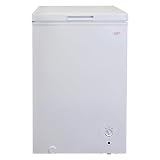
Overview: The Koolatron 3.5 Cu Ft Chest Freezer positions itself as a premium compact storage solution manufactured in North America. With decades of brand heritage, this white chest freezer targets buyers who prioritize build quality and reliable cooling for meats, vegetables, and prepared meals in garages, basements, or cottages where consistent performance matters.
What Makes It Stand Out: The stay-open lid mechanism is genuinely convenient, opening with one hand and remaining stable during loading—a feature rarely seen at this size. The corrosion-resistant, vinyl-coated wire basket withstands humid garage environments better than standard baskets. Most significantly, its North American manufacturing and 30-year brand legacy provide confidence in longevity and parts availability.
Value for Money: At $225.46, it’s the priciest 3.5 cubic foot option reviewed. You’re paying approximately $25-30 extra for the stay-open lid, North American construction, and brand reputation. For garage or cottage use where reliability is paramount, this premium is defensible. For indoor supplemental storage, the value proposition is weaker compared to equally capable Asian-manufactured alternatives.
Strengths and Weaknesses: Strengths include robust stay-open hinges, front-access defrost drain, wide temperature range (0 to -24°C), strong magnetic seal, corrosion-resistant basket, and quiet compressor operation. Weaknesses are the highest price in its class, single basket despite premium cost, manual defrost only, and white finish showing dirt more readily in garage environments.
Bottom Line: Choose Koolatron for garage or workshop duty where the stay-open lid and North American build quality justify the premium. For basic household needs, more economical options suffice.
9. LifePlus Chest Freezer - 4.2 Cubic Feet Deep Freezer Compact Freezer with Fast Cold 7 Adjustable Temperature Convenient Pulley, Small Freezer with Low Noise Energy Saving, Black

Overview: The LifePlus 4.2 Cubic Feet Chest Freezer offers expanded capacity without increasing the price tag, providing 20% more storage than standard 3.5 cu ft models at $199.99. This black compact freezer serves homes, garages, and RVs requiring additional space for frozen goods while maintaining maneuverability through built-in wheels—a practical touch competitors often omit.
What Makes It Stand Out: The D-shaped condensing tube combined with excellent thermal insulation foam delivers rapid cooling while consuming only 0.52 kWh per day—making it the most energy-efficient option in its capacity class. The stain-resistant interior simplifies cleaning, addressing a common pain point. Integrated wheels enable single-person repositioning, eliminating the traditional two-person lift requirement.
Value for Money: Exceptional value. You’re gaining 0.7 cubic feet of additional space, wheels, and superior energy efficiency for the same price as basic 3.5 cu ft models. This represents approximately $30-40 in added value without cost increase, making it arguably the best budget proposition for those with space to accommodate the slightly larger footprint.
Strengths and Weaknesses: Strengths include best-in-class energy consumption, larger capacity, ultra-quiet operation below 40 dB, mobile wheels, wide temperature range (-11.4°F to 10.2°F), and easy-clean interior. Weaknesses include only one removable basket despite larger size, manual defrost requirement, and lesser-known brand name potentially raising concerns about long-term support.
Bottom Line: The LifePlus 4.2 cu ft model is a standout value proposition. If you need maximum capacity per dollar and appreciate mobility, this freezer is difficult to beat.
10. LifePlus Chest Freezer, 4.2 Cubic Feet Small Deep Freezers Top Door with Removable Basket, 7 Temperature Control Energy Saving, Compact Freezer for Home Kitchen Office Dorm Apartment Indoor Use, Grey

Overview: The LifePlus 4.2 Cubic Feet Chest Freezer in grey delivers the same generous capacity as its black counterpart, providing versatile frozen storage for homes, dorms, and offices. Measuring 22.8" x 22.6" x 32.3", it balances substantial storage with a footprint that still fits smaller spaces. The neutral grey finish offers an alternative aesthetic for those preferring subtler appliance colors.
What Makes It Stand Out: Like its sibling, this model features integrated wheels for effortless relocation and operates at whisper-quiet levels below 40 decibels. The R600a high-efficiency compressor balances cooling performance with energy conservation, while the 7-grade thermostat provides precise control from refrigeration temperatures down to -11.4°F, accommodating diverse storage needs from ice cream to long-term meat preservation.
Value for Money: At $199.99, this model shares the exceptional value proposition of the LifePlus line—delivering 4.2 cubic feet capacity at 3.5 cu ft pricing. The wheeled design and quiet operation add tangible value without premium pricing. Compared to stationary, louder competitors at similar prices, you’re receiving mobility and peace-of-mind features essentially free.
Strengths and Weaknesses: Strengths include generous capacity, mobility wheels, ultra-quiet operation, energy-efficient compressor, wide temperature range, and compact design. Weaknesses mirror the black version: single basket limits organization, manual defrost requires periodic maintenance, and the brand lacks the recognition of established manufacturers like Igloo or Koolatron.
Bottom Line: The LifePlus grey variant matches its black counterpart’s outstanding value. Choose based on color preference—both offer unmatched capacity and features for the price point.
Why Energy Efficiency Matters in Chest Freezers
Chest freezers operate 24/7/365, making them one of the hardest-working appliances in your home. Unlike refrigerators that cycle frequently or dishwashers that run occasionally, your freezer’s compressor hums along constantly, battling ambient temperatures and maintaining sub-zero conditions. This continuous operation means that even small efficiency gains compound dramatically over time.
A conventional freezer from the early 2000s typically consumes 500-800 kWh annually, translating to $60-100 per year in electricity costs at average rates. Today’s most efficient models slash this to under 250 kWh, often costing less than $30 annually to operate. Over a 15-year lifespan, this difference exceeds $1,000 in savings—enough to essentially pay for the appliance itself.
The Hidden Cost of Old Freezers
Beyond direct electricity costs, inefficient freezers generate excess heat that forces your HVAC system to work harder, especially during summer months. They also tend to have poorer temperature recovery after opening, leading to freezer burn and food waste. The environmental cost is equally significant: each inefficient freezer adds approximately 350 pounds of CO2 to the atmosphere annually compared to modern efficient models.
Understanding Energy Ratings and Certifications
Energy ratings provide a standardized way to compare efficiency across brands and models, but the numbers require interpretation to make truly informed decisions.
Decoding the EnergyGuide Label
The yellow EnergyGuide label displays estimated annual electricity consumption in kilowatt-hours and operating cost based on national average electricity rates. However, these figures assume ideal conditions: a 70°F ambient temperature and minimal door openings. Real-world usage typically increases consumption by 15-25%. Look for the “kWh/yr” number rather than the dollar amount, as electricity rates vary significantly by region.
Pay attention to the capacity rating too. The most meaningful metric is kWh per cubic foot, which allows you to compare efficiency regardless of size. Top-tier models achieve 0.3 kWh/cu ft annually or lower.
What ENERGY STAR Really Means for Freezers
ENERGY STAR certification requires freezers to be at least 10% more efficient than the federal minimum standard. But here’s the crucial detail: the certification threshold varies by size and configuration. A compact 5-cubic-foot freezer needs to meet stricter efficiency standards than a massive 20-cubic-foot model. This means an ENERGY STAR label doesn’t automatically guarantee best-in-class efficiency—it simply confirms the unit exceeds baseline requirements.
Key Features That Define an Energy-Efficient Chest Freezer
Several technological advances separate modern efficient freezers from energy hogs. Understanding these features helps you evaluate models beyond their labels.
Compressor Technology: Inverter vs. Conventional
Traditional compressors operate on a simple on/off cycle, running at full power until the set temperature is reached, then shutting down completely. This creates temperature fluctuations and inefficient energy spikes. Inverter compressors, borrowed from high-end mini-split HVAC systems, continuously adjust their speed to maintain precise temperatures. They run longer at lower power, reducing energy consumption by 30-40% while minimizing wear and tear.
The initial cost premium for inverter technology typically pays for itself within 3-5 years through electricity savings alone.
Insulation Quality and Thermal Retention
Foam insulation technology has evolved significantly. Modern freezers use cyclopentane-blown foam with R-values of 12-15, compared to R-8 in older models. This thicker, denser insulation maintains internal temperatures for 48-72 hours during power outages while reducing heat transfer during normal operation.
Check the freezer’s weight as a proxy for insulation quality—heavier units typically contain more insulation. Also, press gently on the exterior walls; they should feel solid with minimal flex, indicating dense foam fill.
Lid Design and Gasket Sealing Systems
A freezer’s lid is its thermal weak point. Look for models with recessed handles that don’t protrude, creating a tighter seal. The gasket should be thick, magnetized, and removable for cleaning. Some premium models feature triple-seal gaskets and internal lid heaters that prevent frost buildup on the seal—a feature that seems counterintuitive but actually improves efficiency by maintaining gasket flexibility.
Test the seal by closing the lid on a dollar bill. If you can pull it out easily, the seal is compromised. The best models create such a strong vacuum that you’ll hear a slight hiss when opening.
Thermostat Precision and Temperature Management
Digital thermostats with LED displays offer ±1°F accuracy compared to ±5°F for mechanical dials. This precision prevents unnecessary compressor cycling. Some advanced models include external temperature displays, allowing you to monitor without opening the lid—a simple feature that can reduce energy consumption by 5-8% by minimizing door-open time.
Size Matters: Right-Sizing Your Chest Freezer
Oversizing is the most common mistake that sabotages efficiency. A half-empty freezer wastes energy because the compressor cools empty air space that gets replaced with warm air every time you open the lid.
The Energy Penalty of Oversizing
Each cubic foot of empty space costs approximately 2-3 kWh annually in wasted energy. A 20-cubic-foot freezer that’s only 60% full wastes the equivalent of running a 60-watt light bulb continuously. The thermal mass of frozen food actually helps maintain temperature stability—empty space works against you.
Calculating Your True Storage Needs
Audit your current frozen food inventory. A family of four typically needs 4-6 cubic feet for standard use, 6-8 cubic feet if buying meat in bulk, and 8-10 cubic feet for serious meal prep or hunting. Remember that chest freezers are more space-efficient than uprights—plan for 30% more usable capacity in the same rated volume due to lack of shelves and door storage.
Consider a two-freezer strategy for maximum efficiency: a smaller 5-7 cubic foot unit for daily access and a larger 15+ cubic foot unit in a garage or basement for long-term storage that you open infrequently.
Strategic Placement for Maximum Efficiency
Where you install your freezer impacts its efficiency as much as the model you choose. Ambient temperature fluctuations force the compressor to work harder.
Ambient Temperature Impact
For every 10°F increase in ambient temperature above 70°F, energy consumption rises 15-20%. Placing a freezer in a 90°F garage during summer can increase annual costs by $30-50. Basements are ideal, maintaining 55-65°F year-round. If garage placement is necessary, choose a model specifically rated for “garage-ready” operation with extended temperature range compressors.
Avoid locations near heat sources like water heaters, furnaces, or direct sunlight. Even a few hours of afternoon sun on the exterior can trigger unnecessary compressor cycles.
Ventilation and Clearance Requirements
Chest freezers need 3-4 inches of clearance on all sides for proper air circulation. The compressor and condenser coils are typically located on the back or sides—blocking these with walls or clutter traps heat and reduces efficiency by 10-15%. Never install a freezer in a tightly enclosed cabinet without active ventilation.
Elevate the freezer slightly off concrete floors using a wooden pallet or rubber mat. This prevents cold transfer to the floor and reduces condensation rust issues.
Usage Habits That Slash Energy Consumption
Your behavior significantly impacts efficiency—often more than the freezer’s inherent design. Adopt these practices to maximize savings.
The 24-Hour Rule and Temperature Stability
After adding large quantities of unfrozen food, wait 24 hours before opening the freezer again. This allows the compressor to work efficiently without warm air influx. Adding 20 pounds of room-temperature food is equivalent to leaving the lid open for 3-4 minutes in terms of thermal load.
Organizing for Minimal Air Exchange
Use stackable bins and wire baskets to create a “cold hierarchy.” Place frequently accessed items in top baskets and long-term storage at the bottom. This organization minimizes how long the lid stays open and how much cold air escapes. Cold air sinks, so a chest freezer loses only 10-15% of its cold air when opened briefly compared to 50% in an upright model.
Label everything with contents and dates using freezer tape. This prevents the efficiency-killing “digging around” with the lid open.
Defrosting Strategies for Efficiency
Manual defrost freezers are inherently 15-20% more efficient than frost-free models because they avoid energy-intensive heating cycles. However, ice buildup thicker than ¼ inch acts as insulation, forcing the compressor to work harder. Schedule defrosting when ice reaches this thickness—typically every 6-12 months depending on humidity and usage.
Maintenance Routines That Preserve Efficiency
Efficiency degrades over time without proper maintenance. A well-maintained freezer can retain 95% of its original efficiency after 10 years.
Gasket Care and Replacement
Clean gaskets monthly with warm soapy water and dry thoroughly. Apply a thin layer of petroleum jelly annually to keep the rubber pliable. Replace gaskets every 5-7 years or immediately if you notice cracks or tears. A faulty gasket can increase energy consumption by 15-25%.
Condenser Coil Cleaning
Dust and pet hair on condenser coils reduce heat dissipation efficiency by up to 30%. Vacuum coils every 3-6 months using a brush attachment. For freezers with rear-mounted coils, pull the unit away from the wall carefully to avoid damaging refrigerant lines.
When to Defrost and Why It Matters
Beyond the ¼-inch ice rule, defrost immediately if you notice frost forming on the gasket or if the lid doesn’t close flush. Use a plastic scraper never metal—to avoid damaging interior lining. Place pans of hot water inside to speed melting, but never use hair dryers or heat guns that can warp plastic components.
The Real Cost Breakdown: Payback Period Analysis
Energy-efficient freezers command a price premium, but the math overwhelmingly favors upgrading.
Initial Investment vs. Decade-Long Savings
A standard 15-cubic-foot freezer might cost $400 and use 450 kWh annually ($54/year at $0.12/kWh). An efficient model costing $600 might use only 250 kWh ($30/year). The $200 premium pays for itself in 8.3 years through $24 annual savings, then generates pure profit. Over 15 years, total savings exceed $160.
Factor in utility rebates that can reduce the premium by $50-100. Many utilities offer incentives for ENERGY STAR appliances, shortening the payback period to under 5 years.
Electricity Rate Impact on Your ROI
In regions with rates above $0.20/kWh (California, Northeast states), efficient freezers save $50-75 annually, cutting payback to 3-4 years. Even in low-rate areas, the environmental benefits and improved food preservation justify the investment. Use your actual electricity rate—not national averages—when calculating potential savings.
Environmental Benefits Beyond Your Wallet
An efficient freezer reduces your carbon footprint by approximately 2,500 pounds of CO2 over its lifetime compared to a baseline model. This is equivalent to planting 30 trees or avoiding 2,800 miles of driving.
Modern refrigerants like R600a (isobutane) have a global warming potential of 3 compared to 1,430 for older R134a. While sealed inside the unit, refrigerant eventually leaks during disposal. Choosing models with eco-friendly refrigerants ensures your environmental responsibility extends beyond electricity consumption.
Common Myths Debunked
Myth: Frost-free freezers are more efficient. Reality: The heating elements that prevent frost consume significant energy. Manual defrost models are always more efficient if maintained properly.
Myth: A full freezer is less efficient. Reality: The opposite is true. Frozen food’s thermal mass stabilizes temperatures and reduces compressor cycling. Fill empty space with water bottles if needed.
Myth: Setting the temperature colder saves energy. Reality: Each degree below 0°F increases energy use by 2-3%. The optimal setting is 0°F for food safety and efficiency.
Myth: Chest freezers are always more efficient than uprights. Reality: While generally true due to better cold air retention, a high-efficiency upright can outperform a poorly designed chest freezer. Design matters more than configuration.
Troubleshooting Efficiency Loss
If your freezer’s energy consumption suddenly spikes, systematic diagnosis can identify the culprit without calling a technician.
First, verify the thermostat setting hasn’t been accidentally adjusted. Then, check gasket seal integrity using the dollar bill test. Inspect condenser coils for dust buildup. Monitor ambient temperature—a heat wave or seasonal garage temperature swing explains increased consumption.
If ice buildup occurs rapidly (within weeks), the door seal is compromised or the defrost drain is clogged. Rapid cycling (compressor turning on/off every few minutes) indicates low refrigerant or a failing thermostat—both require professional service.
Seasonal Adjustments for Year-Round Efficiency
In unconditioned spaces like garages, adjust thermostat seasonally. Lower settings in winter when ambient temperatures drop naturally, and raise them slightly in summer to avoid overworking the compressor. Some models feature “garage mode” that automatically compensates for temperature extremes.
If you live in a climate with distinct seasons, consider a freezer with a wider operating range (0-110°F ambient). These units maintain efficiency across dramatic temperature swings that would cripple standard models.
Smart Technology Integration
Wi-Fi connected freezers seem gimmicky but offer legitimate efficiency benefits. Remote temperature monitoring alerts you to door-left-open situations before food spoils and energy wastes. Some models provide energy consumption dashboards, helping you identify usage patterns that drive up costs.
Smart grid integration allows the freezer to precool during off-peak hours when electricity is cheaper and cleaner, then coast during peak demand. This feature alone can reduce costs by 10-15% in areas with time-of-use pricing.
Comparing Chest vs. Upright Freezer Efficiency
While this guide focuses on chest freezers, understanding the efficiency trade-offs helps confirm your choice. Chest freezers excel in cold air retention—opening the lid displaces minimal cold air. Upright freezers lose 50% of their cold air when opened but offer superior organization.
For pure efficiency, chest freezers win. However, if accessibility challenges lead to extended door-open times while searching for items, an organized upright might achieve comparable real-world efficiency. The key is matching the appliance to your usage patterns.
Warranty and Longevity Considerations
A longer warranty often correlates with build quality and efficiency retention. Look for 5-year compressor warranties and 1-year full coverage. Some manufacturers offer 10-year compressor warranties on premium models.
Read warranty terms carefully—some require professional installation or annual maintenance to remain valid. Keep purchase receipts and register your appliance within 30 days. Properly maintained, an efficient freezer should last 15-20 years while retaining most of its efficiency advantage.
Frequently Asked Questions
1. How much can I realistically save with an energy-efficient chest freezer?
Most households save $30-60 annually, depending on electricity rates and the age of their previous freezer. Over 15 years, this totals $450-900 in pure savings, not accounting for utility rebates that can add another $50-100 upfront.
2. Is it worth replacing a working freezer just for efficiency gains?
If your current freezer is over 12 years old, yes. The payback period is typically 5-7 years, and you’ll benefit from improved food preservation and reliability. For freezers under 8 years old, wait until repairs are needed, then upgrade.
3. What’s the most energy-efficient freezer size for a family of four?
A 7-9 cubic foot model offers the best efficiency-to-capacity ratio. It’s large enough for bulk purchases but small enough to maintain full capacity, which is critical for efficiency. Consider a second small freezer if you need occasional extra space.
4. Do garage-ready freezers really make a difference in efficiency?
Absolutely. Standard freezers struggle below 40°F or above 85°F ambient temperatures, causing compressors to cycle inefficiently or fail prematurely. Garage-ready models maintain efficiency across 0-110°F, saving 20-30% in extreme conditions.
5. How often should I defrost my manual defrost freezer for optimal efficiency?
Defrost when ice reaches ¼ inch thickness, typically every 6-12 months. More frequent defrosting wastes energy through thermal cycling, while waiting too long forces the compressor to work harder. In humid climates, check every 4 months.
6. Can I improve my existing freezer’s efficiency without buying a new one?
Yes. Clean condenser coils, replace worn gaskets, ensure 4 inches of clearance, and keep it at least 75% full. These steps can improve efficiency by 15-20%. However, they can’t overcome fundamental design limitations of old compressors and poor insulation.
7. What’s the ideal temperature setting for energy efficiency?
0°F provides the optimal balance of food safety and energy efficiency. Each degree below 0°F increases energy consumption by 2-3% without significant food preservation benefits. Use a separate appliance thermometer to verify accuracy.
8. Are inverter compressors really worth the extra cost?
Inverter compressors reduce energy use by 30-40% and extend compressor lifespan by reducing start-stop cycles. The $100-150 premium typically pays for itself in 3-5 years, making it a smart investment for long-term ownership.
9. How does freezer placement affect my home’s heating and cooling costs?
An inefficient freezer in a conditioned space acts like a small space heater, dumping waste heat into your home. In summer, this can increase AC costs by $20-40 annually. In winter, it slightly reduces heating needs. Basements offer the best year-round efficiency.
10. What’s the environmental impact of disposing of an old freezer?
Proper recycling recovers 95% of materials and safely extracts refrigerants. Many retailers offer free haul-away and recycling with new purchases. Never trash a freezer—refrigerants and foam blowing agents are potent greenhouse gases if released. The environmental benefit of upgrading far outweighs disposal impact when done responsibly.