Living in a studio apartment means every decision about your space carries extra weight—especially when it comes to appliances that run 24/7. That compact refrigerator tucked beside your desk isn’t just a convenience; it’s essentially your roommate, and a noisy one can turn your sanctuary into a source of constant low-grade stress. In a single-room living situation where your kitchen, bedroom, and office coexist, the hum, buzz, and occasional clank of a cheap mini fridge can disrupt sleep, ruin Zoom calls, and slowly erode your quality of life.
The good news? The market has evolved dramatically. Today’s quiet compact fridges leverage advanced compressor technology, sound-dampening insulation, and smart design to operate at noise levels barely above a whisper. But finding the right one requires understanding what actually makes a fridge quiet beyond marketing claims. This guide cuts through the noise—literally—to help you identify the features, specifications, and design elements that matter most for peaceful studio living.
Top 10 Quiet Compact Fridges for Studio Apartments
Detailed Product Reviews
1. Frigidaire, 2 Door Apartment Size Refrigerator/Freezer Combo, 7.5 cu ft, Platinum Series, Stainless, 23" D x 21.5" W x 55.5" H

Overview: The Frigidaire Platinum Series 7.5 cubic foot refrigerator delivers full-sized functionality in an apartment-friendly footprint. Measuring 23" D x 21.5" W x 55.5" H, this two-door unit features a dedicated freezer compartment and spacious refrigeration area, making it ideal for small households, apartments, or secondary storage spaces. The stainless steel finish with chrome trim elevates it beyond typical compact appliances.
What Makes It Stand Out: This model’s generous 7.5 cu. ft. capacity distinguishes it from standard mini fridges, offering genuine grocery storage capability. The platinum design with chrome handles creates an upscale retro aesthetic that enhances any room. Interior features include removable glass shelves, a transparent crisper drawer, full-width door bins, and independent lighting for both compartments. The adjustable thermostat and reversible door add practical flexibility.
Value for Money: At $334.99, this sits at the premium end of compact refrigeration, but the price reflects substantial capacity and build quality. Comparable apartment-sized refrigerators often exceed $400, while smaller 3.1 cu. ft. models typically run $180-$220. You’re paying for the extra 4+ cubic feet of space and designer finish.
Strengths and Weaknesses: Strengths include exceptional storage capacity, attractive design, excellent organization options, and separate freezer compartment. The adjustable shelving accommodates tall items easily. Weaknesses include the higher price point, larger footprint that may not suit all “mini” fridge needs, and lack of specified noise ratings.
Bottom Line: For those needing serious storage in a stylish package, this Frigidaire delivers. It bridges the gap between cramped mini fridges and full-size appliances, making it perfect for apartment dwellers or as a secondary garage unit.
2. Electactic 3.1 Cu.Ft Mini Fridge with Freezer, 2 Door Compact Refrigerator, Mini Fridge with Adjustable Removable Glass Shelves for Bedroom, Office, Dorm or Apartment, Stainless Steel

Overview: The Electactic 3.1 cu. ft. Stainless Steel Mini Fridge offers true dual-zone cooling in a compact format. This two-door unit separates refrigerator and freezer compartments, providing dedicated space for fresh and frozen items. Designed for dorm rooms, offices, or apartments, its space-saving dimensions house surprisingly capable cooling performance with precise temperature management.
What Makes It Stand Out: The standout feature is precise temperature control—32-50°F in the fridge and -1°F to 3°F in the freezer, meaning it actually keeps ice cream frozen solid. The stainless steel exterior provides a modern, durable finish that resists wear. Operating below 35dB, it’s whisper-quiet, while the R600 compressor delivers rapid cooling without energy waste. Adjustable glass shelves offer customization.
Value for Money: Priced at $217.95, this model competes well with similar dual-zone mini fridges. You’re getting genuine freezer capability, not just a chiller compartment, which justifies the premium over basic single-door models. The stainless finish adds $30-40 compared to black versions, but provides superior durability and aesthetics.
Strengths and Weaknesses: Strengths include excellent temperature precision, separate freezer that truly freezes, ultra-quiet operation, energy efficiency, and attractive design. The adjustable shelving is practical. Weaknesses include lack of automatic defrost (requires manual maintenance) and limited freezer space for bulk storage.
Bottom Line: This Electactic model excels for users needing real freezing capability in a compact package. It’s ideal for dorm dwellers wanting ice cream storage or office workers needing frozen meals, delivering performance that matches its sleek appearance.
3. Electactic 1.6 Cu.ft Mini Fridge with Freezer, Compact Single Reversible Door Refrigerator, Adjustable Thermostat, Ultra Quiet, Energy Efficient for Office, Dorm, Bedroom, Apartment -Black

Overview: The Electactic 1.6 cu. ft. Mini Fridge targets ultra-compact spaces where every inch matters. Measuring just 17.52" x 17.13" x 18.70", this single-door unit fits on countertops, under desks, or in tight dorm corners. Despite its diminutive size, it delivers reliable cooling for beverages, snacks, and small food items with whisper-quiet operation.
What Makes It Stand Out: Its microscopic footprint makes it ideal for truly space-constrained environments like office cubicles or RVs. The reversible door offers placement flexibility, while the 38dB operation is barely audible. Energy consumption as low as 0.5 kWh daily keeps operating costs minimal. The seven-variable temperature settings provide customization, and the freezer compartment handles light freezing needs.
Value for Money: At $132.83, this represents solid value for personal-scale refrigeration. Single-door competitors typically range $120-$160, so this sits in the mid-range while offering good efficiency and quiet operation. It’s an affordable solution for individual use rather than shared spaces.
Strengths and Weaknesses: Strengths include exceptional compactness, ultra-quiet performance, energy efficiency, reversible door, and affordability. The freezer compartment works for ice trays but cannot maintain ice cream (32-50°F range). Weaknesses include very limited capacity, single-door design limiting temperature separation, and no interior lighting mentioned.
Bottom Line: Perfect for solo users needing personal refrigeration without spatial sacrifice. It excels in bedrooms, offices, or dorm desks where quiet operation and minimal energy use matter more than storage volume.
4. Electactic 3.1 Cu.Ft Mini Fridge with Freezer, 2 Door Compact Refrigerator, Mini Fridge with Adjustable Removable Glass Shelves for Bedroom, Office, Dorm or Apartment, Black

Overview: The Electactic 3.1 cu. ft. Black Mini Fridge delivers the same dual-zone performance as its stainless sibling in a more budget-friendly package. This two-door unit separates refrigerator and freezer compartments, providing dedicated cooling zones for diverse food storage needs. Its compact design suits dorm rooms, offices, and apartments where space is premium but performance cannot be compromised.
What Makes It Stand Out: Like the stainless version, it offers impressive temperature precision—32-50°F refrigeration and -1°F to 3°F freezing—meaning genuine frozen food storage. The black finish provides a sleek, fingerprint-resistant alternative that’s easier to maintain. The R600 compressor ensures rapid cooling while keeping noise under 38dB. Adjustable glass shelves and separate compartments maximize organization.
Value for Money: At $186.47, this represents exceptional value, undercutting the stainless model by over $30 while delivering identical performance. Comparable dual-zone mini fridges typically start at $200, making this a smart budget choice. You sacrifice only the stainless exterior, not functionality.
Strengths and Weaknesses: Strengths include true freezing capability, quiet operation, energy efficiency, adjustable shelving, and excellent price point. The black finish is practical. Weaknesses mirror the stainless version: no automatic defrost function and limited freezer capacity for bulk items.
Bottom Line: This black version offers the best value in the 3.1 cu. ft. category. It provides genuine dual-zone refrigeration without the premium finish price, making it ideal for cost-conscious buyers who prioritize performance over aesthetics.
5. Electactic 1.6 Cu.ft Mini Fridge with Freezer, Compact Refrigerator, Single Reversible Door, Ultra Quiet, Energy Efficient for Office, Dorm, Bedroom, Apartment, Black
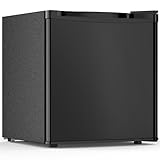
Overview: The Electactic 1.6 cu. ft. Compact Refrigerator offers personal cooling at an entry-level price point. This single-door unit fits virtually anywhere at 17.53" x 17.53" x 19.11", making it perfect for dorm desks, office cubicles, or bedroom nightstands. It provides essential refrigeration for beverages and snacks without demanding significant space or budget.
What Makes It Stand Out: At $117.99, it’s the most affordable option in this lineup while maintaining respectable performance. The ultra-quiet operation ensures it won’t disrupt sleep or work, and energy consumption around 0.5 kWh daily keeps utility costs negligible. Seven temperature settings offer customization, and the reversible door provides placement flexibility. The fast-cooling system delivers quick results.
Value for Money: This is budget excellence—offering core functionality at the lowest price point. Comparable units cost $120-$150, so you’re saving money without sacrificing essential features. The trade-off is limited freezer performance and capacity, but for basic chilling needs, it’s unbeatable value.
Strengths and Weaknesses: Strengths include rock-bottom price, whisper-quiet operation, energy efficiency, compact footprint, and simple functionality. The freezer compartment handles light cooling but cannot store ice cream (32-50°F). Weaknesses include minimal storage space, single-door temperature management, and absence of premium features like interior lighting.
Bottom Line: For bare-bones refrigeration in tight spaces, this delivers. It’s perfect for students or office workers needing a personal drink cooler without financial or spatial commitment.
6. BANGSON 7.7 Cu.Ft Refrigerator with Freezer, Apartment Size Fridge with Top Freezer, Large Capacity, Energy Saving, Adjustable Thermostat, Low Noise, Black

Overview: The BANGSON 7.7 Cu.Ft Refrigerator delivers impressive capacity in a space-saving 21.5" square footprint, standing 56" tall. With 6.21 cubic feet of refrigeration space and a 1.49 cubic foot top freezer, this unit serves as a legitimate primary fridge for apartment residents or couples. The black finish and versatile dimensions allow seamless integration into kitchens, bedrooms, or office environments where space is premium but performance cannot be compromised.
What Makes It Stand Out: Five distinct temperature settings provide rare precision in this category, with the refrigerator ranging from 33°F to 50°F and freezer from -12°F to 12°F. The automatic night light is a thoughtful addition for midnight access, while reversible doors and bottom leveling legs solve installation challenges. Included accessories—ice tray, defrost tool, and egg shelf—add immediate practical value that competitors often omit.
Value for Money: At $319.99, this model occupies the sweet spot between cheap mini fridges and full-sized appliances. You’re securing nearly 8 cubic feet of capacity, advanced temperature control, and premium features typically found in $400+ units. The energy-efficient design maintains operating costs around 39 dB, ensuring long-term savings that offset the initial investment.
Strengths and Weaknesses:
- Strengths: Excellent capacity-to-size ratio; five temperature settings enable precise food preservation; whisper-quiet 39 dB operation; automatic night light enhances usability; reversible doors accommodate any layout; stable leveling system compensates for uneven floors.
- Weaknesses: Requires 6-12 hour settling period after transportation; 56" height may not fit under standard cabinets; freezer compartment is modest for bulk storage; black finish shows fingerprints.
Bottom Line: Perfect for small-space dwellers needing serious refrigeration without sacrificing floor space. The BANGSON justifies its mid-range price with premium features and quiet operation. If your vertical clearance allows, this fridge offers exceptional functionality that bridges the gap between compact and full-sized appliances.
7. 4.5 Cu.Ft Mini Fridge with Freezer, 2 Door Compact Refrigerator, Small Fridge with Adjustable Thermostat Energy Ultra Quiet, Mini Fridge Removable Glass Shelves for Bedroom Office Dorm Black
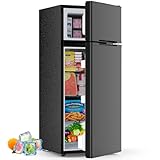
Overview: This 4.5 cubic foot two-door refrigerator organizes fresh and frozen foods in separate compartments—3.64 cu.ft for refrigeration and 0.85 cu.ft for freezing. The dual-door design prevents odor transfer and temperature fluctuations, making it ideal for dorm rooms, offices, or studio apartments where food storage needs exceed mini fridge capacity but space remains constrained. The sleek black exterior integrates into any décor.
What Makes It Stand Out: Remarkable energy efficiency claims set this unit apart: approximately 1 kWh daily consumption costing just $0.14 per day. The separate freezer door eliminates the primary inefficiency of single-door designs. LED interior lighting and adjustable feet demonstrate user-centric engineering rarely seen at this price point. The quick-cooling compressor maintains consistent temperatures while operating quietly.
Value for Money: At $299.99, this fridge positions itself as a premium compact option. While cheaper 4.5 cu.ft models exist, the dual-door configuration and exceptional efficiency justify the premium. Annual operating costs under $55 significantly offset the higher upfront price compared to less efficient competitors consuming twice the electricity. You’re investing in long-term savings.
Strengths and Weaknesses:
- Strengths: Separate freezer door prevents cold air loss; outstanding energy efficiency reduces utility bills; quiet operation suitable for bedrooms; adjustable storage configuration; LED lighting adds convenience; rapid cooling performance.
- Weaknesses: Only three temperature settings limit fine-tuning; freezer capacity is modest for the price; approaches cost of larger units; door seals require periodic cleaning; no interior freezer light.
Bottom Line: An excellent choice for energy-conscious buyers prioritizing organization. The dual-door design and miserly power consumption deliver long-term value that cheaper alternatives cannot match. If your budget reaches $300, this compact refrigerator provides superior temperature management and operating economy for small-space living.
8. Antarctic Star Compact Refrigerator with Freezer,2 Door Mini Fridge,Adjustable Shelf,Small Fridge for Bedroom Office Dorm Kitchen,3.2 Cu.Ft.BLACK

Overview: The Antarctic Star 3.2 Cu.Ft refrigerator delivers essential cooling in an ultra-compact 19.37" deep, 32.28" tall footprint. This two-door unit divides modest capacity between freezer and refrigerator compartments, targeting budget-conscious consumers needing basic refrigeration for bedrooms, dormitories, or small offices. The classic black exterior offers universal aesthetic compatibility while the lightweight design enables easy relocation.
What Makes It Stand Out: The double-door configuration at this price point is its primary advantage—separating frozen and fresh foods to prevent cross-contamination. The door-mounted beverage can dispenser maximizes limited space efficiently. A simple mechanical thermostat with three settings eliminates complexity for users seeking reliable, basic operation without digital interfaces or unnecessary frills that drive up cost.
Value for Money: At $195.64, this unit is one of the most affordable two-door refrigerators available. While capacity and features are limited, you’re getting separate cooling zones and a removable glass shelf—amenities often absent in sub-$200 models. For minimal needs and tight budgets, it delivers acceptable performance without financial strain. Operating costs remain reasonable for occasional use.
Strengths and Weaknesses:
- Strengths: Extremely affordable pricing; compact size fits virtually anywhere; separate freezer compartment; straightforward mechanical controls; beverage can storage; lightweight construction; reversible door hinges.
- Weaknesses: Limited 3.2 cu.ft capacity restricts storage; coarse three-level temperature control; no interior lighting; basic insulation increases running time; freezer section is very small; shelves have limited adjustability.
Bottom Line: A no-frills solution for minimal refrigeration requirements. The Antarctic Star sacrifices capacity and features for affordability, but the two-door design is a meaningful upgrade over single-door alternatives. Choose this if budget is your primary driver and you need only basic cooling for beverages and a few essentials.
9. COWSAR 1.6 Cu.Ft Compact Fridge with Freezer, Compact Refrigerator with 7 Temperature Settings, Energy-efficient Low Noise Small Refrigerator Suitable For Dorm, Office, Bar, RV, Bedroom,Commercial

Overview: The COWSAR 1.6 Cu.Ft refrigerator serves the extreme compact market, designed for truly space-constrained environments like RVs, office nooks, or dorm corners. With only 0.2 cubic feet dedicated to freezing, this unit prioritizes refrigerated storage for beverages, snacks, and beauty products. Its square footprint tucks efficiently into corners while multiple color options allow aesthetic customization.
What Makes It Stand Out: Seven temperature settings provide surprising precision for such a small unit, ranging from 32°F to 50°F in the fridge compartment. Operating costs of just $0.10 daily make it extraordinarily economical. The reversible door and variety of finishes offer flexibility rare in this category. The high-quality compressor maintains consistent temperatures with minimal noise, making it bedroom-friendly.
Value for Money: At $98.99, this refrigerator enters impulse-purchase territory. No other unit reviewed approaches this price point. While capacity is severely limited, you’re getting advanced temperature control and excellent energy efficiency typically found in premium models. For specific niche applications requiring supplemental cooling, the value proposition is undeniable and unbeatable.
Strengths and Weaknesses:
- Strengths: Unbeatable sub-$100 price; seven temperature settings enable precision; whisper-quiet operation; extremely energy efficient; reversible door; multiple color options; ultra-compact footprint.
- Weaknesses: Tiny 1.6 cu.ft capacity severely limits storage; freezer unsuitable for ice cream; cannot accommodate large or tall items; best for supplemental use only; limited long-term food preservation.
Bottom Line: Ideal as a secondary fridge or for extremely limited spaces. The COWSAR excels at specialized tasks—bedroom beverage cooler, office lunch storage, or RV companion. Don’t expect it to function as a primary refrigerator, but for targeted use cases, its combination of price, efficiency, and quiet operation is unmatched in the market.
10. HAILANG 3.1 Cu.Ft Mini Fridge with Freezer, Single Door Mini Refrigerator, 5 Settings Temperature Adjustable, Compact Refrigerator for Apartment,Dorm, Office, Bedroom

Overview: The HAILANG 3.1 Cu.Ft mini fridge offers a single-door solution for small-space refrigeration, measuring just 15.87" wide and 32.8" tall. This compact unit integrates a freezer compartment within the main refrigeration space, targeting apartments, dorms, and offices where budget and space are limited. Eco-friendly construction and materials appeal to environmentally conscious consumers seeking sustainable appliances.
What Makes It Stand Out: Five temperature settings provide more control than typical mini fridges, while eco-friendly materials differentiate it from plastic-heavy competitors. Advanced soundproofing technology ensures whisper-quiet operation suitable for sleeping areas. Removable shelves and drawers simplify cleaning—a practical feature often overlooked in compact appliances. The single-door design reduces purchase cost significantly.
Value for Money: At $139.98, this HAILANG model hits the budget-friendly sweet spot. You’re getting mid-tier capacity, above-average temperature control, and environmentally responsible construction for under $150. While dual-door units offer better organization, this price point makes compromises reasonable. The energy-efficient cooling technology keeps operating costs minimal for daily use.
Strengths and Weaknesses:
- Strengths: Five temperature settings provide customization; eco-friendly materials reduce environmental impact; extremely quiet operation; easy-clean removable components; compact footprint; affordable pricing; adjustable door storage.
- Weaknesses: Single-door design wastes energy when accessing freezer; smaller capacity than dual-door competitors; limited freezer space; interior lighting is basic; door seal requires careful maintenance.
Bottom Line: A solid middle-ground choice balancing capacity, features, and environmental responsibility. The HAILANG suits buyers wanting more than basic functionality without exceeding $150. If you can tolerate the single-door inefficiency, it delivers quiet, customizable cooling with green credentials that appeal to eco-conscious consumers.
Why Noise Level is Your Top Priority in Studio Living
In a studio apartment, there are no walls to hide behind. That 3 a.m. compressor kick-in that would be a minor annoyance in a one-bedroom becomes a sleep-shattering event when your bed is six feet from the fridge. Beyond sleep disruption, persistent low-frequency humming triggers physiological stress responses, raising cortisol levels even when you’re not consciously aware of it. For remote workers, the cycling on and off creates an unpredictable audio backdrop that microphones pick up, making you sound unprofessional on calls. The psychological impact is real: research shows that unwanted ambient noise reduces cognitive performance and increases irritability. When your entire life happens in 400 square feet, auditory peace isn’t a luxury—it’s a necessity for mental health and productivity.
Decoding Decibel Ratings: The Science of Silence
Manufacturers love to slap “quiet operation” on their packaging, but what does that actually mean? Decibel (dB) ratings provide the only objective measure. A traditional refrigerator operates at 40-45 dB, roughly the noise level of a library’s ambient sound. For studio living, you want something under 38 dB, with premium models reaching as low as 32 dB—comparable to a soft whisper. Here’s the tricky part: the decibel scale is logarithmic, so a fridge rated at 35 dB isn’t just slightly quieter than a 40 dB model; it’s substantially less audible. When shopping, look for the “A-weighted” decibel rating (dBA), which accounts for human hearing sensitivity. Be skeptical of vague terms like “ultra-quiet” without numbers to back them up. If a manufacturer won’t provide specific dBA ratings, they’re likely hiding something.
The Hidden Costs of a Noisy Fridge in Small Spaces
The true price of a loud mini fridge extends far beyond the sticker shock. Sleep fragmentation from nighttime cycling can lead to chronic fatigue, affecting your job performance and overall health. Many studio dwellers report developing sound sensitivity, where even minor noises trigger anxiety after prolonged exposure to a disruptive appliance. There’s also the social cost: having to pause Netflix every time the compressor kicks in, or apologizing to guests for the constant background hum. Perhaps most overlooked is the potential lease violation—some rental agreements include noise clauses that could be triggered by an especially loud appliance. Factor in the cost of returning a poorly chosen fridge (restocking fees, shipping, hassle) and the price of a truly quiet model suddenly becomes a wise investment rather than an extravagance.
Compressor Technology: The Core of Quiet Operation
The compressor is the heart of any refrigerator and the primary source of noise. Traditional reciprocating compressors use pistons that create noticeable vibration and cycling noise. Inverter compressors, by contrast, operate at variable speeds, eliminating the jarring on/off cycles that plague conventional models. They adjust cooling output continuously, maintaining temperature while humming along at a consistent, barely perceptible level. The quietest premium models use linear compressors, which have fewer moving parts and operate with magnetic levitation principles, reducing mechanical friction to near zero. When evaluating options, prioritize inverter or linear technology over standard compressors. The initial cost premium pays dividends in silence and energy efficiency, as these systems also consume less electricity by avoiding energy-intensive start-up cycles.
Thermoelectric Cooling: A Silent Alternative?
Thermoelectric fridges use the Peltier effect—passing electrical current through two different conductors—to create cooling without any moving parts. This makes them theoretically silent, with operation around 28-30 dB. However, this silence comes with significant trade-offs. They’re less efficient at removing heat, struggling in ambient temperatures above 80°F. The cooling capacity is limited, typically only achieving 40°F below room temperature, which may not suffice for safe food storage. They also lack freezer compartments and consume more electricity per cubic foot of cooling. For studio apartments with stable, moderate temperatures and minimal storage needs (beverages, snacks), a thermoelectric model might work. But for daily meal prep, leftovers, and frozen items, the performance limitations outweigh the silence benefits.
Size and Capacity: Balancing Space with Storage Needs
Mini fridges range from 1.7 cubic feet (dorm-sized) to 4.5 cubic feet (apartment-grade). The key is honest assessment of your lifestyle. A single person who eats out frequently might manage with 2.5 cubic feet, while someone who meal preaches needs at least 3.5 cubic feet. Consider your shopping habits—do you buy fresh produce weekly or stock up on frozen meals? The freezer compartment deserves special attention; a separate freezer door model maintains temperature better and makes less noise than a freezer box inside the main compartment. Remember that stated capacity includes unusable space around shelving and door pockets. A good rule: subtract 20% from the advertised cubic footage to estimate actual storage. For most studio dwellers, the sweet spot is 3.2-3.6 cubic feet—enough for essentials without dominating your limited floor space.
Measuring for Perfect Fit: Beyond Just Dimensions
Grab your tape measure and think three-dimensionally. Measure the intended spot’s height, width, and depth, then subtract two inches from each dimension for proper air circulation. Heat dissipation requires space—compressor models need 2-3 inches at the back, while thermoelectric need less. Check door swing clearance; a standard right-hinge door needs at least 90 degrees of unobstructed space. Consider the path to that spot: can the fridge fit through your apartment door, around hallway corners, and up stairs? Weight matters too—compact fridges weigh 40-70 pounds. Electrical access is critical; avoid extension cords by ensuring a dedicated outlet within three feet. Pro tip: use painter’s tape to outline the fridge’s footprint on your floor for a week before buying to confirm the placement feels natural in your daily flow.
Energy Efficiency Ratings: What Those Numbers Mean
That yellow Energy Guide sticker reveals more than operating cost. For compact fridges, look for Energy Star certification, which requires being at least 20% more efficient than federal minimums. The kilowatt-hour (kWh) annual consumption number is your friend—a 3.3 cubic foot model using 240 kWh/year costs roughly $30-35 annually to run, while inefficient models can hit $60+. Inverter compressors boost efficiency by 30-50% compared to traditional models. The real win: efficient fridges produce less waste heat, which is crucial in a small space where every BTU affects your comfort and AC costs. Some utility companies offer rebates for Energy Star appliances, potentially offsetting the higher upfront cost. Calculate the total cost of ownership: purchase price + (annual energy cost × expected lifespan). A $250 efficient fridge often beats a $150 energy hog over five years.
Temperature Control Systems: Precision vs. Noise
Basic mini fridges use mechanical thermostats with simple dial settings (1-7) that lack precision. Each adjustment triggers the compressor, creating noise. Digital thermostats with LED displays offer exact temperature control and reduce cycling frequency. Look for models with separate controls for fridge and freezer compartments—this prevents overcooling the main compartment just to keep ice cream frozen. Some premium units feature multi-airflow systems that distribute cold air evenly, eliminating the need for noisy fan cycles. The compressor’s duty cycle matters too; a well-insulated fridge with quality seals runs less frequently, making less noise overall. Check the temperature range—ideal fridges maintain 35-38°F in the main compartment and 0°F in the freezer. Avoid models that can’t consistently stay below 40°F, as this enters the food safety danger zone.
Defrost Mechanisms: Frost-Free vs. Manual
Frost-free systems use heating elements and fans to prevent ice buildup, operating automatically but adding noise through fan cycles and heating clicks. In a mini fridge, this is often unnecessary overkill. Manual defrost models run quieter since they lack these extra components. The trade-off? You’ll need to defrost every 2-3 months, a 30-minute process involving unplugging and towel management. However, manual defrost fridges often maintain more stable temperatures and make fewer operational sounds day-to-day. For studio living, the quarterly inconvenience of manual defrosting typically outweighs the constant low-grade noise of frost-free systems. If you choose manual, look for models with a simple drain plug and smooth interior surfaces that make ice removal easier. Some hybrid models offer partial automatic defrost for the fridge compartment while keeping the freezer manual—an interesting compromise.
Strategic Placement: Where You Put It Matters
Never place your fridge directly adjacent to your bed, even if space is tight. Sound travels through surfaces; the vibration will transfer through your bed frame. Ideally, position it on the opposite side of a furniture barrier—a bookshelf or dresser can absorb significant sound. Solid flooring is quieter than carpet (which can block ventilation); if you must use carpet, place a thin plywood board underneath to create a stable base. Avoid corners where sound waves reflect and amplify. The kitchenette area, if distinct, is optimal. Keep it away from radiators or direct sunlight, which force the compressor to work harder and louder. Distance from your primary seating area matters too—even a quiet fridge becomes noticeable if you’re sitting right next to it for eight hours of remote work. Think in terms of acoustic zones: sleeping zone, working zone, living zone, and appliance zone should be as separate as possible.
Vibration Isolation: DIY Solutions for a Quieter Fridge
Even the quietest compressor creates subtle vibrations that travel through floors and walls. A simple anti-vibration pad, the kind used for washing machines, can reduce transmitted noise by 40-60%. These rubber-cork composite mats absorb mechanical energy before it spreads. For hardwood floors, consider silicone isolation feet that create an air gap. Leveling is crucial—an unlevel fridge rocks slightly with each compressor cycle, amplifying vibration. Use a bubble level and adjust the feet until perfectly stable. Some audiophiles use sorbothane pads, originally designed for turntables, under fridge corners for maximum isolation. If you’re handy, build a platform with neoprene washers between layers of MDF board. This creates a mass-spring system that dissipates vibration energy. Never place foam directly under a fridge; it blocks ventilation and can cause overheating. The goal is isolation, not insulation.
Door Designs and Accessibility
Right-hinge doors dominate the market, but many models offer reversible hinges—a crucial feature for studio layouts. Reversing a door typically takes 20 minutes with a screwdriver and dramatically improves workflow. Glass doors look sleek and let you see contents without opening, but they reduce insulation efficiency, causing more compressor cycles. Solid doors with quality gaskets maintain temperature better and run quieter. Check the door seal quality; a weak seal lets cold air escape, forcing the compressor to compensate noisily. The door should close with a confident suction sound, not a weak click. Some models feature soft-close hinges that prevent slamming—a nice touch in a small space where every sound is amplified. Consider door storage depth; deep pockets are useful but can block interior shelves if overfilled. For studios with open layouts, a fingerprint-resistant finish reduces visual clutter from smudges, making the space feel more intentional.
Interior Configuration: Maximizing Every Inch
Adjustable shelving transforms a cramped interior into a customizable storage system. Look for spill-proof glass shelves that contain messes and are easier to clean than wire racks. The freezer compartment layout matters—separate door freezers maintain temperature better and make less noise than interior freezer boxes, but take up more space. Door storage should include dedicated can dispensers and tall bottle holders. Some clever models feature half-width shelves that let you store tall items like wine bottles on one side while keeping full shelves on the other. Crisper drawers with humidity controls actually work in compact fridges and keep produce fresh longer, reducing food waste. LED interior lighting is standard now, but check that it turns off completely when the door closes—some cheap models have light bleed that can be annoying in a dark studio. The interior back wall should be smooth, not corrugated, for easier cleaning and better airflow.
Smart Features: Are They Worth It in a Mini Fridge?
WiFi connectivity in a mini fridge might seem like overkill, but smart features can enhance quiet operation. App-controlled temperature settings let you fine-tune without opening the door, reducing compressor cycles. Some models send alerts if the door is left ajar, preventing energy waste and noise from overwork. However, smart fridges often include fans for connectivity modules that create a constant low whine. The real value lies in diagnostic features—your phone can alert you to filter changes or compressor issues before they become noisy problems. For studio living, the most useful smart feature is quiet mode scheduling, which reduces cooling power during your typical sleep hours, trading slightly higher temperatures for guaranteed silence. Avoid gimmicks like interior cameras or voice control; they add cost and potential failure points without meaningful benefits. The sweet spot is basic app connectivity without unnecessary hardware additions that could generate noise.
Maintenance Routines for Sustained Quiet Performance
A quiet fridge can become noisy through neglect. Every three months, vacuum the condenser coils—dust buildup forces the compressor to work harder and louder. Check door seals monthly by closing the door on a dollar bill; if you can pull it out easily, the seal needs cleaning or replacement. Defrost manual models before ice exceeds 1/4 inch thickness, as ice acts as an insulator that triggers frequent cycling. Level the fridge seasonally; building settling can create subtle tilts that increase vibration. Keep the fridge at least 70% full—thermal mass stabilizes temperature and reduces cycling. But don’t overfill; blocked air vents cause uneven cooling and noisy fan operation. If you notice new sounds, investigate immediately. A rattling drip pan, loose door handle, or failing fan bearing can escalate from minor annoyance to major headache. Most noise issues are fixable with simple adjustments if caught early.
Budget Breakdown: Investing in Peace and Quiet
Entry-level compact fridges ($100-180) typically lack noise specifications and use basic compressors, often running 42-45 dB. Mid-range models ($180-300) start featuring inverter compressors and explicit noise ratings, usually 36-40 dB. Premium quiet fridges ($300-500) deliver under 35 dB with linear compressors, superior insulation, and vibration dampening. The price jump reflects not just silence but longevity—quiet models often last 8-12 years versus 4-6 for cheap units. Consider the hidden costs: a $150 fridge that disrupts your sleep for five years costs far more in lost productivity and health than a $400 model that operates silently. Financing options through retailers can make the premium manageable. Look for models with 3-5 year warranties on the compressor; this indicates manufacturer confidence in build quality. Remember, you’re not just buying an appliance—you’re purchasing acoustic real estate in your limited living space.
Common Pitfalls That Ruin the Quiet Experience
The biggest mistake is prioritizing capacity over noise specs. A 4.5 cubic foot fridge is useless if it’s too loud to live with. Second is ignoring ventilation requirements; cramming a fridge into a tight alcove with no airflow forces noisy overwork. Third is buying based on brand reputation alone—many “quiet” appliance lines don’t extend to their compact models. Fourth is overlooking the return policy; always verify you can return within 30 days if noise levels are unacceptable. Fifth is placing the fridge on an uneven surface, which amplifies vibration. Sixth is forgetting about door swing in tight quarters, leading to daily frustration. Seventh is choosing a model without adjustable feet, limiting isolation options. Eighth is ignoring energy efficiency, resulting in higher long-term costs and excess heat. Ninth is assuming all inverter compressors are equal; implementation quality varies wildly. Tenth is rushing the decision—measure twice, research thoroughly, and if possible, hear the fridge operating in person before committing.
Frequently Asked Questions
How quiet is “quiet enough” for a studio apartment?
Aim for 35 dB or lower. At this level, the fridge becomes inaudible from more than six feet away and won’t disrupt sleep or concentration. Anything above 38 dB will be noticeable in a silent room.
Can I make my existing mini fridge quieter?
Partially. Place it on anti-vibration pads, ensure it’s perfectly level, clean the coils, and check door seals. These steps can reduce noise by 3-5 dB, but they can’t fix a fundamentally loud compressor.
Do thermoelectric fridges work for storing meat and dairy safely?
Only in moderate climates. They typically cool 40°F below ambient temperature, so if your apartment stays below 75°F, they can maintain safe food storage. Above that, food safety becomes questionable.
How far should my fridge be from my bed?
Ideally 8-10 feet, with a furniture barrier between. If space constraints make this impossible, invest in the quietest model possible (32-34 dB) and use vibration isolation pads to minimize transmitted sound.
Are glass-door fridges louder than solid-door models?
Generally yes. Glass doors have poorer insulation, causing more frequent compressor cycles. The difference is usually 2-3 dB, which is noticeable in a quiet studio.
What’s the best fridge placement for minimal noise?
On a solid, level floor away from walls and corners, with at least 2 inches of ventilation space on all sides. Position it near your “kitchen zone” but away from sleeping and working areas.
How often should I defrost a manual-defrost mini fridge?
Every 2-3 months, or when ice buildup exceeds 1/4 inch. Regular defrosting maintains efficiency and reduces compressor strain, which directly impacts noise levels.
Can I put my mini fridge in a cabinet to muffle sound?
Only if the cabinet is specifically designed for ventilation with proper airflow cutouts. Enclosing a fridge without ventilation will cause overheating, compressor damage, and potentially dangerous situations.
Do energy-efficient fridges actually run quieter?
Yes, typically. Efficient insulation and components mean the compressor runs less frequently and for shorter durations. Inverter compressors, common in efficient models, are inherently quieter than traditional ones.
Is it worth paying extra for a reversible door?
Absolutely. Studio layouts are unpredictable, and the ability to change door swing direction without tools is invaluable. It costs manufacturers little but provides major flexibility for small-space living.