Living off-grid isn’t just a lifestyle choice—it’s a deliberate step toward energy independence and environmental consciousness. But here’s the cold truth: keeping food fresh without reliable grid power has traditionally been one of the biggest challenges for remote cabins, converted vans, and sustainable homesteads. Enter solar-powered compact refrigerators, the silent workhorses that transform abundant sunlight into reliable cooling power. These aren’t your typical dorm room mini-fridges with a solar panel slapped on; they’re engineered systems designed from the ground up to sip electricity conservatively while maintaining consistent temperatures in unpredictable conditions.
Whether you’re planning a weekend escape to your mountain yurt or committing to full-time off-grid living, understanding the nuances of solar refrigeration can mean the difference between spoiled groceries and sustainable self-sufficiency. This guide cuts through the marketing fluff to give you the technical depth you need to make an informed decision, design a robust system, and maintain it for years of reliable service. We’ll explore everything from compressor physics to battery chemistry, because when you’re 50 miles from the nearest hardware store, knowledge isn’t just power—it’s preservation.
Top 10 Solar-Powered Compact Fridges for Off-Grid Living
Detailed Product Reviews
1. Techomey 2.1 Cu.Ft Propane Refrigerator off Grid, Camper Fridge, 12 V/110V/LPG Compact RV Refrigerator for Semi Truck, Garage, Black

Overview: The Techomey 2.1 Cu.Ft Propane Refrigerator is a versatile off-grid cooling solution designed for mobile living. This compact unit operates on three power sources—12V DC, 110V AC, or LPG propane—making it ideal for RVs, semi-trucks, cabins, and garages. With dimensions of 18.77"W x 19.8"D x 26.6"H, it fits snugly in tight spaces while delivering reliable refrigeration between 32-50°F.
What Makes It Stand Out: Its triple-power flexibility sets it apart from standard electric-only models. The advanced absorption cooling system runs completely silent without a compressor, eliminating noise pollution and harmful freon emissions. Manual electric thermostat control offers simple operation, while the lightweight design enables easy relocation between vehicles or locations.
Value for Money: At $455, this refrigerator sits in the mid-range for 3-way absorption fridges. Competitors with similar capacity often exceed $500, making this an attractive option for budget-conscious adventurers. The multi-fuel capability translates to significant savings when propane is cheaper than electricity, especially for full-time off-grid living.
Strengths and Weaknesses: Strengths include versatile power options, whisper-quiet operation, eco-friendly design, compact footprint, and manufacturer-direct customer support. Weaknesses are the limited 2.1 cu ft capacity for extended trips, manual defrost requirement, and narrow temperature range unsuitable for freezing.
Bottom Line: Perfect for weekend warriors and semi-truck drivers needing reliable, quiet refrigeration without grid dependency. The Techomey delivers exceptional flexibility and value, though families or long-term off-gridders may require larger capacity.
2. Walfront Portable RV Refrigerator 50W Solar Powered Cooler Freezer for Camping Monocrystalline Silicon Solar Powered Refrigerator DC18V Car Fridge for Truck 48W Cooling 45W Heating 24x22x16cm
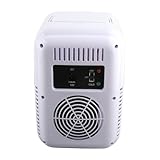
Overview: The Walfront Portable RV Refrigerator is a compact solar-powered cooling unit designed for outdoor enthusiasts. This 50W system combines a monocrystalline silicon panel with an 18V DC cooler measuring just 24x22x16cm, offering true grab-and-go refrigeration for camping, fishing, and tailgating. Its lightweight design and integrated handles make transportation effortless between vehicles and campsites.
What Makes It Stand Out: Its integrated solar power eliminates the need for external batteries or generators, making it uniquely self-sufficient. The unit provides both cooling (48W) and heating (45W) functions, extending its utility across seasons. The included battery box stores excess energy for nighttime operation, while built-in handles enhance portability.
Value for Money: Priced at $107.80, this is one of the most affordable solar refrigerators available. Traditional powered coolers cost 2-3 times more, and the included 50W panel represents substantial value. For occasional campers, it eliminates ongoing fuel costs entirely, paying for itself within a few trips compared to ice-based coolers.
Strengths and Weaknesses: Strengths include ultra-portability, solar self-sufficiency, dual cooling/heating modes, low price point, and minimal environmental impact. Weaknesses are extremely limited capacity, dependency on consistent sunlight, slow cooling performance, and questionable durability for heavy-duty use. The small size restricts storage to beverages and snacks only.
Bottom Line: Ideal for solo campers and day-trippers prioritizing portability over capacity. While not suitable for families or extended trips, it delivers remarkable value for light outdoor refreshment needs and represents an excellent entry point into solar refrigeration.
3. Lipower Solar Power Station, 1075Wh LiFePO4 Outdoor Battery,1200W AC/60W USB-C Output, Solar Powered Generator for Camping, Electric Generator for Home Use, Emergency, Off-Grid Living

Overview: The Lipower Solar Power Station is a robust 1075Wh LiFePO4 portable generator built for serious off-grid power needs. Delivering 1200W continuous AC output (2000W peak) across ten ports including USB-C PD, this unit powers everything from mini-fridges to power tools. The included 100W solar panel enables renewable recharging anywhere, making it perfect for camping, emergency home backup, and off-grid living scenarios where reliability is paramount.
What Makes It Stand Out: Unmatched charging speed—reaching 80% capacity in just 58 minutes—sets it apart from competitors that typically require 3-4 hours. The IP67 waterproof rating and shock-resistant ABS casing provide durability rivaling military-grade equipment. With 4,000+ battery cycles, it offers a decade of reliable service. The comprehensive output array handles 99% of devices simultaneously.
Value for Money: At $666.65, this generator delivers premium features at a mid-range price. Comparable units from Goal Zero or Jackery cost $800+ without solar panels. The fast-charging capability and LiFePO4 chemistry justify every dollar, offering lower long-term cost per cycle than standard lithium-ion. For frequent users, the investment pays dividends in durability and performance.
Strengths and Weaknesses: Strengths include rapid charging, exceptional durability, versatile output array, included solar panel, high cycle life, and waterproof design. Weaknesses are the 1075Wh capacity may be insufficient for whole-home backup, weight could challenge portability, and the 60W PD (not 100W as mentioned in one bullet) limits charging speed for larger laptops. The price may deter casual users.
Bottom Line: A top-tier choice for campers, van-lifers, and emergency preparedness. The Lipower excels in build quality and charging speed, making it worth the investment for those prioritizing reliability and performance over budget constraints.
4. 50W Solar Refrigerator with Solar Panel, DC18V Solar Powered Refrigerator Cooler with Battery Box for Camping

Overview: This 50W Solar Refrigerator offers an affordable entry into solar-powered cooling for outdoor enthusiasts. The DC18V system pairs a monocrystalline silicon panel with a compact cooler and battery box, providing self-contained refrigeration for camping, fishing, and tailgating. Its portable design with integrated handle ensures easy transport between vehicles and campsites, while PVC material construction enhances durability against outdoor elements.
What Makes It Stand Out: The complete package—panel, battery box, and cooler—comes ready-to-use without additional components. Monocrystalline silicon construction delivers efficient energy conversion even in partial shade. The system’s simplicity appeals to users wanting plug-and-play solar cooling without complex wiring or controllers. The included battery box stores energy for nighttime operation, extending usability beyond daylight hours.
Value for Money: At $110.94, this represents exceptional value for a solar refrigeration bundle. Purchasing components separately would cost significantly more. While similar to other compact solar coolers, this unit’s robust PVC material construction suggests improved durability, justifying the slight price premium for regular outdoor use. It eliminates perpetual ice costs after initial investment.
Strengths and Weaknesses: Strengths include all-inclusive solar setup, portable design, eco-friendly operation, low price point, and versatile outdoor applications. Weaknesses mirror other compact solar coolers: limited storage capacity, performance fluctuations on cloudy days, slow initial cooling, and basic temperature control. The unspecified interior volume likely accommodates only beverages and small food items, making it unsuitable for families.
Bottom Line: An excellent budget-friendly option for casual campers and anglers seeking basic cooling without ice hassles. Don’t expect freezer performance or large capacity, but for keeping drinks cold at weekend outings, it delivers impressive value and convenience in a simple package.
5. SMETA Deep Propane Freezer Gas/Electric 110v, Chest Freezers Outdoor RV Refrigerator Off-grid Living Life Lockable Absorption 2 Way for Camper Van, Large Capacity 7.1 Cu.Ft, White
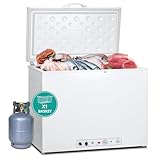
Overview: The SMETA Deep Propane Freezer is a heavy-duty 7.1 cu ft chest freezer designed for serious off-grid living. This 2-way unit operates on LP gas or 110V AC, delivering true freezing capability from 10°F to 32°F without compressor noise. Its lockable design and large capacity make it ideal for RVs, cabins, and outdoor kitchens where preserving meat and frozen goods is essential. The unit measures 40.5"W x 27.6"D x 32.6"H, requiring dedicated installation space.
What Makes It Stand Out: Unlike absorption refrigerators that only cool, this unit provides genuine freezer storage—essential for preserving meat and long-term food supplies. The chest design maximizes efficiency, while the secure lock protects valuable provisions from theft or accidental opening during travel. Consuming just 1.9lb of propane per 24 hours, it offers economical off-grid operation for extended periods without electrical infrastructure.
Value for Money: At $1,799, this is a significant investment, but competitive with other large propane freezers. The cost per cubic foot ($253) is reasonable for absorption technology. For homesteaders and full-time RVers, the ability to buy meat in bulk and preserve harvests provides substantial long-term savings that offset the initial price. The lockable feature adds security value for outdoor installations.
Strengths and Weaknesses: Strengths include massive 7.1 cu ft capacity, true freezing temperatures, silent operation, lockable security, energy-efficient propane consumption, and removable shelves. Weaknesses are the high upfront cost, bulky dimensions requiring dedicated space, no 12V option limiting mobile use, and chest design making item access less convenient. The white finish shows dirt in outdoor environments.
Bottom Line: A premium solution for off-grid families and serious homesteaders needing reliable freezer capacity. The SMETA justifies its price through performance and efficiency, though casual campers should consider smaller alternatives. This is a long-term investment in food security.
Why Solar-Powered Refrigeration is a Game-Changer for Off-Grid Living
Traditional off-grid cooling solutions often involve propane fridges with their finicky flames and ventilation demands, or ice chests that require constant resupply runs. Solar-powered compact fridges eliminate these dependencies entirely, converting your most abundant resource—sunlight—into consistent, maintenance-free cooling. Unlike standard AC-powered mini-fridges that gulp 100+ watts continuously, a properly sized solar fridge system operates on 40-60 watts of DC power, running intermittently to maintain temperature rather than fighting to achieve it.
The real revolution lies in the compressor technology. Modern DC compressors use variable speed drives that ramp up or down based on internal temperature and ambient conditions, rather than the binary on/off cycling of conventional fridges. This means during cool nights or cloudy days, your system draws minimal power while maintaining optimal conditions. For off-grid dwellers, this translates to smaller solar arrays, reduced battery banks, and ultimately, lower system costs.
Understanding the Basics: How Solar Fridges Work
The Core Components: Panels, Batteries, and Charge Controllers
A solar fridge isn’t a standalone appliance—it’s the star player in a four-part ecosystem. The solar panels harvest photons and convert them to DC electricity, which flows to a charge controller that regulates voltage and prevents battery overcharging. Your battery bank stores this energy for use during nighttime or low-light periods, and finally, the fridge draws from this reservoir as needed. Each component must be sized harmoniously; an oversized panel with a tiny battery bank is as dysfunctional as a massive battery paired with insufficient solar input.
The critical distinction is that quality solar fridges run directly on DC power, bypassing the inefficiency of inverters. Every conversion from DC to AC incurs a 10-15% energy loss, which compounds when you’re already working with limited resources. This direct-to-battery operation is what makes true solar fridges fundamentally different from conventional units plugged into inverter-fed outlets.
DC vs AC Power: What Off-Grid Dwellers Need to Know
DC (direct current) fridges represent the gold standard for off-grid efficiency. They operate natively on 12V or 24V systems, eliminating the inverter penalty and allowing for simpler, more reliable wiring. AC fridges, even “energy-efficient” models, introduce complexity and waste. That said, some off-grid setups use AC fridges with pure sine wave inverters for specific reasons—perhaps they already owned the unit, or needed a particular size unavailable in DC models. This approach can work, but requires 20-30% more solar and battery capacity to compensate for conversion losses.
The voltage choice matters too. A 24V system halves the amperage for the same wattage, reducing wire gauge requirements and voltage drop over long runs. For compact fridges under 5 cubic feet, 12V systems remain common and practical. For larger units or whole-house systems, 24V offers tangible efficiency gains.
Sizing Your Solar Fridge: Capacity Considerations
Solo Adventurers vs. Family Setups
Capacity planning starts with honest assessment of your consumption patterns. A single person in a van conversion might thrive with a 1.7 cubic foot unit holding essentials—condiments, fresh vegetables, and a few days of protein. This translates to roughly 30-40 liters of storage and draws about 25-35 amp-hours daily from a 12V battery. A couple in a tiny home typically needs 3.5-4.5 cubic feet (100-130 liters), consuming 40-60 amp-hours daily. Families of four should plan for 5-7 cubic feet, but this pushes the boundaries of what compact solar systems can support without substantial solar arrays.
The key is recognizing that off-grid refrigeration demands ruthless efficiency. You can’t afford to cool empty space, and every cubic inch should serve a purpose. Many experienced off-gridders recommend starting smaller than you think, then adjusting habits around that constraint rather than oversizing the system.
The 80% Rule: Realistic Usage Patterns
Manufacturers rate fridge capacity in ideal conditions—empty boxes with perfect air circulation. Real-world usage reduces effective capacity by 20-30% due to uneven packing, air gaps around containers, and the space occupied by the compressor housing. Factor this into your planning. A 3 cubic foot fridge realistically holds about 2.1-2.4 cubic feet of usable food.
Additionally, consider the 80/20 rule of energy consumption: your fridge runs most efficiently when 80% full. Too empty, and you’re cooling wasted air space. Too full, and air circulation suffers, forcing the compressor to work harder. This sweet spot maximizes thermal mass while maintaining airflow, creating a naturally stable environment that requires less frequent compressor cycling.
Energy Efficiency: Decoding the Numbers That Matter
Compressor Types and Performance
The compressor is the heart of your fridge, and its design dictates efficiency. Danfoss/Secop BD series compressors dominate the quality solar fridge market for good reason—their variable speed operation can throttle down to 2,000 RPM for maintenance cooling or surge to 3,500 RPM for pull-down after door openings. This contrasts sharply with conventional compressors that run at fixed speeds, cycling completely on or off.
Look for coefficient of performance (COP) ratings above 1.5. COP measures cooling output versus electrical input; a COP of 2.0 means the fridge moves twice as much heat energy as it consumes electrically. Premium solar fridge compressors achieve COPs of 2.5-3.0, but these numbers assume optimal condenser airflow and clean coils—maintenance factors we’ll address later.
Insulation Quality: The Hidden Factor
Manufacturers love to advertise compressor efficiency but rarely mention insulation specs. The difference between 2-inch and 4-inch polyurethane foam insulation can mean 30% less energy consumption. High-quality solar fridges use high-density foam with R-values of 25-30, compared to R-10 to R-15 in cheap mini-fridges.
The insulation’s continuity matters too. Poorly sealed door gaskets, thin insulation around compressor compartments, and inadequate thermal breaks in the cabinet create cold bridges where heat infiltrates. Press gently around door seals with the fridge running—if you feel cold air escaping, you’re bleeding energy. Quality units maintain positive door seal pressure and use magnetic gaskets that conform perfectly over time.
Battery Bank Sizing: The Math Behind Continuous Cooling
Lead-Acid vs. Lithium: Storage Solutions Compared
Your battery bank determines how many cloudy days you can weather. Lead-acid batteries (AGM or gel) cost less upfront but suffer from the 50% depth of discharge rule—using more than half their capacity dramatically shortens lifespan. A 100Ah lead-acid battery realistically provides 50Ah of usable capacity. Lithium iron phosphate (LiFePO4) batteries cost 3-4x more but deliver 80-90% usable capacity, charge faster, and last 3,000+ cycles versus 500-800 for lead-acid.
For solar fridges, lithium’s voltage stability proves crucial. Lead-acid voltage sags under load, potentially triggering low-voltage cutoffs that shut down your fridge prematurely. Lithium maintains steady voltage until nearly depleted, ensuring consistent compressor performance. The math often favors lithium for full-time off-grid living; the total cost of ownership over 10 years is lower despite higher initial investment.
Calculating Your Amp-Hour Requirements
Here’s the practical formula: Daily amp-hours = (Fridge wattage × Run time hours) ÷ System voltage × Safety factor. A typical efficient 3 cubic foot solar fridge draws 45 watts and runs about 8 hours per day in moderate weather. On a 12V system: (45 × 8) ÷ 12 = 30 amp-hours. Multiply by 1.5 for battery aging and inefficiency = 45 amp-hours daily requirement.
Now multiply by your desired autonomy. For three days without sun: 45 × 3 = 135 amp-hours of usable capacity. With lead-acid, you need a 270Ah bank. With lithium, a 150Ah bank suffices. This calculation assumes you’re not running anything else; add 20-30% margin for lights, phone charging, and phantom loads.
Solar Panel Array Design for Reliable Power
Optimal Tilt Angles and Seasonal Adjustments
Solar panels for refrigeration can’t be an afterthought—they must produce enough power on cloudy winter days, not just sunny summer afternoons. The rule of thumb: tilt panels at your latitude plus 15 degrees for winter optimization, or use adjustable mounts to seasonally re-angle. A fixed mount at latitude works adequately year-round but sacrifices 15-20% potential harvest.
Panel orientation matters too. While true south (in the northern hemisphere) maximizes annual production, a slightly southwest-facing array can better capture late afternoon sun when your batteries are depleted from daytime fridge cycling. Track your fridge’s power consumption pattern—it likely draws most heavily in late afternoon as ambient temperatures peak and door openings accumulate.
Cloudy Day Strategies and Backup Planning
Even the best solar fridge system needs contingency planning. In persistent overcast conditions, panel output drops to 10-25% of rated capacity. This is where oversizing your array by 30-40% pays dividends. A fridge needing 200 watts of panels for sunny days should have 280-300 watts installed.
Consider hybrid input capabilities. Some charge controllers accept simultaneous solar and wind input, or solar with a small generator backup port. The most robust off-grid systems include a modest DC generator that can bulk-charge batteries in 2-3 hours during multi-day storms, running just long enough to top off reserves without the noise and fuel consumption of continuous generator operation.
Installation Best Practices
Ventilation and Heat Dissipation
Your fridge’s condenser coils release heat—often 1.5 to 2 times the electrical energy consumed. In a confined van or tiny cabin, this waste heat can raise ambient temperatures by 5-10°F, forcing the compressor to work harder in a vicious cycle. Install your fridge with minimum 2-inch clearance on sides and top, and ensure the rear condenser area has active ventilation.
For built-in installations, create a dedicated venting plenum. A small 12V computer fan (0.1 amps) exhausting hot air from behind the fridge can improve efficiency by 15-20%. Thermostatically controlled fans that activate only when condenser temperature exceeds 90°F provide set-and-forget operation without unnecessary power drain.
Wiring, Voltage Drop, and Safety
DC systems are unforgiving of poor wiring. A 3% voltage drop is the maximum acceptable; beyond this, compressors strain and efficiency plummets. For a 45-watt fridge on 12V drawing 3.75 amps, use 12 AWG wire for runs up to 15 feet, 10 AWG for 15-25 feet. Many installations fail because they use 16 or 18 AWG wire adequate for LED lights but insufficient for compressor startup surges.
Fuse your fridge circuit appropriately—typically 1.5x the running current. That 3.75-amp fridge needs a 6-amp fuse minimum. Place fuses as close to the battery as possible to protect the entire wire run. Use marine-grade tinned copper wire in damp locations, and always include a battery disconnect switch for maintenance. The few dollars saved on cheap wire and fuses can cost you a $800 fridge compressor.
Climate Considerations for Your Location
Extreme Heat and Cold Performance
Ambient temperature dramatically impacts fridge performance. At 90°F ambient, a fridge might consume 50% more power than at 70°F. In desert environments, look for units rated for operation up to 110°F, with enhanced condenser cooling and refrigerants like R600a (isobutane) that perform better in heat than older R134a.
Cold climates present opposite challenges. Most compressors won’t start below 50°F ambient without crankcase heaters, which draw significant power. Some solar fridges include low-ambient kits that cycle compressor oil to prevent slugging. Alternatively, in cold climates, consider installing the fridge in a conditioned space rather than an unheated outbuilding. Freezer compartments in particular struggle below freezing ambient temperatures, as the thermostat may never call for cooling while food thaws and refreezes unpredictably.
Humidity and Condensation Management
High humidity environments cause condensation on cold exterior surfaces, especially around door seals and compressor lines. This moisture can drip onto floors, cause rust, and freeze into ice buildup. Quality solar fridges include heated door frames that prevent condensation, but these heaters consume 5-10 watts continuously—an unacceptable tradeoff for most off-grid systems.
Better solutions include passive moisture absorption. A small container of silica gel desiccant inside the fridge changes color as it saturates, and can be regenerated in a solar oven. Ensure your installation space has some air exchange to prevent humidity buildup, but avoid direct drafts on the fridge. In tropical locations, elevate the fridge slightly to prevent floor condensation from wicking into insulation, which permanently degrades performance.
Advanced Features Worth Considering
Dual-Zone Cooling and Precision Control
Some premium compact solar fridges offer separate freezer and refrigerator compartments with independent temperature control. This sounds ideal but comes with caveats. Dual-zone units consume 20-30% more power than single-zone fridges of equivalent total volume, and the freezer compartment often struggles to maintain 0°F in hot weather without oversized compressors.
Consider your actual needs. Many off-gridders find a single-zone fridge set to 35°F, combined with a small passive ice maker or seasonal freezing, more practical. If you must have freezing capability, look for units where the freezer compartment can be temporarily disabled, converting the entire space to refrigeration during low-sun periods. This flexibility proves invaluable during the cloudy week-long storms that test every off-grid system.
Low-Voltage Protection and Smart Features
Your fridge should include adjustable low-voltage disconnect (LVD) settings. When batteries deplete, the fridge should shut down gracefully before voltage drops low enough to damage the compressor. Cheap units simply die when voltage sags, risking locked rotor conditions that burn out motors. Quality fridges restart automatically when voltage recovers.
Bluetooth monitoring apps, while seeming like gimmicks, provide crucial diagnostics off-grid. They reveal actual power consumption, compressor run times, and temperature histories that help you spot efficiency losses before they become failures. A sudden increase in run time often indicates dirty coils or door seal leaks—problems easily fixed if caught early, but catastrophic if ignored.
Maintenance and Troubleshooting
Preventative Care Routines
Every three months, vacuum condenser coils with a soft brush attachment. In dusty environments, monthly cleaning prevents efficiency losses of 25% or more. Clean door seals with mild soap solution, then apply a thin film of petroleum jelly to keep them pliable and maintain positive seal pressure.
Annually, check refrigerant lines for corrosion, especially where they exit the cabinet. Spray a soapy water solution on connections while the compressor runs—bubbles reveal leaks that gradually bleed performance. Tighten mounting screws, as compressor vibration can loosen them over time, creating noise and potential line fatigue.
Common Issues and Solutions
Fridge runs constantly but can’t maintain temperature: Check for door seal leaks with a dollar bill test (close bill in door, pull—it should resist firmly). Inspect for ice buildup on evaporator coils indicating a defrost issue. Verify adequate ventilation space around condenser.
Compressor won’t start: Measure voltage at fridge terminals under load. If below 11.5V on a 12V system, batteries are depleted or wiring is undersized. Check for blown fuse or tripped breaker. Listen for clicking—this indicates LVD is activating due to low voltage.
Excessive noise: Level the fridge using adjustable feet. Check that compressor mounts haven’t loosened. Verify clearance around fridge isn’t creating resonance chambers that amplify sound. Some gurgling is normal as refrigerant flows; loud knocking indicates compressor damage.
True Cost Analysis: Investment vs. Savings
A quality 3 cubic foot solar fridge costs $600-900, versus $150 for a cheap AC mini-fridge. Add $400-600 for appropriate solar panels, $300-800 for batteries (lithium), and $150 for charge controller and wiring. Total system cost: $1,450-2,600. Compare this to a propane fridge at $1,200-1,800 plus $30-50 monthly fuel costs.
The break-even point arrives within 2-3 years for full-time off-grid living. More importantly, solar eliminates fuel supply logistics and the environmental impact of propane combustion. Cheap AC mini-fridges seem economical until you factor in the larger solar array and battery bank needed—often adding $800-1,200 to system costs while delivering inferior performance and 2-3 year lifespans versus 10-15 years for DC compressors.
Environmental Impact Beyond Solar
Solar fridges eliminate direct emissions, but their manufacturing footprint matters. Quality units with replaceable compressors and recyclable insulation reduce long-term waste. Some manufacturers now use hydrocarbon refrigerants with near-zero global warming potential versus HFCs. Consider the product’s end-of-life: can the refrigerant be recovered? Are components modular for repair?
The most sustainable fridge is the one you don’t replace. A $800 fridge lasting 15 years generates less waste than three $300 units failing every 5 years. Factor in repairability when purchasing—units with standard Danfoss compressors have parts available worldwide, while proprietary systems leave you stranded.
Frequently Asked Questions
How many solar panels do I really need to run a compact fridge?
For a typical 3 cubic foot DC fridge drawing 30-45 amp-hours daily, you’ll need 200-250 watts of solar panels in average sun conditions. This assumes 4-5 peak sun hours and accounts for system inefficiencies. Increase to 300-350 watts in cloudy climates or winter-dominant locations.
Can I run a solar fridge directly from panels without batteries?
Only during direct sunlight, which is impractical. Compressors need stable voltage that panels can’t provide when clouds pass. Without batteries, the fridge would cycle on and off hundreds of times daily, destroying the compressor within weeks. Minimum battery capacity should cover 24 hours of operation.
What’s the lifespan of a solar fridge compared to a regular mini-fridge?
Quality DC compressor solar fridges typically last 10-15 years with proper maintenance. Conventional AC mini-fridges last 3-5 years in off-grid conditions due to inverter stress, voltage fluctuations, and frequent cycling. The higher upfront cost amortizes over triple the lifespan.
Do solar fridges work in freezing temperatures?
Yes, but with caveats. Most compressors struggle to start below 50°F ambient without crankcase heaters. The fridge compartment will maintain temperature, but freezer sections may thaw and refreeze unpredictably. Install in a conditioned space or use low-ambient kits for unheated buildings.
How do I prevent my solar fridge from draining my batteries?
Set the low-voltage disconnect to 11.8V for lead-acid or 12.0V for lithium. This preserves battery health while protecting the compressor. Size your battery bank for 3 days of autonomy minimum. Monitor consumption via Bluetooth apps to catch abnormal draws indicating door seal leaks or coil fouling.
Is a DC fridge worth the extra cost over an AC fridge with an inverter?
For off-grid primary use, absolutely. The inverter penalty adds 20-30% to daily consumption, requiring larger solar and battery systems that cost $800-1,200 more. DC fridges also start more reliably on low voltage and have built-in protections designed for battery operation. The payback period is typically under 3 years.
Can I use my solar fridge while driving in a van or RV?
Yes, if wired to the vehicle’s alternator through a battery isolator. This charges your house batteries while driving, powering the fridge simultaneously. Use 8 AWG or thicker wire to handle alternator charging currents. Many van lifers find their batteries fully charged after 2-3 hours of driving, providing overnight fridge power without solar input.
How often should I clean the condenser coils?
In clean environments, every 3 months. In dusty desert conditions, monthly cleaning prevents 25% efficiency losses. Use a soft brush vacuum attachment—compressed air can drive dust deeper into coil fins. Clean coils can reduce daily power consumption by 10-15 amp-hours, directly extending battery autonomy.
What’s the ideal temperature setting for off-grid efficiency?
35-37°F for the refrigerator compartment. Each degree colder increases consumption by 3-5%. Resist the temptation to crank it to 33°F “just to be safe.” Use a separate thermometer to verify actual temperature, as built-in thermostats can be inaccurate by ±5°F, causing unnecessary compressor run time.
Can I add extra insulation to my solar fridge to improve efficiency?
Carefully, yes. Adding 1-inch foam board to the top and sides can improve performance by 10-15%, but never block ventilation openings or compressor compartments. Ensure added insulation doesn’t interfere with door sealing. Some users build insulated enclosures around their fridges in stationary installations, but this requires careful thermal management to prevent overheating.