Designing a kitchen that works for everyone isn’t just about following regulations—it’s about creating spaces where independence and functionality go hand in hand. As we look toward 2026, the evolution of ADA-compliant appliances has transformed from basic accessibility checks to sophisticated, user-centered design that benefits all users, regardless of ability. Undercounter freezers, once an afterthought in accessible kitchen planning, now represent the cutting edge of universal design principles.
Whether you’re renovating a home for aging-in-place, outfitting a multi-generational household, or ensuring commercial compliance, understanding what makes an undercounter freezer truly accessible is crucial. The right choice extends far beyond mere height measurements; it encompasses intuitive operation, thoughtful ergonomics, and seamless integration into your kitchen’s workflow. This comprehensive guide walks you through every consideration you’ll need to make an informed decision without getting lost in technical jargon or marketing hype.
Top 10 ADA-Compliant Undercounter Freezers for Accessible Kitchens
Detailed Product Reviews
1. Summit Appliance ADA302RFZ Built-in Undercounter ADA Compliant Refrigerator-Freezer in White, Designed for General Purpose Storage with Manual Defrost, Glass Shelves, Front Lock and Door Storage

Overview: The ADA302RFZ is Summit’s entry-level ADA-compliant refrigerator-freezer designed for space-constrained environments. At under 20 inches wide and 32 inches high, it fits seamlessly under lower counters while providing 2.68 cubic feet of general-purpose storage. This unit targets budget-conscious buyers needing compliant appliances for offices, medical facilities, or accessible home kitchens.
What Makes It Stand Out: Its sub-$920 price point distinguishes it in the ADA appliance market, where compliance often commands premium pricing. The factory-installed lock provides security rarely included at this tier, while three removable door racks maximize vertical storage for bottles and condiments. The three adjustable spill-proof glass shelves offer flexibility that competes with more expensive models.
Value for Money: At $917.13, this represents exceptional value for ADA-compliant refrigeration. Comparable units typically start above $1,100, making this 15-20% savings substantial. The manual defrost system, while requiring occasional maintenance, eliminates complex machinery that drives up costs and repair rates. For general storage needs without luxury features, it’s a pragmatic investment.
Strengths and Weaknesses: Strengths include compact dimensions, integrated lock, adjustable glass shelving, and door storage versatility. The white finish suits institutional settings, and the price is highly competitive. Weaknesses involve manual defrost requiring periodic shutdown, basic dial thermostat lacking precision, absence of digital controls, and limited capacity for families. The all-white aesthetic may feel dated in modern kitchens.
Bottom Line: Ideal for institutional settings, offices, or budget-focused accessible housing where basic reliable refrigeration meets compliance standards. Not suited for those wanting maintenance-free operation or premium finishes.
2. Summit Appliance FF1843BSSADA ADA Compliant 18" Wide Built-in Undercounter All-refrigerator with Stainless Steel Door, Black Cabinet, Digital Thermostat, Automatic Defrost and Front Lock

Overview: The FF1843BSSADA is a specialized all-refrigerator unit for those prioritizing fresh food storage in ADA-compliant spaces. Its 18-inch width and 32-inch height enable built-in or freestanding installation under lower counters. The stainless steel door with professional handle delivers modern aesthetics for contemporary kitchens, offices, or medical environments requiring accessible design.
What Makes It Stand Out: Automatic defrost eliminates maintenance headaches common in manual units, while the digital thermostat provides precise temperature control absent in lower-tier models. The user-reversible door offers installation flexibility that contractors value. Its flush-back design maximizes every inch in tight spaces, and the front lock adds security for shared environments.
Value for Money: At $1,522.81, this commands a 66% premium over Summit’s basic model, but delivers meaningful upgrades. The auto-defrost system alone justifies the cost for busy users, while digital controls ensure food safety with exact temperature management. Comparable ADA all-refrigerators with these features typically exceed $1,700, making this competitively priced for its class.
Strengths and Weaknesses: Strengths include maintenance-free auto defrost, precise digital controls, reversible stainless door, flexible installation, and integrated lock. The black cabinet provides durability. Weaknesses include the lack of freezer compartment (limiting versatility), narrow 18-inch width restricting capacity, and premium pricing that may exceed residential budgets. The all-refrigerator design requires a separate freezer purchase.
Bottom Line: Perfect for dedicated fresh-food storage in accessible kitchens, medical offices, or break rooms where maintenance-free operation and precise control justify the investment. Purchase separately if freezer space is needed.
3. Summit 24” Two Drawer Freezer, 3.54 cu.ft. Capacity, ADA Compliant, ENERGY STAR, Stainless Steel, Panel Ready Capable*- ADFD2D24 (*Panels not included)

Overview: The ADFD2D24 redefines undercounter freezer access with its innovative two-drawer design, offering 3.54 cubic feet of storage in an ADA-compliant package. Engineered for both indoor and outdoor use, this ENERGY STAR certified unit combines commercial durability with residential sophistication. At 24 inches wide, it provides substantial capacity while maintaining 32-inch height for accessible installation.
What Makes It Stand Out: The drawer configuration eliminates door swing constraints, making it ideal for tight accessible kitchens or outdoor entertainment areas. Commercial-grade construction with ETL-S listing to NSF-7 standards ensures professional reliability. Advanced features include high-temperature alarms, open-drawer alerts, power-loss memory recovery, and Sabbath mode—capabilities rarely found in residential freezers.
Value for Money: At $2,129.87, this premium freezer costs 130% more than standard undercounter models, but offers unique value. The ENERGY STAR rating delivers utility savings, while weatherproof construction eliminates replacement costs in outdoor settings. Comparable commercial drawer freezers exceed $2,500, making this competitively priced for its feature set and durability.
Strengths and Weaknesses: Strengths include ergonomic drawer access, frost-free operation, commercial certification, comprehensive alarm systems, energy efficiency, and panel-ready customization. The unit excels in accessibility and advanced functionality. Weaknesses include premium pricing, panels not included (adding $200+), freezer-only limitation, and complexity that may overwhelm basic residential needs. The 3.54 cu.ft. capacity may prove insufficient for large families.
Bottom Line: Outstanding for accessible outdoor kitchens, commercial settings, or luxury residential installations where drawer convenience, durability, and advanced monitoring justify the significant investment. Not for budget-conscious buyers.
4. Summit Appliance ALRF49BSSTB Built-in Undercounter ADA Compliant Refrigerator-Freezer in Black, Stainless Steel Door, Towel Bar Handle, Manual Defrost, Front Lock, and Door Storage

Overview: The ALRF49BSSTB bridges the gap between basic white units and premium all-stainless models, offering a refrigerator-freezer combo with upgraded aesthetics. Its 32-inch height ensures ADA compliance, while the black cabinet with stainless steel door provides contemporary styling for modern accessible kitchens, offices, or assisted living facilities requiring 2.68 cubic feet of versatile storage.
What Makes It Stand Out: The towel bar handle delivers commercial-kitchen style while enhancing accessibility for users with limited grip strength. The black cabinet construction resists fingerprints and wear better than white alternatives. Three removable door racks and adjustable spill-proof glass shelves provide storage flexibility matching higher-priced units, while the integrated lock maintains security.
Value for Money: Priced at $1,178.26, this sits $260 above the basic white model but $345 below the all-stainless version. The aesthetic upgrade justifies the modest premium for design-conscious buyers. However, the manual defrost system and dial thermostat feel dated at this price point, where competitors often include digital controls. You’re paying primarily for appearance rather than functionality improvements.
Strengths and Weaknesses: Strengths include attractive two-tone design, accessible towel bar handle, flexible door storage, adjustable glass shelves, integrated lock, and ADA compliance. The combo configuration maximizes versatility. Weaknesses include manual defrost maintenance, imprecise dial thermostat, limited capacity, and pricing that nears auto-defrost models. The black cabinet may clash with all-stainless kitchens.
Bottom Line: A solid style upgrade for accessible spaces where appearance matters but budget doesn’t allow premium features. Choose if you prioritize aesthetics over maintenance-free convenience.
5. Summit Appliance ALFZ36CSS Built-in Undercounter ADA Compliant Residential All-Freezer with Stainless Steel Cabinet, Towel Bar Handle, Door Storage, Adjustable Thermostat and Manual Defrost

Overview: The ALFZ36CSS addresses the need for dedicated freezer storage in ADA-compliant spaces where 32-inch undercounter installation is required. This all-freezer unit provides 2.68 cubic feet of capacity in a 20-inch wide stainless steel cabinet, making it ideal for accessible kitchens needing supplemental frozen storage. The full stainless construction offers durability and cohesive aesthetics with other premium appliances.
What Makes It Stand Out: Unlike models with stainless doors only, this features a complete stainless steel cabinet for consistent appearance in built-in applications. User-set high/low temperature alarms provide proactive monitoring absent in most residential freezers, alerting users before food loss occurs. The towel bar handle enhances accessibility, while three removable door racks maximize storage efficiency in the compact interior.
Value for Money: At $1,640.61, this commands premium pricing for a manual-defrost freezer. The full stainless construction and temperature alarm system justify the cost for safety-conscious users, but comparable auto-defrost models are available for less. The value proposition hinges on needing ADA compliance combined with temperature monitoring; otherwise, more economical options exist.
Strengths and Weaknesses: Strengths include complete stainless steel construction, temperature alarm system, flexible built-in/freestanding design, accessible towel bar handle, and door storage optimization. The 20-inch width fits most applications. Weaknesses include manual defrost at a premium price, wire shelves (less refined than glass), limited 2.68 cu.ft. capacity, and no digital controls. The alarm system may be overly complex for some users.
Bottom Line: Best for accessible installations requiring dedicated freezer space with temperature monitoring and cohesive stainless aesthetics. The manual defrost is a notable drawback at this price tier.
6. Summit Appliance CT661WCSSADA ADA Compliant Built-in Undercounter Refrigerator-Freezer for Residential Use, Cycle Defrost with Deluxe Interior, Stainless Steel Exterior and Towel Bar Handle

Overview: The Summit Appliance CT661WCSSADA is a premium ADA-compliant undercounter refrigerator-freezer designed for residential settings. At 32 inches high, it fits perfectly under lower counters while offering flexible built-in or freestanding installation in 24-inch spaces. The complete stainless steel construction with a signature towel bar handle delivers a professional, upscale aesthetic.
What Makes It Stand Out: This unit distinguishes itself with a deluxe interior featuring glass shelves, generous door storage, and a specialized scalloped wine shelf—amenities rarely found in compact ADA appliances. The dual evaporator cooling system provides improved temperature performance by separately managing refrigerator and freezer compartments, preventing odor transfer and maintaining optimal conditions.
Value for Money: At $1,814.66, this is a significant investment, but the price reflects its commercial-grade stainless steel construction, premium features, and specialized ADA compliance. Comparable standard undercounter units cost less but lack the height compliance, dual evaporators, and deluxe interior appointments.
Strengths and Weaknesses: Strengths include robust stainless steel build, flexible installation, superior dual evaporator cooling, and upscale interior design. The 32-inch height meets strict ADA requirements. Weaknesses include the premium price point and cycle defrost system, which requires occasional manual intervention unlike frost-free models. The specialized design may be more appliance than necessary for casual users.
Bottom Line: The CT661WCSSADA is ideal for homeowners seeking a high-end, ADA-compliant refrigeration solution that doesn’t compromise on features or aesthetics. Its premium construction and thoughtful design justify the investment for those prioritizing accessibility and quality.
7. Summit Appliance BKRF663BBIADA Built-in Undercounter ADA Compliant 24" Wide Break Room Refrigerator-Freezer in Black with NIST Calibrated Thermomete and High/Low Temperature Alarm
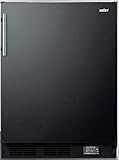
Overview: The Summit Appliance BKRF663BBIADA is a specialized ADA-compliant refrigerator-freezer engineered for break room environments where temperature precision is critical. Its 32-inch height enables installation under ADA counters, while the 24-inch width fits standard undercounter openings.
What Makes It Stand Out: Professional-grade temperature monitoring sets this unit apart. The factory-installed NIST calibrated thermometer provides continuous, accurate temperature display, while the high/low temperature alarm immediately alerts staff to dangerous fluctuations that could compromise stored contents. This makes it perfect for facilities storing medications, sensitive beverages, or employee lunches.
Value for Money: Priced at $1,408.98, this unit sits in the upper-mid range. The cost is justified by its professional temperature monitoring capabilities—a feature typically found on medical-grade equipment costing considerably more. For break rooms requiring documented temperature compliance, this represents excellent value.
Strengths and Weaknesses: Major strengths include the NIST calibration, audible alarms, dual evaporator cooling, and flexible installation options. The black finish provides a professional appearance while resisting fingerprints. The primary weakness is the black exterior may not integrate with all kitchen designs. Interior features are functional but less “deluxe” than residential models. The price may exceed budgets for basic break room needs.
Bottom Line: This is the perfect choice for offices, clinics, or facilities needing ADA compliance with verifiable temperature monitoring. The professional features justify the premium over standard break room refrigerators.
8. Summit Appliance ALFZ37B Built-in Undercounter ADA Compliant Residential All-Freezer in Black, Door Storage, Temperature Alarms, Open Door Alarm, Adjustable Thermostat and Manual Defrost

Overview: The Summit Appliance ALFZ37B addresses a specific need: an ADA-compliant undercounter all-freezer in a compact footprint. At just 32 inches high and 20 inches wide, this black freezer fits where standard units cannot, offering flexible built-in or freestanding installation for residential accessible kitchens.
What Makes It Stand Out: Finding a dedicated ADA-height freezer this narrow is challenging, making the ALFZ37B a rare solution. It includes professional features like temperature alarms and an open door alarm—uncommon in compact residential freezers. The adjustable wire shelving and three removable door racks maximize its 2.68 cubic foot capacity for efficient frozen goods organization.
Value for Money: At $880.43, this specialized freezer commands a premium over standard compact freezers, but its ADA compliance and alarm features justify the cost. For accessibility-focused renovations, the price is reasonable compared to custom solutions or modifying cabinetry.
Strengths and Weaknesses: Strengths include true ADA compliance, compact 20-inch width, multiple safety alarms, and adjustable storage configuration. The manual defrost system is a weakness requiring periodic maintenance, though it reduces complexity and purchase price. Capacity is limited at 2.68 cubic feet, and the black finish offers no alternative. The narrow width may not suit those needing substantial frozen storage.
Bottom Line: The ALFZ37B is an excellent solution for accessible kitchens needing supplemental freezer capacity. Its specialized dimensions and safety features make it worth the investment for ADA-compliant spaces despite manual defrost.
9. Summit Appliance ALR47B Built-in Undercounter ADA Compliant Residential All-Refrigerator in Black with Door Storage, Interior Light, Open Door Alarm, Adjustable Thermostat and Automatic Defrost
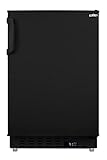
Overview: The Summit Appliance ALR47B is the refrigerator counterpart to the ALFZ37B, providing an ADA-compliant undercounter all-refrigerator solution. At 32 inches high and 20 inches wide, it fits accessible kitchen designs while offering flexible built-in or freestanding installation options for residential use.
What Makes It Stand Out: This unit delivers dedicated refrigeration in an ADA-friendly compact size, featuring three adjustable spill-proof glass shelves—a significant upgrade over wire shelving that contains messes. The interior light, open door alarm, and adjustable thermostat add convenience and safety rarely found in units this size, making it user-friendly for those with accessibility needs.
Value for Money: At $817.13, it offers excellent value for a specialized ADA appliance. The automatic defrost system is a major advantage over its freezer counterpart, eliminating maintenance headaches. For accessible kitchen designs, it’s competitively priced against standard compact refrigerators while meeting strict height requirements.
Strengths and Weaknesses: Strengths include ADA compliance, automatic defrost, spill-proof glass shelves, interior lighting, and door alarms. The 3.53 cubic foot capacity is generous for its 20-inch width. Weaknesses include limited width for those needing more storage, black finish only, and the specialized size commands a premium over non-ADA units. Some may prefer a freezer compartment.
Bottom Line: The ALR47B is ideal for accessible kitchens requiring a dedicated undercounter refrigerator. Its thoughtful features and automatic defrost make it a practical, reliable choice for residential ADA-compliant installations where a separate freezer is available.
Understanding ADA Compliance in Kitchen Appliances
What Does ADA-Compliant Mean for Undercounter Freezers?
ADA compliance for undercounter freezers isn’t simply about making appliances shorter. The Americans with Disabilities Act establishes specific technical requirements that ensure appliances are operable by individuals with disabilities. For freezers, this means meeting strict guidelines for reach ranges, operating forces, and control accessibility. A truly compliant unit allows someone using a wheelchair to approach, open, access contents, and adjust settings without requiring assistance or contorting their body into uncomfortable positions.
The standards address everything from the maximum height of the highest operable part to the force required to open the door. In 2026, manufacturers are going beyond baseline compliance, incorporating features that address a broader spectrum of disabilities including limited dexterity, vision impairments, and cognitive differences. Understanding these nuances helps you distinguish between marketing claims and genuine accessibility.
Key ADA Guidelines for Reach Ranges and Clearance
The ADA Standards for Accessible Design specify that operable parts must be within reach ranges of 15 to 48 inches above the finished floor for forward reach, and 9 to 54 inches for side reach. For undercounter installations, this typically means the freezer’s controls, handles, and primary storage areas must fall within these zones. Clear floor space requirements are equally critical—maneuvering clearances of 30 by 48 inches must be provided at appliances, with additional space for approach depending on the configuration.
Knee and toe clearance beneath countertops is another often-overlooked specification. For a forward approach, you’ll need at least 27 inches of knee clearance height, 30 inches of width, and 19 inches of toe clearance depth. These measurements directly impact which undercounter freezer models will work with your cabinet configuration and why professional installation consultation is essential.
Why Accessibility Matters in Modern Kitchen Design
The Growing Demand for Universal Design
Universal design principles recognize that accessibility features benefit everyone, not just people with disabilities. A parent pushing a stroller, someone recovering from surgery, or a home chef with their hands full all benefit from thoughtfully designed appliances. The market shift toward universal design reflects our evolving understanding of how homes adapt to life changes.
In 2026, we’re seeing a demographic imperative driving this trend: aging baby boomers wanting to remain in their homes, multi-generational households becoming the norm, and increased awareness of invisible disabilities. An ADA-compliant undercounter freezer isn’t a specialized product—it’s a forward-thinking investment in your home’s long-term functionality and resale value.
Legal Requirements vs. Voluntary Compliance
Understanding the difference between mandatory compliance and voluntary adoption helps you make strategic decisions. In commercial settings and multi-family housing, ADA compliance is legally required. For single-family homes, it’s optional but increasingly expected. However, choosing non-compliant appliances in residential settings can create future headaches if your needs change or you decide to sell.
Voluntary compliance often exceeds minimum standards, with manufacturers competing on accessibility features that go beyond the letter of the law. This “race to the top” benefits consumers, offering innovations like adaptive temperature controls, enhanced lighting, and smart features that make appliances more usable for everyone. When evaluating options, consider whether a manufacturer treats accessibility as a checkbox or a core design philosophy.
Essential ADA Features in Undercounter Freezers
Height and Clearance Specifications
The most critical measurement is the freezer’s installed height. For ADA compliance, the maximum height to the highest operable part—typically the control panel or top shelf—cannot exceed 34 inches from the floor when installed under a 36-inch counter. This ensures reachability from a seated position. However, optimal design often places controls even lower, around 30-32 inches, creating a more comfortable experience.
Consider the unit’s overall dimensions and how they interact with your cabinetry. Some models feature “low-profile” designs that recess further under the counter, providing better knee clearance. Others offer adjustable legs that allow fine-tuning during installation. Remember that flooring thickness and cabinet construction affect final installed height, so always verify measurements with your installer before purchase.
Handle Design and Operation
Handle design dramatically impacts accessibility. ADA guidelines specify that operable parts must be usable with one hand without tight grasping, pinching, or twisting of the wrist. Lever-style handles or push-to-open mechanisms excel here, while traditional knob-style handles often fail compliance. The force required to operate handles must not exceed 5 pounds of pressure.
Look for handles that extend beyond the door face, providing easy gripping points for various hand positions and strengths. Some innovative designs incorporate pull handles that run the full width of the door, allowing users to engage them at any point. Consider handle finish too—textured or matte surfaces provide better grip for users with limited hand strength or dexterity compared to polished chrome.
Control Panel Accessibility
Control panels must be operable with one hand and require minimal force. Touch controls with haptic feedback or large, raised buttons work well for users with visual impairments or limited dexterity. Avoid controls that require simultaneous actions or complex sequences. The best designs place controls on the door front rather than the top edge, making them visible and reachable from a seated position.
Backlighting and high-contrast labeling are essential accessibility features that also benefit users in dim lighting. In 2026, we’re seeing more manufacturers adopt tactile indicators—raised symbols that can be identified by touch. Some advanced models even offer customizable control layouts, allowing users to arrange functions based on their most frequent needs.
Door Swing and Opening Force
Door opening force is strictly regulated—no more than 5 pounds of force should be required to initiate movement. This specification ensures users with limited upper body strength can access their freezer independently. Door hinges should allow the door to open to at least 90 degrees, and preferably up to 120 degrees, providing full access to interior storage.
Consider the door swing direction and whether it’s reversible. In tight kitchen layouts, a door that swings the wrong way can block maneuvering clearances or make access impossible. Some manufacturers offer integrated door stops that prevent the door from swinging too far and damaging adjacent cabinetry—a small detail that protects your investment.
Installation Considerations for ADA-Compliant Freezers
Floor Space and Maneuvering Clearances
Proper installation requires more than sliding the unit into place. You must ensure adequate floor space for approach and use. For a forward approach, maintain a clear floor space of 30 by 48 inches. For parallel approaches, you’ll need a 60-inch turning radius or a T-shaped space for wheelchair users to turn around.
Consider traffic flow in your kitchen design. Placing an accessible freezer at the end of a cabinet run often works better than locating it in the middle, where users might block the primary work aisle. Think about how multiple users might need to access the appliance simultaneously and plan clearances accordingly.
Countertop Height Integration
Standard 36-inch countertops work well for ADA compliance, but the relationship between the counter edge and freezer front matters. The freezer door should align flush with or slightly proud of the cabinet face frames, ensuring easy reach without leaning over the counter. Countertop overhangs deeper than 1½ inches can interfere with forward reach ranges, so coordinate with your cabinetmaker.
If you’re installing in an existing kitchen, verify that your countertop height is consistent. Older homes often have non-standard heights that could push controls above compliant reach ranges. Adjustable cabinet legs or custom toe kicks can help achieve the correct relationship between floor, freezer, and counter.
Electrical and Plumbing Requirements
ADA compliance extends to installation details. Electrical outlets should be positioned to allow easy access without requiring users to reach behind the appliance. Ideally, outlets are placed in adjacent cabinets or on the wall beside the freezer, not directly behind it. Ground-fault circuit interrupter (GFCI) protection is required in kitchen locations for safety.
For units with ice makers or water dispensers, water supply lines must be accessible for maintenance without moving the freezer. Consider installing shut-off valves in an adjacent cabinet rather than behind the appliance. This approach not only aids users with disabilities but also simplifies future service calls.
Performance Features That Complement Accessibility
Temperature Management Systems
Consistent temperature control is crucial for food safety, but accessible freezers need user-friendly management systems. Look for models with simple, intuitive temperature displays that show actual temperature rather than arbitrary settings. Some advanced units feature audible alerts for temperature fluctuations, which benefit users with visual impairments.
Consider freezers with rapid recovery systems that maintain temperature during frequent door openings—common in busy households where users might need multiple attempts to retrieve items. Self-defrosting models reduce maintenance burdens, particularly valuable for users who cannot easily bend to manually defrost units.
Noise Levels for Sensitive Environments
A quiet operation isn’t just a luxury—it’s an accessibility consideration for users with sensory sensitivities, autism, or certain neurological conditions. Modern compressors and insulation technologies have dramatically reduced operational noise, with premium models operating below 40 decibels. Compare sound ratings and, if possible, experience the unit in operation before purchasing.
Location matters too. Installing acoustic insulation around the enclosure (without blocking ventilation) can further reduce noise. Some manufacturers offer “quiet kits” specifically designed for their units, demonstrating a commitment to inclusive design.
Energy Efficiency and Sustainability
Energy Star certification should be a baseline requirement, but accessible freezers often include additional efficiency features. LED interior lighting provides better visibility while consuming minimal power. Advanced defrost systems that sense frost buildup rather than operating on timers reduce energy waste.
Consider the environmental impact of materials used in construction. Manufacturers increasingly use recycled stainless steel and foam insulation with low global warming potential. These choices reflect a holistic approach to accessibility that includes environmental sustainability—ensuring the planet remains accessible for future generations.
Material and Design Choices for Accessibility
Stainless Steel vs. Alternative Finishes
While stainless steel remains popular, its reflective surface can create glare that interferes with visual accessibility. Matte or brushed finishes reduce reflections and fingerprints, making controls and handles easier to see and maintain. Some manufacturers offer custom panel-ready models that allow you to match cabinetry, creating a seamless look that doesn’t scream “accessible appliance.”
Consider the thermal properties of exterior materials. Some users with sensory sensitivities prefer warmer-to-the-touch finishes over cold metal. Composite materials and specialized coatings can provide this benefit while maintaining durability. Always verify that alternative finishes meet the same durability standards as traditional stainless steel.
Interior Configuration and Organization
Interior design directly impacts accessibility. Pull-out drawers with full extension slides allow users to access items at the back without reaching or bending. Clear, high-contrast drawer fronts help users identify contents quickly. Some innovative models feature adjustable drawer dividers that can be reconfigured without tools, adapting to changing storage needs.
Look for models with multiple access points—perhaps a main drawer plus a smaller upper compartment for frequently used items. This tiered approach minimizes the need to open the entire freezer for single items, reducing cold air loss and making the unit more efficient to operate.
Lighting and Visibility Features
Interior lighting must be bright, even, and shadow-free. LED strips along the sides rather than a single top light provide better illumination. Some units feature motion-activated lighting that turns on when the door opens, helpful for users who might have difficulty locating manual switches.
Consider exterior indicator lights as well. A simple LED that confirms the unit is running can provide peace of mind for users who cannot easily hear the compressor. Color-coded temperature status lights—green for normal, red for issues—offer at-a-glance status updates that transcend language barriers.
Smart Technology and Accessibility
Voice Control Integration
Voice assistants have revolutionized accessibility for users with mobility or vision impairments. Freezers compatible with Alexa, Google Assistant, or Apple HomeKit allow users to check temperature, receive alerts, and even order groceries hands-free. Ensure the integration is robust—not just a gimmick—and that voice commands work reliably without requiring precise phrasing.
Privacy considerations matter too. Look for models that process voice commands locally rather than sending all data to the cloud, or that allow you to disable listening features while maintaining other smart functions. The best implementations balance convenience with user control.
Remote Monitoring Capabilities
Smartphone apps that monitor freezer status benefit users who cannot easily check displays physically. Temperature alerts, door-open notifications, and maintenance reminders sent directly to a phone or tablet provide independence and peace of mind. Ensure the app interface follows accessibility guidelines with large text, high contrast, and simple navigation.
Some systems allow multiple users to receive alerts, helpful in multi-generational households where different family members share responsibilities. Consider whether the app requires constant internet connectivity or offers local network control as a backup.
Alert Systems for Users with Disabilities
Audible alerts should have adjustable volume and tone to accommodate hearing impairments. Visual alerts—flashing lights or color changes—should be available as alternatives or supplements. The most inclusive designs offer both simultaneously, ensuring users with multiple disabilities receive notifications.
Consider alerts for more than just temperature issues. Some advanced units notify users when it’s time to clean filters, descale ice makers, or check door seals—preventive maintenance that extends appliance life and maintains performance.
Budgeting for ADA-Compliant Undercounter Freezers
Understanding Price Ranges
ADA-compliant undercounter freezers typically cost 20-40% more than standard models due to specialized design and lower production volumes. In 2026, expect to invest between $1,200 and $3,500 for a quality residential unit. Commercial-grade models can exceed $5,000 but offer enhanced durability and serviceability.
Price correlates with features, but not always with accessibility. Some premium models add luxury features that don’t enhance accessibility, while mid-range options may excel at universal design. Focus your budget on features that directly impact usability rather than aesthetic upgrades.
Cost vs. Value in Accessibility Features
Evaluate accessibility features based on long-term value rather than upfront cost. A freezer with superior insulation and a quiet compressor may cost more initially but provides daily quality-of-life benefits. Features like self-closing doors prevent accidents and energy loss, potentially paying for themselves over time.
Consider the cost of retrofitting. Installing a compliant unit during initial construction or renovation is significantly cheaper than modifying cabinetry later. Factor in installation costs, which may be higher for ADA-compliant units requiring precise placement and specialized electrical work.
Potential Tax Benefits and Incentives
In the United States, certain home modifications for accessibility may qualify for tax deductions or credits. While appliances themselves typically don’t qualify, the installation costs and related cabinetry modifications might. Consult with a tax professional about the Disabled Access Credit if you’re making improvements to a home office or rental property.
Some utility companies offer rebates for Energy Star appliances, and certain states have additional incentives for accessibility improvements. Research local programs that might offset your investment, and keep detailed receipts for all accessibility-related purchases and installations.
Evaluating Manufacturers and Warranties
What to Look for in ADA-Certified Brands
Reputable manufacturers provide detailed accessibility specifications, not just a blanket “ADA-compliant” claim. Look for brands that publish third-party testing results and offer detailed installation guides specifically for accessible applications. Companies with dedicated accessibility departments demonstrate genuine commitment versus those treating it as a marketing afterthought.
Check whether the manufacturer consults with disability advocacy organizations during product development. Partnerships with groups like the National Council on Independent Living or the American Association of People with Disabilities indicate authentic engagement with the community the products serve.
Warranty Coverage Specifics
Standard appliance warranties often exclude issues arising from “improper installation”—a problematic clause for ADA applications where installation is highly specific. Seek manufacturers offering extended warranties that explicitly cover accessibility features and installation-related issues. Some companies provide on-site service guarantees, crucial for users who cannot easily transport appliances for repair.
Understand what the warranty covers regarding replacement parts. If a specialized handle or control panel fails, can you get a replacement quickly? Are parts available for the expected lifespan of the unit? A 10-year warranty is meaningless if proprietary parts become unavailable after five years.
Customer Support Accessibility
Evaluate the manufacturer’s customer support through an accessibility lens. Do they offer TTY/TDD phone lines for hearing-impaired customers? Is their website WCAG-compliant for screen readers? Can you request support via email or chat if phone communication is difficult? A company’s support infrastructure reflects their true commitment to accessibility.
Consider the availability of in-home service, particularly for repairs that require moving the unit. Some manufacturers partner with local technicians trained in accessible appliance service, ensuring repairs don’t damage carefully planned installations.
Common Mistakes to Avoid When Choosing
Overlooking Installation Requirements
The most common error is purchasing a unit without verifying installation specifications. A freezer that meets ADA height requirements in the showroom might sit too high once installed on your specific flooring and cabinetry. Always request the “installed height” measurement based on your kitchen’s exact conditions.
Another frequent mistake is failing to account for door swing clearances in tight kitchens. Measure twice, considering both the door at 90 degrees and its maximum opening angle. Ensure the open door doesn’t block adjacent cabinets, appliances, or circulation paths.
Misunderstanding Compliance Standards
Don’t assume “ADA-compliant” means the same thing across all manufacturers. Some claim compliance based only on height measurements while ignoring force requirements or control accessibility. Request the specific ADA sections the unit complies with and ask for documentation. True compliance addresses operable parts, reach ranges, operating forces, and clear floor space.
Be wary of “ADA-friendly” or “ADA-compatible” language—these are not legal terms and often indicate partial compliance. For legal compliance in commercial settings, you need products that meet the full ADA Standards, not just selected provisions.
Prioritizing Aesthetics Over Function
It’s easy to fall in love with a sleek design that compromises accessibility. Handles that look minimalist but require precise finger movements, or controls that are beautifully integrated but impossible to see from a seated position, defeat the purpose of an accessible appliance. Choose function first, then find the most attractive option within those parameters.
Remember that accessible design can be beautiful. Many manufacturers now offer customization options that let you maintain aesthetic vision while meeting functional needs. The key is refusing to compromise on core accessibility features for style points.
Maintenance and Long-Term Care
Cleaning and Upkeep Considerations
Accessible freezers should be easy to clean without requiring awkward positions. Removable drawers that can be washed at a sink, smooth interior surfaces without hard-to-reach crevices, and fingerprint-resistant exterior coatings reduce maintenance burdens. Some models feature self-cleaning condenser coils—a major advantage since coil cleaning typically requires moving the unit.
Consider the location of drip pans and drainage. These should be accessible from the front without pulling the freezer out. For users with chemical sensitivities, verify that interior materials don’t require specialized cleaners that might trigger reactions.
Service Accessibility for Repairs
Plan for eventual repairs by ensuring service technicians can access all sides of the unit. Leave adequate clearance in your design for pulling the freezer forward, and consider installing the unit on a rolling platform if your layout allows. This foresight prevents damaging cabinetry during service calls.
Ask manufacturers about diagnostic features that minimize service disruption. Some units can self-diagnose issues and communicate problems to technicians before they arrive, ensuring they bring the correct parts. This reduces the number of service visits and the time your appliance is out of commission.
Future Trends in Accessible Appliance Design
Innovations on the Horizon for 2026
The next wave of accessible appliances incorporates AI to learn user patterns and adapt accordingly. Imagine a freezer that adjusts its defrost cycle based on your usage patterns or sends predictive alerts before issues occur. Haptic feedback technology is advancing, allowing controls to provide tactile confirmation of selections without requiring visual confirmation.
Modular design is emerging as a key trend, allowing users to customize handle types, control positions, and even interior configurations after purchase. This adaptability ensures the appliance remains accessible as needs change over time, extending its useful life and protecting your investment.
The Evolution of Universal Design Standards
ADA guidelines are minimum standards, but the industry is moving toward “universal design” that exceeds these requirements. The U.S. Access Board continues refining guidelines, and manufacturers are proactively adopting these emerging standards. Features like biometric authentication (fingerprint or voice recognition) for child safety locks, and augmented reality interfaces that project information onto the door, are moving from concept to reality.
Global accessibility standards are converging, making it easier to find products that meet multiple countries’ requirements. This harmonization encourages manufacturers to design for the broadest possible user base, accelerating innovation and potentially reducing costs through economies of scale.
Frequently Asked Questions
What makes an undercounter freezer truly ADA-compliant versus just being marketed as accessible?
True ADA compliance means the freezer meets specific ADA Standards for Accessible Design regarding reach ranges (15-48 inches for forward reach), operating force (maximum 5 pounds for controls and door opening), and one-handed operation without tight grasping or twisting. Look for manufacturers who provide detailed compliance documentation citing specific ADA sections, not just marketing claims.
Can I retrofit my existing standard undercounter freezer to make it ADA-compliant?
Retrofitting is rarely feasible or cost-effective. While you might lower a unit by adjusting legs or modifying the cabinet, critical factors like control panel height, handle design, and door opening force cannot be easily altered. Replacement with a purpose-designed ADA-compliant model is usually the better investment, especially when considering warranty implications and long-term reliability.
How do I verify a freezer’s ADA compliance before purchasing?
Request the manufacturer’s ADA compliance statement and installation specifications. Reputable companies provide detailed dimension drawings showing installed heights, operating force measurements, and reach range diagrams. Cross-reference these with the current ADA Standards. For commercial applications, consider hiring an accessibility consultant to verify compliance before installation.
Do ADA-compliant freezers have less storage capacity than standard models?
Not necessarily. While some compliant models sacrifice a small amount of top-mounted storage to meet height requirements, intelligent interior design often compensates. Pull-out drawers, adjustable shelving, and efficient compressor designs maximize usable space. Many users find the organized drawer layout of accessible freezers actually improves storage efficiency compared to traditional top-access models.
What is the ideal installation height for an ADA-compliant undercounter freezer?
The maximum height to the highest operable part should not exceed 34 inches from the finished floor when installed under a standard 36-inch counter. However, optimal installation often places controls around 30-32 inches for maximum comfort. Always measure from your actual finished floor height, accounting for flooring thickness, and verify the unit’s installed height with the manufacturer.
Are smart features necessary for an accessible freezer?
Smart features enhance but don’t replace physical accessibility. Voice control and remote monitoring provide additional convenience, particularly for users with vision or mobility impairments, but the core appliance must first meet fundamental ADA requirements for reach, force, and operation. Consider smart features as valuable supplements to, not substitutes for, solid accessible design.
How much more expensive are ADA-compliant undercounter freezers?
Expect to pay 20-40% more than comparable standard models, typically ranging from $1,200 to $3,500 for residential units. The premium reflects specialized design, lower production volumes, and enhanced features. However, consider long-term value: energy efficiency, durability, and the ability to age in place often offset the initial cost difference over the appliance’s lifetime.
Can ADA-compliant freezers be integrated into custom cabinetry?
Yes, many models are designed for panel-ready installation, allowing custom cabinet fronts to match your kitchen design. Ensure the custom panels don’t interfere with door swing, handle operation, or ventilation. Work with an experienced cabinetmaker familiar with accessible appliance installation, and provide them with the manufacturer’s detailed installation specifications before construction begins.
What maintenance issues are unique to ADA-compliant undercounter freezers?
Accessible freezers share most maintenance needs with standard units but may require more frequent cleaning of handles and controls due to frequent touchpoints. Ensure condenser coils are accessible for cleaning without moving the unit—some models feature front-access coils. Always use manufacturer-recommended replacement parts, especially for handles and controls, to maintain compliance and warranty coverage.
Will choosing an ADA-compliant freezer increase my home’s resale value?
While you may not recoup the full premium, accessible kitchens increasingly appeal to buyers. Multi-generational households, aging boomers, and forward-thinking families actively seek homes with universal design features. Real estate professionals report that well-executed accessible kitchens differentiate properties in competitive markets. The investment signals quality and thoughtful design that transcends specific accessibility needs.