The modern kitchen has evolved from a purely functional workspace into the true heart of the home—a place where culinary creativity meets sophisticated design. As open-concept living continues to dominate residential architecture, the visual harmony of your kitchen appliances has never been more critical. Enter the counter-depth French door refrigerator: the unsung hero of streamlined kitchen design that promises to deliver premium food preservation without disrupting your carefully curated aesthetic. Looking ahead to 2026, we’re witnessing an unprecedented convergence of intelligent technology, sustainability innovation, and razor-thin design engineering that’s fundamentally transforming what these appliances can achieve.
Whether you’re planning a complete kitchen renovation or simply upgrading your existing setup, understanding the nuanced landscape of counter-depth French door refrigeration will empower you to make a decision that balances form, function, and future-forward thinking. This comprehensive guide cuts through marketing jargon to explore the essential considerations, emerging technologies, and practical wisdom you’ll need to navigate the 2026 market with confidence.
Top 10 Counter-Depth French Door Refrigerators for Modern Kitchens
Detailed Product Reviews
1. KoolMore 30-Inch and 18.5 cu. ft. Counter Depth French Door Refrigerator with Three Doors and Deep Freezer in Stainless-Steel (KM-RERFDSS-18C)

Overview: The KoolMore KM-RERFDSS-18C brings French door sophistication to budget-conscious kitchens. At 18.5 cubic feet, this counter-depth refrigerator aligns flush with cabinetry for a built-in look without the premium price tag. The three-door configuration includes two refrigerator doors and a deep freezer drawer, offering efficient organization for small to medium households.
What Makes It Stand Out: This model delivers premium features at an accessible price point. The double crispers with humidity control maintain produce freshness, while the digital temperature control ensures precise cooling. Six door bins and adjustable glass shelving provide flexible storage options typically found in higher-end models. The double-flow cooling system distributes cold air evenly throughout the compartments.
Value for Money: Priced at $1,389, this KoolMore unit undercuts major brands by hundreds while delivering core counter-depth functionality. You sacrifice the brand name but retain essential features like humidity-controlled crispers and digital controls. For comparison, similar-sized French door refrigerators from established brands often start above $1,800.
Strengths and Weaknesses: Pros: Excellent price for counter-depth design; humidity-controlled crispers; digital temperature control; even cooling distribution; space-efficient layout. Cons: No built-in ice maker; limited 18.5 cu. ft. capacity may feel cramped for larger families; lesser-known brand with uncertain long-term reliability; fewer service centers.
Bottom Line: The KoolMore KM-RERFDSS-18C is ideal for homeowners seeking French door style and counter-depth integration on a strict budget. While it lacks some conveniences like an ice maker, its core performance features and substantial savings make it a compelling value proposition for apartments or smaller kitchens.
2. KoolMore Counter Depth French Door Refrigerator with Ice Maker, 4 Door Stainless-Steel Fridge - 22.5 Cu.Ft
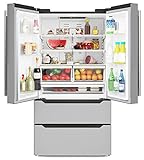
Overview: This upgraded KoolMore model addresses the main limitation of its smaller sibling by adding a factory-installed ice maker and expanding capacity to 22.5 cubic feet. The four-door configuration separates fresh and frozen compartments more distinctly, while maintaining the sleek counter-depth profile that modern kitchens demand.
What Makes It Stand Out: The integrated ice maker is the headline feature, eliminating the need for countertop ice machines or manual trays. The four-door design provides better organization than traditional three-door models, with dedicated freezer drawers that prevent cold air loss. At 22.5 cubic feet, it offers substantial storage for families while preserving the integrated look.
Value for Money: At $2,370, this model commands a nearly $1,000 premium over the 18.5 cu. ft. version. The ice maker and additional capacity justify some increase, but the price approaches established brand territory. You’re paying for convenience and space rather than brand heritage or advanced technology.
Strengths and Weaknesses: Pros: Built-in ice maker; generous 22.5 cu. ft. capacity; four-door organization; counter-depth design; digital temperature control. Cons: Significant price jump from smaller model; still lacks premium features like fingerprint-resistant finish; brand reliability unproven; energy efficiency ratings not specified.
Bottom Line: Choose this KoolMore if you prioritize ice maker convenience and maximum counter-depth storage. The four-door layout enhances organization, but budget shoppers might find better value in the smaller model. Consider your ice needs carefully before investing the additional $1,000.
3. VEVOR French Door Refrigerator, 18.9 Cu. Ft. Kitchen Fridge, Counter Depth French Refrigerator with LED Display and 4 Casters, Frost-Free Bottom Freezer Refrigerators for Home & Commercial Use, Black

Overview: The VEVOR French Door Refrigerator targets versatility with its mobility-focused design and commercial-grade construction. At 18.9 cubic feet, this black counter-depth unit bridges home and commercial applications, featuring four casters that enable easy repositioning—a unique attribute in this category.
What Makes It Stand Out: Mobility defines this model. The four casters allow kitchen reconfiguration or commercial event use, while the inverter compressor operates at just 45dB—quieter than many competitors. Frost-free technology eliminates manual defrosting, and the smart LED display offers multiple modes including fast cooling and energy efficiency settings.
Value for Money: Priced at $1,438, VEVOR positions this as a feature-rich alternative to stationary models. The commercial versatility adds value for small business owners or frequent entertainers. For residential use, the mobility may be underutilized but provides future-proofing for kitchen renovations.
Strengths and Weaknesses: Pros: Unique caster mobility; whisper-quiet 45dB operation; frost-free convenience; inverter compressor energy efficiency; smart control interface; commercial/home dual purpose. Cons: Black finish limits kitchen integration; fewer door bins (only mentioned 3 shelves); brand less recognized for appliances; casters may compromise stability when fully loaded.
Bottom Line: The VEVOR excels for users needing refrigerator mobility or commercial durability. For standard kitchen installations, the casters offer minimal benefit, but the quiet operation and smart features remain compelling. Consider your long-term placement needs before prioritizing this unique mobility advantage.
4. Kenmore 36" French Door Refrigerator with Freezer - Accela Chill, Adjustable Shelving, Humidity Controlled Crispers, ENERGY STAR Certified, 20.3 cu. ft. Capacity, Fingerprint Resistant Stainless Steel
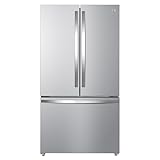
Overview: Kenmore’s 20.3 cubic foot French door refrigerator balances brand reliability with modern features. The counter-depth design integrates seamlessly into contemporary kitchens, while ENERGY STAR certification promises long-term utility savings. This model targets environmentally conscious buyers seeking proven performance.
What Makes It Stand Out: Accela Chill technology rapidly cools fresh groceries—a practical feature for busy households. The inverter compressor maintains consistent temperatures with reduced noise and wear. Fingerprint-resistant stainless steel preserves aesthetics, while the full-width pantry drawer accommodates party platters. Dual evaporator technology prevents odor transfer between compartments.
Value for Money: At $1,518, Kenmore commands a modest premium over budget brands but undercuts premium European manufacturers. ENERGY STAR certification delivers measurable savings, while the brand’s extensive service network provides peace of mind. The feature set rivals refrigerators costing $300-500 more.
Strengths and Weaknesses: Pros: Trusted brand reputation; ENERGY STAR efficiency; Accela Chill rapid cooling; fingerprint-resistant finish; dual evaporator system; full-width pantry drawer; robust service network. Cons: No built-in ice maker mentioned; 20.3 cu. ft. may still feel limited for large families; price slightly above bare-budget alternatives.
Bottom Line: This Kenmore represents smart middle-ground purchasing—reliable brand, energy savings, and practical features without luxury pricing. The Accela Chill and dual evaporators demonstrate thoughtful engineering. Ideal for eco-conscious buyers prioritizing long-term value over maximum capacity.
5. 30 in. 17.5 cu. ft. Counter Depth 3-Door French Door Refrigerator with Freezer Drawer in Fingerprint Resistant Stainless Steel

Overview: This unnamed 30-inch French door refrigerator prioritizes affordability in a compact footprint. At 17.5 cubic feet, it’s the smallest capacity reviewed, targeting apartments, condos, and kitchens where space trumps storage volume. The three-door configuration maintains French door aesthetics in a reduced size.
What Makes It Stand Out: Fingerprint-resistant stainless steel stands out at this price tier, typically reserved for mid-range models. The hidden hinge creates a cleaner integrated look, while the removable ice bin offers flexible freezer organization. USA-based customer support provides accessible assistance, backed by a one-year limited warranty.
Value for Money: Priced at $1,399, this model competes directly with budget brands while offering fingerprint resistance and domestic support. The 17.5 cu. ft. capacity limits appeal for families, but the price-per-cubic-foot remains competitive for solo dwellers or couples. You’re trading capacity for cost savings and finish quality.
Strengths and Weaknesses: Pros: Fingerprint-resistant steel; hidden hinge design; USA-based support; competitive pricing; removable ice bin enhances organization. Cons: Smallest capacity (17.5 cu. ft.); unknown brand reliability; basic feature set; no advanced cooling technology mentioned; limited door bins.
Bottom Line: This refrigerator suits space-constrained kitchens where French door style is desired but budget is limited. The fingerprint resistance and domestic support add value, but capacity constraints require careful consideration. Best for singles, couples, or secondary kitchen applications rather than primary family use.
6. Hamilton Beach HBF1662 French Door Full Size Counter Depth Refrigerator with Freezer Drawer, 16.6 cu ft, Stainless

Overview: The Hamilton Beach HBF1662 delivers French door sophistication in a compact 16.6 cubic foot package. This counter-depth stainless steel refrigerator targets budget-conscious buyers seeking modern styling without premium pricing. With 4.9 cubic feet of freezer space and thoughtful interior organization, it balances form and function for smaller households or secondary kitchen spaces.
What Makes It Stand Out: The recessed handles create a seamless, professional aesthetic rarely found at this price point. Gallon door bins maximize interior flexibility, while LED lighting illuminates contents efficiently. The counter-depth design ensures it won’t overwhelm modest kitchens, making it ideal for apartments or condos where space is premium.
Value for Money: At $1,245, this model undercuts major brands by hundreds while delivering core French door benefits. You’re sacrificing an ice maker and advanced features, but gaining authentic style and reliable cooling. Comparable entry-level models from Whirlpool or Frigidaire typically start around $1,500, making this an intelligent budget alternative.
Strengths and Weaknesses: Strengths include attractive pricing, space-saving counter-depth build, and elegant recessed handles. The LED lighting and door storage are genuinely useful. Weaknesses are the absence of an ice maker, smaller capacity limiting bulk storage, and basic temperature controls without digital precision. The Hamilton Beach brand also lacks the service network of larger manufacturers.
Bottom Line: Perfect for style-focused buyers on strict budgets. It delivers French door aesthetics and adequate performance, though feature minimalism requires compromise. Consider this if ice makers and smart features aren’t priorities.
7. Festisoul 21 Cu.Ft. French Door Refrigerator with Wine Cooler, Counter Depth 4 Door Fridge with Automated Defrost & Touch Screen, Stainless Steel Large Multi Door Refrigerator for Home Modern Kitchen

Overview: The Festisoul 21 Cu.Ft. French Door Refrigerator redefines multi-function cooling with its integrated wine cooler and triple-zone independence. This four-door stainless steel behemoth allocates 15 cubic feet to refrigeration, plus dedicated 3 cubic foot compartments for both freezing and wine storage. Designed for entertainers and wine enthusiasts, it merges premium features with contemporary styling.
What Makes It Stand Out: Three-zone independent temperature control lets you perfectly calibrate fridge, freezer, and wine cooler sections. The inverter compressor consumes just 0.76 kWh daily while maintaining noise under 42 dB—whisper-quiet operation. Automated defrost and double circulation cooling preserve food quality longer, while the touch screen interface adds tech sophistication.
Value for Money: At $1,973, this sits in the mid-premium tier. The integrated wine cooler alone justifies $300-400 compared to separate units. When factoring in triple-zone precision, energy efficiency, and quiet operation, it competes favorably with $2,500+ models from established brands, though Festisoul’s lesser-known name requires faith in build quality.
Strengths and Weaknesses: Strengths include versatile three-zone cooling, exceptional energy efficiency, near-silent operation, and entertainer-focused design. Weaknesses involve brand recognition concerns, potential service challenges, and complexity that may overwhelm users wanting simplicity. The wine cooler reduces general freezer space.
Bottom Line: Ideal for wine lovers and frequent hosts who value specialized storage. The feature set punches above its price, but consider extended warranty protection given the brand’s limited track record.
8. BLACK+DECKER 16 Cu. Ft. French Door Refrigerator with Built-in Ice Maker, Full Size Refrigerator with Bottom Mount Freezer Drawer, Frost Free, ENERGY STAR certified, BRF1600GIMB, Black

Overview: BLACK+DECKER’s BRF1600GIMB brings reliable brand recognition to the French door segment with this 16 cubic foot model featuring a built-in ice maker. The bottom-mount freezer drawer configuration offers 11.15 cubic feet of refrigeration and 5.06 cubic feet of frozen storage. ENERGY STAR certification and frost-free operation position it as an environmentally conscious choice for modern households.
What Makes It Stand Out: The integrated ice maker produces up to 3.5 pounds daily—a rare find in sub-$1,600 French door refrigerators. Digital temperature controls provide precise climate management for both compartments. The sleek black finish distinguishes it from ubiquitous stainless options, while the bottom freezer design prioritizes frequently accessed refrigerated items at eye level.
Value for Money: At $1,574, you’re paying approximately $300 more than ice-less competitors for the automated ice maker—reasonable considering aftermarket solutions cost $150-200 plus installation hassles. ENERGY STAR efficiency yields long-term utility savings that offset the premium. BLACK+DECKER’s established service network adds intangible value over obscure brands.
Strengths and Weaknesses: Strengths include trusted brand name, built-in ice maker, energy efficiency, and distinctive black aesthetic. Weaknesses are modest total capacity limiting bulk buyers, absence of advanced features like smart connectivity, and black finish showing fingerprints more than stainless alternatives. Freezer organization is basic compared to dual-drawer models.
Bottom Line: A practical compromise between budget and convenience. The ice maker and brand reliability justify the moderate price bump, making it suitable for small families prioritizing trusted performance over cutting-edge features.
9. Commercial Cool 18.9 Cu. Ft. French Door Refrigerator, 33 Inch Wide Refrigerator with 2 Bottom Mount Freezer Drawers, Frost Free, LED Lighting, Digital Temperature Control, CCRF1890KW, White

Overview: The Commercial Cool CCRF1890KW offers generous 18.9 cubic foot capacity with innovative dual-bottom freezer drawers in a clean white finish. This 33-inch wide French door refrigerator provides 12.35 cubic feet of cooling space and 6.53 cubic feet of cleverly organized frozen storage. Digital controls and specialized modes target tech-savvy users seeking customization beyond standard refrigeration.
What Makes It Stand Out: Two separate freezer drawers enable superior organization compared to single-compartment designs—separate ice, meats, and prepared meals intuitively. AI mode automatically optimizes temperature based on usage patterns, while Vacation mode minimizes energy waste during extended absences. The door alarm prevents costly temperature excursions, adding practical security.
Value for Money: At $1,399, this undercuts similarly sized competitors by $200-300 while offering premium features like dual drawers and intelligent modes. The white finish may limit appeal, but functionally it matches $1,700+ models. Commercial Cool’s value proposition centers on delivering advanced features without brand-name markup.
Strengths and Weaknesses: Strengths include excellent capacity-to-price ratio, superior freezer organization, intelligent energy-saving modes, and comprehensive temperature management. Weaknesses involve limited brand recognition, potentially inconsistent long-term reliability, and white finish polarizing modern kitchen aesthetics. The absence of an ice maker disappoints given the feature-rich spec sheet.
Bottom Line: Outstanding value for organization-obsessed buyers who prioritize function over brand prestige. The dual freezer drawers and smart modes are genuinely useful, though warranty coverage deserves scrutiny. Perfect for large households needing freezer flexibility.
10. LG LRRXC2606S 26 Cu. Ft. Stainless Counter-Depth French Door Smart Refrigerator
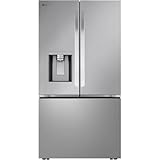
Overview: LG’s LRRXC2606S represents the pinnacle of French door refrigeration with 26 cubic feet of counter-depth storage and smart technology integration. This premium stainless steel flagship caters to tech-forward households demanding maximum capacity and innovative features. Dual ice makers and specialized Craft Ice elevate it beyond conventional cooling into beverage enhancement territory.
What Makes It Stand Out: Dual ice makers ensure you never run out, while the Craft Ice system produces slow-melting spherical ice—perfect for cocktails and premium beverages. Door Cooling+ technology maintains consistent temperatures even with frequent door openings. Smart connectivity enables remote monitoring and diagnostics via LG’s ThinQ app, future-proofing your kitchen.
Value for Money: At $2,199, this commands premium pricing but delivers proportional value. The Craft Ice feature alone appears in models costing $500+ more. Combined with dual ice makers, smart capabilities, and LG’s reliability reputation, it justifies the investment for discerning buyers. Comparable Samsung or KitchenAid models exceed $2,500 with similar features.
Strengths and Weaknesses: Strengths include massive capacity, innovative ice systems, proven brand reliability, smart features, and advanced cooling technology. Weaknesses are the substantial price premium, potential overkill for small households, and Craft Ice’s niche appeal may not justify cost for all users. Counter-depth design slightly reduces interior space versus standard-depth models.
Bottom Line: The ultimate choice for large families, entertainers, and tech enthusiasts who demand the best. LG’s feature set and build quality justify the premium, though budget buyers should consider simpler alternatives. This is a statement appliance that delivers tangible performance benefits.
Understanding Counter-Depth French Door Refrigerators
What Exactly is Counter-Depth?
The term “counter-depth” creates more confusion than clarity for many shoppers. In 2026, true counter-depth refrigerators typically measure between 24 and 30 inches deep (excluding handles), designed to align nearly flush with standard 24-25 inch kitchen countertops. However, this measurement only tells part of the story. The “case depth”—the refrigerator body itself—often differs from the “overall depth,” which includes doors, handles, and hinge clearance. Manufacturers have responded to consumer demand for truly flush installations by developing zero-protrusion hinge systems that allow doors to swing fully open without extending beyond the cabinet face. This engineering feat represents a significant evolution from earlier models that claimed counter-depth status while still jutting out several inches.
The French Door Advantage
The French door configuration—two side-by-side refrigerator doors above a bottom freezer drawer—has become the gold standard for modern kitchens, and for compelling reasons. This design minimizes cold air loss since you only open one narrow door at a time, improving energy efficiency. The wide refrigerator compartment accommodates party platters, sheet cakes, and other oversized items that struggle to fit in traditional side-by-side models. The bottom freezer drawer pulls out like a well-organized storage chest, eliminating the need to bend down for frequently accessed fresh foods. For 2026 models, manufacturers have refined the weight distribution and added soft-close mechanisms that prevent the freezer drawer from slamming shut—a small detail that significantly enhances the user experience.
Why 2026 Marks a New Era in Refrigeration Design
The Shift Toward Seamless Integration
Kitchen designers in 2026 are increasingly treating refrigerators as architectural elements rather than standalone appliances. This philosophy shift has driven manufacturers to develop what industry insiders call “invisible refrigeration”—units that can be clad in custom cabinetry panels or feature breakthrough finishes that mirror surrounding materials. Some innovative models now incorporate edge-to-edge glass panels that can display digital artwork or family photos when not in use, transforming the refrigerator into a dynamic design feature. The integration extends beyond aesthetics: new installation systems allow for true built-in appearance without the built-in price tag, using advanced leveling mechanisms and trim kits that create the illusion of a custom installation.
Sustainability Meets Innovation
The 2026 energy standards have raised the bar significantly, requiring refrigerators to use 15% less energy than 2023 models. This has sparked a revolution in compressor technology, insulation materials, and cooling algorithms. Manufacturers are now employing variable-speed linear compressors that adjust cooling output in microscopic increments rather than cycling on and off, dramatically reducing energy consumption while maintaining more consistent temperatures. Additionally, the use of cyclopentane-blown foam insulation and vacuum-insulated panels has improved thermal efficiency without increasing wall thickness—preserving interior capacity while shrinking exterior dimensions. Many premium models now feature solar-ready capabilities, allowing them to run partially on rooftop solar during peak daylight hours.
Key Considerations Before You Buy
Measuring Your Space: Beyond Basic Dimensions
The most expensive mistake in refrigerator shopping is assuming your space will accommodate any counter-depth model. Start by measuring the width at three points: floor level, countertop height, and cabinet bottom—old houses often have settled, creating narrower openings at the top. For height, measure from the floor to the bottom of your upper cabinets, accounting for any crown molding or trim. Depth requires the most nuance: measure from the wall (not the backsplash) to the front edge of your countertop, then subtract at least half an inch for proper air circulation. Crucially, map your delivery path: measure every doorway, hallway turn, and stairwell between your front door and the kitchen, remembering that the refrigerator will be on a dolly, adding several inches to its height.
Door Clearance and Swing Radius
Counter-depth French door refrigerators may fit flush, but their doors require significant swing space to open fully. In 2026, many models feature 125-130 degree door hinges that allow shelves to slide out completely. This means you need at least 2-3 inches of clearance on each side of the unit for the doors to swing past 90 degrees. If you’re placing the refrigerator adjacent to a wall or cabinet, consider models with reversible hinges or narrower door profiles. Some manufacturers now offer “cabinet-depth” doors that are slightly shallower than the main body, reducing swing radius without sacrificing interior space. For island installations, ensure the doors won’t interfere with seating or workflow when open.
Ventilation Requirements
Unlike freestanding models that can breathe from the back, counter-depth units often require precise clearance for proper airflow. Most 2026 specifications call for 1-inch minimum clearance on each side, 1-2 inches at the top, and sometimes a quarter-inch behind the unit. This prevents compressor overheating and ensures efficient operation. Some advanced models feature front-venting systems that eliminate side clearance requirements, but these typically cost more. Pay attention to “zero-clearance” claims—they often apply only to specific sides and may still require top ventilation. Poor ventilation can reduce efficiency by up to 25% and shorten the appliance’s lifespan dramatically.
Essential Features for Modern Kitchens
Advanced Cooling Systems
The heart of any refrigerator is its cooling system, and 2026 technology has transformed this fundamental function. Dual evaporator systems—which maintain separate cooling circuits for refrigerator and freezer compartments—prevent odor transfer and maintain optimal humidity levels in each section. Triple-evaporator configurations take this further by adding a dedicated cooling zone for crisper drawers. Look for models with metal cooling plates that line the back wall; these conduct cold more efficiently than plastic and help maintain temperature during door openings. Variable-speed compressors paired with multiple temperature sensors (some models now use 7-9 sensors throughout the cavity) create micro-climates that adapt to how you use the appliance.
Smart Technology Integration
The “smart” label has matured beyond gimmicky Wi-Fi connectivity. In 2026, meaningful integration includes AI-powered food recognition cameras that track inventory and suggest recipes based on available ingredients. Voice assistant compatibility has evolved to include proactive notifications: “Your milk expires in two days” or “The freezer door was left ajar.” Some systems now integrate with grocery delivery services, automatically adding depleted items to your shopping list. Look for models with internal displays that show family calendars, photos, and notes—transforming the refrigerator into a household command center. However, prioritize practical features: remote temperature monitoring, door alarm notifications, and diagnostic capabilities that alert you to maintenance needs before they become emergencies.
Flexible Interior Configurations
Modern lifestyles demand adaptability, and refrigerator interiors have responded with unprecedented flexibility. In 2026, look for split shelving that can be adjusted independently on each side, allowing you to store tall items on one side while maintaining full shelving on the other. Convertible compartments that switch between refrigerator and freezer mode at the touch of a button provide extra space for holiday cooking or bulk shopping trips. Some models feature sliding dividers in door bins, adjustable crisper humidity settings with digital controls, and retractable shelves that create temporary space for tall items. The best designs minimize fixed components, giving you the freedom to reconfigure the interior as your needs change.
Design Aesthetics and Finish Options
Stainless Steel Evolutions
The stainless steel finish has undergone a quiet revolution. Traditional brushed stainless shows fingerprints and requires constant maintenance, but 2026 offerings include smudge-proof coatings that repel oils and water spots. Black stainless has matured into a true neutral that complements both warm and cool color palettes, while white stainless offers a bright, clean look without the clinical feel of appliance white. Some manufacturers now offer “living finishes” that develop a subtle patina over time, adding character to your kitchen. Pay attention to the grain direction and reflectivity—horizontal grains can make a kitchen feel wider, while vertical grains add height. The most premium options feature real stainless steel wrapped around the door rather than a thin veneer, ensuring durability and repairability.
Panel-Ready Options for True Integration
For the ultimate seamless look, panel-ready models accept custom cabinetry panels that match your kitchen exactly. In 2026, this category has expanded beyond ultra-premium price points, with several mid-tier manufacturers offering panel-ready options. These units require precise installation: the panels must be perfectly aligned with adjacent cabinet doors, and the refrigerator needs professional leveling to ensure doors swing correctly. Look for models with integrated toe kicks that match your cabinet base and hidden hinges that disappear when closed. The best systems include soft-close mechanisms on both the refrigerator doors and the custom panels, preventing stress on the cabinetry. While panel-ready models cost 20-30% more than standard finishes, they create a truly custom, high-end appearance that can increase home value.
Fingerprint-Resistant and Matte Finishes
The rise of matte finishes represents a direct response to consumer frustration with maintenance. Fingerprint-resistant technology now uses nanocoatings that create an invisible barrier against oils and smudges—these aren’t just surface treatments but molecular bonds that last the life of the appliance. Matte black and matte white have become dominant choices in contemporary kitchens, offering a sophisticated, velvety appearance that hides imperfections. Some manufacturers have introduced textured finishes that mimic natural materials like slate or concrete, providing tactile interest while remaining easy to clean. When evaluating finishes, request a sample swatch and test it with fingerprints, water spots, and common kitchen stains to ensure real-world performance matches marketing claims.
Performance Factors That Matter
Energy Efficiency Ratings in 2026
The EnergyGuide labels have become more comprehensive, now including estimated annual operating costs and carbon footprint data. Look for models exceeding the new federal standards—some premium units use less than 400 kWh annually, translating to under $50 per year in electricity costs. The most efficient models employ vacuum-insulated panels (VIPs) that provide superior insulation with thinner walls, maximizing interior space. Inverter compressors that run continuously at variable speeds use significantly less energy than traditional on/off compressors. Some utilities offer rebates for models that achieve ENERGY STAR “Most Efficient” designation, which can offset the initial purchase price. Remember that efficiency claims assume ideal conditions; real-world usage with frequent door openings and warm room temperatures will increase consumption.
Noise Levels and Acoustic Design
A refrigerator’s hum can disrupt the open-concept living spaces that counter-depth models typically serve. Modern units operate between 32-42 decibels—quieter than a library. Premium models achieve this through compressor isolation mounts, sound-dampening insulation, and variable-speed fans that eliminate the jarring on/off cycling. Some manufacturers now publish octave band frequency data, revealing whether noise is a low hum (less intrusive) or high-pitched whine (more noticeable). When shopping, ask to hear the unit running in the showroom, and check if the display model has been leveled properly—poor leveling increases vibration and noise. For ultra-quiet operation, look for models with “night mode” settings that reduce compressor activity during designated hours, trading slight temperature variation for acoustic peace.
Temperature Consistency and Food Preservation
The best refrigerator maintains temperature within 1°F of the setpoint, even with frequent door openings. 2026 models achieve this through multiple temperature sensors, rapid-cooling functions that activate when doors are opened, and dedicated air circulation fans in each compartment. Look for humidity-controlled crispers with adjustable vents that can be sealed for leafy greens or opened for fruits. Some advanced models feature ethylene gas absorbers that extend produce life by neutralizing the ripening hormone. The freezer should maintain 0°F consistently—fluctuations cause freezer burn and degrade food quality. Quick-freeze functions rapidly lower temperature when adding new items, preserving texture and nutritional value. Independent testing data, often available on manufacturer websites, provides objective performance metrics beyond marketing claims.
Installation and Integration
Professional vs. DIY Installation
While the DIY spirit is admirable, counter-depth French door refrigerators demand professional installation to perform optimally. These units require precise leveling—within 1/4 inch side-to-side and front-to-back—to ensure doors seal properly and compressors operate efficiently. Professionals use laser levels and adjustable shims to achieve perfection, while DIY attempts often result in doors that don’t align, ice makers that malfunction, or compressors that fail prematurely. Installation typically includes water line connection (with proper shut-off valves and pressure testing), electrical verification, and initial calibration. Many retailers offer free or discounted installation with purchase, and manufacturer warranties may be voided by improper installation. If you do attempt DIY, invest in an appliance dolly with straps, measure every obstacle three times, and have a helper—counter-depth units weigh 250-350 pounds and are surprisingly unwieldy.
Aligning with Cabinetry and Countertops
Achieving that coveted built-in look requires meticulous alignment. The refrigerator should sit within 1/8 inch of adjacent cabinets, with the top aligned perfectly with upper cabinet bottoms. Most models include adjustable height legs that can raise the unit 1-3 inches—crucial for matching varying countertop heights. Use filler panels to close gaps between the refrigerator and cabinets; these can be ordered in matching finishes or painted to blend seamlessly. Pay attention to the toe kick area—some models include adjustable toe kicks that can be raised or lowered to match cabinet bases. The goal is creating a visual line where the refrigerator becomes indistinguishable from surrounding cabinetry. This may require minor countertop or cabinet modifications, so budget accordingly.
Electrical and Water Line Requirements
Counter-depth French door refrigerators require a dedicated 120-volt, 15-amp circuit—sharing a circuit with other appliances can cause voltage drops that damage the compressor. The outlet should be a standard 3-prong grounded type, positioned in the cabinet space above or to the side of the unit, never directly behind it. For ice makers and water dispensers, you’ll need a 1/4-inch copper or PEX water line with a shut-off valve. Water pressure must be between 40-120 psi; install a pressure regulator if your home exceeds this range. The water line should have a sediment filter to prevent clogging, and in cold climates, insulation prevents freezing. Some 2026 models include leak detection sensors that shut off water automatically—a worthwhile safety feature that can prevent thousands in water damage.
Maintenance and Longevity
Cleaning and Care Best Practices
Stainless steel exteriors require specific care to maintain their appearance. Use microfiber cloths and cleaners designed for appliance-grade stainless—never abrasive pads or chlorine-based cleaners that damage the protective layer. For interior cleaning, remove all food monthly and wipe surfaces with a baking soda solution (1 tablespoon per quart of warm water) to neutralize odors. Clean door gaskets every three months with mild soap and water, then apply a thin layer of petroleum jelly to keep the rubber supple and maintain the seal. Vacuum the condenser coils every six months—most 2026 models place these behind a front-access panel rather than the rear, making maintenance easier. Neglected coils force the compressor to work harder, increasing energy use by up to 30% and shortening lifespan.
Filter Replacement Schedules
Water filters require replacement every six months or 200-300 gallons, whichever comes first. Many 2026 models include filter life indicators that monitor actual usage rather than simply counting days. Air filters, which reduce odors and ethylene gas, typically last 6-12 months. Some premium models use photocatalytic air purifiers that last the appliance’s lifetime but require annual cleaning. Keep a maintenance log on your phone or inside the door—consistency matters more than exact timing. Using off-brand filters may save money initially but can void warranties and compromise water quality. Stock up on filters during sales, as running your dispenser with an expired filter can introduce more contaminants than using tap water directly.
Expected Lifespan and Durability
A quality counter-depth French door refrigerator should last 12-15 years with proper maintenance. The compressor, typically covered by a 5-10 year warranty, is the most critical component. Linear compressors generally outlast traditional reciprocating types due to fewer moving parts. Door hinges should be tested for 50,000+ cycles—equivalent to opening doors 10 times daily for 13 years. Interior plastics should feel substantial and resist cracking at corners. Before purchasing, research the manufacturer’s reputation for parts availability; a 15-year-old refrigerator is worthless if replacement shelves are discontinued. Some premium brands guarantee parts availability for 20 years, providing long-term peace of mind.
Budget and Value Considerations
Understanding Price Tiers
Counter-depth French door refrigerators in 2026 fall into three distinct categories. Entry-level models ($1,800-$2,800) offer basic counter-depth dimensions and French door styling but may lack dual evaporators, smart features, and premium finishes. Mid-range options ($2,800-$4,500) represent the sweet spot for most buyers, including dual cooling, some smart capabilities, fingerprint-resistant finishes, and flexible interiors. Premium models ($4,500-$8,000+) feature advanced technologies like triple evaporators, AI integration, panel-ready designs, and ultra-quiet operation. The law of diminishing returns applies: a $6,000 model isn’t necessarily twice as good as a $3,000 unit, but the incremental improvements in performance, features, and longevity may justify the investment for serious home chefs or design-conscious homeowners.
Total Cost of Ownership
The purchase price is just the beginning. Calculate annual energy costs (divide the kWh/year rating by 12, then multiply by your electricity rate), filter expenses ($40-80 annually), and potential repair costs. Premium models often include extended warranties and better energy efficiency, recouping their higher initial cost over time. Consider resale value: a kitchen with a high-end counter-depth refrigerator can increase home value by $2,000-$5,000, effectively offsetting the appliance cost. Conversely, a budget model that fails after 8 years requires replacement, while a premium unit might last 15+ years. Factor in installation costs ($150-$300 for professional installation) and any necessary electrical or plumbing modifications.
When to Invest in Premium Features
Premium features justify their cost if they solve specific problems. If you entertain frequently, a model with convertible temperature zones and rapid cooling is invaluable. For tech-savvy households, AI inventory management reduces food waste and streamlines meal planning. Panel-ready designs are worth the 30% premium only if you’re committed to the integrated aesthetic throughout your kitchen. Quiet operation commands a higher price but is essential in open-concept homes where kitchen noise disrupts living areas. Conversely, skip features like built-in coffee makers or elaborate door-in-door designs if they don’t align with your lifestyle—they add cost and complexity without proportional benefit.
Common Mistakes to Avoid
Ignoring the Details in Spec Sheets
Manufacturers bury critical details in specification sheets that can make or break your installation. “Case depth” excludes handles and hinges; “overall depth” includes everything. Some models list “flush installation depth” that assumes custom cabinetry modifications. Check the “door swing radius at 90 degrees” measurement to ensure drawers clear adjacent walls. Verify whether the height includes leveling legs at minimum or maximum extension. The “capacity” figure often includes unusable space around ice makers and door mechanisms; “usable capacity” is more meaningful but rarely advertised. Always download the installation manual before purchasing—it contains clearance requirements and cutout dimensions that supersede marketing materials.
Overlooking Delivery Path Obstacles
That perfect refrigerator is worthless if it can’t reach your kitchen. Beyond measuring doorways, consider stairway turns (refrigerators need vertical clearance plus dolly height), elevator capacity in apartments, and whether protective floor coverings can be removed. Counter-depth units often arrive on pallets and require removal of packaging before navigating tight spaces—this adds 2-3 inches to the maneuvering dimensions. Check if handles are field-removable; many 2026 models feature tool-free handle attachment for easier delivery. Schedule delivery when you have ample time and light, and clear the path of rugs, furniture, and artwork. The delivery crew’s job is to get it to your door; getting it into the kitchen may incur additional charges or require specialized appliance movers.
Frequently Asked Questions
What is the standard counter-depth measurement for 2026 models?
True counter-depth refrigerators measure 24-30 inches deep (excluding handles), designed to align with standard 24-25 inch countertops. However, always check the “overall depth” specification, which includes doors and handles, as this can add 2-4 inches. Zero-protrusion hinge designs allow doors to open fully without extending beyond the cabinet face, achieving a truly flush installation.
Do counter-depth refrigerators sacrifice storage space compared to standard depth?
Yes, typically 2-5 cubic feet less than comparable standard-depth models. However, 2026 designs maximize usable space through thinner insulation materials, optimized interior layouts, and eliminating wasted space around ice makers. The visual and ergonomic benefits of a flush installation often outweigh the modest capacity reduction for most households.
Are French door refrigerators more energy-efficient than other configurations?
The French door design itself improves efficiency by reducing cold air loss when opening one narrow door versus a full-width door. When combined with dual evaporators, linear compressors, and advanced insulation, 2026 French door models often exceed ENERGY STAR requirements by 20-30%. However, efficiency ultimately depends on the specific technologies employed, not just the door style.
What smart features are actually useful in 2026 refrigerators?
Prioritize features that provide tangible benefits: remote temperature monitoring, door-open alerts, filter replacement notifications, and AI-powered food inventory tracking. Voice assistant integration for adding items to shopping lists and recipe suggestions based on available ingredients add convenience. Avoid gimmicky features like internal cameras with poor resolution or apps that duplicate functions already available on your phone.
Can I install a counter-depth refrigerator myself?
While physically possible, professional installation is strongly recommended. These units require precise leveling, proper water line connections with pressure testing, and electrical verification. Improper installation can void warranties, cause doors to misalign, reduce efficiency, and lead to premature compressor failure. Most retailers include or discount installation services.
How do I maintain fingerprint-resistant finishes?
Clean with a damp microfiber cloth and mild soap—avoid abrasive cleaners, ammonia, or chlorine bleach. For stubborn marks, use cleaners specifically formulated for fingerprint-resistant stainless steel. Never use steel wool or scrubbing pads. The protective coating is durable but can be damaged by harsh chemicals. Wipe in the direction of the grain to maintain the finish’s appearance.
What’s the difference between counter-depth and built-in refrigerators?
Counter-depth models are freestanding units designed to look built-in but install in standard cabinet cutouts. True built-in refrigerators are designed for flush cabinet integration, offer custom panel options, and require professional installation with precise cabinet modifications. Built-ins cost 2-3 times more but provide superior integration and typically last longer.
Do all French door refrigerators require a water line?
No. Many models offer ice makers in the freezer that require manual water filling, and some skip ice makers entirely for maximum storage. However, if you want through-the-door water and ice dispensers, a water line is mandatory. Even without dispensers, a water line enables automatic ice makers and is worth installing for convenience.
How long should a quality counter-depth French door refrigerator last?
With proper maintenance, expect 12-15 years of reliable service. Premium models with linear compressors and heavy-duty components may last 18-20 years. Regular maintenance—cleaning coils, replacing filters, lubricating gaskets—significantly impacts longevity. The compressor warranty (typically 5-10 years) is a good indicator of expected lifespan.
Are panel-ready models worth the additional cost?
Panel-ready models justify their 20-30% premium only if you’re committed to a fully integrated kitchen aesthetic. They require custom cabinetry panels and professional installation, adding $500-$1,500 to the total project cost. The result is a seamless, built-in appearance that can increase home value and provides design flexibility. For standard kitchen renovations, premium finished models offer better value.