Tucking a refrigerator into a corner seems like a smart space-saving solution—until you realize your doors won’t open fully, your drawers hit the wall, and you’re performing yoga poses just to grab the milk. Corner installations present unique spatial geometry challenges that standard refrigerator specifications rarely address. The intersection of two walls creates a 90-degree puzzle where door swing arcs, handle projection, and ventilation clearance become critical factors that can make or break your kitchen’s functionality.
Counter-depth models already offer a sleek, built-in aesthetic that aligns with cabinetry, but when combined with corner placement, the stakes get higher. You’re not just buying an appliance; you’re solving a three-dimensional spatial equation. This comprehensive guide walks you through everything you need to know before committing to a counter-depth refrigerator for your corner space, ensuring you avoid costly mistakes and end up with a configuration that enhances both workflow and style.
Top 10 Counter-Depth Refrigerators for Corner Installations
Detailed Product Reviews
1. LG 24 cu. ft. Counter Depth MAX Zero Clearance 3-Door French Door Refrigerator with Craft Ice in PrintProof Stainless Steel LF24Z6530S

Overview: This premium LG French door refrigerator delivers 24 cubic feet of storage in a sophisticated counter-depth design that sits flush with kitchen cabinetry. The standout Craft Ice maker produces slow-melting spherical ice perfect for cocktails, while the Zero Clearance installation allows doors to open fully even when placed against walls. The PrintProof stainless steel finish resists fingerprints and smudges, maintaining a pristine appearance.
What Makes It Stand Out: The spherical Craft Ice system sets this apart from conventional refrigerators, creating 2-inch diameter ice balls that elevate home entertaining. The Zero Clearance engineering solves a common installation headache, requiring minimal side clearance for full door articulation. LG’s DoorCooling+ technology ensures consistent temperatures throughout, while the linear compressor operates efficiently and quietly. The three-door configuration includes two refrigerator doors and a bottom freezer drawer.
Value for Money: At $1,951.90, this refrigerator competes with premium brands like Samsung and KitchenAid. The Craft Ice feature alone would cost hundreds as a standalone appliance. Counter-depth models typically command 20-30% premiums over standard depth, making this competitively priced for its category. The energy-efficient linear compressor and durable build quality justify the investment for homeowners prioritizing both form and function.
Strengths and Weaknesses: Pros: Innovative spherical ice production; flush counter-depth installation; fingerprint-resistant finish; efficient cooling system; full-width pantry drawer. Cons: Premium price point; Craft Ice maker may require maintenance; smaller capacity than standard-depth alternatives; complex features increase potential repair costs.
Bottom Line: Ideal for design-conscious homeowners who entertain frequently, this LG refrigerator justifies its premium price with innovative features and sleek integration. The Craft Ice and Zero Clearance design solve real kitchen pain points, making it a worthwhile investment for those who can afford the luxury.
2. Sharp SJB1255GS Bottom-Freezer Counter-Depth Refrigerator, 24 Inch, 11.5 Cubic Foot, Garage Ready

Overview: Sharp’s compact 24-inch bottom-freezer refrigerator offers 11.5 cubic feet of capacity in a space-saving counter-depth design certified for garage use. This model excels in secondary kitchen spaces, apartments, or as a dedicated beverage and frozen food storage solution. The stainless steel finish and professional styling belie its modest footprint.
What Makes It Stand Out: The Garage Ready certification ensures reliable operation in fluctuating temperatures from 0-110°F, making it uniquely versatile. Vacation Mode allows shutting down the refrigerator section while keeping the freezer active, saving energy during travel. The removable wine rack adds flexibility for entertaining, while the Fresh Converter Drawer switches between chiller and crisper modes. Multi-Air Flow technology maintains consistent temperatures throughout both compartments.
Value for Money: Priced at $1,098.97, this Sharp model undercuts many garage-ready competitors by $200-300. The specialized temperature tolerance and energy-saving features deliver exceptional value for those needing a flexible installation location. While capacity is limited, the intelligent storage solutions maximize usable space effectively.
Strengths and Weaknesses: Pros: Garage-ready certification; Vacation Mode energy savings; versatile wine rack; consistent cooling; counter-depth design. Cons: 11.5 cu ft may be small for primary use; narrow 24-inch width limits platter storage; bottom freezer requires bending; fewer advanced features than premium brands.
Bottom Line: Perfect for garage, basement, or apartment installations where temperature fluctuations are a concern. The Sharp SJB1255GS offers reliable performance and smart features at a reasonable price, making it an excellent secondary refrigerator or compact primary unit for small households.
3. Hamilton Beach HBF1558 15.6 cu ft Counter Depth Full Size Refrigerator, Side Doors, Stainless
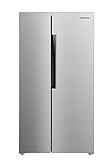
Overview: Hamilton Beach delivers a budget-friendly side-by-side refrigerator with 15.6 cubic feet of storage in a counter-depth configuration. This model targets value-conscious consumers seeking the convenience of side-by-side doors without the premium price tag. The stainless steel exterior provides a modern aesthetic suitable for most kitchen decors.
What Makes It Stand Out: The side-by-side configuration at this price point is remarkable, offering frozen and fresh food access at eye level. Oversized door bins accommodate gallon containers, maximizing storage efficiency. The digital display control panel, mounted inside the refrigerator door, allows precise temperature adjustments without external clutter. Adjustable shelving and customizable feet height enable personalized organization.
Value for Money: At $1,096.90, this refrigerator competes directly with top-freezer models from major brands while offering superior side-by-side convenience. The counter-depth design typically commands a premium, making this price point particularly aggressive. For budget renovations or rental properties, it delivers essential features without unnecessary frills.
Strengths and Weaknesses: Pros: Affordable side-by-side design; digital temperature controls; gallon door bins; counter-depth styling; adjustable shelving. Cons: Build quality may not match premium brands; limited capacity for large families; no advanced features like ice maker; potential longevity concerns with lesser-known appliance brand.
Bottom Line: A practical choice for budget-minded buyers wanting side-by-side convenience. The Hamilton Beach HBF1558 sacrifices some refinement for affordability but delivers core functionality and modern styling. Ideal for rental units, first homes, or as a temporary solution during renovations.
4. KoolMore 30-Inch and 18.5 cu. ft. Counter Depth French Door Refrigerator with Three Doors and Deep Freezer in Stainless-Steel (KM-RERFDSS-18C)

Overview: KoolMore’s French door refrigerator offers 18.5 cubic feet of storage in a 30-inch counter-depth design featuring three doors and dual freezer drawers. This model bridges the gap between budget and premium appliances, delivering stylish French door aesthetics with practical storage solutions. The stainless steel finish and flat handles create a contemporary kitchen presence.
What Makes It Stand Out: The dual freezer drawer configuration provides superior organization compared to single-drawer designs, separating items by category or frequency of use. Humidity-controlled double crispers extend produce freshness significantly. The double-flow cooling system maintains separate air circulation for refrigerator and freezer compartments, preventing odor transfer. Six door bins and adjustable glass shelving offer exceptional customization.
Value for Money: Priced at $1,389.00, this KoolMore model undercuts comparable GE and LG French door refrigerators by $400-600. The feature set—including humidity controls, dual freezer drawers, and digital temperature management—matches premium offerings. For style-conscious buyers on moderate budgets, it represents compelling value despite the lesser-known brand name.
Strengths and Weaknesses: Pros: Dual freezer drawers; humidity-controlled crispers; counter-depth design; adjustable storage; attractive pricing. Cons: Limited brand recognition; uncertain long-term reliability; smaller service network; warranty support may be less robust; ice maker not mentioned in features.
Bottom Line: An excellent value proposition for homeowners wanting French door style without the premium price. The KoolMore KM-RERFDSS-18C delivers impressive features and storage flexibility. While brand reputation lags behind established competitors, the design and functionality make it worth considering for budget renovations.
5. Drawer Divider for LG Refrigerator Convert Drawer (Heavy Duty - Counter Depth (Approx: 16" x 4"))

Overview: This heavy-duty drawer divider restores organization to LG refrigerator convert drawers, replacing OEM part MEA663864. The two-piece design slides together without tools, creating separate compartments within the flexible convert drawer. Measuring approximately 16" x 4" when assembled, it fits counter-depth LG models including LF30H8210S, LF29H8330S, and LH29S85655.
What Makes It Stand Out: The tool-free installation is remarkably simple, snapping together in seconds without adhesives or hardware. Unlike flimsy aftermarket alternatives, this divider uses heavy-duty construction that matches original equipment durability. The precise fit maintains the convert drawer’s versatility while adding crucial segmentation for separating meats, cheeses, or produce. Its compatibility across numerous LG models makes it a versatile replacement solution.
Value for Money: At $23.00, this divider costs 60-70% less than genuine LG replacement parts while delivering identical functionality. For a simple plastic component, the OEM price often exceeds $50, making this aftermarket option economically sensible. The durability ensures years of use, preventing the need for repeated replacements. Given that broken dividers compromise refrigerator organization, the investment pays immediate dividends in daily convenience.
Strengths and Weaknesses: Pros: Significant cost savings; tool-free installation; heavy-duty construction; broad model compatibility; restores original functionality. Cons: Plastic construction may eventually fatigue; requires part number verification; not universal for all LG models; limited to counter-depth versions; lacks official OEM branding.
Bottom Line: Essential for maintaining LG refrigerator organization at a fraction of the OEM cost. This drawer divider delivers perfect fit and function without tools or expense. Verify your model compatibility, but if it matches, this is a no-brainer purchase that solves a common frustration affordably and permanently.
6. Hamilton Beach HBF1662 French Door Full Size Counter Depth Refrigerator with Freezer Drawer, 16.6 cu ft, Stainless

Overview: The Hamilton Beach HBF1662 delivers French door sophistication in a counter-depth package for smaller kitchens. This 16.6 cubic foot refrigerator features a spacious 4.9 cubic foot freezer drawer, making it an efficient solution for couples or small families prioritizing style without overwhelming their space. The stainless steel finish and recessed handles create a built-in aesthetic that belies its mid-range price point.
What Makes It Stand Out: The combination of counter-depth design and gallon door bins maximizes usable space while maintaining a streamlined profile. The recessed handles provide a professional, handle-free appearance that simplifies cleaning and enhances safety in tight kitchens. LED interior lighting illuminates contents efficiently, and the freezer drawer organization system offers better accessibility than traditional top-freezer models.
Value for Money: At $1,245.47, this model competes aggressively with entry-level French door refrigerators. While it lacks an ice maker and advanced temperature controls found in premium models, the counter-depth design and thoughtful storage features justify the investment for space-conscious buyers. Comparable counter-depth models typically start above $1,500, making this an accessible entry point.
Strengths and Weaknesses: Strengths include the counter-depth silhouette, gallon door storage, LED lighting, and attractive price point. The recessed handles add modern appeal. Weaknesses are the modest 16.6 cubic foot capacity, absence of an ice maker, limited brand service network compared to major appliance manufacturers, and lack of specialized cooling zones. The freezer drawer may require more bending than French door models with bottom freezers.
Bottom Line: The Hamilton Beach HBF1662 suits budget-minded shoppers wanting French door style in compact kitchens. It sacrifices some capacity and features but delivers core functionality and aesthetics at a compelling price.
7. KoolMore Counter Depth French Door Refrigerator with Ice Maker, 4 Door Stainless-Steel Fridge - 22.5 Cu.Ft
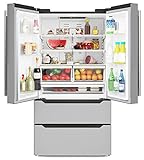
Overview: The KoolMore four-door French door refrigerator presents a premium configuration with 22.5 cubic feet of capacity and a built-in ice maker. This stainless-steel appliance targets buyers seeking high-end features without the premium brand markup, offering double freezer drawers and humidity-controlled crispers for optimal food preservation.
What Makes It Stand Out: The four-door layout separates fresh and frozen storage more efficiently than traditional two-door models. Dual freezer drawers enable superior organization, while six door bins and adjustable glass shelving provide exceptional customization. The integrated ice maker and digital temperature control with double-flow cooling system deliver consistent performance typically reserved for luxury brands.
Value for Money: Priced at $2,370.38, this model undercuts comparable four-door refrigerators from established brands by $500-$1,000. The inclusion of an ice maker, precision temperature management, and premium aesthetics justifies the investment for serious home chefs. While KoolMore lacks long-term brand equity, the feature set matches refrigerators costing significantly more.
Strengths and Weaknesses: Strengths include generous capacity, four-door versatility, ice maker, humidity-controlled crispers, and counter-depth sizing. The adjustable shelving system accommodates oversized items. Weaknesses involve the lesser-known brand reputation, potentially limited service network, higher price point than basic French door models, and unknown long-term reliability. The warranty and parts availability may not match industry leaders.
Bottom Line: The KoolMore four-door refrigerator excels for feature-focused buyers prioritizing capacity and organization over brand name. It delivers luxury amenities at a mid-premium price, making it a smart choice for modern kitchens.
8. GE GYE22GYNFS 36" French Door Counter Depth Refrigerator with 22.1 cu. ft. Total Capacity Space Saving Ice Maker Showcase LED Lighting in Stainless Steel
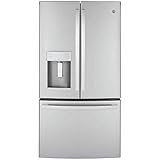
Overview: The GE GYE22GYNFS combines trusted brand reliability with counter-depth French door design in a 22.1 cubic foot package. This model features a space-saving ice maker and fingerprint-resistant stainless steel, positioning it as a mainstream choice for brand-conscious homeowners seeking seamless kitchen integration.
What Makes It Stand Out: GE’s engineering delivers a space-saving ice maker that maximizes interior capacity without sacrificing convenience. The fingerprint-resistant finish maintains a clean appearance in busy households, while showcase LED lighting provides excellent visibility. As a counter-depth model, it creates a built-in look that enhances kitchen aesthetics without custom paneling costs.
Value for Money: At $1,999.00, this refrigerator sits in the sweet spot between budget and premium tiers. The GE badge ensures reliable service networks and parts availability, justifying the moderate premium over lesser-known brands. While features appear basic compared to four-door competitors, the brand’s track record for longevity provides peace of mind worth the investment.
Strengths and Weaknesses: Strengths include GE’s proven reliability, efficient ice maker design, counter-depth configuration, and smudge-resistant finish. The 22.1 cubic foot capacity serves families adequately. Weaknesses are the standard two-door layout that lacks organizational flexibility of four-door models, minimal advanced features like humidity controls, and price premium for brand recognition. Energy efficiency ratings and noise levels aren’t specified.
Bottom Line: The GE GYE22GYNFS suits buyers valuing brand trustworthiness and clean aesthetics. It delivers core functionality with professional backing, making it a dependable, if unexciting, choice for long-term kitchen performance.
9. Feelfunn 24 inch Beverage Refrigerator - 180 Cans Under Counter Beverage Fridge with Glass Door & Safety Lock for Beer Wine Soda, Built-in or Freestanding Drink Fridge for Home Office Kitchen or Bar
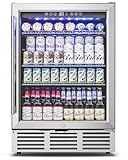
Overview: The Feelfunn 24-inch beverage refrigerator offers specialized drink storage for up to 180 cans in an under-counter format. This versatile unit functions as either built-in or freestanding, making it ideal for home bars, offices, or kitchen islands where beverage access is prioritized over food storage.
What Makes It Stand Out: The safety lock distinguishes it from competitors, securing contents in shared spaces. Energy efficiency is exceptional at 0.84 kWh daily consumption, while the 40dB operation remains whisper-quiet. Double-glazed doors minimize UV exposure and heat transfer, and the 37-65°F temperature range accommodates everything from craft beer to white wine.
Value for Money: At $529.99, this model significantly undercuts premium beverage centers while delivering core features. The dual installation flexibility eliminates the need for separate built-in and freestanding units, saving future upgrade costs. While brand recognition is limited, the specifications match units costing $200-$300 more.
Strengths and Weaknesses: Strengths include outstanding energy efficiency, quiet operation, safety lock, versatile installation, and clear digital controls. The three removable shelves offer customization. Weaknesses involve the unknown brand’s service reliability, potentially shorter lifespan than commercial-grade alternatives, and limited warranty information. The temperature range may not suit serious wine collectors needing precise humidity control.
Bottom Line: The Feelfunn beverage refrigerator delivers exceptional value for casual enthusiasts wanting dedicated drink storage. Its efficiency and versatility make it a practical addition to entertainment spaces without breaking the budget.
10. ICEVIVAL 24 Inch Beverage Refrigerator, 180 Cans Under Counter Beverage Fridge with Glass Door, LED Light, Built-in or Freestanding Beer Fridge for Soda, Water, Wine - Home, Bar or Office

Overview: The ICEVIVAL 24-inch beverage refrigerator elevates under-counter drink storage with premium certifications and advanced features. Holding 180 cans, this unit targets discerning buyers wanting commercial-grade performance for home bars or office environments where reliability and precision matter.
What Makes It Stand Out: ETL, DOE, and CEC certifications guarantee safety and efficiency standards often missing in budget alternatives. The power-off memory function automatically restores temperature settings after outages, preventing spoilage. Precision compressor cooling maintains temperatures within 3.6°F variance, while front ventilation enables true zero-clearance built-in installation with reversible door hinges.
Value for Money: At $669.98, this model commands a $140 premium over the Feelfunn but justifies it through certifications and warranty support. The one-year after-sales service provides peace of mind absent from generic brands. For built-in applications where failure is costly, the certified performance and support network offset the higher price.
Strengths and Weaknesses: Strengths include comprehensive certifications, temperature stability, power-off memory, reversible door, and explicit warranty coverage. The near-silent 40dB operation suits quiet environments. Weaknesses remain the lesser-known brand reputation and higher cost compared to basic beverage coolers. The feature set may exceed casual users’ needs, and long-term parts availability is uncertain.
Bottom Line: The ICEVIVAL beverage refrigerator suits buyers prioritizing certified performance and warranty support over absolute lowest price. It’s a prudent choice for permanent installations where reliability justifies the moderate premium.
Why Corner Installations Demand Specialized Refrigerator Design
Corner placements aren’t just another spot in your kitchen—they’re a completely different beast. Unlike flush wall installations, corners introduce compound angles that affect everything from door swing geometry to user ergonomics. Standard refrigerators assume you’ll approach them head-on, but corner units are accessed from an oblique angle, changing how you interact with shelves, drawers, and controls. This is why manufacturers have developed specific design elements like reduced-depth handles, reversible hinge mechanisms, and specialized ventilation systems that accommodate the unique constraints of corner positioning.
Understanding Counter-Depth Dimensions: More Than Meets the Eye
The True Meaning of Counter-Depth
“Counter-depth” doesn’t mean your refrigerator will be exactly as deep as your countertops. Standard kitchen counters run 24-25 inches deep, but counter-depth refrigerators typically measure 25-30 inches excluding doors and handles. The key is that the cabinet portion sits nearly flush, while door and handle projection brings the total depth to 28-32 inches. For corner installations, this distinction matters enormously because every extra inch affects the door’s swing radius and your ability to open drawers without scraping adjacent walls.
Standard vs. Counter-Depth: Clearance Implications
Traditional refrigerators can extend 6-8 inches beyond counter edges, creating a massive obstruction in corner spaces where traffic flow is already compromised. Counter-depth models reduce this protrusion, but they also require more precise planning. You’ll need to account for the “triangle of access”—the 45-degree angle formed between the refrigerator’s front corner and the two walls. A shallower unit actually improves this geometry, giving you better access to interior contents without requiring you to stand directly in front of the appliance.
The Geometry of Corner Spaces: Measuring for Success
The 90-Degree Challenge: Door Swing Arcs
Here’s where math becomes your best friend. When a refrigerator door opens, it doesn’t just swing on a flat plane—it creates a three-dimensional arc that extends into your kitchen space. In corners, this arc intersects with both walls at different points. Measure from the hinge side wall to the opposite wall at multiple heights, not just at floor level. Baseboards, crown molding, and uneven floors can all shift your measurements by crucial inches. Use a cardboard template or painter’s tape to map the full swing arc on your floor and walls before you even start shopping.
Accounting for Baseboard and Crown Molding
These architectural details are the silent killers of corner refrigerator installations. A standard 3/4-inch baseboard can prevent a door from opening fully if the hinge is mounted too low. Crown molding on the adjacent wall can block the top corner of the door swing. When measuring, subtract these from your available depth and height. Some installers recommend trimming baseboards or using quarter-round molding instead of full baseboards on the hinge side to gain precious clearance.
Essential Features for Corner-Friendly Refrigerators
Reversible Door Hinges: Your Installation Lifesaver
This single feature can salvage an otherwise impossible corner installation. Reversible hinges let you switch the door swing from right to left, which is often the difference between a door that opens 90 degrees versus one that bangs into the adjacent wall. Look for models where the hinge mechanism is completely reversible—not just the handles. Some premium units even offer dual-hinge designs that allow for a “middle” swing position, perfect for corner configurations where neither full left nor full right is ideal.
Handle Design and Projection Considerations
In corner installations, handle projection becomes a critical measurement. Protruding handles can increase your total depth by 2-4 inches, but more importantly, they can catch on the adjacent wall during door swing. Look for recessed handles, pocket handles, or slim-profile designs that extend less than 1.5 inches. Some manufacturers offer “corner installation kits” that replace standard handles with shorter, angled alternatives specifically designed for 90-degree placements.
Adjustable Shelving for Optimal Access
When you’re reaching into a corner refrigerator from an angle, visibility and reachability suffer. Adjustable shelving systems let you customize the interior layout to minimize blind spots. Pull-out shelves, split shelves, and tilting door bins become more than conveniences—they’re accessibility necessities. Prioritize models with cantilevered shelving systems that can be repositioned without tools, allowing you to create wider clearance zones for tall items on the side you’ll access most frequently.
Door Configuration: Which Style Works Best?
French Door Advantages in Corner Spaces
French door models shine in corners because their narrower doors require less swing clearance than a single full-width door. You can open one side partially to grab frequently used items without committing to a full door swing. The bottom freezer drawer pulls straight out, eliminating side-swing concerns entirely. However, watch the width—some French door models are wider overall, which can make the corner triangle tighter. Opt for 33-36 inch widths rather than oversized 42-inch models.
Side-by-Side Considerations
Side-by-side refrigerators offer the narrowest door swings, making them technically easiest for tight corners. But there’s a catch: the vertical split means you’re accessing a smaller portion of fresh food space with each door open. In corners, this can force you to open both doors frequently, counteracting the space-saving benefit. If you choose this style, ensure the doors can open to at least 135 degrees so you can pull out crispers and shelves without obstruction.
Bottom-Freezer Benefits
Bottom-freezer models (single door up top) combine a reasonable swing arc with excellent interior visibility. The single fresh food door means less hardware complexity, and the freezer compartment’s slide-out design works perfectly in corners. The main consideration is door stop strength—you’ll want a robust mechanism that holds the door open at various angles since gravity will pull it toward the adjacent wall.
Ventilation Requirements: The Hidden Deal-Breaker
Clearance Standards for Proper Airflow
Every refrigerator needs breathing room, but corner installations restrict airflow paths. Most manufacturers require 1-2 inches of clearance on the sides and top, but corners often make one side effectively zero-clearance. Look for models with front-venting systems or those specifically rated for “zero-clearance” installations. Some units use forced-air cooling that actively pushes hot air forward rather than relying on passive convection, which is crucial when one side is butted against a wall.
Top-Mounted vs. Rear-Mounted Compressors
The compressor location dramatically affects corner performance. Rear-mounted compressors need more back clearance and can overheat when placed in corners where heat gets trapped. Top-mounted compressors vent upward, which works better in corners as long as you maintain top clearance. Front-bottom compressors with forward-facing vents are the gold standard for corner installations, as they don’t rely on side or rear airflow at all.
Smart Technology in Corner Installations
Wi-Fi Connectivity and App Control
You might wonder what Wi-Fi has to do with corners, but here’s the connection: smart diagnostics can alert you to ventilation issues before they cause compressor failure. Temperature fluctuations are more common in corner installations due to restricted airflow, and smart alerts let you monitor performance remotely. Some apps even track door open duration, which is useful when you’re navigating around a corner and might not close the door as quickly.
Internal Cameras: Seeing Around Corners
Internal cameras transform the corner refrigerator experience. When you’re standing at an angle, it’s harder to see items at the back. Camera feeds on your smartphone let you check contents without fully opening doors—especially valuable when you’re meal planning and don’t want to let cold air escape in a configuration that’s already fighting temperature stability challenges.
Energy Efficiency in Tight Spaces
Why Corner Placement Affects Performance
Corners can be warmer than other kitchen areas, especially if near ovens or in direct sunlight. This forces the compressor to work harder. Additionally, restricted airflow can cause heat recirculation, where the refrigerator pulls in its own hot exhaust air. Look for models with high-efficiency compressors and enhanced insulation specifically designed for “challenged airflow” environments. The ENERGY STAR rating is just a starting point—dig into the actual kilowatt-hour usage and compare it to standard installations.
ENERGY STAR Ratings Explained
While all ENERGY STAR refrigerators meet minimum efficiency standards, some exceed them by 20-30%. For corner installations, this margin matters. Check the yellow EnergyGuide label for estimated annual operating cost, but also research the model’s performance in “high ambient temperature” conditions—this simulates the warmer microclimate corners often create. Inverter compressors that adjust speed rather than cycling on/off are particularly valuable in corners, as they maintain more consistent temperatures with less energy waste.
Budget Planning: Beyond the Sticker Price
Installation Cost Factors
Corner installations frequently require custom solutions: trim kits, reversible hinge modifications, electrical relocations, or even minor drywall work to create proper clearances. Budget an extra $200-500 beyond standard delivery and installation. If you’re converting from a standard-depth to counter-depth unit, you may need cabinet modifications or filler panels to close gaps. Some homeowners find that moving the refrigerator outlet to the side wall (rather than behind the unit) solves both clearance and service access issues.
Long-Term Energy Consumption
That energy-efficient model might cost $300 more upfront but save $50-75 annually in a corner installation where efficiency is compromised. Calculate the payback period, but also factor in potential repair costs. Overheating due to poor corner ventilation can shorten compressor lifespan by 30-50%, turning a 15-year appliance into a 10-year replacement. Investing in a model with robust thermal protection and excellent ventilation design pays dividends beyond monthly utility bills.
Professional Installation vs. DIY: Making the Right Choice
Corner installations amplify every measurement error. Professional installers use laser levels, custom shims, and have experience with tricky hinge reversals. They’ll also handle the delicate dance of sliding a 300-pound appliance into position without damaging walls or the unit itself. DIY installation might save $150-300, but one scratched floor or crushed door hinge can erase those savings instantly. If you choose DIY, rent an appliance dolly with stair climbers and have at least two strong helpers—corners require precise maneuvering that brute force alone can’t solve.
Maintenance Access in Corner Configurations
Filter Replacement Challenges
Water filters that require side access become nightmares in corners where you can’t open the door fully. Look for models with front-access filters located at the bottom grille or inside the door at the top. Some smart refrigerators even alert you via app when filters need changing and can auto-order replacements. When evaluating models, physically simulate the filter replacement process—can you get your hand and the filter out without removing food or fighting the door angle?
Cleaning Considerations
Pulling a refrigerator from a corner for deep cleaning is a major undertaking. Models with retractable wheels or slide-out bases make this easier, but many don’t have them. Consider placing a protective mat underneath to allow sliding without floor damage. For routine cleaning, look for spill-proof glass shelves and antimicrobial coatings that reduce deep-clean frequency. Some premium models feature self-cleaning condenser coils—a huge advantage when coils are hard to access in corner placements.
Design Integration: Making It Look Built-In
Panel-Ready Options
Panel-ready counter-depth refrigerators accept custom cabinet fronts, creating a seamless look that makes corners feel intentional rather than awkward. The key is precise panel thickness—too thick and doors won’t close properly; too thin and you see gaps. Most manufacturers specify exact panel dimensions and provide mounting templates. For corners, consider slightly thinner panels on the hinge side to maximize clearance while maintaining visual consistency.
Custom Handle Solutions
Beyond manufacturer kits, custom metal fabricators can create corner-specific handles that are angled or shortened. Some homeowners opt for leather strap handles or cut-out finger pulls that reduce projection to nearly zero. The goal is maintaining functionality while eliminating the “lever arm” effect that makes handles catch on adjacent walls. Remember that handle design affects not just clearance but also the force needed to open doors—important when you’re pulling from an angle.
Common Mistakes to Avoid
The biggest error is measuring only once at floor level. Walls aren’t perfectly plumb, and floors aren’t perfectly level—especially in older homes. Measure at the floor, counter height, and top of the opening. Another critical mistake is forgetting the “human factor”: can you actually stand comfortably and access the interior while someone else is in the kitchen? Test your reach distance and sight lines. Finally, don’t assume bigger is better. A slightly smaller refrigerator that opens fully and functions properly beats a larger one that’s perpetually half-accessible.
Expert Tips for Maximizing Corner Refrigerator Performance
Position your most-used items on the door and front shelves of the side that opens most freely. Use lazy Susans or turntables on deep shelves to bring items forward without requiring full door access. Install LED strip lighting inside if the model doesn’t come with excellent illumination—corners create shadows that standard lighting doesn’t address. Consider a “soft-close” door mechanism upgrade; it prevents the door from slamming into the adjacent wall if accidentally released. Finally, maintain a 1-inch gap behind the unit even if the specs say zero-clearance—this buffer improves airflow and makes future maintenance less traumatic.
Frequently Asked Questions
Can any counter-depth refrigerator work in a corner installation?
No, not all counter-depth models are suitable for corners. You need specific features like reversible hinges, reduced handle projection, and adequate ventilation design for zero-clearance situations. Always check the manufacturer’s specifications for “corner installation” compatibility.
How much clearance do I really need on the hinge side?
Minimum 1 inch for the door to open 90 degrees, but 2 inches is ideal for full access to drawers and shelves. If you can only manage 1 inch, ensure the model has a “door stop” feature to prevent the handle from contacting the wall.
Are French doors or side-by-side better for corners?
French doors generally perform better because they offer wider fresh food access with narrower door swings. Side-by-sides work in very tight spaces but can be frustrating for storing wide items and may require opening both doors frequently.
What’s the biggest measurement mistake people make?
Measuring only at floor level and ignoring baseboard/crown molding thickness. Always measure at multiple heights and account for all architectural details. Use a template to map the actual door swing arc before purchasing.
Do I need a special electrical outlet for corner refrigerators?
Not necessarily, but relocating the outlet to the side wall (rather than directly behind the unit) makes installation and service access much easier. Ensure it’s on a dedicated 15-20 amp circuit as required by code.
How does corner placement affect energy consumption?
Corners can be 5-10°F warmer than other kitchen areas and may have restricted airflow, forcing the compressor to work harder. Choose ENERGY STAR models with inverter compressors and excellent insulation to mitigate these effects.
Can I install a water line for ice makers in a corner configuration?
Yes, but plan carefully. Run the line through the floor or side wall before installing the unit. Trying to connect it after the refrigerator is in place is nearly impossible in tight corner spaces.
What if my walls aren’t perfectly square?
Most homes have some degree of wall imperfection. Use a contour gauge to map the wall surface and choose a slightly smaller refrigerator or plan for custom trim work. Some installers can shim the unit to compensate for minor angles.
How do I clean behind a corner refrigerator?
Look for models with retractable wheels or a slide-out base. Alternatively, place a heavy-duty furniture slider mat underneath during installation. For routine cleaning, use a long, flexible duster that can reach behind without moving the unit.
Are panel-ready models harder to install in corners?
They require more precision but aren’t inherently more difficult. The key is exact panel thickness matching and ensuring the custom panels don’t interfere with door swing. Many manufacturers provide corner-specific installation guides for their panel-ready models.