Gone are the days when refrigerators simply kept your milk cold and your ice cream frozen. Today’s connected families demand appliances that work as hard as they do—managing groceries, coordinating schedules, and even helping with meal planning. Wi-Fi-enabled French door refrigerators have evolved from luxury novelties to essential family command centers, offering massive storage capacity alongside intelligent features that sync seamlessly with your digital lifestyle. For households juggling busy schedules, dietary preferences, and the constant challenge of food waste, these smart appliances represent a transformative investment in kitchen efficiency.
But with so many options flooding the market, understanding what truly matters in a large-capacity smart refrigerator can feel overwhelming. This comprehensive guide cuts through the marketing noise to equip you with expert-level knowledge about features, technologies, and considerations that impact your family’s daily life. Whether you’re upgrading your kitchen or building your dream home, we’ll explore everything from connectivity standards to cooling technologies—ensuring you make an informed decision that serves your family for years to come.
Top 10 Large Capacity Wi-Fi French Door Refrigerators for Connected Families
Detailed Product Reviews
1. Midea MRF29D6AST 29.3 Cu. Ft. Stainless 3-Door French Door Smart Refrigerator

Overview: The Midea MRF29D6AST delivers impressive capacity and smart functionality at a mid-range price point. This 29.3 cubic foot French door refrigerator features a dual ice maker system with external water and ice dispenser, making it ideal for busy households that entertain frequently. The fingerprint-resistant stainless steel finish maintains a clean appearance with minimal maintenance.
What Makes It Stand Out: The dual ice maker configuration is the star feature, ensuring you never run out of ice during gatherings. As a smart refrigerator, it offers connectivity for remote monitoring and control. The combination of generous capacity, LED interior lighting for excellent visibility, and fingerprint-resistant exterior at this price point differentiates it from competitors.
Value for Money: At $1,299, this model undercuts premium brands by hundreds while delivering comparable capacity and superior ice production. You’re getting smart features typically found in $1,800+ models. The standard depth design may protrude slightly, but the trade-off is substantial interior space that counter-depth models can’t match without jumping to $2,000+.
Strengths and Weaknesses: Strengths include exceptional ice production capacity, smart home integration, fingerprint-resistant finish, spacious interior, and bright LED lighting. Weaknesses involve standard depth requiring more kitchen clearance, lesser-known brand reputation compared to Samsung or LG, and potentially fewer service centers.
Bottom Line: An excellent choice for value-conscious buyers prioritizing ice production and smart features. The Midea MRF29D6AST offers premium functionality without the premium price tag, making it ideal for large families and entertainers.
2. SAMSUNG RF28R7201SR 28 Cu. Ft. Stainless 4-Door French Door Refrigerator

Overview: Samsung’s 4-door configuration brings flexible organization to the forefront with its innovative FlexZone drawer. This 28 cubic foot refrigerator targets discerning homeowners who value customizable storage over sheer ice production. The Twin Cooling Plus system maintains optimal humidity levels separately for refrigerator and freezer compartments.
What Makes It Stand Out: The FlexZone drawer with Smart Divider transforms the middle section into a versatile space that can switch between fridge and freezer modes. This 4-door design eliminates the need to open main compartments for frequently accessed items. Twin Cooling Plus technology prevents odor transfer and maintains precise temperature control, a feature Samsung has perfected across its premium lineup.
Value for Money: At $1,798, this model sits in the premium mid-range category. You’re paying for Samsung’s engineering reputation and the flexible drawer system rather than maximum capacity or smart connectivity. Comparable LG and GE models with similar features typically start at $1,900+, making this competitively priced for a 4-door configuration.
Strengths and Weaknesses: Strengths include exceptional organizational flexibility, superior cooling technology, reputable brand reliability, and energy-efficient design. Weaknesses include lack of external ice/water dispenser (a surprising omission at this price), no mentioned smart features, and slightly less capacity than competitors in the same price bracket.
Bottom Line: Perfect for organization enthusiasts who prioritize flexible storage over ice dispensers. The SAMSUNG RF28R7201SR excels in preserving food quality but may disappoint those wanting external water access. Consider your priorities carefully before purchasing.
3. Sharp SJF2955KS 28.9 cu. ft., 3-door French Door Refrigerator, Ice/Water Dispenser, Advanced Cooling Plus System, Chill-Boost & Freezer-Boost, Automatic Dual Ice Maker, Stainless Steel
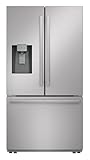
Overview: Sharp enters the premium appliance market with this feature-packed 28.9 cubic foot French door refrigerator. Positioned at the high end of the mid-range market, it combines dual ice making capability with advanced cooling technologies. The fingerprint-resistant stainless steel exterior complements its sophisticated feature set.
What Makes It Stand Out: The Chill-Boost and Freezer-Boost modes deliver rapid cooling when you need to quickly chill beverages or freeze items, a rare feature in this category. Producing up to 6.9 pounds of ice daily, the dual ice makers outperform most competitors. Five premium white LED lights create exceptional interior visibility, while the Advanced Cooling Plus System maintains consistent temperatures throughout.
Value for Money: At $2,299, this represents a significant investment. You’re paying for rapid-cooling technology and superior ice production that most families won’t fully utilize. While feature-rich, comparable Samsung and LG models with similar capacity and dual ice makers run $1,800-$2,000. The premium is justified only if you’ll regularly use the boost modes and require maximum ice output.
Strengths and Weaknesses: Strengths include industry-leading ice production, rapid cooling modes, excellent LED lighting, fingerprint resistance, and advanced temperature management. Weaknesses involve the highest price in this comparison, limited service network compared to major brands, and features that may be overkill for average households.
Bottom Line: Best suited for serious entertainers and large families who need rapid cooling and abundant ice. The Sharp SJF2955KS justifies its premium price only if you’ll leverage its specialized features. Otherwise, more economical options deliver similar core performance.
4. LG LRFLC2706S 27 Cu. Ft. French Door Smart Refrigerator in Stainless Steel

Overview: LG’s entry balances sophisticated design with practical food preservation technology in this 27 cubic foot smart refrigerator. The minimalist aesthetic appeals to design-conscious homeowners while promising to keep produce fresh up to twice as long as conventional models. This model targets buyers who prioritize food quality and kitchen aesthetics over maximum capacity.
What Makes It Stand Out: The sleek, minimalist design eliminates visual clutter, creating a built-in look even in standard installations. LG’s produce preservation technology addresses the common pain point of premature spoilage. As a smart refrigerator, it integrates with home automation systems for temperature monitoring and control, offering convenience through connectivity.
Value for Money: Priced at $1,499, this LG hits the sweet spot for smart refrigerator entry points. You’re getting brand reliability and proven food preservation technology without paying premium prices. While capacity is slightly lower than competitors, the focus on extending produce freshness can reduce food waste, indirectly saving money. Comparable smart models from Samsung start around $1,600 for similar capacity.
Strengths and Weaknesses: Strengths include attractive minimalist design, advanced produce preservation, smart connectivity, reputable brand support, and efficient space utilization. Weaknesses include smaller capacity than similarly priced alternatives, no mentioned dual ice maker, limited details on shelving flexibility, and potentially less robust ice production.
Bottom Line: Ideal for couples and small families who value design and produce freshness over maximum storage. The LG LRFLC2706S delivers quality and smart features at a reasonable price, though larger households may find the capacity limiting.
5. VEVOR French Door Refrigerator, 18.9 Cu. Ft. Kitchen Fridge, Counter Depth French Refrigerator with LED Display and 4 Casters, Frost-Free Bottom Freezer Refrigerators for Home & Commercial Use, Black

Overview: VEVOR’s unique offering blends commercial durability with residential convenience in this compact 18.9 cubic foot French door refrigerator. Four built-in casters provide unprecedented mobility, while the counter-depth design creates a seamless kitchen integration. This model serves dual purposes for home and light commercial applications.
What Makes It Stand Out: The integrated caster system is genuinely unique, allowing easy repositioning for cleaning or layout changes. Counter-depth construction at this price point ($1,438) is remarkable, typically commanding a $300+ premium. The frost-free bottom freezer with two drawers, magnetic door seals, and 45dB operation makes it suitable for open-concept spaces. Multiple cooling modes and inverter compressor technology deliver precise temperature control from 35.6°F to 46.4°F.
Value for Money: While capacity is significantly lower than competitors, the specialized features justify the price. You’re sacrificing 8-10 cubic feet for mobility and counter-depth design. For small kitchens, garages, or commercial settings where space and flexibility matter more than sheer storage, this represents solid value. Standard counter-depth French doors start at $1,600+ from major brands.
Strengths and Weaknesses: Strengths include exceptional mobility, true counter-depth integration, quiet operation, energy efficiency, versatile applications, and commercial-grade construction. Weaknesses include limited capacity for families, unconventional brand for residential use, black finish may not match all kitchens, and fewer advanced features like ice dispensers.
Bottom Line: Perfect for specific scenarios: small kitchens, garage installations, or light commercial use where mobility and space efficiency trump capacity. The VEVOR isn’t for everyone, but for its niche, it delivers unique value that major brands don’t offer.
6. Winia WRFS26ABTD French Door Non-Dispenser Refrigerator, 26.1 Cu.Ft, Stainless Steel

Overview:
The Winia WRFS26ABTD delivers 26.1 cubic feet of French door storage without the complexity of external dispensers. This stainless steel model features a factory-installed icemaker producing 1.7 pounds of ice daily, ensuring steady ice supply for beverages. The full-width gourmet pantry drawer accommodates large platters and charcuterie boards, while gallon-size door bins maximize vertical storage space. Energy-efficient LED lighting illuminates the interior with natural warmth, eliminating dark corners where items get lost.
What Makes It Stand Out:
The non-dispenser design eliminates a common failure point while preserving ice production capability. The dedicated dairy shelf maintains optimal temperatures for butter and cheese spreadability, a thoughtful touch for daily convenience. The full-width pantry drawer spans the entire compartment, perfect for entertaining. By focusing resources on storage innovation rather than complex mechanical systems, Winia appeals to reliability-conscious buyers who prioritize function over flashy features.
Value for Money:
At $1,187, this model occupies the sweet spot between budget and premium French door refrigerators. Comparable capacity models from major brands typically exceed $1,400. The absence of a water dispenser reduces both upfront cost and long-term maintenance risks, potentially saving hundreds in future repairs. For buyers prioritizing versatile storage over through-door features, this represents exceptional value with reliable ice production included.
Strengths and Weaknesses:
Strengths include reliable icemaker without dispenser complexity, spacious pantry drawer, efficient LED lighting, optimized door storage, and fingerprint-resistant stainless finish. Weaknesses involve lack of water dispenser for those wanting chilled water access, moderate 1.7-pound daily ice output that may insufficient for heavy entertainers, and absence of smart features. The non-dispenser design, while reliable, may disappoint users expecting external water access.
Bottom Line:
The Winia WRFS26ABTD excels for families seeking dependable French door refrigeration with essential features minus dispenser-related headaches. Its thoughtful storage design and competitive pricing make it a smart choice for practical-minded consumers who value function over flashy additions. This refrigerator proves that simplicity and reliability can coexist with modern style.
7. Avanti French Door Refrigerator with Bottom Freezer 30-Inch Wide​, Frost Free Technology, Large Capacity with Adjustable Shelves, Door Bins & Crisper Drawers, 17.5 Cu.Ft., Stainless Steel

Overview:
Avanti’s 30-inch French door refrigerator provides 17.5 cubic feet of capacity in a space-conscious footprint ideal for smaller kitchens. The frost-free bottom freezer features two drawers totaling 5.1 cubic feet, eliminating manual defrosting forever. Inside, three adjustable glass shelves and two clear-view crisper drawers offer customizable fresh food storage, while six door bins maximize vertical space efficiency. Select locations benefit from optional delivery and installation support, removing setup hassles.
What Makes It Stand Out:
The compact 30-inch width fits kitchen layouts where standard 36-inch models prove impossible. Dual freezer drawers prevent the frozen item avalanches common with single-bin designs, while frost-free technology represents a significant upgrade over manual-defrost models in this price tier. Six door bins deliver exceptional small-item storage flexibility rarely seen in sub-18 cubic foot units. The combination of French door style and space efficiency addresses urban living challenges directly.
Value for Money:
Priced at $1,039, this Avanti undercuts most French door competitors by $200-400 while delivering essential premium features. The frost-free system alone justifies the price premium over budget top-freezer models. For apartment dwellers or galley kitchen owners, the space-efficient design maximizes storage without demanding premium real estate. Optional installation support adds value by mitigating heavy-lifting concerns and ensuring proper setup.
Strengths and Weaknesses:
Strengths include compact footprint, frost-free convenience, excellent door storage organization, dual freezer drawers, and attractive pricing. Weaknesses involve smaller 17.5 cu.ft. capacity limiting bulk storage, absence of icemaker or water dispenser, and potentially less robust construction than premium brands. The 30-inch width may still prove too wide for truly tight spaces, and the stainless finish may show fingerprints.
Bottom Line:
The Avanti French Door Refrigerator serves urbanites and small-space dwellers brilliantly, delivering frost-free French door elegance in a compact package. While capacity limitations exist, the thoughtful organization and competitive price point make it an excellent value proposition for right-sized refrigeration needs. It’s an ideal solution for those prioritizing style and convenience over maximum cubic footage.
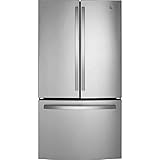
8. GE GNE27JYMFS 36" French Door Refrigerator with 27 cu. ft. Total Capacity Energy Star LED Lighting Internal Water Dispenser Spill-Proof Shelves in Fingerprint Resistant Stainless Steel
Overview:
GE’s GNE27JYMFS offers 27 cubic feet of capacity in a 36-inch French door configuration featuring an internal water dispenser and spill-proof shelves. The fingerprint-resistant stainless steel finish maintains a clean appearance in busy households, while Energy Star certification ensures operating efficiency. The Quick Space shelf slides back to accommodate tall items instantly, and bright LED lighting eliminates search time. This model balances premium features with practical, serviceable design elements that GE is known for.
What Makes It Stand Out:
The internal water dispenser provides filtered water without compromising door insulation or adding external complexity that often leads to service calls. Spill-proof shelves contain messes before they spread throughout the refrigerator, simplifying cleanup. The Quick Space adjustable shelf offers instant reconfiguration for tall wine bottles or party platters without requiring shelf removal. Fingerprint-resistant stainless steel significantly reduces cleaning frequency in high-traffic kitchens, maintaining aesthetics effortlessly.
Value for Money:
At $1,420, this GE positions itself in the competitive mid-premium segment. The internal dispenser design saves approximately $100-200 versus external dispenser models while delivering identical water quality. Energy Star efficiency reduces lifetime operating costs substantially. Compared to similar capacity Samsung or LG models, GE offers superior brand reputation and extensive service network access at a comparable or better price point, ensuring long-term support availability.
Strengths and Weaknesses:
Strengths include smart internal water dispenser placement, flexible Quick Space shelving, fingerprint-resistant finish, trusted brand support network, and Energy Star efficiency. Weaknesses involve lack of external dispenser convenience for some users, no mentioned icemaker, premium pricing over basic models, and substantial 36-inch width requiring generous kitchen space. The internal dispenser may prove less intuitive for children.
Bottom Line:
The GE GNE27JYMFS suits families wanting water dispensing capability without external dispenser maintenance concerns. Its flexible interior and smudge-resistant finish make it ideal for active households. While priced above entry-level options, the trusted GE brand and thoughtful features justify the investment for quality-conscious buyers who prioritize reliability and clean aesthetics over flashy smart technology.
9. LG 29 cu. ft. Smart Standard Depth MAX French Door Refrigerator with Full Convert Drawer in PrintProof Stainless Steel LF29H8330S

Overview:
LG’s 29 cubic foot Smart French Door refrigerator introduces the innovative Full Convert Drawer, transforming from fridge to freezer space on demand. PrintProof stainless steel resists fingerprints while smart connectivity enables remote temperature monitoring and diagnostics via smartphone. As part of LG’s MAX series, this standard-depth model maximizes capacity without excessive kitchen protrusion. The expansive interior accommodates large families and bulk shoppers, while linear compressor technology ensures quiet, efficient operation throughout its lifespan.
What Makes It Stand Out:
The Full Convert Drawer offers unprecedented flexibility, expanding fresh or frozen storage by several cubic feet as seasonal needs change. SmartThinQ technology provides smartphone control, energy usage tracking, and proactive maintenance alerts. PrintProof finish maintains showroom appearance with minimal cleaning effort. LG’s linear compressor reduces mechanical noise and improves efficiency compared to conventional compressors. Achieving 29 cu.ft. in standard depth represents impressive space optimization engineering.
Value for Money:
At $1,998, this LG commands a premium but delivers features absent in competitors under $1,800. The convertible drawer alone adds $200-300 in functional value compared to fixed-configuration models. Smart diagnostics can prevent costly service calls by identifying issues early. For tech-savvy families needing adaptable storage, the premium proves justified. However, budget-conscious buyers can find similar capacity without smart features for $300-400 less, making this ideal for feature-focused consumers.
Strengths and Weaknesses:
Strengths include convertible drawer flexibility, smart home integration, fingerprint-resistant finish, massive capacity, and exceptionally quiet linear compressor. Weaknesses involve premium pricing, potential smart feature learning curve for non-tech users, and reliance on app connectivity for full functionality. Standard depth may still protrude in galley kitchens, and the complex features could increase potential repair costs long-term.
Bottom Line:
The LG LF29H8330S excels for modern families wanting adaptable, connected refrigeration. The convertible drawer solves seasonal storage challenges brilliantly, while smart features add genuine convenience. Though expensive, the innovative design and premium build quality make it a worthwhile investment for those who’ll actively utilize its unique capabilities. It’s a forward-thinking appliance for the connected home.
10. Winia WRFS26ABBD French Door Non-Dispenser Refrigerator, 26.1 Cu.Ft, Black

Overview:
The Winia WRFS26ABBD mirrors its stainless sibling with 26.1 cubic feet of French door storage in a sophisticated black finish. The factory-installed icemaker produces 1.7 pounds of ice daily, while the full-width pantry drawer accommodates entertaining platters and deli trays. A two-tier freezer drawer system organizes frozen foods efficiently, separating treats from bulk items. The dedicated dairy shelf maintains optimal temperatures for spreads, and the black exterior hides smudges better than traditional stainless steel.
What Makes It Stand Out:
The two-tier freezer drawer system separates frequently accessed items from deep storage, improving organization over single-bin designs. Black finish offers a bold, modern alternative to ubiquitous stainless steel while naturally concealing fingerprints and smudges. The non-dispenser configuration focuses resources on storage innovation rather than complex mechanical systems prone to failure. This combination of ice production without water dispensing hits a sweet spot for ice-heavy households that don’t require chilled water on demand.
Value for Money:
At $1,384, the black finish commands a $200 premium over the stainless version, reflecting specialized color pricing trends. However, the two-tier freezer adds organizational value worth approximately $100-150 compared to single-drawer models. For buyers specifically wanting black appliances to match their kitchen aesthetic, this represents fair market pricing. The reliability-focused design minimizes future repair costs, improving long-term ownership value and offsetting the initial color premium.
Strengths and Weaknesses:
Strengths include superior freezer organization, reliable icemaker, spacious pantry drawer, smudge-hiding black finish, and simplified maintenance without dispenser components. Weaknesses involve premium pricing solely for color option, lack of water dispenser, moderate ice production rate, and limited smart features. The black finish, while practical, may clash with some kitchen aesthetics and could show dust more readily than stainless.
Bottom Line:
The Winia WRFS26ABBD suits households wanting dependable French door refrigeration with excellent freezer organization in a distinctive black finish. While costing more than its stainless counterpart, the two-tier freezer and smudge-resistant appearance justify the premium for right-fit buyers. It’s a practical, stylish choice for those deliberately avoiding dispenser complexity while maximizing usable storage space. The model proves that thoughtful design can trump flashy features.
Why Large Capacity Wi-Fi French Door Refrigerators Are Perfect for Connected Families
The modern family kitchen serves as more than a cooking space—it’s a hub for coordination, communication, and connection. Large capacity Wi-Fi French door refrigerators excel in this environment by combining generous storage with intelligent organization tools. The dual-door design minimizes cold air loss compared to single-door models, while the bottom freezer configuration keeps fresh foods at eye level where busy parents can quickly grab what they need.
Smart connectivity transforms these appliances into proactive household assistants. Imagine receiving a smartphone alert that you’re low on milk while you’re already at the grocery store, or getting a notification that the door was left ajar during the morning rush. For families with multiple members accessing the fridge throughout the day, these features prevent waste, save money, and eliminate the “Did anyone buy more eggs?” group text threads that plague modern households.
Understanding Smart Refrigerator Technology
The Evolution from Basic to Smart Cooling
Smart refrigeration represents a fundamental shift from reactive cooling to predictive food management. Traditional refrigerators operate on simple thermostat cycles, but Wi-Fi-enabled models integrate sensors, cameras, and microprocessors that continuously monitor conditions and adapt performance. This intelligence extends beyond temperature control to include humidity management, door usage patterns, and even external factors like ambient kitchen temperature.
The core technology relies on robust Wi-Fi modules that maintain constant cloud connectivity, enabling two-way communication between your appliance and smartphone apps. This connection allows manufacturers to push software updates that improve functionality over time—something impossible with conventional models. Your refrigerator essentially becomes better at its job the longer you own it.
How Wi-Fi Connectivity Transforms Kitchen Management
Wi-Fi integration fundamentally changes how families interact with their food storage. Remote monitoring capabilities let you check internal temperatures while on vacation, ensuring your appliance is functioning properly. Grocery management features allow you to create shopping lists based on actual fridge contents, while expiration date tracking helps reduce the $1,500 average annual food waste cost for American families.
For parents, the ability to see inside your refrigerator from your phone while standing in the supermarket aisle is invaluable. No more guessing whether you need another block of cheese or if there’s still enough yogurt for school lunches. This visual inventory feature, combined with AI-powered food recognition in premium models, creates a digital pantry that syncs across family devices.
Key Features to Look for in Wi-Fi French Door Refrigerators
Internal Cameras and Food Recognition Technology
Internal camera systems vary dramatically in quality and capability. Entry-level smart fridges might offer a single wide-angle camera that captures a grainy image, while sophisticated systems deploy multiple high-definition cameras covering every shelf and bin. When evaluating this feature, look for cameras positioned to capture door bins—where condiments and small items often hide—and adjustable shelving areas.
Food recognition technology represents the next frontier, with advanced systems using AI to identify specific items and track quantities. However, accuracy varies widely, and these systems work best with clearly labeled packaged goods. Fresh produce recognition remains challenging, so consider this feature a helpful supplement rather than a flawless inventory manager. The most practical implementations allow you to manually tag items and set custom expiration reminders.
Voice Assistant Integration Capabilities
Voice control transforms your refrigerator into a hands-free kitchen companion. Integration with platforms like Amazon Alexa, Google Assistant, or Apple HomeKit enables commands like “Add eggs to my shopping list” or “Set the freezer to -2 degrees.” The most seamless implementations embed microphones in the fridge’s control panel, allowing conversation from across the kitchen.
Evaluate compatibility with your existing smart home ecosystem before purchasing. Some manufacturers prioritize one platform over others, potentially limiting functionality if you’re invested in a competing ecosystem. The best implementations offer multi-platform support and allow you to disable always-listening features for privacy-conscious households.
Advanced Temperature and Humidity Controls
Precision climate management separates premium smart refrigerators from basic connected models. Look for systems offering independent temperature control for specific zones beyond the standard refrigerator and freezer compartments. Dedicated produce drawers with customizable humidity settings, chill zones for meat and fish, and convertible compartments that switch between fridge and freezer modes provide unmatched flexibility.
The most advanced models feature multiple evaporators and dedicated cooling systems for different zones, preventing flavor transfer and maintaining optimal conditions for everything from delicate berries to frozen pizzas. Temperature stability matters more than the ability to set extreme cold—consistent conditions preserve food quality and extend shelf life significantly.
Capacity Considerations for Growing Families
Measuring True Usable Space vs. Advertised Capacity
Manufacturers advertise capacity in cubic feet, but this number includes every nook and cranny, often misrepresenting practical storage space. A 28 cubic foot refrigerator might offer less usable space than a well-designed 25 cubic foot model due to bulky ice makers, intrusive door bins, and fixed shelving that wastes vertical space.
To assess true capacity, focus on adjustable features. Can you raise or lower shelves to accommodate tall items? Do door bins slide and stack? Is the ice maker compact or does it monopolize an entire door? The best large-capacity models maximize vertical space with split shelves and offer retractable or fold-away sections that adapt to your grocery hauls. For families of four or more, aim for at least 22 cubic feet of usable fresh food space.
Balancing Fresh Food vs. Freezer Storage Ratios
French door configurations typically allocate 70% of capacity to fresh food storage and 30% to the freezer—a ratio that suits most families prioritizing fresh ingredients. However, households that batch-cook or buy bulk frozen goods should evaluate freezer organization carefully. Look for full-width pull-out drawers with dividers rather than basic baskets that create a frozen avalanche.
Some models offer convertible compartments that transform from fridge to freezer based on your needs—ideal for holiday seasons or summer entertaining when fresh food demands spike. Consider your shopping habits: Do you visit farmers markets weekly and need extensive produce storage? Or do you stock up at warehouse clubs requiring more freezer real estate? The right balance prevents constant rearranging and maximizes efficiency.
Wi-Fi Connectivity and App Integration Explained
Compatible Smart Home Ecosystems
Smart refrigerator apps range from basic remote temperature adjustments to comprehensive food management platforms. Before committing, download the manufacturer’s app and explore its interface. Clunky, poorly reviewed apps indicate the smart features may cause more frustration than convenience.
Check compatibility with your smart home hub. Samsung models integrate deeply with SmartThings, LG appliances sync with ThinQ, while GE Appliances connect through SmartHQ. If you use Apple HomeKit, ensure the model specifically lists HomeKit support—many Android-first manufacturers neglect this integration. Cross-platform compatibility ensures your refrigerator remains functional even if you switch smartphone ecosystems.
Remote Diagnostics and Automatic Software Updates
One of the most valuable yet overlooked smart features is remote diagnostics. When your refrigerator detects a performance issue, it can automatically alert both you and the manufacturer, often resolving problems before food spoils. This proactive monitoring can distinguish between a door seal needing adjustment and a failing compressor, saving diagnostic fees and preventing emergency service calls.
Automatic software updates improve functionality and security over time. However, verify whether updates occur automatically or require manual approval. The best implementations allow scheduled updates during low-usage hours and provide detailed changelogs explaining new features or improvements. This future-proofing ensures your investment remains current for its 10-15 year lifespan.
Energy Efficiency in Smart Refrigerators
Decoding Energy Star Ratings and What They Mean
Energy Star certification indicates a refrigerator exceeds federal minimum efficiency standards by at least 10%, but the rating system has evolved. Look for the Energy Star “Most Efficient” designation, which identifies the top 5% of models. These units often incorporate variable-speed compressors that adjust cooling output precisely rather than cycling on and off, reducing energy consumption by 20-30% compared to conventional models.
The yellow EnergyGuide label provides estimated annual operating costs, but these figures assume ideal conditions. Smart features like internal cameras and Wi-Fi connectivity consume standby power—typically 2-5 watts continuously. While minimal, this adds $5-10 annually to operating costs. The most efficient models include eco-modes that reduce connectivity frequency during overnight hours or vacations.
Impact of Smart Features on Power Consumption
Every smart feature consumes electricity. Internal cameras require LED lighting and constant power, touchscreens draw significant energy, and Wi-Fi modules maintain always-on connections. However, these costs are offset by efficiency gains. Door alarms prevent energy waste from accidental openings, precise temperature control reduces overcooling, and food waste reduction means fewer trips to the store.
Calculate the total cost of ownership by adding approximately $15-25 annually for smart feature operation to the EnergyGuide estimate. For context, preventing just one $50 grocery spoilage incident per year more than covers this cost. The environmental impact also favors smart models—reduced food waste decreases methane emissions from landfills, making these appliances surprisingly eco-friendly despite their connectivity.
The Importance of Flexible Storage Solutions
Adjustable Shelving and Door Bin Systems
Rigid storage configurations force you to adapt to your refrigerator rather than the other way around. Premium French door models feature split shelves that independently adjust in one-inch increments, accommodating everything from towering birthday cakes to flat sheet pans. Spill-proof edges contain messes, while slide-under or fold-away designs create temporary tall spaces without requiring full shelf removal.
Door bins deserve equal scrutiny. Look for adjustable gallon-deep bins that securely hold milk jugs and juice containers, freeing interior shelf space. Some models offer removable dividers within bins, preventing bottles from toppling when the door closes. The most versatile designs include a mix of deep bins for large containers and shallow trays for condiments, maximizing every inch of door real estate.
Specialized Compartments for Modern Family Needs
Beyond basic crisper drawers, advanced models offer specialized zones tailored to contemporary lifestyles. Deli drawers with adjustable temperature settings keep charcuterie and cheeses at ideal serving temperatures. Dedicated herb storage compartments maintain slightly higher humidity with direct airflow, extending cilantro and parsley freshness from days to weeks.
For families with diverse dietary needs, allergen-safe compartments with sealed gaskets prevent cross-contamination—crucial for households managing gluten-free or nut-free diets. Chill zones for beverages cool drinks rapidly without freezing, while soft-freeze sections keep ice cream at scoopable temperatures. These purpose-built spaces eliminate the compromises that lead to food waste and frustration.
Advanced Cooling Technologies Demystified
Multi-Air Flow Systems for Even Cooling
Traditional refrigerators rely on a single air vent, creating temperature zones that vary by 5-7 degrees from top to bottom. Multi-air flow systems distribute chilled air through multiple vents strategically placed throughout the compartment, maintaining temperatures within 1-2 degrees of the set point. This consistency prevents premature spoilage of delicate items stored on door shelves and ensures even cooling behind packed shelves.
When evaluating this feature, ask about vent placement and quantity. Premium models position vents along the back wall and side columns, with some directing air toward door bins. The system should include dedicated return air paths that prevent warm, humid air from mixing with cold zones—critical for preventing frost buildup and maintaining energy efficiency.
Dual Evaporator Benefits for Food Preservation
Single-evaporator systems share air between refrigerator and freezer compartments, causing odor transfer and humidity imbalances. Dual evaporator configurations use completely separate cooling systems for each zone, maintaining optimal conditions simultaneously. Your ice cream stays frozen without freezer burn while fresh herbs remain crisp without wilting from dry air.
This technology also improves efficiency. The freezer evaporator runs less frequently since it’s not battling humidity from the fresh food section, reducing energy consumption by 10-15%. For families storing aromatic foods like kimchi, strong cheeses, or fresh fish, dual evaporators prevent flavor contamination that can ruin ice cream and other frozen desserts.
Ice and Water Dispenser Options
Through-the-Door vs. Internal Dispensing Systems
Through-the-door dispensers offer convenience but consume valuable door space and introduce potential maintenance issues. They typically reduce fresh food capacity by 0.5-1 cubic feet and can increase energy consumption as warm air enters the door cavity. However, for families consuming large volumes of chilled water and ice, the convenience outweighs these drawbacks.
Internal dispensers maximize capacity and energy efficiency while still providing filtered water access. These systems tuck into the side wall, preserving shelf space and eliminating the door’s insulation breaches. Consider your family’s habits: Do you refill water bottles constantly? Do children need easy ice access? The answer determines which system aligns with your priorities. Some premium models offer both—an internal water dispenser with an automatic ice maker in the freezer.
Filtration Technologies and Maintenance Schedules
Water filtration quality varies significantly between manufacturers. Look for systems certified to NSF/ANSI Standards 42, 53, and 401, which guarantee removal of chlorine, lead, mercury, and emerging contaminants like pharmaceuticals. Filter capacity matters—premium filters process 300+ gallons before requiring replacement, while basic units need changing every six months regardless of usage.
Smart refrigerators with filter monitoring track water flow and time, sending app notifications when replacement is due. This prevents the common problem of forgotten filters that become bacterial breeding grounds. Replacement costs range from $30-60 annually, so factor this into your budget. Some manufacturers offer subscription services that automatically ship filters, ensuring you never run out of clean water.
Design Aesthetics and Kitchen Integration
Finish Options and Fingerprint-Resistant Coatings
Stainless steel remains the dominant finish, but not all stainless is created equal. Traditional brushed stainless shows fingerprints and requires constant cleaning, while fingerprint-resistant (or “smudge-proof”) coatings incorporate a protective layer that repels oils and smudges. These finishes maintain their appearance with simple water wiping—no special cleaners needed.
Black stainless steel offers a modern alternative with warmer tones than traditional black appliances, while matte finishes in white, gray, and even navy blue provide designer options. Consider your kitchen’s lighting: Dark finishes absorb light and can make small kitchens feel cramped, while lighter colors reflect light and create an airy feel. The most durable finishes are applied using physical vapor deposition (PVD) processes that resist scratches and corrosion.
Handle Styles and Professional Kitchen Looks
Handle design impacts both aesthetics and ergonomics. Pro-style tubular handles create a commercial kitchen aesthetic but protrude 3-4 inches, requiring additional clearance in tight kitchens. Integrated pocket handles offer a sleek, minimalist look and save space but can be harder to open for children or individuals with limited grip strength.
Consider handle finish consistency with other appliances. Many families mix brands, so choosing a universal handle style—like a simple bar design—creates visual cohesion. Some smart refrigerators offer touch-to-open doors that require no handles, using sensors to release the seal with a gentle push. While futuristic, these systems require reliable power and can be sensitive to calibration issues.
Installation and Space Requirements
Proper Kitchen Space Measurement Techniques
Measuring for a French door refrigerator requires more than width, depth, and height. Account for door swing radius—French doors need clearance to open 125-135 degrees for full bin access. Measure from the refrigerator’s intended position to adjacent walls, islands, and cabinets, ensuring doors can open without hitting obstacles.
Depth measurement must include handles and the space needed for water line connections. Standard-depth models protrude 6-8 inches beyond countertops, while counter-depth units align flush but sacrifice 2-4 cubic feet of capacity. For ventilation, maintain at least 1 inch of clearance on sides and top, with 2 inches behind for proper air circulation. Poor ventilation forces compressors to work harder, reducing lifespan by 20-30%.
Ventilation and Clearance Specifications
Smart refrigerators generate more heat than conventional models due to their always-on connectivity and display screens. Ensure your cabinetry design includes vented toe kicks or side panels that allow heat dissipation. Built-in installations require professional integration with dedicated electrical circuits—never share a circuit with other major appliances.
Water line installation demands attention to pressure and filtration. Most manufacturers specify 20-120 PSI water pressure; outside this range requires a pressure regulator. Install an easily accessible shut-off valve behind the refrigerator for emergency maintenance. For families in areas with hard water, consider a whole-house softener or refrigerator-specific pre-filter to extend the appliance’s internal filter life and prevent mineral buildup in ice makers.
Maintenance and Longevity of Smart Appliances
Cleaning Smart Components Safely
Touchscreens and control panels require different care than stainless steel exteriors. Use microfiber cloths slightly dampened with water—never spray cleaners directly onto electronic components. Ammonia-based cleaners can damage touch-sensitive overlays, while abrasive pads scratch protective coatings. For stubborn fingerprints, a 50/50 water and isopropyl alcohol solution safely dissolves oils without harming electronics.
Internal cameras need occasional cleaning to maintain image clarity. Access these through the app to check for condensation or food splatter. Use a dry microfiber cloth on a flexible duster to gently wipe lenses without dislodging them. Never use compressed air, which can force debris into camera housings and damage sensitive components.
Software Update Best Practices for Security
Enable automatic updates for security patches but schedule feature updates manually. This approach ensures you receive critical vulnerability fixes immediately while allowing you to research major interface changes before installation. Read update release notes to understand new features or changes to existing functionality.
Before major updates, document your custom settings—temperature presets, shopping lists, and notification preferences—as updates occasionally reset configurations. If an update causes issues, most manufacturers allow rollback within a 72-hour window through the app settings. For persistent problems, contact customer support before attempting manual firmware flashes, which can void warranties.
Security and Privacy Considerations
Protecting Your Smart Appliance from Cyber Threats
Any device connected to your home network represents a potential entry point for cyber threats. Smart refrigerators have been targeted in botnet attacks and ransomware campaigns. Protect your appliance by creating a separate IoT network on your router—most modern routers offer a guest network that isolates smart devices from computers and phones containing sensitive data.
Change default passwords immediately through the refrigerator’s settings menu. Manufacturers often use generic credentials for initial setup that are widely documented online. Enable two-factor authentication if available, and regularly check for firmware updates that patch security vulnerabilities. Disable remote access features you don’t use—if you never check your fridge while away, turn off external connectivity to reduce attack surfaces.
Understanding Data Collection and Privacy Policies
Smart refrigerators collect data on usage patterns, door openings, temperature settings, and food inventory. Review the manufacturer’s privacy policy before connecting to Wi-Fi—some reserve rights to share anonymized data with third parties for marketing purposes. European models under GDPR offer more robust privacy controls than US versions from the same manufacturer.
Consider what information you’re comfortable sharing. Camera footage of your fridge’s contents reveals dietary habits, shopping patterns, and potentially health information. Some apps allow local-only storage without cloud backup, reducing data exposure. If privacy is paramount, use the refrigerator in “dumb” mode without Wi-Fi, treating smart features as optional rather than mandatory.
Budget Planning and Value Assessment
Understanding Price Tiers and Feature Correlation
Smart French door refrigerators typically fall into three price tiers. Entry-level models ($1,800-$2,500) offer basic Wi-Fi connectivity and app control but lack advanced features like internal cameras or food recognition. Mid-range options ($2,500-$3,500) add cameras, flexible storage, and better app integration. Premium models ($3,500-$6,000+) include AI-powered inventory management, multiple evaporators, and designer finishes.
The sweet spot for most families lies in the $2,800-$3,200 range, where you gain meaningful smart features without paying for gimmicks. Features that justify higher prices include dual evaporators (improved food preservation), flexible temperature zones (versatility), and robust app ecosystems (long-term utility). Avoid paying premiums for features like built-in recipe suggestions or shopping list integration—these are often available free through better-designed third-party apps.
Calculating Total Cost of Ownership Over Time
A refrigerator’s purchase price represents only 60% of its lifetime cost. Factor in energy consumption ($80-150 annually), water filters ($40-60 annually), and potential repairs. Smart models with extended warranties covering electronic components offer better value—control boards and displays can cost $400-600 to replace out of warranty.
Consider depreciation: Smart appliances lose value faster than conventional models as technology evolves. However, they also deliver ongoing value through reduced food waste. The average family wastes $1,500 in food annually; a smart refrigerator can realistically cut this by 20-30% through better inventory management and expiration tracking. Over a 10-year lifespan, this $3,000-4,500 savings often exceeds the technology premium.
Common Mistakes to Avoid When Buying a Smart Refrigerator
The most costly error is prioritizing capacity over kitchen fit—purchasing a refrigerator that requires cabinet modifications or blocks traffic flow. Always measure twice, accounting for door swing and ventilation. Another frequent mistake is buying based on showroom displays without testing the app experience. A beautiful refrigerator with a dysfunctional app quickly becomes frustrating.
Don’t assume all smart features work equally well. Internal cameras sound revolutionary but vary wildly in image quality and usefulness. Test demo models by opening the app and viewing the camera feed—if it’s blurry or slow to load, you’ll never use it. Finally, avoid models with proprietary smart ecosystems that don’t integrate with your existing devices. An isolated smart fridge is just a fridge with a screen.
Frequently Asked Questions
1. How reliable is the Wi-Fi connectivity in smart refrigerators, and what happens if my internet goes down?
Wi-Fi connectivity in modern smart refrigerators is generally reliable, using industrial-grade modules similar to those in security systems. Most models store data locally for 24-48 hours and sync when connection restores. If your internet fails, the refrigerator continues cooling normally—all essential functions work offline. Smart features like remote monitoring and app control simply pause until connectivity returns. Consider a refrigerator with a local display that shows critical information independently of the app, ensuring you’re never locked out of settings during outages.
2. Can smart refrigerators really help reduce food waste for busy families?
Yes, but effectiveness depends on your commitment to using the features. Studies show families who regularly check internal cameras before shopping reduce impulse purchases by 15-20%. Expiration tracking features can cut waste by 25-30% when used consistently. The key is establishing a routine: check the app before grocery trips, set expiration alerts when storing leftovers, and involve family members in maintaining the digital inventory. The technology provides the tools, but habit formation drives results. Families who engage with their smart fridge daily see the best outcomes.
3. Are internal cameras worth the extra cost, or are they just a gimmick?
Internal cameras provide genuine value for families with specific needs. If you frequently shop after work without checking home inventory, cameras prevent duplicate purchases. They’re invaluable for caregivers monitoring elderly parents’ eating habits or ensuring kids have healthy options available. However, if you maintain detailed shopping lists or live alone, the utility diminishes. Evaluate your family’s shopping patterns: Do you make unplanned grocery stops? Do multiple family members shop independently? If yes, cameras justify their cost. If not, invest in flexible storage instead.
4. How do smart refrigerators impact resale value when selling my home?
Smart appliances generally don’t recoup their full premium during resale but can differentiate your home in competitive markets. Younger buyers (millennials and Gen Z) increasingly expect smart features, viewing them as standard rather than luxury. However, technology ages quickly—a five-year-old smart fridge may have outdated connectivity that new buyers must replace. To maximize resale value, choose models from manufacturers with strong track records for long-term software support. Document all smart features for potential buyers and highlight practical benefits like energy savings and food waste reduction rather than gimmicky functions.
5. What security measures should I take to protect my smart refrigerator from hacking?
Implement a multi-layered security approach. First, create a dedicated IoT network on your router that isolates smart appliances from devices containing personal data. Change all default passwords immediately and enable two-factor authentication if available. Regularly update firmware—set security patches to auto-install but review feature updates manually. Disable unused remote access features to reduce attack surfaces. Monitor your router’s connected devices list for unfamiliar entries, and consider a network-wide security solution like a firewall appliance that identifies suspicious IoT traffic patterns.
6. How long do smart refrigerators typically last compared to traditional models?
The mechanical components—compressor, condenser, and cooling system—last 10-15 years, identical to traditional refrigerators. However, smart features introduce new failure points. Touchscreens typically last 5-7 years before brightness degrades, and Wi-Fi modules may become obsolete as networking standards evolve. Manufacturers usually support software for 7-10 years before discontinuing updates. To maximize lifespan, choose models with modular electronic components that can be replaced independently. Extended warranties covering electronics provide valuable protection, as control board replacements cost $400-600—often prompting premature appliance replacement.
7. Can I use a smart refrigerator without connecting it to Wi-Fi?
Absolutely. Smart refrigerators function perfectly as conventional appliances without Wi-Fi connectivity. All cooling, ice making, and basic controls operate through the physical control panel. You lose remote monitoring, app features, and automatic software updates, but avoid security concerns and privacy data collection. Many families initially use their refrigerator offline, then enable Wi-Fi after becoming comfortable with the appliance. This approach lets you evaluate whether smart features justify any privacy trade-offs. Just note that some manufacturers require initial Wi-Fi setup to register warranties, so check terms before permanently staying offline.
8. What’s the difference between counter-depth and standard-depth smart French door refrigerators?
Counter-depth models align flush with standard 24-inch countertops, creating a built-in look without custom installation. They sacrifice 2-4 cubic feet of capacity and typically cost $200-400 more than equivalent standard-depth models. The reduced depth improves kitchen traffic flow and creates a sleek aesthetic but limits storage for large platters and pizza boxes. Standard-depth units protrude 6-8 inches but maximize capacity and often include more advanced features since engineers have additional space for components. Choose counter-depth for design-focused kitchens where appearance trumps absolute capacity, and standard-depth for families prioritizing storage volume.
9. How much should I budget annually for maintaining a smart refrigerator?
Plan for $120-180 annually in maintenance costs. This includes water filters ($40-60 every six months), increased electricity consumption from smart features ($15-25 annually), and occasional replacement of minor components like door seals. Extended warranties covering electronics cost $150-250 per year but can prevent $400-600 control board replacement bills. Budget an additional $50-100 every 2-3 years for professional coil cleaning and calibration, which extends compressor life. While higher than conventional refrigerators, these costs are offset by reduced food waste and energy efficiency gains. Keep a maintenance fund of $300-400 for unexpected repairs after the warranty expires.
10. Will my smart refrigerator become obsolete as new technology emerges?
Smart refrigerators face functional obsolescence faster than mechanical appliances, but core cooling technology remains relevant for 10-15 years. Wi-Fi standards evolve slowly—802.11n from 2009 still works perfectly today—so connectivity remains viable. The greater risk is manufacturers discontinuing app support, which happened to some early smart appliance lines after 5-7 years. Mitigate this by choosing brands with strong track records of long-term support and active user communities. Modular design helps—appliances allowing aftermarket smart module upgrades extend functionality. Treat smart features as valuable bonuses rather than permanent fixtures, and prioritize proven cooling performance over cutting-edge but unproven technology.