There’s something undeniably satisfying about that first crunchy bite of nugget ice. It’s not just frozen water—it’s a textural experience that transforms ordinary drinks into moments of pure joy. Originally popularized by Sonic drive-ins and coveted by ice-chewing enthusiasts, this soft, chewable pellet ice has evolved from a fast-food novelty into one of the most sought-after luxury appliances for modern homes. As we look toward 2026, undercounter nugget ice makers are no longer reserved for commercial kitchens or ultra-high-end renovations; they’re becoming accessible centerpieces of thoughtfully designed homes.
But here’s the reality: choosing the right nugget ice maker involves far more than picking a machine that simply freezes water. From understanding daily production rates to navigating complex installation requirements, the difference between years of perfect ice and a costly mistake lies in the details most buyers overlook. This comprehensive guide cuts through the marketing noise, delivering the expert insights you need to make an informed decision—ensuring your investment delivers that signature crunch without the headaches.
Top 10 Nugget-Style Undercounter Ice Makers
Detailed Product Reviews
1. Scotsman UN324A-1 Undercounter Nugget-Style Ice Maker Machine with Bin, 340 lb Daily Production, 80 lb Storage, Stainless Steel, 115V, Air-Cooled Commercial Ice Producer

Overview: The Scotsman UN324A-1 represents the pinnacle of undercounter nugget ice production for demanding commercial environments. This robust machine delivers an impressive 340 pounds of chewable nugget ice daily while maintaining a space-saving 24-inch undercounter footprint. The substantial 80-pound storage bin ensures you’ll never run short during peak service hours, making it ideal for high-volume restaurants, bars, and healthcare facilities where ice is constantly in demand.
What Makes It Stand Out: The UN324A-1’s extraordinary production capacity sets it apart from nearly all competitors in the undercounter category. Its commercial-grade stainless steel construction features a reinforced evaporator and greaseless bearing system engineered for continuous operation. The integrated QR code system provides instant access to service manuals and parts information, dramatically reducing downtime. The slide-back lid design offers ergonomic access even in tight spaces.
Value for Money: At $5,441, this premium machine commands a significant investment, but delivers exceptional ROI for businesses requiring massive ice output. Compared to modular head units requiring separate bins, this integrated solution saves both money and space. The durability and reliability reduce long-term maintenance costs, while the efficiency minimizes operational expenses.
Strengths and Weaknesses: Pros: Unmatched production capacity for undercounter units; durable stainless steel construction; large storage bin; QR code service access; space-efficient design. Cons: Premium price point; may be overkill for small operations; requires professional installation; significant power consumption.
Bottom Line: The Scotsman UN324A-1 is the definitive choice for high-volume commercial operations that demand maximum nugget ice production without sacrificing valuable floor space. For businesses where ice is mission-critical, this machine justifies every penny.
2. Scotsman UN0815A-1 15-Inch Air-Cooled Nugget Undercounter Ice Maker Machine with 36 lb. Storage Capacity, 79 lbs/Day, 115v, NSF

Overview: The Scotsman UN0815A-1 delivers authentic nugget ice production in an ultra-compact 15-inch package designed for space-constrained commercial settings. Producing up to 79 pounds daily with 36 pounds of storage, this Energy Star certified unit brings commercial reliability to small cafes, break rooms, and boutique bars. Its front-breathing design eliminates side clearance requirements, offering maximum placement flexibility.
What Makes It Stand Out: This machine’s remarkable 15-inch width makes it the slimmest commercial nugget ice maker available, perfect for tight installations. The sealed, maintenance-free bearings and stainless steel evaporator ensure years of reliable service with minimal upkeep. Being designed, engineered, and assembled in the USA with a three-year warranty provides exceptional peace of mind. The unit-specific QR code instantly connects technicians to service documentation.
Value for Money: Priced at $3,559, this unit occupies the sweet spot between residential models and larger commercial units. The Energy Star certification delivers measurable utility savings, while the maintenance-free design reduces service costs. For small businesses, it eliminates the need for expensive modular systems.
Strengths and Weaknesses: Pros: Extremely compact footprint; Energy Star certified; USA-made quality; maintenance-free bearings; front-breathing design; excellent warranty. Cons: Limited production for growing businesses; small storage capacity; premium price over residential units.
Bottom Line: The UN0815A-1 excels in small commercial environments where space is at a premium but reliability cannot be compromised. It’s the perfect solution for establishments serving 50-100 drinks daily.
3. Electactic Nugget Ice Maker Machine, Under Counter Ice Machine,Stainless Steel Built-in Freestanding Ice Maker,66Lbs/Day,LCD Panel/Self-Clean/24H Timer,for Home Kitchen Office Bar Party

Overview: The Electactic Nugget Ice Maker bridges the gap between residential convenience and commercial capability, producing 66 pounds of chewable ice daily in an undercounter package priced for home enthusiasts. This versatile machine features a dual ice box design that ensures continuous supply, while the 24-hour timer and self-cleaning functions automate operation. The stainless steel construction provides durability suitable for kitchens, home bars, or small offices.
What Makes It Stand Out: The dual ice box configuration maintains 80% ice retention for 24 hours, a rare feature in this price class. The comprehensive LCD panel displays ambient temperature while providing water shortage and ice full alerts. Automatic water supply eliminates manual filling hassles, and the 10-minute first-batch production time is remarkably fast. The flexibility to function as built-in or freestanding adds installation versatility.
Value for Money: At $1,019.62, this unit dramatically undercuts commercial alternatives while delivering comparable daily production. The feature set—including timer, self-cleaning, and dual storage—matches units costing twice as much. For residential users wanting commercial-style nugget ice, it represents exceptional value.
Strengths and Weaknesses: Pros: Affordable price point; dual ice box design; rapid first batch; 24-hour timer; self-cleaning; flexible installation. Cons: Unknown long-term reliability; lower production than true commercial units; limited brand support network.
Bottom Line: The Electactic is ideal for home bars, offices, or light commercial use where budget constraints exist but nugget ice quality is non-negotiable. It delivers premium features without the premium price tag.
4. COWSAR Commercial Under Counter Nugget Ice Maker Machine, 68Lbs/Day Ice Maker with Double Ice Baskets, Bulit-in Freestanding Ice Machine, 24H Timer & Self-Cleaning, for Commercial & Home Use(Silver)

Overview: The COWSAR Commercial Under Counter Nugget Ice Maker delivers 68 pounds of daily pellet ice production in a compact, ETL-certified package suitable for both home and light commercial applications. Measuring just 17.72 by 14.96 inches, this unit fits seamlessly under standard counters while providing continuous ice through its double-layer ice box design. The silver stainless steel finish resists corrosion in high-humidity environments.
What Makes It Stand Out: This machine’s ETL certification for commercial use distinguishes it from many residential-grade competitors at this price point. The advanced insulation system maintains 80% ice integrity for 24 hours, ensuring minimal waste. The smart LCD panel provides ambient temperature readings and proactive maintenance alerts. The double ice basket system creates a continuous production cycle, while the 24-hour timer enables energy-conscious scheduling.
Value for Money: At $999.99, this unit competes aggressively with residential models while offering commercial certification. The feature set—including self-cleaning, timer functions, and dual baskets—typically appears in units costing 30-50% more. For small restaurants or serious home enthusiasts, it delivers professional credibility without professional pricing.
Strengths and Weaknesses: Pros: Commercial ETL certification; double ice box design; excellent insulation; compact footprint; self-cleaning; affordable pricing. Cons: Limited brand recognition; unclear warranty terms; lower storage capacity than premium models.
Bottom Line: The COWSAR unit suits budget-conscious commercial operators and dedicated home users who need verified safety standards and reliable nugget ice production without breaking the bank.
5. VEVOR Under Counter Ice Maker Machine, 66 Lbs/Day Undercounter Nugget Ice Maker with Gravity Drain, Reversible Door, Self-Cleaning & 24H Timer, Stainless Steel Ice Machine for Commercial Home Kitchen

Overview: The VEVOR Under Counter Ice Maker combines commercial-grade performance with installation flexibility, producing 66 pounds of nugget ice daily in a thoughtfully engineered package. The reversible stainless steel door and convertible hinge accommodate left or right-handed installations, while triple-layer insulation maintains ice quality. The 18-pound storage capacity and gravity drain system suit both home kitchens and small commercial spaces.
What Makes It Stand Out: Installation versatility defines this unit—the reversible door and multiple configuration options (undercounter, built-in, or freestanding) adapt to any space. The triple-layer insulation exceeds standard double-wall designs, keeping ice crisp longer. Gravity drain simplicity eliminates complex pump systems. VEVOR’s established brand presence ensures parts availability and customer support, a significant advantage over lesser-known competitors.
Value for Money: At $1,399.99, this unit commands a premium over similar production models, but justifies the cost through superior insulation, installation flexibility, and brand reliability. The reversible door feature alone saves hundreds in custom cabinetry modifications. For renters or those remodeling, the adaptable design provides long-term value.
Strengths and Weaknesses: Pros: Reversible door; triple-layer insulation; multiple installation options; established brand support; gravity drain simplicity. Cons: Smaller storage capacity; higher price point; requires 50mm side clearance.
Bottom Line: The VEVOR unit excels for users prioritizing installation flexibility and long-term reliability. It’s the smart choice for kitchens with unique layouts or those wanting premium insulation performance.
6. EUHOMY Under Counter Nugget Ice Maker Machine, 70Lbs/Day, Bulit-in Freestanding Ice Maker with Double Ice Baskets, Self-Cleaning & 24H Timer Ice Machine, for Home Use(Silver)

Overview: The EUHOMY Under Counter Nugget Ice Maker delivers an impressive 70 pounds of chewable sonic ice daily through its innovative double-layer ice box design. This built-in or freestanding unit measures 15×18.03×32.48 inches, making it ideal for standard kitchen counters, home bars, or commercial settings. The machine produces crisp, pebble-style ice perfect for beverages and chewing enthusiasts.
What Makes It Stand Out: The dual-basket system ensures continuous ice supply while the advanced insulation keeps 80% of ice frozen for a full day even when full—a standout feature compared to competitors. The LCD control panel displays ambient temperature and provides timely alerts for water shortage and full ice bins. The 24-hour timer and self-cleaning function offer exceptional convenience.
Value for Money: At $1,099.99, this premium-priced unit justifies its cost through superior daily output (70 vs typical 66 lbs) and remarkable cold retention. For heavy ice users, restaurants, or large families, the extra capacity and insulation reduce waste and frequency of operation, offsetting the initial investment over time.
Strengths and Weaknesses: Strengths include high production capacity, excellent insulation, user-friendly controls, and flexible installation. The double basket design minimizes downtime. Weaknesses are the premium price point and potentially excessive capacity for smaller households. The brand name recognition is moderate compared to industry leaders.
Bottom Line: This EUHOMY model suits demanding users who prioritize continuous supply and long-term ice retention. Its superior insulation and dual-basket system make it worth the premium for busy households or light commercial use.
7. ecozy Under Counter Nugget Ice Maker Machine, Bulit-in & Freestanding, Horizontal Handle, Reversible Door, 66 Lbs/Day, Thickened Viewing Glass Window, Self-Cleaning & 24H Timer, Stainless Steel

Overview: The ecozy Under Counter Nugget Ice Maker produces 66 pounds of chewable ice daily with a versatile built-in or freestanding design. The unit features a modern stainless steel construction with a unique horizontal handle and reversible door for flexible installation in kitchens, coffee shops, or bars.
What Makes It Stand Out: The thickened viewing glass window allows instant ice level monitoring while storing 26 pounds—8 pounds more than standard competitors. The reversible door with horizontal handle adapts to any space without requiring handle repositioning. Triple-layer insulation maintains ice for up to 8 hours, and the smart LCD panel offers self-cleaning, 24-hour timer, and alert functions.
Value for Money: Priced at $899.99, this model competes directly with mid-range offerings while delivering superior storage capacity. The extra 8 pounds of storage reduces frequency of ice removal and waste, providing tangible value for entertaining or commercial use. The reversible door eliminates custom installation costs.
Strengths and Weaknesses: Strengths include largest-in-class storage capacity, installation flexibility, viewing window, and comprehensive control panel. The horizontal handle design is ergonomic. Weaknesses include insulation duration (8 hours) that lags behind premium models offering 24-hour retention. Brand recognition is growing but not yet established.
Bottom Line: Perfect for users needing maximum storage capacity without stepping up to commercial-grade pricing. The ecozy balances performance, capacity, and installation flexibility, making it ideal for home entertainers and small businesses.
8. VEVOR Under Counter Ice Maker, 66 Lbs/Day Under Counter Nugget Ice Makers Machine with Drain Pump, Reversible Door, 18 Lbs Storage, Stainless Steel Freestanding Ice Maker for Commercial Home Kitchen

Overview: The VEVOR Under Counter Ice Maker delivers 66 pounds of nugget ice daily with professional-grade features designed for challenging installations. This stainless steel unit functions as built-in, freestanding, or undercounter appliance, measuring compactly for versatile placement.
What Makes It Stand Out: The integrated electric drain pump eliminates gravity-dependent drainage, enabling installation in kitchens, patios, RVs, or boats where floor drains are inaccessible. The reversible door and full-length handle provide flexible configuration. Triple-layer insulation ensures excellent cold retention, while the 0.6×0.4×0.4 inch nugget size is perfect for cocktails and slushies.
Value for Money: At $1,499.99, this is the premium option, but the drain pump alone justifies the cost for locations lacking proper drainage. Avoiding complex plumbing modifications saves hundreds in installation expenses. However, the 18-pound storage capacity is standard, not exceptional for the price.
Strengths and Weaknesses: Strengths include unmatched installation flexibility thanks to the drain pump, robust insulation, and multi-configuration design. The pump enables placement freedom competitors can’t match. Weaknesses are the highest price point, separate pump shipment causing potential setup delays, and modest storage capacity relative to cost.
Bottom Line: Essential purchase for installations where drainage poses challenges. The VEVOR’s pump system solves location constraints that competitors cannot, making it worth the premium for RVs, boats, or kitchens without floor drains.
9. Undercounter Nugget Ice Maker,Commercial Nugget Ice Machine,66 lbs/Day,Built-in or Freestanding with Self-Cleaning,24-Hour Timer,Stainless Steel Ice Maker for Bars, Cafes, Businesses

Overview: This Undercounter Nugget Ice Maker produces 66 pounds of chewable ice daily in a compact 15×18.03×32.48-inch frame that fits standard counters. Designed for commercial durability but priced for residential use, it serves bars, cafes, and busy households seeking reliable nugget ice production.
What Makes It Stand Out: The powerful compressor generates ice in just 10-15 minutes with remarkably quiet operation—uncommon in this category. Triple-layer insulation maintains ice quality, while the automatic water supply connection eliminates manual refilling. The self-cleaning function activates with a 5-second button hold, simplifying maintenance.
Value for Money: At $899.99, this model matches mid-tier pricing while offering commercial-speed production and quiet operation. The automatic water supply adds convenience value, though the brand is less recognized than premium competitors. For noise-sensitive environments, the quiet performance alone justifies the cost.
Strengths and Weaknesses: Strengths include rapid ice production, quiet operation, automatic water supply, and solid insulation. The compact design fits most spaces. Weaknesses include generic branding with limited support history, potentially affecting long-term reliability. The control panel appears less sophisticated than premium models.
Bottom Line: An excellent choice for noise-conscious users needing reliable nugget ice production. The automatic water supply and quiet operation make it ideal for open-concept homes or small commercial settings where brand prestige is secondary to performance.
10. Nugget Ice Maker – 40 lbs/Day Countertop Ice Machine with 10Lbs Storage Bin, Chewable Ice Machine Maker Self-Cleaning, Stainless Steel, Dual Water Inlet Mode, Portable for Home Kitchen Bar Office
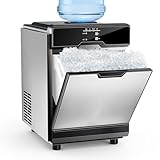
Overview: This Nugget Ice Maker offers 40 pounds of soft, chewable ice daily in a compact countertop design. Measuring conveniently for portability, it features a 10-pound storage bin and stainless steel construction suitable for home kitchens, bars, or office break rooms.
What Makes It Stand Out: The dual water inlet system supports both tap and bottled water, includes a tap water filter, and offers overflow protection—features rare in this class. The 8-15 minute batch cycle is among the fastest available. Commercial-grade stainless steel with thick foam insulation (≥25mm) and food-safe PP liner ensures durability and ice purity.
Value for Money: At $549.99, this is the most affordable option, sacrificing capacity for accessibility. While 40 pounds may limit heavy users, the dual water system and portability provide unique flexibility. The 12-month warranty and lifetime support add confidence for budget-conscious buyers.
Strengths and Weaknesses: Strengths include affordability, portability, dual water sources, fast batch cycles, and comprehensive warranty. The countertop design requires no installation. Weaknesses are lower daily output (40 vs 66+ lbs), smaller storage (10 lbs), and inability to integrate as built-in. Not suitable for high-demand commercial use.
Bottom Line: Ideal for casual users, small households, or those wanting nugget ice without permanent installation. The portability and dual water system make it perfect for renters, offices, or occasional entertainers prioritizing convenience over maximum capacity.
Why Nugget Ice Has Become the Ultimate Home Luxury
The rise of nugget ice makers represents a fascinating shift in how we think about kitchen luxury. Where once a Sub-Zero refrigerator or a six-burner range defined a premium culinary space, today’s discerning homeowners are investing in appliances that enhance daily rituals. Nugget ice—sometimes called pellet ice, chewable ice, or Sonic ice—delivers a sensory experience that standard cubes simply cannot match. Its porous structure absorbs flavors, chills drinks rapidly, and provides that addictive crunch that has spawned countless online fan communities.
What makes this particularly relevant for 2026 is the convergence of improved technology and more accessible pricing. Early generations of these machines were plagued by reliability issues, noisy operation, and prohibitive costs. Modern units feature sophisticated compressors, smart diagnostics, and energy-efficient designs that justify their place in the residential market. The result is an appliance that doesn’t just make ice—it creates a lifestyle upgrade that you’ll use and appreciate multiple times every single day.
Understanding the Sonic Ice Phenomenon
The term “Sonic ice” has become genericized, much like “Kleenex” for tissues, but its origins are specific. Sonic Drive-In perfected the production of nugget ice using a specialized process that creates small, irregularly shaped pellets with a soft, chewable core. Unlike traditional hard cubes that are frozen in molds, nugget ice is made by compressing flaked ice into small nuggets, creating air pockets that give it that signature texture.
This phenomenon has transcended its fast-food roots to become a cultural touchstone. Social media platforms are filled with videos of people crunching nugget ice, reviews comparing home machines to the Sonic original, and creative cocktail recipes specifically designed around this unique ice form. The psychological appeal is powerful: the soft crunch provides sensory satisfaction, while the rapid cooling and flavor absorption create a superior drinking experience. Understanding this context helps explain why so many homeowners are willing to dedicate precious undercounter space to a single-purpose appliance.
The Science Behind That Perfect Crunch
The magic of nugget ice lies in its microscopic structure. Traditional ice cubes freeze from the outside in, creating a dense, hard crystal structure. Nugget ice, by contrast, begins as thin flakes of ice scraped from a cylindrical evaporator plate. These flakes are then extruded through a small auger and compressed into nuggets, but not so densely that they become solid. The result is an ice particle that’s approximately 50% ice and 50% air by volume.
This high air content is what creates the signature crunch and rapid melt rate. When you bite down, those air pockets collapse, creating that satisfying sensory feedback. From a thermodynamic perspective, the increased surface area and porous nature means more contact with your beverage, chilling it faster than dense cubes. The trade-off is that it melts more quickly, but this is actually a feature for many enthusiasts—the ice absorbs and concentrates flavors as it melts, making the last sips of your drink uniquely delicious.
What Makes an Undercounter Ice Maker “Nugget-Style”?
Not all undercounter ice makers produce true nugget ice, and this is where many buyers get confused. Some machines produce “cubelet” or “pearl” ice that looks similar but has a fundamentally different texture. True nugget ice makers use a specific auger-style system that creates ice through extrusion, rather than traditional grid-based freezing.
The distinction matters because the production method directly impacts texture, noise level, and maintenance requirements. Auger-based systems are more complex, with more moving parts that require periodic maintenance. They also tend to be slightly louder during operation due to the mechanical nature of ice extraction and compression. However, they’re the only way to achieve that authentic Sonic-like quality that most buyers are seeking.
The Nugget Ice Production Process
Understanding the mechanics helps set realistic expectations. The process begins with water flowing over a cylindrical evaporator plate that’s cooled to well below freezing. A rotating auger scrapes ice crystals from this surface, creating a slushy mixture that’s then compressed through small extrusion heads. The pressure and temperature must be precisely calibrated—too much compression creates hard pellets; too little results in slush.
This continuous process means nugget ice makers operate differently than traditional batch-production ice makers. They can typically produce ice around the clock, but their daily output is measured under ideal conditions. Real-world production varies based on ambient temperature, water quality, and how frequently the bin is emptied. The storage bin itself isn’t refrigerated—it’s insulated—so ice slowly melts and recycles water, which is both efficient and a key design feature to understand.
Key Benefits of Undercounter Nugget Ice Makers
The primary advantage of undercounter installation is integration. Unlike countertop models that clutter your kitchen and require manual water filling, undercounter units connect directly to your water line and drain, providing truly automated operation. This set-it-and-forget-it convenience means you’ll never run out of ice during a party or find yourself manually refilling a reservoir.
Space efficiency is another critical benefit. In modern kitchen design, every square inch matters. Undercounter models tuck neatly into kitchen islands, wet bars, or butler’s pantries, often replacing a less-used cabinet or drawer. Many units are designed to accept custom panels, allowing them to disappear completely into your cabinetry. For homes without basements or utility rooms, this integration is essential for maintaining clean sightlines and uncluttered countertops.
Critical Features to Evaluate Before Buying
When evaluating specifications, focus on performance metrics that align with your actual usage patterns rather than getting dazzled by impressive-sounding numbers. The difference between a machine that produces 50 pounds versus 80 pounds daily matters less than you might think for most households—what’s more important is how quickly it replenishes after you empty the bin and how consistent the ice quality remains over time.
Pay close attention to the control interface. Basic models offer simple on/off switches with mechanical timers, while premium units feature digital displays, programmable ice production schedules, and diagnostic systems that alert you to maintenance needs. For 2026, look for units with adaptive learning capabilities that adjust production based on your usage patterns, optimizing both energy consumption and ice availability.
Daily Ice Production Capacity
Manufacturers rate production capacity under ideal conditions: 70°F ambient air and 50°F incoming water. Your actual production will vary. A family of four typically uses 5-8 pounds of ice daily for regular drinking, but entertaining can spike usage to 20-30 pounds in a single evening. The key is understanding the machine’s recovery rate—how quickly it refills an empty bin.
Most premium units produce their first batch within 15-20 minutes of startup, with full bin recovery in 2-3 hours. For serious entertainers, consider units with production rates of 60+ pounds daily. However, be realistic about your needs. A 50-pound machine produces over 2 pounds per hour continuously—sufficient for most households if you develop the habit of emptying the bin into a freezer container before parties.
Storage Bin Capacity
Storage capacity is separate from production rate and often the more limiting factor. Bins typically hold 15-30 pounds of ice. The crucial specification is the “ice level sensor” system. Cheaper models use simple mechanical flappers that can become jammed with ice, while premium units employ infrared sensors that accurately measure bin fullness.
Consider your usage pattern. If you primarily want ice available for daily drinks, a smaller bin with continuous production works perfectly. If you host large gatherings where you need to batch ice in advance, prioritize larger bins and plan to supplement with freezer storage. Some advanced models feature a “party mode” that overfills the bin temporarily, a clever feature for entertaining.
Ice Quality and Consistency
Not all nugget ice is created equal. Quality variations stem from water pressure consistency, temperature stability, and auger precision. The best units maintain consistent nugget size and texture throughout the production cycle, while lesser models may produce irregular pieces or develop “slushy” periods during heavy use.
Look for machines with built-in water pressure regulators and multiple temperature sensors. These features ensure the ice maintains its characteristic chewability even when your household water pressure fluctuates. Some premium models allow you to adjust nugget density through the control panel, letting you customize the texture from softer (more Sonic-like) to slightly firmer for slower melting in cocktails.
Installation Requirements
This is where dreams meet reality. Undercounter nugget ice makers have specific requirements that can make or break your project. Clearance is critical—these units need ventilation space, typically 1-3 inches on sides and back, though some premium models are front-venting and can be built-in flush. Measure your space three times before ordering.
Weight is another overlooked factor. A fully installed unit can weigh 100-150 pounds. Ensure your floor can support this, especially in older homes or upper-level installations. The location must also be level within 1/4 inch over 2 feet—any more and you’ll have uneven ice production and potential water leakage.
Energy Efficiency and Operating Costs
Nugget ice makers are surprisingly energy-intensive, typically drawing 300-500 watts during production cycles. Over a year, this translates to $100-200 in electricity costs depending on your rates and usage patterns. Energy Star ratings are becoming more common, but the certification process is complex for ice makers, so absence of the label doesn’t necessarily indicate inefficiency.
More significant is water usage. These machines are water-cooled (most residential units use air-cooled condensers, but water is still wasted during harvest cycles). Expect 3-5 gallons of water to produce 20 pounds of ice, with additional water used for self-cleaning cycles. In areas with high water costs or conservation concerns, this operational expense adds up. Look for models with water recycling features that reuse melted ice water for new production.
Noise Levels and Acoustic Considerations
The auger mechanism and compressor create noise—there’s no way around it. Decibel ratings typically range from 45-60 dB, comparable to a quiet dishwasher at the low end and a normal conversation at the high end. However, these numbers don’t tell the full story. The sound profile matters: a steady hum is less intrusive than intermittent grinding or clicking.
Premium units feature sound-dampening compressors, insulated cabinets, and rubber-mounted components that minimize vibration transfer to cabinetry. Consider the installation location carefully. A unit placed in a kitchen island will be more audible than one tucked in a butler’s pantry. Some homeowners build additional sound insulation into the surrounding cabinetry, though this must be done carefully to avoid restricting ventilation.
Sizing and Dimensions: Will It Fit Your Space?
Standard undercounter nugget ice makers measure 15 inches wide, 34 inches high, and 24 inches deep—designed to fit standard cabinet openings. However, “standard” doesn’t mean universal. Measure your actual opening, not the nominal cabinet size. Account for hinges, door handles, and any trim that might interfere.
Depth is frequently problematic. Many kitchen islands have reduced depth cabinets (21-22 inches) that won’t accommodate a full-depth unit. Some manufacturers offer “slimline” models at 18 inches deep, though these typically sacrifice bin capacity. Height can also be an issue if you have non-standard countertops or plumbing running through the back of the cabinet. Always confirm the exact cutout dimensions in the installation manual, not just the unit’s exterior measurements.
Plumbing and Electrical Requirements
This is the technical heart of installation and where professional help is often warranted. Most units require a 1/4-inch water supply line with a dedicated shutoff valve. The water pressure must be between 20-80 PSI—outside this range, you’ll need a pressure regulator. The connection is typically made with a saddle valve or, preferably, a proper T-fitting installed in an existing cold water line.
Electrical requirements vary. Most residential units use a standard 115V, 15-amp circuit, but they should be on a dedicated line to prevent nuisance tripping. The outlet must be GFCI-protected and positioned so the plug is accessible for service. Some commercial-grade units require 220V, which means running new electrical—a significant cost factor. Always verify requirements before purchasing.
Water Line Considerations
Water quality directly impacts ice quality and machine longevity. Hard water will cause scale buildup that can destroy a machine in months. At minimum, install an inline sediment filter. Better yet, use a combination sediment and carbon filter that removes chlorine, which can affect taste and corrode internal components.
The water line routing matters. Avoid running lines near heat sources or through uninsulated exterior walls where they could freeze. Use flexible braided stainless steel lines rather than copper, as they’re more forgiving of minor movement and vibration. Install a shutoff valve within easy reach—if your machine develops a leak, you’ll need to cut water quickly without crawling under the unit.
Drainage Options
This is the detail that derails most DIY installations. Nugget ice makers produce meltwater that must go somewhere. You have three options: gravity drain, drain pump, or condensate pump. Gravity drain is simplest—if you can position the unit above a floor drain or sink drain with a continuous downward slope. Most kitchen installations require a pump.
Drain pump models are more expensive but infinitely more flexible. The pump activates automatically when water reaches a certain level in the collection tray, pushing it through a small line to your sink drain or garbage disposal inlet. Ensure your local code allows this connection—some jurisdictions require an air gap. Pump models add complexity and another potential failure point, so look for units with commercial-grade pumps rated for continuous duty.
Power Supply Specifications
Beyond voltage and amperage, consider the outlet location. It should be within 6 feet of the unit, positioned so you can unplug it without removing the machine. The cord should never be routed through cabinetry or compressed against walls. Some codes require the outlet to be installed in an adjacent cabinet rather than behind the unit, making service safer and easier.
Surge protection is non-negotiable. The control boards in modern ice makers are sensitive to power fluctuations. A whole-house surge protector is ideal, but at minimum, use a high-quality outlet with built-in surge protection. During installation, verify proper grounding with a multimeter—improper grounding is a common cause of erratic operation and premature component failure.
Water Filtration: The Secret to Perfect Ice
The difference between crystal-clear, taste-free nugget ice and cloudy, off-flavored pellets often comes down to filtration. Municipal water supplies vary dramatically in mineral content, chlorine levels, and particulates. Even with excellent tap water, the ice-making process concentrates impurities as water freezes.
Install a multi-stage filtration system: sediment filter (5-micron) to remove particulates, carbon block to remove chlorine and organic compounds, and ideally a scale inhibitor if you have hard water. Change filters on schedule—clogged filters reduce water flow, which the machine interprets as a supply problem, triggering error codes or reduced production. Many premium units now include filter life monitors that track gallons processed rather than just time.
Maintenance and Cleaning Protocols
Here’s the truth nugget ice maker manufacturers don’t emphasize enough: these machines require consistent maintenance. The auger system, evaporator plate, and storage bin create an environment where mineral scale and biofilm can flourish. Neglect maintenance and you’ll have a $3,000 appliance producing foul-tasting ice or failing completely within a year.
Establish a maintenance schedule before you buy. The machine should be cleaned monthly with a nickel-safe cleaner (most manufacturers sell proprietary solutions). This involves running a cleaning cycle, scrubbing the bin, and sanitizing the auger assembly. It’s a 45-minute process that can’t be skipped. Some newer models feature automated cleaning cycles that reduce manual labor, but you’ll still need to initiate the process and replace cleaning solution.
Daily and Weekly Maintenance Tasks
Develop simple habits to extend time between deep cleanings. Empty the bin completely every few days to prevent ice from clumping and developing freezer burn. Wipe down the gasket and door interior weekly with a food-safe sanitizer. Check the condenser coils monthly for dust buildup—vacuum them gently with a brush attachment.
Listen to your machine. Changes in sound often precede problems. A grinding noise might indicate auger wear; a high-pitched whine could signal a failing compressor bearing. Catching these early through regular attention can mean the difference between a simple service call and a catastrophic failure.
Deep Cleaning and Descaling
Every 3-6 months, perform a full descaling if you have hard water. This requires circulating a mild acid solution (vinegar is insufficient; use commercial descalers) through the water system to dissolve mineral buildup. The process takes 2-3 hours and must be followed by multiple rinse cycles to prevent chemical contamination of your ice.
During deep cleaning, inspect critical components. Check the auger for pitting or wear, examine the evaporator plate for scale that won’t release, and verify that the bin drain isn’t clogged with mineral deposits. Document any changes with photos—this creates a baseline for tracking wear over time and provides valuable information for service technicians.
Warranty and Customer Support Considerations
Nugget ice maker warranties typically cover 1-3 years on parts and labor, with extended coverage on the sealed refrigeration system (5 years is common). Read the fine print carefully. Many warranties are voided by improper installation, failure to perform documented maintenance, or using non-approved cleaning products.
Customer support quality varies dramatically between manufacturers. Before purchasing, test their support system: call with a technical question and see how quickly you reach a knowledgeable representative. Check online forums and reviews specifically for service experiences, not just product performance. A company that provides excellent support can make ownership painless; poor support turns a minor issue into a month-long nightmare.
Budget Planning: Understanding Total Cost of Ownership
The sticker price is just the beginning. A quality undercounter nugget ice maker represents a significant investment with ongoing costs that smart buyers factor into their decision. Between installation, maintenance, water, electricity, and potential repairs, the five-year cost can exceed the purchase price by 50%.
Plan for professional installation ($300-800 depending on plumbing and electrical complexity). Budget $100-150 annually for filters and cleaning supplies. Set aside a repair fund—compressor replacements can cost $400-600, and control board failures run $200-400. Understanding these numbers helps you choose between a budget model that might need earlier replacement versus a premium unit with better reliability.
Initial Purchase Price Ranges
In 2026, expect to spend $1,800-2,500 for entry-level residential units with 50-pound production capacity and basic features. Mid-range models ($2,500-3,500) offer better insulation, quieter operation, and smart features. Premium units ($3,500-5,000+) provide commercial-grade components, higher production rates, custom panel readiness, and advanced diagnostics.
Price doesn’t always correlate with reliability. Some mid-range models outperform expensive units in long-term durability. Focus on component quality: copper versus aluminum evaporators, commercial versus residential-grade compressors, and the gauge of stainless steel used in construction. These details, often buried in specification sheets, dictate longevity more than brand prestige.
Long-Term Operating Costs
Calculate your cost per pound of ice. A typical household using 10 pounds daily will produce 3,650 pounds annually. If your total annual operating costs (electricity, water, filters, cleaning supplies) are $200, you’re paying about 5.5 cents per pound—far less than bagged ice, but not insignificant. High-usage households might see costs of $300-400 annually.
Energy costs will rise. When evaluating units, look for those with variable-speed compressors and intelligent production scheduling that can shift ice-making to off-peak hours if your utility offers time-of-use rates. Some smart models can integrate with home energy management systems to optimize for both cost and convenience.
Common Installation Mistakes to Avoid
The most frequent error is inadequate ventilation. Even front-venting units need clearance for air circulation. Building them into tight cavities without proper vent channels causes overheating, reduces ice production by 20-30%, and shortens compressor life dramatically. Follow manufacturer specifications exactly; they’re not suggestions.
Another mistake is improper leveling. Use a digital level, not a bubble level, for precision. The machine must be level front-to-back and side-to-side. An unlevel machine causes water to pool unevenly in the evaporator, leading to inconsistent ice formation and potential water leakage. Take the time to adjust the leveling legs perfectly, even if it means shimming the cabinet floor.
Troubleshooting Common Issues
Before calling for service, understand that many “problems” are normal operation. It’s normal for the machine to pause production when the bin is full. It’s normal for ice to clump slightly if left for days. It’s normal for the machine to produce more noise during the harvest cycle.
Real problems include: ice production stopping completely (check water supply and filter), ice that’s too wet or slushy (check ambient temperature—unit may be overheating), or unusual grinding noises (auger may be jammed with a foreign object). Keep a log of error codes—most digital displays will show codes that technicians can use for remote diagnosis. Never clear an error code without documenting it first.
Integrating Your Ice Maker into Smart Home Systems
The newest generation of nugget ice makers offers WiFi connectivity and app control, but evaluate whether these features add real value. Useful capabilities include: production scheduling, maintenance reminders, filter life tracking, and remote diagnostics. Gimmicky features like voice control or ice level cameras rarely justify the price premium.
If you invest in a smart model, ensure your home network reaches the installation location with strong signal. These appliances operate on 2.4GHz networks and can be finicky about connectivity. Place them on a dedicated IoT network segment for security. The real value comes from predictive maintenance alerts that notify you of issues before they cause a breakdown—imagine getting a text that your water pressure is dropping, indicating a clogged filter, before you run out of ice during a party.
Environmental Considerations and Sustainability
Nugget ice makers have a larger environmental footprint than most small appliances. The refrigerants used (typically R600a or R134a) are potent greenhouse gases if they leak. Choose models with leak-detection systems and robust sealed systems. The water usage, while efficient compared to early models, still represents ongoing consumption in an increasingly water-conscious world.
Consider the unit’s end-of-life. Premium models with modular construction allow for component replacement, extending lifespan to 10-15 years. Cheaper units may be disposable after 5-7 years. Look for manufacturers with take-back programs for responsible refrigerant recovery and metal recycling. Some forward-thinking companies are experimenting with natural refrigerants and biodegradable insulation foams—worth investigating if sustainability is a core value.
Frequently Asked Questions
1. How long do nugget ice makers typically last?
With proper maintenance, quality residential units last 7-10 years. Commercial-grade models can exceed 15 years. The most common failure points are compressors and control boards, which are repairable but expensive. Consistent cleaning and filter changes are the best predictors of longevity.
2. Can I install a nugget ice maker myself?
If you’re experienced with plumbing and electrical work, yes—but most homeowners should hire professionals. The combination of water line connections, drainage, 115V electrical, and precise leveling creates multiple failure points. Improper installation voids warranties and can cause water damage. Budget $300-800 for professional installation.
3. Why does my nugget ice taste bad even with filtered water?
Taste issues usually stem from infrequent cleaning. Biofilm and mineral buildup in the bin and auger system impart flavors that filters can’t remove. Perform the manufacturer’s recommended cleaning cycle monthly, and sanitize the bin weekly. Also check that your drain line has a proper air gap—sewer gases can backflow and contaminate ice.
4. How much ice should I expect to get on the first day?
First-day production is typically 30-50% of rated capacity. The machine needs time to cool down, and the bin starts empty. Most units produce their first nuggets within 15-20 minutes of startup, but reaching full bin capacity takes 4-6 hours. Plan ahead for parties by starting the machine early or storing ice in your freezer.
5. What’s the difference between nugget ice and cubelet ice?
True nugget ice is made by compressing flaked ice, creating a soft, porous texture. Cubelet ice is made by freezing water in small molds, resulting in a harder, more uniform pellet. Cubelet machines are often cheaper and more reliable but don’t deliver the signature Sonic-like crunch. Verify the production method, not just the marketing terms.
6. Can I use my ice maker outdoors?
Only models specifically rated for outdoor use. Standard units can’t handle temperature fluctuations, humidity, and insects. Outdoor-rated models have sealed electronics, weatherproof exteriors, and condensers designed for variable ambient temperatures. They cost 30-50% more but are essential for outdoor kitchens.
7. Why is my ice maker so loud?
Normal operation includes compressor cycling, auger rotation, and ice dropping into the bin (45-60 dB). Excessive noise often indicates a problem: a failing compressor mount, loose auger, or restricted water flow causing pump strain. Check that the unit is level and has proper clearance. Persistent unusual noises warrant a service call.
8. How often do I really need to change filters?
Follow manufacturer recommendations, typically every 6 months or 1,500 gallons. However, if you notice reduced ice production, wetter ice, or off-taste before the scheduled change, replace the filter. High sediment water or heavy usage may require 3-4 month intervals. Use only manufacturer-approved filters to avoid warranty issues.
9. Will a nugget ice maker increase my home’s value?
In luxury markets, yes—a properly installed, high-end nugget ice maker can be a compelling differentiator. In average markets, it’s unlikely to recoup full cost but adds lifestyle appeal. The real value is personal enjoyment and convenience. Consider it a luxury upgrade like a wine fridge: valuable for your quality of life, with modest impact on resale.
10. What happens if I don’t use all the ice?
Ice slowly melts in the insulated bin and drains away, with water recycled for new ice production. This is normal and efficient. However, don’t let ice sit for weeks unused—it can absorb odors and develop freezer burn. If you’ll be away, empty the bin, clean it, and turn off the machine. Most units have a vacation mode that reduces energy use while keeping the system clean.