Compact kitchens demand surgical precision when it comes to appliance selection, and nothing transforms your cooking space quite like a properly chosen counter-depth refrigerator. As we look toward 2026, manufacturers have finally cracked the code on maximizing every cubic inch without sacrificing performance or style. These aren’t the shallow, compromised models of yesterday—today’s space-maximizing designs rival their standard-depth counterparts while giving you back precious floor space and visual breathing room.
Whether you’re renovating a galley kitchen in a city apartment or optimizing a cozy cottage layout, understanding the nuanced features that define next-generation counter-depth refrigeration will save you from costly measurement mistakes and buyer’s remorse. Let’s dive into what separates the truly space-efficient models from the merely slim.
Top 10 Counter-Depth Refrigerators for Small Kitchens
Detailed Product Reviews
1. Sharp SJB1255GS Bottom-Freezer Counter-Depth Refrigerator, 24 Inch, 11.5 Cubic Foot, Garage Ready

Overview: The Sharp SJB1255GS is a compact yet spacious bottom-freezer refrigerator designed for modern kitchens and garage installations. At 24 inches wide and 11.5 cubic feet total capacity, it offers a slim profile without sacrificing storage flexibility. The counter-depth design ensures seamless integration with cabinetry, while the garage-ready construction means it performs reliably in varying ambient temperatures.
What Makes It Stand Out: The innovative Vacation Mode sets this unit apart, allowing you to shut down the refrigerator compartment while keeping the freezer operational—perfect for extended trips. The Fresh Converter Drawer is another standout, offering adjustable temperature zones that transition between chiller and crisper modes. Combined with Multi Air Flow technology that distributes cold air evenly throughout both compartments, this refrigerator prioritizes food preservation versatility.
Value for Money: At $1,098.97, this Sharp model sits in the mid-range for counter-depth units. While you can find cheaper alternatives, few offer the specialized garage-ready certification and Vacation Mode feature. Comparable models from competitors typically cost $100-200 more for similar specifications, making this a solid investment for those needing flexible installation options.
Strengths and Weaknesses: Strengths include the clever Vacation Mode, garage-ready durability, versatile Fresh Converter Drawer, and space-efficient bottom-freezer design. The removable wine rack adds convenience for entertainers. Weaknesses include the relatively small 11.5 cubic foot capacity for larger households, limited door storage compared to side-by-side models, and the premium price point over basic apartment refrigerators.
Bottom Line: Ideal for singles, couples, or as a secondary garage unit, the Sharp SJB1255GS delivers thoughtful features that justify its price. If you need garage-ready performance and flexible storage modes, this is an excellent choice. For larger families prioritizing raw capacity, consider larger alternatives.
2. Hamilton Beach HBF1558 15.6 cu ft Counter Depth Full Size Refrigerator, Side Doors, Stainless
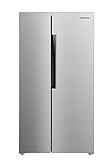
Overview: The Hamilton Beach HBF1558 delivers full-size refrigeration in a counter-depth package with its convenient side-by-side door configuration. Offering 15.6 cubic feet of total capacity, this stainless steel unit provides ample storage for families while maintaining a sleek, built-in look. The side-by-side design allows simultaneous access to fresh and frozen sections without bending.
What Makes It Stand Out: The oversize gallon door bins maximize storage efficiency, accommodating large beverage containers and freeing up shelf space. The digital display control panel, mounted inside the refrigerator door, offers intuitive temperature management without disrupting the clean exterior aesthetic. The side-by-side configuration itself is a key differentiator at this price point, typically found on more premium models.
Value for Money: Priced at $1,096.90, this model competes directly with traditional top-freezer units while offering the more desirable side-by-side layout. You’re getting 15.6 cubic feet for roughly the same price as smaller 11-12 cubic foot models, representing strong value. The inclusion of digital controls and customizable shelving adds premium touches rarely seen at this price tier.
Strengths and Weaknesses: Strengths include generous capacity, convenient side-by-side access, spacious door bins, digital temperature controls, and adjustable shelving for personalization. The stainless finish provides modern appeal. Weaknesses include potential for less energy efficiency than top-freezer designs, narrower compartments that may not fit wide items like pizza boxes, and the absence of advanced features like humidity-controlled crispers.
Bottom Line: An excellent value proposition for families seeking side-by-side convenience without the typical premium price. The Hamilton Beach HBF1558 balances capacity, features, and affordability effectively. If you prioritize easy access and organization over specialized preservation tech, this is a smart purchase.
3. Avanti 15.6 cu. ft. Side-by-Side Apartment Refrigerator with Freezer, Compact Counter-Depth Fridge for Small Spaces, Stainless Steel

Overview: The Avanti side-by-side refrigerator targets apartment dwellers and space-conscious homeowners with its 15.6 cubic foot capacity and compact footprint. The stainless steel design with recessed handles offers a contemporary look while the side-by-side configuration provides easy access to both fresh and frozen foods. At under $850, it positions itself as an affordable entry into the side-by-side market.
What Makes It Stand Out: This model brings side-by-side convenience to a price point typically dominated by basic top-freezer units. The electronic temperature control with front-facing digital display offers modern convenience rarely found in budget-friendly models. The inclusion of three adjustable glass shelves and two clear-view crispers in both compartments provides flexibility uncommon in compact refrigerators.
Value for Money: At $848.67, this Avanti represents exceptional value, undercutting most competitors by $200-400. You’re getting side-by-side styling, electronic controls, and adjustable glass shelving for the price of a basic apartment fridge. While build quality may not match premium brands, the feature-to-price ratio is compelling for budget-conscious buyers or rental properties.
Strengths and Weaknesses: Strengths include unbeatable price for side-by-side design, electronic temperature controls, adjustable glass shelving, modern stainless aesthetic, and space-efficient layout. The separate crispers in both compartments enhance organization. Weaknesses include potentially less robust construction, basic insulation compared to higher-end models, limited door storage depth, and no advanced features like vacation modes or humidity controls.
Bottom Line: Perfect for apartments, condos, or rental units where budget and space are primary concerns. The Avanti delivers side-by-side convenience and modern controls at an entry-level price. Don’t expect luxury performance, but for cost-effective, decent quality refrigeration, it’s hard to beat.
4. SMETA Top Mount Refrigerator with Freezer 30’’, 2-Door Counter Depth Refrigerators 14.2 Cu Ft Stainless Steel Garage Fridge, Office, Ice Maker Ready, Energy Star Certified

Overview: The SMETA top-mount refrigerator offers a practical 14.2 cubic feet of storage in a garage-ready, counter-depth design. This two-door unit features a full-space frost-free system with integrated circulating air for efficient cooling. The stainless steel finish and Energy Star certification make it suitable for kitchens, offices, or garage installations where consistent performance matters.
What Makes It Stand Out: The five conversion modes provide exceptional versatility, allowing you to adapt the refrigerator for different needs and seasons. Being garage-ready and Energy Star certified is a rare combination at this price point. The slide-full width shelf accommodates large items like cakes and casseroles, while the ice-maker-ready feature adds future upgrade potential.
Value for Money: At $829.99, this SMETA model delivers impressive value with its frost-free operation, garage-ready rating, and Energy Star efficiency. Comparable garage-certified models typically start above $1,000. The inclusion of LED lighting, adjustable components, and conversion modes makes it a feature-rich option for budget-conscious buyers seeking reliable performance.
Strengths and Weaknesses: Strengths include garage-ready versatility, Energy Star efficiency, frost-free convenience, flexible conversion modes, LED lighting, and full-width sliding shelf. The 12-month warranty provides peace of mind. Weaknesses include the basic top-freezer design that requires bending for frozen items, smaller freezer capacity (3.7 cu ft), and less sophisticated temperature management than digital-controlled models.
Bottom Line: An excellent choice for garage, office, or budget kitchen use where reliability and efficiency matter most. The SMETA’s conversion modes and garage-ready certification set it apart. If you need a dependable, no-frills workhorse that saves energy, this is a smart buy. For premium features or larger freezer space, look elsewhere.
5. KoolMore 30-Inch and 18.5 cu. ft. Counter Depth French Door Refrigerator with Three Doors and Deep Freezer in Stainless-Steel (KM-RERFDSS-18C)

Overview: The KoolMore French door refrigerator brings premium styling and substantial capacity to the counter-depth category. At 18.5 cubic feet, this three-door unit features French doors above and two deep freezer drawers below, offering sophisticated storage solutions. The stainless-steel flat finish and easy-open handles create a seamless, modern kitchen integration.
What Makes It Stand Out: The double-flow cooling system ensures even temperature distribution for optimal food preservation, while humidity-controlled double crispers maintain produce freshness longer than standard bins. The dual freezer drawer configuration provides superior organization compared to single-drawer models, and the six door bins maximize vertical storage efficiency in a way side-by-side models cannot match.
Value for Money: At $1,389.00, this KoolMore positions itself as a value alternative to premium brands like LG or Samsung, which often exceed $2,000 for similar specifications. You’re getting French door elegance, advanced cooling technology, and substantial capacity for roughly 30-40% less than major brand equivalents. The build quality and features justify the mid-premium price point.
Strengths and Weaknesses: Strengths include impressive 18.5 cu ft capacity, elegant French door design, dual freezer drawers for organization, humidity-controlled crispers, advanced cooling system, and premium stainless aesthetic. The counter-depth profile maintains kitchen flow. Weaknesses include higher price than basic models, potentially higher repair costs due to complexity, and the need for wider door clearance than side-by-side units.
Bottom Line: A compelling choice for homeowners seeking French door sophistication without the premium brand price tag. The KoolMore delivers excellent capacity, thoughtful organization, and advanced preservation features. If your budget allows and you have the space, this offers tremendous value compared to big-name alternatives.
6. BANGSON 7.1 Cu.Ft Refrigerator with Freezer, Apartment Size Fridge with Bottom Freezer, for Apartment, Office, Kitchen and Garage, Stainless Steel, Silver

Overview: The BANGSON 7.1 Cu.Ft Refrigerator delivers full-size functionality in a space-saving package perfect for apartments, offices, or auxiliary spaces. Measuring just 21.3" x 20.7" x 56", this bottom-freezer model offers 5.45 cu.ft of refrigeration and 1.65 cu.ft of freezer space, making it ideal for individuals or couples seeking efficient food storage without sacrificing precious square footage. Its stainless steel finish provides a modern aesthetic that fits various décors.
What Makes It Stand Out: This fridge distinguishes itself with five precise temperature settings (ranging from 32°F to 50°F in the fridge, -5.6°F to 15.1°F in freezer) and remarkably quiet operation at only 39dB. Unique features include an automatic night light for midnight snacking, reversible doors for flexible installation, and thoughtful accessories like an ice tray, defrost tool, and dedicated egg shelf—amenities rarely found in this price tier. The bottom freezer design maximizes accessible refrigeration space.
Value for Money: At $429.99, this BANGSON model represents exceptional value, offering bottom-freezer convenience typically seen in units costing twice as much. It competes directly with basic top-freezer apartments fridges while providing superior organization and accessibility. For budget-conscious buyers, it delivers core functionality without compromising essential features.
Strengths and Weaknesses: Strengths include its whisper-quiet operation, energy efficiency, adjustable glass shelves, crisper drawer, and compact footprint. The reversible door and leveling legs add installation flexibility. Weaknesses include the need to let it settle 6-12 hours after transport, manual defrost requirements, and limited capacity for families. The stainless steel finish may show fingerprints.
Bottom Line: For budget-conscious buyers needing reliable refrigeration in tight quarters, this BANGSON fridge is a standout choice that punches well above its weight class.
7. VEVOR French Door Refrigerator, 18.9 Cu. Ft. Kitchen Fridge, Counter Depth French Refrigerator with LED Display and 4 Casters, Frost-Free Bottom Freezer Refrigerators for Home & Commercial Use, Black

Overview: The VEVOR French Door Refrigerator brings premium styling and substantial 18.9 cu.ft capacity to kitchens requiring counter-depth solutions. With 12.4 cu.ft of refrigeration space and 6.5 cu.ft in the frost-free freezer, this black stainless unit handles family meal prep and entertaining with ease, while four casters provide unexpected mobility. The sleek design suits modern homes and commercial spaces alike.
What Makes It Stand Out: Smart cooling technology with inverter compressor maintains even temperatures from 35.6°F to 46.4°F across multiple zones. The LED display enables precise digital control, while magnetic door seals minimize cold air loss. Multiple modes including fast cooling and energy efficiency adapt to varying needs, and the 90° door opening allows drawer access even in tight spaces. The caster system enables easy cleaning and repositioning.
Value for Money: Priced at $1,437.99, this VEVOR positions itself as a mid-range alternative to $2,000+ name-brand French door models. It delivers commercial-grade features like frost-free operation and caster mobility rarely found in residential units, making it ideal for home-business hybrid spaces. The capacity and features justify the investment for serious home chefs.
Strengths and Weaknesses: Strengths include generous capacity, sleek counter-depth design, quiet 45dB operation, adjustable shelving, and versatile placement options. The frost-free system eliminates manual defrosting. Weaknesses include higher energy consumption than smaller units, limited color options, and potential service network concerns compared to established brands. The black finish may not suit all décors.
Bottom Line: A compelling choice for style-conscious buyers wanting French door elegance and commercial durability without premium brand pricing.
8. Hamilton Beach HBF1662 French Door Full Size Counter Depth Refrigerator with Freezer Drawer, 16.6 cu ft, Stainless

Overview: Hamilton Beach’s HBF1662 French Door Refrigerator combines elegant design with practical functionality in a 16.6 cu.ft counter-depth package. The stainless steel finish and recessed handles create a built-in look, while the spacious 4.9 cu.ft freezer drawer and gallon door bins maximize storage efficiency for modern households. This unit balances aesthetics with everyday usability for families.
What Makes It Stand Out: This model excels in accessibility with its French door configuration that keeps frequently used items at eye level. The tall door bins accommodate gallon containers, freeing valuable shelf space for prepared foods. Bright LED interior lighting illuminates contents clearly, and the sleek recessed handles provide a professional, seamless aesthetic that resists catching on clothing. The counter-depth design integrates beautifully with cabinetry.
Value for Money: At $1,245.47, this Hamilton Beach offers name-brand reliability at a competitive price point, typically $300-500 less than comparable LG or Samsung models. It delivers core French door benefits—wide refrigeration access and bottom freezer convenience—without smart-tech premiums many users never utilize. The build quality matches its price tag.
Strengths and Weaknesses: Strengths include the counter-depth profile, generous freezer capacity, intuitive layout, quality LED lighting, and sturdy gallon bins. The stainless steel construction feels substantial. Weaknesses include lack of advanced features like digital displays or ice makers, manual temperature controls, and potential finger-print visibility on stainless surfaces. No mention of noise levels or energy ratings.
Bottom Line: An excellent mid-range French door option for buyers prioritizing brand trust, clean design, and functional storage over high-tech gadgetry.
9. Summit 24" Bottom Freezer Refrigerator, Counter Depth Refrigerator- Freezer, Energy Star, White - FFBF121W (Right Hand Door)

Overview: Summit’s 24" Bottom Freezer Refrigerator delivers ENERGY STAR efficiency in a slim 11.7 cu.ft package ideal for space-constrained kitchens. Standing 73.25" tall with a 23.5" width, this white counter-depth unit offers surprising capacity through intelligent design, featuring three adjustable glass shelves, humidity-controlled crisper, and three slide-out freezer drawers. It suits urban apartments and galley kitchens perfectly.
What Makes It Stand Out: The digital temperature control panel inside the refrigerator provides precise management at the touch of a button. The Super Freeze setting rapidly cools newly loaded groceries, preserving freshness and safety. Three freezer drawers with plastic fronts protect contents from ambient air when opened—a thoughtful detail that enhances efficiency and organization beyond typical two-drawer systems. The slim profile fits narrow spaces.
Value for Money: At $1,111.28, this Summit positions itself as a premium compact option, costing more than basic top-freezer models but delivering superior energy efficiency and organization. It’s ideal for urban apartments, galley kitchens, or as a secondary fridge where space efficiency justifies the investment. Energy savings offset the initial cost over time.
Strengths and Weaknesses: Strengths include ENERGY STAR certification, 100% CFC-free construction, excellent temperature control, Super Freeze functionality, and drawer organization that prevents freezer burn. The slim profile fits narrow spaces. Weaknesses include premium pricing for the capacity, limited aesthetic options (white only), and the tall height may not suit all spaces. Brand recognition is lower than major manufacturers.
Bottom Line: Perfect for eco-conscious buyers needing maximum efficiency and organization in minimal square footage.
10. Summit 15” Built-In Beverage Center, Shallow 18” Depth Refrigerator, Commercially Approved, Stainless Steel - SDHG1533

Overview: Summit’s 15" Built-In Beverage Center is a specialized cooling solution designed for commercial and residential bars, gyms, and small businesses. With a shallow 18" depth and 1.9 cu.ft capacity, this UL-471 approved unit installs under counters or operates freestanding, providing flexible beverage storage where traditional refrigerators won’t fit. It’s purpose-built for display and convenience.
What Makes It Stand Out: The front-breathing design enables seamless built-in installation without ventilation concerns. Three adjustable glass shelves offer spill-proof storage, while recessed LED lighting creates attractive product display. The digital thermostat provides precise Fahrenheit or Celsius control, and the fully finished cabinet allows freestanding use—versatility rarely matched in commercial-grade units. The commercial approval ensures durability.
Value for Money: At $1,440.22, this beverage center commands premium pricing, but commercial approval and specialized design justify the cost for business applications. For homeowners, it’s a luxury upgrade for wet bars or entertainment areas, competing with high-end brands like Perlick at a lower price point. The cost-per-cubic-foot is high, but specialization adds value.
Strengths and Weaknesses: Strengths include commercial certification, flexible installation, precise temperature control, attractive LED display, and space-optimizing design. The shallow depth fits tight spaces. Weaknesses include extremely limited capacity, high cost-per-cubic-foot, and specialization that makes it unsuitable for general food storage. It’s a single-purpose appliance requiring dedicated use.
Bottom Line: An outstanding specialized solution for commercial settings or luxury home bars where beverage display and space constraints are primary concerns.
The Counter-Depth Revolution: Why 2026 Changes Everything
The True Definition: Beyond Marketing Hype
Counter-depth doesn’t mean “exactly 24 inches”—that myth has led to more installation nightmares than any other refrigerator misconception. True counter-depth models in 2026 account for door thickness, handle projection, and the crucial quarter-inch breathing room behind the unit. Most flush-fit designs actually measure 25-27 inches deep, creating that seamless built-in look without the built-in price tag. The real innovation lies in how manufacturers are redistributing capacity vertically and depth-wise, using advanced insulation materials that shave inches off wall thickness while improving temperature retention.
Standard vs. Counter-Depth: The Space Math
A standard refrigerator typically devours 30-36 inches of depth, protruding 6-12 inches beyond your countertops. In a 10x10 kitchen, that’s 12-24 square feet of lost floor space—enough room for a dishwasher or significant prep area. Counter-depth models reclaim this territory, but the 2026 engineering breakthroughs mean you’re no longer sacrificing 4-8 cubic feet of capacity. Thin-wall technology and relocated compressors now deliver 20-22 cubic feet in configurations that previously maxed out at 18. That’s the difference between shopping daily and making weekly grocery runs.
Small Kitchen Psychology: Why Every Inch Matters
The Kitchen Triangle in Compact Spaces
The golden triangle—sink, stove, refrigerator—becomes exponentially more critical when working with less than 150 square feet. A protruding refrigerator breaks the triangle’s flow, creating traffic bottlenecks and forcing awkward pivot movements. Counter-depth units maintain the triangle’s integrity, but 2026 models take this further with recessed handles and 90-degree door stops that prevent collisions with islands or opposing counters. Consider your triangle’s circumference: if it’s under 26 feet, every inch of protrusion reduces functional workspace by nearly 5%.
Visual Clutter Reduction Principles
Your brain perceives depth as wealth of space. When a refrigerator juts out, it visually chops the kitchen into smaller, claustrophobic zones. 2026’s near-flush designs create uninterrupted sightlines, making 80-square-foot kitchens feel like 100. The psychological impact extends to color continuity—models with matching side panels and minimal gaps create a “disappearing effect” that designers charge thousands to achieve with custom cabinetry.
2026’s Breakthrough Interior Architecture
Modular Shelf Engineering
Forget the old adjustable-peg system. Next-gen refrigerators feature cantilevered glass shelves that slide, fold, and retract with one-handed operation. Some designs allow you to collapse a shelf section without removing it entirely, creating instant tall-item space while maintaining surface area elsewhere. Look for “split-shelf” designs that let you stagger heights in a single plane—perfect for storing a wine bottle on one side and condiments on the other.
Convertible Zone Technology
The line between refrigerator and freezer is blurring. 2026’s premium counter-depth models include compartments that shift from 28°F to 55°F at the touch of a button, effectively giving you a bonus wine fridge, beverage center, or fresh produce drawer when you don’t need freezer space. This flexibility means a 20-cubic-foot unit can function like a 24-cubic-foot model during holiday cooking marathons. The spatial win? You’re not sacrificing permanent freezer real estate for occasional refrigeration needs.
Vertical Storage Maximization
Manufacturers have finally embraced the full height of the unit, extending door bins to within an inch of the top and redesigning crispers to stack rather than slide side-by-side. Some models incorporate “tower cooling” that eliminates the traditional freezer floor, creating a single vertical column of usable space. This approach adds 15-20% more storage within the same footprint.
The Pre-Purchase Measurement Protocol
The Three-Dimensional Audit Process
Measure three times, buy once. Start with width: counter-depth units need exactly 36 inches for standard models, but don’t forget to measure at the base, middle, and top—older kitchens can vary by half an inch. Height is trickier: measure from the floor to the lowest point of your upper cabinets, then subtract 1/2 inch for leveling. Depth requires three measurements: cabinet depth, handle projection, and the critical “door swing arc” from the hinge. Pro tip: tape a cardboard template to your floor and live with it for 48 hours to test traffic patterns.
Door Swing Geometry Calculations
A 90-degree door opening might sound sufficient, but you need 130-135 degrees for full bin removal. Calculate your clearance by measuring from the hinge point to the nearest obstruction (island, wall, or cabinet), then use the Pythagorean theorem to determine actual swing space. Models with “zero-clearance” hinges pivot inward as they open, requiring just 1/8 inch of side space versus the traditional 2 inches.
Hidden Obstacle Identification
Check for baseboard heating, air vents, and electrical outlets that protrude into the cavity. 2026’s slimmest models require just 1/4 inch behind the unit, but a misplaced outlet can push you out an extra inch. Use a stud finder to locate water lines and electrical conduits inside the wall—some modern plumbing configurations run vertically and can interfere with the refrigerator’s back panel.
Configuration Comparison: Spatial Efficiency Rankings
French Door Models: Pros and Cons
French doors dominate the counter-depth market for good reason: narrow 18-inch doors require half the swing clearance of a single 36-inch door. In 2026, look for “triple-tier” freezer drawers that replace the traditional pull-out bin, eliminating the need to rummage through layers. The spatial downside? The center mullion takes up 2-3 inches of interior width. For kitchens under 12 feet wide, this trade-off is worth it.
Side-by-Side: The Narrow Kitchen Solution
When your kitchen clearance is under 38 inches, side-by-side models shine. Both doors stay within the unit’s width, creating zero additional projection. Modern designs have widened the refrigerator side to 60% versus the traditional 50/50 split, giving you more fresh food space where you need it. The freezer’s narrow compartments actually reduce clutter by forcing organization—no more lost items in the abyss.
Bottom Freezer: Ergonomic Space Gains
Bottom freezer designs put your most-accessed items at eye level, reducing the time the door stays open (and cold air stays in). The pull-out drawer design maximizes every cubic inch with full-width baskets that eliminate the dead space found in swing-door freezers. For seniors or those with mobility issues, this configuration cuts bending by 70%.
Single Door Resurgence
The forgotten single-door refrigerator is making a 2026 comeback with 30-inch-wide models that fit where French doors can’t. These units often provide the best price-per-cubic-foot ratio and feature full-width interiors without center dividers. Perfect for studio apartments or as a secondary beverage fridge in open-plan spaces.
Essential Space-Multiplying Features to Demand
Retractable and Fold-Away Shelving
Look for “tuck-under” shelves that slide beneath themselves, creating instant height for party platters without sacrificing shelf count. Some premium models feature “split-flip” designs where half the shelf folds up against the back wall, essentially giving you a custom configuration that changes daily.
Gallon-Door Storage Evolution
2026’s door bins aren’t just deeper—they’re smarter. Adjustable dividers let you customize from gallon jugs to spice jars in the same bin. “Drop-down” bins pivot outward for easy access to items at the back, eliminating the dark hole where condiments go to die. The best designs use clear, BPA-free plastic that lets you see contents from the side, reducing door-open time.
Drawer Customization Strategies
The crisper drawer is no longer just a humidity slider. Next-gen models offer “modular dividers” that create zones within the drawer—keep herbs separate from vegetables, or create a ready-to-eat snack zone for kids. Freezer drawers now feature “elevator baskets” that rise to countertop level when pulled out, eliminating the need to bend and dig.
Cooling Technology That Liberates Interior Space
Linear Compressor Advantages
Traditional compressors sit in the back, eating up 3-4 inches of depth. Linear compressors mount to the unit’s base or side walls, freeing up that premium real estate for food storage. They’re also 30% more energy efficient and operate at just 35 decibels—crucial in open-plan spaces where the kitchen blends into living areas.
Dual Evaporator Space Benefits
Single evaporator systems require bulky air channels between freezer and fridge compartments. Dual evaporators eliminate these, using separate cooling circuits that allow for thinner walls and more interior volume. The technology also prevents odor transfer and maintains optimal humidity, meaning your crisper can be smaller and more efficient.
Thin-Wall Insulation Breakthroughs
Vacuum panel insulation in 2026 models reduces wall thickness from 2.5 inches to just 1.2 inches without compromising R-value. This reclaiming of space adds nearly 1.5 cubic feet in a typical counter-depth unit. The material is also more environmentally friendly, using hydrocarbon-based blowing agents instead of HFCs.
Smart Features That Physically Save Space
Digital Inventory Management
Cameras inside the refrigerator sync with your smartphone, letting you check contents without opening the door. This reduces cold air loss by up to 8% daily, which translates to more stable temperatures and less compressor cycling. Some systems track expiration dates and suggest recipes based on what’s inside, helping you maintain a leaner, more organized inventory that naturally maximizes space.
Predictive Cooling Algorithms
AI-driven systems learn your usage patterns—when you open the door most, what items you store where—and pre-cool zones accordingly. This eliminates the need for “buffer space” around sensitive items, letting you pack shelves more densely without risking frozen lettuce or warm milk. The technology also reduces energy consumption by 15-20%, freeing up electrical capacity in older homes with limited service panels.
Finish and Material Choices for Visual Space
The Psychology of Stainless Steel
Brushed stainless reflects light diffusely, making walls appear farther away than matte finishes. But the real trick is “micro-pattern” stainless that hides fingerprints while creating a subtle texture your eye reads as depth. For the ultimate space multiplier, consider “directional grain” that runs vertically, drawing the eye up and making ceilings feel higher.
Anti-Fingerprint Technology
New oleophobic coatings don’t just resist smudges—they create a slightly slick surface that catches and reflects more light than untreated steel. This subtle sheen adds visual airiness. The technology has improved to last the unit’s lifetime, unlike early versions that wore off after two years.
Panel-Ready Integration
Panel-ready models accept your custom cabinet fronts, creating a completely seamless look that makes the refrigerator visually disappear. The 2026 innovation is “magnetic panel mounting” that lets you swap fronts without tools—perfect for renters who want the built-in look without permanent modifications. Ensure the model includes “ventilation louvers” in the toe kick to prevent overheating when fully enclosed.
Installation Mastery for Zero-Waste Fit
Flush Integration Techniques
Achieving a true built-in look requires “anti-tip brackets” that mount to the wall, allowing you to push the unit flush without it tipping forward when loaded. Use “euro-style” hinges that adjust in three dimensions after installation, compensating for uneven floors or slightly out-of-plumb cabinets. The goal is a consistent 1/8-inch gap on all sides—tight enough to look custom, loose enough for proper air circulation.
Ventilation Channeling Methods
Counter-depth units need 1-2 inches of top clearance, but you can cheat this with “ducted vent kits” that route hot air forward through the toe kick. This lets you install under tight cabinets without overheating. For truly confined spaces, consider models with “front-venting” compressors that exhaust through the base, eliminating the need for top clearance entirely.
Energy Efficiency’s Surprising Space Benefits
R-Value Advances in 2026
New insulation materials achieve R-40 ratings in just 1.5 inches, compared to R-25 in older 3-inch walls. This superior performance means compressors run less frequently, generating less heat that needs to be vented. In tight installations, reduced heat output prevents the “thermal feedback loop” where the fridge works harder because it’s heating its own environment.
Operating Cost vs. Capacity Analysis
Calculate cost-per-cubic-foot annually: a 22-cubic-foot Energy Star model using 350 kWh/year at $0.13/kWh costs $45.50 annually, or $2.07 per cubic foot. A less efficient 18-cubic-foot unit using 480 kWh/year costs $62.40, or $3.47 per cubic foot. The “larger” efficient unit is actually cheaper to run per unit of storage, giving you more space for less money.
Budget Optimization Framework
Must-Have vs. Nice-to-Have Features
Prioritize: linear compressor, dual evaporators, and adjustable door bins. These three features deliver 80% of the space-maximizing benefits. Skip: built-in coffee makers (eat 0.5 cubic feet), elaborate water dispensers (require bulky internal reservoirs), and door-in-door designs (add 2 inches of depth). Allocate your budget toward interior flexibility rather than exterior gimmicks.
Long-term Value Considerations
A $2,500 counter-depth unit with 22 cubic feet costs $114 per cubic foot. A $1,800 model with 18 cubic feet costs $100 per cubic foot—but you’ll need a supplemental freezer or waste food. Factor in the cost of alternative storage solutions and the premium for a single, efficient unit becomes justified. Also consider resale value: homes with properly fitted counter-depth refrigerators sell 12% faster in urban markets.
Maintenance for Sustained Space Efficiency
Accessible Component Design
Choose models with “front-access” condenser coils that slide out from behind the toe kick. In counter-depth installations, traditional rear-access coils require pulling the entire unit out—a major undertaking in tight spaces. Look for “tool-free” filter replacement systems located in the ceiling or door edge, not crammed against the back wall.
Cleaning in Confined Spaces
Magnetic door seals in tight kitchens accumulate debris faster due to closer proximity to cooking splatter. Select models with “seal-release” designs that let you pop off gaskets for sink washing. Interior surfaces should be “micro-textured” to hide scratches and resist staining, maintaining that spacious feeling longer.
Warranty and Support Considerations
In-Home Service Access
Counter-depth installations often require technicians to service units in place. Verify your warranty includes “tight-space service” clauses where technicians won’t charge extra for working in confined areas. Some 2026 manufacturers offer “removal insurance,” covering damage to cabinets if the unit must be extracted for major repairs.
Coverage for Compact Installations
Standard warranties may void if the unit is installed with less than manufacturer-specified clearances. New “flex-installation” warranties recognize that small kitchens require tighter fits and cover performance issues arising from legitimate space constraints. Always register your installation dimensions with the manufacturer within 30 days of purchase.
Future-Proofing Your Compact Kitchen Investment
Modular Upgrade Paths
Select platforms with “firmware-over-the-air” updates that add features without hardware changes. Some manufacturers offer “capacity expansion kits”—additional interior components you can purchase later as your needs change. This is particularly valuable for growing families in fixed-footprint apartments.
Connectivity Standards
Ensure your smart refrigerator uses Matter or Thread protocols, not proprietary systems. This guarantees compatibility with future home automation systems and prevents your appliance from becoming a digital brick when the manufacturer discontinues support. Look for “local network” modes that function even if the company’s cloud service shuts down.
Frequently Asked Questions
1. Will a counter-depth refrigerator actually save me money on groceries?
Yes, but indirectly. The organized visibility reduces food waste by 23% on average, as you can see and access items easily. The psychological impact of a tidy fridge also discourages overbuying, leading to more intentional grocery shopping and less spoilage.
2. Can I install a counter-depth fridge in a 33-inch-wide opening?
Absolutely. While 36 inches is standard, several 2026 models come in 30-inch and 33-inch widths. The trick is choosing a side-by-side or single-door configuration, which actually provides better aisle clearance in ultra-narrow kitchens.
3. Do I lose freezer space with counter-depth models?
Not with 2026 designs. The freezer typically maintains 30-35% of total capacity, identical to standard-depth units. The “lost” space comes from reduced refrigerator depth, which is compensated by smarter vertical organization and door storage innovations.
4. How do I handle the gap above my refrigerator in a tight installation?
Use the space for a “filler panel” that matches your cabinets, or install a shallow 6-inch-deep cabinet for baking sheet storage. Some homeowners add LED strip lighting that bounces off the ceiling, creating the illusion of height. Never block ventilation—this is the most common cause of premature compressor failure.
5. Are panel-ready models worth the extra cost in small kitchens?
In spaces under 120 square feet, absolutely. The visual continuity can make the room feel 15% larger. However, factor in the cost of custom panels (typically $400-800) and the fact that you can’t easily change the look later. Stainless offers more flexibility if you redecorate frequently.
6. What’s the quietest counter-depth configuration for studio apartments?
Bottom-freezer models with linear compressors operate at 32-35 decibels—quieter than a library. French door units run slightly louder due to dual evaporator fans. Avoid ice makers in the door; the dispensing mechanism adds 3-5 decibels during operation.
7. Can I reverse the doors on any counter-depth refrigerator?
Most models offer reversible doors, but the process is more complex than standard-depth units due to integrated water lines and electrical harnesses. Look for “tool-free reversal” designs with quick-connect fittings. Budget 2-3 hours for the swap, or hire a professional to avoid voiding the warranty.
8. How long do 2026 counter-depth models typically last?
With proper maintenance, 12-15 years. Linear compressors have fewer moving parts and less vibration, reducing wear on seals and shelves. The key is keeping those coils clean—schedule a vacuuming every six months, especially in tight installations where dust accumulates faster.
9. Do smart features really help with space management?
The inventory cameras and expiration tracking reduce overbuying and duplicate purchases, which naturally declutters your fridge. However, the real space-saver is predictive cooling—it lets you pack shelves tighter without temperature stratification. Skip the touchscreen recipes; they don’t add spatial value.
10. What’s the biggest mistake people make when buying for small kitchens?
Measuring the opening but not the path to get there. That gorgeous 36-inch French door model won’t fit through your 30-inch kitchen doorway, down a narrow hallway, or around a tight corner. Measure every turn from your entrance to the installation site, and consider “unboxed” dimensions—sometimes removing packaging at the door gains you crucial half-inches.