When the lights flicker out and the hum of your refrigerator dies, that silence can cost you hundreds in spoiled groceries within hours. Power outages are no longer rare emergencies—they’re becoming increasingly frequent events that can stretch from a few hours to several days. While traditional coolers packed with ice might work for a brief camping trip, they quickly become a soggy, inefficient mess when you’re trying to preserve an entire family’s worth of food during an extended blackout. Enter the battery-backup portable fridge: a game-changing solution that combines compressor-driven cooling technology with integrated power storage to keep your essentials cold without ice, without grid power, and without the constant stress of monitoring temperatures.
These aren’t your grandfather’s ice chests. Modern battery-backup portable fridges represent a convergence of automotive, marine, and residential cooling technologies, engineered for true energy independence. Whether you’re facing hurricane season, wildfire-related utility shutdowns, or simply want peace of mind for the next grid failure, understanding how these systems work—and what separates a reliable unit from an expensive disappointment—can mean the difference between food security and costly waste. This guide cuts through the marketing noise to give you the technical knowledge and practical insights you need to make an informed investment.
Top 10 Battery-Backup Portable Fridges for Power Outages
Detailed Product Reviews
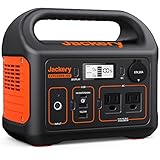
1. Jackery Portable Power Station Explorer 300, 293Wh Backup Lithium Battery, Solar Generator for Outdoors Camping Travel Hunting Blackout (Solar Panel Optional)
Overview:
The Jackery Explorer 300 is a compact 293Wh portable power station delivering 300W of pure sine wave power through two AC outlets. Weighing just 7.1 pounds, this unit strikes an excellent balance between capacity and portability, making it ideal for weekend camping trips, photography outings, and emergency backup. Its versatile charging options include wall outlets, car chargers, and optional solar panels, with a rapid 2-hour recharge to 80% capacity.
What Makes It Stand Out:
The Explorer 300’s standout feature is its remarkably fast dual-charging capability, reaching 80% in just 2 hours by simultaneously using the wall outlet and 60W PD USB-C port. This is significantly quicker than most competitors in this class. The integrated MPPT controller optimizes solar charging efficiency when paired with Jackery’s SolarSaga panels, making it a true off-grid companion. Its proven reliability and brand recognition in the portable power market give it an edge.
Value for Money:
At $179, the Explorer 300 sits in the sweet spot for entry-level power stations. While not the cheapest option, you’re paying for Jackery’s reputable build quality, safety certifications, and reliable customer support. The 293Wh capacity offers more runtime than budget alternatives, and the fast-charging capability adds significant practical value that justifies the premium over lesser-known brands.
Strengths and Weaknesses:
Strengths include rapid charging, lightweight design, pure sine wave output, and brand reliability. The 293Wh capacity may be limiting for extended trips or high-power devices. It lacks LiFePO4 battery chemistry, meaning fewer charge cycles than newer competitors. The solar panel is sold separately, adding to total cost for solar users.
Bottom Line:
The Jackery Explorer 300 is an excellent choice for users prioritizing fast charging and brand reliability over maximum battery longevity. Perfect for casual campers and emergency preparedness.
2. Anker SOLIX C1000 Portable Power Station, 1800W (Peak 2400W) Solar Generator, Full Charge in 58 Min, 1056wh LiFePO4 Battery for Home Backup, Power Outages, and Outdoor Camping (Optional Solar Panel)

Overview:
The Anker SOLIX C1000 is a high-capacity portable power station packing 1056Wh of LiFePO4 battery storage with an impressive 1800W continuous output (2400W peak). This powerhouse can run 99% of household appliances and is engineered for serious home backup, RV living, and extended off-grid adventures. Its UltraFast charging technology reaches 80% in just 43 minutes, while the 10-year battery lifespan ensures long-term reliability.
What Makes It Stand Out:
The C1000’s blazing recharge speed sets a new standard, achieving full charge in under an hour—five times faster than conventional power stations. SurgePad technology delivers exceptional 2400W peak power, handling demanding appliances like air conditioners and power tools. The Anker app provides real-time monitoring and customizable charging speeds, while 11 versatile ports accommodate virtually any device simultaneously. The 600W solar input enables complete off-grid sustainability.
Value for Money:
At $397, the C1000 commands a premium but delivers exceptional value per watt-hour. The LiFePO4 battery’s 3000-cycle lifespan translates to a decade of daily use, significantly outperforming cheaper lithium-ion alternatives. For homeowners seeking reliable backup during outages or RV enthusiasts needing substantial power, this investment pays dividends through durability, capacity, and cutting-edge features that budget options simply cannot match.
Strengths and Weaknesses:
Strengths include unmatched charging speed, massive capacity, LiFePO4 longevity, high power output, and smart app integration. Weaknesses include higher price point, weight (implied by capacity), requirement of smartphone for UltraFast mode, and limited operating temperature range (68-122°F) for optimal charging.
Bottom Line:
The Anker SOLIX C1000 is the premium choice for users demanding maximum capacity, speed, and longevity. It’s ideal for home backup and serious outdoor enthusiasts who need reliable, high-power energy on demand.
3. DaranEner Portable Power Station 60,000mAh, 192Wh LiFePO4 Battery Backup w/2 300W (Surge 600W) AC Outlets, 2H Fast Charging, Power Bank for Hurricane Emergency/Home/Outdoor Camping/RVs Use

Overview:
The DaranEner Portable Power Station offers 192Wh capacity with 300W pure sine wave output in an ultra-compact 5.73-pound package. This budget-friendly unit features advanced LiFePO4 battery chemistry delivering 3500+ charge cycles—lasting up to ten times longer than standard lithium-ion. Designed for essential device charging during camping, emergencies, and travel, it powers phones, laptops, CPAP machines, and small electronics under 300W.
What Makes It Stand Out:
DaranEner’s standout feature is combining premium LiFePO4 technology with an entry-level price point, offering exceptional battery longevity typically found in more expensive units. The integrated 4-mode LED flashlight with SOS function adds practical emergency utility rarely seen in this category. Its 2-hour fast charging via AC outlet maximizes uptime, while the built-in MPPT controller optimizes solar panel efficiency for sustainable off-grid use.
Value for Money:
At $114.99, this power station delivers outstanding value, undercutting most LiFePO4 competitors by $50-100. The 3500+ cycle rating means years of reliable service, making it cheaper long-term than budget lithium-ion alternatives requiring earlier replacement. While 192Wh capacity is modest, the price-to-longevity ratio is unbeatable for users prioritizing device lifespan and essential power needs over maximum capacity.
Strengths and Weaknesses:
Strengths include LiFePO4 battery longevity, lightweight portability, fast charging, built-in LED flashlight, and exceptional price. Weaknesses include limited 192Wh capacity unsuitable for high-power appliances, 60W maximum solar input restricting off-grid recharging speed, and lack of brand recognition compared to industry leaders.
Bottom Line:
The DaranEner is perfect for budget-conscious buyers wanting premium battery technology. Ideal for short trips, emergency kits, and CPAP users who value longevity and portability over raw capacity.
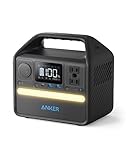
4. Anker 521 Portable Power Station Upgraded with LiFePO4 Battery, 256Wh 6-Port PowerHouse, 300W (Peak 600W) Solar Generator (Solar Panel Optional), 2 AC Outlets, 60W USB-C PD Output, Outdoor Generator
Overview:
The Anker 521 Portable Power Station delivers 256Wh of LiFePO4 battery capacity in a compact 6-port design. With 300W continuous output and 600W peak power via SurgePower technology, this unit powers essential devices during outdoor adventures and unexpected outages. The durable construction and advanced temperature control promise a decade of reliable performance, making it a trustworthy companion for camping and emergency preparedness.
What Makes It Stand Out:
Anker’s InfiniPower technology and LiFePO4 chemistry combine to offer a 10-year lifespan with superior temperature management and durability. The SurgePower capability handles startup spikes from appliances demanding up to 600W—unusual for this capacity class. Anker’s reputation for quality and the streamlined fast-charging USB-C port provide reliable, efficient power delivery that competitors often lack at this price point.
Value for Money:
Priced at $129.99, the 521 positions itself as a mid-tier option offering LiFePO4 longevity without the premium cost of high-capacity units. The 256Wh capacity provides 33% more runtime than 192Wh competitors while maintaining portability. You’re investing in Anker’s quality assurance and proven battery management, making it a smarter long-term purchase than cheaper lithium-ion alternatives with shorter lifespans.
Strengths and Weaknesses:
Strengths include LiFePO4 battery with 10-year rating, SurgePower 600W peak capability, brand reliability, and balanced capacity-to-price ratio. Weaknesses include slower charging compared to newer models, only 60W USB-C output limiting laptop charging speed, and lack of app connectivity or advanced features found in premium units.
Bottom Line:
The Anker 521 is a solid, no-frills choice for users wanting reliable LiFePO4 technology from a trusted brand. Perfect for campers and homeowners seeking a durable, mid-capacity power station without breaking the bank.
5. Anker Portable Power Station SOLIX C300, 288Wh LiFePO4 Battery, 300W (600W Surge) Solar Generator, 140W Two-Way Fast Charging, for Outdoor Camping, Traveling, and Emergencies (Solar Panel Optional)

Overview:
The Anker SOLIX C300 packs 288Wh of LiFePO4 power into a travel-friendly design that’s 15% smaller than comparable units. Delivering 300W continuous and 600W surge power through three AC outlets, this premium compact station charges up to eight devices simultaneously. The revolutionary 140W two-way USB-C charging achieves 80% capacity in just 50 minutes, making it ideal for fast-paced adventures and emergency readiness.
What Makes It Stand Out:
The C300’s standout feature is its 140W two-way fast charging—among the fastest in the portable power market—enabling rapid recharge and high-speed device charging from a single port. Three AC outlets in a sub-300Wh unit is exceptionally rare, providing unmatched versatility. The compact, strap-ready design prioritizes portability without sacrificing capacity, while 100W solar input supports sustainable off-grid living.
Value for Money:
At $249.99, the C300 commands a premium over basic 300W units, but justifies it through cutting-edge charging speed, LiFePO4 longevity, and triple AC outlet configuration. The 140W USB-C capability future-proofs your investment for next-generation devices. For users who value time savings and maximum port versatility in a compact form, this delivers superior value compared to slower, bulkier alternatives.
Strengths and Weaknesses:
Strengths include blazing 140W two-way charging, three AC outlets, LiFePO4 battery, compact design, and fast 50-minute recharge. Weaknesses include higher price per watt-hour than larger units, limited solar input compared to bigger models, and potential overkill for users needing only basic charging.
Bottom Line:
The Anker SOLIX C300 is the premium compact choice for tech-savvy users wanting maximum charging speed and versatility. Perfect for digital nomads, photographers, and anyone prioritizing fast power delivery in a portable package.
6. powkey Portable Power Station with AC Outlet, 65W/110V External Battery Pack 24000mAh/88.8Wh Power Pack, Portable Power Source Supply Backup for Outdoor Tent Camping Home Office

Overview: The powkey Portable Power Station delivers 88.8Wh capacity in an incredibly compact package, making it ideal for light travel and basic power needs. This entry-level unit features a 110V/65W AC outlet alongside USB and DC outputs, targeting users who prioritize portability over raw power. Weighing minimally, it slips easily into backpacks for business trips or day hikes.
What Makes It Stand Out: Its remarkably small footprint distinguishes it from bulkier competitors. The three-way recharging system—wall outlet, car adapter, or solar panel—provides exceptional versatility. The LED battery display offers at-a-glance monitoring, while QC3.0 USB ports enable rapid device charging. At under $50, it’s one of the most affordable gateways to portable AC power.
Value for Money: This represents exceptional budget value for casual users. While premium models offer ten times the capacity, they cost eight to ten times more. For charging phones, tablets, and small laptops, it delivers comparable performance. However, the 65W AC limit restricts use with larger appliances, making it a specialized tool rather than an all-in-one solution.
Strengths and Weaknesses: Pros: Ultra-portable design, wallet-friendly price, multiple charging methods, fast USB charging. Cons: Limited 88.8Wh capacity, low 65W AC output, non-LiFePO4 battery, no app connectivity.
Bottom Line: Perfect for minimalist travelers and occasional campers needing basic device charging. Don’t expect it to run power tools or mini-fridges, but for smartphones and laptops, it’s a reliable, cost-effective companion.
7. Jackery Explorer 1000 v2 Portable Power Station,1070Wh LiFePO4 Battery,1500W AC/100W USB-C Output, 1 Hr Fast Charge, Solar Generator for Camping,Emergency, RV, Off-Grid Living(Solar Panel Optional)

Overview: The Jackery Explorer 1000 v2 positions itself as a premium mid-tier power station with 1070Wh capacity and 1500W AC output. Weighing 23.8 pounds, it balances portability with serious power delivery for camping, emergency backup, and mobile workshops. The LiFePO4 battery chemistry ensures longevity and safety, making it a reliable companion for years.
What Makes It Stand Out: Revolutionary one-hour emergency charging via the Jackery App sets a new standard for convenience. The 10-year lifespan, rated for 4,000 cycles, dramatically outlasts conventional lithium-ion units. ChargeShield 2.0 technology optimizes charging speed while protecting battery health. Three pure sine wave AC outlets and 100W USB-C PD ports enable simultaneous multi-device charging with clean power.
Value for Money: At $399, it’s priced competitively for its feature set. While cheaper alternatives exist, none match its combination of fast charging, battery longevity, and smart features. The cost per cycle over its decade-long lifespan makes it more economical than budget options requiring replacement every few years, saving money long-term.
Strengths and Weaknesses: Pros: Lightning-fast charging, exceptional durability, intelligent app control, multiple high-output ports, reputable brand support. Cons: Premium price point, heavier than ultra-portable models, solar panels sold separately.
Bottom Line: An outstanding investment for serious outdoor enthusiasts and homeowners seeking reliable backup power. The fast charging and longevity justify the upfront cost, making it a buy-it-for-life portable power solution.
8. BLUETTI Elite 100 V2 (2025 New) Solar Generator, 1024Wh LFP Battery Backup w/ 4 1800W AC Outlets (3600W Surge), 35% Smaller, Portable Power for Camping, Outages, and UPS Backup (Solar Panel Optional)
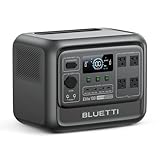
Overview: The BLUETTI Elite 100 V2 emerges as a 2025 powerhouse packing 1024Wh into a 25-pound frame with 1800W continuous output. Its compact 17L form factor represents a significant engineering achievement. Designed for versatile applications from camping to home office backup, it targets users wanting maximum power in minimal space without compromise.
What Makes It Stand Out: The 35% size reduction compared to competitors is immediately noticeable and practical. A 70-minute full charge via TurboBoost AC input rivals the fastest chargers available. Unique UPS functionality provides instant failover during outages, protecting sensitive electronics. The 3600W surge capacity handles demanding startup loads, while 11 total ports offer unmatched connectivity options.
Value for Money: At $419, it commands a slight premium over the Jackery 1000 v2 but delivers 20% more AC output and crucial UPS capability. For home office users needing uninterrupted workflow, this feature alone justifies the cost. The fast charging and compact design add further value for space-conscious buyers seeking premium performance.
Strengths and Weaknesses: Pros: Incredibly compact, ultra-fast charging, UPS backup, high surge capacity, comprehensive port selection. Cons: Newer brand with shorter track record, slightly heavier than Jackery, premium pricing may deter budget buyers.
Bottom Line: Ideal for remote workers and campers prioritizing space efficiency and UPS protection. If instant power failover matters to you, this compact giant outperforms similarly priced competitors and deserves serious consideration.
9. EnginStar Portable Power Station 150W 155Wh Solar Generator 110V 42000mAh Portable Power Bank w/AC Outlet, 6 Outputs External Battery Backup LED Light for Outdoor Camping
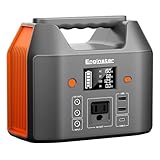
Overview: The EnginStar Portable Power Station offers a modest 155Wh capacity in an ultra-lightweight 4-pound package. This entry-level unit focuses on affordability and basic functionality for casual campers and emergency preparedness. With 150W AC output and multiple DC/USB options, it handles small electronics effectively but cannot support heavy-duty appliances.
What Makes It Stand Out: Remarkable portability at just 4 pounds makes it effortless to carry on hikes or store in vehicles. The built-in LED light with three modes (light, strobe, SOS) adds practical utility for camping and emergencies. Lifetime technical support provides peace of mind rarely found in budget electronics. The 42000mAh rating appeals to those prioritizing mAh numbers.
Value for Money: At $109.99, it’s an accessible entry point into portable power. While capacity is limited, the price-per-watt ratio favors casual users overinvesting in oversized units. It competes with power banks costing twice as much while adding AC functionality. However, the non-LiFePO4 battery and lower cycle life mean earlier replacement than premium models.
Strengths and Weaknesses: Pros: Extremely lightweight, budget-friendly, useful LED light, lifetime support, multiple recharge options. Cons: Low 155Wh capacity, limited 150W output, not water-resistant, shorter battery lifespan.
Bottom Line: A solid choice for first-time buyers needing occasional phone charging and light camping use. Don’t expect it to power laptops for long or run appliances, but for basic needs, it’s a capable, affordable starter unit.
10. Jackery Explorer 2000 v2 Portable Power Station, 2042Wh LiFePO4 Home Backup Battery, 2200W Solar Generator, USB-C PD 100W Fast Charging for Emergencies, Power Outages, Camping(Solar Panel Optional)

Overview: The Jackery Explorer 2000 v2 delivers massive 2042Wh capacity and 2200W AC output while maintaining remarkable portability at 39.5 pounds. This flagship model targets serious off-grid users, homeowners wanting extended backup, and professionals with substantial power demands. CTB technology borrowed from electric vehicles optimizes space and safety for superior energy density.
What Makes It Stand Out: Unprecedented charging speed reaches 80% in just 66 minutes, with a full charge in 102 minutes via Emergency Super Charging. The LiFePO4 battery ensures a decade of reliable service. Silent Charging mode operates below 30dB, making it bedroom-friendly. Despite its massive capacity, it’s 41% lighter than comparable units, revolutionizing transportability for this power class.
Value for Money: At $799, it’s a significant investment but delivers industry-leading performance. Cost-per-cycle over ten years rivals smaller units, while the capacity justifies the price for those needing whole-home appliance support. It replaces gas generators for many applications without fumes or noise, offering true peace of mind during extended outages and adventures.
Strengths and Weaknesses: Pros: Massive capacity, lightning-fast charging, whisper-quiet operation, durable LiFePO4, relatively lightweight for its class. Cons: Premium price point, still substantial weight for some users, solar panels add considerable cost.
Bottom Line: The ultimate portable power solution for extended outages and serious camping. If you need reliable, high-capacity power and value fast charging, this justifies its premium price through unmatched performance and longevity.
Understanding Battery-Backup Portable Fridges: What Makes Them Different?
Battery-backup portable fridges are self-contained refrigeration units that integrate a high-capacity battery directly into their design, allowing them to operate independently from external power sources for extended periods. Unlike standard portable fridges that require constant connection to a vehicle or wall outlet, these units store energy internally and manage power consumption intelligently to maximize runtime during outages.
The key differentiator is the seamless integration of power management circuitry that monitors battery health, regulates charging from multiple sources, and optimizes compressor cycling based on available energy. This creates a true “set it and forget it” experience during emergencies—you’re not juggling separate power stations or guessing how long your external battery will last.
Why Traditional Coolers Fall Short During Extended Outages
Ice-based cooling creates a fundamental dependency that’s impossible to sustain during widespread power failures. Once your ice supply melts—which happens in 24-48 hours even in quality coolers—you’re left with lukewarm food and no way to restore safe temperatures. The meltwater also creates cross-contamination risks and turns your food storage into a waterlogged mess.
Temperature control is another critical failure point. A cooler with ice might maintain 40°F for a day, but temperatures fluctuate dramatically as ice melts, often spending hours in the bacterial danger zone (40°F-140°F). During a multi-day outage, you’re looking at multiple cycles of ice runs that may be impossible if stores are closed or roads are impassable. The math simply doesn’t work for anything beyond a short-term inconvenience.
Key Benefits of Investing in a Battery-Backup Portable Fridge
The primary advantage is autonomous operation. With a fully charged internal battery, these fridges can maintain safe temperatures for 1-3 days without any external power, depending on ambient conditions and usage. This gives you a critical buffer period while you assess the outage duration and implement backup charging solutions.
Energy precision is another major benefit. Digital temperature controls let you set exact temperatures (often within 1°F accuracy) and maintain them consistently, eliminating the guesswork and food safety risks of ice cooling. Many units also offer dual-zone configurations, allowing simultaneous refrigeration and freezing—something impossible with ice unless you separate zones manually.
Cost efficiency over time is substantial. While the initial investment is significant, you eliminate the perpetual expense of ice ($3-5 per bag) and reduce food waste dramatically. During a week-long outage, a family can easily lose $300-500 in spoiled groceries, making the fridge pay for itself after just one major event.
How Battery-Backup Portable Fridges Work: The Technology Explained
Compressor vs. Thermoelectric Cooling
All serious battery-backup fridges use compressor-based cooling systems, similar to your home refrigerator. A small, efficient compressor circulates refrigerant through a sealed system, extracting heat from the interior and expelling it through condenser coils. This method can achieve and maintain sub-freezing temperatures regardless of ambient heat, with efficiency ratings (COP) of 1.5-2.5.
Thermoelectric cooling, found in cheaper “cooler warmers,” uses the Peltier effect and is fundamentally unsuitable for outage scenarios. These units can only cool 30-40°F below ambient temperature, struggle above 80°F, and draw constant power—draining batteries 2-3x faster than compressor systems. For emergency preparedness, compressor cooling is non-negotiable.
Battery Integration and Power Management
The integrated battery connects to a power management system that functions like a miniaturized grid operator. It handles multi-source charging (AC, DC, solar), prevents deep discharge that damages cells, and modulates compressor speed based on battery state-of-charge. Advanced units use variable-speed compressors that ramp down to 1,500 RPM when battery levels are low, extending runtime by 40-60% compared to fixed-speed models.
Critical Features to Evaluate Before Buying
Capacity and Size Considerations
Capacity is measured in quarts or liters, but usable space differs dramatically from rated volume. A “45-quart” fridge might only offer 35 quarts of practical storage after accounting for compressor hump, battery compartment, and insulation thickness. For outage planning, estimate 1.5-2 quarts per person per day for essential items only. A family of four should target 60-80 quarts minimum for 3-day autonomy.
Physical dimensions matter just as much. Measure your intended storage location—whether it’s a garage corner, closet, or vehicle—and add 4-6 inches of ventilation clearance on all sides. Many buyers focus solely on capacity and discover their unit won’t fit through doorways or overheats in tight spaces.
Battery Capacity and Runtime
Battery capacity is typically specified in watt-hours (Wh) or amp-hours (Ah) at 12V. For runtime calculations, focus on watt-hours—it’s the most honest metric. A 300Wh battery can theoretically run a 30W compressor for 10 hours, but real-world factors compress this significantly.
Duty cycle is the critical variable. Compressors don’t run continuously; they cycle on and off to maintain temperature. In 70°F ambient, a well-insulated fridge might have a 30% duty cycle (running 18 minutes per hour), but in 90°F heat, this jumps to 60-70%. Always assume a 50% duty cycle for conservative estimates, and look for units with at least 400Wh capacity for meaningful outage protection.
Charging Options and Solar Compatibility
Multiple charging pathways separate premium units from basic models. Minimum acceptable configuration includes AC wall charging and DC vehicle charging. True emergency preparedness requires solar input with MPPT (Maximum Power Point Tracking) controller built-in, which optimizes solar panel output and can recharge a 400Wh battery in 4-6 hours with a 100W panel.
Pay attention to input voltage ranges. Quality units accept 12V and 24V DC natively, while some cheap models only handle 12V, limiting your charging flexibility. USB-C Power Delivery charging (60W+) is emerging as a convenient third option for topping off from power banks or laptops.
Temperature Range and Control Precision
For food safety, you need a unit that maintains 35-38°F consistently in the refrigerator compartment. Freezer capability should reach 0°F or lower. Digital controls with 1°F increments are standard on good units; avoid dial-based thermostats that offer vague settings.
Fast-cooling or “turbo” modes are valuable during initial cooldown but consume 2-3x more power. Look for units that automatically exit turbo mode after reaching set temperature to prevent accidental battery drain. Some advanced models offer “eco” modes that sacrifice 2-3°F temperature stability for 20-30% longer runtime.
Insulation Quality and Energy Efficiency
Insulation thickness directly impacts duty cycle and runtime. Premium units use 2-3 inches of high-density polyurethane foam (R-value 12-15), while budget models might have just 1-1.5 inches (R-value 6-8). The difference translates to 40% longer runtime in hot conditions.
Energy efficiency is measured in kWh per 24 hours. Top-tier portable fridges consume 0.3-0.5 kWh/day at 70°F ambient. During a power outage, every watt-hour matters, so prioritize units with published efficiency data and positive real-world reviews from hot climate users.
Portability and Weight Factors
Don’t underestimate the importance of weight when the power’s out and you need to relocate the unit. A 60-quart fridge with a 400Wh battery typically weighs 45-55 pounds empty—add 30+ pounds of food and you’re approaching 80 pounds. Look for units with ergonomic handles, sturdy wheels, and a balanced center of gravity.
Foldable handles and removable batteries offer additional flexibility. Some designs let you detach the battery pack for separate charging or weight reduction, converting the unit to a standard portable fridge when grid power is available.
Durability and Build Quality
During emergencies, your fridge might face rough handling, temperature extremes, and dust. Look for roto-molded construction or reinforced corners, IPX4 splash resistance minimum, and metal hinges rather than plastic. The compressor should be mounted on vibration dampeners to survive transport.
Internal components matter too. Stainless steel interior liners resist odors and clean easily. Removable wire baskets prevent food from blocking air vents—a common cause of compressor overwork and premature failure.
Noise Levels for Indoor Use
Compressor noise becomes a major factor when you’re running the fridge in your living space during an outage. Quality units operate at 35-45 decibels (library-quiet), while cheaper models can exceed 55 decibels (refrigerator hum). Variable-speed compressors are inherently quieter, as they avoid the jarring on/off cycling of fixed-speed units.
Check for “sleep mode” or nighttime settings that further reduce noise by slowing fan speeds. If you plan to use the unit in a bedroom or small apartment, prioritize noise ratings as highly as battery capacity.
Smart Features and Connectivity
WiFi and Bluetooth connectivity might seem like luxuries, but during an outage, remote monitoring becomes incredibly valuable. Smart fridges let you check battery levels, interior temperature, and estimated runtime from your phone without opening the lid and letting cold air escape.
Some apps provide proactive alerts when battery drops below 20% or temperature rises above safe thresholds. However, don’t let smart features compensate for poor fundamentals—a fridge that needs an app to work properly is poorly designed. Use connectivity as a tiebreaker between equally capable units.
Safety Certifications and Warranties
Look for UL, ETL, or CE certifications that verify electrical safety and electromagnetic compatibility. For battery safety, UN38.3 certification ensures the cells can withstand transport vibration, temperature extremes, and pressure changes.
Warranty terms reveal manufacturer confidence. A 2-year warranty on the fridge and 1-year on the battery is industry standard; premium brands offer 3-5 years on compressors and 2-3 years on batteries. Read the fine print—some warranties are voided if you use third-party solar panels or operate the unit continuously above 90°F ambient.
Powering Your Fridge: Battery Types Deep Dive
Lithium Iron Phosphate (LiFePO4) vs. Lithium-ion
LiFePO4 batteries dominate the premium market for good reason. They offer 2,000-5,000 charge cycles (vs. 500-1,000 for standard lithium-ion), maintain stable voltage throughout discharge, and are inherently safer with minimal thermal runaway risk. Their 10+ year lifespan makes them ideal for emergency equipment that sits idle for months.
Standard lithium-ion (NMC chemistry) packs more energy into less weight and costs 20-30% less, but degrades faster and poses greater fire risk if damaged. For outage scenarios where reliability trumps weight savings, LiFePO4 is the clear winner despite the premium price.
Lead-Acid Batteries: Are They Still Relevant?
Some budget portable fridges still use sealed lead-acid (SLA) batteries due to their low cost. While they work, their 300-500 cycle lifespan, heavy weight (3x heavier than LiFePO4 for same capacity), and voltage sag under load make them a poor long-term investment. They also require monthly maintenance charging to prevent sulfation.
If you choose a lead-acid model, plan to replace the battery every 2-3 years and accept 30-40% shorter runtime as the battery ages. For most buyers, the total cost of ownership favors lithium from day one.
Solar Charging Integration: Staying Off-Grid Indefinitely
True energy independence requires solar capability. A 100W monocrystalline panel in full sun generates 400-500Wh per day—enough to offset the daily consumption of an efficient portable fridge. This creates a sustainable loop: fridge runs on battery overnight, solar recharges during the day, indefinitely.
Key considerations include panel voltage compatibility (most fridges accept 12-24V input), connector type (MC4 is standard), and whether the fridge includes a charge controller. Never connect panels directly without a controller—voltage fluctuations can damage the battery. Some fridges have “pass-through” charging, letting you power the fridge directly from solar while simultaneously charging the internal battery.
Runtime Expectations: Real-World Scenarios
Let’s cut through manufacturer claims with realistic numbers. A 60-quart fridge with 500Wh LiFePO4 battery, set to 37°F in 75°F ambient, with minimal lid opening, will run approximately 40-48 hours. Increase ambient to 90°F, and runtime drops to 24-30 hours. Add a family accessing it 10-15 times daily, and you’re looking at 18-24 hours.
Freezing dramatically increases consumption. Running the same unit at 0°F reduces runtime by 50-60%. For outage planning, use the fridge primarily for refrigeration and rely on separate freezer packs for items you truly need frozen. Pre-cooling your fridge to target temperature while grid power is available adds 6-8 hours of effective runtime.
Installation and Setup Best Practices
Location matters more than most buyers realize. Place your fridge in the coolest part of your home—basements or interior rooms away from windows. Elevate it 6-12 inches off the floor to improve airflow and protect from potential flooding. Ensure 6 inches of clearance on all sides, especially the side with condenser coils.
Initial setup should include a full test run. Charge the battery completely, pre-cool the empty fridge for 4-6 hours, then load it with pre-chilled items. This minimizes compressor workload and validates that the unit meets your expectations before an emergency strikes. Document your baseline runtime in your actual conditions—this becomes your reference point during outages.
Maintenance Tips for Long-Term Reliability
Battery health is your top priority. Every 3-6 months, run a full discharge-recharge cycle to calibrate the battery management system. Store the fridge with the battery at 50-60% charge in a cool, dry place—full charge storage accelerates lithium aging. Clean condenser coils monthly with compressed air; dust buildup can increase power consumption by 15-20%.
Inspect door seals quarterly. A damaged seal lets cold air escape, forcing the compressor to work overtime. Test by closing the door on a dollar bill—if you can pull it out easily, the seal needs replacement. Most manufacturers sell seal kits, and replacement takes 10 minutes with a screwdriver.
Cost Analysis: Understanding True Value Over Time
The sticker shock of a quality battery-backup fridge ($800-1,500) often overshadows long-term economics. Let’s break it down: a 3-day outage costs the average family $400 in spoiled food. Two such events over five years equals $800 in losses. Add $200 spent on emergency ice runs, and you’re at $1,000—more than the fridge cost.
Factor in the battery lifespan. A $1,200 unit with a 10-year LiFePO4 battery costs $120/year. Compare this to buying 20 bags of ice annually for camping or emergencies at $4/bag—that’s $80/year with zero food security benefits. The fridge becomes a financial asset after the first major outage while providing daily utility for road trips, outdoor events, and medical storage.
Common Mistakes to Avoid When Purchasing
Undersizing the battery: Buyers focus on capacity and skimp on battery size, then discover their 300Wh unit dies overnight. Always oversize battery capacity by 30% over calculated needs.
Ignoring ambient temperature ratings: A fridge rated for 90°F maximum will struggle in 95°F heat, consuming battery at 2x the normal rate. If you live in a hot climate, invest in models rated for 110°F+ operation.
Overvaluing solar wattage: A 200W panel sounds impressive, but if your fridge’s charge controller only accepts 100W input, you’re wasting money. Match solar capacity to the fridge’s maximum input rating.
Forgetting about inverter losses: If you plan to run the fridge from a home backup battery through an inverter, account for 10-15% conversion losses. A 40W fridge draw becomes 46W after inverter inefficiency.
Alternative Power Solutions: How They Compare
Portable power stations (Jackery, Goal Zero) paired with standard portable fridges offer flexibility but create three problems: you must buy two devices, the power station’s inverter adds inefficiency, and you lose integrated power management. Cost is often higher than an all-in-one unit with similar capacity.
Generator-powered fridges work but require constant fuel supply, produce noise and fumes, and can’t be used indoors. A 2,000W generator burns 1-2 gallons of gas daily—impractical during extended outages when fuel stations may be closed.
Thermoelectric coolers with battery packs are cheaper but fail in hot weather and consume more power. They’re fine for day trips but unreliable for emergency preparedness where failure isn’t an option.
Real-World Applications Beyond Power Outages
The versatility of these fridges extends far beyond emergencies. Use them for:
- Medical storage: Insulin, medications, and breast milk require precise temperature control that ice can’t guarantee
- Mobile businesses: Food trucks, catering, and farmers’ market vendors gain reliable mobile cold storage
- Vehicle dwelling: Van lifers and overlanders rely on them daily, proving their durability through constant use
- Hunting and fishing: Preserve game meat in remote locations without daily ice runs
- Event hosting: Outdoor parties and weddings where traditional power access is limited
This multi-use functionality transforms the purchase from a single-purpose emergency tool into a lifestyle upgrade that justifies the investment through regular utility.
Future Trends in Portable Refrigeration Technology
The next generation of battery-backup fridges is integrating solid-state batteries with 2x the energy density of LiFePO4, potentially doubling runtime in the same footprint. Solid-state cooling technology, while still years from commercial viability, promises compressor-free operation with even greater efficiency.
AI-driven power management is emerging, with fridges that learn your usage patterns and pre-cool before predicted outages based on weather forecasts and grid stability data. We’re also seeing modular designs where you can swap battery packs like power tool batteries, letting you scale capacity based on threat level or trip duration.
Frequently Asked Questions
How long will a battery-backup portable fridge keep food cold during a power outage? A quality unit with a 500Wh battery will maintain safe refrigeration temperatures (37°F) for 24-48 hours in typical conditions. Runtime varies significantly based on ambient temperature, how often you open the lid, and whether you’re using it as a fridge or freezer. Pre-chilling contents and keeping the unit in a cool location can extend runtime by 30-40%.
Can I run a portable fridge on my car battery without draining it? Technically yes, but it’s risky for all but the shortest outages. A portable fridge draws 30-50W while running, which can deplete a standard car battery in 6-12 hours of cumulative runtime. Most vehicles aren’t designed for deep discharges, and draining below 50% can permanently damage the battery. Use a dedicated portable fridge battery or connect through a battery isolator that protects your starter battery.
What’s the difference between a portable fridge and a powered cooler? Portable fridges use compressor-based cooling, achieving precise temperatures down to freezing regardless of ambient heat. Powered coolers typically use thermoelectric cooling, which can only cool 30-40°F below outside temperature and fails in hot weather. For power outage reliability, only compressor fridges with integrated batteries provide true food safety assurance.
Are solar panels necessary for these fridges? Not strictly necessary for short outages (1-2 days), but essential for extended events beyond 72 hours. A 100W solar panel can fully recharge a typical fridge battery in 4-6 hours of good sun, creating an indefinite off-grid capability. Even a small 50W panel can extend runtime by 50% during multi-day outages. Consider solar compatibility a critical feature for true emergency preparedness.
How noisy are battery-backup portable fridges? Quality units operate at 35-45 decibels—comparable to a quiet library or refrigerator hum. Variable-speed compressors are quieter than fixed-speed models, as they avoid loud on/off cycling. Most people can sleep in the same room without disturbance. Cheaper models may exceed 55 decibels, so check noise ratings if you plan indoor use during outages.
Can I use my portable fridge indoors during an outage? Absolutely, and this is one of their primary advantages. Unlike generators, battery-backup fridges produce no emissions, no fumes, and minimal noise. Place them in a well-ventilated area with 6 inches of clearance on sides and back. Avoid bedrooms if you’re sensitive to low-level hum, but living rooms, kitchens, and basements are ideal locations.
What size portable fridge do I need for a family of four? For a 3-day outage, target 60-80 quarts of usable capacity, which translates to roughly 70-90 quarts rated capacity. This allows space for milk, eggs, medications, leftovers, and some fresh produce. Remember that usable space is 15-20% less than rated capacity due to compressor housing and battery compartment. When in doubt, size up—running a partially filled fridge is more efficient than overstuffing a small unit.
How do I calculate the total power consumption? Multiply the fridge’s average power draw (usually 30-50W) by 24 hours, then multiply by the duty cycle (typically 0.3-0.7 depending on heat). For example: 40W × 24h × 0.5 duty cycle = 480Wh per day. Add 15% if using an external inverter. This helps you size solar panels or backup generators appropriately and set realistic runtime expectations.
Can these fridges freeze food or just keep it cool? Most quality units can function as either a refrigerator (35-50°F) or a freezer (0°F and below), but not both simultaneously in single-zone models. Dual-zone models have separate compartments with independent temperature control. However, freezing consumes 50-60% more battery than refrigeration, so during outages, it’s smarter to use the unit as a fridge and rely on ice packs for items requiring freezing.
Is it worth the investment if I only experience occasional outages? Consider it insurance with utility. Beyond rare outages, these fridges excel for camping, road trips, medical storage, and outdoor entertaining. The average family loses $400 in food per multi-day outage. Two outages in five years nearly pays for a quality unit. When you factor in year-round versatility and the peace of mind of knowing you’re prepared, the value proposition becomes clear for anyone in areas with aging infrastructure or severe weather risks.