Designing a kitchen that works for everyone isn’t just about following regulations—it’s about creating a space where independence and dignity are built into every detail. When it comes to cold storage, the right upright freezer can transform daily life for individuals with mobility challenges, making meal prep safer and more manageable. Yet navigating the world of ADA compliance feels overwhelming, with technical specifications that seem to require an engineering degree to decode.
This comprehensive guide cuts through the confusion, giving you the expert knowledge to evaluate upright freezers based on true accessibility, not just marketing claims. Whether you’re remodeling for aging-in-place, designing a commercial space, or simply want a more universally designed home, understanding these principles ensures your investment serves everyone’s needs for years to come.
Top 10 ADA-Compliant Upright Freezers
Detailed Product Reviews
1. Summit Appliance ADA305AF 20 inch Wide Built-In Vaccine All-Freezer, ADA Compliant, Built-in Capable, Factory-Installed Lock, Adjustable Digital Thermostat, 3 inch Thick Door, Manual Defrost, White
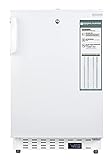
Overview: The Summit ADA305AF is a specialized medical-grade freezer designed for vaccine storage and other temperature-sensitive materials. At 20 inches wide and 32 inches tall, this unit meets ADA compliance standards for installation under lower countertops. The all-freezer configuration maintains temperatures down to -25°C, making it suitable for critical cold chain applications.
What Makes It Stand Out: This model distinguishes itself with a factory-installed probe hole, allowing seamless integration with external monitoring systems—a crucial feature for medical facilities. The electronic controls are cleverly positioned in the front kickplate, providing intuitive temperature management without requiring door opening. Three slide-out baskets with protective plastic fronts minimize temperature fluctuations during access, while the 3-inch thick door enhances insulation efficiency.
Value for Money: At $875.23, the ADA305AF offers excellent value for medical and laboratory settings requiring compliant cold storage. Comparable medical freezers with probe access and ADA dimensions typically exceed $1,000. The manual defrost system, while requiring periodic maintenance, reduces upfront costs and eliminates the complexity of automatic defrost mechanisms that could compromise temperature stability.
Strengths and Weaknesses: Strengths include ADA compliance, ultra-low temperature capability, integrated security lock, monitoring-ready design, and efficient basket organization. Weaknesses involve manual defrost requirements, smaller 20-inch width limiting capacity, basic white exterior finish, and absence of audible alarms for door ajar or temperature excursions.
Bottom Line: The ADA305AF is an ideal choice for clinics, pharmacies, and labs needing reliable ADA-compliant freezer storage under counters. Its monitoring integration and stable low-temperature performance justify its price, though users must commit to manual defrost maintenance.
2. Summit 24" Wide ADA Built-In All-Freezer - Stainless Steel/Black

Overview: This Summit 24-inch built-in freezer delivers ADA-compliant cold storage in a premium stainless steel and black finish. Designed for seamless under-counter installation in medical and commercial environments, it combines professional aesthetics with reliable freezing performance. The unit maintains consistent temperatures suitable for vaccine storage and temperature-sensitive materials.
What Makes It Stand Out: The stainless steel exterior elevates this model above standard white medical freezers, making it ideal for modern clinical settings where appearance matters. Its 24-inch width provides substantial storage capacity while maintaining the 32-inch ADA height requirement. The reversible door and built-in capable design offer flexible installation options for various workspace configurations.
Value for Money: Priced at $1,506.70, this freezer commands a premium over white-finish alternatives. The cost reflects its durable stainless steel construction and enhanced aesthetic appeal. For facilities where design cohesion is important—such as patient-facing pharmacies or contemporary medical offices—this investment pays dividends. However, budget-conscious buyers may find comparable performance in less expensive models.
Strengths and Weaknesses: Strengths include attractive stainless steel finish, ADA compliance, built-in installation flexibility, robust construction, and professional appearance. Weaknesses center on the premium price point, likely manual defrost system (common in this category), absence of explicitly stated advanced alarms, and potentially limited temperature monitoring integration compared to specialized medical units.
Bottom Line: Choose this Summit freezer for ADA-compliant medical storage where professional appearance is paramount. While significantly more expensive than basic white models, its stainless steel construction and clean design justify the cost for visible installations in modern healthcare environments.
3. Summit Appliance ALFZ37BIF 21" Wide Built-In All-Freezer; Panel-ready Door (Panels Not Included); Open Door and Temperature Alarms; Manual Defrost; 2.68 cu.ft Capacity; Digital Thermostat

Overview: The Summit ALFZ37BIF offers customizable medical freezer storage with its panel-ready design, allowing seamless integration into existing cabinetry. At 21 inches wide, this ADA-compliant unit provides 2.68 cubic feet of capacity for temperature-sensitive materials. The manual defrost system ensures stable temperatures without automatic cycles that could compromise contents.
What Makes It Stand Out: The panel-ready door is this model’s defining feature, enabling perfect aesthetic matching in upscale medical offices or laboratory settings. Unlike fixed-finish units, this freezer disappears into your cabinetry when paired with custom panels. Critical safety features include both open door and temperature alarms—essential for protecting valuable vaccines and specimens. The digital thermostat provides precise temperature control with clear readouts.
Value for Money: At $1,103.28, this freezer occupies a middle ground between basic white models and premium stainless units. The price reflects its customization capability and advanced alarm systems. While panels add extra cost, the ability to integrate seamlessly into existing millwork can save overall renovation expenses. For facilities prioritizing both function and design flexibility, this represents strong value.
Strengths and Weaknesses: Strengths include panel-ready customization, dual alarm systems, ADA compliance, digital thermostat precision, and built-in capability. Weaknesses involve additional expense for custom panels, manual defrost maintenance, smaller 2.68 cu.ft capacity, and potentially complex installation requiring panel fabrication.
Bottom Line: The ALFZ37BIF excels in applications requiring both medical-grade performance and design integration. Its alarm systems provide peace of mind, while the panel-ready design offers unmatched aesthetic flexibility. Ideal for modern medical facilities where appearance and safety are equally important.
4. VT65MLSSHHADA 24" Medically Approved ADA Compliant Upright Freezer with 3.5 cu. ft. Capacity White Cabinet Factory Installed Lock and Three Removable Storage Baskets in Stainless Steel

Overview: The VT65MLSSHHADA is a medically approved upright freezer combining ADA compliance with enhanced storage capacity. At 24 inches wide with 3.5 cubic feet of interior space, this unit accommodates larger inventory than compact under-counter models. The stainless steel finish provides durability and professional appearance suitable for clinical environments.
What Makes It Stand Out: This model’s medical approval certification ensures it meets stringent requirements for vaccine and pharmaceutical storage. The three removable storage baskets offer superior organization compared to standard shelving, allowing easy access and inventory rotation. The factory-installed lock provides immediate security without aftermarket modifications. Its upright configuration maximizes vertical space efficiency.
Value for Money: At $1,523.31, this freezer represents a significant investment in medical-grade cold storage. The price reflects its medical certification, larger capacity, and stainless steel construction. For high-volume clinics and pharmacies requiring reliable ADA-compliant storage, the cost is justified. However, smaller practices may find better value in more compact models with similar temperature performance.
Strengths and Weaknesses: Strengths include medical approval, generous 3.5 cu.ft capacity, stainless steel durability, three removable baskets, ADA compliance, and integrated security. Weaknesses include premium pricing, likely manual defrost maintenance, substantial footprint requiring dedicated space, and potentially higher energy consumption than smaller units.
Bottom Line: This Summit model serves high-capacity medical storage needs where ADA compliance and certification are non-negotiable. Its upright design and basket organization make it ideal for busy healthcare facilities managing substantial vaccine inventories. The premium price delivers professional-grade reliability and security.
5. Summit VT65MLADA Upright Freezer, White

Overview: The Summit VT65MLADA delivers reliable ultra-low temperature storage in an ADA-compliant upright configuration. At 32 inches tall and under 24 inches wide, this freezer fits easily under standard ADA counters while providing practical storage capacity. The -25°C operation ensures safe preservation of vaccines, pharmaceuticals, and temperature-sensitive laboratory materials.
What Makes It Stand Out: This model excels with its three slide-out freezer drawers, a superior design that prevents ambient air infiltration far better than traditional shelving. Each drawer acts as a separate compartment, maintaining stable temperatures even during frequent door openings. The slim profile under 24 inches allows installation in tight spaces where wider units cannot fit, while the factory-installed lock provides immediate security.
Value for Money: Priced at $1,211.96, the VT65MLADA offers mid-range value for medical-grade ADA freezers. The drawer system justifies the premium over basic basket models, as it provides superior temperature stability and organization. While more expensive than the ADA305AF, the enhanced organization and reduced temperature fluctuations during access make it worth the additional investment for busy facilities.
Strengths and Weaknesses: Strengths include innovative drawer design, -25°C ultra-low capability, ADA compliance, integrated lock, slim footprint, and stable temperature maintenance. Weaknesses include white finish showing wear in high-traffic areas, manual defrost requirements, moderate capacity limitations, and absence of advanced monitoring probes or alarms.
Bottom Line: The VT65MLADA is perfect for facilities prioritizing temperature stability and organization in an ADA-compliant package. The drawer system alone makes it superior to basket-style units for frequently accessed inventories. Ideal for clinics and labs needing reliable performance in space-constrained installations.
6. Summit Appliance VT65MLPROADA ADA Compliant 24" Wide -25ºC All-Freezer for Freestanding Use with Manual Defrost, Adjustable Thermostat, Lock and Probe Hole for User-Installed Monitor

Overview: The Summit VT65MLPROADA is a specialized ADA-compliant all-freezer engineered for critical temperature storage. Operating at an ultra-low -25°C, it serves medical, pharmaceutical, or residential applications requiring superior preservation. The 24-inch width and 32-inch height meet ADA standards while providing substantial capacity. A factory-installed access port allows users to integrate their own monitoring systems, making it ideal for temperature-sensitive materials that require continuous tracking.
What Makes It Stand Out: The -25°C operation significantly exceeds standard freezer performance, ensuring safe storage of sensitive specimens and medications. The integrated probe hole for user-installed monitoring equipment is a professional-grade feature typically reserved for medical-grade units costing thousands more. Manual defrost, while requiring occasional maintenance, maintains more stable temperatures than auto-defrost cycles, critical for preserving sample integrity.
Value for Money: At $1,483.46, this freezer commands a premium but delivers exceptional value for specialized needs. Comparable medical-grade units often exceed $2,500, making this a cost-effective solution for clinics, labs, or accessible homes requiring ultra-low temperatures. The security lock and monitoring capability justify the investment for professional applications.
Strengths and Weaknesses: Pros: Ultra-low -25°C capability; ADA compliant; Factory-installed probe hole; Security lock; Manual defrost ensures temperature stability; Clear storage baskets Cons: Manual defrost requires maintenance; Premium price over standard freezers; 24" width may not suit compact spaces
Bottom Line: An outstanding choice for medical, scientific, or residential users needing reliable ultra-low temperature storage with professional monitoring capabilities. The ADA compliance and security features make it particularly valuable for institutional or accessible home settings where temperature integrity is non-negotiable.
7. Summit SCFF1842SSADA Upright Freezer, Stainless-Steel

Overview: The Summit SCFF1842SSADA is a compact, ADA-compliant upright freezer designed for space-constrained environments requiring accessibility. Its unique 18-inch width makes it exceptionally suited for micro-kitchens, small apartments, or as supplemental accessible storage. The 32-inch height ensures seamless integration under ADA-compliant counters, while the stainless steel finish provides a professional aesthetic.
What Makes It Stand Out: The 18-inch width is remarkably narrow—most ADA freezers start at 20 inches—making this a true space-saving solution. The fully frost-free operation eliminates maintenance hassles entirely, a significant advantage over manual defrost models. Its flexible design supports both built-in and freestanding installation, while the reversible stainless steel door with professional handle offers premium aesthetics and installation versatility.
Value for Money: At $1,726.03, this unit sits at the premium end for compact freezers. However, the frost-free convenience, dual installation flexibility, and full stainless steel construction justify the cost. Comparable compact ADA freezers typically range $1,400-$1,800, positioning this competitively for its feature set and premium materials.
Strengths and Weaknesses: Pros: Ultra-narrow 18" footprint; Frost-free operation; ADA compliant; Flexible built-in/freestanding design; Premium stainless steel; Reversible door Cons: High price point; Limited capacity due to slim design; May require professional installation for built-in applications
Bottom Line: Perfect for urban dwellers or accessible kitchen designs where space is at a premium. The frost-free convenience and flexible installation options make it worth the investment for those needing ADA compliance without sacrificing quality or aesthetics.
8. Summit Appliance ALFZ37BSSTB Built-in Undercounter ADA Compliant Residential All-Freezer in Black with Stainless Steel Door, Towel Bar Handle, Door Storage, Adjustable Thermostat and Manual Defrost

Overview: The Summit ALFZ37BSSTB strikes an impressive balance between ADA compliance, flexible installation, and intelligent storage design. This 20-inch wide undercounter unit provides 2.68 cubic feet of freezer space at a compliant 32-inch height. The black cabinet with stainless steel door creates a sophisticated two-tone aesthetic suitable for various kitchen styles.
What Makes It Stand Out: The storage configuration is exceptional for this class—three removable door racks plus three adjustable wire shelves maximize organization in a compact footprint. The towel bar handle adds a residential touch while maintaining accessibility. Its flexible built-in/freestanding capability provides installation freedom, and the manual defrost system ensures stable temperatures for long-term storage.
Value for Money: At $1,265.22, this represents strong mid-range value. It’s significantly more affordable than frost-free models while offering superior storage versatility. The manual defrost trade-off saves approximately $300-400 compared to auto-defrost alternatives, making it economical for buyers comfortable with occasional maintenance. The partial stainless construction delivers premium aesthetics at a reduced price.
Strengths and Weaknesses: Pros: Excellent storage configuration; ADA compliant; Flexible installation; Attractive stainless door with black cabinet; Adjustable shelves; Competitive pricing Cons: Manual defrost requires periodic effort; Smaller 2.68 cu ft capacity; Two-tone design may not suit all décors
Bottom Line: A smart purchase for value-conscious buyers prioritizing storage flexibility over frost-free convenience. The ADA compliance and installation versatility make it ideal for accessible kitchen designs or as a secondary freezer where organization matters more than hands-off maintenance.
9. Summit SCFF1842ADA Upright Freezer, Black

Overview: The Summit SCFF1842ADA delivers premium frost-free convenience in an ultra-compact, ADA-compliant format. Its 18-inch width makes it one of the narrowest accessible freezers available, perfect for small kitchens and compliant installations. The 32-inch height ensures proper undercounter placement while the black finish provides a classic, versatile look.
What Makes It Stand Out: Frost-free operation in an 18-inch wide ADA freezer is genuinely rare, eliminating the chore of manual defrosting entirely. The digital thermostat offers precise temperature control and easy monitoring, a significant upgrade from mechanical dials. Its dual built-in/freestanding design provides exceptional installation flexibility for such a compact unit, making it adaptable to various kitchen configurations.
Value for Money: At $1,519.59, this model hits the sweet spot between manual defrost units and premium stainless models. The frost-free feature adds roughly $250-300 to the price but eliminates maintenance time and effort. For ADA-compliant spaces where convenience is paramount, this moderate premium is well justified. The digital controls provide added value through precision and peace of mind.
Strengths and Weaknesses: Pros: Frost-free operation; Ultra-narrow 18" design; ADA compliant; Digital thermostat; Flexible installation; Zero defrost maintenance Cons: Higher price than manual defrost; Limited storage capacity; Black finish less premium than stainless
Bottom Line: An excellent compromise for those seeking hassle-free operation in a space-saving ADA-compliant design. The digital controls and frost-free system make it worth the moderate premium, particularly for users who prioritize convenience and precise temperature management in accessible kitchens.
10. Summit 24" Wide ADA Built-In All-Freezer - Stainless Steel

Overview: The Summit 24" Wide ADA Built-In All-Freezer represents the pinnacle of accessible kitchen appliance design. This premium model combines full stainless steel construction with true built-in capability, delivering a seamless integrated look for high-end accessible kitchens. The 32-inch height meets ADA requirements while the 24-inch width provides generous storage capacity.
What Makes It Stand Out: Full stainless steel construction—both cabinet and door—provides commercial-grade durability and a cohesive premium aesthetic that partial-stainless models cannot match. The built-in ready design features front venting for flush installation, essential for integrated kitchen layouts. This level of construction quality and design integration is rare in ADA-compliant freezer units.
Value for Money: At $1,992.81, this is a significant investment. The premium reflects full stainless construction, likely frost-free operation, and true built-in engineering. While $400-600 more than partial-stainless models, it delivers the authentic commercial aesthetic and durability luxury renovations demand. For accessible kitchen projects where seamless integration is non-negotiable, the cost is justified.
Strengths and Weaknesses: Pros: Premium full stainless steel; True built-in design; ADA compliant; 24" width offers ample capacity; Professional appearance; Likely frost-free operation Cons: Highest price in category; Requires professional installation; Over-specified for freestanding use
Bottom Line: The definitive choice for luxury accessible kitchen renovations where seamless integration and premium materials are priorities. Worth the substantial investment for design-conscious buyers needing ADA compliance without sacrificing capacity, durability, or high-end aesthetics.
What Does ADA Compliance Really Mean for Upright Freezers?
ADA compliance for kitchen appliances goes far beyond simple height adjustments. The Americans with Disabilities Act establishes specific technical requirements that ensure individuals with disabilities can independently access, operate, and maintain appliances. For upright freezers, this means considering reach ranges, operating forces, control accessibility, and clear floor space in a holistic way. True compliance isn’t about checking boxes—it’s about understanding how these elements work together to create a seamless user experience for people with diverse abilities.
Why Choose an Upright Freezer Over a Chest Freezer for Accessibility?
The fundamental design differences between upright and chest freezers create dramatically different accessibility profiles. Upright freezers offer front-facing access that eliminates the need to reach down and rummage through layers of frozen goods—a motion that can be impossible for wheelchair users or those with limited upper body strength. The vertical orientation puts items at eye level, reducing bending and lifting while providing better organization through shelves and door bins. Chest freezers, despite their energy efficiency advantages, require users to lift items over a high sidewall and often involve awkward reaching motions that violate ADA reach range requirements.
Key ADA Accessibility Standards for Kitchen Appliances
The ADA Standards for Accessible Design provide the backbone for compliant appliance selection, but interpretation matters. Section 308 covers reach ranges, Section 309 addresses operable parts, and Section 804 outlines kitchen workspace requirements. These standards work in concert to ensure that at least one of each type of appliance in a kitchen is accessible. For commercial settings, the 2010 ADA Standards apply, while residential applications often reference ICC A117.1 consensus standards. Understanding which standard applies to your situation is the first step toward meaningful compliance.
Understanding ADA Guidelines vs. Universal Design
While ADA compliance is legally mandated for many spaces, universal design principles take accessibility further by creating products usable by all people without adaptation. An ADA-compliant freezer meets minimum requirements, but a universally designed model anticipates needs across the spectrum of human ability—including visual, cognitive, and strength limitations. The best accessible freezers blend both approaches, meeting legal standards while exceeding them in practical usability.
Critical Height and Reach Requirements You Must Know
The most crucial specification for freezer accessibility involves placement height. The highest operable part—whether that’s temperature controls, door handles, or interior storage—must sit no higher than 48 inches above the finished floor for forward reach, or 54 inches for side reach. This measurement assumes a clear floor space of 30 by 48 inches that allows either parallel or perpendicular approach by a wheelchair. But here’s what many people miss: the lowest operable part shouldn’t be lower than 15 inches to prevent excessive bending. This creates a “sweet zone” between 15 and 48 inches where all freezer functions must reside.
Forward Reach vs. Side Reach Limits
Your kitchen’s layout determines which reach standard applies. Forward reach requires unobstructed access directly in front of the appliance, with no obstructions deeper than 20 inches. Side reach works when a user approaches perpendicular to the freezer, often in galley-style kitchens. The side reach limit extends to 54 inches high, but this assumes no obstructing countertop beside the appliance. When planning your installation, measure from the finished floor to the highest point you’ll need to touch—not just the handle, but any control or storage area.
Door Handle Design and Accessibility Features
Handle design makes or breaks freezer accessibility. The ADA requires that operable parts be usable with one hand without tight grasping, pinching, or twisting of the wrist. Lever-style handles or open-loop pulls work best, requiring minimal grip strength to operate. The handle should extend far enough from the door surface—at least 1.5 inches—to allow knuckles to wrap around comfortably. Avoid recessed handles that force fingers into tight spaces or require dual-hand operation. The force required to open the door must not exceed 5 pounds of pressure, a specification that challenges many budget models with strong magnetic seals.
Handle Shape, Size, and Operation Force
Look for handles with a diameter between 1.25 and 2 inches, which accommodates various grip strengths and arthritic hands. Textured finishes provide better traction for users with limited hand function. Some advanced models feature power-assisted opening mechanisms that reduce required force to under 2 pounds—ideal for those with severe strength limitations. Test the handle operation yourself: can you open it using a closed fist? If not, it fails the accessibility test.
Storage Accessibility: Shelving and Organization Systems
Interior organization determines whether users can actually retrieve items safely. Fixed shelving positions people with mobility challenges at a disadvantage. The best ADA-friendly freezers offer adjustable shelving that users can reconfigure without tools, allowing customization to individual reach capabilities. Pull-out shelves or bins that extend fully on smooth glides bring items forward, eliminating dangerous reaching into deep cavities. Clear bins with front-facing labels help those with visual impairments identify contents without removing each container.
Adjustable Shelving Systems
Tool-free adjustment mechanisms typically use peg-and-slot systems or cam locks that operate with minimal finger dexterity. Shelves should adjust in 1-inch increments rather than the standard 2-inch spacing, providing finer control over storage heights. The shelves themselves need to support at least 50 pounds when fully extended, preventing sagging that could cause items to slide forward unexpectedly. Pay attention to shelf depth—shallow 12-inch shelves prevent items from getting lost in the back where they’re unreachable.
Drawer and Bin Accessibility
Pull-out freezer drawers represent the gold standard for accessibility, bringing contents directly to the user. Look for drawers with full-extension slides that reveal the entire interior and feature soft-close mechanisms to prevent slamming. Handles on drawers should match the same accessibility standards as the main door—lever-style pulls, low operation force, and adequate clearance. Some models include transparent drawers that eliminate the need to open each one to find specific items, saving energy and reducing frustration.
Temperature Controls and User Interface Considerations
Control panels must reside within the 15- to 48-inch reach range and operate with one hand without tight grasping or twisting. Digital displays should offer high contrast—white text on black backgrounds or vice versa—with characters at least 3/8-inch tall. For users with visual impairments, audible feedback confirms button presses and setting changes. Avoid capacitive touch controls that require skin contact; physical buttons with tactile feedback work more reliably for those wearing gloves or with limited sensation.
Display Readability and Contrast
Backlit displays with adjustable brightness accommodate various lighting conditions and visual abilities. The viewing angle matters tremendously—controls should remain readable from both standing and seated positions. Some manufacturers offer companion smartphone apps that mirror control functions, allowing temperature adjustments without physical reach. However, don’t rely solely on app-based controls; the primary interface must be independently accessible.
Tactile and Auditory Feedback
Raised buttons with distinct shapes help users identify functions by touch alone. An audible click or beep confirms activation without requiring visual confirmation. Advanced models provide voice prompts or spoken temperature readings, invaluable for users with low vision. The control lock feature should engage and disengage with a simple, memorable pattern rather than complex button sequences that challenge cognitive abilities.
Door Swing and Clearance Space Requirements
The freezer door must open to at least 90 degrees to provide unobstructed access to interior storage. Side-swing doors should hinge on the side that provides the clearest approach path—typically the side opposite the user’s approach direction. Some models offer reversible hinges, allowing customization during installation. The door itself shouldn’t exceed 5 pounds of opening force, and it should stay open at any angle to prevent it from swinging closed on a user. Pay attention to the door’s full swing arc; it must not block adjacent accessible routes or work surfaces.
Lighting and Visibility Features for All Abilities
Proper illumination transforms freezer usability. LED lighting should activate automatically when the door opens, providing bright, even illumination without shadows. The best systems place lights at multiple levels—top, sides, and even inside drawers—to eliminate dark corners. Motion-activated lighting that turns on as you approach the appliance helps users with visual impairments navigate safely. Consider the color temperature: daylight-balanced LEDs (5000K-6500K) render food colors more accurately, helping identify items.
Interior LED Lighting Systems
Look for lighting systems with 200+ lumens distributed across multiple fixtures. Some premium models feature lights that gradually brighten, reducing glare for sensitive eyes. Door-activated switches should have large, easy-to-operate paddles rather than tiny plungers. For users with photosensitivity, adjustable brightness settings prevent overwhelming brightness in dim kitchens.
Energy Efficiency and Its Impact on Accessibility
Energy-efficient freezers benefit everyone through lower utility bills, but they offer specific accessibility advantages. Models with excellent insulation maintain temperature longer during door openings, reducing panic when users need extra time to locate items. Efficient compressors run quieter, benefiting those with sensory sensitivities. Look for ENERGY STAR certification, but verify that efficiency features don’t compromise accessibility—for instance, some high-efficiency models use tighter door seals that exceed the 5-pound force limit.
Installation Considerations for ADA-Compliant Kitchens
Proper installation determines whether a technically compliant freezer remains accessible in practice. The appliance must sit on a stable, level surface that supports wheelchair maneuvering. Flooring should be slip-resistant and level with adjacent surfaces—no raised thresholds or lips that create trip hazards or block wheelchair wheels. The installation location needs adequate clearance on all sides for maintenance access, with service panels reachable without moving the unit.
Flooring and Stability Considerations
Anti-vibration pads beneath the freezer prevent walking, which could shift the appliance out of compliance. The flooring material must support the freezer’s full weight (often 300+ pounds when loaded) without deflection that changes height measurements. In commercial settings, consider seismic anchoring that prevents tipping without interfering with wheelchair access.
Smart Technology and Accessibility Integration
WiFi-connected freezers offer surprising accessibility benefits. Voice control through Amazon Alexa or Google Assistant allows temperature adjustments, alarm monitoring, and door status checks without physical interaction. Smartphone apps can provide large-text displays, high-contrast modes, and screen reader compatibility that exceed built-in control panel capabilities. However, technology should supplement, not replace, physical accessibility—never choose a model that requires app use for basic functions.
Voice Control and App Integration
Evaluate smart features based on the user’s tech comfort level. Voice commands should work reliably without precise phrasing, and apps must offer offline functionality for when internet service fails. Privacy concerns matter too; ensure smart features can be disabled for users uncomfortable with connected appliances. The best implementations use smart technology to enhance accessibility while maintaining full manual operation as a fallback.
Maintenance and Cleaning Accessibility
Everyday maintenance tasks must remain accessible. Water filter changes, drain tube cleaning, and condenser coil access should all fall within the established reach ranges. Tool-free maintenance panels with large, easy-grip fasteners prevent frustration. The defrost drain should be reachable and operable with one hand, and any status indicators for filter changes must be visible from a seated position. Consider how you’ll clean the interior—removable, dishwasher-safe bins simplify sanitizing without awkward reaching.
Budgeting for an ADA-Compliant Upright Freezer
Accessible design doesn’t automatically mean premium pricing, but true compliance often adds cost. Expect to invest 20-40% more than standard models for features like soft-close drawers, accessible controls, and reversible doors. However, consider this an investment in independence that prevents costly injuries and extends the time someone can age safely at home. Factor in installation costs, which may include electrical modifications, flooring adjustments, or cabinetry alterations to achieve proper clearances. Some utility companies offer rebates for ENERGY STAR models, and tax deductions may apply for medical necessity modifications.
Common Mistakes to Avoid When Shopping
The biggest error is trusting “ADA-compliant” labels without verification. Manufacturers sometimes claim compliance based on height alone, ignoring force requirements or control accessibility. Another mistake is measuring from subflooring instead of finished floor height—always measure from the surface you’ll actually stand on. Don’t overlook door handle depth; recessed handles that look sleek often fail accessibility tests. Finally, avoid models with control panels on the top edge of the door, which place controls above the 48-inch limit in most installations.
Frequently Asked Questions
1. Can I modify my existing upright freezer to become ADA-compliant?
Limited modifications are possible, such as installing aftermarket lever handles or lowering the unit by removing a base platform. However, fundamental issues like control panel height, door opening force, and interior shelving design typically can’t be altered cost-effectively. Most modifications only address one or two compliance points rather than creating a fully accessible appliance.
2. How do I verify a manufacturer’s ADA compliance claims?
Request the product’s accessibility specification sheet, which should detail measurements for reach ranges, operation forces, and control accessibility. Test the floor model yourself using a tape measure and a spring scale to measure door opening force. Check that the model appears on the ADA National Network’s product database or has third-party certification from organizations like UL or CSA.
3. What’s the difference between ADA Type A and Type B accessibility for freezers?
Type A accessibility (often called “fully accessible”) requires compliance with all ADA operable parts standards, including reach range, operation force, and one-hand operation. Type B (or “adaptable”) means the appliance can be made accessible through installation modifications or removable features. For true independent use, insist on Type A compliance.
4. Do ADA-compliant freezers have less storage capacity than standard models?
Not necessarily. While some space is sacrificed for pull-out mechanisms and accessible controls, smart design often maintains similar usable capacity. The key is efficient organization—accessible features like shallow drawers and pull-out shelves can actually improve storage utilization compared to deep, inaccessible cavities in standard freezers.
5. Can a freezer be too low to be ADA-compliant?
Yes. While the ADA sets upper limits for reach, controls and storage below 15 inches from the floor require excessive bending and may be inaccessible for those with back injuries or limited mobility. The “sweet zone” for accessibility spans 15 to 48 inches for forward reach, creating both lower and upper boundaries.
6. Are commercial ADA freezer standards different from residential ones?
Commercial standards under the 2010 ADA Standards for Accessible Design are more stringent, often requiring specific clear floor space dimensions and prohibiting obstructed side reaches in employee work areas. Residential applications follow ICC A117.1 standards, which offer slightly more flexibility. Always verify which standard applies to your installation.
7. How does freezer drawer weight impact accessibility?
Heavy drawers loaded with frozen food can exceed safe pulling forces for users with limited strength. Look for drawers with weight capacities clearly marked and glide systems rated for smooth operation under load. Some accessible models include assisted-opening mechanisms that reduce required pulling force by up to 70%.
8. What role does door seal strength play in ADA compliance?
Magnetic door seals often create opening forces exceeding the 5-pound ADA limit, especially in larger freezers. Compliant models use specialized gasket designs or assist mechanisms to reduce this force. Test this specifically by measuring the force required to break the initial seal—this is where most models fail compliance.
9. Can I install an ADA-compliant freezer under a countertop?
Undercounter installation is possible but challenging. The unit must be a dedicated built-in model with proper ventilation, and the countertop above cannot obstruct the 30-by-48-inch clear floor space. Controls must remain in the accessible zone, which often requires remote control panels or smartphone integration. Most undercounter installations work better in universal design kitchens than strict ADA compliance.
10. How often should I recheck my freezer’s ADA compliance after installation?
Reverify measurements annually, as flooring settling, appliance leveling changes, or house shifting can alter critical heights. If the freezer is moved for any reason, remeasure before returning it to service. For commercial settings, include accessibility checks in quarterly maintenance schedules to ensure continued compliance and user safety.