So you’re ready to buy your first French door refrigerator—but your budget has a hard ceiling of $1,500. You’re probably wondering if you can actually get a quality appliance at that price without sacrificing everything that makes French doors so appealing. The good news? You absolutely can. The not-so-good news? You’ll need to navigate a minefield of stripped-down models, confusing feature trade-offs, and marketing jargon that could leave you with a fridge that looks great but fails within two years.
This guide cuts through the noise to give you the insider knowledge that appliance salespeople won’t. We’ll explore what corners get cut at this price point, which features you can genuinely live without, and how to spot the hidden gems that deliver premium aesthetics and solid performance without the premium price tag. Whether you’re furnishing your first home or upgrading from a decades-old top-freezer, understanding these nuances will save you money, frustration, and that dreaded buyer’s remorse.
Top 10 Budget French Door Refrigerators for First-Time Buyers
Detailed Product Reviews
1. Hamilton Beach HBF2067 French Door Full Size Refrigerator with Freezer Drawer, 20.3 cu ft, Stainless Steel

Overview: The Hamilton Beach HBF2067 delivers reliable French door refrigeration at a mid-range price point. This 20.3 cubic foot stainless steel unit combines practical cooling technology with user-friendly features for families seeking style without premium cost. Its full-width freezer drawer and organized door storage maximize accessibility while maintaining a sleek kitchen profile.
What Makes It Stand Out: Multi-vent technology ensures consistent temperature distribution throughout the compartment, eliminating hot spots that spoil food prematurely. The manual defrost mode offers rare user control over ice buildup—appealing to hands-on homeowners. Spill-proof glass shelves contain messes before they cascade, while dedicated crisper bins preserve produce freshness longer than standard shelving.
Value for Money: At $1,199, this refrigerator undercuts many competitors while delivering core French door benefits. You sacrifice automatic ice makers and smart connectivity, but gain essential features like even cooling and organized storage that matter daily. Comparable models from premium brands cost $300-500 more for similar capacity, making this an intelligent choice for practical buyers prioritizing function over frills.
Strengths and Weaknesses: Strengths include excellent temperature consistency, easy-to-clean surfaces, generous door storage, and straightforward controls. The manual defrost feature provides maintenance control. Weaknesses involve incandescent lighting (less energy-efficient than LED), absence of an ice maker, and basic temperature management without digital precision. The freezer’s fixed wire shelf limits configuration flexibility.
Bottom Line: The Hamilton Beach HBF2067 suits budget-conscious families wanting French door aesthetics and reliable performance. While it lacks advanced features, its cooling technology and practical design deliver solid value for everyday use.
2. Midea MRF29D6AST 29.3 Cu. Ft. Stainless 3-Door French Door Smart Refrigerator

Overview: The Midea MRF29D6AST dominates with massive 29.3 cubic feet capacity and smart functionality at a surprisingly accessible price. This three-door French door refrigerator integrates dual ice makers and external dispensing in a fingerprint-resistant stainless steel package, offering luxury features without the luxury price tag.
What Makes It Stand Out: The dual ice maker system ensures you never run out of ice, producing both cubed and crushed varieties through the door dispenser. Fingerprint-resistant stainless steel maintains a pristine appearance in busy households. Standard depth construction maximizes interior space while LED lighting provides efficient, bright illumination throughout the cavernous interior.
Value for Money: At $1,299, this unit delivers exceptional capacity-per-dollar value. Competitors with similar volume and dual ice makers typically exceed $1,800. The smart features, while not fully detailed, suggest connectivity benefits that usually command premiums. For large families or entertainers, the combination of size and ice production justifies every penny.
Strengths and Weaknesses: Strengths include massive storage capacity, dual ice makers, water/ice dispenser, fingerprint-resistant finish, and energy-efficient LED lighting. The three-door design enhances organization. Weaknesses include potential reliability concerns given Midea’s shorter market track record versus legacy brands, unspecified smart features that may require app dependency, and standard depth protrusion that may not suit all kitchen layouts.
Bottom Line: Perfect for large families needing maximum storage and ice production, the Midea MRF29D6AST offers compelling value. Accept the brand’s growing reputation to gain premium features at a mid-range price.
3. Forno 30" Inch w. French Door Refrigerator with Bottom Freezer and 17.5Cu. Ft. Total Capacity - Stainless Steel No Frost Fridge with Adjustable Glass Shelves and Child Safety Lock

Overview: The Forno 30-inch French door refrigerator targets compact kitchens without sacrificing style or functionality. With 17.5 cubic feet total capacity and a bottom freezer design, this unit maximizes space efficiency while delivering premium touches like a no-frost system and electronic controls at a budget-friendly price point.
What Makes It Stand Out: The no-frost air-cooling system maintains optimal humidity in both compartments, preserving food longer while eliminating manual defrosting. Electronic touch controls with digital LED interface provide precise temperature management typically found in higher-end models. The unit produces both solid and crushed ice—rare for compact refrigerators—while 90-degree door opening allows full drawer access even in tight spaces.
Value for Money: At $1,094, this Forno model undercuts most competitors by $200-400 while offering superior warranty protection. The two-year factory warranty demonstrates manufacturer confidence rarely seen in this price tier. For apartment dwellers or small kitchen owners, it delivers French door sophistication without premium cost or space requirements.
Strengths and Weaknesses: Strengths include space-efficient 30-inch width, no-frost operation, dual ice options, electronic controls, LED lighting, and exceptional warranty coverage. The fresh food compartment’s 12.35 cubic feet is well-organized with adjustable shelves. Weaknesses include smaller total capacity limiting bulk storage, potential service network limitations given Forno’s niche market presence, and basic interior materials that may not match premium brands.
Bottom Line: The Forno 30-inch model excels for small spaces, offering advanced features and peace of mind through its warranty. It’s ideal for urbanites prioritizing technology and reliability over raw capacity.
4. Kenmore 36" French Door Refrigerator with Freezer - Accela Chill, Adjustable Shelving, Humidity Controlled Crispers, ENERGY STAR Certified, 20.3 cu. ft. Capacity, Fingerprint Resistant Stainless Steel
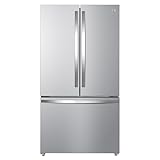
Overview: The Kenmore 36-inch counter-depth French door refrigerator delivers built-in aesthetics with ENERGY STAR efficiency. This 20.3 cubic foot unit features advanced cooling technology and customizable storage, positioning itself as a premium choice for design-conscious homeowners seeking seamless kitchen integration.
What Makes It Stand Out: Accela Chill rapidly cools fresh groceries, protecting food safety and quality during unpacking. The inverter compressor operates quietly while maintaining precise temperatures, reducing energy consumption and wear. A full-width pantry drawer accommodates oversized platters, while humidity-controlled crispers and adjustable glass shelving provide professional-level organization. Fingerprint-resistant stainless steel maintains appearance with minimal maintenance.
Value for Money: At $1,518, this Kenmore commands a $300-400 premium over standard-depth models, but counter-depth design adds significant kitchen value. The ENERGY STAR certification promises utility savings, while the inverter compressor’s durability offsets initial cost. Comparable built-in look refrigerators from luxury brands exceed $2,000, making this a relative bargain for renovation projects.
Strengths and Weaknesses: Strengths include flush counter-depth installation, rapid cooling technology, quiet inverter compressor, excellent storage flexibility, factory-installed icemaker, and energy efficiency. Dual evaporators prevent odor transfer between compartments. Weaknesses include reduced depth limiting storage versus standard models, premium pricing, and crescent ice shape that may not suit all preferences. The 20.3 cubic feet capacity may disappoint given the 36-inch width.
Bottom Line: The Kenmore suits kitchen renovations where aesthetics and efficiency matter most. Pay the premium for counter-depth design and advanced cooling technology that preserves food better and longer.
5. Commercial Cool 18.9 Cu. Ft. French Door Refrigerator, 33 Inch Wide Refrigerator with 2 Bottom Mount Freezer Drawers, Frost Free, LED Lighting, Digital Temperature Control, CCRF1890KS, Stainless Look

Overview: The Commercial Cool 18.9 cubic foot French door refrigerator offers innovative features like dual freezer drawers and AI-powered temperature management in a 33-inch package. This model balances modern technology with practical design for families wanting advanced functionality without stepping up to premium brand pricing.
What Makes It Stand Out: Two separate bottom freezer drawers provide superior organization compared to single-compartment designs, allowing separation of meal types and reducing cold air loss. The AI mode automatically optimizes temperature based on usage patterns, while Vacation mode minimizes energy consumption during extended absences. A door alarm prevents energy waste and food spoilage from accidental openings.
Value for Money: At $1,499, this unit sits in the competitive mid-range segment, offering features typically found in $1,800+ models. The dual drawer configuration and smart modes deliver tangible daily benefits. While brand recognition lags behind Kenmore or Whirlpool, the feature set justifies the price for tech-savvy buyers prioritizing innovation over legacy status.
Strengths and Weaknesses: Strengths include dual freezer drawers, intelligent temperature modes, door alarm, frost-free operation, LED lighting, and digital controls. The 33-inch width fits most kitchens comfortably. Weaknesses include ambiguous “Stainless Look” finish (may not be true stainless), unspecified ice maker capabilities, and limited service network. The 18.9 cubic feet capacity trails some competitors at this price.
Bottom Line: The Commercial Cool refrigerator appeals to tech-oriented users wanting intelligent features and superior freezer organization. Accept the lesser-known brand to gain innovative functionality that genuinely improves daily convenience.
6. KoolMore 30-Inch and 18.5 cu. ft. Counter Depth French Door Refrigerator with Three Doors and Deep Freezer in Stainless-Steel (KM-RERFDSS-18C)

Overview: The KoolMore 30-inch French door refrigerator offers a premium counter-depth design that seamlessly integrates into modern kitchens. With 18.5 cubic feet of capacity, this stainless-steel appliance provides ample storage while maintaining a sleek, built-in appearance that aligns perfectly with standard cabinetry.
What Makes It Stand Out: This model distinguishes itself with a sophisticated double-flow cooling system that ensures even temperature distribution throughout both compartments. The dual humidity-controlled crisper drawers are a standout feature, extending produce freshness significantly compared to standard models. Its counter-depth configuration is ideal for kitchen layouts where space efficiency and aesthetic cohesion are priorities.
Value for Money: Priced at $1,389, this KoolMore refrigerator sits in the mid-range for counter-depth French door models. While more expensive than standard-depth alternatives, the premium pricing reflects the specialized design and advanced cooling technology. Comparable counter-depth units from major brands often exceed $1,500, making this a competitive option for design-conscious buyers.
Strengths and Weaknesses: Strengths include the seamless counter-depth integration, superior humidity control system, quiet operation, and modern stainless-steel finish. The double freezer drawer configuration enhances organization. Weaknesses are the reduced capacity compared to standard-depth models, limited color options, and absence of a built-in ice maker. The 18.5 cubic feet may feel restrictive for larger households.
Bottom Line: The KoolMore is an excellent choice for homeowners prioritizing kitchen aesthetics and advanced food preservation. Its counter-depth design and humidity control system justify the investment for those who value form and function equally, though families requiring maximum storage should consider larger alternatives.
7. Avanti French Door Refrigerator with Bottom Freezer 30-Inch Wide​, Frost Free Technology, Large Capacity with Adjustable Shelves, Door Bins & Crisper Drawers, 17.5 Cu.Ft., Stainless Steel

Overview: The Avanti French door refrigerator delivers 17.5 cubic feet of storage in a contemporary stainless-steel package. Measuring 30 inches wide, this bottom-freezer model combines frost-free convenience with flexible organization options, making it a practical choice for modern households seeking French door functionality without premium pricing.
What Makes It Stand Out: Avanti’s commitment to hassle-free ownership shines through its frost-free technology, eliminating manual defrosting entirely. The refrigerator distinguishes itself with comprehensive delivery and installation support in select locations, removing the logistical burden often associated with major appliance purchases. Its clear-view crisper drawers and six door bins provide exceptional visibility and accessibility.
Value for Money: At $1,039.84, this model significantly undercuts competitors while delivering core French door benefits. The frost-free system alone saves hours of maintenance annually. While lacking some advanced features of pricier models, the value proposition is compelling for budget-conscious consumers who refuse to compromise on style or basic functionality.
Strengths and Weaknesses: Strengths include the frost-free freezer, transparent organizational components, competitive pricing, and installation support. The dual freezer drawers enhance frozen food management. Weaknesses include a smaller 17.5 cubic foot capacity that may challenge larger families, limited advanced temperature management features, and Avanti’s lesser-known brand status potentially affecting long-term service support.
Bottom Line: This Avanti refrigerator is ideal for apartments, small families, or as a secondary fridge. It delivers essential French door advantages and frost-free convenience at an accessible price point, making it a smart choice for value-focused buyers who prioritize practicality over premium features.
8. BLACK+DECKER 16 Cu. Ft. French Door Refrigerator with Built-in Ice Maker, Full Size Refrigerator with Bottom Mount Freezer Drawer, Frost Free, ENERGY STAR certified, BRF1600GIMB, Black

Overview: The BLACK+DECKER 16 cubic foot French door refrigerator brings convenient ice production to a compact, energy-efficient design. Finished in sleek black, this bottom-freezer model integrates a built-in ice maker while maintaining ENERGY STAR certification, appealing to environmentally conscious consumers who won’t sacrifice modern amenities.
What Makes It Stand Out: The integrated ice maker producing 3.5 pounds daily sets this model apart in the mid-size category, eliminating separate ice machine purchases. Its digital temperature control provides precise climate management for both compartments, while ENERGY STAR certification ensures operational cost savings. The brand’s widespread recognition offers confidence in reliability and service accessibility.
Value for Money: At $1,573.99, the pricing reflects the included ice maker and energy-efficient technology. While capacity is modest at 16 cubic feet, comparable models with automatic ice makers typically command higher prices. The long-term energy savings and convenience factor help offset the initial investment, particularly for households prioritizing ice availability.
Strengths and Weaknesses: Strengths include the factory-installed ice maker, precise digital controls, frost-free operation, and strong energy efficiency ratings. The bottom freezer drawer provides ergonomic access. Weaknesses center on the limited 16 cubic foot capacity, which may prove insufficient for families, and the black finish’s divisive aesthetic appeal. The price-per-cubic-foot ratio is higher than ice-maker-free alternatives.
Bottom Line: This BLACK+DECKER model suits small to medium households seeking built-in ice production and energy savings in a space-conscious package. Buyers should verify capacity meets their needs, but the feature set and brand backing make it a solid mid-range contender.
9. BLACK+DECKER 16 Cu. Ft. French Door Refrigerator with Built-in Ice Maker, Full Size Refrigerator with Bottom Mount Freezer Drawer, Frost Free, ENERGY STAR certified, BRF1600GIMS, Stainless Look

Overview: This BLACK+DECKER French door refrigerator mirrors its sibling model with 16 cubic feet of capacity and a built-in ice maker, but wraps it in a contemporary stainless-steel look finish. The bottom-freezer design maintains ENERGY STAR efficiency while offering the aesthetic versatility that modern kitchens demand.
What Makes It Stand Out: The stainless-look exterior broadens this model’s appeal beyond the black version, seamlessly blending with diverse kitchen palettes. It retains the powerful 3.5-pound daily ice maker and precise digital temperature controls. The ENERGY STAR certification remains a key differentiator, promising measurable utility savings over non-certified competitors.
Value for Money: At $1,694.99, this model commands a $121 premium over the black version solely for finish. While the stainless aesthetic justifies the upcharge for many buyers, the price-per-cubic-foot becomes harder to justify. However, integrated ice makers in stainless finishes typically start above $1,800 from premium brands, maintaining this model’s competitive edge.
Strengths and Weaknesses: Strengths include the versatile stainless finish, reliable ice production, energy efficiency, and user-friendly digital controls. The frost-free freezer and ergonomic layout enhance daily use. Weaknesses mirror the black version: limited capacity constrains larger families, and the 16 cubic foot size feels cramped relative to price. The finish premium may deter budget-focused shoppers.
Bottom Line: Choose this model if stainless aesthetics are non-negotiable and you value the integrated ice maker. It’s perfect for urban dwellings or small families prioritizing style and convenience. Capacity-conscious buyers should explore larger alternatives, but this hits the sweet spot for compact efficiency with premium looks.
10. Winia WRFS26ABTD French Door Non-Dispenser Refrigerator, 26.1 Cu.Ft, Stainless Steel

Overview: The Winia WRFS26ABTD French door refrigerator delivers an impressive 26.1 cubic feet of storage at a surprisingly accessible price point. This non-dispenser model focuses on maximizing interior space and organizational flexibility, featuring a full-width pantry drawer and gallon-size door bins in a classic stainless-steel design.
What Makes It Stand Out: The cavernous capacity sets this model apart, offering nearly double the space of compact French door units. The full-width Gourmet Pantry Drawer accommodates large platters and deli trays—perfect for entertainers. LED lighting illuminates every corner efficiently, while the factory-installed icemaker provides steady ice production without sacrificing door space to a dispenser.
Value for Money: At $1,187.15, this Winia model delivers exceptional value with one of the lowest price-per-cubic-foot ratios in the French door category. Comparable capacity models from major brands typically exceed $1,500. The omission of a water dispenser reduces both cost and maintenance concerns, making this a financially savvy choice for space-hungry households.
Strengths and Weaknesses: Strengths include massive 26.1 cubic foot capacity, versatile pantry drawer, energy-efficient LED lighting, and outstanding value. The dairy shelf and gallon door bins enhance organization. Weaknesses include the lower 1.7-pound daily ice output, absence of through-door water/ice dispenser, and Winia’s limited brand presence potentially impacting service networks. The non-dispenser design may disappoint some users.
Bottom Line: This Winia refrigerator is unbeatable for large families seeking maximum storage without premium pricing. If you prioritize capacity and organization over dispenser convenience, this model offers extraordinary value and functionality that outpaces pricier competitors.
Why French Door Refrigerators Are Worth Considering on a Budget
French door refrigerators have long been marketed as luxury appliances, but their core design offers practical benefits that translate well to budget-conscious households. The side-by-side refrigerator doors require less clearance than a single full-width door, making them ideal for galley kitchens or tight spaces where every inch matters. The bottom freezer drawer puts frequently accessed fresh foods at eye level, reducing energy loss and making meal prep more ergonomic.
At the sub-$1,500 price point, manufacturers have democratized this layout, offering stripped-down versions that retain the essential form factor while eliminating premium flourishes. You’re still getting the wide refrigerator compartment that accommodates party platters and sheet cakes—something narrow side-by-side models struggle with. The psychological impact is real too: French doors simply make a kitchen feel more modern and spacious, which matters when you’re trying to maximize your home’s aesthetic appeal on a limited budget.
What Does “Budget” Really Mean in the French Door Category?
The term “budget” is relative in the appliance world. While $1,500 might seem substantial, it’s actually the entry-level threshold for French door models from major brands. Understanding this context is crucial for setting realistic expectations. At this price, you’re typically looking at capacities between 20-25 cubic feet, often closer to the smaller end of that range.
Manufacturers achieve this price point through strategic cost-cutting: single evaporator systems instead of dual cooling, wire shelving rather than tempered glass, and basic LED lighting instead of theater-style illumination. The compressors are typically standard single-speed units rather than the variable-speed inverters found in premium models. This doesn’t mean poor performance—it means straightforward functionality without the refinement. You’ll also notice fewer door bins, simpler control panels, and plastic interiors rather than stainless steel accents.
Essential Features vs. Nice-to-Have Upgrades
When every dollar counts, distinguishing between necessity and luxury becomes paramount. Essential features include adjustable glass shelves (not wire), humidity-controlled crispers, and at least one full-width drawer for deli items or large trays. A factory-installed ice maker in the freezer compartment is now standard even at budget levels, though in-door dispensers remain a premium feature.
Nice-to-have upgrades that you’ll typically sacrifice include dual evaporators for separate cooling zones, door-in-door storage, flexible middle drawers with independent temperature controls, and smart connectivity. The absence of these doesn’t compromise basic food preservation. However, be wary of models that strip away too much—avoid fridges with only two crisper drawers or fixed shelving, as these limitations will frustrate you daily. The sweet spot is finding a model that retains interior flexibility while foregoing exterior flash.
Understanding Capacity: Getting the Right Size for Your Household
Capacity claims can be misleading. Manufacturers list total cubic footage that includes the freezer, which typically represents only 30-35% of usable space. For a family of four, you’ll want at least 14-16 cubic feet of fresh food storage, which translates to roughly a 22-25 cubic foot total capacity model. First-time buyers often underestimate their needs, leading to a cramped interior that requires Tetris-like organization skills.
Consider your shopping habits. If you buy in bulk from warehouse clubs, prioritize wider refrigerator compartments over deeper ones—depth makes items disappear into the back. For apartment dwellers or couples, a 20-21 cubic foot model suffices and saves energy. Remember that French doors inherently waste some space with their center mullion and door mechanisms, so a 22 cubic foot French door often holds less than a 22 cubic foot side-by-side. Always check the usable capacity rather than the marketed number.
Measuring Your Space: The Critical Pre-Purchase Step
This is where first-time buyers most commonly derail their purchase. French door refrigerators require clearance on three sides: ventilation space (typically 1-2 inches on sides and back), door swing clearance, and delivery path clearance. Measure the width, height, and depth of your alcove, then subtract those ventilation inches. But that’s just the beginning.
Account for door swing radius—the doors need room to open beyond 90 degrees for full bin access. Check if your countertop overhang will obstruct the doors. Measure every doorway, hallway corner, and stairwell between your driveway and the kitchen. Budget models often lack the adjustable hinges or removable doors of premium units, making tight squeezes impossible. Photograph your space from multiple angles and bring a tape measure to the showroom to verify dimensions against floor models. That “perfect fit” online can become a return nightmare if you skip this step.
Decoding Energy Efficiency Ratings and Long-Term Savings
That yellow EnergyGuide sticker tells a story beyond the estimated annual operating cost. At the $1,500 price point, most French doors carry an Energy Star certification, but efficiency varies widely. Look for the CEE Tier rating—Tier I meets basic Energy Star, while Tier II and III indicate superior efficiency. A model costing $30 more annually might seem negligible, but over a 12-year lifespan, that’s $360.
Budget models often use older compressor technology, consuming 10-15% more energy than premium inverter-driven units. However, the difference between a budget French door and an old top-freezer can be dramatic—potentially saving $100+ annually. Factor this into your true cost of ownership. Also consider the environmental impact: more efficient models use less electricity during peak demand hours, reducing strain on the grid. The kicker? Some utility companies offer rebates for higher-tier efficient models, potentially offsetting the purchase price.
The Truth About Ice and Water Dispensers at This Price Point
Here’s a hard truth: most French doors under $1,500 either lack in-door dispensers entirely or include basic units that compromise interior space. The ice maker typically resides in the freezer, consuming 2-3 cubic feet of precious storage. In-door dispenser models at this price often use cheaper components prone to failure and may sacrifice a door bin or two.
Consider your household’s actual usage. Many families use dispensers less frequently than they anticipate, while the maintenance—filter replacements every six months at $40-60 each—adds up. A manual fill option with an internal pitcher that auto-fills can be a smart compromise, offering chilled water without the mechanical complexity. If you must have a dispenser, prioritize models with simple, mechanical designs over electronic touchpads, which fail more frequently and cost more to repair. The money saved skipping this feature often allows you to upgrade to a larger capacity or better interior configuration.
Interior Layout and Configuration Strategies
Budget doesn’t have to mean basic interior design. Look for spill-proof glass shelves with raised edges—these contain messes and are easier to clean than wire racks. Adjustable shelving is non-negotiable; you need at least two or three positions to accommodate tall items. The door bin configuration matters more than you think: deep gallon-sized bins on the right door and shallower condiment bins on the left create natural organization.
Pay attention to crisper drawer placement. Side-by-side crispers at the bottom are standard, but a full-width pantry drawer above them adds tremendous versatility for party trays, pizza boxes, or meal prep containers. Some budget models include a sliding deli drawer, which is worth seeking out. Avoid models with fixed-position shelves or only one crisper—these design limitations will haunt you every time you bring home a watermelon or tall bottle of wine.
Finish Options: Stainless Steel, Black Stainless, and Beyond
Finish choice impacts both aesthetics and maintenance. Traditional stainless steel remains the most popular option, but budget models often use a lower-grade 430 stainless that shows fingerprints more readily and lacks the magnetic properties of higher-end 304 stainless. This means your magnets won’t stick—a surprise many first-time buyers discover too late.
Black stainless offers a modern look and better fingerprint resistance, but the coating can chip, revealing bright stainless underneath. At the sub-$1,500 level, the coating quality varies significantly between brands. White and black finishes are making a comeback, often at $50-100 less than stainless, and they’re actually more durable—powder-coated finishes resist scratches and don’t show smudges. Consider your lifestyle: families with young children might prefer white for its forgiving nature, while design-focused buyers may prioritize the sleekness of stainless despite the maintenance.
Noise Levels: What to Expect from Budget Models
That gentle hum you hear in the showroom? It might become a constant drone in your quiet kitchen. Budget French doors typically use louder compressors and less insulation than premium models, operating in the 42-48 decibel range. For context, 40 dB is library-quiet, while 50 dB is normal conversation level. The difference matters in open-concept homes where the kitchen flows into living spaces.
Listen for compressor cycling—the on-off sound as the unit maintains temperature. Cheaper models cycle more frequently and abruptly. Some budget units develop rattling door bins, vibrating water lines, or humming ice makers over time. Check customer reviews specifically for noise complaints, and if possible, visit a friend with a similar model. Placement matters too: a fridge tucked into a tight alcove will sound louder than one with breathing room. Consider acoustic panels behind the unit if noise is a deal-breaker.
Reliability and Brand Reputation in the Sub-$1,500 Segment
Brand loyalty gets complicated at budget price points. Major manufacturers often create derivative models specifically for big-box retailers, using components from their parts bin to hit price targets. These models may carry the brand name but lack the engineering robustness of their higher-end siblings. Research the specific model number, not just the brand.
Look for manufacturers with proven track records in compressor reliability and parts availability. Some brands excel at basic mechanical reliability while others focus on feature innovation that may not age well. Check the average repair rate for French doors in this category—typically 15-20% within the first five years. Extended warranties become a math equation: if a 5-year plan costs $150 and the average repair is $300, it might make sense. But read the fine print—many exclude sealed system components (compressor, evaporator) which are the most expensive failures.
Warranty Coverage: What Manufacturers Actually Offer
Standard warranties in this category typically include one year full coverage, five years on sealed systems (compressor, evaporator, condenser), and ten years on the compressor specifically. However, labor costs often aren’t covered after the first year, meaning a failed compressor in year six could still cost you $200-400 in service fees despite the parts being “covered.”
Some brands now offer limited lifetime warranties on specific components, but these usually require registration within 30 days and exclude commercial use (including rental properties). Read the warranty document before purchasing—it’s often available online. Pay attention to whether the warranty is pro-rated (coverage decreases over time) and what constitutes “normal use.” Improper installation voids most warranties, making professional installation a worthwhile investment despite the added cost.
Installation Considerations and Hidden Costs
The $1,500 price tag is just the beginning. Delivery fees typically run $50-100, and haul-away of your old unit adds another $20-40. Installation costs vary: if you have an existing water line for an ice maker, connection might be included. If not, plumbing a new line costs $150-300.
Consider the electrical requirements. Most French doors require a dedicated 15-amp circuit. If your kitchen outlets are shared, you might need an electrician ($200-500). Flooring is another hidden factor: budget models are heavier than expected, and if your floor isn’t level, the doors won’t seal properly. Some retailers offer free installation promotions during holiday weekends—time your purchase accordingly. And don’t forget the water filter: most models ship with a bypass plug, requiring a $40-60 filter purchase before you can use the ice maker.
Smart Features: Are They Worth It on a Budget?
Wi-Fi connectivity is creeping into sub-$1,500 models, but approach with skepticism. These bare-bones smart features typically offer only basic temperature monitoring and filter change reminders—hardly revolutionary. The real concern is longevity: app support often gets discontinued after 3-5 years, and the Wi-Fi modules themselves can fail, sometimes disabling the entire control panel.
Worse, smart features in budget models can introduce security vulnerabilities to your home network. The processors used are often underpowered, leading to laggy app experiences. Instead of paying a $100 premium for “smart” capabilities, invest that money in better interior configuration or a higher efficiency rating. If you must have connectivity, look for models that work with established platforms like SmartThings rather than proprietary apps, as they’re more likely to receive long-term support.
Seasonal Timing and Deal-Hunting Strategies
Patience pays literal dividends in appliance shopping. Major sales events—Presidents Day, Memorial Day, July 4th, Labor Day, and Black Friday—typically offer 15-25% discounts, bringing mid-range models into your budget. But the real secret is shopping the weeks after these holidays, when retailers discount floor models and returns by 30-40%.
New model releases happen in spring, making previous year models ripe for clearance in late summer. Set price alerts on multiple retailers and check for bundle deals—some stores offer 10% off when you buy two or more appliances. Don’t overlook regional retailers; they often match prices and include superior installation services. And here’s a pro tip: ask about customer-returned units that can’t be sold as new. These “open-box” items typically carry full warranties and can save you hundreds, with only minor cosmetic imperfections.
Frequently Asked Questions
1. Can I really get a reliable French door refrigerator for under $1,500?
Yes, but you’ll need to prioritize mechanical reliability over features. Focus on models with simple ice maker designs, fewer electronic controls, and strong compressor warranties. Avoid units with excessive feature bloat, as these are often where corners are cut.
2. How much should I budget beyond the sticker price for installation and setup?
Plan for an additional $200-400. This covers delivery ($50-100), water line installation if needed ($150-300), and essential accessories like a water filter ($40-60). If electrical work is required, add another $200-500.
3. Is it better to buy a slightly smaller capacity from a better brand or a larger capacity from a budget brand?
Generally, opt for the better brand with adequate capacity. A 21 cubic foot fridge from a reliable manufacturer will serve you better than a 25 cubic foot model from a brand with poor service networks and high failure rates. Quality trumps size when longevity matters.
4. How do I know if a finish is fingerprint-resistant or just marketed that way?
Test it yourself in-store. Press your fingers firmly on the display model and see how visible the marks are. Real fingerprint-resistant finishes use special coatings that can be wiped clean with a dry cloth. Read reviews specifically mentioning finish durability after 6+ months of use.
5. What’s the biggest compromise I’ll make at this price point?
The most common compromise is a single evaporator system versus dual cooling. This means refrigerator and freezer air mix somewhat, potentially transferring odors and creating humidity imbalances. It’s functional but less precise than premium dual-evaporator systems.
6. Should I buy an extended warranty for a budget French door?
It depends on the brand’s reliability record and the warranty cost. If the extended warranty is 10-15% of the purchase price and covers labor beyond year one, it can be worthwhile. However, if it excludes sealed system components, skip it and save for potential repairs instead.
7. How long should I expect a sub-$1,500 French door to last?
With proper maintenance, expect 10-12 years of service. This is slightly less than the 15-year average for premium models, primarily due to less robust compressors and fewer protective features. Regular cleaning of coils and prompt filter changes significantly impact longevity.
8. Are ice and water dispensers in the door worth the space sacrifice?
For most households, no. Internal ice makers in the freezer compartment are more reliable and free up door storage. Door dispensers consume 2-3 cubic feet of interior space and introduce more failure points. Consider your actual usage—many families use them less than anticipated.
9. How can I verify a fridge will fit through my home’s doorways?
Measure every doorway, hallway, and stairwell along the delivery path. Compare these to the fridge’s dimensions with doors removed (this measurement is usually listed in specs). Take photos of tight corners. Many budget models don’t have easily removable doors, so measure conservatively.
10. What’s the most important feature to prioritize for energy savings?
Look for the CEE Tier rating rather than just Energy Star. A Tier II or III model saves $30-50 annually compared to basic Tier I. Also, consider the ice maker location—freezer-based units consume less energy than in-door dispensers. The combination of higher tier rating and simpler ice maker can save $500+ over the appliance’s lifetime.