Running out of ice during the morning rush is a small café owner’s nightmare. That frantic scramble to borrow bags from the gas station down the street doesn’t just disrupt service—it chips away at your professional reputation and your bottom line. Commercial-grade undercounter ice systems have become the unsung heroes of efficient café operations, delivering restaurant-quality ice production while tucking neatly beneath your existing counter space. But not all ice machines are created equal, and choosing the wrong system can lead to years of headaches, unexpected expenses, and inconsistent performance.
This comprehensive guide cuts through the marketing jargon and technical specifications to give you the practical knowledge you need to make an informed investment. Whether you’re opening your first location or upgrading outdated equipment, we’ll explore everything from ice chemistry to installation clearances, helping you select a system that will serve your café reliably for years to come.
Top 10 Commercial-Grade Undercounter Ice Systems for Small Cafes
Detailed Product Reviews
1. Coolake Commercial Ice Maker Machine 320lbs/24H with 120lbs Storage, Stainless Steel Under Counter Freestanding Ice Maker, Water Filter Reduce Scale up to 99% for Home Bar Restaurant, ETL Approval

Overview: The Coolake Commercial Ice Maker positions itself as a premium under-counter solution for small to medium-sized food service operations. Producing 320 pounds of clear cube ice daily with 120 pounds of storage, it emphasizes water quality and longevity through advanced filtration. The unit’s stainless steel construction and front-access design promise durability and easy maintenance in space-constrained environments.
What Makes It Stand Out: This machine’s upgraded coconut shell-activated carbon filter is its crown jewel, reducing scale buildup by 99% while improving ice taste and clarity—a feature rarely emphasized so strongly in this price tier. The 3-year parts and 5-year compressor warranty demonstrates manufacturer confidence. The cool blue LED lighting transforms a functional appliance into an aesthetic element, while the thickened foam insulation maintains ice for 7-9 hours during power outages.
Value for Money: At $1,149.98, the Coolake sits in the mid-range category, but its filtration system and extended warranty justify the premium over budget competitors. However, its 320-pound daily output lags behind similarly priced alternatives offering 450+ pounds, making it better suited for establishments with moderate ice demands rather than high-volume operations.
Strengths and Weaknesses:
- Strengths: Superior water filtration system; exceptional warranty coverage; attractive LED lighting; excellent insulation; intuitive LCD controls with self-diagnostics
- Weaknesses: Lower production capacity compared to price competitors; smaller storage bin limits peak-hour buffering; premium price for output ratio
Bottom Line: Ideal for quality-focused bars and cafes prioritizing ice clarity and equipment longevity over maximum output. The filtration system alone makes it worthwhile for areas with hard water, though high-volume businesses should consider more productive alternatives.
2. Commercial Ice Maker Machine 500LBs/Day with Filter, 250LBs Storage Bin, SECOP Compressor&ETL Approval Industrial Ice Machine, Auto-Cleaning, Ice Ready in 8-20mins, Cafe/Bar/Business/RST.

Overview: The ICYGLEE 500-pound commercial ice maker delivers serious production power for demanding environments. With a massive 250-pound storage capacity and world-class SECOP compressor, this unit targets high-volume restaurants, bars, and cafes that cannot afford ice shortages during peak service periods. Its rapid 8-20 minute cycle ensures continuous supply when it matters most.
What Makes It Stand Out: The combination of SECOP compressor technology and 250-pound storage creates exceptional peak-hour resilience, storing over twice the ice of standard units. The auto-cleaning with self-drainage function simplifies maintenance, while advanced insulation keeps ice frozen for 7-9 hours without power. Dual-box shipping protects components during transport, though arrival times may vary.
Value for Money: Priced at $1,199.99, this machine offers exceptional production-to-cost value, delivering 500-pound capacity at the same price point as many 450-pound units. The energy-efficient copper compressor reduces operational costs over time. However, the one-year warranty feels insufficient for commercial equipment, potentially offsetting initial savings with future repair risks.
Strengths and Weaknesses:
- Strengths: Outstanding daily output; massive storage capacity; premium SECOP compressor; auto-cleaning and drainage; energy-efficient operation; rapid ice production
- Weaknesses: Short one-year warranty; dual-box shipping may cause incomplete deliveries; bulkier footprint requires more space; basic filtration compared to specialized systems
Bottom Line: A powerhouse for high-volume establishments prioritizing production capacity and storage over long-term warranty protection. Perfect for busy restaurants and bars where ice shortages directly impact revenue, though consider extended service plans for peace of mind.
3. Commercial Ice Machine, 450LBS/24H Ice Maker with 120 LBS Storage, Ice Ready in 8-15 min, Under Counter Ice Machine, Commercial Ice Machine Maker for Restaurant/Bar/Cafe/Business

Overview: This 450-pound commercial ice machine strikes an impressive balance between performance, affordability, and user-friendliness. Designed for restaurants, bars, and cafes, it produces ice every 8-15 minutes with straightforward operation. The under-counter form factor maximizes space efficiency while delivering sufficient output for medium-sized operations during peak demand periods.
What Makes It Stand Out: Exceptional customer service distinguishes this unit, with users praising responsive support and detailed troubleshooting guidance—critical for minimizing downtime in commercial settings. The intuitive LCD panel simplifies ice thickness adjustment, timer settings, and self-cleaning activation. Quick installation and compact portability make it ideal for businesses needing immediate deployment without complex setup.
Value for Money: At $970.99, this model offers the best price-to-performance ratio in the comparison. It delivers 450-pound capacity—exceeding more expensive units—while maintaining essential features like self-cleaning and adjustable thickness. The 120-pound storage is adequate for most applications, though high-volume businesses may need supplemental storage during extreme peaks.
Strengths and Weaknesses:
- Strengths: Excellent production speed; outstanding customer support; competitive pricing; easy installation; intuitive controls; compact under-counter design
- Weaknesses: Smaller storage capacity limits buffer during extreme rushes; basic warranty details not prominently stated; lacks premium filtration systems; insulation duration unspecified
Bottom Line: The smart choice for budget-conscious businesses seeking reliable performance without premium frills. Ideal for cafes and medium-volume restaurants where responsive customer service and easy operation outweigh maximum storage capacity. Delivers professional results at a compelling price point.
4. Commercial Ice Machine 650Lbs/24H, 450Lbs Large Storage, ETL Approval, Fast Ice in 8-15 Min, Stainless Steel, Powerful Compressor, Auto Clean, Ideal for Bars Cafes Restaurants

Overview: The TUATNUT commercial ice maker dominates the performance category with an extraordinary 650-pound daily output and massive 450-pound storage capacity. This industrial-grade unit serves high-demand venues like large restaurants, hotels, and grocery stores where ice is mission-critical. The three-layer insulation maintains ice quality for nine hours, while ETL certification ensures compliance with commercial safety standards.
What Makes It Stand Out: No competitor matches the storage-to-production ratio—450 pounds of storage captures nearly 70% of daily output, providing unprecedented buffer capacity during surges. The 3-year general warranty plus 10-year compressor coverage is industry-leading, protecting your investment for a decade. NSF-standard compliance guarantees food safety, while the powerful compressor delivers 156 cubes every 8-15 minutes consistently.
Value for Money: Remarkably priced at $1,199.99, this machine offers superior specifications to units costing hundreds more. The 10-year compressor warranty alone adds tremendous value, potentially saving thousands in replacement costs. For high-volume operations, the productivity gains and storage capacity quickly offset the initial investment through eliminated emergency ice purchases.
Strengths and Weaknesses:
- Strengths: Highest production capacity; massive storage bin; exceptional 10-year compressor warranty; triple-layer insulation; NSF/ETL certified; rapid ice cycles; premium stainless construction
- Weaknesses: Overkill for small establishments; large footprint requires substantial space; higher upfront cost may strain startup budgets; transfer to freezer needed for long-term storage
Bottom Line: The undisputed champion for large-scale commercial operations. If your business depends on uninterrupted ice supply, this unit’s production capacity, storage buffer, and warranty coverage make it a no-brainer investment that pays dividends through reliability and performance.
5. Commercial Ice Maker Machine 450LBS/24H, Under Counter Ice Machine, Upgrade Compressor 120LBS Storage Bin, Stainless Freestanding Commercial Ice Maker for Home Bar Cafe Office
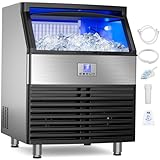
Overview: This 450-pound under-counter ice maker emphasizes intelligent design and operational flexibility for versatile commercial applications. Featuring an upgraded compressor and thoughtful engineering, it caters to home bars, cafes, and offices requiring reliable ice production without industrial-scale footprint. The freestanding or built-in installation options adapt to various spatial constraints.
What Makes It Stand Out: Humanized design features set this unit apart, including adjustable screw-in feet for leveling on uneven floors and unrestricted water source options beyond tap connections. The intelligent LCD panel with built-in diagnostics proactively identifies issues before failure, while the appointment timer function automates production scheduling. Enhanced polyethylene insulation extends preservation from six to eight hours.
Value for Money: Priced at $999.99, this model competes directly with Product 3, offering similar 450-pound output with enhanced design features for $29 more. The upgrade compressor and flexible installation justify the slight premium. However, the standard 120-pound storage feels limiting compared to the price-equivalent Product 4’s massive 450-pound bin, making it better suited for steady demand rather than extreme peaks.
Strengths and Weaknesses:
- Strengths: Flexible installation options; intelligent diagnostic system; appointment timer; upgraded compressor; excellent customer service; adjustable feet; unrestricted water sourcing
- Weaknesses: Average storage capacity; unspecified warranty details; brand recognition concerns; insulation shorter than premium models; lacks advanced filtration
Bottom Line: Perfect for versatile environments needing installation flexibility and smart monitoring. Ideal for home bars, offices, and cafes with moderate peak demands. The intelligent features and design adaptability make it a practical choice, though high-volume businesses should prioritize storage capacity over convenience features.
6. Undercounter Ice Makers 90Lbs/Day, 35 Lbs Storage, 12H Ice Retention, Auto-Cleaning, Stainless Steel Built-in Freestanding Undercounter Ice Machines for Commercial Home Bar Restaurant Cafe

Overview: This stainless steel undercounter ice maker delivers impressive performance for its price point, producing up to 90 pounds of clear ice daily with a 35-pound storage capacity. Designed for versatile installation in homes, bars, and restaurants, the unit combines rapid ice production—40 cubes every 10-15 minutes—with thoughtful features like a 12-hour retention system and auto-cleaning functionality. The compact 15-inch width allows seamless integration under most counters.
What Makes It Stand Out: The triple-layer insulation system maintains ice for up to 12 hours without power, a standout feature rarely found in this price class. The reversible door offers installation flexibility, while the intuitive LCD panel provides control over ice thickness, cleaning cycles, and timing. The gravity drainage system simplifies setup without requiring complex plumbing modifications.
Value for Money: At $599.99, this unit significantly undercuts commercial competitors while delivering 90% of their functionality. It balances residential convenience with commercial-grade output, making it ideal for small businesses that can’t justify $2,000+ units. The ETL certification and stainless steel construction ensure durability that budget models typically lack.
Strengths and Weaknesses: Strengths include rapid production, excellent insulation, flexible installation, and user-friendly controls. The auto-cleaning feature reduces maintenance burden considerably. However, the 35-pound storage may require more frequent monitoring during peak usage, and gravity drainage might need elevation in some installations. The brand lacks the established service network of premium manufacturers.
Bottom Line: An exceptional value proposition for home bar enthusiasts and small commercial operations. This unit democratizes high-capacity ice production without sacrificing core performance or build quality. Recommended for buyers prioritizing features over brand prestige.
7. Commercial Undercounter Ice Maker by Manitowoc

Overview: The Manitowoc UYF0240A represents professional-grade ice production in a compact undercounter package. This workhorse generates up to 219 pounds of half-dice ice per day—more than double most residential units—with a generous 90-pound storage bin. Engineered for demanding commercial environments, it features robust electronic controls and intelligent production management that adapts to your operational schedule.
What Makes It Stand Out: Manitowoc’s forward-sliding storage bin provides exceptional service access without moving the entire unit, a crucial maintenance advantage. The production delay feature (4, 12, or 24 hours) allows strategic ice-making during off-peak hours, reducing energy costs. Full bin and service indicators eliminate guesswork, while the sealed food zone with removable components ensures sanitary operation.
Value for Money: At $2,998.00, this premium unit commands commercial-grade pricing but delivers corresponding durability and support. The investment makes sense for establishments requiring reliable 24/7 ice supply. Compared to cheaper alternatives, you’re paying for proven longevity, manufacturer support, and NSF-grade sanitation features that health inspectors demand.
Strengths and Weaknesses: Strengths include massive output, large storage, superior serviceability, and brand reputation. The half-dice cubes maximize beverage displacement. However, the price excludes small businesses and home users. The unit requires professional installation and regular maintenance contracts. At 90 pounds storage, it may still need supplemental bins for peak events.
Bottom Line: A professional solution for serious commercial operations. The Manitowoc UYF0240A justifies its premium through reliability, serviceability, and sanitation compliance. Essential for restaurants and bars where ice downtime means revenue loss.
8. Commercial Undercounter Ice Maker by Manitowoc

Overview: The Manitowoc UNP0300A specializes in producing soft, chewable nugget ice—a customer favorite—at an impressive rate of 330 pounds per day. This premium undercounter unit targets high-volume establishments where ice quality differentiates the experience. With a 50-pound storage bin and stainless steel construction, it combines robust performance with commercial durability.
What Makes It Stand Out: Nugget ice production at this capacity in an undercounter form factor is rare. The unit’s high-load stainless steel bearings ensure longevity under continuous operation, while ETL-Sanitation and cETLus certifications guarantee compliance with strict health standards. The 6-inch adjustable legs provide stability on uneven floors, a practical detail often overlooked.
Value for Money: At $5,273.00, this is a significant investment reserved for businesses where nugget ice drives customer satisfaction. The price reflects specialized compressor technology and premium components. For establishments selling beverages as a primary profit center, the ROI through customer retention can justify the cost. However, it’s overkill for standard cube ice needs.
Strengths and Weaknesses: Strengths include exceptional nugget ice quality, massive daily output, certified sanitation, and professional build quality. The compact footprint relative to production is impressive. Weaknesses include limited storage capacity (only 50 lbs) relative to production, premium pricing that excludes most buyers, and higher water usage than cube ice machines. Nugget ice also melts faster than traditional cubes.
Bottom Line: The gold standard for nugget ice aficionados. Perfect for high-end bars, healthcare facilities, and convenience stores where chewable ice is a signature offering. The investment only makes sense if nugget ice directly impacts your revenue or customer experience.
9. YITAHOME 100lbs Under Counter Ice Maker, ETL & DOE Certificated Commercial Ice Maker Machine Commercial, Large Ice Makers Freestanding for Home Cafe Bar Restaurant 45pcs with 33lbs Storage Bin

Overview: YITAHOME’s undercounter ice maker prioritizes user ergonomics and energy efficiency while delivering 100 pounds of daily ice production. The innovative top-mounted button eliminates repetitive bending, a thoughtful design choice for frequent users. Producing 45 clear cubes every 8-15 minutes, this unit serves home bars and small cafes seeking commercial capabilities without commercial complexity.
What Makes It Stand Out: The top-mounted control button is genuinely innovative, addressing a real pain point in undercounter installations. The 20% thicker cyclopentane insulation extends retention to 8 hours, while the built-in blue light visually enhances the ice presentation and slows melting. DOE certification and a CFC-free compressor delivering 35% energy savings demonstrate environmental consciousness.
Value for Money: At $329.99, this unit offers remarkable features at a budget-friendly price. It outperforms many $500+ units in efficiency and user experience while matching their production capacity. The copper tube construction and food-grade components suggest better durability than typical budget options, making it ideal for cost-conscious buyers refusing to compromise on core features.
Strengths and Weaknesses: Strengths include ergonomic design, energy efficiency, quiet operation, and rapid production. The adjustable cube size adds versatility. However, the 33-pound storage is modest for its output rate, requiring frequent emptying during heavy use. The brand has less service network presence than established commercial manufacturers, and the gravity drainage may limit installation options.
Bottom Line: An outstanding value that proves innovation isn’t limited to premium brands. The ergonomic design alone makes it worth considering for home users. For small businesses with moderate ice needs, this delivers commercial performance at residential pricing.
10. Scotsman Commercial Undercounter Ice Maker with Bin
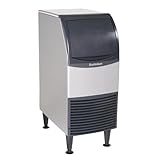
Overview: Scotsman’s compact undercounter unit delivers 80 pounds of medium cube ice daily in a space-saving 15-inch width that requires zero side clearance. Designed for tight commercial spaces, this air-cooled, self-contained machine prioritizes accessibility and maintenance efficiency. The ADA compliance with floor mount kit ensures universal usability, while the metallic finish provides professional aesthetics.
What Makes It Stand Out: The zero side clearance requirement maximizes installation flexibility in cramped bar and kitchen layouts. The unit-specific QR code revolutionizes service and maintenance documentation, instantly providing technicians with model-specific information. The horizontal evaporator design optimizes ice clarity and production efficiency, while 6-inch legs simplify cleaning underneath.
Value for Money: At $2,410.00, this Scotsman unit positions itself as a mid-tier commercial solution. The price reflects brand reputation and specialized compact engineering rather than raw production volume. For space-constrained establishments needing reliable medium cubes, it offers better value than larger, more expensive units. However, its 80-pound capacity lags behind similarly priced competitors.
Strengths and Weaknesses: Strengths include compact footprint, ADA compliance, innovative QR code system, and reputable brand support. The medium cube size suits most beverage applications. Weaknesses include modest daily output for the price, no advanced features like production delay, and limited storage capacity. The air-cooled design may increase ambient temperature in tight installations.
Bottom Line: Ideal for establishments where space is the primary constraint. Scotsman delivers reliability and serviceability in a compact package. Choose this when square footage is at a premium and medium cube ice meets your needs, but consider alternatives if maximum output is your priority.
Why Your Small Café Needs a Commercial-Grade Undercounter Ice System
The Hidden Cost of Running Out of Ice
That consumer-grade ice maker from the big-box store might seem like a bargain at first glance, but it’s designed for occasional home use—not the relentless demands of a busy café. When you’re serving 50-100 customers during peak hours, you need equipment that can produce ice continuously without overheating or failing. Commercial-grade systems feature heavy-duty compressors, robust condensers, and industrial-strength components engineered for 12-16 hour daily operation. The cost of one lost morning rush due to equipment failure typically exceeds the price difference between residential and commercial units.
How Undercounter Units Save Precious Space
Square footage in small cafés comes at a premium, often costing $30-50 per square foot annually in rent. A traditional modular ice machine and bin combination can consume 6-8 square feet of floor space, essentially costing you $180-400 per year just to house your ice production. Undercounter systems reclaim this valuable real estate by integrating production and storage into a single unit that fits within your existing footprint. This space efficiency allows you to add seating, expand prep areas, or simply improve workflow in tight quarters.
Understanding Ice Types and Their Café Applications
Cube Ice: The Classic Choice
Full cube ice remains the workhorse of the beverage industry for good reason. Its larger surface area melts slowly, diluting drinks less while maintaining optimal temperature. For cafés serving iced coffee, tea, and fountain drinks, full cubes (typically 7/8" x 7/8" x 7/8") provide the ideal balance of cooling efficiency and beverage integrity. Half-cube variants pack more densely into glasses, creating the perception of a fuller pour while actually using less liquid—a subtle profitability advantage that adds up across thousands of beverages.
Nugget Ice: The Customer Favorite
Also known as pellet or chewable ice, nugget ice has developed a cult following among consumers. The soft, porous texture absorbs flavors and provides a satisfying chew that keeps customers coming back. For specialty coffee shops, nugget ice excels in blended drinks and cold brew applications because it breaks down smoothly without creating a watery consistency. While nugget ice machines typically cost 15-20% more than cube ice equivalents, the customer loyalty they generate often justifies the premium.
Flake Ice: Beyond Beverages
Flake ice isn’t just for seafood displays. Innovative cafés use this moldable, quick-cooling ice for cold brew coffee towers, rapid chilling of ingredients, and eye-catching salad bar presentations. Its 73% ice-to-water ratio makes it incredibly efficient for cooling, though its rapid melting rate limits its application in standard beverages. Consider flake ice if your menu includes grab-and-go items, pastry displays, or specialty cold brewing equipment.
Gourmet Ice: Elevating the Experience
Top-hat, octagonal, or clear cube ice represents the premium tier of ice production. These slow-melting, crystal-clear cubes enhance the perceived value of craft cocktails, premium spirits, and high-end coffee beverages. The clarity comes from specialized freezing processes that eliminate trapped air and impurities. While overkill for most basic café operations, gourmet ice systems can differentiate your business in competitive markets where every detail matters to discerning customers.
Key Features That Define Commercial-Grade Quality
Construction Materials and Durability
The difference between a $1,500 and a $3,500 undercounter ice machine often lies in the materials. Commercial units should feature stainless steel exteriors (type 304 or 430) that resist corrosion from constant moisture and cleaning chemicals. Interior components like evaporator plates should be nickel-plated copper or stainless steel—not aluminum, which deteriorates quickly in acidic water conditions. Check that door hinges are reinforced and that gaskets are removable for cleaning; these are failure points on cheaper units.
Production Capacity vs. Storage Capacity
Manufacturers advertise “daily production” rates based on ideal conditions: 70°F ambient air and 50°F incoming water. Your café rarely provides these perfect conditions, so actual production may be 15-20% lower. More importantly, understand that production capacity differs from storage capacity. A machine that produces 200 lbs per day but only stores 50 lbs means you’ll wait 6 hours to rebuild your full ice supply after emptying the bin. For small cafés, a storage-to-production ratio of 1:4 (50 lbs storage, 200 lbs production) provides adequate buffer for typical service patterns.
Recovery Time: The Unsung Hero
Recovery time—the period needed to replenish the bin after heavy use—impacts your operation more than daily production figures. A quality commercial unit can produce its first full bin in 12-15 minutes and recover 25% of its capacity within 30 minutes. This rapid cycling ensures you won’t face ice shortages between rushes. Ask manufacturers for “harvest cycle” specifications rather than just daily production rates when comparing models.
Water Filtration Integration
Hard water is the silent killer of ice machines, causing scale buildup that reduces efficiency and eventually destroys components. Premium undercounter systems include integrated water filtration with scale inhibitors, sediment filters, and sometimes UV sterilization. These systems extend equipment life by 40-60% and ensure crystal-clear ice. When evaluating machines, check whether filtration is built-in or requires separate purchase, and factor replacement cartridge costs ($50-150 quarterly) into your operating budget.
Sizing Your System: The Goldilocks Principle
Calculating Daily Ice Requirements
Start with this formula: (Average daily customers × 1.5 lbs ice per customer) + (peak hour customers × 0.5 lbs ice per customer) = Total daily ice need. A café serving 150 customers daily with 30 customers during peak hours requires approximately 240 lbs of ice per day. However, this baseline assumes standard iced beverages. If you serve blended drinks, cold brew on nitro, or offer free water with ice, increase calculations by 25-30%. Always size up by 20% to account for growth and equipment aging.
Peak Hour Demand Analysis
Your ice machine must handle your busiest 60-minute period, not just your daily average. Track customer flow for two weeks to identify true peak demand—often it’s not when you expect. Morning commuter rushes might see 40 customers between 7:30-8:30 AM, each ordering large iced coffees. That’s 60+ lbs of ice in one hour, requiring a machine that can produce at least 1 lb per minute during that period. Undersizing for peak demand means constant anxiety and compromised service.
Physical Space Constraints
Measure your installation space meticulously, including height, width, depth, and door swing clearance. Account for the additional 3-4 inches needed behind the unit for water and electrical connections. Check that floors are level and can support 150-250 lbs when the unit is full. Consider ventilation—undercounter units need 6 inches of clearance on the compressor side. A common mistake is installing units too tightly, causing overheating and reducing production by 30% or more.
Installation Requirements: What Your Contractor Needs to Know
Electrical Specifications
Most commercial undercounter ice machines require a dedicated 115V/15-amp circuit, but larger units may need 208-230V service. The circuit must be dedicated—sharing with other equipment causes voltage drops that damage compressors. Install a GFCI outlet within 6 feet of the unit, and ensure the breaker is labeled and accessible. For hardwired units, a disconnect switch must be installed within sight of the equipment. Never use extension cords; they void warranties and create fire hazards.
Plumbing and Drainage
Incoming water lines should be 1/4" or 3/8" copper or braided stainless steel, never PVC which can leach chemicals. Install a shut-off valve within reach for emergency servicing. Drainage requires an air gap—never direct connection—to prevent backflow contamination. Floor drains work best, but some units accommodate drain pumps for elevated installations. Water pressure must be 20-80 PSI; outside this range requires pressure regulators. Inadequate drainage causes water pooling, bacterial growth, and health code violations.
Ventilation and Clearance
Air-cooled units—the most common type—reject significant heat into the surrounding space. In a 200-square-foot prep area, a busy ice machine can raise ambient temperature by 5-8°F, forcing your HVAC system to work harder. Ensure the compressor side has 6 inches of clearance for airflow, and consider adding a small exhaust fan in enclosed spaces. Water-cooled units eliminate this heat but increase water usage by 100+ gallons daily, making them impractical for most small cafés due to utility costs.
ADA Compliance Considerations
If your café serves the public, your ice machine installation may need to comply with Americans with Disabilities Act (ADA) guidelines. For self-service beverage stations, controls must be accessible from a wheelchair (15-48 inches height). Even in employee-only areas, ergonomic placement reduces worker strain and injury risk. Consider slide-out units on heavy-duty drawer slides for easier maintenance access, reducing the need for technicians to crawl behind equipment.
Energy Efficiency: Saving Money While Staying Cool
Energy Star Ratings Explained
Energy Star-certified ice machines use 15% less energy and 10% less water than standard models. For a small café running a machine 12 hours daily, this translates to $150-200 annual savings. However, the real value lies in the rigorous testing required for certification—Energy Star units undergo third-party verification of production claims, ensuring you get what you pay for. Some utilities offer rebates of $200-500 for Energy Star equipment, effectively reducing your initial investment.
Water Usage Optimization
Ice machines consume 12-20 gallons of water to produce 100 lbs of ice, depending on design. Water-cooled models are notoriously inefficient, using 100+ gallons per 100 lbs. Look for air-cooled units with water-saving features like purge controls that minimize water waste during cleaning cycles. Some advanced models recirculate meltwater for new ice production, reducing consumption by up to 30%. In drought-prone areas, these features aren’t just eco-friendly—they’re essential for regulatory compliance.
Heat Rejection and Your HVAC System
An ice machine’s heat rejection directly impacts your climate control costs. A unit producing 200 lbs daily rejects approximately 2,400 BTUs per hour—equivalent to running a small space heater. In summer months, your air conditioning must counteract this heat, potentially adding $30-50 monthly to utility bills. Strategic placement away from customer seating and near kitchen exhaust can mitigate this effect. Some cafés vent heat directly outside using custom ducting, though this requires professional HVAC modification.
Maintenance and Sanitation: Protecting Your Investment
Daily, Weekly, and Monthly Cleaning Protocols
Daily tasks include wiping down exterior surfaces, checking for ice clumps, and ensuring proper door closure. Weekly, remove all ice and sanitize the bin with food-safe quaternary ammonium solution—never chlorine bleach, which corrodes stainless steel. Monthly deep cleaning requires removing panels to access the evaporator plate and water distribution system. Scale buildup appears as white, chalky deposits; even slight accumulation reduces efficiency by 10-15%. Establish a cleaning log and assign responsibility to specific staff members to ensure consistency.
Preventive Maintenance Schedules
Professional servicing every six months prevents 80% of common failures. Technicians should check refrigerant pressures, clean condenser coils, inspect water inlet valves, and calibrate harvest cycles. A typical service call costs $150-250 but extends equipment life from 5-7 years to 10-12 years. Keep a maintenance fund of $300-400 annually—it’s far cheaper than emergency repairs or premature replacement. Some manufacturers void warranties if you can’t prove professional maintenance, making this non-negotiable.
Descaling and Sanitizing Best Practices
Scale forms when minerals precipitate out of heated water, insulating the evaporator plate and forcing the compressor to work harder. In hard water areas (over 7 grains per gallon), descale monthly using food-grade citric acid or specialized descaling solutions. Sanitizing kills biofilm—the slimy bacterial colonies that form in moist environments and contaminate ice. Always descale first, then sanitize; doing them simultaneously creates chemical reactions that neutralize both processes. Run two full harvest cycles and discard the ice before returning the machine to service.
Cost Analysis: Beyond the Sticker Price
Initial Investment Breakdown
Quality undercounter ice machines range from $1,800 to $4,500, but the purchase price tells only part of the story. Add $200-400 for professional installation, $150-300 for required water filtration, and $100-200 for electrical work. Freight shipping often adds $150-250 for these heavy units. Some dealers offer “turnkey” packages including installation and first-year maintenance for $500-800 above equipment cost—worthwhile for first-time buyers. Budget $2,500-6,000 all-in for a reliable, properly installed system.
Operating Costs Over Time
Annual operating costs include electricity ($180-300), water ($60-120), filters ($200-600), and maintenance ($300-400). Over a 10-year lifespan, you’ll spend 2-3 times the purchase price on operations. Cheaper units with lower initial cost often consume 30-40% more energy and require more frequent repairs, making them more expensive long-term. Calculate total cost of ownership (TCO) rather than focusing on purchase price. A $3,500 Energy Star unit typically costs $1,200 less to operate over five years than a $2,500 standard model.
Warranty Value Assessment
Standard warranties cover parts for 1-3 years and compressors for 5 years, but the fine print reveals important limitations. Many require professional installation, regular maintenance documentation, and use of approved water filters to remain valid. Labor coverage is often excluded or limited to 90 days. Extended warranties ($200-400) that include labor can be worthwhile for complex repairs like compressor replacement, which can cost $800-1,200. Evaluate the manufacturer’s service network—local authorized technicians mean faster repairs than shipping units back to factories.
Common Mistakes Small Café Owners Make
Underestimating Ice Demand
The most frequent error is sizing based on current needs without planning for growth. A machine that barely meets today’s demand will be obsolete within 18 months as your customer base grows. Seasonal fluctuations also matter—summer demand can be 40-50% higher than winter. Buy for where you expect to be in 2-3 years, not where you are today. Another miscalculation is assuming customers will drink less iced beverages in cooler months; in reality, cold brew and iced coffee remain popular year-round in most markets.
Ignoring Water Quality Issues
Installing a commercial ice machine without testing water quality is like buying a sports car and filling it with dirty fuel. Hard water destroys evaporator plates, while chlorine and chloramines corrode stainless steel. High sediment levels clog water distribution tubes, creating uneven ice formation. Invest $50-100 in a comprehensive water test from a certified lab before purchasing. The results will determine whether you need basic filtration, reverse osmosis, or specialized scale inhibition—potentially saving thousands in premature equipment failure.
Poor Placement Decisions
Tucking an ice machine in the hottest corner of your kitchen—near the oven, dishwasher, or direct sunlight—reduces production capacity by 20-30% and doubles component wear. Heat makes compressors work harder, shortening lifespan significantly. Similarly, placing units too close to customer seating creates noise complaints; compressor cycling generates 50-60 decibels, comparable to normal conversation but noticeable in quiet environments. The ideal location is a cool, well-ventilated area with moderate foot traffic, away from heat sources and customer seating.
Maximizing ROI: Getting the Most from Your Ice System
Staff Training Essentials
Your $3,000 ice machine is only as good as the staff operating it. Train every employee on proper ice handling—never scoop with hands, always use the scoop, and store the scoop outside the bin. Teach them to recognize early warning signs: unusual noises, smaller ice cubes, or longer harvest cycles. Create a simple troubleshooting guide for common issues like bin level sensors stuck in ice or clogged water filters. Well-trained staff can resolve 70% of problems without service calls, saving hundreds annually.
Menu Engineering with Ice in Mind
Strategic menu design can reduce ice consumption while improving profitability. Price iced beverages to reflect ice costs (approximately $0.03-0.05 per serving). Offer “light ice” options that use 30% less ice but maintain pricing—this appeals to health-conscious customers while reducing machine strain. For blended drinks, nugget ice requires 20% less volume than cube ice for the same consistency. Track which menu items use the most ice and adjust recipes or pricing accordingly. Some cafés find that 40% of their ice production goes to just 15% of menu items.
Leveraging Ice Quality for Marketing
Crystal-clear, taste-free ice signals quality to customers. Use it as a marketing point: “Filtered water ice for pure taste” on menu boards or social media. Show behind-the-scenes content of your commercial ice system—customers love seeing professional equipment that ensures consistency. During health inspections, a clean, well-maintained ice machine scores major points and demonstrates operational excellence. Some cafés even offer bagged ice sales to neighboring businesses during off-hours, turning idle capacity into ancillary revenue.
Frequently Asked Questions
How long should a commercial undercounter ice machine last in a small café?
With proper maintenance and water filtration, expect 7-10 years of reliable service. Units in hard water areas without adequate filtration may fail in 3-5 years. Professional servicing every six months and daily cleaning protocols are the keys to longevity.
What’s the difference between air-cooled and water-cooled ice machines?
Air-cooled units use fans to dissipate heat, consuming less water but rejecting heat into your space. Water-cooled models use water to remove heat, eliminating ambient temperature concerns but increasing water usage by 100+ gallons daily. For most small cafés, air-cooled is the only practical choice due to water costs.
Can I install a commercial ice machine myself to save money?
Self-installation voids most warranties and risks improper setup that damages the unit. Professional installation ensures correct electrical connections, proper drainage with required air gaps, and adequate ventilation. The $200-400 installation cost protects your $2,000-4,000 investment and ensures health code compliance.
How do I know if my water is too hard for an ice machine?
Test your water using a kit from a hardware store or through a certified lab. Hardness over 7 grains per gallon (120 ppm) requires scale-inhibiting filtration. Signs of hard water damage include white scale buildup, slower ice production, and cloudy ice cubes. Addressing water quality before installation prevents costly repairs.
Why does my ice machine produce less ice in summer?
Higher ambient temperatures and warmer incoming water reduce efficiency. For every 10°F increase in air temperature above 70°F, production drops approximately 10%. Ensure adequate ventilation, clean condenser coils monthly during summer, and consider sizing your machine 20% larger if you operate in hot climates without air conditioning.
How often should I clean my ice machine?
Wipe down exterior surfaces daily, sanitize the bin weekly, and perform deep cleaning monthly. In hard water areas, descale monthly. Professional servicing should occur every six months. Neglecting cleaning schedules leads to bacterial contamination, health code violations, and equipment failure.
What’s the ideal ice storage capacity for a small café?
Aim for storage that holds 20-25% of your daily production needs. This provides enough buffer for peak periods without excessive holding time that causes ice to clump. For a café needing 200 lbs daily, a 50-lb bin offers optimal balance. Too much storage leads to stale, fused ice; too little creates constant shortages.
Can I use ice machine ice for food preparation and display?
Yes, provided the machine is properly maintained and cleaned. Use dedicated scoops for food contact ice, never hands. For salad bars or seafood displays, flake ice works best as it molds around items. Never use ice that has contacted raw proteins for beverages—this cross-contamination risk is a major health code violation.
How much clearance does an undercounter ice machine need?
Most manufacturers require 6 inches of clearance on the compressor side for proper airflow. Top clearance of 4-6 inches allows heat dissipation and service access. Door swing requires 12-18 inches of unobstructed space. Always check the specific manual—tight installations void warranties and reduce efficiency by up to 30%.
Are extended warranties worth the extra cost?
For small cafés without technical expertise, extended warranties covering labor ($200-400) often pay for themselves with one major repair. Compressor replacement costs $800-1,200, while control board issues run $400-600. Standard warranties typically cover parts only, leaving you paying $150-200 hourly for labor. Evaluate your risk tolerance and technical capabilities before deciding.