If you’ve been refrigerator shopping lately, you’ve probably noticed a perfect storm of innovation converging in one compelling package: the Energy Star convertible zone French door refrigerator. This isn’t just another kitchen appliance trend—it’s a fundamental shift in how we think about food preservation, energy efficiency, and kitchen flexibility. These sophisticated units combine the elegant ergonomics of French door styling with the utility of convertible compartments that morph from fridge to freezer and back again, all while sipping electricity through rigorous Energy Star certification.
But here’s what most shoppers miss: not all convertible zones are created equal, and the Energy Star label tells only part of the efficiency story. The real magic lies in understanding how these technologies work together to transform your daily kitchen routine. Whether you’re renovating your dream kitchen or simply upgrading an aging appliance, this comprehensive guide will arm you with the insider knowledge to make a confident, informed decision that you’ll benefit from for the next decade.
Top 10 Energy Star Convertible Zone French Door Refrigerators
Detailed Product Reviews
1. Cafe CVE28DP4NW2 27.8 cu. ft. Smart 4-Door French Door Refrigerator in Matte White, Fingerprint Resistant and ENERGY STAR
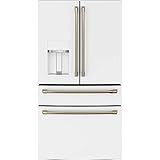
Overview: The Cafe CVE28DP4NW2 is a 27.8 cubic foot smart French door refrigerator that combines sophisticated matte white aesthetics with cutting-edge functionality. This ENERGY STAR certified four-door appliance features a fingerprint-resistant finish, positioning itself as a premium kitchen centerpiece for discerning homeowners who value both style and substance in their culinary workspace.
What Makes It Stand Out: The convertible drawer with Soft Freeze technology offers unprecedented flexibility, transforming from extra refrigerator space to soft-freeze storage at temperatures between 23-42°F with sliding glass dividers. The signature LED light wall illuminates the entire fresh food compartment with uniform brightness. AutoFill technology automatically dispenses perfect water portions using built-in sensors. The innovative humidity control system maintains separate wet and dry zones, extending produce freshness significantly, while the full-width tray accommodates oversized frozen items.
Value for Money: At $3,549, this refrigerator competes with Sub-Zero and Thermador models costing thousands more. The combination of smart features, convertible storage, and premium finish justifies the investment for serious home chefs. While expensive compared to standard French door models, the versatility and build quality offer legitimate long-term value that enhances daily kitchen workflow.
Strengths and Weaknesses: Strengths include exceptional flexibility with temperature zones, superior lighting design, smart water dispensing, and fingerprint-resistant matte finish. The four-door configuration enhances organization. Weaknesses involve the premium price point, complexity that may overwhelm casual users, and limited color options within the product line.
Bottom Line: Ideal for culinary enthusiasts and design-conscious homeowners, this Cafe refrigerator delivers professional-grade features that genuinely enhance kitchen workflow and food preservation.
2. Cafe CVE28DP3ND1 27.8 cu. ft. Smart 4-Door French Door Refrigerator in Matte Black, Fingerprint Resistant and ENERGY STAR

Overview: The Cafe CVE28DP3ND1 mirrors its sibling’s impressive 27.8 cubic foot capacity and smart feature set, wrapped in a sleek matte black finish. This ENERGY STAR certified four-door French door refrigerator targets the premium market segment, offering fingerprint-resistant surfaces and sophisticated styling that complements modern kitchen designs while delivering versatile storage solutions for serious home cooks.
What Makes It Stand Out: The convertible drawer with Soft Freeze technology provides a 23-42°F range for customized storage with elegant glass dividers. The LED light wall spans the back wall, creating exceptional visibility. AutoFill uses sensors to dispense precise amounts of filtered water automatically. The humidity control system maintains separate sealed Wet Zone and vented Dry Zone bins for optimal produce preservation, while the full-width tray handles uniquely shaped frozen items like gourmet pizzas effortlessly.
Value for Money: Priced at $3,617, this black variant commands a modest premium over its white counterpart. The $68 difference reflects manufacturing costs and demand for black appliances. While still a significant investment, the feature set rivals luxury brands at higher price points, making it reasonable for premium kitchen renovations where aesthetic cohesion matters.
Strengths and Weaknesses: Strengths mirror the white model: versatile temperature zones, exceptional lighting, smart features, and smudge-proof finish. The matte black offers dramatic aesthetic appeal. Weaknesses include the high price, potential for fingerprints despite resistance, and feature richness that may exceed casual cooking needs, making it potentially over-specified for simple households.
Bottom Line: Perfect for homeowners seeking a bold, contemporary statement piece with professional-grade functionality that justifies its premium positioning through genuine utility and striking appearance.
3. Cafe CGE29DP 36 Inch Wide 28.7 Cu. Ft. Energy Star Certified French Door Refrigerator with Dual-Dispense AutoFill Pitcher and Convertible Drawer - Stainless Steel/Brushed Stainless
Overview: The Cafe CGE29DP offers 28.7 cubic feet of storage in a counter-depth configuration that seamlessly integrates with kitchen cabinetry. This ENERGY STAR certified French door refrigerator features brushed stainless steel finish and targets buyers wanting premium Cafe aesthetics without protruding into walkways. The inclusion of Enhanced Sabbath Mode accommodates diverse household needs, while the dual-dispense AutoFill pitcher provides convenient hydration solutions.
What Makes It Stand Out: The counter-depth design provides a built-in appearance while maintaining full functionality and slightly more capacity than standard-depth models. The convertible drawer continues Cafe’s flexibility tradition, adapting to various storage requirements. Enhanced Sabbath Mode demonstrates thoughtful consideration for religious observance requirements, a rare feature in mainstream luxury appliances that disables certain functions for extended periods without compromising food safety.
Value for Money: At $3,415, this model undercuts its siblings while offering slightly more capacity. The counter-depth premium typically adds $200-400 to comparable models, making this pricing competitive for the category. However, the sparse feature list compared to the CVE28DP series suggests some premium functions may be omitted to achieve the price point, requiring careful comparison.
Strengths and Weaknesses: Strengths include seamless counter-depth integration, larger capacity, brand prestige, and Sabbath Mode. The AutoFill pitcher adds entertaining convenience. Weaknesses involve limited feature documentation, potentially fewer organization systems than the 4-door models, and brushed finish that may require more maintenance than matte alternatives.
Bottom Line: Best suited for design-focused buyers prioritizing flush installation and brand cachet over comprehensive feature documentation, though verification of specific capabilities is recommended before purchase.
4. Smeg FD30UXI 30" French Door Stainless Steel Free Standing Refrigerator
Overview: The Smeg FD30UXI brings Italian design excellence to the French door refrigerator category, offering a 30-inch width solution for space-conscious luxury kitchens. This freestanding model measures 70" x 29 3/4" x 34 5/8", delivering premium aesthetics and performance in a compact footprint. The stainless steel finish and precision engineering reflect Smeg’s heritage of combining form with function for discerning homeowners.
What Makes It Stand Out: The Dual Inverter Cooling System maintains optimal temperature and humidity independently in both compartments while operating remarkably quietly and efficiently. The convertible MultiZone drawer transforms from refrigerator to freezer at the touch of a button, providing hosting flexibility. Italian design principles ensure every detail serves both aesthetic and practical purposes, from the wide-opening doors to the spacious freezer drawers that offer effortless organization.
Value for Money: At $2,599, this Smeg positions itself as a design-forward alternative to mainstream premium brands. While more expensive than basic French door models, it undercuts Cafe and Sub-Zero significantly. The price premium reflects design heritage and build quality rather than smart features, appealing to aesthetics-first buyers who value European engineering.
Strengths and Weaknesses: Strengths include stunning Italian design, quiet and efficient Dual Inverter Cooling, space-saving dimensions, and flexible MultiZone drawer. The premium materials and refined aesthetics stand out dramatically. Weaknesses include smaller capacity than 36-inch models, limited smart features, potentially higher service costs, and brand recognition that trails domestic competitors in the North American market.
Bottom Line: Ideal for design enthusiasts and urban dwellers where space is premium and aesthetic impact matters as much as functionality, offering legitimate luxury credentials at a relatively accessible price point.
5. GE GNE27JYMFS 36" French Door Refrigerator with 27 cu. ft. Total Capacity Energy Star LED Lighting Internal Water Dispenser Spill-Proof Shelves in Fingerprint Resistant Stainless Steel
Overview: The GE GNE27JYMFS delivers essential French door refrigeration at an accessible $1,420 price point, offering 27 cubic feet of capacity in a fingerprint-resistant stainless steel package. This ENERGY STAR certified model focuses on core functionality rather than premium bells and whistles, making it an excellent value proposition for budget-conscious families seeking reliable performance without luxury markups from a trusted American brand.
What Makes It Stand Out: The Quick Space shelf slides out of the way to accommodate tall items, providing flexibility rarely seen in this price tier. LED lighting illuminates the interior efficiently while consuming minimal energy. The internal water dispenser maintains a clean exterior profile. Three full-width shelves maximize storage utility, and spill-proof shelves contain messes effectively. The fingerprint-resistant finish helps maintain appearance in busy households with children.
Value for Money: Exceptional value at $1,420—less than half the price of premium competitors while delivering similar capacity and core functionality. This represents GE’s mass-market expertise: focusing resources on reliability and essential features while omitting costly smart technology and convertible compartments that many users never utilize, maximizing practical return on investment.
Strengths and Weaknesses: Strengths include outstanding affordability, generous capacity, Energy Star efficiency, practical Quick Space shelf, and fingerprint resistance. The internal dispenser prevents exterior clutter. Weaknesses involve basic feature set, internal water dispenser (less convenient than external), no smart features, and standard shelving without premium organization systems found in luxury models.
Bottom Line: Perfect for practical buyers prioritizing capacity and reliability over luxury features, delivering dependable performance that meets everyday family needs without unnecessary expense or complexity.
6. GE Profile PVD28BYNFS 36" 4-Door French Door Refrigerator with 27.6 cu. ft. Total Capacity in Fingerprint Resistant Stainless Steel

Overview:
The GE Profile PVD28BYNFS is a premium 36-inch French door refrigerator featuring a unique four-door configuration and an impressive 27.6 cubic feet of total capacity. This fingerprint-resistant stainless steel unit combines substantial storage space with modern convenience features, positioning itself as a family-sized solution for busy households.
What Makes It Stand Out:
The quad-door design sets this model apart, offering superior organization with dedicated compartments that reduce cold air loss. Its smart capabilities allow for remote monitoring and control via your smartphone, while the door alarm provides peace of mind for families with children. The massive interior capacity rivals built-in models at a fraction of the cost.
Value for Money:
At $2,330, this refrigerator delivers exceptional value for those needing maximum storage. You’re getting commercial-grade capacity, smart home integration, and GE’s reliable engineering. Comparable four-door models from luxury brands often exceed $3,500, making this a strategic mid-premium choice.
Strengths and Weaknesses:
Strengths: Massive 27.6 cu ft capacity; innovative 4-door design reduces energy waste; smart home connectivity; fingerprint-resistant finish; door alarm prevents energy loss.
Weaknesses: Requires substantial kitchen space; limited feature details provided; may be oversized for smaller households; counter-depth not specified.
Bottom Line:
Perfect for large families or entertainers who prioritize capacity and organization. The four-door design and smart features justify the investment, though measure your space carefully before purchasing.
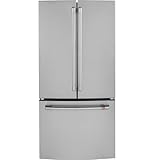
7. Cafe CWE19SP2NS1 18.6 cu. ft. French Door Refrigerator in Stainless Steel, Counter Depth and ENERGY STAR
Overview:
The Cafe CWE19SP2NS1 represents the Matte Collection’s approach to personalized kitchen design, offering an 18.6 cubic foot counter-depth French door refrigerator. This ENERGY STAR certified model emphasizes style integration with its flush-fit design and sophisticated stainless steel finish.
What Makes It Stand Out:
Cafe’s commitment to customization shines through the counter-depth configuration that creates a seamless built-in aesthetic. The internal water dispenser maintains the sleek exterior while providing convenient access. WiFi connectivity enables voice-controlled commands, and the factory-installed icemaker ensures you’re always prepared for entertaining.
Value for Money:
Priced at $2,429, this refrigerator targets design-conscious buyers willing to pay a premium for integrated aesthetics. While capacity is modest, you’re investing in Cafe’s design philosophy and smart features. Similar counter-depth models range from $2,000-$3,000, placing this competitively within the style-forward segment.
Strengths and Weaknesses:
Strengths: Counter-depth built-in look; internal water dispenser preserves exterior; WiFi connectivity with voice control; factory-installed icemaker; ENERGY STAR efficiency; premium Matte Collection design.
Weaknesses: Smaller 18.6 cu ft capacity limits storage; premium pricing; internal dispenser less convenient than external; limited feature specification.
Bottom Line:
Ideal for kitchen renovations where aesthetics trump capacity. The counter-depth design and smart features justify the price for style-focused homeowners, though storage-conscious buyers should look elsewhere.
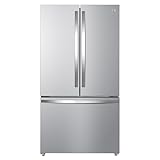
8. Kenmore 36" French Door Refrigerator with Freezer - Accela Chill, Adjustable Shelving, Humidity Controlled Crispers, ENERGY STAR Certified, 20.3 cu. ft. Capacity, Fingerprint Resistant Stainless Steel
Overview:
The Kenmore French Door Refrigerator delivers 20.3 cubic feet of counter-depth storage in a fingerprint-resistant stainless steel package. This ENERGY STAR certified model targets value seekers wanting built-in aesthetics without the premium price tag, featuring innovative cooling technology and flexible organization.
What Makes It Stand Out:
The Accela Chill system rapidly cools groceries while the inverter compressor ensures quiet, efficient operation. A full-width pantry drawer accommodates oversized items, and the Multi-Flow Air System with dual evaporators maintains optimal humidity levels. At counter-depth, it offers seamless integration at an accessible price point.
Value for Money:
At $1,518.46, this represents outstanding value. You’re getting advanced cooling technology, counter-depth design, and customizable storage for roughly $800-$1,000 less than comparable models. The inclusion of an inverter compressor and dual evaporators at this price point is particularly impressive.
Strengths and Weaknesses:
Strengths: Excellent price for counter-depth; Accela Chill rapid cooling; inverter compressor for efficiency; full-width pantry drawer; dual evaporator system; ENERGY STAR certified; fingerprint-resistant finish.
Weaknesses: Kenmore brand has uncertain service network; 20.3 cu ft may be tight for large families; basic aesthetic design; no smart features.
Bottom Line:
A smart choice for budget-conscious buyers wanting premium features. The cooling technology and counter-depth design offer exceptional bang for your buck, making it a practical alternative to higher-priced competitors.
9. BLACK+DECKER 18 Cu. Ft. French Door Refrigerator with Built-in Ice Maker, Full Size Refrigerator with Bottom Mount Freezer Drawer, Frost Free, ENERGY STAR certified, BRF1800GIMS, Stainless Look

Overview:
BLACK+DECKER’s 18 cubic foot French Door Refrigerator brings modern styling and practical functionality to the mid-range market. This ENERGY STAR certified unit features a bottom-mount freezer with built-in ice maker and digital temperature controls, packaged in a contemporary stainless look finish.
What Makes It Stand Out:
The bottom freezer configuration provides convenient eye-level refrigerator access while the digital thermostat enables precise climate control. The built-in ice maker produces up to 3.5 pounds daily, and the frost-free operation eliminates maintenance hassles. Its 12.5 cu ft fridge capacity prioritizes fresh food storage.
Value for Money:
At $1,937.99, this model occupies a competitive middle ground. You’re paying for the convenience of a bottom freezer and digital controls without the premium pricing of luxury brands. However, the 18 cu ft total capacity is modest for the price, and the “stainless look” suggests a lower-grade finish.
Strengths and Weaknesses:
Strengths: Bottom freezer convenience; digital temperature control; built-in ice maker; ENERGY STAR efficiency; frost-free operation; French door style.
Weaknesses: Smaller total capacity; “stainless look” not true stainless; BLACK+DECKER lacks refrigeration heritage; limited advanced features; value proposition is questionable.
Bottom Line:
Suitable for smaller households prioritizing bottom freezer convenience. The digital controls and ice maker add value, but budget buyers may find better features elsewhere, and premium shoppers will miss higher-end finishes.
10. GE® ENERGY STAR® 17.5 Cu. Ft. Counter-Depth French-Door Refrigerator

Overview:
The GE ENERGY STAR 17.5 Cu. Ft. Counter-Depth French-Door Refrigerator delivers compact efficiency in a premium package. This fingerprint-resistant stainless steel model is designed for smaller kitchens where space is at a premium but performance cannot be compromised.
What Makes It Stand Out:
The Turbo Cool and Turbo Freeze settings provide rapid temperature recovery after door openings, ensuring food safety and freshness. LED lighting illuminates the interior efficiently, while the fingerprint-resistant exterior maintains a clean appearance with minimal maintenance. Its counter-depth design maximizes kitchen space.
Value for Money:
At $2,399, you’re paying a premium for the GE brand and counter-depth design relative to capacity. While the features are solid, the price-per-cubic-foot is high compared to larger models. This makes sense only for space-constrained kitchens where dimensions matter more than storage volume.
Strengths and Weaknesses:
Strengths: Turbo cooling features; counter-depth space efficiency; fingerprint-resistant stainless; LED lighting; GE reliability; ENERGY STAR certified.
Weaknesses: Premium pricing for small capacity; limited storage (17.5 cu ft); sparse feature list; no icemaker mentioned; poor value for larger households.
Bottom Line:
Best for urban apartments or compact kitchens where space efficiency is paramount. The GE reliability and turbo features justify the cost only if you absolutely need counter-depth in a small footprint. Otherwise, larger models offer better value.
What Are Energy Star Convertible Zone French Door Refrigerators?
At their core, these appliances represent a trifecta of modern refrigeration engineering. The French door design places fresh foods at eye level with two side-by-side doors on top, while the freezer sits below as a pull-out drawer. The convertible zone—typically a middle drawer or compartment—gives you the power to switch between refrigerator and freezer modes based on your needs. When you add Energy Star certification into the mix, you’re getting a unit that exceeds federal minimum efficiency standards by at least 10-20%, depending on the configuration.
This combination addresses the three biggest consumer pain points: food accessibility, storage flexibility, and long-term operating costs. Unlike traditional side-by-side or top-freezer models, you’re not locked into a fixed 70/30 fresh-to-frozen storage ratio. Hosting a holiday dinner? Transform that drawer into extra beverage space. Stocking up on frozen goods? Switch it back to a deep freeze. The Energy Star component ensures these transformations don’t come with shocking utility bills.
Why the French Door Design Dominates Modern Kitchens
French door refrigerators have surged in popularity for reasons that go far beyond aesthetics. The wide refrigerator compartment accommodates party platters, sheet cakes, and pizza boxes that would never fit in a standard 30-inch fridge opening. You’re opening only one door at a time, which means less cold air escapes and your compressor works less—translating directly into energy savings and quieter operation.
The bottom freezer configuration puts your most frequently accessed items at waist and eye level, reducing the bending and rummaging that makes traditional top-freezer models so inconvenient. Many users report that this ergonomic advantage alone justifies the upgrade, especially for households with older adults or anyone with back issues. The design also creates a more streamlined kitchen profile, with the refrigerator’s width typically aligning with standard 36-inch counters for a built-in look.
Decoding the Energy Star Certification: What It Really Means
Energy Star isn’t just a blue sticker—it’s a rigorous, third-party verified standard administered by the EPA. For refrigerators, certification requires meeting strict energy consumption thresholds based on size and configuration. A 36-inch French door model must use approximately 573 kWh per year or less, which translates to about $70 annually in electricity costs at average rates.
The testing process simulates real-world usage: doors are opened and closed multiple times daily, the appliance cycles through defrost modes, and measurements account for icemaker operation. What many consumers don’t realize is that Energy Star standards have tightened significantly over the years. A 2024 certified model is dramatically more efficient than one from 2014, even if both bear the same label. Look for the yellow EnergyGuide label that shows the estimated yearly operating cost and compares it to similar models—this gives you the true efficiency picture beyond the certification badge.
The Convertible Zone Explained: Your Kitchen’s Secret Weapon
The convertible zone is the feature that truly sets these refrigerators apart from standard French door models. Typically located between the fresh food compartment and freezer, this versatile drawer operates on an independent cooling system that can maintain temperatures from approximately -5°F to 41°F. Manufacturers market this feature under various names—FlexZone, Custom-Flex, 5th Drawer, or Flexi-Space—but the functionality remains consistent.
Most convertible zones offer four to five preset temperature settings: freezer (0°F), soft freeze (23°F), meat/fish (28°F), chilled beverages (33°F), and fresh produce (37°F). The compartment uses its own evaporator and fan system, allowing precise temperature control independent of the main refrigerator and freezer sections. This isolation prevents odor transfer and maintains optimal humidity levels, whether you’re storing delicate berries or hearty roasts.
How Convertible Zones Transform Your Food Storage Strategy
The practical applications of convertible zones extend far beyond occasional entertaining. Consider the weekly meal prepper who needs extra space for pre-portioned containers—set the drawer to fresh mode and gain 4-5 cubic feet of additional refrigerator space. During summer months, transform it into a dedicated beverage center for sports drinks, cold brew coffee, and chilled wine, freeing up main fridge space for fresh produce.
Holiday cooking becomes dramatically easier when you can temporarily expand your fresh food capacity for turkeys, hams, and side dishes. Conversely, bulk shoppers can maximize freezer space during warehouse store runs, then revert to fresh storage as inventory depletes. The key is thinking seasonally and lifestyle-driven rather than being locked into a static configuration. This adaptability essentially gives you two refrigerators in one footprint, a game-changer for urban kitchens where space is at a premium.
Key Features That Define Premium Models
When evaluating convertible zone French door refrigerators, several features separate premium models from basic units. Dual evaporator systems are non-negotiable for true performance—this means separate cooling systems for refrigerator and freezer compartments, preventing dry freezer air from dehumidifying your fresh produce. Look for metal cooling plates or stainless steel interior panels that help maintain consistent temperatures and aid in cooling recovery after door openings.
Advanced temperature management systems use multiple sensors throughout the unit, adjusting compressor speed and fan operation in real-time. Ice maker placement matters significantly: in-door dispensers save interior space but may reduce door storage; internal bins maximize capacity but require manual scooping. Shelving systems should offer spill-proof designs with raised edges, and door bins should be adjustable without tools. LED lighting has become standard, but premium models use layered lighting that eliminates shadows and makes every item visible.
Size and Capacity Considerations for Every Kitchen
Before falling in love with any model, you must understand your spatial constraints and storage needs. Standard French door widths are 33, 36, and 42 inches, with 36 inches being the most common. Depth options include standard (35-36 inches), counter-depth (28-30 inches), and built-in (24 inches). Counter-depth models create a flush, built-in aesthetic but sacrifice 4-6 cubic feet of capacity—a significant tradeoff for large families.
Capacity needs scale with household size: a family of four typically requires 20-22 cubic feet, while five or more people should target 25+ cubic feet. However, the convertible zone complicates these calculations because it essentially gives you 4-5 cubic feet of flexible space. A 22-cubic-foot model with a convertible zone might functionally serve as well as a 26-cubic-foot standard refrigerator. Always measure your doorways, hallways, and kitchen entry points—most French door units require at least 32 inches of clearance to angle through doors.
Installation Requirements: What Your Space Needs
Installing a French door refrigerator involves more than sliding it into place. Electrical requirements are straightforward—most units need a dedicated 115-volt, 60-Hz, 15-amp circuit. However, the location of your outlet matters. It should be positioned behind the unit, not in the adjacent cabinet, to prevent the cord from creating a gap. Never use an extension cord, as it can void warranties and create fire hazards.
Water line installation for ice makers and water dispensers requires a 1/4-inch copper or braided stainless steel line with a shut-off valve. The water pressure must be between 20-120 psi, and the line should be installed by a licensed plumber if you’re not comfortable with basic plumbing. Floor support is another overlooked factor—these units weigh 300-400 pounds when installed, concentrated on small leveling legs. If you have floating floors or older subflooring, you may need reinforcement to prevent sagging or damage.
Understanding Refrigerator Dimensions and Clearances
Proper clearance is critical for both performance and longevity. Manufacturers typically recommend 1 inch of space on each side, 1 inch at the top, and 2 inches behind the unit for ventilation. These gaps allow heat to dissipate from the condenser coils, preventing the compressor from overworking and extending its lifespan. In practice, you can often reduce side clearances to 1/2 inch if necessary, but never eliminate them entirely.
Door swing clearance is equally important. French doors require adequate space to open fully—typically 130-140 degrees—for easy drawer removal and cleaning. Measure from the hinge side to adjacent walls, islands, or cabinets. If you have a kitchen island, ensure at least 42-48 inches of walkway space between the island and refrigerator when doors are open. Counter-depth models require special attention to hinge design—some use articulating hinges that allow doors to open without swinging beyond the cabinet depth.
The Technology Behind Dual Evaporator Systems
The dual evaporator system is the unsung hero of modern French door refrigerators. Traditional single-evaporator units cool the freezer, then bleed cold, dry air into the refrigerator compartment. This approach is energy-efficient but terrible for food preservation, causing vegetables to wilt and absorb freezer odors. Dual evaporators create completely separate cooling environments, each optimized for its specific purpose.
The refrigerator evaporator maintains higher humidity levels (around 50-60%) ideal for produce, while the freezer evaporator creates the arid conditions necessary to prevent frost buildup. The convertible zone adds a third evaporator, giving you true three-zone independence. This technology also enables precise temperature control—refrigerator compartments can maintain temperatures within ±1°F of the setpoint, compared to ±3-5°F in older designs. Variable-speed compressors work in tandem with these evaporators, running at lower speeds for longer periods rather than cycling on and off, which reduces temperature fluctuations and noise.
Smart Features and Connectivity: Worth the Investment?
WiFi connectivity has migrated from luxury to mainstream in premium French door models, but the value proposition varies dramatically. Basic smart features include door-open alerts sent to your phone—a genuinely useful function that prevents energy waste and food spoilage. Temperature monitoring and control through mobile apps allow you to adjust settings remotely, helpful when you’re away and need to switch the convertible zone from freezer to refrigerator mode before returning with groceries.
Advanced models integrate with voice assistants, offer internal cameras for remote inventory viewing, and provide maintenance reminders for filter changes. Some even feature AI-powered food recognition that tracks expiration dates and suggests recipes. The question is whether these features justify the $200-400 price premium. For tech-savvy households, the convenience and peace of mind are worthwhile. For others, the novelty wears off quickly, and the same functionality can be achieved with basic temperature alarms and manual monitoring. Consider your lifestyle and whether you’ll actually use app-based controls before paying for features that may go unused.
Noise Levels and Quiet Operation: What to Expect
Refrigerator noise is measured in decibels (dB), with most modern French door models operating between 35-45 dB. For context, 35 dB is comparable to a quiet library, while 45 dB resembles light rainfall. The difference may seem small, but it’s logarithmic—a 40 dB unit is actually twice as loud as a 30 dB model. Premium units with linear compressors and dual evaporators tend to be quieter, often advertised as operating below 40 dB.
Noise sources include compressor cycling, fan operation, ice makers, and defrost cycles. Linear compressors produce a steady hum rather than the on/off cycling of traditional reciprocating compressors, making them less noticeable. Ice makers are typically the loudest component, especially when dropping ice into the bin—a sudden clatter that can reach 50-55 dB. If your kitchen is open-concept or adjacent to living areas, prioritize models with quiet operation ratings and consider disabling the ice maker’s sound alerts. Some units offer a “quiet mode” that reduces compressor speed and fan activity during specified hours, trading slight temperature variation for reduced noise.
Finish Options and Their Impact on Maintenance
Finish choice affects both aesthetics and daily maintenance more than most buyers anticipate. Traditional stainless steel remains popular for its professional look, but it shows fingerprints, smudges, and can be difficult to clean. Black stainless steel offers better fingerprint resistance and a modern aesthetic, though it can scratch more easily and reveal the underlying silver metal. Matte finishes—available in white, black, and custom colors—provide the best fingerprint resistance but may show grease and oil more readily.
Some manufacturers apply protective coatings like LG’s PrintProof or Samsung’s Fingerprint Resistant finish, which create a hydrophobic layer that repels oils and water spots. These finishes cost $100-200 more but save countless hours of cleaning over the appliance’s lifetime. Panel-ready models allow you to attach custom cabinet panels for a fully integrated look, ideal for high-end kitchen designs but requiring precise cabinet matching. Consider your household’s habits—families with young children should strongly prioritize fingerprint-resistant finishes, while empty-nesters might prefer the classic appeal of traditional stainless.
Long-Term Energy Savings: A Real-World Analysis
The financial case for Energy Star convertible zone French door refrigerators becomes compelling when you calculate long-term savings. A standard 25-cubic-foot French door model from 2010 might consume 800 kWh annually, costing roughly $100 per year at average electricity rates. A modern Energy Star certified model of the same size uses about 550 kWh, reducing the annual cost to $69. That $31 yearly saving accumulates to $310 over ten years, often offsetting the initial price premium.
The convertible zone adds another layer of savings. By optimizing storage space and reducing food waste through better organization and visibility, households report saving $200-400 annually on groceries. The ability to buy in bulk during sales and properly store items reduces emergency takeout orders and last-minute grocery runs. Additionally, many utility companies offer rebates of $50-150 for Energy Star appliances, further improving the ROI. When you factor in the extended lifespan of modern compressors—often 15-20 years compared to 10-12 years for older models—the total cost of ownership strongly favors upgrading to an efficient, feature-rich unit.
Maintenance Tips for Maximum Efficiency and Longevity
Proper maintenance can extend your refrigerator’s lifespan by 5-7 years and maintain its efficiency rating. Clean the condenser coils every six months using a vacuum with a brush attachment—dust buildup forces the compressor to work harder, increasing energy consumption by up to 30%. The coils are typically located behind a grille at the bottom front or on the back of the unit. If you have pets, increase cleaning frequency to every three months.
Replace water filters every six months or when the indicator light illuminates. A clogged filter restricts water flow to the ice maker and dispenser, causing components to fail prematurely. Clean door gaskets monthly with warm soapy water to maintain their seal—test by closing the door on a dollar bill; if you can pull it out easily, the seal needs replacement. For convertible zones, periodically remove and clean the drawer tracks with a damp cloth to ensure smooth operation. Defrost the convertible zone completely every 12 months if you’ve used it as a freezer, as ice buildup reduces efficiency even in frost-free models.
Common Mistakes to Avoid When Shopping
The most expensive mistake is failing to measure your space accurately. Bring a tape measure to the showroom and confirm the exact height, width, and depth, including handles. Many buyers forget that French door handles can add 2-3 inches to the stated depth. Another critical error is overlooking the water line location—if your water connection is on the left but the refrigerator’s inlet is on the right, you’ll need a longer line that could create installation challenges.
Don’t be seduced by capacity numbers alone. A 28-cubic-foot model with poor layout and fixed shelves may store less usable food than a 24-cubic-foot unit with adjustable storage. Similarly, avoid choosing a model based solely on the convertible zone’s size—ensure the main refrigerator compartment meets your daily needs. Many shoppers forget to check which way the doors swing and whether they’re reversible. In tight kitchens, you may need doors that swing opposite the standard configuration. Finally, never skip reading the user manual online before purchasing—some models have surprising limitations, like convertible zones that can’t maintain freezer temperatures in hot garages.
Warranty and Service Considerations
Standard warranties typically cover one year of parts and labor for the entire unit, with five years on sealed system components (compressor, evaporator, condenser). Premium brands may extend this to two years comprehensive and ten years on the compressor. The convertible zone mechanism and its associated electronics are usually covered under the main warranty, but read the fine print—some manufacturers classify them as “accessories” with shorter coverage.
Extended warranties merit careful consideration. For a $2,500-3,500 investment, a $200-300 extended warranty covering years 2-5 can provide peace of mind, especially given the complexity of electronic controls and three-zone systems. However, these warranties often have exclusions for cosmetic damage and require service through authorized networks. Research the manufacturer’s service reputation in your area—a great warranty is worthless if the nearest technician is 100 miles away. Check online forums for complaints about specific brands’ responsiveness and parts availability. Some manufacturers offer premium service plans that include annual maintenance visits, which can be worthwhile for high-end models.
Environmental Impact Beyond Energy Consumption
While Energy Star certification addresses operational efficiency, the environmental footprint extends further. Modern refrigerators use R-600a (isobutane) or R-134a refrigerants, which have significantly lower global warming potential than the R-12 and R-22 used in older units. R-600a is particularly environmentally friendly with near-zero ozone depletion potential, though it’s mildly flammable, requiring certified technicians for repairs.
Manufacturing processes have also improved, with many brands using recycled steel and plastics in their construction. The extended lifespan of quality models—15+ years—reduces landfill waste compared to replacing cheaper units every 8-10 years. At end-of-life, responsible recycling recovers 95% of materials, including valuable copper from coils and compressors. Some manufacturers offer take-back programs when you purchase a new unit. The convertible zone itself contributes to sustainability by reducing food waste through better organization and visibility, addressing the 30-40% of food that Americans waste annually.
Frequently Asked Questions
How does a convertible zone actually work?
The convertible zone operates using a separate evaporator and fan system controlled by a digital thermostat. When you switch modes, the refrigerator adjusts refrigerant flow, fan speed, and defrost cycles to maintain the target temperature. Most units use a damper system to isolate the compartment from the main refrigerator and freezer, ensuring independent operation. The transition between modes typically takes 2-4 hours, depending on the temperature difference and how full the compartment is.
Will the convertible zone maintain freezer temperatures in my hot garage?
Most convertible zones are designed for indoor use in ambient temperatures between 55°F and 90°F. In unconditioned spaces like garages, especially in climates with extreme temperatures, performance can suffer. Below 55°F, the compressor may not run enough to maintain freezer temperatures. Above 90°F, the system works overtime and may fail to reach 0°F. Some manufacturers offer “garage-ready” models with enhanced compressors and insulation, but these are specifically engineered for the convertible zone to function properly in temperature extremes.
Does the Energy Star rating apply to all modes of the convertible zone?
Yes, Energy Star testing accounts for the convertible zone operating in various configurations. The EPA requires manufacturers to test the unit in its most energy-intensive typical setting, which is usually with the convertible zone in freezer mode. However, actual energy consumption varies based on how you use the zone. Running it as a refrigerator typically uses 15-20% less energy than freezer mode, while the “chilled beverage” setting often uses slightly more due to frequent door access.
How much clearance do I really need around the refrigerator?
While manufacturers recommend 1 inch on sides and top with 2 inches behind, you can often reduce side clearance to 1/2 inch if ventilation isn’t obstructed. The critical measurement is behind the unit—never less than 1.5 inches, as this is where the condenser releases heat. For door swing, ensure you have at least 130 degrees of opening for proper drawer removal. If your refrigerator is near a wall, the hinge side needs extra clearance—typically 2-3 inches—to allow the door to open without scraping.
Are dual evaporators necessary if I have a convertible zone?
Absolutely. A convertible zone requires its own evaporator to function properly. However, the more important question is whether the main refrigerator and freezer compartments have separate evaporators. Single-evaporator systems with a convertible zone exist but compromise food quality by sharing air between compartments. True dual evaporator systems (plus a third for the convertible zone) maintain optimal humidity and temperature in each area, preventing freezer burn on fresh foods and odor transfer between sections.
What’s the lifespan of the convertible zone mechanism?
The mechanical components—drawer slides, seals, and hinges—typically last 10-15 years with normal use. The electronic controls and evaporator system should match the main unit’s 15-20 year lifespan. The most common failure point is the drawer seal, which may need replacement after 7-10 years. Heavy use, overloading, and slamming the drawer can accelerate wear. Regular cleaning of the tracks and avoiding excessive weight (stay under 50 pounds) will maximize longevity.
Do I need a water line for the convertible zone?
Only if the convertible zone includes features like a built-in water pitcher, infuser, or ice maker. Most convertible zones are purely temperature-controlled storage and require no water connection. However, if you choose a model with an internal water dispenser or ice maker in the convertible compartment, you’ll need the same 1/4-inch water line as a standard ice maker. Always verify water line location requirements before purchase, as some models need left-side connections while others require right-side access.
Can I install the refrigerator myself?
You can handle basic installation if you’re comfortable with appliance moving and have strong helpers. However, water line connection should be done by a licensed plumber to maintain warranty coverage and prevent leaks. Electrical connection is straightforward—just plug it in—but ensure your outlet is properly grounded and on a dedicated circuit. Professional installation ($150-300) often includes delivery, leveling, water line connection, and haul-away of your old unit, which is worth considering given the 300+ pound weight and risk of damaging floors or doorways.
How do I clean and maintain the convertible zone?
Remove all contents and wash the interior with a solution of 2 tablespoons baking soda per quart of warm water every three months. Clean the drawer tracks with a damp cloth to remove debris that impedes smooth operation. Check the door seal weekly for food particles that prevent proper closure. If you’ve used the zone as a freezer, defrost it annually by switching to refrigerator mode and letting ice melt naturally—never use sharp objects to chip ice. Replace any water filters associated with the zone every six months, and run the “self-clean” cycle if your model includes one for the water dispenser.
Will a convertible zone refrigerator increase my home’s resale value?
While no appliance guarantees a return on investment, a quality French door refrigerator with a convertible zone is a strong selling point in today’s market. Real estate agents report that modern, energy-efficient appliances rank among the top 10 features buyers seek, particularly in kitchens. The convertible zone appeals to serious home cooks and families, showcasing the kitchen’s versatility. Expect the appliance to retain 30-40% of its value over five years, compared to 20% for standard models. In competitive markets, it could be the feature that distinguishes your listing from similar homes.