The crack of a cold beverage after a dusty day on the trail. The confidence of knowing your fresh catch won’t spoil before you reach camp. The freedom to carry real food—not just dehydrated meals—on a two-week expedition into the backcountry. These aren’t luxuries; they’re game-changers for serious overlanders. While traditional coolers have long been the default, savvy expedition planners are increasingly turning to portable chest freezers as the ultimate solution for food preservation in the wild.
Unlike passive coolers that rely on ice and constant draining, a quality portable chest freezer puts you in complete control of your food supply, regardless of ambient temperature or trip duration. But choosing the right unit isn’t as simple as picking the biggest box that fits your rig. From power management to compressor types, insulation values to mounting solutions, the devil is in the details. This guide cuts through the marketing fluff to give you the technical knowledge you need to select a freezer that will become your most reliable trail companion.
Top 10 Portable Chest Freezers for Overlanding
Detailed Product Reviews
1. Dometic CFX2 37-Liter Portable Refrigerator and Freezer, Powered by AC/DC
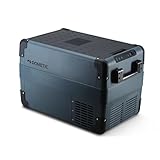
Overview: The Dometic CFX2 37-Liter is a premium portable refrigeration solution designed for serious adventurers and road trippers. This compact unit offers true freezer capability down to -7°F while maintaining energy efficiency through its optimized compressor system. With versatile power options and robust construction, it’s engineered for weekend warriors and extended travelers who refuse to compromise on food safety or beverage temperature.
What Makes It Stand Out: Dometic’s legendary reliability shines through the 3-stage battery protection system, which intelligently monitors vehicle battery status to prevent draining. The reinforced corners and stainless steel hinges demonstrate purposeful durability, while the ABS folding handles provide secure transport. Unlike budget competitors, this unit delivers precise temperature control across a remarkable 75-degree range, making it equally suitable for keeping ice cream frozen or produce crisp.
Value for Money: At $770, the CFX2 commands a premium price but justifies it through superior efficiency and build quality. Cheaper alternatives may match the capacity but lack the sophisticated battery management and temperature precision. For frequent travelers, the reduced power consumption translates to tangible fuel savings and longer off-grid capability, offsetting the initial investment within a few seasons of regular use.
Strengths and Weaknesses: Strengths include exceptional temperature consistency, rugged construction, intelligent battery protection, and whisper-quiet operation. The dual AC/DC compatibility ensures seamless transitions from home to vehicle. Weaknesses center on the steep price point for the capacity, absence of dual-zone functionality, and lack of an internal battery option. The 37-liter size may prove limiting for families on trips exceeding three days.
Bottom Line: The CFX2 37-Liter is an outstanding choice for couples or solo travelers prioritizing reliability and efficiency. While expensive, its performance and durability make it a worthwhile long-term investment for regular adventurers.
2. Dometic CFX5 95 Liter Dual Zone Portable Refrigerator and Freezer, Powered by AC/DC

Overview: The Dometic CFX5 95L represents the pinnacle of portable refrigeration technology, offering dual-zone flexibility for ambitious overlanders and large families. This flagship model separates itself by allowing simultaneous refrigeration and freezing in a single unit, eliminating the compromise between fresh food and frozen goods. With massive capacity and professional-grade components, it’s built for extended expeditions where resupply isn’t an option.
What Makes It Stand Out: Vacuum Insulated Panels (VIP) deliver exceptional thermal efficiency, reducing power consumption by up to 30% compared to conventional insulation. The VMSO 3.5 compressor provides rapid cooldown and maintains stable temperatures even in extreme ambient conditions. The weatherproof high-resolution display ensures full control in rain or shine, while the dual-zone design offers independent temperature settings from -7°F to 68°F in each compartment.
Value for Money: Priced at $1,500, this unit competes directly with other premium dual-zone models while offering superior insulation technology. For serious overlanders or mobile professionals, the ability to run indefinitely on solar power while preserving both fresh and frozen goods creates value that transcends the purchase price. It’s overkill for casual campers but essential gear for full-time travelers.
Strengths and Weaknesses: Strengths include unmatched dual-zone flexibility, best-in-class insulation, powerful compressor performance, and professional build quality. The 95-liter capacity handles weeks of provisions. Weaknesses are substantial weight and bulk, premium pricing that excludes budget buyers, and power requirements that demand robust electrical systems. The size may prove impractical for smaller vehicles.
Bottom Line: For dedicated overlanders, mobile professionals, or large families living on the road, the CFX5 95L is unmatched. The investment pays dividends in food security and energy efficiency during extended remote travel.
3. Dometic CFX5 75 Liter Dual Zone Portable Refrigerator and Freezer, Powered by AC/DC

Overview: The Dometic CFX5 75L strikes an optimal balance between capacity and portability while retaining the flagship dual-zone functionality. This mid-size powerhouse serves couples and small families who need separate refrigeration and freezing compartments without the extreme bulk of its 95-liter sibling. It delivers the same premium technology and build quality in a more vehicle-friendly footprint, making it ideal for extended weekend trips and week-long adventures.
What Makes It Stand Out: The identical VIP insulation and VMSO 3.5 compressor from the larger model ensure no performance compromise despite the reduced size. Users get the same weatherproof display interface and independent zone control, allowing simultaneous ice cream storage and vegetable preservation. The reinforced construction and 3-stage battery protection carry over, providing peace of mind during remote operations where power conservation is critical.
Value for Money: At $1,349.99, the 75L version saves approximately $150 compared to the 95L model while sacrificing only 20 liters of capacity. This represents strong value for users who don’t require maximum storage. The price remains premium, but the dual-zone capability justifies the cost compared to single-zone alternatives. It hits the sweet spot for serious enthusiasts who find the 95L excessive but need more than a single compartment.
Strengths and Weaknesses: Strengths include true dual-zone flexibility, excellent insulation, robust compressor performance, and manageable dimensions for mid-size SUVs and trucks. The build quality ensures longevity. Weaknesses include the continued premium pricing, significant weight at 53 pounds, and power draw that requires careful battery management. Some users may still find it oversized for solo travel.
Bottom Line: The CFX5 75L is the smart choice for small families and couples seeking dual-zone convenience without maximum bulk. It delivers flagship performance in a more practical package for most adventure vehicles.
4. Whynter 45 Qt. Portable Refrigerator / Portable Freezer for Travel - Chest Freezer / Fridge for Car, Camping, RVs & More, -8°F to 50°F Temperature Range, AC 110V/ DC 12V, FM-45G, Gray
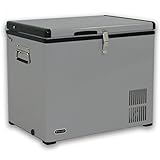
Overview: The Whynter FM-45G offers accessible portable refrigeration for budget-conscious adventurers without sacrificing core functionality. This 45-quart unit converts seamlessly between fridge and freezer modes, reaching temperatures as low as -8°F. Designed for casual campers and weekend warriors, it provides reliable cooling performance in a straightforward package that prioritizes value over premium features. The steel housing and removable baskets add practical durability.
What Makes It Stand Out: The Fast Freeze function rapidly drops temperature to -8°F, a feature often missing in this price class. ETL approval ensures safety compliance, while the built-in drain plug simplifies cleaning after messy trips. Dual power cords enable both vehicle and household use without adapter purchases. The stainless steel handles provide secure lifting points, and the solid steel housing resists dents better than plastic alternatives, making it suitable for rough handling.
Value for Money: At $499.27, the FM-45G undercuts Dometic models by hundreds while delivering comparable cooling performance. The temperature range is slightly narrower, and insulation less advanced, but the core functionality remains solid for intermittent use. This represents exceptional value for occasional campers or those new to portable refrigeration who want reliable performance without premium-brand pricing. The two-year warranty adds confidence.
Strengths and Weaknesses: Strengths include aggressive pricing, Fast Freeze capability, ETL safety certification, robust steel construction, and user-friendly operation. The removable baskets enhance organization. Weaknesses include less efficient insulation leading to higher power draw, no battery protection system, single-zone limitation, and louder compressor operation. The temperature control lacks precision compared to premium units.
Bottom Line: The Whynter FM-45G is an excellent entry-level portable freezer/fridge that delivers reliable performance at an accessible price. Perfect for occasional adventurers who prioritize value over premium features.
5. Whynter FM-65G 65 Quart Portable Refrigerator and Deep, AC 110V/ DC 12V, Real Chest Freezer for Car, Home, Camping, and RV with-8°F to 50°F Temperature Range, Gray, One Size

Overview: The Whynter FM-65G scales up the brand’s value-focused formula to 65 quarts, accommodating longer trips and larger groups without breaking the bank. This unit maintains the same practical feature set as its smaller sibling while providing substantially more storage capacity. It’s engineered for families and extended travelers who need serious refrigeration capability but remain price-sensitive. The steel construction and dual power options ensure versatility across vehicles and locations.
What Makes It Stand Out: The generous 65-quart capacity rivals premium brands at a fraction of the cost, while retaining the Fast Freeze function for rapid cooling. The two removable wire baskets organize a larger volume effectively, preventing food from getting buried. The heavy-duty steel housing withstands expedition abuse, and the built-in drain plug handles defrosting efficiently. ETL certification provides safety assurance often absent in budget competitors.
Value for Money: At $621.17, the FM-65G offers the best capacity-to-price ratio in its class. Competing Dometic models with similar storage cost nearly twice as much. While power efficiency and insulation don’t match premium brands, the significant cost savings can fund additional solar panels or battery upgrades to offset higher consumption. For budget-limited buyers needing maximum storage, this is the market leader.
Strengths and Weaknesses: Strengths include massive capacity at an affordable price, robust steel construction, Fast Freeze functionality, and dual power compatibility. The removable baskets add organization. Weaknesses include higher power draw than premium units, single-zone limitation, audible compressor noise, and basic temperature control interface. The unit’s weight and size demand careful vehicle space planning.
Bottom Line: The Whynter FM-65G dominates the value segment for large-capacity portable refrigeration. It’s the pragmatic choice for families needing maximum storage without premium-brand pricing, provided you can manage its power requirements.
6. Blizzard Box 41QT Portable Fridge Freezer – Iceless Cooler for Cars, Trucks, Camping, Overlanding & Boating, 12V/24V DC & 110V AC, Dual Zone Temperature, Digital Control, USB Charging

Overview: The Blizzard Box 41QT represents the premium tier of portable refrigeration, engineered for serious adventurers who demand dual-zone versatility. This electric cooler eliminates ice dependency entirely, offering precise digital control from 0°F to 50°F across two independent compartments, making it ideal for simultaneous freezer and refrigerator use during extended overlanding or boating expeditions.
What Makes It Stand Out: The SECOP compressor delivers industrial-grade cooling performance, reaching 32°F rapidly and plunging to 0°F for proper frozen food storage. Its true dual-zone design with independent temperature controls sets it apart from single-compartment competitors. The three-level battery protection system with auto-restart ensures your vehicle battery remains safe while preserving your settings through power interruptions.
Value for Money: At $999.99, this is a significant investment, but it justifies the cost for dedicated users. Comparable Dometic or ARB units cost 20-30% more while offering similar performance. For weekend warriors, it’s overkill; however, for full-time van lifers, commercial truckers, or expedition leaders, the reliability and capacity deliver long-term value that cheaper compressors can’t match.
Strengths and Weaknesses: Strengths include rapid cooling, genuine dual-zone functionality, robust construction, and comprehensive power compatibility (12V/24V DC and 110V AC). Weaknesses are its premium price point, substantial weight when loaded, and dimensions that may challenge smaller vehicle installations. The 54-can capacity, while adequate, fills quickly on multi-week trips.
Bottom Line: This is a professional-grade tool for serious travelers. If you’re committed to extended off-grid adventures or make a living on the road, the Blizzard Box 41QT is worth every penny. Casual campers should consider more affordable options.
7. BougeRV 12V Portable Refrigerator Fridge Freezer Portable Car Fridge 53 Quart Electric Cooler12V/24V DC 110~240 V AC for RV Truck Jeep Pickup SUV Van Boat Camping Tailgating Road Trip Outdoor Travel

Overview: The BougeRV 53-quart portable refrigerator delivers impressive capacity and performance at a budget-friendly price point. This single-control unit functions as both fridge and freezer with a temperature range of -4°F to 50°F, making it suitable for week-long family trips or serious tailgating adventures without the bulk of premium brands.
What Makes It Stand Out: The rapid cooling capability drops temperatures from 77°F to 32°F in just 15 minutes, while the ECO mode sips power at under 45W. CE and FCC certifications backed by a two-year compressor warranty provide peace of mind. The 53-quart capacity comfortably serves families, holding enough provisions for seven days off-grid.
Value for Money: At $249.99, this unit dramatically undercuts competitors while delivering 90% of the functionality. Premium brands charge 3-4x more for similar capacity and cooling performance. The minor limitation of a single temperature control (with the small zone cooled by air transfer) is a fair compromise for the savings.
Strengths and Weaknesses: Strengths include exceptional cooling speed, large capacity, energy efficiency, quiet 45dB operation, and robust battery protection. Weaknesses center on the lack of true dual-zone independence and reliance on BougeRV’s customer service for warranty claims, which has mixed reviews. The unit’s plastic construction feels less rugged than premium alternatives.
Bottom Line: For families and budget-conscious adventurers, this refrigerator offers outstanding value. Accept the single-control limitation and you get near-premium performance for a fraction of the cost. It’s an intelligent compromise between price and capability.
8. BougeRV 12V Refrigerator Fridge Freezer Portable Car Fridge 42 Quart Electric Cooler 12V/24V DC 110~240V AC for RV Camper Truck Jeep Pickup SUV Van Boat Camping Tailgating Road Trip Outdoor Travel

Overview: This 42-quart BougeRV model scales down the brand’s proven formula into a more compact package while retaining the same core features. With identical temperature range (-4°F to 50°F) and cooling technology as its larger sibling, it targets couples and small families who need reliable refrigeration without sacrificing precious cargo space.
What Makes It Stand Out: The unit maintains the impressive 15-minute cooling-to-32°F performance and sub-45W ECO mode efficiency despite its smaller footprint. At 42 quarts, it still accommodates a week’s worth of provisions for two people. The same CE/FCC certifications and two-year compressor warranty apply, ensuring quality standards remain consistent across the product line.
Value for Money: Priced at $229.99, it’s only $20 less than the 53-quart model, creating a value proposition dilemma. While slightly more space-efficient, the minimal savings make the larger unit more attractive for most buyers. However, if your vehicle space is truly constrained, the modest discount still represents solid value compared to premium brands.
Strengths and Weaknesses: Strengths mirror the 53-quart version: rapid cooling, energy efficiency, quiet operation, and reliable battery protection. Weaknesses include the same single-control temperature limitation and the awkward pricing relative to the larger model. The reduced capacity may prove limiting for families while not being small enough for true solo use.
Bottom Line: Choose this only if the 53-quart absolutely won’t fit your vehicle. The marginal cost savings don’t justify the capacity sacrifice for most users. It’s a good refrigerator caught in an odd position within its own product family.
9. Alpicool C9PT Portable Car Freezer Cooler, 12 Volt Car Refrigerator, 10 Quart Fast Cooling, with 12/24V DC and 100-240V AC for Outdoor, Camping, RV, Truck (Black&Grey)

Overview: The Alpicool C9PT redefines portability in the 12V refrigerator category with its ultra-compact 10-quart design weighing just 14.8 pounds. This pint-sized powerhouse delivers legitimate compressor cooling from -4°F to 68°F, making it ideal for solo travelers, day trips, or as a supplemental freezer for dedicated beverages or medications.
What Makes It Stand Out: Extreme portability sets this unit apart—it fits behind seats, in motorcycle side cases, or even as airplane cargo. The MAX mode achieves rapid cooling while ECO mode preserves vehicle battery life. Three-level battery protection prevents dead batteries, and the temperature memory function maintains settings through power cycles. It runs on global voltage (100-240V AC) for international travel.
Value for Money: At $109.99, it’s an accessible entry point to compressor refrigeration. Traditional ice coolers with similar capacity cost $50-80 plus ongoing ice expenses. For solo adventurers, the convenience and performance justify the premium. It’s not intended as a primary family fridge, but as a specialized tool, the value is exceptional.
Strengths and Weaknesses: Strengths include featherlight weight, true portability, fast cooling, versatile power options, and affordability. Weaknesses are obvious: 10-quart capacity limits use to one person for short durations, and the single-zone design lacks flexibility. Build quality feels utilitarian rather than rugged.
Bottom Line: Perfect for its intended niche. Solo anglers, motorcycle campers, or anyone needing a compact cooling solution will find it indispensable. Don’t buy this expecting family refrigeration—it’s a specialized instrument that excels within its constraints.
10. Blizzard Box 99QT Insulated Cover – Premium Heavy-Duty Protection for Large Portable Fridge Freezers, Waterproof, UV-Resistant, Extra Insulation for Camping, Overlanding & RV Cooling Performance

Overview: This heavy-duty insulated cover specifically fits the Blizzard Box 99QT portable fridge freezer, transforming it from a rugged appliance into an expedition-ready system. Constructed from durable polyester with reinforced insulation, it shields your substantial investment from the environmental abuse typical of overlanding, marine, and long-haul trucking applications.
What Makes It Stand Out: The cover’s tailored design incorporates Velcro and zippered access panels that maintain full functionality without removal. This means adjusting temperature, accessing contents, and connecting power while protected. The additional insulation layer measurably improves thermal efficiency, reducing compressor cycles and extending battery life in extreme heat—critical for desert crossings or tropical boating.
Value for Money: At $130.04, the cover costs roughly 10% of the fridge’s value—a reasonable insurance policy. Premium fridges fail prematurely due to UV degradation and impact damage. For users who’ve invested $1,000+ in their 99QT unit, this protection extends service life and improves performance, paying for itself through reduced power consumption and avoided repairs.
Strengths and Weaknesses: Strengths include perfect fit retention, comprehensive weatherproofing, UV resistance, and genuine thermal improvement. The convenience of panel access demonstrates thoughtful design. Weaknesses are its single-model compatibility—useless for other brands—and the price, which exceeds generic cover alternatives by 2-3x. It adds bulk and weight to an already large unit.
Bottom Line: Essential for serious overlanders who own the 99QT Blizzard Box. If you’re subjecting your fridge to months of continuous outdoor exposure, this cover is non-negotiable. For occasional campers who store their fridge indoors, it’s an unnecessary luxury.
Why a Portable Chest Freezer is Your Overlanding Game-Changer
The leap from cooler to compressor-driven freezer represents more than convenience—it’s a fundamental shift in how you plan and execute extended journeys. Traditional coolers lose roughly 30% of their internal volume to ice, require constant maintenance, and expose your food to meltwater contamination. A portable chest freezer eliminates these variables entirely, offering precise temperature control from -8°F to 50°F, allowing you to use 100% of the interior capacity for actual food storage.
Beyond space efficiency, these units provide food safety assurance in extreme conditions. When you’re traversing desert landscapes where ambient temperatures exceed 110°F, even premium rotomolded coolers struggle to maintain safe food temperatures beyond 48 hours. A compressor freezer doesn’t care if it’s 120°F outside—it maintains your set temperature with minimal power draw, ensuring your provisions remain frozen solid or perfectly chilled regardless of external conditions.
Understanding the Basics: How Portable Freezers Work
At their core, portable chest freezers operate on the same vapor-compression refrigeration principle as your home unit, but with critical adaptations for mobile use. A 12V/24V DC compressor pressurizes refrigerant gas, which then circulates through condenser coils to release heat, expands through an evaporator to absorb heat from the interior, and cycles continuously to maintain temperature.
The key differentiator lies in the compressor design. Overlanding freezers use either fixed-speed or variable-speed compressors, with the latter offering significant advantages for off-grid use. Variable-speed units ramp down to as low as 2,000 RPM once target temperature is reached, sipping power rather than guzzling it. This is crucial when your electrical budget is limited to solar panels and auxiliary batteries.
Power Source Considerations: Matching Your Freezer to Your Setup
Your freezer is only as good as the power system supporting it. Most units draw between 1-5 amps at 12V when running, but this figure alone is misleading. The real metric is amp-hours consumed over 24 hours, typically ranging from 15-60 Ah depending on insulation, ambient temperature, and usage patterns.
Dual-Zone Battery Systems
Smart overlanders install a dedicated secondary battery system isolated from the starter battery. This house battery—whether AGM, gel, or lithium—powers your freezer and other accessories without risk of draining your cranking power. Lithium iron phosphate (LiFePO4) batteries have become the gold standard, offering deeper discharge capabilities (80-90% vs. 50% for AGM) and faster recharge rates, crucial for maintaining freezer operation during cloudy periods.
Solar Panel Integration
Sizing your solar array requires honest assessment of your freezer’s daily consumption plus a 30% buffer for inefficiencies. A freezer consuming 30 Ah daily needs roughly 360Wh. Factoring in 5 peak sun hours, you’d need 100-120W of panels minimum, but 200W provides necessary headroom for winter sun angles and panel soiling. Always use a quality MPPT charge controller to maximize harvest during low-light morning and evening hours.
Vehicle Alternator Charging
While driving, your alternator can recharge house batteries, but don’t rely on it exclusively. Standard alternators charge at 13.8-14.2V, insufficient for full lithium battery charging. Consider a DC-DC charger that boosts voltage to 14.6V for proper lithium charging, ensuring your freezer has maximum stored power when you shut down for the night.
Capacity Matters: Right-Sizing Your Freezer for the Journey
Capacity is measured in liters or quarts, but effective capacity depends on how you pack. A 40-liter unit holds approximately 56 twelve-ounce cans, but food packaging is less efficient. Rule of thumb: plan for 1.5-2 liters per person per day for trips exceeding one week.
Weekend Warrior vs. Extended Expedition
For 2-3 day trips, a 30-40 liter freezer suffices, allowing you to pre-freeze meals at home and maintain them. For week-long expeditions, 50-65 liters becomes the sweet spot for two people. Solo travelers can get by with 25-35 liters, while families or groups of four should consider 75+ liters or dual units.
Calculating Your Food Storage Needs
Audit your typical meal plan. A frozen steak requires 0.5 liters; a gallon of milk, 3.8 liters. Factor in irregular shapes and necessary air circulation—overpacking restricts airflow and forces the compressor to work harder. Smart packers use reusable silicone bags that conform to available space and eliminate bulky packaging.
Temperature Range and Climate Class: Performance Where It Counts
Not all freezers perform equally in extreme environments. Climate class ratings—common in European appliances but rarely advertised in portable units—indicate operational temperature ranges. A unit rated SN-T (Subnormal-Tropical) operates reliably from 50°F to 109°F ambient, while lesser units may fail above 90°F.
Understanding Climate Classes
Look for units tested to ISO standards. Premium overlanding freezers maintain -4°F in 110°F ambient conditions, crucial for ice cream or preserving game meat. Some budget models struggle to reach 0°F even in mild weather, effectively making them refrigerators rather than freezers.
Sub-Freezing Capabilities
True freezing capability means reaching -8°F or lower. This isn’t just for ice cream—it’s essential for long-term meat preservation and creating ice blocks for supplemental cooling. Check the manufacturer’s temperature curve charts; reputable brands publish performance data across various ambient temperatures rather than just stating a minimum temperature.
Compressor Technology: The Heart of Your Freezer
The compressor determines efficiency, noise, and longevity. Secop (formerly Danfoss) compressors have been the industry benchmark for decades, with some units running 15+ years in expedition vehicles. These variable-speed units start at low RPM, eliminating the high-draw startup surge that can stress electrical systems.
Secop vs. Chinese Compressors
Chinese compressors from manufacturers like Huayi or Embraco have closed the gap significantly, offering 80% of the performance at 50% of the cost. However, they often lack the sophisticated control algorithms that minimize power consumption during partial load conditions. For extreme expeditions, Secop remains the reliable choice; for budget-conscious weekenders, quality Chinese compressors provide adequate performance.
Variable Speed vs. Fixed Speed
Variable-speed compressors adjust their output to maintain temperature within a narrow band, typically ±2°F. Fixed-speed units cycle on and off, creating wider temperature swings and higher average power consumption. The continuous low-power operation of variable-speed units also reduces noise and vibration—critical when the unit is mounted in a sleeping area.
Insulation Quality: Keeping the Cold In and the Heat Out
Insulation is where premium units separate themselves. Look for high-density polyurethane foam at least 2.5 inches thick in the walls and 3 inches in the lid. Some manufacturers use vacuum-insulated panels (VIPs) in addition to foam, achieving R-values of 15+ in a thinner profile.
Foam Density and Thickness
Foam density matters as much as thickness. 2.5 lb/ft³ foam provides better thermal resistance than cheaper 1.5 lb/ft³ material. Press gently on the interior walls; quality units feel rigid and solid, while budget models may flex, indicating thin insulation. The lid should feel heavy—this indicates adequate insulation mass.
Lid Seal Design
A freezer is only as good as its seal. Premium units use magnetic gaskets with multiple sealing surfaces and a positive latch mechanism that compresses the seal. Test this by closing the lid on a dollar bill; you should feel significant resistance when pulling it out. Some units feature heated seals to prevent condensation freezing in humid environments—a nice touch for coastal expeditions.
Build Quality and Durability: Surviving the Trail
Your freezer will experience vibration, impacts, and temperature cycling that would destroy residential units. Look for roto-molded polyethylene cabinets with steel or aluminum reinforcements at stress points. Hinges should be stainless steel with bronze bushings, not plastic.
Impact Resistance
Check the corner construction. Quality units have reinforced corners and metal bumpers that protect the compressor compartment. The compressor should be mounted on vibration-isolating rubber feet, with flexible refrigerant lines to prevent work-hardening and fatigue failure from constant vibration.
Vibration Dampening
Internal components matter. Wire baskets should ride on reinforced slides, not thin plastic rails. The control board should be potted or conformal-coated to resist moisture and dust. Ask about MTBF (Mean Time Between Failure) ratings; reputable manufacturers test units to 30,000+ hours of continuous operation.
Size, Weight, and Portability: The Space Equation
A 65-liter freezer weighs 50-65 pounds empty, becoming a significant payload consideration. Measure your intended mounting location accounting for ventilation clearance—most units require 2-3 inches on all sides except the bottom for proper airflow to the condenser.
Vehicle Fitment Strategies
Consider slide-out mounts that allow access without unpacking your rig. These add 30-40 pounds but transform usability. For smaller SUVs, a 40-liter unit fits behind the front seats, while truck bed setups can accommodate 75+ liter units in dedicated storage systems. Always position the freezer with the compressor end toward the vehicle exterior for better heat dissipation.
Weight Distribution Considerations
Mount heavy freezers low and centered between the axles to maintain vehicle dynamics. A 70-pound freezer mounted on a roof rack raises your center of gravity significantly and increases rollover risk. In smaller vehicles, consider splitting capacity into two smaller units—one for frozen goods, one for refrigeration—to distribute weight and provide redundancy.
Control Systems and Monitoring: Smart Freezing on the Go
Modern freezers offer sophisticated control beyond simple temperature setting. Three-stage battery protection prevents deep discharge, cutting off at 11.1V, 11.8V, or 12.2V depending on your battery type. This is non-negotiable for preserving your house battery.
Digital vs. Analog Controls
Digital controls offer precise temperature setting and display, but verify the display remains readable in bright sunlight. Premium units feature dimmable displays that won’t light up your sleeping area. Analog controls are simpler and potentially more reliable long-term, but lack the fine-tuning capability for critical freezing applications.
Bluetooth and App Integration
App connectivity allows temperature monitoring from your cab or tent, but don’t let it become a crutch. The best apps provide power consumption graphs, compressor run-time statistics, and temperature logging—valuable data for optimizing your system. Ensure the app works offline; many remote areas lack cell service, and you don’t want a cloud-dependent system.
Noise Levels: Maintaining Wilderness Serenity
Noise specs are often misleading, measured in ideal conditions. A unit rated at 35 dB might reach 45 dB when the compressor is working hard in hot weather. For reference, 40 dB is a quiet library; 50 dB is moderate rainfall.
Decibel Ratings Explained
Variable-speed compressors are inherently quieter because they avoid the jarring on/off cycles of fixed-speed units. Listen to a unit in person if possible. The noise should be a low hum, not a high-pitched whine. Mounting location dramatically affects perceived noise; foam isolation pads can reduce transmitted vibration by 10 dB or more.
Night Mode Operations
Some units feature a “night mode” that restricts compressor speed, trading cooling capacity for silence. This works well in mild climates but may cause temperature rise in hot weather. Better units automatically adjust night mode based on ambient temperature, maintaining balance between comfort and performance.
Energy Efficiency: Maximizing Your Battery Life
Efficiency ratings are rarely published for portable freezers, but you can calculate approximate daily consumption. A well-insulated 50-liter unit should use 0.8-1.2 kWh per day at 90°F ambient. This translates to 20-30 Ah from a 12V battery.
Power Consumption Metrics
The compressor’s duty cycle—percentage of time it’s running—tells the real story. In 70°F ambient, a premium unit might run 15% of the time; in 100°F, 40-50%. Budget units can run 70%+ in hot conditions, quickly depleting batteries. Ask manufacturers for duty cycle curves at various temperatures.
Eco Modes and Optimization
Pre-cooling your freezer at home on AC power reduces initial battery load by 60-70%. Pack frozen goods with minimal air gaps—frozen water bottles fill voids and provide backup cooling if power fails. Keep the freezer full; thermal mass stabilizes temperature and reduces compressor cycles. Every time you open the lid, you lose 2-4% of the cold air volume, so organize contents in labeled bins for quick retrieval.
Installation and Mounting: Securing Your Investment
A freezer bouncing down a washboard road will fail prematurely. Proper mounting is engineering, not improvisation. Use grade 8.8 or better bolts with lock washers and nylock nuts. The mounting surface must support 3-4 times the unit’s weight to account for dynamic loads.
Slide-Out Drawer Systems
Quality slides rated for 150+ pounds with locking mechanisms are essential. Cheap drawer slides will fail within months of off-road use. Look for stainless steel ball-bearing slides with corrosion-resistant coating. Test the lock—can it withstand a rollover? Some systems feature redundant mechanical locks that engage automatically when closed.
Tie-Down Solutions
If slides aren’t feasible, use four corner tie-downs with ratchet straps rated for 500+ pounds working load. Install eye bolts through the freezer’s mounting feet into the vehicle floor with large fender washers to distribute load. Protect the compressor with a skid plate if mounting in a vulnerable location like a truck bed.
Maintenance and Care: Longevity on the Road
A well-maintained freezer should last 10-15 years in overlanding service. Neglect basic care and you might get 2-3 seasons. The condenser coils require cleaning every 2-4 weeks in dusty conditions—more often on desert expeditions.
Cleaning Protocols
Use compressed air or a soft brush to clean condenser coils. Never use water directly on the compressor or electronics. Interior cleaning should be done with a mild baking soda solution; avoid harsh chemicals that can damage plastic and leave residual odors. After cleaning, leave the lid open for 24 hours to ensure complete drying before repacking.
Defrosting Strategies
Frost buildup exceeding 0.25 inches reduces efficiency by 20-30%. Defrost when frost reaches 0.5 inches using the unit’s manual defrost mode or by transferring contents to another cold source. Never use metal tools to scrape ice—puncture the evaporator and the unit is ruined. A plastic scraper and patience are your friends.
Budget Considerations: Investment vs. Value
Entry-level 40-liter units start around $400; premium 65-liter models exceed $1,200. The price delta reflects compressor quality, insulation thickness, and component durability. But total cost of ownership extends beyond purchase price.
Total Cost of Ownership
Factor in power system upgrades. A budget freezer might require an additional 100W solar panel and larger battery to achieve the same reliability as a premium unit. Over five years, the “cheaper” option can cost $300-500 more when accounting for battery replacement and fuel costs from alternator charging.
Warranty and Support
Look for 3-5 year warranties on the compressor and 1-2 years on electronics. More importantly, verify the manufacturer has a track record of honoring warranties without requiring you to ship a 60-pound unit across the country. Some premium brands have authorized service centers in major expedition hubs like Denver, Phoenix, and Seattle, enabling field-swappable components.
Frequently Asked Questions
How long will a portable chest freezer run on a typical dual-battery setup?
A standard 100Ah AGM house battery provides 50Ah of usable capacity (50% discharge limit). A 50-liter freezer consuming 30Ah daily will run approximately 36-40 hours without charging. A 100Ah lithium battery providing 80Ah usable capacity extends this to 60+ hours. With 200W of solar replenishing 60-80Ah daily, you can run indefinitely in sunny conditions.
Can I run my freezer while the vehicle is off?
Absolutely—this is the primary design purpose. The three-stage battery protection prevents starter battery drain. Set the cutoff at 12.2V for AGM or 11.8V for lithium to preserve enough cranking power. For extended stays, rely on your house battery system, not your starter battery.
What’s the difference between a portable freezer and a 12V cooler?
12V coolers use thermoelectric (Peltier) modules that can only cool 30-40°F below ambient and cannot freeze. They consume constant power and fail above 80°F ambient. Compressor freezers function like household units, reaching -8°F regardless of outside temperature and using less total power due to cycling efficiency.
How do I prevent my freezer from killing my battery?
Install a battery monitor with low-voltage alarm. Set the freezer’s battery protection to the appropriate level for your battery type. Never run directly from your starter battery without isolation. For lithium systems, a battery management system (BMS) provides additional protection against over-discharge that can permanently damage cells.
Are dual-zone freezers worth the extra cost?
For most overlanders, yes. A dual-zone unit functions as both freezer and refrigerator simultaneously, eliminating the need for a separate cooler. The temperature divider isn’t perfectly sealed, so expect a 5-10°F gradient, but this is manageable with proper packing. The convenience and space savings justify the 20-30% price premium for trips longer than a week.
How noisy are these units in real-world conditions?
Quality units produce 35-42 dB at three feet—comparable to a quiet refrigerator. Noise increases to 45-50 dB in 100°F+ conditions when the compressor runs at maximum speed. Mounting location matters more than the unit itself; isolate with foam pads and avoid mounting against sleeping area walls. The low-frequency hum is less intrusive than the cycling “click” of fixed-speed compressors.
Can I use my freezer as a refrigerator instead?
Yes, most units operate from -8°F to 50°F. Set to 35-38°F for refrigeration. However, refrigerators typically have faster temperature recovery after lid opening. For optimal efficiency as a fridge, use freezer packs to add thermal mass and minimize compressor cycles. Some units have dedicated “fridge mode” that adjusts compressor speed and defrost timing.
What altitude will these freezers work at?
Premium compressors are rated to 10,000+ feet. The refrigerant charge is calibrated for sea level, but variable-speed compressors compensate for reduced air density affecting condenser efficiency. Above 8,000 feet, expect 10-15% higher power consumption. Some units require manual altitude compensation via control panel settings to prevent over-pressure conditions.
How do I calculate the right size solar panel for my freezer?
Take the freezer’s rated 24-hour consumption (e.g., 30Ah) and multiply by 1.5 for inefficiencies = 45Ah. Convert to watt-hours: 45Ah × 12V = 540Wh. Divide by your region’s average peak sun hours (5 hours in Southwest, 3 hours in Pacific Northwest) = 108W minimum panel size. Round up to 150-200W for margin. Add 20% if mounting flat rather than angled toward the sun.
Is it better to buy one large freezer or two smaller ones?
Two 35-liter units offer redundancy—if one fails, you haven’t lost all cooling capacity. They also allow different temperature zones without compromise and distribute weight better. However, they cost 30-40% more than a single 70-liter unit and consume slightly more total power due to dual compressors. For remote solo expeditions, two smaller units provide peace of mind. For established basecamp-style overlanding, one large unit is more efficient.