Living in an apartment means every square foot counts—and so does every decibel. That gentle hum from your kitchen appliances might go unnoticed in a sprawling house, but in a 600-square-foot apartment, it can become the soundtrack to your entire life. If you’re tired of choosing between food storage and peace and quiet, you’re not alone. The quest for a chest freezer that respects both your space constraints and your need for silence has become a top priority for urban dwellers.
The good news? Modern appliance engineering has made remarkable strides in creating chest freezers that are both spacious enough for serious meal prep and quiet enough to keep your neighbors (and your sanity) intact. But navigating the sea of specifications, decibel ratings, and marketing claims requires more than just comparing numbers—it demands understanding how these machines actually operate in real-world apartment conditions. Let’s dive into everything you need to know to make an informed decision that will keep your food frozen and your home serene.
Top 10 Quiet Chest Freezers for Apartments
Detailed Product Reviews
1. EUHOMY 3.5 Cu.Ft Chest Freezer with Wheels, Small Deep Freezer Adjustable 7 Thermostat, Quiet Mini Freezer Free-Standing Top Door, Energy Saving for Apartment/Garage/Basement/Dorm/Home, New Black

Overview:
The EUHOMY 3.5 Cu.Ft Chest Freezer delivers compact cold storage for space-constrained environments. Measuring 21.5" x 18.7" x 32.7" and requiring only 2.8 ft² of floor space, it tucks neatly into kitchen corners, apartments, or garages. Despite its small footprint, it accommodates approximately 33 pounds of beef and 48 pounds of fish, making it practical for daily use. The unit features a 7-stage adjustable thermostat and a high-performance R600a compressor for efficient freezing.
What Makes It Stand Out:
Mobility is the defining feature—integrated wheels allow effortless repositioning without unloading contents. The whisper-quiet 38dB operation is quieter than a library, while the 0.53kWh daily consumption keeps electricity costs minimal. A built-in mesh basket organizes smaller items, and the bottom drainage port simplifies defrosting cleanup. High-density foam insulation and an insulated door seal maintain temperature during power outages, protecting your investment.
Value for Money:
At $174.99, this freezer sits in the mid-range for its capacity class. The wheel feature and drainage system add practical value rarely found in competitors. While not the absolute cheapest option, the mobility and thoughtful engineering justify the modest premium over basic stationary models, especially for renters or those who frequently rearrange spaces.
Strengths and Weaknesses:
Strengths include excellent mobility, ultra-quiet operation, energy efficiency, practical drainage system, and compact footprint. The R600a compressor provides reliable performance with minimal environmental impact. Weaknesses include manual defrost requirement, lack of digital temperature display, and limited capacity for larger households or bulk shoppers.
Bottom Line:
Ideal for apartment dwellers, students, or anyone needing movable freezer storage. The EUHOMY balances size, features, and performance admirably for singles or small families seeking flexible frozen food solutions without permanent installation.
2. EUHOMY 3.5 Cu.Ft Chest Freezer with Removable Basket, Small Deep Freezer Adjustable 7 Thermostat, Quiet Mini Freezer Free-Standing Top Door, Energy Saving for Apartment/Garage/Basement/Dorm/Home,Black

Overview:
This EUHOMY 3.5 Cu.Ft variant offers similar capacity to its sibling but with distinct design priorities. Occupying a 3.2 ft² footprint with dimensions of 21.2" x 21.6" x 31", it provides the same 3.5 cubic feet of storage for meats, seafood, and frozen goods. The unit employs a 7-stage thermostat ranging from -7.6°F to 10°F, giving users granular control over preservation conditions with approximately 2°F adjustments per stage.
What Makes It Stand Out:
The hovering door mechanism is the headline feature—it stays open at 45°-85° angles without manual support, eliminating the need to hold it while retrieving items. This thoughtful touch benefits pregnant users, elderly individuals, or anyone with limited mobility. The precise temperature control knob and drainage port for easy maintenance add practical convenience to daily operation.
Value for Money:
At $230.23, this model commands a significant premium over similar 3.5 cu ft freezers. While the door hover mechanism is genuinely useful, the price difference is difficult to justify when comparable models offer wheels and similar features for substantially less. It represents the upper pricing tier for this capacity class without delivering proportional capacity or efficiency gains.
Strengths and Weaknesses:
Strengths include the innovative hovering door, precise thermostat control, quiet 38dB operation, effective insulation, and included storage baskets. The temperature range accommodates various frozen goods. Weaknesses are the high price point, absence of wheels, and redundant features compared to cheaper alternatives. The manual lacks specific energy consumption data beyond compressor type.
Bottom Line:
Recommended for users who prioritize the hands-free door feature above cost considerations. For most buyers, however, more affordable options deliver equivalent performance and reliability without the premium price tag, making this a niche rather than mainstream recommendation.
3. 7.0 Cu Ft Chest Freezer - Energy Efficient & Quiet Mini Freezer with Adjustable Thermostat - Compact Deep Freezer for Home, Apartment, and Garage - Removable Basket & Defrost Drain

Overview:
This 7.0 Cu Ft Chest Freezer delivers double the capacity of typical compact models while maintaining a modest footprint. Measuring 21.1" x 20.3" x 32.3", it fits most spaces while providing substantial storage for large families or bulk shoppers. The unit features an LED indicator and 6-speed adjustable thermostat controlling temperatures from -0.4°F to 32°F, offering flexibility for various frozen foods from meats to ice cream.
What Makes It Stand Out:
The capacity-to-price ratio is remarkable—offering 7 cubic feet at a budget price point. Operating under 40dB, it uses eco-friendly R600a refrigerant with an estimated daily operating cost of just $0.0492 (based on 12¢/kWh), making it extremely economical. The inclusion of two removable baskets enhances organization, and stabilizer adjusters ensure level operation on uneven floors.
Value for Money:
At $139.99, this freezer represents exceptional value. You’re getting twice the capacity of 3.5 cu ft models for less than their typical cost. The energy efficiency and negligible operating costs compound the savings, making this a financially intelligent choice for long-term ownership. No other new freezer matches this capacity at such an aggressive price point.
Strengths and Weaknesses:
Strengths include massive capacity, unbeatable price, energy efficiency, quiet operation, and dual baskets. The compact height relative to capacity is impressive. Weaknesses include the basic thermostat interface (no digital display), manual defrost requirement, and unspecified brand reputation which may concern warranty-focused buyers. The temperature range isn’t as wide as some premium competitors.
Bottom Line:
Perfect for families, hunters, or bulk food purchasers needing maximum storage on a budget. This freezer offers unmatched capacity value, though brand-conscious buyers may prefer established names. For pure storage-per-dollar, it’s currently unbeatable in the residential market.
4. 4.2 Cu.Ft Chest Freezer - 7-Temp Adjustable Deep Freezer, Ultra Quiet, Energy Saving, Removable Basket & Wheels, Compact Small Deep Freezer for Apartments/Garage/Office,Gray

Overview:
This 4.2 Cu.Ft Chest Freezer positions itself as the budget champion in the compact category. Measuring 22.83" x 22.64" x 32.28", it provides 20% more storage than typical 3.5 cu ft models while maintaining a small-space-friendly footprint. The unit features seven adjustable temperature settings from -11.4°F to 10.2°F, catering to various frozen goods from ice cream to long-term meat storage.
What Makes It Stand Out:
The sub-$100 price point is the headline feature—this is among the most affordable new freezers available. Despite the low cost, it includes premium touches like built-in wheels for mobility and a removable storage basket. Operating below 40dB, it maintains quiet operation suitable for offices or bedrooms while consuming only 0.52kWh per day for minimal utility impact.
Value for Money:
At $99.99, the value proposition is outstanding. You’re getting more capacity than 3.5 cu ft models at nearly half the price of premium equivalents. The included wheels and energy-efficient operation make this a cost-effective choice for budget-conscious consumers who refuse to sacrifice core functionality for affordability.
Strengths and Weaknesses:
Strengths include the incredibly low price, wheels for mobility, adequate capacity for singles/couples, quiet operation, and energy efficiency. The seven temperature settings provide good control granularity. Weaknesses include potential durability concerns at this price point, manual defrost requirement, basic aesthetic design, and lack of advanced features like digital displays or door alarms that some users expect.
Bottom Line:
An unbeatable choice for first-time buyers, students, or anyone needing auxiliary freezer space without financial strain. While basic in features, it delivers core freezing functionality reliably at a price that’s hard to ignore. Perfect as a secondary freezer or for those prioritizing budget over brand recognition.
5. DEMULLER Chest Freezer 5.0Cubic Feet Deep Freezer Freestanding Freezers with 2 Removable Stainless Steel Basket, Mini Freezer Top Open Door Compact Freezer with Electronic Control 41℉ to -15℉BLACK

Overview:
The DEMULLER 5.0 Cubic Feet Chest Freezer bridges the gap between basic compact models and premium appliances. Designed for smaller living spaces, it offers substantial storage with sophisticated electronic controls. The unit features a top-opening design with intelligent digital display and stainless steel baskets for durable organization, measuring compactly enough for apartments, dorm rooms, or RVs while providing ample freezing capacity.
What Makes It Stand Out:
Electronic precision sets this freezer apart. The digital display allows temperature adjustments in 1°F increments from -15°F to 41°F—far more accurate than manual dials. D-shaped cooling tubes surround the inner cabinet for superior, even cooling performance compared to standard freezers. At under 38dB, it’s exceptionally quiet, and the stainless steel baskets resist corrosion better than standard wire baskets.
Value for Money:
Priced at $199.99, this freezer offers fair value for tech-forward features. While more expensive than basic 5 cu ft models, the electronic controls and superior cooling system justify the premium. It competes well against mainstream brands offering similar digital precision at higher price points, making it a middle-ground option for feature-conscious buyers.
Strengths and Weaknesses:
Strengths include precise digital temperature control, D-shaped cooling tubes for efficient performance, whisper-quiet operation, durable stainless steel baskets, and attractive black finish. The wide temperature range accommodates everything from ice cream to long-term meat storage. Weaknesses include the mid-tier price without established brand recognition, potential repair complexity with electronic components, and manual defrost requirement despite advanced controls.
Bottom Line:
Ideal for tech-savvy users wanting precise temperature management without commercial-grade pricing. The DEMULLER excels in control accuracy and cooling efficiency, making it worth the modest premium over basic models for those who value digital precision and even cooling performance in a mid-size package.
6. Kismile 3.5 Cubic Feet Chest Freezer with 2 Removable Baskets Free Standing Top Open Door Compact Deep Freezer with Adjustable Temperature for Home/Kitchen/Office/Bar (3.5 Cubic Feet, Black)

Overview: The Kismile 3.5 cubic feet chest freezer offers a space-saving solution for those needing extra frozen storage without sacrificing floor space. Measuring just 21.26" x 21.65" x 30.91", this black compact unit fits easily in apartments, offices, or small kitchens while providing versatile storage for breast milk, meats, frozen meals, and beverages.
What Makes It Stand Out: This freezer features a precise 7-grade temperature control system ranging from 6.8°F to -7.6°F, giving you exceptional control over freezing conditions. The 45° to 90° door hinge angle allows hands-free loading and unloading, while two removable baskets keep smaller items organized. Operating at under 40 decibels and consuming only 0.6 kWh daily, it’s both whisper-quiet and energy-efficient.
Value for Money: At $219.99, this freezer sits in the mid-range price bracket. While not the cheapest option, its dual-basket configuration and superior temperature granularity justify the premium over basic models. The energy consumption translates to roughly $0.07-$0.08 per day, offering reasonable long-term operational costs.
Strengths and Weaknesses: Pros: Excellent temperature control with 7 settings; ultra-quiet operation; space-efficient footprint; two removable baskets; adjustable leveling legs; low daily energy consumption. Cons: Smaller capacity than some competitors at similar prices; requires 24-hour upright settling before use; manual defrost only; black finish may show fingerprints.
Bottom Line: Ideal for users prioritizing quiet operation and precise temperature control in compact spaces. The Kismile 3.5 cu ft freezer delivers reliable performance for apartments, offices, or supplemental kitchen storage. If you need maximum capacity per dollar, look elsewhere, but for feature-rich convenience in a small package, this is a solid investment.
7. 7.0 Cu Ft Chest Freezer - Energy Saving Quiet Top Open Door Mini Freezer Adjustable 6 Thermostat - Compact Small Deep Freezer w/Removable Basket and Defrost Water Drain for Home/Apartment/Garage

Overview: This 7.0 cubic foot chest freezer delivers substantial storage capacity in a compact footprint, perfect for families needing overflow freezer space. The unit handles large quantities of meat, vegetables, and frozen treats while fitting comfortably in garages, apartments, or basements where space is available but premium.
What Makes It Stand Out: The exceptional energy efficiency stands out, costing only $0.0492 daily based on average electricity rates—among the lowest operational costs in its class. The 6-setting thermostat provides adequate temperature customization, while the defrost water drain simplifies maintenance. Despite its larger capacity, it maintains quiet operation suitable for living spaces.
Value for Money: At $139.99, this freezer offers outstanding value with the lowest price-per-cubic-foot ratio in this comparison. You’re getting double the capacity of premium compact models for significantly less money. The minimal operating costs further enhance its budget-friendly profile, making it ideal for cost-conscious shoppers.
Strengths and Weaknesses: Pros: Massive 7.0 cu ft capacity; extremely affordable; lowest daily operating cost; quiet performance; defrost drain included; removable basket for organization. Cons: Only one basket included; basic 6-setting thermostat less precise than 7-grade systems; build quality may be less robust than premium brands; limited color options.
Bottom Line: This freezer is a bargain hunter’s dream, offering maximum storage for minimal investment. Perfect for garage or basement overflow storage where absolute temperature precision isn’t critical. If you need raw capacity on a tight budget, this is your best choice. Those wanting premium features or ultra-quiet operation should consider alternatives.
8. BLACK+DECKER 2.0 Cu. Ft. Compact Chest Freezer, Deep Freezer Holds Up To 70 Lbs. of Frozen Food, Removable Storage Basket, Manual Defrost, White

Overview: BLACK+DECKER’s 2.0 cubic foot chest freezer provides reliable supplemental freezing capacity for tight spaces. Despite its compact dimensions, it holds up to 70 pounds of frozen food, making it suitable for small households, dorm rooms, or as a dedicated unit for specific items like ice cream or frozen meals in home bars or offices.
What Makes It Stand Out: The trusted BLACK+DECKER brand name ensures reliability and customer support credibility. Its mechanical temperature control dial and indicator light allow easy adjustments without opening the lid, preserving cold air. The manual defrost system includes an easy-access drain, simplifying what can be a messy maintenance task on other compact freezers.
Value for Money: Priced at $186.86, this freezer commands a brand premium over generic alternatives with similar capacity. While you’re paying extra for the name, the build quality and warranty support typically justify the cost. However, the price-per-cubic-foot ratio is the highest among reviewed models, making it better suited for brand-loyal buyers.
Strengths and Weaknesses: Pros: Reputable brand backing; external temperature control; indicator light; easy-access defrost drain; compact footprint; holds impressive 70 lbs for size. Cons: Smallest capacity (2.0 cu ft) at a relatively high price; only one basket; manual defrost requires periodic maintenance; white finish may discolor over time; no energy consumption specs provided.
Bottom Line: Choose this BLACK+DECKER freezer if brand reliability and proven customer service matter most. It’s perfect for small-space applications where trusted performance outweighs capacity needs. Budget buyers can find better value elsewhere, but for a dependable name-brand compact freezer that just works, this delivers peace of mind worth the modest premium.
9. LifePlus Chest Freezer 4.2 Cubic Feet with Removable Storage Basket, Deep Freezer 7 Adjustable Temperature, Energy Saving, Super Quiet for Garage, Office, Kitchen, or Apartment
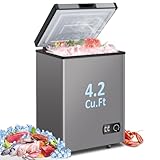
Overview: The LifePlus 4.2 cubic foot chest freezer strikes an appealing balance between capacity and compactness, offering versatile storage for apartments, garages, or offices. Its temperature range spans from -11.4°F to 10.2°F, accommodating everything from ice cream to frozen meats, while the wheeled base adds mobility uncommon in this category.
What Makes It Stand Out: Mobility sets this freezer apart—two bottom wheels make repositioning effortless, a game-changer for renters or those who rearrange spaces frequently. The stain-resistant interior simplifies cleaning, while the super-quiet operation (under 40 dB) ensures it won’t disrupt sleep or work. At just 0.52 kWh daily consumption, it’s exceptionally energy-efficient for its size.
Value for Money: At $199.99, this freezer offers competitive pricing for its capacity and feature set. The wheeled design and stain-resistant interior provide tangible benefits over similarly priced competitors. Energy costs remain low, and the 7-grade thermostat adds precision control typically found in more expensive models, creating strong overall value.
Strengths and Weaknesses: Pros: Built-in wheels for easy movement; excellent energy efficiency (0.52 kWh/day); wide temperature range; super-quiet operation; stain-resistant interior; 7 temperature settings; removable basket. Cons: Single basket limits organization; wheel design may reduce stability if not locked; brand less recognized than major competitors; manual defrost only.
Bottom Line: This LifePlus freezer excels for users who value flexibility and mobility. The wheeled design makes it perfect for apartments or multi-purpose spaces where relocation might be necessary. Combining quiet operation, energy efficiency, and practical features at a fair price, it’s an excellent mid-range choice for most households needing reliable supplemental freezer storage.
10. EUHOMY 5.0 Cu.Ft Chest Freezer with Removable Basket, Deep Freezer Adjustable 7 Thermostat, Quiet Mini Freezer Free-Standing Top Door, Energy Saving for Apartment/Garage/Basement/Dorm/Home,Black

Overview: EUHOMY’s 5.0 cubic foot chest freezer maximizes storage efficiency with a compact 3.8 ft² footprint, making it ideal for space-constrained environments like dorms, apartments, or basements. The unit holds approximately 47 pounds of beef and 68 pounds of fish simultaneously, providing substantial capacity for meal preppers, hunters, or large families needing supplemental freezing.
What Makes It Stand Out: The freezer’s door hovers at 45°-85° angles, allowing pregnant users or those with limited mobility to access contents without holding the lid. Its R600a compressor delivers 34-pound freezing power within 12 hours while maintaining whisper-quiet 38 dB operation. Two mesh baskets enhance organization, and the high-density foam insulation keeps contents frozen for extended periods during power outages.
Value for Money: Priced at $279.99, this is the premium option in our review. The price reflects advanced features like superior insulation, dual baskets, and the hovering door mechanism. While the upfront cost is highest, the 0.60 kWh daily consumption remains reasonable, and the build quality suggests long-term durability that justifies the investment for serious users.
Strengths and Weaknesses: Pros: Innovative hovering door design; two mesh baskets; excellent insulation for power outage protection; powerful R600a compressor; quiet 38 dB operation; 7-stage thermostat; compact footprint with large capacity; drainage port included. Cons: Highest price point; brand recognition still building; requires 24-hour settling period; black finish may not suit all decors.
Bottom Line: This EUHOMY freezer is worth the premium for users who prioritize innovative design and reliability. The hovering door and dual baskets make it exceptionally user-friendly, while the superior insulation provides peace of mind during outages. Perfect for serious home cooks, hunters, or families needing dependable long-term freezer storage. Budget buyers should look elsewhere, but for feature-rich performance, this is top-tier.
Why Noise Matters: Decoding Decibel Ratings in Apartment Living
Understanding Decibel Levels
When manufacturers claim their freezer operates at “42 decibels,” what does that actually mean? Decibels measure sound pressure logarithmically, not linearly, which means a freezer rated at 40 dB is actually twice as loud as one at 30 dB. For apartment context, a whisper typically registers around 30 dB, while normal conversation hovers near 60 dB. The quietest chest freezers on the market today operate in the 35-42 dB range—roughly equivalent to a library’s ambient noise.
The critical factor for apartment dwellers isn’t just the stated decibel rating, but the frequency and character of the sound. Low-frequency humming travels through walls and floors far more effectively than higher-frequency sounds, which means a freezer with a slightly higher dB rating but better sound dampening might be less intrusive than a “quieter” model with poor insulation.
The Real-World Impact of Freezer Noise
In open-plan apartments or studios, appliance noise becomes particularly problematic. That cycling compressor doesn’t just disturb your Netflix binge—it can interfere with sleep, work-from-home video calls, and even create tension with neighbors if you share walls. Sound waves from vibrating compressors can transmit through floorboards, creating a subtle but persistent disturbance in the unit below yours. This is why noise reduction features matter as much as the raw decibel number.
Apartment-Specific Considerations for Chest Freezers
Space Optimization Strategies
Unlike houses with basements or garages, apartments demand strategic thinking about where a chest freezer can physically fit. The first rule: measure your space three times before even browsing specifications. Account not just for the freezer’s dimensions, but for the lid’s swing radius and your ability to stand in front of it with the door open. Many apartment dwellers successfully tuck freezers into closets, laundry nooks, or even under kitchen counters—provided ventilation requirements are met.
Weight and Floor Load Concerns
A fully loaded chest freezer can weigh 200-300 pounds, concentrating significant load on a small floor area. Most residential floors handle 40 pounds per square foot, but older apartment buildings may have weaker spots. Distribute weight by placing the freezer perpendicular to floor joists if possible, and consider a reinforced platform if you’re placing it in a high-traffic area or above a neighbor’s bedroom.
Ventilation Requirements in Tight Spaces
Chest freezers need breathing room—typically 3 inches on sides and back, plus 4-6 inches above. In cramped apartments, this requirement often gets overlooked, leading to compressor strain, increased noise, and premature failure. If you’re planning a built-in installation, look for models specifically designed for zero-clearance or front-venting operation, though these are rare in chest freezer designs.
Size Matters: Finding the Perfect Capacity Without Overwhelming Your Space
Measuring Your Available Space
Grab your tape measure and create a detailed floor plan before falling in love with any freezer. Mark door swing paths, account for baseboard heaters, and remember that you’ll need to fully open the lid to access contents. The sweet spot for most apartments is 5-7 cubic feet—large enough to store 175-250 pounds of food but small enough to maneuver through standard doorways and into elevators.
Capacity vs. Footprint: The Trade-off
Manufacturers have gotten clever with interior organization, but physics still dictates that more capacity requires more space. Compact models (3.5-5 cubic feet) typically measure around 24x22x33 inches, while mid-size units (7-10 cubic feet) stretch to 36x24x34 inches. The footprint difference might seem minor on paper, but in a studio apartment, those extra inches can make or break your traffic flow.
The 80% Rule: Why You Shouldn’t Max Out
Here’s a pro tip that freezer manuals rarely emphasize: never buy a freezer you plan to fill completely. Air circulation is crucial for even cooling and energy efficiency. Filling beyond 80% capacity forces the compressor to work harder, creating more noise and wear. Buy slightly larger than your absolute minimum needs, then resist the temptation to cram every corner.
Energy Efficiency: Saving Money and the Planet
Energy Star Ratings Explained
That Energy Star label isn’t just marketing fluff—it indicates a freezer uses at least 10% less energy than federal minimum standards. For apartment dwellers paying premium electricity rates, this translates to $20-30 annual savings. More importantly, efficient models generate less waste heat, which matters enormously when your freezer lives in a closet rather than a spacious garage.
The Hidden Cost of Inefficiency
An older or inefficient chest freezer can consume 400+ kWh annually, costing $60-80 per year to operate. Modern efficient models slash this to 200-250 kWh. Over a 10-year lifespan, the difference exceeds $300—often more than the price difference between budget and premium models. Factor this into your purchase decision, especially if utilities aren’t included in your rent.
Calculating Long-Term Operating Costs
Do this simple math: find the annual kWh rating (on the yellow Energy Guide label), multiply by your electricity rate (found on your utility bill), then multiply by 10 years. A freezer that costs $50 more upfront but saves $5 monthly on electricity pays for itself in under a year. In apartments where every utility dollar counts, this calculation is non-negotiable.
Soundproofing and Noise Reduction Features
Compressor Technology Advances
Traditional reciprocating compressors are the noisiest culprits. Modern inverter compressors, originally developed for air conditioners, now appear in premium chest freezers. These variable-speed units run continuously at low speeds rather than cycling on/off with jarring starts and stops. The result? A steady, barely perceptible hum instead of disruptive clicking and whirring.
Vibration Dampening Systems
Look for freezers featuring rubber-mounted compressors, insulated cabinets, and anti-vibration feet. These components absorb mechanical energy before it becomes sound. Some manufacturers add mass-loaded vinyl barriers inside cabinet walls—essentially soundproofing blankets that deaden noise. You can replicate this effect yourself with aftermarket sound dampening mats, but factory-installed solutions perform better and don’t void warranties.
Insulation’s Dual Role
Thicker insulation serves two masters: it maintains temperature better and muffles compressor noise. Polyurethane foam insulation has largely replaced fiberglass, offering superior R-value in thinner layers. The denser the insulation, the less noise escapes. Premium models use up to 4 inches of foam, while budget units might skimp at 2-2.5 inches.
Temperature Control and Consistency
Manual vs. Electronic Controls
Old-school dial thermostats get the job done but lack precision. Electronic controls with digital displays allow exact temperature setting—crucial if you’re storing breast milk, medication, or premium frozen foods. More importantly, electronic systems respond faster to temperature changes, reducing compressor cycles and associated noise.
The Importance of Temperature Alarms
In an apartment, you might not notice a slowly warming freezer until it’s too late. Audible alarms sound when internal temps rise above safe levels, but in quiet models, these alarms are often gentler chimes rather than blaring sirens. Some smart freezers send phone notifications instead—a feature worth considering if you’re frequently away.
Fast Freeze Functions
This feature temporarily drops the freezer to its coldest setting, ideal for rapidly freezing large quantities of fresh food. While useful, it makes the compressor work overtime and increases noise temporarily. Use it judiciously—perhaps when neighbors are at work—to avoid creating a disturbance during quiet evening hours.
Defrosting: Manual vs. Automatic
The Trade-offs of Frost-Free Technology
Frost-free (automatic defrost) freezers eliminate the chore of manual defrosting but come with a significant noise penalty. They cycle through periodic warming phases, using fans that create noticeable whooshing sounds. For apartment dwellers prioritizing silence, manual defrost models are almost always the quieter choice, operating 5-10 dB lower than their frost-free counterparts.
Manual Defrost Best Practices
Plan to defrost your manual freezer twice yearly—more if you live in a humid climate. The process takes 2-4 hours, during which you’ll need alternative storage for your frozen goods. Schedule this during a neighbor-friendly time (midday on a weekday) and place towels strategically to catch meltwater. A well-maintained manual defrost freezer actually runs more efficiently and quietly than a poorly maintained frost-free unit.
How Defrosting Affects Noise Levels
Ice buildup forces compressors to work harder, increasing both energy consumption and noise. Just a quarter-inch of frost can raise operational noise by 3-5 dB. Regular defrosting isn’t just about efficiency—it’s about maintaining the quiet operation you paid for. Mark your calendar and treat it like any other apartment maintenance task.
Placement Strategies for Minimal Noise Disruption
Locating the Ideal Spot
The golden rule: keep your freezer away from bedrooms and shared walls if possible. Utility closets, kitchen corners opposite sleeping areas, or even balcony spaces (with proper weatherproofing) work well. Avoid placing freezers in hallways where sound can echo, and never position them directly against a neighbor’s wall without additional sound dampening.
The 3-Inch Rule for Airflow
Those ventilation gaps aren’t suggestions—they’re requirements. In tight spaces, use a small fan to improve air circulation around the compressor. Poor ventilation causes compressors to overheat and run louder, creating a feedback loop of increasing noise and decreasing efficiency. Measure and mark these clearances with painter’s tape during setup to ensure they remain unobstructed.
Flooring Considerations
Hard surfaces like tile or wood transmit vibration easily. Place your freezer on a anti-vibration mat or thick rubber padding to absorb mechanical energy. Carpeted areas naturally dampen sound but can restrict airflow—if placing on carpet, use a solid platform to ensure the freezer sits level and can vent properly underneath.
Features That Make a Difference in Apartment Settings
Interior Organization Systems
Baskets and dividers aren’t just convenient—they prevent you from leaving the lid open while rummaging, which reduces compressor cycles. Look for sliding baskets that provide access to upper layers without disturbing deeper items. Some models offer modular systems you can reconfigure as your storage needs change.
Lockable Lids for Shared Spaces
If your freezer lives in a common area or accessible closet, a lock prevents curious roommates or children from accidentally leaving the lid ajar. More importantly, a secure seal ensures the compressor isn’t working overtime to compensate for warm air infiltration—directly impacting noise levels.
LED Lighting and Its Benefits
LED interior lights consume minimal energy and generate no heat, unlike old incandescent bulbs. They illuminate contents instantly when you open the lid, reducing the time warm air enters and minimizing compressor kick-in cycles. Some premium models feature motion-activated lights that turn on as you approach, a small luxury that pays dividends in efficiency.
Installation and Setup Best Practices
The Settling Period Myth
You’ve heard it: “Let your freezer sit upright for 24 hours before plugging in.” This advice is partially true but often exaggerated. If your freezer was transported upright, 2-3 hours is sufficient for compressor oil to settle. Only if it was laid on its side does it need a full day. However, waiting longer never hurts and gives you time to clean and organize the space.
Leveling Your Freezer
An unlevel freezer stresses compressor mounts and creates uneven wear on door seals, both of which increase noise. Use a bubble level on the lid, not the cabinet body, as the lid is the most precisely machined component. Adjust the feet until perfectly level—most freezers have adjustable front feet, and you can shim the rear with thin plastic or composite shims.
Initial Temperature Calibration
Don’t trust factory settings. Place a thermometer inside and monitor for 24 hours, adjusting as needed. The ideal temperature is 0°F (-18°C), not the “recommended” setting on the dial. A freezer set even 5 degrees too cold works unnecessarily hard, creating excess noise and energy consumption for negligible benefit.
Maintenance for Longevity and Quiet Operation
Cleaning Condenser Coils
Dusty coils force compressors to run hotter and louder. Every three months, unplug the freezer and vacuum the coils with a brush attachment. In apartment environments with pet hair or high dust, increase frequency to monthly. This 10-minute task extends compressor life by years and maintains quiet operation.
Seal Integrity Checks
Close the lid on a dollar bill and try to pull it out. If it slides out easily, your seal is compromised. Replace door gaskets every 3-5 years or sooner if you notice frost buildup around the lid perimeter. A failing seal is one of the most common causes of excessive noise in aging freezers.
When to Call a Professional
If you notice a sudden increase in noise, clicking sounds, or the compressor running constantly, don’t wait. Apartment living means any failure affects your immediate food security. A qualified technician can diagnose issues before they become catastrophic. Annual professional servicing costs less than replacing spoiled groceries after a breakdown.
Common Noise Issues and Troubleshooting
Identifying Normal vs. Problematic Sounds
A gentle hum is normal; loud clicking, buzzing, or rattling is not. Gurgling sounds during defrost cycles indicate refrigerant flow—normal. But sharp, repetitive clicks every few minutes suggest a failing start relay. Learn your freezer’s baseline sounds so you can detect changes early.
The Click, Hum, and Gurgle Explained
The click is the thermostat activating the compressor. The hum is the compressor motor running. The gurgle is refrigerant moving through coils. These should be subtle background noises. If any become pronounced enough to hear from another room, investigate. Often the fix is simple: leveling, cleaning, or moving items away from vibrating against the cabinet.
DIY Fixes vs. Professional Repairs
You can safely address vibration noises by adjusting feet or adding padding. You can clean coils and replace door seals. But never attempt compressor repairs or refrigerant recharging yourself—it’s dangerous, illegal without certification, and voids warranties. In rental apartments, unauthorized repairs can also violate your lease.
Budget Considerations: Total Cost of Ownership
Upfront vs. Operating Costs
The cheapest freezer at the big box store often costs more long-term. A $200 budget model might consume $75 annually in electricity, while a $400 efficient unit costs $30 per year to run. Over a decade, the “expensive” option saves you $50 total while providing a quieter, more reliable experience. Factor in potential energy rebates from your utility company, which can offset 10-20% of purchase price.
Warranty Value Analysis
Standard warranties run 1 year parts and labor, 5 years on compressor. Premium brands may offer 2-3 years comprehensive coverage. In apartments where moving the freezer for service is difficult, in-home warranty service is worth its weight in gold. Read the fine print: some warranties require professional installation to remain valid.
The Premium for Silence
Expect to pay 20-40% more for a freezer specifically engineered for quiet operation. This premium covers better insulation, inverter compressors, and vibration dampening. For apartment dwellers, this isn’t a luxury—it’s a necessity that directly impacts quality of life. Consider it an investment in your mental health and neighborly relations.
Environmental and Sustainability Factors
Refrigerant Types and Global Warming Potential
Modern freezers use R-600a (isobutane) or R-134a refrigerants. R-600a is more environmentally friendly with near-zero ozone depletion potential, but it’s flammable—a consideration in tight apartment spaces. R-134a is safer but has higher global warming potential. Most new models have shifted to R-600a, but verify before purchasing.
End-of-Life Disposal
When your freezer eventually fails, responsible disposal matters. Many municipalities require professional refrigerant removal before landfill disposal. Some retailers offer haul-away services when delivering a new unit. In apartment complexes, improper disposal can result in hefty fines. Plan ahead for this eventuality.
Energy Consumption Footprints
A typical apartment chest freezer generates 150-200 kg of CO2 annually from electricity consumption. Choosing an Energy Star model cuts this by 30-40%. Over the appliance’s lifetime, this reduction equals the carbon footprint of a short flight. For environmentally conscious renters, this factor increasingly influences purchasing decisions.
Safety Features and Certifications
Child Safety Locks
Even if you don’t have children, locks prevent accidental lid closure on hands and ensure the seal remains tight. In apartments with visiting guests or roommates, this feature provides peace of mind. Some building codes actually require locks on freezers in common areas.
UL and ETL Certifications
These independent safety certifications ensure the freezer meets rigorous electrical and fire safety standards. In older apartment buildings with questionable wiring, this isn’t optional—it’s essential. Uncertified appliances can void your renter’s insurance if they cause a fire.
Ground Fault Protection
Never plug a chest freezer into a standard outlet in potentially damp areas like balconies or near sinks. Use a GFCI outlet or adapter to prevent electrical shock. While building codes require GFCIs in new construction, many older apartments lack them. A $15 GFCI adapter is cheap insurance.
Frequently Asked Questions
How many decibels should a quiet chest freezer produce for apartment use?
For apartment living, aim for a freezer rated at 42 decibels or lower. The quietest models operate in the 35-38 dB range, which is comparable to a library’s ambient noise level. Remember that decibel ratings are measured in ideal conditions, so real-world noise may be slightly higher depending on placement and ventilation.
Can I put a chest freezer on my apartment balcony?
Only if the balcony is fully enclosed and climate-controlled. Extreme temperatures force the compressor to work harder, increasing noise and reducing lifespan. Direct sunlight is particularly damaging. Check your lease agreement—many prohibit balcony appliances, and exposure to elements voids most warranties.
Will a chest freezer increase my electric bill significantly?
A modern efficient chest freezer (5-7 cubic feet) typically costs $2-4 monthly to operate. Older or larger models can cost $6-8 monthly. The increase is modest compared to air conditioning or heating costs. To minimize impact, choose an Energy Star model and maintain it properly.
How often should I defrost a manual defrost chest freezer in an apartment?
In typical apartment conditions, defrost twice yearly. If you notice more than a quarter-inch of frost buildup, it’s time. High humidity apartments may require quarterly defrosting. Schedule this during daytime hours when neighbors are less likely to be disturbed by the temporary increase in compressor activity.
What’s the minimum ventilation space needed around a chest freezer?
Maintain 3 inches of clearance on sides and back, and 4-6 inches above the lid. In tight spaces, you can sometimes reduce side clearance to 2 inches if you install a small fan for forced air circulation. Never block the compressor grille on the back or sides.
Are inverter compressors worth the extra cost for apartments?
Absolutely. Inverter compressors run continuously at variable speeds instead of cycling on/off, eliminating the jarring clicks and startup noises that travel through walls. The premium typically pays for itself within 2-3 years through energy savings alone, making it a smart investment for noise-sensitive apartment environments.
Can I soundproof my existing chest freezer to make it quieter?
You can add mass-loaded vinyl mats around the cabinet (never block ventilation) and anti-vibration pads underneath. However, these modifications have limited effect and may void your warranty. The compressor itself is the main noise source, and it’s not practical to modify. If noise is a major issue, replacement is usually more effective than retrofitting.
How do I know if my freezer is too loud for my apartment building?
If you can hear it clearly from another room with the door closed, it’s too loud. A simple test: place a glass of water on top while it’s running. If you see ripples, vibration is excessive. Most apartment leases have “quiet enjoyment” clauses—persistent appliance noise can technically violate these, though it’s rarely enforced unless neighbors complain.
Should I unplug my chest freezer when I go on vacation?
Only if you’ll be gone longer than 3-4 weeks and have emptied it completely. A full freezer maintains temperature for 24-48 hours without power, but frequent unplugging stresses the compressor. For short trips, leave it running. The energy savings from unplugging for a week don’t justify the wear and tear on components.
What size chest freezer is best for a studio apartment?
A 5-7 cubic foot model hits the sweet spot for most studio apartments. It holds approximately 175-250 pounds of food—enough for a month’s groceries for one or two people—while maintaining a compact footprint. Measure your space carefully, including door swing and ventilation clearances, before committing to any size.